It usually gets better, slowly
The NHS says "the pain and stiffness will usually go away eventually", but it can take months or years. Years later, about 6 in 10 people had normal or near-normal shoulders and 4 in 10 had some symptoms, mostly mild.
Yoga guide
You can do yoga with a frozen shoulder, if you adapt it. In the painful stage, move the arm gently and only as far as is pain-free: in a study, exercise within pain limits did better than intensive stretching through pain. Later, as the pain settles, gentle holds to mild discomfort help bring the movement back.
Yoga hasn't been shown to speed recovery: in the one trial in the painful stage, adding standing poses to usual care made no difference. It sits beside your GP's and physiotherapist's care, including any injection, never in place of it.
This guide covers what frozen shoulder is and how long it lasts, how to practise in each stage, the poses to avoid, what the trials show, diabetes and thyroid problems, the warning signs, and a 20-minute class with a 10-minute version for the painful stage, with 3D demos.
The NHS says "the pain and stiffness will usually go away eventually", but it can take months or years. Years later, about 6 in 10 people had normal or near-normal shoulders and 4 in 10 had some symptoms, mostly mild.
In the best trial, 30 minutes a day of standing poses for 4 weeks, added to painkillers and physiotherapy, made no difference to pain or function. No yoga trial is registered. Use yoga to keep moving and stay strong, not as a treatment.
Exercise within pain limits left 89% with near-normal shoulders at 2 years, against 63% after intensive stretching beyond the pain threshold, in a study that wasn't randomised. The NHS says "Only move your shoulder gently", but don't keep it still.
When the shoulder is stiff but no longer very painful, firmer stretching helps a little more. That rests on trials of mobilisation by a therapist and on the UK FROST trial's home programme, not on trials of stretching on your own.
A steroid injection speeds early improvement, a home exercise programme adds to it, and in the largest trial surgery was no better than physiotherapy with an injection at a year. Ask your GP or physiotherapist.
A shoulder out of place after a fall, or shoulder or arm pain with chest pain, needs 999; a hot, red, swollen shoulder or fever needs help the same day. The full list is below.
The capsule around the shoulder joint becomes inflamed and tight. The UK care pathway describes "slow onset of pain near the deltoid insertion combined with a disproportionately severe loss of passive external rotation": turning the arm outwards goes first. Pain is often worse at night. Doctors call it adhesive capsulitis.
About 2% to 5% of people, typically women aged 45 to 60, with a peak at 56; 6% to 17% get it in the other shoulder within 5 years. Diabetes is the strongest link, and an underactive thyroid roughly doubles the odds.
The NHS says months, sometimes years, and the UK FROST trial team says typically 1 to 3 years. In 223 people followed for an average of 4.4 years, 59% had normal or near-normal shoulders and 41% some symptoms, almost all mild. A review found shoulders improve without treatment, but not always completely, and most improvement comes early.
An earlier UK pathway described a painful phase (2 to 9 months), a stiffening phase (4 to 12 months) and a thawing phase (12 to 42 months). The 2025 pathway says the stages overlap, so they're of limited use for choosing treatment, and a review found no evidence of neat phases to full recovery.
As the gentle daily movement the NHS asks for in the painful stage, gradually firmer holds later, and strength, balance and calm for the rest of you throughout. It hasn't been shown to speed recovery.
The levels and the last line of the pain rule are from our frozen shoulder guide, word for word.
Our frozen shoulder guide uses how irritable the shoulder is, following a model from shoulder physiotherapists:
Source 17
Frozen shoulder is the exception to the 5 out of 10 rule our shoulder guides use for rotator cuff pain: in a study, gentle exercise within the pain-free range did better than intensive stretching through pain, and the NHS says to move the shoulder gently.
So: in the very painful stage, stay pain-free. Later, stretch to mild discomfort and hold. A stretch should not leave a lasting flare afterwards; if it does, go gentler next time.
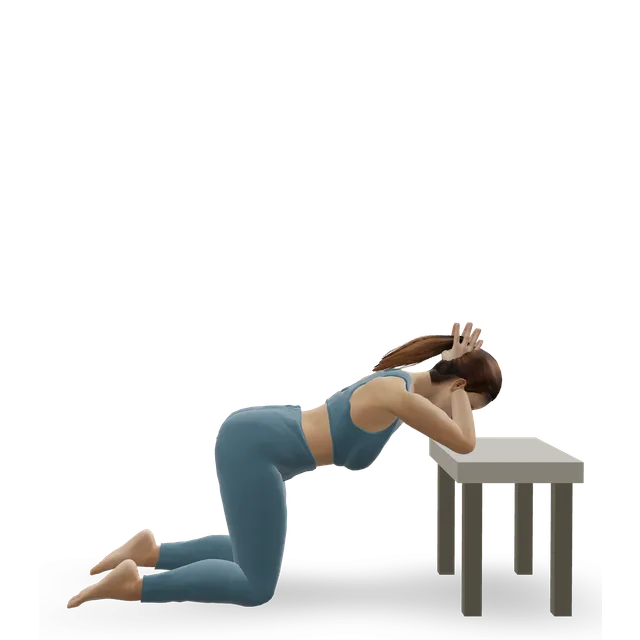
Pendulum swings, table slides and a stick to help the arm turn out, a few minutes 2 or 3 times a day, never into pain. Standing poses with your hands on your hips or thighs keep the rest of you strong.
Hold the table slide and the turn-out a little longer, and add a finger climb up a wall and a cross-body stretch, to mild discomfort only. The UK FROST home programme progressed "from gentle pendular exercises to firm stretching exercises according to stage".
Source 7
Once night pain has gone, longer holds and light strength work help bring the range back. In trials, firmer, end-of-range mobilisation by a therapist did slightly better than staying in the pain-free zone in stiff, long-standing frozen shoulder, at very low certainty overall. No trial has tested firmer self-stretching, so this step is our reading of those trials and of the UK FROST programme's wording.
Only three small yoga trials exist, so this guide also draws on trials of frozen shoulder care, and says where it does.
In 72 people aged 30 to 60 in the painful stage, allocated in a partly random way, 30 minutes of eight standing poses a day for 4 weeks, added to anti-inflammatory medicines and physiotherapy, made no difference: overall scores of 40.67 against 40.03 out of 100. No one had side effects. The trial wasn't registered or blinded.
Source 3
In 40 people, yoga poses and physiotherapy both helped over 4 weeks, with slightly more improvement in lifting the arm out to the side after yoga but not in other movements. In 90 people in China, yoga postures and warm acupuncture gave similar results, in a poorly reported trial.
A 2025 review says yoga improved shoulder movement more than physiotherapy, which overstates the 40-person trial, and that every study showed benefit, which the 72-person trial didn't. No trial of yoga for frozen shoulder is registered.
In 77 people, exercise within pain limits left 89% with normal or near-normal shoulders at 2 years (64% within a year), against 63% after intensive stretching and mobilisation up to and beyond the pain threshold. It wasn't randomised.
Source 5
The UK pathway rates a steroid injection into the joint as improving symptoms faster than waiting, with no benefit seen after 3 months. Across 65 studies, an injection was the only treatment clinically better in the short term, and adding a home exercise programme gave extra benefit later. Exercise and manual therapy probably do less than an injection at 7 weeks and about the same by 6 to 12 months.
The UK pathway suggests physiotherapy after an injection, and found no trials comparing physiotherapy alone with waiting. In UK FROST, 503 adults (30% with diabetes) had early physiotherapy with an injection, manipulation under anaesthetic or keyhole release; at 12 months none was clinically better, and release had more serious side effects.
"There are no clinical trials assessing the role of dosage" for exercise in frozen shoulder, a 2023 review says, and pooled effects of exercise were small, at low to very low certainty. Every dose on this page is our editorial starting point or a site page's.
Pendulum: about 1 minute (10 small circles each way), 2 to 3 times a day; table slide: 10 slow repetitions, 1 to 3 times a day; stick-assisted turning out: 10 slow repetitions, pain-free, twice a day (the moves' pages). Shoulder rolls: 10 slow circles each way, small if it's sore; thoracic rotation: 6 each side, arms crossed (our yoga for shoulder pain class).
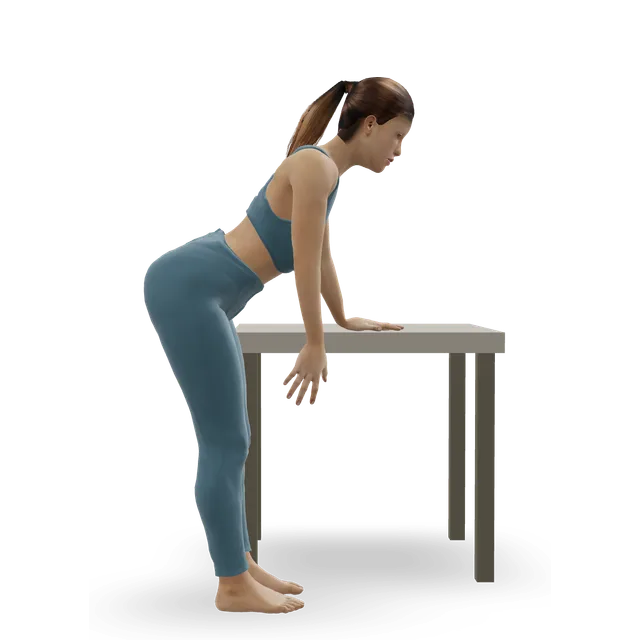 3D demoPendulum exercise (Codman's pendulum)Beginner · A bench or box
 3D demoTable slide (seated forward reach)Beginner · A bench or box
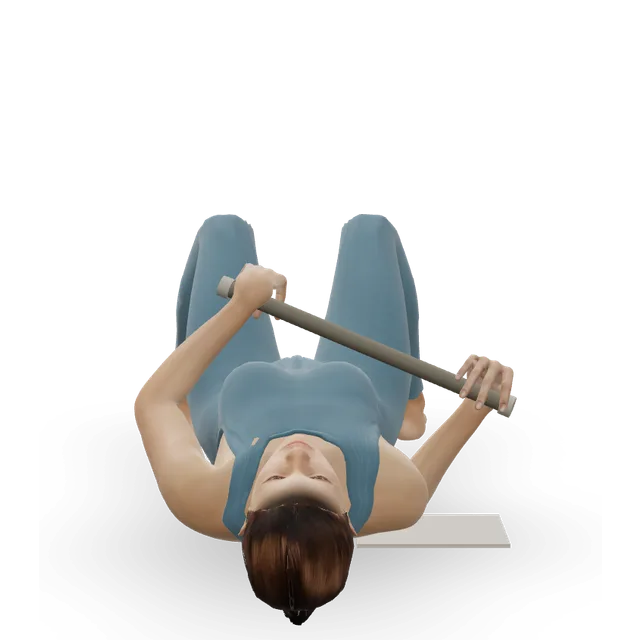 3D demoStick-assisted external rotation (lying)Beginner · Other / check instructions
 3D demoShoulder rollsBeginner · No equipment
 3D demoThoracic rotationBeginner · No equipment
Table slide: 5 to 10 with a 10 to 20 second hold at the end; stick-assisted turning out: 3 to 5 holds of 20 to 30 seconds (the moves' pages). Wall finger climb: 5 slow climbs, holding the top for a count of 10 (our editorial starting point; the move's page gives this dose for after breast surgery). Cross-body stretch: 3 holds of 20 to 30 seconds; doorway chest opener: 2 holds of 20 to 30 seconds, elbow below shoulder height at first (our frozen shoulder guide). Band rotation: 2 sets of 10 to 15 in a small range; band row: 2 sets of 12 to 15; wall push-up: 2 sets of 10 (our frozen shoulder guide).
3D demoTable slide (seated forward reach)Beginner · A bench or box3D demoStick-assisted external rotation (lying)Beginner · Other / check instructions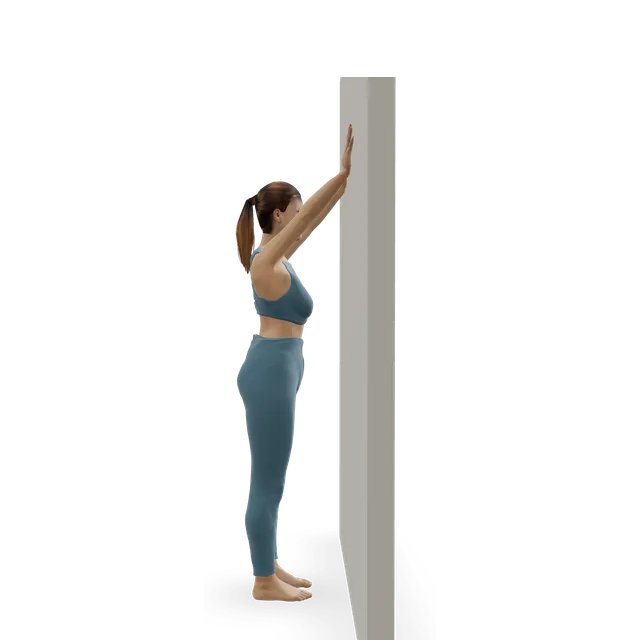 3D demoWall climb (finger walk up the wall)Beginner · A wall
 3D demoCross-body shoulder stretchBeginner · No equipment
 3D demoDoorway chest openerBeginner · A wall
 3D demoStanding band external rotationBeginner · A band + An anchor point
 3D demoBand rowBeginner · A band + An anchor point
 3D demoWall push-upBeginner · A wall
Overhead stretch at a bench: 3 holds of 30 to 45 seconds; sleeper stretch: 3 holds of 30 seconds on the stiff side, gently, only if turning the arm inwards stays stiff (our frozen shoulder guide). Shoulder circles: 3 slow circles each way, working around any pinch (the move's page).
Mountain pose: 5 breaths, palms turned forward; chair pose: 3 holds of 15 seconds, hands on your thighs; warrior II: 3 breaths each side, hands on your hips if holding the arms out hurts (our yoga for shoulder pain class). Tree pose: 3 to 5 breaths each side, fingertips of your good hand on a wall (our yoga for posture class). Corpse pose: 3 minutes with a cushion under the sore arm (our yoga for shoulder pain class).
Don't push through strong pain, and never let a teacher push your arm into a stretch: intensive stretching beyond the pain threshold did worse in a study.
Leave out downward dog, plank, chaturanga, dolphin, side plank and crow while the shoulder is painful or stiff, then build back up from the wall, as our yoga for shoulder pain class does.
Skip cow-face and eagle arms, reverse prayer, strap pass-throughs over your head and extended puppy pose until the shoulder has settled: the strap pass-through's own page says to leave it out with a frozen shoulder, and our yoga for flexibility class says to skip puppy pose with a current shoulder injury.
Our frozen shoulder guide advises against heavy pressing or hanging from a bar while the shoulder is painful and stiff.
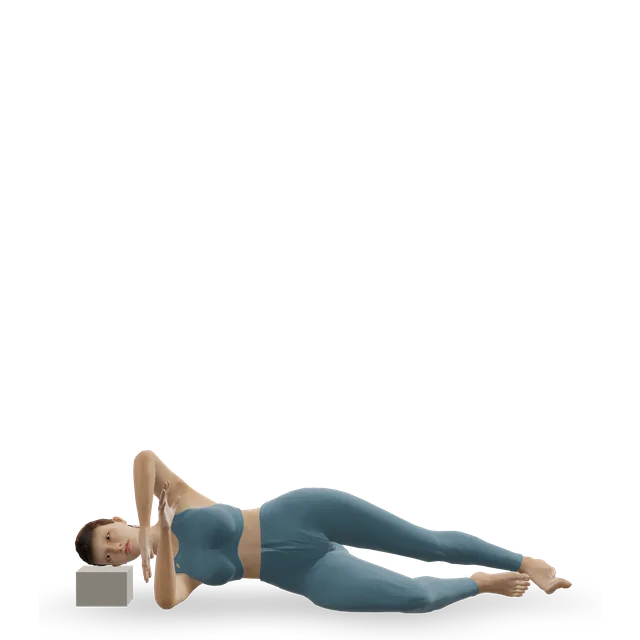
Do thread the needle and side-lying poses on your good side only, or skip them.
They need full shoulder range and put load through it. Hand, shoulder and head stands are also the practices most often linked with acute yoga injuries, and US health advice says people new to yoga should avoid them.
About 13% of people with diabetes have frozen shoulder, about 30% of people with frozen shoulder have diabetes, and people with diabetes have about 5 times the odds. In UK health records, people newly diagnosed with frozen shoulder were far more often diagnosed with type 2 diabetes afterwards, partly because they saw clinicians more.
Across 28 studies, diabetes went with worse recovery scores (moderate certainty) and worse pain.
Source 31
Thyroid disease went with about twice the odds of frozen shoulder, mainly an underactive thyroid; an overactive thyroid wasn't clearly linked.
Source 14
Check your blood sugar before and after, keep hypo treatment by your mat, and don't start if it's 4 mmol/L or lower. Never change a diabetes medicine yourself because you've started yoga: your team can help you adjust it.
Joint stiffness, frozen shoulder and carpal tunnel syndrome are more common with diabetes; regular stretching and strength work help keep movement. Our frozen shoulder and carpal tunnel guides have plans.
If you haven't been checked for diabetes, ask your GP whether you should be: about 3 in 10 people with frozen shoulder have diabetes (our suggestion). A meta-analysis says "Screening for DM should be considered in patients presenting with AC", and the NHS says "it's important to have your regular diabetes check-ups".
Painkillers and gentle movement first, then a steroid injection, which speeds early improvement, and physiotherapy, which the NHS says usually lasts at least 6 weeks. A home exercise programme alongside an injection gave extra benefit later.
A shoulder specialist may suggest a large-volume injection (hydrodilatation), manipulation under anaesthetic or keyhole surgery to release the capsule. In UK FROST, none was clinically better than early structured physiotherapy with an injection at a year.
Follow the timing your clinician gives before stretching harder; the gentle moves on this page can carry on. The UK pathway suggests physiotherapy after an injection.
Source 8
Our 20-minute class: block A every day in the very painful stage (about 10 minutes), the standing block for strength, and the gentle holds only once the pain is mostly 6 out of 10 or less. Our yoga for shoulder pain class suits the settled stage, when you're ready to build weight on your arms again.
Twenty minutes of gentle yoga for a frozen shoulder: pain-free assisted movement, standing poses with the arms low, and gentle holds once it's less sore.
20 minBeginner14 movesA bench or box, Other / check instructionsA 20-minute yoga sequence for shoulder pain: gentle movement, standing poses with the arms low, shoulder strength, and weight on the arms built up from the wall.
20 minBeginner16 movesA bench or box, A wallA 20-minute Pilates class for a sore shoulder: gentle range first, then shoulder-blade and rotator cuff strength, then light weight on the arms, in steps.
20 minBeginner15 movesA bench or box, Other / check instructionsA 25-minute band routine for healthy shoulders: move the shoulder and upper back through their range, then strengthen the rotator cuff and shoulder blades.
25 minBeginner12 movesA wall, A bandA free 20-minute chair yoga class for older adults: slow breathing, gentle seated stretches and twists, standing poses holding the chair, and a calm finish.
20 minBeginner18 movesA bench or box, Something with weightA 6-minute breathing routine: slow breathing, crocodile breathing, alternate nostril breathing, box breathing and 4-7-8 breathing.
6 minBeginner5 movesNo equipmentWhen night pain has gone and the shoulder hurts only at the very end of its range, build weight on your arms in steps: wall push-ups, then knees and forearms, then a full plank and downward dog when those are easy, as our yoga for shoulder pain class does. Keep binds and full overhead holds until last.
Stop for sharp pain, a feeling that the shoulder is slipping, pins and needles or numbness down the arm, or pain that is still worse by your next session after strengthening.
These are the warning signs from our shoulder pain and frozen shoulder guides, word for word. This is general information, not a diagnosis. A&E means accident and emergency; in the US, call 911 for 999.
Call 999 or go to A&E: after a fall or injury, your shoulder looks out of place or has changed shape, you cannot move your arm, or your shoulder is painful, bruised or swollen. Do not drive yourself, and do not try to put it back in yourself.
Call 999: shoulder or arm pain with chest pain that feels tight or squeezing, or chest pain that spreads to your arms, neck or jaw, especially with shortness of breath, sweating or feeling sick. It could be a heart attack.
Get help from NHS 111: pain or tightness in your chest, neck, shoulders, jaw or arms that comes and goes, often brought on by exercise, stress, emotion or cold and easing after a few minutes' rest. It can be angina, a sign of a heart problem. If you've been diagnosed with angina, get help from NHS 111 too if it feels worse than before, is happening more often, lasts longer or happens when you're resting.
Source 12
Same day (GP or NHS 111): the shoulder or arm is hot, swollen or red, or you have a high temperature (although not everyone has one) or feel unwell. A joint infection needs same-day care.
Same day (GP or NHS 111): sudden or very bad shoulder pain; you cannot move your arm; the arm or shoulder is badly swollen or has changed shape; pins and needles that do not go away; no feeling in the arm; the arm is hot or cold to the touch; pain that started after an injury such as a fall; or severe pain in both shoulders.
Contact a GP immediately, go to 111.nhs.uk or call NHS 111: a new or frequent headache that usually comes on suddenly (your scalp may also feel sore or tender), pain in the jaw muscles or tongue when eating or talking, or problems with your sight, such as double vision or loss of vision in 1 or both eyes. With pain and stiffness around the shoulders, these can be signs of temporal arteritis (giant cell arteritis), which up to 1 in 5 people with polymyalgia rheumatica develop. If you suddenly can't see from 1 or both eyes, call 999 or go to A&E.
Source 11
In many areas you can refer yourself to physiotherapy.
Source 11
Call 999 if:
The NHS advises getting advice from a healthcare professional first if you have a health problem, an injury or symptoms, or have recently had a heart attack or an operation.
Exercise within pain limits did better than intensive stretching beyond the pain threshold (89% against 63% near-normal at 2 years), and the NHS says to move the shoulder gently. Firmer stretching has a place later, once it's settled.
The NHS says keeping it still will make the pain worse, and the UK FROST trial's physiotherapy discouraged keeping the arm still.
In the one trial in the painful stage, yoga added nothing to usual care, and no trial is registered.
Shoulders improve without treatment, but not always completely; years later, 41% had some symptoms, mostly mild.
An injection speeds early improvement and, with home exercise, gave extra benefit later; its advantage over other care fades by about 3 months.
No study has tested it. The NHS suggests a heat pack for comfort, for up to 20 minutes at a time; hot classes carry risks of overheating and dehydration.
Yes, if you adapt it. Keep the sore arm low and move it only within a pain-free range in the painful stage, skip poses that put weight on your arms or bind them, and use standing and seated poses to keep the rest of you strong.
It's a reasonable way to keep moving, but it hasn't been shown to speed recovery. In the one trial in the painful stage, adding 30 minutes of standing poses a day for 4 weeks made no difference to pain or function.
In the painful stage, gentle assisted moves: pendulum swings, table slides and a stick to help the arm turn out, plus standing poses with your hands on your hips or thighs. Later, gentle holds to mild discomfort, such as a finger climb up a wall and a cross-body stretch.
Move gently and pain-free, a little and often, and don't push into pain: in a study, exercise within pain limits did better than intensive stretching. Ask your GP about pain relief or an injection if pain stops you sleeping.
Weight on the arms (downward dog, plank, chaturanga), binds and wraps such as cow face and eagle arms, strap pass-throughs, hanging from a bar, and lying on the sore side. Never let anyone push your arm into a stretch.
No, not in the painful stage: gentle exercise within pain limits did better than intensive stretching beyond the pain threshold. Once the shoulder is stiff but settled, firmer holds to mild discomfort can help a little more, ideally guided by a physiotherapist.
Months, sometimes years. Most people improve, but years later about 4 in 10 still had some symptoms, mostly mild.
No study has tested it. The NHS suggests a heat pack to ease stiffness, for up to 20 minutes at a time, but hot classes carry risks of overheating and dehydration, and no study shows they help a frozen shoulder.
Frozen shoulder is more common and can be slower to recover with diabetes. Check your blood sugar around yoga as your team advises, and if you haven't been checked for diabetes, ask your GP whether you should be.
No study has tested it. Its strongest links are diabetes and thyroid problems, which yoga doesn't change, though staying active is good for you anyway.
They do different jobs. An injection speeds early improvement, physiotherapy is usually offered after it, and yoga is a way to do your gentle home movement and stay active; it doesn't replace either.
When pain at night has gone and the shoulder hurts only at the very end of its range. Build up weight on your arms in steps, starting at the wall, and keep binds and full overhead holds until last.
Exercise education, not a personal prescription, and clinical review of these guides is pending. If you are pregnant, have a health condition such as glaucoma, high blood pressure or osteoporosis, or have had recent surgery, check with a doctor, midwife or physiotherapist before starting, and stop for sharp or increasing pain. Health disclaimer.