Pain guide · Shoulder pain

Shoulder pain in menopause and perimenopause: frozen shoulder, rotator cuff, neck and heart signs

Shoulder pain often starts in the years around the menopause. Most of it is the rotator cuff, the tendons that lift and turn the arm, or a frozen shoulder, which typically affects women between 45 and 60 and peaks at 56. The menopause years and frozen shoulder overlap, and NHS inform lists being perimenopausal or menopausal among its risk factors, but no study has shown that the menopause causes it, and hormone replacement therapy (HRT) hasn't been shown to prevent or treat it. Diabetes and thyroid problems are the clearer links. A frozen shoulder gets better slowly, often over 1 to 3 years, and keeping it moving gently helps.

This guide starts with the signs that need help fast, including heart attack signs, which can be felt in the shoulder or arm, with when to call 999 or go to accident and emergency (A&E), and when to get help from a general practitioner (GP) or the National Health Service's 111 line (NHS 111). Then it sorts the causes by where and when it hurts, from frozen shoulder and the rotator cuff to the neck, polymyalgia rheumatica and breast cancer treatment, explains what injections, physiotherapy, surgery and HRT really do, and gives a three-stage plan with 3D demos, from gentle movement to full strength overhead.

When to get help first

Exercise is for pain that has been checked or is clearly mild and settling.

Get urgent medical help if

  • Call 999: shoulder or arm pain with chest pain that feels tight or squeezing, or chest pain that spreads to your arms, neck or jaw, especially with shortness of breath, sweating or feeling sick. It could be a heart attack.
  • Get help from NHS 111: pain or tightness in your chest, neck, shoulders, jaw or arms that comes and goes, often brought on by exercise, stress, emotion or cold and easing after a few minutes' rest. It can be angina, a sign of a heart problem. If you've been diagnosed with angina, get help from NHS 111 too if it feels worse than before, is happening more often, lasts longer or happens when you're resting.
  • Call 999: you've been diagnosed with angina and have chest pain that does not stop after resting for a few minutes or after taking your angina medicine.
  • Call 999: you suddenly can't fully lift both arms and keep them there, because of weakness or numbness in one arm, especially if one side of your face droops or you slur your words or sound confused. It could be a stroke. Call even if the signs have stopped.
  • Call 999 or go to A&E: after a fall or injury, your shoulder looks out of place or has changed shape, you cannot move your arm, or your shoulder is painful, bruised or swollen. Do not drive yourself, and do not try to put it back in yourself.
  • Call 999 or go to A&E if breathing suddenly becomes difficult, if pain in your chest or upper back comes on suddenly with breathlessness or a very fast heartbeat, or if someone passes out. These are the NHS's signs of a blood clot in the lungs (a pulmonary embolism) or another serious condition. Don't drive yourself.
  • Same day (GP or NHS 111): sudden or very bad shoulder pain; you cannot move your arm; the arm or shoulder is badly swollen or has changed shape; pins and needles that do not go away; no feeling in the arm; the arm is hot or cold to the touch; pain that started after an injury such as a fall; or severe pain in both shoulders.
  • Same day (GP or NHS 111): sudden weakness lifting the arm after an injury or fall. A rotator cuff tear caused by an injury needs urgent referral to a shoulder specialist. After a dislocation in anyone over 40, the rotator cuff should be checked: about 40% have a tear.
  • Same day (GP or NHS 111): the shoulder or arm is hot, swollen or red, or you have a high temperature (although not everyone has one) or feel unwell. A joint infection needs same-day care.
  • Contact a GP immediately, go to 111.nhs.uk or call NHS 111: a new or frequent headache that usually comes on suddenly (your scalp may also feel sore or tender), pain in the jaw muscles or tongue when eating or talking, or problems with your sight, such as double vision or loss of vision in 1 or both eyes. With pain and stiffness around the shoulders, these can be signs of temporal arteritis (giant cell arteritis), which up to 1 in 5 people with polymyalgia rheumatica develop. If you suddenly can't see from 1 or both eyes, call 999 or go to A&E.
  • If you take an aromatase inhibitor (anastrozole, letrozole or exemestane): call a doctor or NHS 111 now if your muscles feel weak, or the joints or tendons in your ankles, legs, shoulders or arms feel weak, painful or swollen, and ask a doctor for advice urgently about a sudden attack of pain in a joint. Don't stop the tablets without talking to your doctor first.
  • Ask for an urgent GP appointment or get help from NHS 111 if the skin of your arm, hand, breast or chest is painful, hot and swollen, especially on the side you had treatment for breast cancer: it can be cellulitis. Call 999 or go to A&E if you also have a very high temperature or feel hot, cold or shivery, a fast heartbeat or fast breathing, or purple patches on your skin.
  • Call NHS 111 now if you've recently had a mastectomy and you have sudden pain or swelling, bleeding from your wounds, or a sudden loss of feeling in your arm.

See a doctor or physiotherapist if

  • Pain that is getting worse or has not improved after 2 weeks of looking after it yourself, or it is very hard to move your arm. In many areas you can refer yourself to physiotherapy.
  • See a GP if you have shoulder pain and stiffness that does not go away, or the pain is so bad it makes it hard to move your arm and shoulder. If you have diabetes, keep up your regular diabetes check-ups.
  • See a GP if you have pain and stiffness for more than a week, especially if you're over 50, it's in both shoulders (often the neck and hips too) and the stiffness lasts longer than 45 minutes in the morning. It can be polymyalgia rheumatica.
  • Pins and needles or a cold arm alongside neck pain, or a new loss of strength or feeling in the arm that you cannot explain (a possible nerve problem).
  • A past history of cancer, an unexplained lump or swelling, weight loss, or pain that is constant and does not ease when you change position.
  • Joint aches around the menopause, with symptoms such as hot flushes, poor sleep or low mood: contact your GP if you want to know your options.
  • You're 50 or over, or past the menopause, and have broken a bone in a fall from standing height or less, or you take steroid tablets long term: ask your GP about a fracture risk assessment. NICE recommends offering a bone density (DXA) scan after a broken hip or spine from thin bones, or another major fragility fracture, such as a broken wrist or shoulder, in the last 2 years.
  • Aches with tiredness, feeling cold, weight gain, constipation or low mood: see a GP. NICE says that in women around the menopause, the symptoms of thyroid problems may be mistaken for the menopause.
  • Swelling, tightness, heaviness, aching, tingling or stiffness in the arm, hand, fingers, breast, chest wall or shoulder on the side you had treatment for breast cancer: get advice from your breast care nurse, treatment team or GP as soon as you notice it. Discomfort can be an early sign of lymphoedema.
  • See a GP if you have a lump or swelling in your breast, chest or armpit, or any change in your breasts or nipples that is not normal for you.

Where does it hurt?

Location narrows the likely causes; it does not diagnose.

Shoulder or arm pain with chest pain or tightness, breathlessness, sweating or feeling sick, or that comes on with effort and eases with rest

Possibly the heart: call 999 for chest pain that feels tight or squeezing, or spreads to your arms, neck or jaw, and get help from NHS 111 for pain or tightness that comes and goes. See the warning signs at the top of this page.

A deep ache, stiff in every direction, hard to turn the arm outwards, and bad at night

Possibly a frozen shoulder, which peaks in the menopause years and is strongly linked with diabetes. Our frozen shoulder guide stages the plan by how irritable it is.

Read: Frozen shoulder →
Pain lifting the arm out to the side or overhead, or lying on it

Usually rotator cuff related pain (often called impingement), the commonest cause of shoulder pain at any age.

Read: Shoulder impingement (rotator cuff pain) →
Sudden weakness lifting the arm after a fall or a jolt

Possibly a torn rotator cuff: get it checked the same day.

Read: Rotator cuff tear →
Sudden, severe pain without an injury

Possibly calcific tendinitis, calcium in a rotator cuff tendon.

Read: Calcific tendinitis →
Pain at night, or lying on it

Our shoulder pain at night guide covers positions and the causes.

Read: Shoulder pain at night →
The neck and shoulder together, with tingling or pain below the elbow

Often the neck, which can be felt in the shoulder even without neck pain.

Read: Neck and shoulder pain →
From the neck down the arm, with pins and needles or numbness

Possibly a trapped nerve in the neck. See the warning signs for weakness or tingling that is getting worse.

Read: Pinched nerve in the neck →
A deep ache with grinding, usually over 60

Possibly shoulder joint arthritis.

Read: Shoulder arthritis →
After a fall onto the arm, with bruising, or you can't lift it

Possibly a broken top of the arm bone, commonest in older women: after a fall, a shoulder that is painful, bruised or swollen needs A&E.

Read: Broken shoulder →
Aches in several joints, the shoulder among them, with hot flushes or poor sleep

Common around the menopause. Our joint pain in menopause guide covers aches in several joints.

Read: Joint pain in menopause →
Between the shoulder blades

Usually the muscles and joints of the upper back. Our pain under the shoulder blade guide covers the causes; with breathlessness or chest symptoms, see the warning signs.

Read: Pain under the shoulder blade →
Both shoulders and hips stiff for more than 45 minutes every morning, over 50

Possibly polymyalgia rheumatica: see a GP. With a new headache, jaw pain when eating or problems with your sight, contact a GP immediately or NHS 111.

After breast cancer treatment, or aches after starting a breast cancer tablet

Our shoulder pain in women guide covers the shoulder after breast cancer treatment; your breast care team's advice comes first.

Read: Shoulder pain in women →
A hot, swollen or red shoulder, with a high temperature or feeling unwell

Possibly a joint infection: get help the same day from a GP or NHS 111.

Understand it

The usual causes are the same as at other agesStrong evidence

About 1 in 100 adults aged 45 and over see a GP with a new episode of shoulder pain each year, and rotator cuff problems cause about 70% of the shoulder pain seen in primary care. In a UK survey of working-age adults, shoulder tendon problems were found in 6.1% of women and 4.5% of men.

Frozen shoulder affects 2% to 5% of people, and the UK care pathway from the British Elbow and Shoulder Society (BESS) says it "typically affects women between the ages of 45 and 60, with a peak age of 56"; the American Academy of Orthopaedic Surgeons says it is most common between 40 and 60. Muscle and joint aches in general are reported by 40% of women before the menopause and 57% to 59% around and after it, in surveys that weren't adjusted for age.

Sources 1, 2, 3, 4, 5

Frozen shoulder and the menopause: linked in time, not shown to cause itMixed evidence

NHS inform lists being "Peri-menopausal or menopausal" among the risk factors for frozen shoulder; the NHS frozen shoulder page doesn't mention the menopause. The BESS pathway says hormonal changes "are thought to contribute to the increased prevalence, although a causal link has not been identified", and a review of 48 studies found no "direct relationship between female hormones and FS".

In 310 women seen with shoulder pain at one Korean clinic, frozen shoulder was about as common before the menopause as around it (31.8% and 35.4%). In an international panel of 14 experts, 86% agreed that the menopause is a factor, which is opinion, and a 2025 theory about oestrogen hasn't been tested in people. Men get frozen shoulder too: there were 1.6 women for every man in one cohort of 223 people.

Sources 6, 7, 3, 8, 9, 10, 11, 12

Diabetes and thyroid problems are the clearer linksStrong evidence

In studies comparing people with and without frozen shoulder, people with diabetes had about 4 to 5 times the odds of having it, and 13.4% of people with diabetes had it; in two studies following people over time, the risk was 1.3 to 1.7 times higher. Thyroid disease went with about twice the odds. NHS inform says recovery can be slower with diabetes or thyroid problems, and the NHS asks people with diabetes to keep up their regular check-ups.

Sources 13, 14, 15, 6, 7

Rotator cuff changes are common with age, often without painStrong evidence

Across 30 studies of 6,112 shoulders, rotator cuff changes on scans rose from 9.7% at 20 and under to 62% at 80 and over, whether or not people had symptoms, and in a Japanese village 16.9% of people without symptoms had a full-thickness tear. Calcium deposits in the cuff were found in 42.5% of 485 adults with shoulder pain and 7.8% of 734 without, and were most likely between 30 and 60, a little more in women. In a Taiwan study, calcific tendinitis was commoner after the menopause, but the women with it were older, so age may explain that.

In a Chinese survey, shoulder pain was reported by 20.4% of women past the menopause and 15.5% of women before it, but the first group was 13 years older on average and the comparison wasn't adjusted for age.

Sources 16, 17, 18, 19, 20

The heart, the neck and other causesStrong evidence

The heart can cause pain in the shoulder or arm. The NHS angina page names "sudden pain in your chest, neck, shoulders, jaw or arms", and among its signs to call 999, pain that spreads to your arm, neck, jaw, shoulder, stomach or back. The British Heart Foundation says men and women mostly share the same heart attack symptoms. Across 27 studies of more than a million people having a heart attack or unstable angina, left arm or shoulder pain was reported by 38% of women and 37% of men, and in a US registry, 42.0% of women having a heart attack had no chest pain. The British Heart Foundation says that after the menopause, your risk increases. Most shoulder pain still comes from the shoulder or the neck.

NHS inform says shoulder pain can come from the neck "even when you don't feel pain in your neck", often as pins and needles or a sharp, hot or burning pain; Arthritis UK says tingling in the hand or arm with shoulder pain is likely to come from the neck. Pain spreading below the elbow, and pain that changes with neck movement, point the same way. Polymyalgia rheumatica stiffens both shoulders, often the neck and hips, for more than 45 minutes every morning; it is mostly over 65 and very rare under 50.

Sources 21, 22, 23, 24, 25, 26, 27, 28, 29, 30, 31

Breast cancer treatment, and broken bonesStrong evidence

In 200 women taking aromatase inhibitors after breast cancer, 47% reported joint pain from the tablets, and the NHS says to call a doctor or NHS 111 now if the joints or tendons in your shoulders or arms feel weak, painful or swollen on anastrozole. Frozen shoulder was a little more common after breast radiotherapy in US records.

A broken top of the arm bone after a fall is commonest in older women: 114 per 100,000 women a year against 47 per 100,000 men in a Finnish town, with the highest rate in women aged 80 to 89 in an earlier series. The NHS says a fracture liaison service can help anyone over 50 who has broken an arm or wrist.

Sources 32, 33, 34, 35, 36, 37

When a scan or test helpsStrong evidence

Frozen shoulder and rotator cuff pain are diagnosed by examination: the UK FROST trial used a loss of turning the arm outwards to less than half of the other side, with a normal X-ray. An X-ray helps to rule out arthritis or a broken bone, or to find calcium. A scan finds tears and tendon changes that are common without pain, so it matters most with sudden weakness after an injury, or before surgery.

Because diabetes and thyroid disease are the clearest links, a GP may check your blood sugar or thyroid with a frozen shoulder (our suggestion). Blood tests for inflammation help when polymyalgia rheumatica is possible. Heart symptoms need the heart checked, not the shoulder.

Sources 38, 18, 16, 7, 15, 31

How it usually goesMixed evidence

A frozen shoulder gets better slowly. The NHS says it "can take months or years to get better. But the pain and stiffness will usually go away eventually"; NHS inform says it "can take more than 2 years"; and NHS Lothian says it can take 2 to 4 years or sometimes longer, though the pain may not last that long. A review found most improvement comes early, with no evidence of set phases ending in full recovery. 4 or more years after it started, 59% of 223 people had normal or near-normal shoulders and 41% had some symptoms, almost all mild. 6% to 17% get it in the other shoulder within 5 years.

With rotator cuff pain, the NHS says it can take 6 months or longer to recover, and in a UK trial of 708 adults, most improved substantially over a year with advice or physiotherapy. No one can promise a timescale.

Sources 7, 6, 39, 12, 40, 3, 41, 1
What helps, and how strong the evidence is

Frozen shoulder: an early injection eases pain, and surgery isn't usually neededStrong evidence

Across 65 studies of 4,097 people, a steroid injection into the shoulder joint was the only treatment clearly better in the first 12 weeks (pain about 1 point better on a 0 to 10 scale), and adding a home exercise programme gave extra benefit later. The BESS pathway says injections "improve symptoms faster than natural history", with no benefit seen after 3 months, and NHS inform says "Injections won't cure your condition or reduce shoulder stiffness, they are used to help with the pain".

In the UK FROST trial (503 adults, 63% women, average age 54), physiotherapy with an injection, manipulation under anaesthetic and keyhole release of the joint capsule ended within a few points of each other at 12 months, and "none of the three interventions were clinically superior". All 10 serious complications were in the surgical groups, and the typical time off work was none with physiotherapy, 6 days with manipulation and 2 weeks with keyhole release. The trial set no fixed exercise doses.

The BESS pathway recommends physiotherapy after an injection, but grades physiotherapy alone against waiting as "Neutral": "Recommendations cannot be made due to the lack of evidence." Stretching the capsule with fluid (hydrodistension) is a short-term option, and manipulation and keyhole release aren't recommended for long-term results.

Sources 42, 3, 6, 43, 38, 44

Keep a frozen shoulder moving, gentlyStrong evidence

The NHS says "move your shoulder - keeping it still will make the pain worse", "Only move your shoulder gently", and "do not make up your own strenuous exercises - for example, gym equipment can make the pain worse". NHS Lothian says "Although the pain can be severe it does not mean that you are damaging your shoulder", and an NHS physiotherapy leaflet says "There is no point in forcing movements through pain".

Doses vary: across 38 NHS leaflets, most gave 10 repetitions, with holds of 5 to 60 seconds, from once to four times a day, and only one matched the dose to how painful the shoulder was. These doses are convention, not trial results.

Sources 7, 39, 45, 46, 44

Rotator cuff pain: exercise and advice help most peopleStrong evidence

In the UK GRASP trial (708 adults, average age 55.5, 49% women), up to 6 physiotherapy sessions of progressive exercise were no better than one advice session with a home programme over a year, and both groups improved substantially; a steroid injection helped at 8 weeks but not at 6 or 12 months. In a Swedish trial of 102 people on a waiting list for surgery (few of them women), specific rotator cuff and shoulder-blade exercises, 3 sets of 15 twice a day, gave a good result in 69% against 24% with general exercise, and 20% chose surgery afterwards against 63%.

For full-thickness tears without an injury, a physiotherapy programme worked for about 75% of 452 people followed for 2 years, in a study with no comparison group. Sudden weakness after an injury is different, and needs checking the same day.

Sources 1, 47, 48

HRT hasn't been shown to prevent or treat frozen shoulder or rotator cuff problemsMixed evidence

All the evidence is from records and surveys. In the records of 1,952 women aged 40 to 60, frozen shoulder was recorded in 3.95% of those on hormone therapy and 7.65% of those not, a difference that could be chance, and the authors call it a pilot; figures online saying women without HRT had "twice" or "99%" greater odds come from an earlier conference poster of the same records. Two 2026 conference abstracts, one from coded records and one an online survey of women who chose to take part, reported fewer diagnoses with HRT, but neither is a peer-reviewed paper. A peer-reviewed study of US records found slightly more rotator cuff tears in women taking HRT (39.2% against 37.9%), which its authors put down partly to differences between the women, and small studies found no meaningful benefit of oestrogen after cuff repair.

A 2026 article in the journal of The Menopause Society says: "There are no large randomized, controlled trials (RCTs) looking specifically at hormone therapy (HT) as a treatment for joint pain during menopause." HRT is a decision about your menopause symptoms with a GP, who the NHS says "will help you decide", and NICE calls the evidence that HRT improves muscle "limited".

Sources 49, 50, 51, 52, 53, 54, 55, 56, 57, 58

Strength for the long termStrong evidence

The NHS asks adults to do strengthening activities for all the major muscle groups, including the shoulders and arms, on at least 2 days a week, and NICE asks clinicians to explain the importance of keeping muscle mass and strength through physical activity in the menopause. The NHS HRT page adds: "It's also important to exercise to keep your muscles strong."

Sources 59, 58, 57

How much pain is OK while you exercise?

Up to 5 out of 10 for rotator cuff work; frozen shoulder stretches to mild discomfort onlyEmerging evidence

Rotator cuff strengthening, borrowed from our shoulder pain guide: pain up to about 5 out of 10 is acceptable during the exercises, and a little is expected. By your next session it should be back to where it was; if it isn't, use a lighter band or a smaller range next time, not nothing. This is how the Swedish trial set each person's load, NHS inform's shoulder exercises use the same 0 to 5 scale and ask that pain is no worse the morning after, and across 7 trials of long-lasting pain, exercise that allowed some pain did slightly better in the short term.

A frozen shoulder is the exception, borrowed from our frozen shoulder guide: in the very painful stage, stay pain-free; later, stretch to mild discomfort and hold, and a stretch shouldn't leave a lasting flare. An NHS physiotherapy leaflet says "stretch up to the threshold of pain and use controlled rather than rapid movements", and NHS Lothian says pain "does not necessarily mean you are harming or damaging your shoulder". Stop exercises that make your symptoms worse or cause new pain (NHS inform). If night pain rises after a session, drop back a step (our suggestion).

Never a pain-rule question: shoulder or arm pain with chest pain, breathlessness, sweating or feeling sick; sudden weakness after a fall; a hot, swollen shoulder or a high temperature; both shoulders stiff with a new headache or jaw pain; new tingling or weakness in the arm; or new pain or swelling on a breast cancer tablet or after breast cancer treatment. See the warning signs.

Sources 47, 60, 61, 45, 39, 6

The exercise plan: 3 stages

Start at the first stage. Each move opens a full guide with a 3D demo.

Stage 1

Settle: keep it moving without stirring it up

About weeks 0 to 2, or through the painful early stage of a frozen shoulder: daily, little and often. Keep the shoulder moving within comfort, ease nights with pillows and heat (the written steps below), and start light rotator cuff work if lifting the arm hurts but it isn't stiff. With a diagnosis, that guide's plan comes first: frozen shoulder, rotator cuff pain or a tear, calcific tendinitis, arthritis or a broken bone, and after breast cancer surgery or radiotherapy, your team's plan. No trial has tested a plan for shoulder pain in menopause: the stages follow our frozen shoulder guide's stages, the rotator cuff trials and NHS inform's pacing.

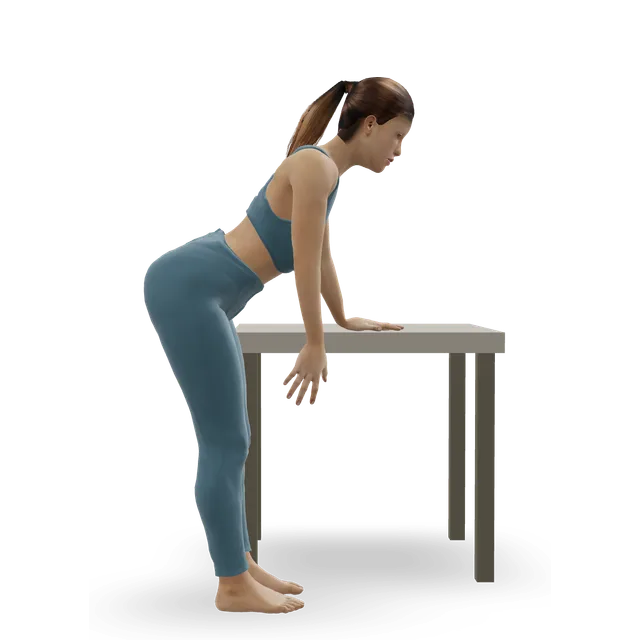
Pendulum exercise (Codman's pendulum) demonstrated on the 3D figure3D demoPendulum exercise (Codman's pendulum)Beginner · A bench or box

About 1 minute (10 small circles each way), 2 to 3 times a day · The move page's dose (editorial). It keeps the arm moving rather than restoring range, as the move page says

Harder: Table slide (seated forward reach)

Table slide (seated forward reach) demonstrated on the 3D figure3D demoTable slide (seated forward reach)Beginner · A bench or box

10 slow repetitions, 1 to 3 times a day · The move page's dose (editorial); an NHS physiotherapy leaflet gives a towel slide at 10 repetitions twice a day. In the very painful stage of a frozen shoulder, stay pain-free, as the move page says

Easier: Pendulum exercise (Codman's pendulum) · Harder: Overhead lat stretch at a bench (elbows on the bench)

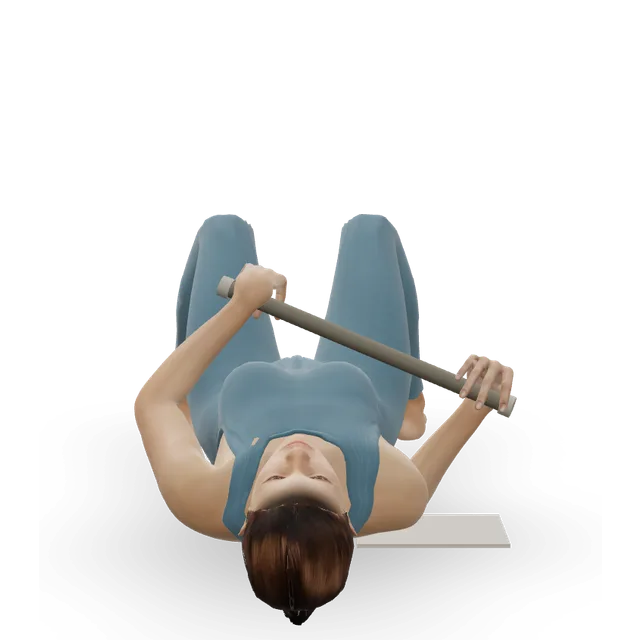
Stick-assisted external rotation (lying) demonstrated on the 3D figure3D demoStick-assisted external rotation (lying)Beginner · Other / check instructions

10 slow repetitions, pain-free, twice a day, if turning the arm outwards is stiff · The move page's dose for a very irritable shoulder (editorial)

Harder: Standing band external rotation

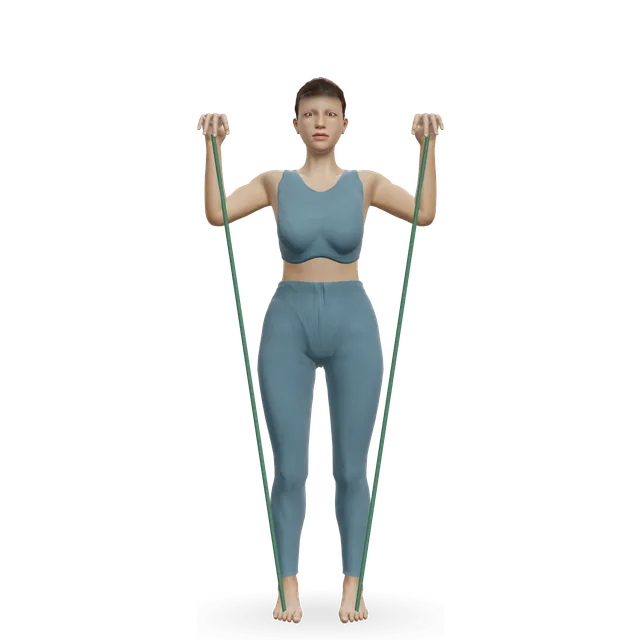
Standing band external rotation demonstrated on the 3D figure3D demoStanding band external rotationBeginner · A band + An anchor point

2 to 3 repetitions at a time with a light band, elbow at your side, building to 2 sets of 8 · NHS inform's pacing for shoulder exercises, if lifting the arm hurts but it moves fully; leave it until stage 2 with a frozen shoulder

Easier: Stick-assisted external rotation (lying) · Harder: Side-lying external rotation

Thoracic rotation demonstrated on the 3D figure3D demoThoracic rotationBeginner · No equipment

6 rotations each side, moving with the breath · The move page's dose

Easier: Side-lying open book · Harder: World's greatest stretch

Treadmill walking demonstrated on the 3D figure3D demoTreadmill walkingBeginner · Cardio machine

10 to 20 minutes on most days · As in our frozen shoulder guide (editorial), building towards the NHS's 150 minutes a week; walking outdoors counts the same

Harder: Treadmill jogging

Move on when: Pain is mostly 6 out of 10 or less, night pain comes and goes, and it hurts only at the end of the movement (our frozen shoulder guide's check, editorial).

Follow along: a timer, a cue and the next move, one step at a time.
Stage 2

Build: stretch the stiff directions and strengthen the rotator cuff

About weeks 2 to 12: stretches daily, and strength on 3 to 5 days a week. Gentle stretches that progress without a lasting flare, and the rotator cuff and shoulder-blade work from the trials.

Stick-assisted external rotation (lying) demonstrated on the 3D figure3D demoStick-assisted external rotation (lying)Beginner · Other / check instructions

3 to 5 holds of 20 to 30 s, once it is less irritable · The move page's dose (editorial)

Harder: Standing band external rotation

Cross-body shoulder stretch demonstrated on the 3D figure3D demoCross-body shoulder stretchBeginner · No equipment

3 holds of 30 to 60 s, twice a day, if the back of the shoulder feels tight and it doesn't pinch · The Swedish trial's stretch for the back of the shoulder. Skip it with pain on top of the shoulder at the end of the collarbone, as the move page says

Harder: Sleeper stretch

Standing band external rotation demonstrated on the 3D figure3D demoStanding band external rotationBeginner · A band + An anchor point

3 sets of 15, slow on the way back, pain up to 5 out of 10 · The Swedish trial's sets and repetitions; the UK GRASP trial did resisted outward rotation 5 days a week. With a frozen shoulder, 2 sets of 10 to 15 in a small range, as in our frozen shoulder guide (editorial)

Easier: Stick-assisted external rotation (lying) · Harder: Side-lying external rotation

Scaption raise demonstrated on the 3D figure3D demoScaption raiseBeginner · A dumbbell

3 sets of 15, thumbs up, to shoulder height, lowering over 3 s, with no weight or a light one · As in our impingement guide (editorial), modelled on the Swedish trial's lowering work

Easier: Band lateral raise · Harder: Smith machine upright row

Band row demonstrated on the 3D figure3D demoBand rowBeginner · A band + An anchor point

3 sets of 10 to 15, stopping 2 to 3 repetitions short of failure · The move page's dose (editorial)

Harder: Supported single-arm dumbbell row

Wall push-up demonstrated on the 3D figure3D demoWall push-upBeginner · A wall

2 sets of 10 in a small range · As in our shoulder pain guide (editorial). Move to a steeper angle if your shoulders complain, as the move page says

Harder: Push-up

Move on when: Pain is 3 out of 10 or less with no night pain, and lifting your arm to shoulder height is comfortable (our frozen shoulder and impingement guides' checks, editorial).

Follow along: a timer, a cue and the next move, one step at a time.
Stage 3

Full use: overhead, carrying and the gym

From about week 8 to 12, or once most of your range has come back: 2 or 3 sessions a week, then twice a week for good. Strength and range for reaching, lifting, carrying, swimming and the gym, and the twice-weekly strength work the NHS asks for. Sleep, dressing, driving, swimming and the gym come back by the written steps below.

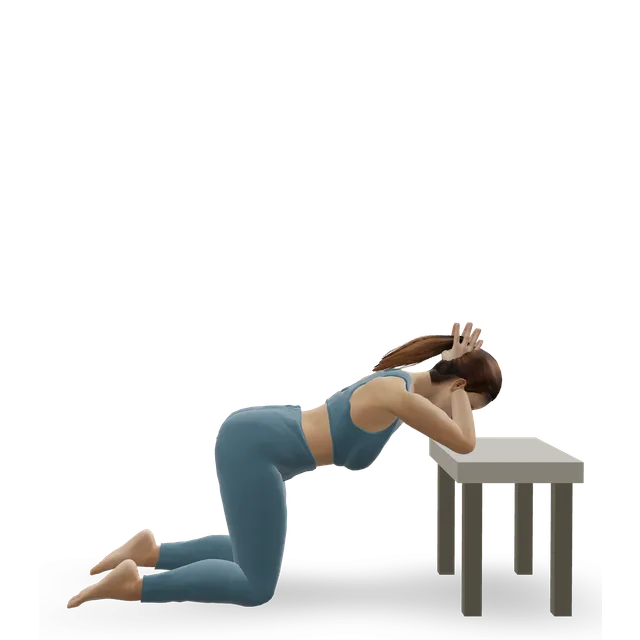
Overhead lat stretch at a bench (elbows on the bench) demonstrated on the 3D figure3D demoOverhead lat stretch at a bench (elbows on the bench)Intermediate · A bench or box

Hold 30 to 45 s, 2 to 4 times · The move page's dose, for the last of your overhead range. Keep your low back long, as the move page says

Easier: Overhead triceps stretch · Harder: Sots press

Shoulder press with a band demonstrated on the 3D figure3D demoShoulder press with a bandBeginner · A band

3 sets of 8 to 12 · As in our shoulder pain guide (editorial). After breast cancer surgery or a reconstruction, follow your team's advice on lifting your arm above shoulder height, as the move page says

Harder: Push press

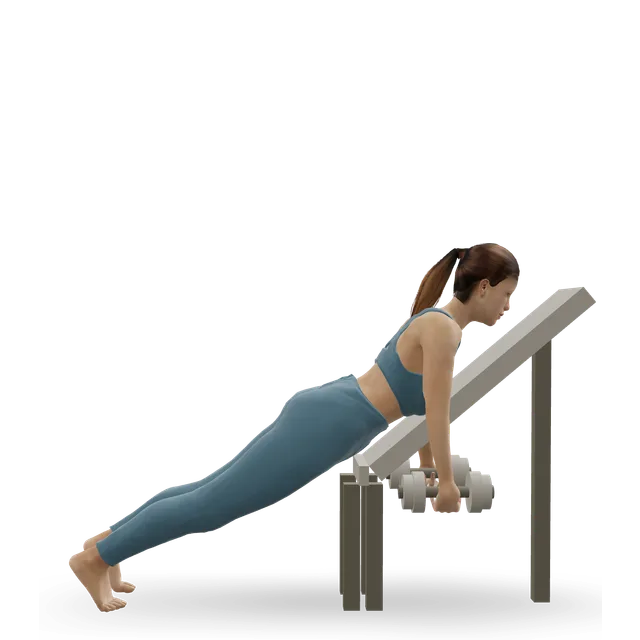
Incline push-up demonstrated on the 3D figure3D demoIncline push-upBeginner · A bench or box

3 sets of 8 to 12 · As in our shoulder pain guide (editorial). Check the bench or counter can't slide, as the move page says

Easier: Wall push-up · Harder: Push-up

Prone Y-T-W raises demonstrated on the 3D figure3D demoProne Y-T-W raisesBeginner · No equipment

2 to 3 rounds of 8 of each shape · As in our impingement guide (editorial). Keep the neck long and the face down, as the move page says

Easier: Wall angel · Harder: Bent-over reverse fly

Farmer's carry demonstrated on the 3D figure3D demoFarmer's carryIntermediate · A dumbbell + A kettlebell

3 walks of 20 to 30 m · Editorial: practice for shopping bags. With thumb base arthritis, start light with thick or padded handles, as the move page says

Harder: Suitcase carry

Move on when: Our suggestion: reaching, carrying, sleep and your usual activities feel normal for 2 weeks. Keep rotator cuff and shoulder-blade work going twice a week: the NHS suggests shoulder exercises for 6 to 8 weeks to stop pain returning, and our workout plans for women over 40 and over 50 are a long-term home.

Follow along: a timer, a cue and the next move, one step at a time.

What to change for now

The first days, pain relief and nights (written steps)

Our 3D figure can't show these. Each step names its source or is our suggestion.

  • 1. Keep using the arm within comfort: the NHS says don't stop using your shoulder completely, as that can stop it getting better. In the first 48 hours of a flare, NHS inform suggests moving the shoulder gently for 10 to 20 seconds every hour while you're awake.
  • 2. Pain relief: paracetamol regularly, an anti-inflammatory such as ibuprofen if paracetamol doesn't help and it suits you, and a heat pack wrapped in a tea towel for up to 20 minutes at a time (the NHS on frozen shoulder). Leave a few hours between heat or ice treatments (NHS inform). One NHS physiotherapy leaflet says not to use heat or ice packs "if you have poor skin sensation or poor circulation, if you are diabetic or over areas of infection".
  • 3. Nights: lie on your good side with a pillow under your neck, a folded pillow in front of you supporting the painful arm and another behind your back, or on your back with one or two pillows under the painful arm (Arthritis UK). If nights are very bad in the early stage of a frozen shoulder, ask a GP about an injection, which eases pain in the first months. No trial has tested sleeping positions.
  • 4. Don't make up your own strenuous exercises or use heavy gym equipment while it's painful (the NHS).

Sources 7, 41, 27, 6, 45, 28, 42

Dressing, reaching, carrying and work (written steps)

These come from Arthritis UK, NHS inform and Acas, except where a step is our suggestion.

  • 1. Reaching: keep your elbow bent and close to your side, with your palm facing the ceiling when you reach up, and bend your elbow to lower the arm (Arthritis UK). Keep things you use often between waist and shoulder height (our suggestion).
  • 2. Dressing: put the sore arm into a sleeve first and take it out last, and choose front-fastening clothes while the shoulder is stiff (our suggestion). An occupational therapist can help if dressing, washing or driving is hard (Arthritis UK).
  • 3. Carrying: use a trolley or a backpack, or split the load between two bags, and have heavy shopping delivered (Arthritis UK).
  • 4. Desk work: keep the keyboard and screen straight in front of you, use a headset rather than holding the phone with your shoulder, and move your shoulders and neck through their range regularly (Arthritis UK).
  • 5. Work: "You don't need to be symptom free before you consider returning to work" (NHS inform). Acas asks employers to consider changes for menopause symptoms, and employers must make reasonable adjustments for a diagnosed condition (Arthritis UK).

Sources 28, 6, 62

Driving, swimming and the gym (written steps)

These are our suggestions, built on NHS inform's and the NHS's advice.

  • 1. Driving: once you can turn the wheel fully and look over your shoulder without pain (our suggestion; NHS inform names driving among the hard tasks with a frozen shoulder).
  • 2. Swimming: start with breaststroke or backstroke, shorter sessions and a warm-up, and add front crawl as your overhead reach returns (our suggestion). NHS inform says avoid sports or heavy lifting until you have less discomfort and good movement.
  • 3. The gym: the stage 3 moves first, adding load in small steps, and no made-up strenuous exercises while it's painful (the NHS).

Sources 6, 27, 41

HRT, diabetes and thyroid checks (written steps)

These come from the NHS and NICE (the National Institute for Health and Care Excellence).

  • 1. Talk to your GP about your menopause symptoms and the options, including HRT, as a separate decision from your shoulder. The NHS says HRT tablets slightly raise the risk of blood clots and stroke, while patches, gels and sprays don't raise the clot risk, and NICE says the same about clots.
  • 2. With a stiff, painful shoulder and diabetes, keep up your regular diabetes check-ups (the NHS).
  • 3. If you're also tired, feeling the cold, gaining weight or low, ask about a thyroid check: NICE warns that thyroid symptoms can be mistaken for the menopause.

Sources 63, 57, 58, 7, 64

Positions to swap, and why

Habit or positionWhy it mattersInstead
Keeping the arm still in a slingThe NHS says keeping a frozen shoulder still will make the pain worse, and the UK FROST trial didn't allow braces.Gentle movement within comfort, starting with pendulums.Try: Pendulum exercise (Codman's pendulum)
Forcing stretches through strong pain, or having someone push the arm hardAn NHS physiotherapy leaflet says there is no point in forcing movements through pain: it won't work and it makes the pain worse.Stretch to mild discomfort and hold.Try: Stick-assisted external rotation (lying)
Making up strenuous gym exercises, or heavy pressing while it's painfulThe NHS advises against it for frozen shoulder and shoulder pain.The staged plan, starting with band rotations.Try: Standing band external rotation
Hanging from a bar while the shoulder is stiffIt loads a range you don't have yet (our suggestion, as in our frozen shoulder guide).Table slides now; overhead strength in stage 3.Try: Table slide (seated forward reach)
Sleeping on the sore sideNHS inform says frozen shoulder pain is often worse lying on the affected side.Your good side, with pillows supporting the sore arm.
Reaching up with a straight arm and the palm downArthritis UK says keeping the elbow bent and the palm up reduces the strain on a painful shoulder.Elbow bent and close to your side, palm up.
Pushing the sleeper stretch hardThe move page says it's easy to overdo, and to skip it with a currently painful shoulder.The cross-body stretch, gently.Try: Cross-body shoulder stretch
Starting HRT to fix the shoulderNo trial shows that it prevents or treats frozen shoulder or rotator cuff problems.A conversation with your GP about all your menopause symptoms.
Putting shoulder pain with chest, breathing or sweating symptoms down to the menopauseIt can be the heart.Call 999.
Waiting weeks with a new frozen shoulder and very bad nightsAn early steroid injection eases the pain in the first months.See a GP early.

Routines to follow

More moves for this area

Questions people ask

Can the menopause cause shoulder pain?

Shoulder pain is common around the menopause, but the causes are the same as at other ages, mostly the rotator cuff and frozen shoulder. Aches in many joints are reported more often in the menopause years, and frozen shoulder peaks then, but no study has shown that the menopause itself causes either.

Can the menopause cause frozen shoulder?

It typically affects women between 45 and 60, peaking at 56, and NHS inform lists being perimenopausal or menopausal as a risk factor. But the UK care pathway says a causal link has not been identified, and diabetes and thyroid problems are much clearer links.

Why is frozen shoulder so common around the menopause?

No one knows. The effect of falling oestrogen on the joint lining is a theory that hasn't been tested in people. Age, diabetes, thyroid disease and other conditions all play a part.

How long does a frozen shoulder last?

Often 1 to 3 years, sometimes longer; it improves most in the early months, and the NHS says the pain and stiffness will usually go away eventually. About 4 in 10 people still have some, mostly mild, symptoms after 4 years. Recovery can be slower with diabetes or thyroid problems.

Does HRT help or prevent frozen shoulder?

It hasn't been shown to. In one records study of 1,952 women, frozen shoulder was less common with hormone therapy, but the difference could be chance, and no trial has tested it. HRT is a decision about your menopause symptoms with a GP.

Can HRT cause frozen shoulder or tendon problems?

We found no evidence that it causes frozen shoulder. One large records study found slightly more rotator cuff tears in women taking HRT (39.2% against 37.9%), probably because the women taking it differed in other ways.

What does a frozen shoulder feel like?

A deep ache that is often worse at night and lying on it, with stiffness in every direction, especially turning the arm outwards to do up a coat or reach a back pocket. With rotator cuff pain, lifting the arm away from your body hurts, especially overhead, but it isn't stiff in every direction.

Could pain in my left shoulder be my heart?

Occasionally. Call 999 for chest pain that feels tight or squeezing, or chest pain that spreads to your arms, neck or jaw, especially with breathlessness, sweating or feeling sick, and get help from NHS 111 for pain or tightness that comes on with exertion and eases with rest. Left shoulder pain on its own, which changes as you move your arm, usually comes from the shoulder.

Why do my neck, shoulder blade and arm ache?

Pain from the neck can be felt in the shoulder, even without neck pain, especially with pins and needles or pain below the elbow. Pain between the shoulder blades usually comes from the upper back's muscles and joints, but with chest discomfort, breathlessness or sweating it needs a 999 call.

What exercises help shoulder pain in the menopause?

Gentle movement first, such as pendulum swings and table slides, then stretches for the stiff directions and rotator cuff strength, then full strength. Pain up to 5 out of 10 that settles by the next session is fine for strengthening, but frozen shoulder stretches should stay at mild discomfort. The plan on this page has 3D demos.

Can I prevent a frozen shoulder?

No proven way exists. Keeping up diabetes check-ups and staying active are sensible (our suggestion), and after one frozen shoulder, 6% to 17% of people get it in the other shoulder within 5 years.

Why does my shoulder hurt at night?

Night pain is typical of a frozen shoulder's painful stage, and of rotator cuff pain when you lie on it. Sleep on your good side with pillows supporting the sore arm, and take painkillers before bed if you need them. Night pain with weight loss or a past cancer needs a GP; in the US, call 911 where this page says 999.

Related exercise guides

Other pain guides

Sources

  1. Hopewell 2021 · Progressive exercise vs best practice advice, with or without steroid injection, for rotator cuff disorders: GRASP (RCT, Lancet)
  2. Walker-Bone 2004 · How common arm, elbow and shoulder disorders are in 9,696 working-age adults (population survey, Arthritis Rheum)
  3. Rupani 2025 · BESS patient care pathway: frozen shoulder (Shoulder & Elbow)
  4. American Academy of Orthopaedic Surgeons (OrthoInfo) · Frozen shoulder
  5. Kruse 2026 · Muscle and joint symptoms around the menopause in 93,021 women (systematic review and meta-analysis, JBJS Open Access)
  6. NHS inform · Frozen shoulder
  7. NHS · Frozen shoulder
  8. Kraal 2020 · The puzzling causes of frozen shoulder (scoping review, J Exp Orthop)
  9. Yoon 2018 · Shoulder pain before and around the menopause in 310 women (clinic study, Menopause)
  10. Salamh 2025 · Causes, risk factors, diagnosis and management of frozen shoulder: an international Delphi consensus (J Man Manip Ther)
  11. Navarro-Ledesma 2025 · Frozen shoulder, oestrogen, the thyroid and metabolism: a theory (narrative review, J Clin Med)
  12. Hand 2008 · Long-term outcome of frozen shoulder (cohort of 223 people, JSES)
  13. Zreik 2016 · Frozen shoulder and diabetes (meta-analysis of prevalence, Muscles Ligaments Tendons J)
  14. Dyer 2023 · Diabetes and the risk of frozen shoulder (systematic review and meta-analysis, BMJ Open)
  15. Chuang 2023 · Frozen shoulder and thyroid disease (meta-analysis of 10 studies, J Shoulder Elbow Surg)
  16. Teunis 2014 · Rotator cuff disease becomes more common with age (systematic review and pooled analysis, JSES)
  17. Yamamoto 2010 · Rotator cuff tears and their risk factors in 683 villagers in Japan (population study, J Shoulder Elbow Surg)
  18. Louwerens 2015 · Calcium deposits in the rotator cuff in 1,219 adults with and without shoulder pain (cross-sectional study, JSES)
  19. Lin 2026 · The menopause, high cholesterol and calcific tendinitis of the shoulder in the Taiwan Biobank (case-control study, Menopause)
  20. Wang 2025 · Shoulder pain in people with diabetes and in menopausal women in China (survey, J Orthop Surg Res)
  21. NHS · Angina
  22. NHS · Heart attack
  23. British Heart Foundation · Signs and symptoms of heart attacks in women
  24. van Oosterhout 2020 · Heart attack symptoms in women and men compared: 27 studies (systematic review and meta-analysis, J Am Heart Assoc)
  25. Canto 2012 · Heart attacks without chest pain by age and sex in 1,143,513 people (registry study, JAMA)
  26. El Khoudary 2020 · Menopause transition and cardiovascular disease risk (AHA scientific statement, Circulation)
  27. NHS inform · Shoulder problems
  28. Arthritis UK · Shoulder pain
  29. Requejo-Salinas 2025 · Neck or shoulder? Consensus on screening the spine in shoulder pain (Delphi study, Physical Therapy)
  30. NHS · Polymyalgia rheumatica (past its review date: reviewed April 2023, review due April 2026)
  31. Toyoda 2026 · The British Society for Rheumatology guideline for treating polymyalgia rheumatica (guideline, Rheumatology)
  32. Crew 2007 · Joint pain in 200 women taking aromatase inhibitors after breast cancer (survey, J Clin Oncol)
  33. NHS · Side effects of anastrozole
  34. Park 2026 · Radiotherapy for breast cancer and later frozen shoulder (insurance database study, Clin Breast Cancer)
  35. Launonen 2015 · How common breaks at the top of the arm bone are in a Finnish town (population study, Arch Osteoporos)
  36. Court-Brown 2001 · The epidemiology of proximal humerus fractures (1,027 fractures, Acta Orthop Scand)
  37. NHS · Broken arm or wrist
  38. Brealey 2020 · Surgery against early structured physiotherapy for frozen shoulder: the full UK FROST report (RCT, Health Technol Assess)
  39. NHS Lothian · Frozen shoulder: information for patients (leaflet, June 2026)
  40. Wong 2017 · Natural history of frozen shoulder: fact or fiction? (systematic review, Physiotherapy)
  41. NHS · Shoulder pain (past its review date: reviewed May 2023, review due May 2026)
  42. Challoumas 2020 · Comparison of treatments for frozen shoulder (systematic review and network meta-analysis, JAMA Network Open)
  43. Rangan 2020 · Physiotherapy with injection vs manipulation vs capsular release for frozen shoulder: UK FROST (RCT, Lancet)
  44. Hanchard 2020 · The UK FROST physiotherapy protocols (Physiotherapy)
  45. Calderdale and Huddersfield NHS Foundation Trust · Frozen shoulder (physiotherapy leaflet, review due December 2027)
  46. Winter 2026 · What NHS frozen shoulder leaflets advise: a review of 38 leaflets (Musculoskeletal Care)
  47. Holmgren 2012 · Specific exercise and the need for surgery in subacromial impingement (RCT, BMJ)
  48. Kuhn 2013 · Physiotherapy for worn full-thickness rotator cuff tears in 452 people (cohort study, J Shoulder Elbow Surg)
  49. Reinke 2026 · Hormone therapy and frozen shoulder (pilot study, Climacteric)
  50. Saltzman 2023 · Hormone therapy and frozen shoulder in one US health system (conference abstract, Orthop J Sports Med)
  51. Shah 2026 · Hormone therapy and coded shoulder soft tissue problems in US records (conference abstract, Orthop J Sports Med)
  52. Wittstein 2026 · Shoulder symptoms and hormone therapy in an online survey of 13,946 women (conference abstract, Orthop J Sports Med)
  53. Bcharah 2026 · Hormone replacement therapy and tendon injuries and repairs in women aged 45 and over (matched records study, Orthop J Sports Med)
  54. Nasr 2026 · Hormone replacement therapy and outcomes in 77 women with rotator cuff tears (cohort study, Arch ISPRM)
  55. Percin 2026 · Oestradiol and rotator cuff repair outcomes in 184 women aged 50 and over (cohort study, JSES Rev Rep Tech)
  56. Manno 2026 · Joint pain and the menopause (practice article, Menopause)
  57. NHS · Benefits and risks of hormone replacement therapy (HRT) (past its review date: reviewed February 2023, review due February 2026)
  58. NICE NG23 · Menopause: identification and management (recommendations, last updated April 2026)
  59. NHS · Physical activity guidelines for adults aged 19 to 64
  60. NHS inform · Exercises for shoulder problems
  61. Smith 2017 · Should exercises be painful in chronic musculoskeletal pain? (systematic review and meta-analysis, Br J Sports Med)
  62. Acas · Menopause at work: supporting staff through the menopause
  63. NHS · Symptoms of menopause and perimenopause
  64. NICE NG145 · Thyroid disease: assessment and management
  65. NHS · Dislocated shoulder
  66. NHS · Symptoms of a stroke
  67. NHS · Septic arthritis
  68. NHS · Temporal arteritis (giant cell arteritis) (past its review date: reviewed August 2023, review due August 2026)
  69. NHS · Vision loss
  70. NHS · Neck pain (past its review date: reviewed April 2023, review due April 2026)
  71. NHS inform · Neck problems
  72. NICE NG259 · Osteoporosis: risk assessment (2026)
  73. Breast Cancer Now · Joint and muscle pain during breast cancer treatment

Exercise education, not a diagnosis or treatment plan. It is written from the guidelines and studies listed above; review by a clinician is pending. If your pain follows an injury, is severe, is getting worse, or comes with any warning sign listed on this page, get it assessed. Health disclaimer.