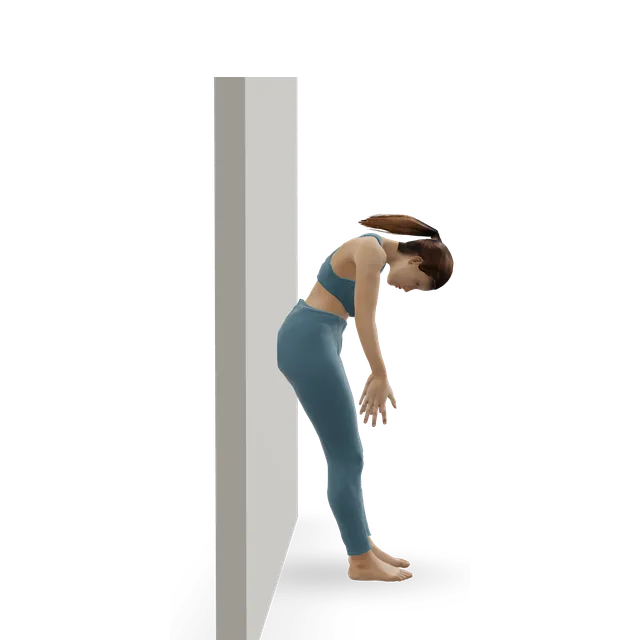
Pilates for your shoulders: strength and mobility, the shoulder blades, the neck and upper back, tight shoulders, and a class
Pilates can make your shoulders stronger and easier to move: the swan, swimming and Y-T-W raises work the muscles that steady your shoulder blades, the leg pulls and push-ups put weight through your arms in steps, and the mermaid and open book take your arms overhead and round. Lab studies show its arm work switches on the right muscles, and small trials found better shoulder-blade strength and, in some, better reach behind the back in older adults. It hasn't been shown to fix rounded shoulders.
This guide covers what makes a shoulder strong and mobile, tight shoulders and the neck at a desk (where strengthening has better evidence than stretching), the moves in steps, the reformer, who should change what, and a free 25-minute class. If your shoulder hurts, start with our Pilates for shoulder pain guide; for posture, our Pilates for rounded shoulders guide.
Steady shoulder blades, a working rotator cuff, weight on your hands built up in steps, and reach overhead. Pilates trains all four. This guide is for shoulders that work but feel weak, stiff or tight; if yours hurts, our Pilates for shoulder pain guide comes first.
In lab studies, Pilates arm work on the reformer and push-up plus moves worked the muscles that steady the shoulder blade, with heavier springs working them harder up to a point.
Small trials found better shoulder-blade strength and upper-body endurance. Reach behind the back improved in some trials of older adults, but not in the largest.
Tight tops of the shoulders are stiffer, not shown to be short. Stretches ease them for a while; strengthening the neck and shoulders had the stronger results for desk aches.
Posture is only weakly linked with shoulder and neck pain. Strengthening changes upper-back posture more than stretching, and Pilates hasn't been shown to fix rounded shoulders.
Shoulder or arm pain with chest pain is a 999 call. New weakness lifting the arm, or neck pain with pins and needles in an arm, needs a doctor the same day (see below).
The shoulder is a big ball on a small socket, steadied by the rotator cuff and carried on a shoulder blade that slides and turns on the ribs. The big movers (the deltoid, the lats and the chest) do the heavy work, and reaching overhead also needs the upper back to straighten. Our shoulder joint page has the anatomy.
How Pilates frames the shoulder
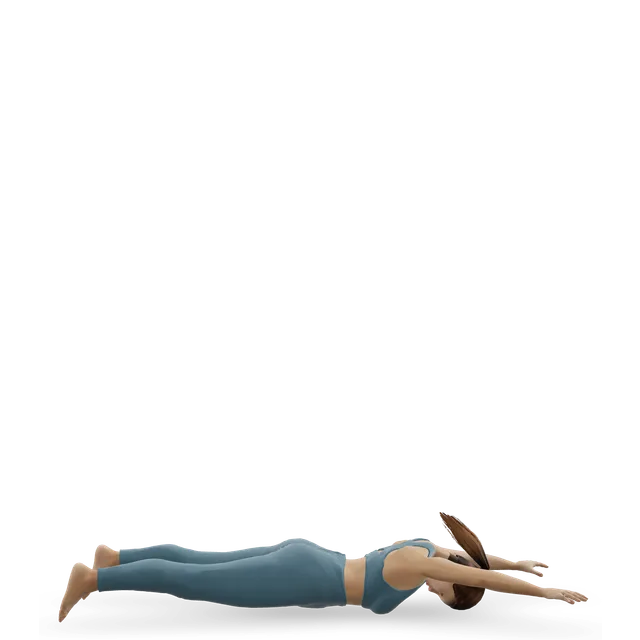
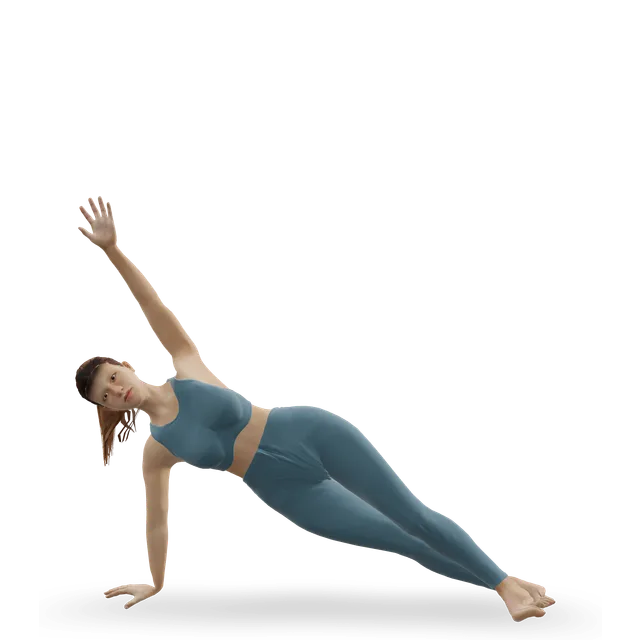
STOTT PILATES, a teacher-training school, makes "Scapular movement & stabilization" one of its five basic principles: "Stabilizing the scapulae is necessary during the initiation of every exercise." In the classical mat sequence the shoulders bear weight in the leg pulls, the side bend and the push-up, and work face down in the swan and swimming. On the reformer, arm work against springs is a large part of the repertoire.
A shoulder blade that moves or sits unusually is common in shoulder injuries, but a 2013 consensus says its exact role in causing them "is not clearly defined". In 419 athletes without symptoms, shoulder pain developed in 35% of those with it against 25% without, over 9 to 24 months.
In lab studies of muscle activity measured with electrodes (electromyography), face-down arm raises and side-lying turning out worked the lower and middle trapezius well without overworking the upper trapezius, and serratus anterior worked most when the arm turned upwards. In healthy men doing Pilates: heavier reformer springs raised shoulder-blade muscle activity until the heaviest brought compensation, the arm's angle changed which part of the trapezius worked most, push-up plus on one leg worked serratus anterior hardest, and swan variations worked the deltoid and trapezius.
In office workers with neck pain, the tops of the shoulders (the upper trapezius) were measurably stiffer: 11% stiffer in 16 women against 16 without pain, and in 88 office workers stiffness went with neck disability. These studies measured stiffness, not muscle length, and can't show which came first.
In 48 women with neck and shoulder muscle pain in mostly computer jobs, 10 weeks of specific neck and shoulder strength training cut their worst pain by about 79%, while cycling gave only a small, short-lived drop. Reviews of office workers agree that strengthening reduces neck pain, at low certainty.
In 96 office workers with long-term neck pain, neck and shoulder stretching twice a day, 5 days a week for 4 weeks, cut pain by 1.4 points on a 0 to 10 scale against an ergonomics leaflet alone, more in those who stretched 3 or more times a week.
Pilates at work: disability more than painMixed evidence
Across 12 randomised trials, Pilates at work reduced disability (a moderate effect) but not pain clearly. We read this review as a summary only, and the range of results it expects in a new workplace crossed zero, so the effect is uncertain. Another review of 23 studies found Pilates may reduce pain and disability in workers with long-term back or neck pain. The single trials compared Pilates with Pilates plus something else, not with no exercise. Our Pilates for office workers guide covers the working day.
People with and without shoulder pain have similar upper-back rounding across 10 studies, though sitting tall lets the arm lift a little further in the moment. Adults with neck pain had a little more forward head posture in snapshot studies, but in 686 people followed from 17 to 22, sitting posture didn't predict neck pain in men, and in women the upright sitters did worse.
Shoulder-blade strength and controlEmerging evidence
In 24 inactive young women, 12 reformer sessions raised shoulder-blade stabiliser strength more than in controls, in a pilot trial. In 19 healthy adults (not described as randomised), 12 weeks of Pilates twice a week reduced upper-back rounding in sitting and changed how the shoulder blade moved during full arm raises; shoulder range didn't change.
In 50 active middle-aged adults, 12 weeks of mat Pilates improved upper-body muscular endurance but not posture. In people over 60, upper-limb endurance rose by about 5 repetitions against controls, at very low quality.
Reach behind the back in older adults: mixedMixed evidence
The back scratch test (reaching one hand down behind your neck and the other up your back) improved with mat and apparatus Pilates in 48 active older women and in 104 older adults with type 2 diabetes. It didn't improve against no exercise in 110 women aged 60 and over, the largest trial. We read the positive trials as summaries only, and uncontrolled studies report gains too.
In reviews of trials, strength training improved range of movement as much as stretching did, so the strengthening moves in a Pilates class help your reach as well.
Across 23 trials in 969 healthy people, strengthening programmes improved upper-back and neck posture and stretching didn't, at moderate certainty. Pilates trials are small: in 45 girls, 6 weeks of Pilates didn't change rounded shoulders while corrective exercise did; in 40 young women, Pilates did no better than posture exercise; smaller trials found better head angles. A 2024 review found very low to low certainty that Pilates improves a shoulder angle. Our Pilates for rounded shoulders guide has the detail.
Shoulder pain: two small Pilates trialsMixed evidence
Ten sessions of clinical Pilates beat usual exercise for pain in 33 people, and adding Pilates to physiotherapy for rotator cuff pain raised strength but not arm function or pain in groups of 15. Shoulder-blade focused exercise helps shoulder pain a little in the short term, and in one review the benefit was gone by 3 months. Our Pilates for shoulder pain guide owns this.
Our searches found no Pilates trial in swimmers or other overhead athletes that measured the shoulder; the one study of 3 baseball pitchers measured trunk and leg tests. Trials of Pilates for shoulder impingement and of Pilates against yoga for rounded shoulders have finished or are under way, with no results posted.
Strength work on at least 2 days a week is the guideline, worked until you need a short rest. The posture trials ran 8 to 12 weeks, 2 or 3 times a week, and the desk trial 10 weeks.
Wall push-ups, then the knee hover, then knee planks and the side bend from your knees, then the leg pull front and the Pilates push-up, moving on when each step feels easy (our suggestion, following our Pilates for shoulder pain guide's ladder).
Make it harder over the weeks
A firmer band, more repetitions until the last few are hard, heavier springs, and planks and push-ups from your toes (our editorial starting point). For bigger strength gains, add pressing and rows with weights: our guide to strengthening your shoulders has the plan.
Move first
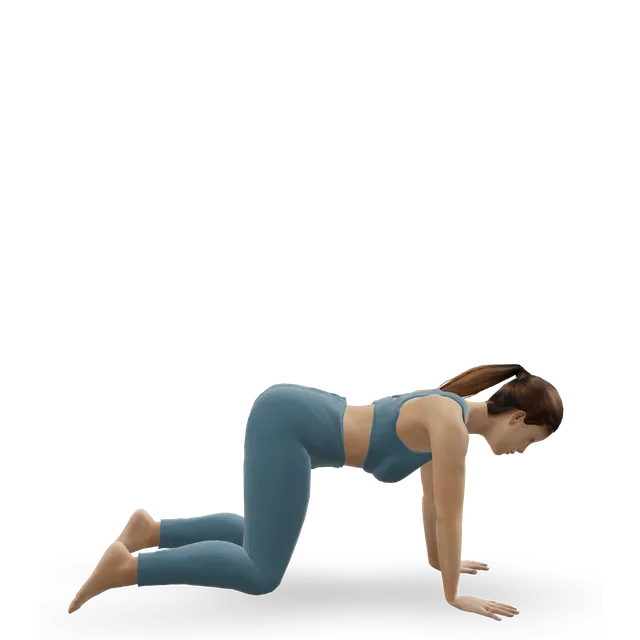
Breath reach (5 breaths, from the move page's dose), shoulder circles (3 slow circles each way with each arm, from the move page's dose), thoracic rotation (6 rotations per side, from the move page's dose) and cat-cow (8 waves, from the move page's dose). Work around any pinch rather than through it.
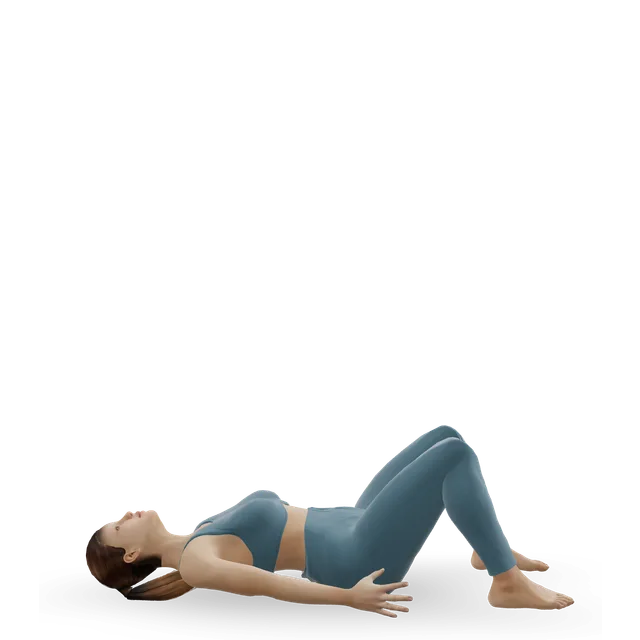
The swan (5 to 6 reps, from the move page's dose), Y-T-W raises (5 of each shape, our Pilates arm workout), prone swimmers (4 or 5 slow circles, 2 rounds, from the move page's dose), swimming (2 to 3 sets of 20 to 30 seconds, from the move page's dose), scapular push-ups (8 to 10 at the wall, our shoulder pain class) and wall angels (8 slow slides, our posture class).
Turning the arm out (12 to 15 each arm, our shoulder mobility and rotator cuff routine), band rows (3 sets of 10 to 15, from the move page's dose) and pull-aparts (2 sets of 12 to 15, our posture class). Anchor the band to something fixed, never a door handle.
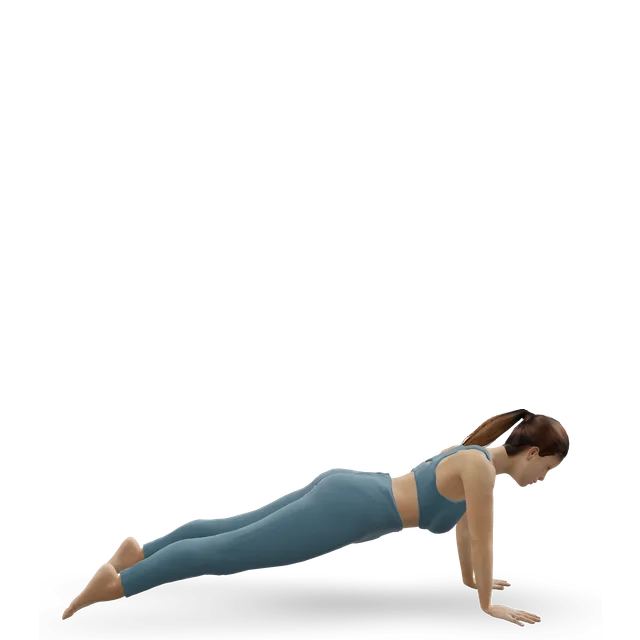
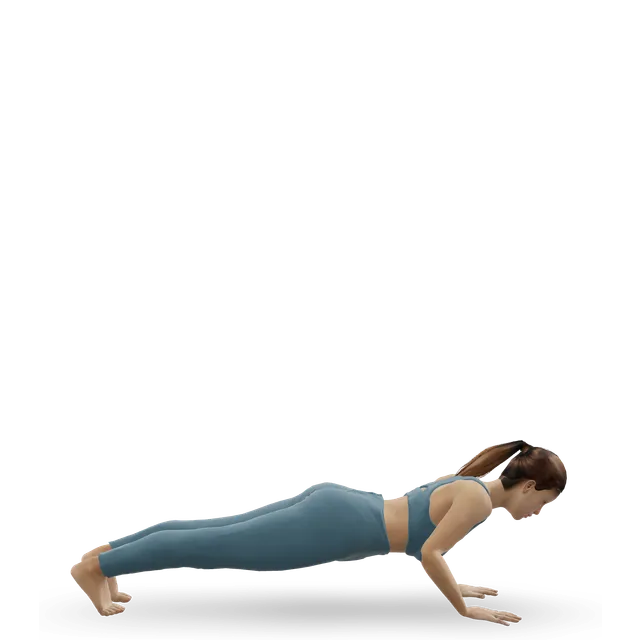
Wall push-ups (2 sets of 8, our shoulder pain class), the knee hover (3 holds of 15 to 30 seconds, from the move page's dose), the knee side plank (2 holds of 15 to 20 seconds, our arm workout), then the leg pull front and the side bend (3 to 5 each side, from the move pages' doses) and the push-up (2 to 3 rounds of 3, from the move page's dose). Fists or forearms if your wrists hurt.
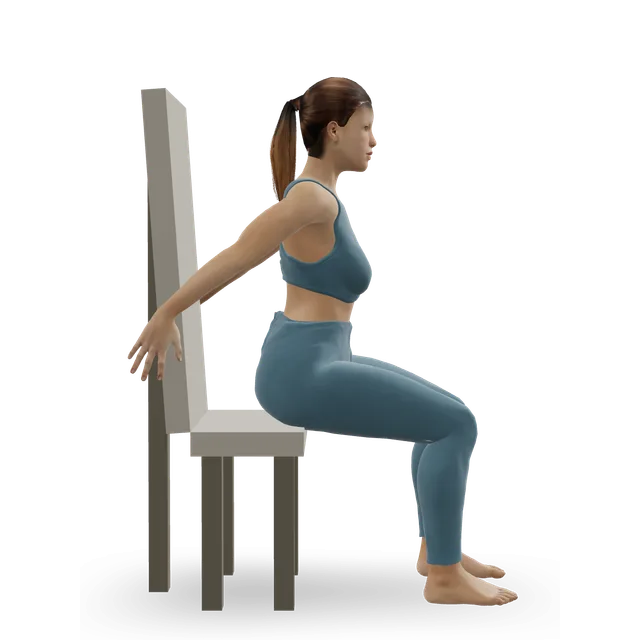
The mermaid (3 each direction, each side, from the move page's dose), the open book (8 to 10 slow openings each side, from the move page's dose) and the chair chest stretch (hold 15 to 30 seconds, 2 to 4 times, from the move page's dose), which is optional: chest stretches didn't change posture in trials.
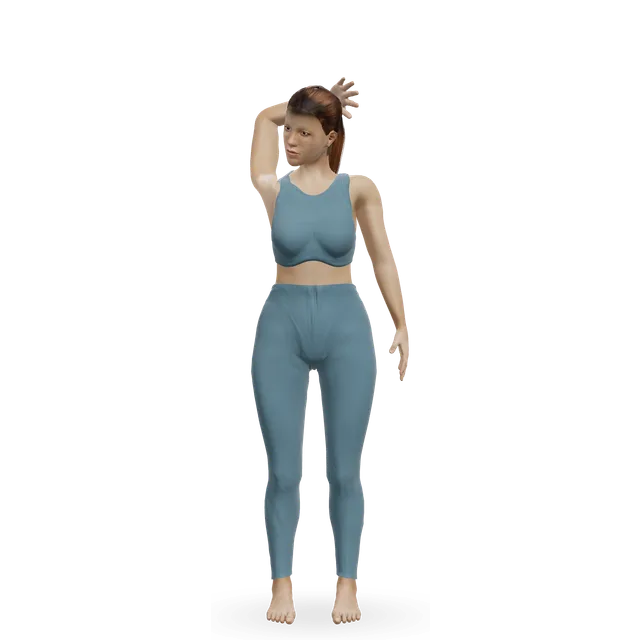
Chin tucks (8 slow reps with a 3 to 5 second hold, our posture class) and the seated upper-back lift (3 to 5 repetitions, each held 3 to 5 seconds, from the move page's dose) strengthen; the upper trap release (2 slow holds of 30 seconds per side, the move page's dose) and the levator scapulae stretch (hold 20 to 30 seconds, 2 to 4 times each side, from the move page's dose) ease tightness for a while. Let the hand's weight do the work; don't pull.
The order follows our Pilates for shoulder pain guide's ladder, and the knee hover's steps and dose come from its move page; for healthy shoulders, move on when each step feels easy (our suggestion).
Push-ups against a wall, hands at chest height, body in one line.
Push-up plus at the wall: keep your arms straight, let your chest sink between your shoulder blades, then push the wall away.
The knee hover: hands under your shoulders, knees under your hips; press the floor away so your shoulder blades sit wide, and lift your knees 2 to 5 cm for 15 to 30 seconds.
The knee side plank and knee push-ups.
When those feel easy: the leg pull front, the Pilates push-up and the side bend.
In 2,404 Australian adults without shoulder problems, lifting the arm forward fell from about 171 degrees in men in their early twenties to about 147 in their early seventies and 128 at 85 and over (women about 165, 145 and 124), and turning the arm out fell too, especially in women.
Reaching and stretching can win some backEmerging evidence
Upper-body stretching raised shoulder range 33% more than controls in 48 women aged about 75, and Thai yoga improved the back scratch test by 2 cm against controls in 39 older adults. Pilates trials were mixed: reach behind the back improved in some, not in the largest.
Take your arms overhead and behind you most days, within a comfortable range: reaching to high shelves, hanging washing, the mermaid and the open book (our suggestion). If your shoulder is stiff in every direction, especially turning out, with pain at night, see a GP or physiotherapist; our Pilates for frozen shoulder guide has its own plan.
Who should change what
A sore shoulder
Build up in steps from the wall, leave out the leg pulls, the kneeling side kick and control balance, and do the side bend as a knee side plank while it hurts, as our shoulder pain class advises. Do push-ups against a wall, and skip rocking, as their move pages say. Our Pilates for shoulder pain guide has the pain rule and the plan. After breast cancer surgery, start with your team's exercises; our Pilates for breast cancer guide has more.
A shoulder that slips, or after a dislocation
Keep your arm in front of you, avoid taking it out to the side and turning it back, and stop if it feels about to slip, as our shoulder pain class advises. Build up prone swimmers slowly, as its move page says.
Very flexible shoulders
Keep stretches mild and in the middle of your range, and favour the strengthening moves: the NHS says not to overextend your joints just because you can.
In planks, keep your elbows soft rather than locked and push the floor away rather than sinking into your shoulders, as the move pages advise.
With heart disease, keep breathing and ask your cardiac team before long holds; with heart failure, avoid planks; after heart surgery through the breastbone, follow your surgeon's advice before pushing, pulling or lifting with your arms, as the plank moves' pages say.
Osteoporosis, and pregnancy
With a high fracture risk, avoid or change side bending, as the side bend and mermaid pages advise, and keep twists smooth. Don't lie face down later in pregnancy; use an all-fours version of the face-down moves.
Moves this page leaves out
The roll-over, jack knife and control balance put weight on your shoulders and neck, so this page leaves them out (our suggestion). If the front of your shoulder hurts, skip rocking and the leg pull back, as their move pages say.
A sore neck in the ab moves
If your neck works harder than your abs, lower your head, rest it in your hands, and nod gently without jamming your chin down. Neck pain that persists, or spreads into an arm, is a reason to see our neck pain guide or a professional.
Arm work in the straps and on the long box adds spring resistance. In lab studies of healthy men, heavier springs raised shoulder-blade muscle activity until the heaviest brought compensation, and the arm's angle changed which part of the trapezius worked most. A teacher should set the springs.
Mat and apparatus Pilates improved arm strength tests equally in older women. The mat's leg pulls, side bend and push-up load the shoulders, and a band does the pulling work at home.
Our shoulders class covers the shoulder blades, the rotator cuff, weight on your hands and reach overhead. The posture and arm classes go further on one part, and the desk class suits a working day. If your shoulder hurts, use the class in our Pilates for shoulder pain guide instead.
Stiffness that eases as you move is usually nothing to worry about. These are the same warning signs as our shoulder pain, neck pain and rounded shoulders guides, word for word. This is general information, not a diagnosis. A&E means accident and emergency; in the US, call 911 for 999, and use your doctor's urgent line or urgent care for NHS 111.
Call 999
Call 999: shoulder or arm pain with chest pain that feels tight or squeezing, or chest pain that spreads to your arms, neck or jaw, especially with shortness of breath, sweating or feeling sick. It could be a heart attack.
Call 999: you suddenly can't fully lift both arms and keep them there, because of weakness or numbness in one arm, especially if one side of your face droops or you slur your words or sound confused. It could be a stroke. Call even if the signs have stopped.
Call 999 or go to A&E: after a fall or injury, your shoulder looks out of place or has changed shape, you cannot move your arm, or your shoulder is painful, bruised or swollen. Do not drive yourself, and do not try to put it back in yourself.
Call 999 or go to A&E: new problems walking, loss of bladder or bowel control, or a sudden loss of coordination, such as difficulty doing up buttons. These can be signs of pressure on the spinal cord.
Get help from NHS 111: pain or tightness in your chest, neck, shoulders, jaw or arms that comes and goes, often brought on by exercise, stress, emotion or cold and easing after a few minutes' rest. It can be angina, a sign of a heart problem. If you've been diagnosed with angina, get help from NHS 111 too if it feels worse than before, is happening more often, lasts longer or happens when you're resting.
New weakness lifting the arm, or a hot, swollen shoulder: the same day
Same day (GP or NHS 111): sudden weakness lifting the arm after an injury or fall. A rotator cuff tear caused by an injury needs urgent referral to a shoulder specialist. After a dislocation in anyone over 40, the rotator cuff should be checked: about 40% have a tear.
Same day (GP or NHS 111): the shoulder or arm is hot, swollen or red, or you have a high temperature (although not everyone has one) or feel unwell. A joint infection needs same-day care.
Same day (GP or NHS 111): sudden or very bad shoulder pain; you cannot move your arm; the arm or shoulder is badly swollen or has changed shape; pins and needles that do not go away; no feeling in the arm; the arm is hot or cold to the touch; pain that started after an injury such as a fall; or severe pain in both shoulders.
Neck pain with numbness or pins and needles in an arm: the same day
Same day (urgent GP appointment or NHS 111): severe neck pain that starts suddenly or gets worse quickly; heaviness or weakness in the arms or legs; pins and needles in an arm along with neck or arm pain; or pain between the shoulder blades.
Same day: clumsiness in your hands, or numbness, pins and needles or weakness in one or both arms, that is getting worse; problems with balance or walking since the neck pain started; or neck pain with a severe headache.
Arm weakness or numbness that keeps getting worse, severe pain that painkillers and rest do not touch, or an unexplained fever.
Pain that is getting worse or has not improved after 2 weeks of looking after it yourself, or it is very hard to move your arm. In many areas you can refer yourself to physiotherapy.
Your shoulder has partly or fully come out of joint, or you worry it might.
Pins and needles or a cold arm alongside neck pain, or a new loss of strength or feeling in the arm that you cannot explain (a possible nerve problem).
Neck pain or stiffness that has not eased after a few weeks, or after 8 weeks of looking after it yourself; painkillers are not helping; or you are worried. In many areas you can refer yourself to NHS physiotherapy.
No improvement after 6 weeks of exercise, or arm symptoms still there beyond 6 to 12 weeks.
See a GP if you have pain and stiffness for more than a week, especially if you're over 50, it's in both shoulders (often the neck and hips too) and the stiffness lasts longer than 45 minutes in the morning. It can be polymyalgia rheumatica.
Stop if neck circles bring on dizziness, light-headedness or tingling into an arm. Make the movement smaller, with separate turns and nods, and see a GP if it keeps happening. Our neck pain guide has more.
Chest pain or fainting while exercising: call 999
Call 999 if:
You get sudden pain or discomfort in your chest that doesn't go away; it can feel like squeezing or pressure, burning or indigestion.
The pain spreads to your left or right arm, or your neck, jaw, stomach or back.
You have chest pain and feel sweaty, sick, light-headed or short of breath.
Someone faints while exercising, can't be woken within 1 minute, or has chest pain or a pounding, fluttering or irregular heartbeat.
Call 999 or go to A&E (accident and emergency) straight away for severe difficulty breathing (gasping, choking or not able to get words out), a chest that feels tight or heavy, pain that spreads to your arms, back, neck and jaw, lips or skin turning very pale, blue or grey, or sudden confusion. If you're more short of breath than usual, or your heart is racing, fluttering or skipping beats, contact NHS 111.
You feel any pain or become unwell, as the NHS advises for its Pilates videos, and especially for chest pain or pressure, unusual breathlessness, dizziness or fainting. If you have a health problem, an injury or any symptoms, get advice from a healthcare professional, such as a GP, before you start.
The NHS advises getting advice from a healthcare professional first if you have a health problem, an injury or symptoms, or have recently had a heart attack or an operation.
"Tight shoulders only need stretching"Emerging evidence
Tight tops of the shoulders are stiffer, not shown to be short; strengthening cut office workers' neck and shoulder pain by about 79% in one trial, and reviews favour it. Stretching helps too, so do both.
In 45 girls, 6 weeks of Pilates didn't change rounded shoulders while corrective exercise did, and in 40 young women Pilates did no better than posture exercise. Strengthening changes upper-back posture; stretching doesn't.
"Bad posture causes shoulder and neck pain"Emerging evidence
People with and without shoulder pain have similar upper-back rounding, and sitting posture at 17 didn't predict neck pain at 22. Adults with neck pain had a little more forward head posture in snapshot studies.
"Pilates gives you long, lean shoulders and arms"Emerging evidence
Training doesn't lengthen muscles: stretching changed muscle fibre length only trivially across 19 studies. Shoulder shape comes from muscle and body fat.
"Pilates is too gentle to strengthen your shoulders"Emerging evidence
Reformer arm work and push-up plus work the shoulder-blade muscles hard in lab studies, and 12 reformer sessions raised shoulder-blade strength. Like any strength work, it needs to get harder over the weeks.
No trial supports avoiding overhead movement, as our guide to strengthening your shoulders explains. Build up the range you can control, and see our Pilates for shoulder pain guide if lifting hurts.
"You need a reformer for strong shoulders"Emerging evidence
The mat's leg pulls, side bend and push-up load the shoulders, and mat and apparatus Pilates improved arm strength tests equally in older women.
Yes, for strength and mobility: it trains the shoulder blades, puts weight on the arms in steps and takes them through their range. Small studies found better shoulder-blade strength and upper-body endurance, and lab studies show the right muscles working.
What are the best Pilates exercises for your shoulders?
The swan, swimming and Y-T-W raises for the shoulder blades; the knee hover, leg pull front and push-up for weight on the arms; and the mermaid and open book for reach. A light band adds rotator cuff work.
Is Pilates good for tight shoulders?
Yes: it combines strengthening, which had the stronger results for desk aches, with gentle stretches that ease tightness for a while. Tight tops of the shoulders are stiffer, not shown to be short.
Is Pilates good for your neck and shoulders?
For stiff, achy necks and shoulders at a desk, it can help: workplace Pilates reduced disability across 12 trials, though not clearly pain, and the effect is uncertain. Neck pain with numbness or weakness in an arm needs a doctor first.
Does Pilates improve shoulder mobility?
It can: reach behind the back improved in some trials of older adults, though not in the largest. Moving your arms overhead and round, as Pilates does, helps keep the range you have.
Does Pilates strengthen your shoulders?
Yes, modestly: 12 reformer sessions raised shoulder-blade strength in inactive women, and upper-body endurance improved in a 12-week trial. Make it harder over time with firmer springs or bands and harder planks.
Can Pilates fix rounded shoulders?
It hasn't been shown to: in small trials it changed rounded shoulders no more than posture exercise, and in one not at all. Strengthening changes upper-back posture more than stretching; our Pilates for rounded shoulders guide has the detail.
How often should I do Pilates for my shoulders?
Two or three times a week; the posture and desk trials ran 8 to 12 weeks. Strength work on at least 2 days a week is the NHS guideline.
Is reformer Pilates good for your shoulders?
It can be: spring resistance raises shoulder-blade muscle work, though very heavy springs brought compensation in lab studies. A teacher should set the springs, and the mat and a band do the same job.
Can Pilates hurt your shoulders?
Weight on the arms and arms-behind moves can irritate a sore shoulder, so build up in steps and skip the leg pulls and rocking while it hurts. Our shoulder pain after Pilates guide covers what to change.
Why are my shoulders stiffer as I get older?
Range falls with age: in one large study, lifting the arm forward fell by about 40 degrees from the twenties to the eighties. Regular reaching and stretching can win some back; in one trial, stretching raised older women's shoulder range 33% more than controls.
When should I see a doctor about my shoulder?
Call 999 for shoulder or arm pain with chest pain. Get help the same day for sudden weakness lifting your arm after a fall, or neck pain with pins and needles in an arm, and see a GP if pain isn't better after 2 weeks.
Exercise education, not a personal prescription, and clinical review of these guides is pending. If you are pregnant, have a health condition or have had recent surgery, check with a doctor, midwife or physiotherapist before starting, and stop for sharp or increasing pain. Health disclaimer.