Pain guide · Back pain

Upper back pain in men: desk work, lifting and the gym, ankylosing spondylitis, and heart signs

Pain between or around the shoulder blades is less common than low back or neck pain, and less common in men than in women: in one large Danish study, about 1 in 10 men had it at 40. Most of it comes from the muscles, small joints and ribs of the upper back, after long, still spells at a desk, a heavy lift or a hard gym session, and posture is less to blame than people think. A few causes lean towards men: ankylosing spondylitis in young men, whose stiffness eases with exercise, spinal fractures from thin bones from 50, and, rarely, a collapsed lung or a torn aorta.

This guide starts with the warning signs: upper back pain with chest pain or pressure, breathlessness, sweating or feeling sick, sudden tearing pain, or sudden sharp pain with breathlessness needs 999 straight away. Then it sorts the causes by where and when it hurts, covers the desk, lifting at work and the gym, says when to see a general practitioner (GP) or contact the National Health Service's 111 line (NHS 111), and gives a three-stage plan with 3D demos.

When to get help first

Exercise is for pain that has been checked or is clearly mild and settling.

Get urgent medical help if

  • Call 999 or go to A&E: back pain with chest pain, or back pain that started after a serious accident, such as a car crash.
  • Call 999: sudden pain or discomfort in your chest that does not go away (it can feel like squeezing or pressure, burning or indigestion); pain that spreads to your left or right arm, or your neck, jaw, shoulder, stomach or back; or chest pain and you feel sweaty, sick, light-headed or short of breath. It could be a heart attack. Don't drive yourself to A&E.
  • Call 999: you've been diagnosed with angina and have chest pain that does not stop after resting for a few minutes or after taking your angina medicine.
  • Call 999: sudden chest or back pain that can feel like something being torn inside, and causes shortness of breath, and problems with walking, vision and speaking (the NHS's wording, on its costochondritis page). It can be a tear in the wall of the body's main artery (an aortic dissection). Don't drive yourself to A&E.
  • Call 999 or go to A&E if breathing suddenly becomes difficult, if pain in your chest or upper back comes on suddenly with breathlessness or a very fast heartbeat, or if someone passes out. These are the NHS's signs of a blood clot in the lungs (a pulmonary embolism) or another serious condition. Don't drive yourself.
  • Call 999: sudden chest pain or discomfort, or chest pain with feeling sweaty, sick, light-headed or breathless. A collapsed lung (pneumothorax) causes a sudden, sharp, stabbing pain in the chest or shoulder that gets worse when you breathe in, with breathlessness; it is more common in people aged 15 to 34, people who smoke, and tall, thin people.
  • Call 999: sudden, severe pain in the tummy or back, which can come with breathlessness, pale or grey skin, or collapse. It can be a burst abdominal aortic aneurysm, most common in men aged 65 or over and in people who smoke or used to smoke.
  • Call 999 or go to A&E: you have sudden, severe pain in your tummy; pain that spreads from your tummy to your back, and you're being sick; your temperature is very high, or you feel hot, cold or shivery; or your skin or the white part of your eyes looks yellow. These can be signs of a problem with gallstones.
  • Call 999 or go to A&E: new problems walking, loss of bladder or bowel control, or a sudden loss of coordination, such as difficulty doing up buttons. These can be signs of pressure on the spinal cord.
  • Call 999 or go to A&E: loss of feeling or numbness around the genitals or bottom, new trouble peeing or controlling your bladder or bowels, changes in genital sensation during sex or problems with erections or orgasm, or pain, tingling, weakness or numbness in both legs. These are signs of cauda equina syndrome, which needs treating in hospital urgently. Don't drive yourself.
  • Same day (GP or NHS 111): back pain and you feel hot, cold, shivery or generally unwell, or severe pain that starts suddenly or is getting worse quickly.
  • Same day: you have or have had cancer, and new back pain that is severe and doesn't let up, is getting steadily worse, is worse at night and disturbs your sleep, is worse when you cough, sneeze or strain, or comes with tenderness over the spine. Contact your cancer team or GP urgently. With cancer, new weakness, difficulty walking, numbness or bladder or bowel problems are an emergency.
  • Get help from NHS 111: pain or tightness in your chest, neck, shoulders, jaw or arms that comes and goes, often brought on by exercise, stress, emotion or cold and easing after a few minutes' rest. It can be angina, a sign of a heart problem. If you've been diagnosed with angina, get help from NHS 111 too if it feels worse than before, is happening more often, lasts longer or happens when you're resting.
  • Same day (urgent GP appointment or NHS 111): pain in your tummy, often in the middle or just under the ribs on the right, that lasts longer than 30 minutes; it may spread from there to your side or shoulder blade. It can be gallstones.
  • Same day (urgent GP appointment or NHS 111): severe neck pain that starts suddenly or gets worse quickly; heaviness or weakness in the arms or legs; pins and needles in an arm along with neck or arm pain; or pain between the shoulder blades.
  • A burning, tingling or painful patch of skin on one side of your back or chest, with or without a rash: get advice from a pharmacist or NHS 111 as soon as possible. Shingles can cause pain a few days before the rash appears, and rarely without one. Try to see a pharmacist within 3 days of the rash appearing.

See a doctor or physiotherapist if

  • Pain at the top of the back, between the shoulders, rather than in the lower back.
  • Back pain that hasn't improved after a few weeks of looking after it at home, stops you doing day-to-day activities, worries you, or you're struggling to cope.
  • Pain that doesn't improve with rest or is worse at night, or pain that is worse when you sneeze, cough or poo.
  • Unexplained weight loss, or a lump, swelling or change in the shape of your back.
  • Upper back stiffness that is worse in the morning and at night and eases with exercise, with pain where the ribs join the spine or breastbone, or a deep breath that is hard to take, especially if it started before 45: see a GP. It can be ankylosing spondylitis.
  • Back pain and stiffness that persists in a teenager or young adult. Ankylosing spondylitis tends to start at that age and can affect the whole spine.
  • Sudden new back pain after a minor fall, lift, cough or sneeze, from 50 or past the menopause, or if you take long-term steroid tablets; or height loss, a curved spine or a change in posture: see a GP. It can be a spinal fracture.
  • You're 50 or over, or past the menopause, and have broken a bone in a fall from standing height or less, or you take steroid tablets long term: ask your GP about a fracture risk assessment. NICE recommends offering a bone density (DXA) scan after a broken hip or spine from thin bones, or another major fragility fracture, such as a broken wrist or shoulder, in the last 2 years.
  • If you're a man having hormone treatment for prostate cancer, ask your GP about a fracture risk assessment.
  • You are 60 or over with bone pain in your hips, back, ribs or shoulders that won't go away, especially with tiredness, feeling very thirsty or weight loss: see a GP. The National Institute for Health and Care Excellence (NICE) asks GPs to offer blood tests for myeloma in people 60 and over with persistent bone pain.
  • Pins and needles or a cold arm alongside neck pain, or a new loss of strength or feeling in the arm that you cannot explain (a possible nerve problem).

Where does it hurt?

Location narrows the likely causes; it does not diagnose.

An ache or stiffness across or between the shoulder blades, worse after long, still spells and easing when you move

Usually the muscles and small joints of the upper back. This guide's plan covers it; our general upper back guide has more.

Read: Upper back pain →
Upper back pain after a day at a desk, in a van or on screens

Usually tired muscles after long, still spells. Our sitting guide covers the desk set-up and breaks.

Read: Upper back pain from sitting →
A sharp twinge during a bench press, row, deadlift or carry, or an ache across both sides the next day

Usually a strained muscle or ordinary soreness. This guide's written steps cover the gym; our deadlift guide covers the low back.

Read: Back pain after deadlifts →
Under or around one shoulder blade, right or left

Often the muscles, the neck or the shoulder. Our shoulder blade guide maps both sides, including the organs that can be felt there.

Read: Pain under the shoulder blade →
Shoulder-blade pain with pins and needles, burning or weakness in one arm

Possibly a trapped nerve in the neck. Weakness or tingling that is getting worse needs a same-day check, as the warning signs say.

Read: Pinched nerve in the neck →
A tender spot over a rib at the back, or pain when you breathe in

Often a rib joint or a strain. Our breathing guide covers which breathing pains need urgent help.

Read: Upper back pain when breathing →
Stiffness in the back that is worst in the morning, wakes you in the second half of the night and eases with exercise, starting before 45

Possibly ankylosing spondylitis, which can also cause pain where the ribs meet the breastbone. See a GP. Our exercise guide for ankylosing spondylitis covers the daily routine.

A teenager's or young man's upper back that is rounded and stays rounded when he stands tall

Possibly Scheuermann's disease, diagnosed about twice as often in boys and men. Our Scheuermann's guide covers it.

Read: Scheuermann's disease →
Sudden pain in the upper or middle back after a minor fall, lift, cough or sneeze, from 50, or height loss

Possibly a spinal fracture from thin bones: see a GP, as the warning signs say. Our spinal compression fracture guide covers recovery.

Read: Spinal compression fracture →
The middle of the back, below the shoulder blades

Our middle back guide covers it.

Read: Middle back pain →
Upper back pain with chest pain or pressure, breathlessness, sweating or feeling sick

Possibly the heart: call 999, as the warning signs say.

Sudden tearing chest or back pain, or sudden sharp chest or shoulder pain with breathlessness

Rarely a torn aorta or a collapsed lung, both more common in men: call 999, as the warning signs say.

Pain under the right ribs or in the middle of the tummy for more than 30 minutes, sometimes into the right shoulder blade

Possibly gallstones: get an urgent GP appointment or NHS 111, as the warning signs say.

A burning or tingling patch on one side of the back or chest, then a rash

Possibly shingles: see a pharmacist within 3 days of the rash.

Upper back pain in a woman

Our upper back pain in women guide covers desk work, bra fit, pregnancy, the menopause and heart signs in women.

Read: Upper back pain in women →
The low back, in a man

Our lower back pain in men guide covers lifting at work, the kidneys, the prostate and an aneurysm.

Read: Lower back pain in men →

Understand it

Less common than low back or neck pain, and less common in menEmerging evidence

In a Danish study of 34,902 adults, 13% had upper or middle back pain in the past year, against 43% for the low back and 32% for the neck. At 40, about 10% of men had it against 20% of women, and men more often had short spells of a few days. It didn't climb with age. Across 33 population studies the figures vary widely (3.5% to 34.8% a year), because studies define it differently.

In working adults it goes with heavy workloads, ergonomic problems at work, dull tasks, long hours driving and mental pressure. These are links, not proven causes, and nothing suggests men's backs are weaker or stronger.

Sources 1, 2, 3

Posture is less to blame than people thinkMixed evidence

In 686 young Australians, how a young man sat at 17 didn't predict neck pain at 22. In office trials, adjusting the workstation or giving people sit-stand desks didn't reduce arm or upper-body pain; in 756 UK council workers, sit-stand desks cut sitting by about an hour a day, but upper-body aches fell in every group alike. Most of this evidence is about the neck, and much of it is from women.

NHS inform puts it plainly: "Although your posture doesn't need to be perfect, try and move often so you don't stay in the same position for too long."

Sources 4, 5, 6, 7

Lifting, the gym, the ribs and the neckEmerging evidence

Men made up 82.3% of the weight-training injuries seen in US emergency departments, and men's injuries were more often in the upper trunk (26.8% against 18.4% in women), mostly strains and sprains. Lifting sports are still low-risk: weightlifting and powerlifting cause about 1 to 4 injuries per 1,000 hours of training, low next to contact sports.

A rib joint beside the spine causes "a deep, dull ache, and pressure sensation" over the joint, in a small study of 8 volunteers. The NHS describes a chest wall strain as starting after an injury or exercise, worse when you breathe in and better when you rest the muscle. Rowers can get stress injuries of the ribs. A trapped nerve in the neck can be felt at the shoulder blade, sometimes before the arm.

Sources 8, 9, 10, 11, 12, 13

Ankylosing spondylitis: stiffness that eases with exerciseStrong evidence

Ankylosing spondylitis (AS) is the form of axial spondyloarthritis that shows on X-rays, and about 70% of people with it are men. The form that doesn't show on X-rays is about as common in women as in men, so the National Institute for Health and Care Excellence (NICE) says axial spondyloarthritis "affects a similar number of women as men". The NHS says AS "usually first starts to develop between 18 and 40", and diagnosis takes about 6 to 8 years on average, longer in women.

The pain "gets better with exercise, but does not improve or gets worse with rest", is worse in the morning and at night, and can cause pain where the ribs join the breastbone, making a deep breath hard. Experts' criteria add a slow start before 40 and pain at night; the Berlin criteria add morning stiffness of more than 30 minutes, waking in the second half of the night and pain switching between the buttocks. In 708 people with recent inflammatory back pain, 44.6% had chest wall pain.

NICE's referral rule for suspected axial spondyloarthritis is written for low back pain that started before 45 and has lasted more than 3 months; there is no separate rule for the upper back. Upper back stiffness with these features still needs a GP.

Sources 14, 15, 16, 17, 18, 19, 20

Scheuermann's disease in boys and young menMixed evidence

In about 35,000 Danish twins, Scheuermann's was diagnosed in 3.6% of men and 2.1% of women, close to 2 to 1. On the X-rays of 2,753 Dutch adults it was only slightly, not significantly, more common in men (4.5% against 3.6%), so boys may be noticed more often. It is a sharp, stiff curve that stays when standing tall; the NHS says exercises help pain and stiffness "But they will not improve the curve".

Sources 21, 22, 23

Men break their spines tooStrong evidence

Across 19 European countries, squashed vertebrae showed on the X-rays of 12% of both men and women aged 50 to 79. New spinal fractures happened at about half the women's rate (5.7 against 10.7 per 1,000 a year). About 1 in 5 men over 50 will break a bone because of osteoporosis, the Royal Osteoporosis Society says, and a third of the UK's 549,000 fragility fractures a year are in men. Most spinal fractures are never diagnosed.

Risks in men include long-term steroid tablets, heavy drinking, smoking and low testosterone, including "some prostate cancer drug treatments". A spinal fracture can cause sudden pain after a minor fall, lift, cough or sneeze, height loss or a new curve. These fractures are "stable" and "do not cause paralysis". People with ankylosing spondylitis are more prone to fractures, and NICE asks them to get checked after any fall.

Sources 24, 25, 26, 27, 28, 29, 15

The heart, felt in the upper backStrong evidence

Upper back pain with chest pain or pressure, breathlessness, sweating or feeling sick needs 999. The NHS angina page lists pain that "spreads to your left or right arm, or your neck, jaw, shoulder, stomach or back" among its 999 signs, and says angina is more likely in "a man aged 45 or over". The British Heart Foundation (BHF) names the upper back too.

Chest pain is still the commonest heart attack symptom in men (79% across 27 studies), but in one US registry 30.7% of men had none. Pain between the shoulder blades is reported more by women: women had about twice the odds of it in two analyses. Pain that changes when you move or press on the back, with none of the heart signs, points to the back.

Sources 30, 31, 32, 33, 34, 35

The aorta and the lungs: rare, but 999Strong evidence

A tear in the body's main artery (aortic dissection) is rare: about 6 per 100,000 people a year in Oxfordshire, average age 72, and about 1.5 to 2 times more common in men. Uncontrolled high blood pressure is the main risk that can be treated. There is no NHS page for it; the NHS describes it on its costochondritis page as "sudden chest or back pain that can feel like something being torn inside".

A collapsed lung (pneumothorax) is about 2.3 times more common in men in England, most often at 15 to 34, in people who smoke and in tall, thin people, the charity Asthma + Lung UK says. It causes "a sudden, sharp stabbing pain in your chest or shoulder" that is worse breathing in, with breathlessness. Fewer than 1 in 2,000 people go to hospital with one each year.

Sources 36, 37, 38, 39, 40, 41, 42

Other causes, and how rare they areStrong evidence

Gallstone pain is just under the right ribs or in the middle of the tummy, lasts more than 30 minutes and "may spread from here to your side or shoulder blade", NHS inform says. Shingles starts with tingling or pain in one patch on one side, with a rash a few days later; it becomes more common after 50.

Cancer is a rare cause of upper back pain. New back pain with a past cancer, especially if it is constant, getting worse, worse at night or with tenderness over the spine, needs an urgent check, NICE says, and it asks for blood tests for myeloma in people 60 and over with persistent bone pain. Bony bridges along the spine (diffuse idiopathic skeletal hyperostosis, DISH) are more common in older men and with type 2 diabetes, and can stiffen the upper back.

Sources 43, 44, 45, 46, 47, 48, 49, 50, 51, 52

When a scan or test helpsStrong evidence

"For most back pain problems, you'll not normally need an X-ray or MRI scan", NHS inform says, though the NHS asks you to see a GP for pain "coming from the top of your back (between your shoulders)". Disc and joint changes on a magnetic resonance imaging (MRI) scan of the upper back range from almost no one to most people depending on how they're defined, and only 2 studies have tested whether they track pain.

Tests answer specific questions. A suspected spinal fracture needs a spine X-ray or a spine check at a bone density (DXA) scan; NICE suggests this for men 70 and over, and for younger men with unexplained back or rib pain or height loss of more than 4 cm. Suspected axial spondyloarthritis needs blood tests (normal results don't rule it out), then an X-ray and MRI. Heart pain needs an electrocardiogram (ECG) and blood tests; a torn aorta needs a scan in hospital, and a normal ECG doesn't rule it out.

Sources 7, 53, 54, 55, 26, 56, 15, 57, 32, 38

How it usually goesEmerging evidence

Back pain "often improves on its own within a few weeks", the NHS says, and NHS inform suggests talking to a healthcare professional if it hasn't improved within 6 weeks. In a trial of 143 adults with long-standing upper back pain, every group improved over 12 months, whatever the treatment. Ankylosing spondylitis is long-term, but treatment helps the symptoms and helps "delay its progression". No one can promise a timescale.

Sources 53, 58, 59, 60

What helps, and how strong the evidence is

Strength work for the shoulder blades, borrowed from neck and shoulder trialsEmerging evidence

No trial has tested exercise for upper back pain in men. In 198 workers (174 women, 24 men), 2 or 12 minutes a day of elastic band training, 5 days a week, cut neck and shoulder pain by about 1.4 points out of 10 over 10 weeks. A workplace programme in 138 people with neck and upper back pain cut how many reported pain, in a weak trial design. This evidence is borrowed from neck and shoulder pain, mostly in women.

Sources 61, 62

Breaks and set-up, rather than a perfect postureEmerging evidence

The Health and Safety Executive (HSE) says "5 to 10 minutes every hour is better than 20 minutes every 2 hours", and gives set-up steps: the top of the screen level with your eyes, the keyboard just below elbow height, and the shoulders relaxed. Trials of desk changes and sit-stand desks didn't reduce upper-body pain, so these are comfort steps rather than a tested treatment.

Sources 63, 64, 5, 6, 7

Lifting: change the task, not stop liftingStrong evidence

Across 9 trials with 20,101 workers, lifting training on its own didn't prevent back pain (moderate quality, mostly the low back). The HSE says good technique "is not a substitute" for lifting aids and better tasks, and employers must avoid or reduce risky handling; the law sets no weight limits. Even with thin bones, the UK osteoporosis consensus asks for safe lifting rather than "don't lift".

Sources 65, 66, 67, 68

Manipulation and braces add littleEmerging evidence

In the one full-size trial of upper back pain (143 adults), spinal manipulation did no better than a sham treatment at any point to 12 months, though everyone improved. Manipulation of the upper back gives a little short-term help for neck pain, on very low to moderate certainty evidence. For low back pain, NICE allows manual therapy only alongside exercise, and says "Do not offer belts or corsets". No trial has tested a posture brace for upper back pain.

Sources 59, 69, 70

Ankylosing spondylitis: exercise and medicines, with a specialistStrong evidence

NICE asks for referral to a specialist physiotherapist for a structured exercise programme of stretching, strengthening and posture work, deep breathing, spinal extension, movement for the whole spine and aerobic exercise. It offers an anti-inflammatory painkiller (NSAID) at the lowest dose that works, and biological medicines if those don't control it. Our exercise guide for ankylosing spondylitis turns this into a daily routine.

Sources 15, 60

With thin bones: back-muscle exercise and safe liftingStrong evidence

The UK osteoporosis consensus recommends back-strengthening exercises "repeated 3-5 times and held for 3-5 s at least twice a week", strength on 2 or 3 days a week, and "how to" advice: a hip hinge and a straight upper back for lifting, and modifying sustained or end-of-range forward bending. These are consensus recommendations. After a spinal fracture, the UK guideline says routine bracing "cannot be recommended" and advises the weakest painkiller that works for the shortest time.

Sources 68, 26

Heat, staying active and painkillersStrong evidence

The NHS says stay active, use a heat pack wrapped in a tea towel for stiffness or spasm, and don't stay in bed for long. It suggests anti-inflammatory painkillers such as ibuprofen if they suit you; "paracetamol on its own is not recommended for back pain". In many areas you can refer yourself to NHS physiotherapy.

Source 53

How much pain is OK while you exercise?

Up to about 5 out of 10, no worse the next morningEmerging evidence

NHS inform's rule for back exercises: rate your pain from 0 to 10, where 0 to 3 is minimal and 4 to 5 acceptable, and keep it within 0 to 5. If it goes higher, do fewer, move more slowly or rest longer. "Exercise should not make your existing back pain worse overall", and your pain should be no worse the next morning. Across 7 trials of long-lasting pain, exercise that allowed some pain did no worse than pain-free exercise.

Judge a gym session or a heavy working day the same way: if your back is worse the next morning, make the next day lighter rather than stopping (our suggestion). Stop any move that sends tingling down an arm, and with thin bones or a healed spinal fracture, no loaded or forced forward rounding. Upper back pain with chest pain, breathlessness, sweating or feeling sick isn't a pain-rule question: it is the 999 line.

Sources 58, 71, 68

The exercise plan: 3 stages

Start at the first stage. Each move opens a full guide with a 3D demo.

Stage 1

Settle: keep the upper back moving, little and often

About weeks 0 to 2, daily. Gentle movement for the upper back and shoulders, heat for stiffness, and walking. No trial has tested a plan for upper back pain in men; the doses come from the move pages, NHS inform, the UK osteoporosis consensus and a neck and shoulder trial, as named, or are editorial. With ankylosing spondylitis, a specialist physiotherapist's plan and our exercise guide for it come first; after a spinal fracture, our spinal compression fracture guide's plan does.

Thoracic rotation demonstrated on the 3D figure3D demoThoracic rotationBeginner · No equipment

6 rotations each side, moving with the breath · The move page's dose

Easier: Side-lying open book · Harder: World's greatest stretch

Side-lying open book demonstrated on the 3D figure3D demoSide-lying open bookBeginner · No equipment

8 to 10 slow openings each side, pausing 2 s at the end · The move page's dose (editorial)

Harder: Thoracic rotation

Shoulder rolls demonstrated on the 3D figure3D demoShoulder rollsBeginner · No equipment

10 to 15 slow circles each way, once or twice through · The move page's dose (editorial)

Harder: Shoulder CARs (controlled articular rotations)

Crocodile breathing (prone diaphragmatic breathing) demonstrated on the 3D figure3D demoCrocodile breathing (prone diaphragmatic breathing)Beginner · No equipment

5 minutes of easy breathing · The move page's dose (editorial). Deep breathing is part of NICE's programme for ankylosing spondylitis; sit up instead if lying face down is uncomfortable

Easier: Slow breathing (6 breaths a minute)

Treadmill walking demonstrated on the 3D figure3D demoTreadmill walkingBeginner · Cardio machine

10 to 20 minutes most days, arms swinging · Editorial; the NHS says stay active. Walking outdoors counts

Harder: Treadmill jogging

Move on when: Turning and reaching feel easier, pain mostly stays within the rule, and your back is no worse the next morning.

Follow along: a timer, a cue and the next move, one step at a time.
Stage 2

Build: endurance for the shoulder blades and back

About weeks 2 to 6: the band work daily, the rest 3 days a week. Endurance and strength around the shoulder blades and in the back muscles.

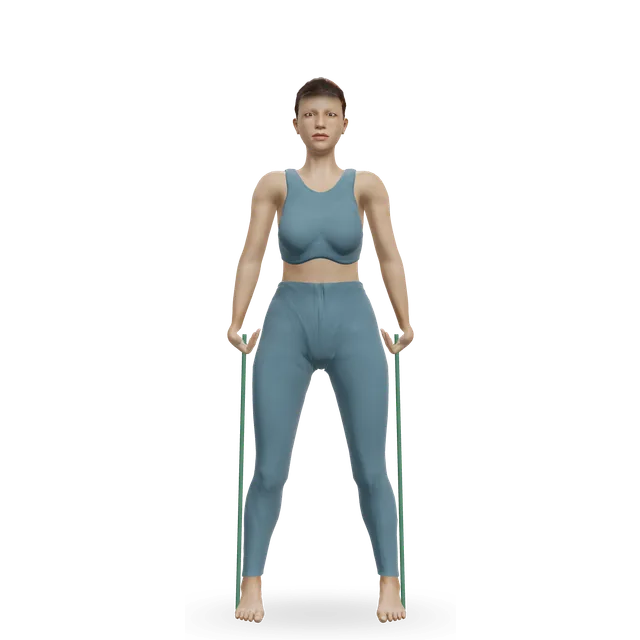
Band lateral raise demonstrated on the 3D figure3D demoBand lateral raiseBeginner · A band

2 minutes a day, 5 days a week, progressing the band · The daily dose from a trial in 198 workers, 24 of them men; the trial's abstract doesn't name the exercises, so this move is our choice (editorial)

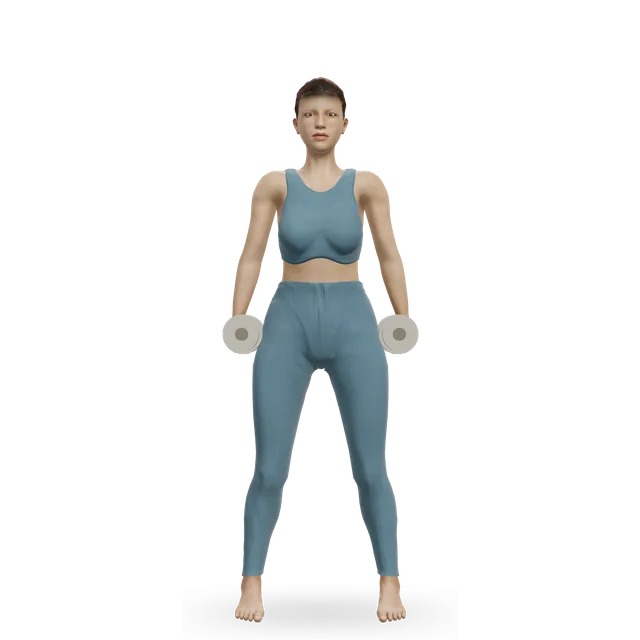
Harder: Dumbbell lateral raise

Band row demonstrated on the 3D figure3D demoBand rowBeginner · A band + An anchor point

3 sets of 10 to 15, stopping 2 to 3 reps short of failure · The move page's dose (editorial)

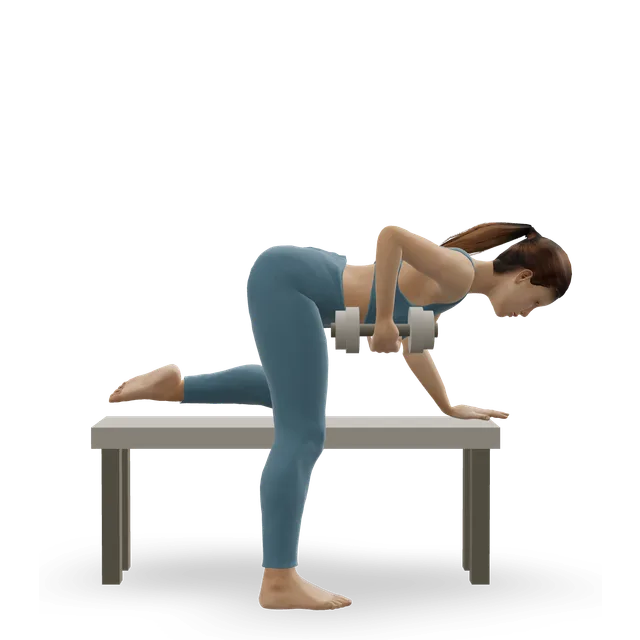
Harder: Supported single-arm dumbbell row

Prone Y-T-W raises demonstrated on the 3D figure3D demoProne Y-T-W raisesBeginner · No equipment

5 to 8 of each shape, 2 rounds · Editorial, as in our upper back pain in women guide

Easier: Wall angel · Harder: Bent-over reverse fly

Band pull-apart demonstrated on the 3D figure3D demoBand pull-apartIntermediate · A band

2 to 3 sets of 12 to 15 · Editorial, as in our upper back pain guide

Easier: Prone Y-T-W raises · Harder: Tuck back lever

Seated upper-back lift (sit tall, shoulders back) demonstrated on the 3D figure3D demoSeated upper-back lift (sit tall, shoulders back)Beginner · A bench or box

3 to 5 repetitions, each held 3 to 5 s, at least twice a week · The move page's dose, from the UK osteoporosis consensus; worth keeping from 50, with thin bones or with ankylosing spondylitis. After a painful spinal fracture, daily, as the move page says

Easier: Elbows back · Harder: Prone Y-T-W raises

Move on when: Every set stays within the pain rule and your back is no worse the next morning.

Follow along: a timer, a cue and the next move, one step at a time.
Stage 3

Strengthen, and back to work, lifting and the gym

From about week 6: 2 or 3 sessions a week, then twice a week for the long term. Desk days, lifting at work, sport and the gym come back a little at a time, by the written steps below (our suggestion).

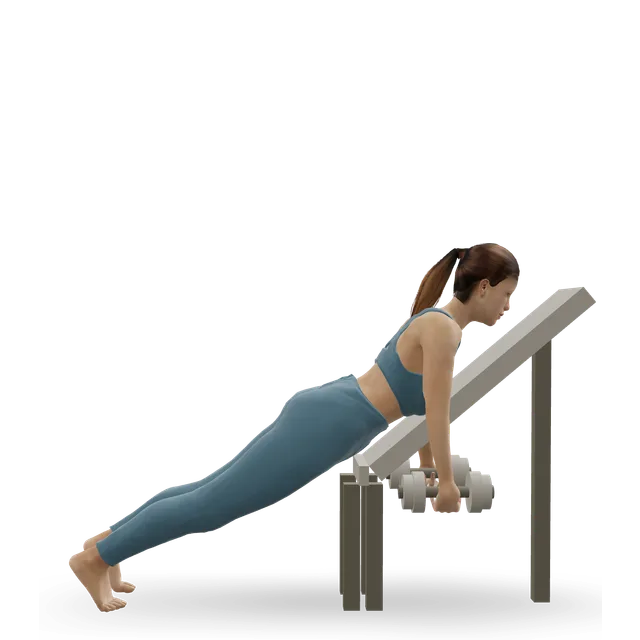
Chest-supported dumbbell row demonstrated on the 3D figure3D demoChest-supported dumbbell rowBeginner · A dumbbell + A bench or box

3 sets of 8 to 12 · Editorial, as in our upper back pain guide; the chest pad takes the strain off holding a bent-over position

Harder: Supported single-arm dumbbell row

Face pull demonstrated on the 3D figure3D demoFace pullIntermediate · A band

3 sets of 12 to 15 · Editorial

Easier: Prone Y-T-W raises · Harder: Tuck back lever

Dumbbell shrug demonstrated on the 3D figure3D demoDumbbell shrugBeginner · A dumbbell

2 to 3 sets of 8 to 12, pausing a second at the top · The move page's dose (editorial). Lighten it if it brings on headaches or arm tingling, as the move page says

Harder: Snatch shrug

Kettlebell deadlift demonstrated on the 3D figure3D demoKettlebell deadliftBeginner · A kettlebell

3 sets of 8, light to moderate, the load close to you · Editorial: practice for lifting at work, keeping the load close to your waist, as the HSE advises. Learn the hip hinge first, as the move page says

Easier: Hip-hinge practice · Harder: Dumbbell Romanian deadlift

Locust pose (Salabhasana) demonstrated on the 3D figure3D demoLocust pose (Salabhasana)Beginner · No equipment

3 to 5 lifts, each held 3 to 5 s, at least twice a week · The UK osteoporosis consensus dose for back strength, as in our upper back pain guide. Lower the chest if the low back pinches, as the move page says

Easier: Seated upper-back lift (sit tall, shoulders back) · Harder: One-legged bow (half locust)

Move on when: Our suggestion: your usual working week and training pass the pain rule for 2 weeks. Keep two strength sessions a week for the long term.

Follow along: a timer, a cue and the next move, one step at a time.

What to change for now

The desk and screens (written steps)

Our 3D figure can't show these. They come from the HSE and NHS inform.

  • 1. Take short breaks often: 5 to 10 minutes every hour, getting up and moving or stretching (the HSE).
  • 2. Set the top of the screen level with your eyes, about an arm's length away, the keyboard just below elbow height, and the screen and keyboard straight in front of you so you don't twist (the HSE).
  • 3. Relax your shoulders, with the seat high enough that you don't shrug, and use a separate keyboard and mouse with a laptop on a stand (the HSE).
  • 4. Your posture doesn't need to be perfect: move often so you don't stay in one position for long (NHS inform).

Sources 63, 64, 7

Lifting at work and at home (written steps)

These come from the HSE. Good technique helps, but it doesn't replace lifting aids and better tasks.

  • 1. Think before you lift: use a trolley or hoist where you can, and ask for help with heavy or awkward loads.
  • 2. Keep the load close to your waist, with the heaviest side next to your body.
  • 3. Bend your back, hips and knees a little at the start, rather than stooping or squatting fully, and don't bend your back further as you lift.
  • 4. Don't twist or lean sideways, especially with your back bent: turn with your feet.
  • 5. Don't lift more than you can easily manage. Put the load down, then adjust it.
  • 6. If a task keeps causing pain, tell your employer: they must assess and reduce the risk.

Sources 66, 67

Back to the gym (written steps)

No trial has tested these steps; they are our suggestion. Lifting sports are relatively low-risk, and most gym injuries are strains.

  • 1. Keep training, but swap what hurts: rows with your chest supported, and lighter pulls, first.
  • 2. Bring bench and overhead pressing back at about half your old working weight, adding a little each week while your back passes the pain rule.
  • 3. Bring deadlifts back last, from blocks or a trap bar first, as our deadlift guide describes.
  • 4. No sets to failure or new maximum lifts for 2 to 3 weeks.
  • 5. If one lift keeps flaring it, change the grip or the range before dropping it.

Sources 9, 8

With ankylosing spondylitis or thin bones (written steps)

These come from NICE, the UK osteoporosis consensus and the Royal Osteoporosis Society.

  • 1. With ankylosing spondylitis, do a daily exercise routine, ideally set by a specialist physiotherapist, and see a health professional after any fall or knock, especially if the pain increases (NICE).
  • 2. With thin bones, lift with a hip hinge and a straight upper back, close to your body, rather than avoiding lifting, and avoid loaded rounding to the end of your range (the UK osteoporosis consensus).
  • 3. If you're having hormone treatment for prostate cancer, ask your doctor about a fracture risk assessment (the Royal Osteoporosis Society).

Sources 15, 68, 27

Positions to swap, and why

Habit or positionWhy it mattersInstead
Hours at a screen without a breakLong, still spells go with upper back and neck pain, and the HSE advises short, frequent breaks.A movement break every hour, with a few thoracic rotations.Try: Thoracic rotation
Holding yourself rigidly upright all dayIn young men, sitting posture didn't predict later neck pain, and NHS inform says posture doesn't need to be perfect.Change position often, and build strength with band rows.Try: Band row
A posture corrector or brace to fix itUntested for upper back pain; NICE advises against belts and corsets for low back pain.Shoulder-blade and back strength.Try: Seated upper-back lift (sit tall, shoulders back)
Having your back cracked for long-standing painManipulation did no better than a sham treatment in 143 adults.The staged plan, which builds strength.
Heavy bent-over reverse flies while it's soreHolding the hinge loads the back; the move page says chest support removes the problem.Chest-supported rows.Try: Chest-supported dumbbell row
Heavy shrugs while it's flaredThe move page says the loads climb quickly and shrugging can bring on headaches or arm tingling.2 minutes a day with a band.Try: Band lateral raise
Lifting from the floor with a rounded back and a twistThe HSE advises keeping the load close and turning with your feet.Kettlebell deadlifts, keeping the load close.Try: Kettlebell deadlift
Deep, loaded forward rounding with thin bonesThe UK osteoporosis consensus advises modifying sustained or end-of-range forward bending.Back-muscle work instead.Try: Locust pose (Salabhasana)
A foam roller along the spine with thin bonesThe roller's own page says clear it with a clinician first if you have osteoporosis.Gentle rotations instead.Try: Thoracic rotation
Staying in bedThe NHS says don't stay in bed for long periods.Walking and gentle movement.Try: Treadmill walking
Waiting to see whether pain with breathlessness, sweating or chest discomfort passesIt can be the heart, the aorta or the lungs.Call 999.

Routines to follow

More moves for this area

Questions people ask

Why does my upper back hurt?

Usually the muscles, small joints and ribs of the upper back, often after long, still spells at a desk, a heavy lift or a hard gym session. It's less common in men than in women, and most of it settles with movement, heat and strength work. Check the warning signs first.

Is upper back pain a sign of a heart attack in men?

It can be part of one: heart pain can spread to the back, and in one large registry about 3 in 10 men having a heart attack had no chest pain. Call 999 if it comes with chest pain or pressure, breathlessness, sweating, feeling sick or light-headed. Pain that changes when you move or press on the back, with none of these, points to the back.

What causes pain on the left side of my upper back in a male?

Usually a strained muscle or rib joint, the same as on the right. The heart comes first if there's chest pain, breathlessness or sweating. Sudden, sharp pain that is worse when you breathe in can be a collapsed lung, which is more common in tall, thin young men.

And on the right side?

Again usually the muscles and joints. Pain under the right ribs or in the middle of the tummy for more than 30 minutes, sometimes spreading into the right shoulder blade, can be gallstones: get an urgent GP appointment or contact NHS 111.

Can lifting weights or bench pressing cause upper back pain?

Yes, usually a strain or ordinary soreness: most gym injuries in men are strains, and lifting sports are relatively low-risk. Keep training with lighter loads and chest-supported rows, and bring heavy bench presses and deadlifts back last, judged by the pain rule.

Could it be ankylosing spondylitis?

It's worth thinking about if stiffness is worst in the morning and at night, eases with exercise rather than rest, and started before 45, especially with buttock pain or pain where the ribs meet the breastbone. See a GP: blood tests and a scan help decide, and normal blood tests don't rule it out.

Can men get a spinal fracture from thin bones?

Yes: about 1 in 5 men over 50 will break a bone because of osteoporosis, and squashed vertebrae are as common in men as in women aged 50 to 79. See a GP for sudden back pain after a minor fall, lift, cough or sneeze from 50, or height loss. Hormone treatment for prostate cancer raises the risk.

Is my posture or my desk to blame?

Probably not on its own: in young men, sitting posture didn't predict later neck pain, and desk changes didn't ease upper-body pain in trials. Breaks every hour and moving often matter more, and so does strength.

Should I have my back cracked?

In the one full-size trial for upper back pain, manipulation did no better than a sham treatment, though everyone improved over time. Strength work and staying active are the better bets.

Do I need a scan?

Usually not. An X-ray or a spine check at a bone density scan is for a suspected fracture, and an MRI for suspected ankylosing spondylitis or a serious cause. The heart, the aorta and the lungs have their own tests in hospital.

Could upper back pain be cancer?

Rarely. New back pain with a past cancer, unexplained weight loss, or pain that is constant, worse at night and won't settle needs a GP soon. From 60, persistent bone pain is a reason for a GP to check for myeloma.

When should I see a doctor?

Call 999 for the heart, aorta, lung and spinal cord signs at the top of this page. See a GP for pain between the shoulders that is new, not improving after a few weeks, worse at night, sudden after a minor fall from 50, or stiff in the mornings since before 45. In the US, call 911 where this page says 999.

Related exercise guides

Other pain guides

Sources

  1. Leboeuf-Yde 2009 · Neck, mid back and low back pain by age and sex in 34,902 Danish twins (population study, BMC Musculoskelet Disord)
  2. Briggs 2009 · Upper and mid back pain in the general population: 33 studies (systematic review, BMC Musculoskelet Disord)
  3. Briggs 2009 · Upper back pain in working adults: 52 studies (literature review, J Occup Health)
  4. Richards 2021 · Neck posture at 17 and neck pain at 22: 686 young people (cohort study, Phys Ther)
  5. Hoe 2018 · Ergonomic interventions for preventing arm and neck problems in office workers (Cochrane review)
  6. Edwardson 2022 · Sit-stand desks and a programme to sit less in 756 UK council office workers: the SMART Work and Life trial (cluster randomised trial, BMJ)
  7. NHS inform · Back problems
  8. Kerr 2010 · Weight-training injuries in US emergency departments, 1990 to 2007 (descriptive study, Am J Sports Med)
  9. Aasa 2017 · Injuries among weightlifters and powerlifters (systematic review, BJSM)
  10. Keogh 2017 · Injuries across the weight-training sports (systematic review, Sports Medicine)
  11. Young 2008 · Where pain from the rib joints beside the spine is felt: 8 healthy volunteers (experimental study, BMC Musculoskelet Disord)
  12. NHS · Chest pain (past its review date: reviewed August 2023, review due August 2026)
  13. Evans 2016 · Great Britain Rowing Team guideline on rib stress injury, part 1 (Br J Sports Med)
  14. de Winter 2016 · Ankylosing spondylitis and non-radiographic axial spondyloarthritis compared, including the share of men (meta-analysis, Arthritis Res Ther)
  15. NICE NG65 · Spondyloarthritis in over 16s: diagnosis and management (2017)
  16. Rusman 2020 · Sex and gender differences in axial spondyloarthritis: myths and truths (review, Rheumatology)
  17. NHS · Ankylosing spondylitis: symptoms (past its review date: reviewed January 2023, review due January 2026)
  18. Sieper 2009 · Expert criteria for inflammatory back pain (ASAS criteria, validated in 648 patients, Ann Rheum Dis)
  19. Rudwaleit 2006 · Telling inflammatory from mechanical back pain from the history in 213 people under 50 (diagnostic study, Arthritis Rheum)
  20. Wendling 2013 · Chest wall pain in 708 people with recent inflammatory back pain: the DESIR cohort (cohort study, J Rheumatol)
  21. Damborg 2006 · How common and how inherited Scheuermann's is: almost 35,000 twins (twin study, J Bone Joint Surg Am)
  22. Makurthou 2013 · Scheuermann's on the spine X-rays of 2,753 Dutch adults (population study, Spine)
  23. NHS · Kyphosis
  24. O'Neill 1996 · Squashed vertebrae on X-ray in 15,570 European men and women aged 50 to 79 (population study, J Bone Miner Res)
  25. Felsenberg 2002 · New spinal fractures in European men and women aged 50 and over: the EPOS study (cohort study, J Bone Miner Res)
  26. Gregson 2025 · The 2024 UK clinical guideline for the prevention and treatment of osteoporosis (NOGG, Archives of Osteoporosis)
  27. Royal Osteoporosis Society · Osteoporosis in men
  28. NHS · Osteoporosis (past its review date: reviewed October 2022, review due October 2025)
  29. Royal Osteoporosis Society · Osteoporosis symptoms
  30. NHS · Angina
  31. British Heart Foundation (BHF) · Heart attack: symptoms, causes and treatment
  32. NHS · Heart attack
  33. van Oosterhout 2020 · Heart attack symptoms in women and men compared: 27 studies (systematic review and meta-analysis, J Am Heart Assoc)
  34. Kirchberger 2011 · Heart attack symptoms in 1,710 men and 568 women in Augsburg (registry study, Am J Cardiol)
  35. Canto 2012 · Heart attacks without chest pain by age and sex in 1,143,513 people (registry study, JAMA)
  36. Howard 2013 · How often a torn aorta (aortic dissection) happens, and who gets it: the Oxford Vascular Study (population study, Circulation)
  37. Olsson 2006 · Thoracic aortic aneurysm and dissection in Sweden, 1987 to 2002: more than 14,000 cases (population study, Circulation)
  38. Hagan 2000 · 464 people with acute aortic dissection in the International Registry (registry study, JAMA)
  39. NHS · Costochondritis
  40. Zhong 2024 · Hospital admissions for a collapsed lung (pneumothorax) in England, 2017 to 2023 (population study, Lancet Reg Health Eur)
  41. Gupta 2000 · How often a collapsed lung (pneumothorax) happens in England, by sex (population study, Thorax)
  42. Asthma + Lung UK · Pneumothorax (collapsed lung)
  43. NHS inform · Gallstones
  44. NHS · Gallstones
  45. Kawai 2014 · How often shingles happens and its complications: 130 studies (systematic review, BMJ Open)
  46. NHS · Shingles
  47. NICE NG234 · Spinal metastases and metastatic spinal cord compression (2023)
  48. NICE NG12 · Suspected cancer: recognition and referral (2015, updated 2026)
  49. NHS · Symptoms of myeloma
  50. NHS · Symptoms of prostate cancer
  51. NHS · Symptoms of lung cancer
  52. Bieber 2026 · Bony bridges along the spine (diffuse idiopathic skeletal hyperostosis, DISH): what they look like and who gets them (narrative review, RMD Open)
  53. NHS · Back pain
  54. Arnbak 2025 · Disc and end-plate changes on MRI of the upper back and their link with pain (systematic review, Skeletal Radiol)
  55. Potu 2026 · MRI findings in 503 adults with pain around the shoulder blade (cross-sectional study, Interv Pain Med)
  56. NICE NG259 · Osteoporosis: risk assessment, identifying spinal fragility fractures (2026)
  57. NHS · Ankylosing spondylitis: diagnosis (past its review date: reviewed January 2023, review due January 2026)
  58. NHS inform · Exercises for back pain
  59. Crothers 2016 · Spinal manipulation, the Graston technique and placebo for upper back pain (randomised trial of 143 people, Chiropractic and Manual Therapies)
  60. NHS · Ankylosing spondylitis (past its review date: reviewed January 2023, review due January 2026)
  61. Andersen 2011 · Small daily amounts of resistance training for frequent neck and shoulder pain (RCT, Pain)
  62. Beneka 2024 · A 6-week workplace exercise programme for neck and upper back pain: 138 workers (randomised trial, Medicina)
  63. Health and Safety Executive · Display screen equipment: work routine and breaks
  64. Health and Safety Executive · Good posture when using display screen equipment
  65. Verbeek 2011 · Manual handling advice and assistive devices for preventing back pain in workers (Cochrane review)
  66. Health and Safety Executive · Manual handling at work: good handling technique
  67. Health and Safety Executive · Manual handling at work
  68. Brooke-Wavell 2022 · Strong, steady and straight: UK consensus on physical activity and exercise for osteoporosis (BJSM)
  69. Masaracchio 2019 · Manipulation of the upper back for neck pain: 14 trials (systematic review and meta-analysis, PLoS One)
  70. NICE NG59 · Low back pain and sciatica in over 16s: assessment and management (2016, updated 2026)
  71. Smith 2017 · Should exercises be painful in chronic musculoskeletal pain? (systematic review and meta-analysis, Br J Sports Med)

Exercise education, not a diagnosis or treatment plan. It is written from the guidelines and studies listed above; review by a clinician is pending. If your pain follows an injury, is severe, is getting worse, or comes with any warning sign listed on this page, get it assessed. Health disclaimer.