Pain guide · Back pain

Upper back and shoulder pain when cycling: reach, bar height, the shoulder blades and what helps

An ache between the shoulder blades or across the shoulders on long rides usually looks like tired muscles: they hold part of your weight on the bars and keep your head up to see the road, often for hours. A long, low reach, a nose-down saddle, wide bars and hard or standing efforts add to the load, and it isn't a sign of bad posture.

Some pain needs help first. The National Health Service (NHS) says chest pain, or pain that spreads to the arm, neck, jaw or back, can be a heart attack and needs a 999 call, and after a crash, a shoulder that looks out of place or a collarbone that may be broken is an accident and emergency (A&E) problem. This guide covers those warning signs, when to see a general practitioner (GP), what to change on the bike today, how much pain is fine, and a three-stage plan from gentle movement to shoulder-blade and rotator cuff strength, with a 3D demo of every move. The exercise evidence comes from office workers and shoulder clinics, not riders, and the page says so.

When to get help first

Exercise is for pain that has been checked or is clearly mild and settling.

Get urgent medical help if

  • Call 999: sudden pain or discomfort in your chest that does not go away (it can feel like squeezing or pressure, burning or indigestion); pain that spreads to your left or right arm, or your neck, jaw, shoulder, stomach or back; or chest pain and you feel sweaty, sick, light-headed or short of breath. It could be a heart attack. Don't drive yourself to A&E.
  • Get help from NHS 111: pain or tightness in your chest, neck, shoulders, jaw or arms that comes and goes, often brought on by exercise, such as a climb, stress, emotion or cold, and easing after a few minutes' rest. It can be angina, a sign of a heart problem.
  • Call 999: sudden chest or back pain that can feel like something being torn inside, with shortness of breath and problems walking, seeing or speaking.
  • Call 999 or go to A&E: back pain with chest pain, or back pain that started after a serious accident, such as a car crash.
  • Call 999: sudden, severe pain in the tummy or back, which can come with breathlessness, pale or grey skin, or collapse. It can be a burst abdominal aortic aneurysm, most common in men aged 65 or over and in people who smoke or used to smoke.
  • Call 999 or go to A&E: after a fall or injury, your shoulder looks out of place or has changed shape, or you cannot move your arm. Do not drive yourself, and do not try to put it back in yourself.
  • Go to A&E, or call 999 if you can't get there: after an injury, your shoulder has changed shape, has swollen very quickly or has bone sticking out of the skin; you're bleeding heavily; or you have difficulty breathing, chest pain or are coughing up blood.
  • Call 999 or go to A&E: a rib injury caused by a serious accident; or, with a broken or bruised rib, shortness of breath or chest pain that is getting worse, coughing up blood, or pain in your tummy or shoulder. A broken rib may have damaged your lung, liver or spleen. Don't drive yourself.
  • Call 999 or go to A&E after a neck injury if the person is unresponsive, has severe neck pain or cannot move their head, or fell from a height such as 5 or more stairs. Do not drive yourself. Being 65 or over, a dangerous fall or crash (from more than 1 metre or 5 steps, diving, a high-speed or rollover crash, being thrown from a vehicle, or a bike or horse-riding accident), or tingling in the arms or legs after an injury puts you at high risk of a broken neck: get checked.
  • Same day (GP or NHS 111): sudden or very bad shoulder pain; you cannot move your arm; the arm or shoulder is badly swollen or has changed shape; pins and needles that do not go away; no feeling in the arm; the arm is hot or cold to the touch; pain that started after an injury such as a fall; or severe pain in both shoulders.
  • Same day (GP or NHS 111): sudden weakness lifting the arm after an injury or fall. A rotator cuff tear caused by an injury needs urgent referral to a shoulder specialist. After a dislocation in anyone over 40, the rotator cuff should be checked: about 40% have a tear.
  • Same day (GP or NHS 111): back pain and you feel hot, cold, shivery or generally unwell, or severe pain that starts suddenly or is getting worse quickly.
  • Same day: you have or have had cancer, and new back pain that is severe and doesn't let up, is getting steadily worse, is worse at night and disturbs your sleep, is worse when you cough, sneeze or strain, or comes with tenderness over the spine. Contact your cancer team or GP urgently. With cancer, new weakness, difficulty walking, numbness or bladder or bowel problems are an emergency.

See a doctor or physiotherapist if

  • Pain at the top of the back, between the shoulders, rather than in the lower back.
  • Pain that is getting worse or has not improved after 2 weeks of looking after it yourself, or it is very hard to move your arm. In many areas you can refer yourself to physiotherapy.
  • After a crash, shoulder pain, or weakness lifting or turning the arm, that hasn't settled within 2 weeks, even if nothing was broken: see a GP or physiotherapist. Rotator cuff tears were 22% of riders' shoulder injuries in one hospital series.
  • Unexplained back pain with muscle spasms, loss of height, or a curved spine or change in posture: a possible osteoporotic spinal fracture, more likely with older age or long-term steroid tablets.
  • Pins and needles or a cold arm alongside neck pain, or a new loss of strength or feeling in the arm that you cannot explain (a possible nerve problem).
  • You smoke or used to, and have shoulder pain with a cough that will not go away, breathlessness or weight loss.
  • Pain that doesn't improve with rest or is worse at night, or pain that is worse when you sneeze, cough or poo.
  • Unexplained weight loss, or a lump, swelling or change in the shape of your back.
  • Back pain and stiffness that persists in a teenager or young adult. Ankylosing spondylitis tends to start at that age and can affect the whole spine.
  • Upper back or shoulder ache that comes back on every long ride despite raising the bars, shortening the reach and building strength: our suggestion is to see a physiotherapist, ideally one who knows cycling, who can check you and the bike together.

Where does it hurt?

Location narrows the likely causes; it does not diagnose.

A burning or aching band between the shoulder blades on long rides

Eases when you sit up, change hand position or stop; worse with a long, low reach, in the drops, on rough roads and with a tight grip: tired upper back and shoulder-blade muscles. This guide covers it.

Across the tops of the shoulders and up into the neck

Tight over the upper trapezius, worse with shrugged shoulders and locked elbows: our neck pain when cycling guide covers it.

Read: Neck pain when cycling →
The front of the shoulder or the outside of the upper arm

Worse leaning on the bars, reaching behind you, lifting the arm or lying on that side: usually rotator cuff-related shoulder pain.

Read: Shoulder impingement (rotator cuff pain) →
The top of the shoulder, at the end of the collarbone

Tender over the joint, often after a fall onto the point of the shoulder: the acromioclavicular (AC) joint.

Read: AC joint injury and pain →
Along the collarbone after a crash

A bump, the shoulder drooping forward, and lifting the arm hurts: a possible broken collarbone, about a third of riders' shoulder injuries in one hospital series.

Read: Broken collarbone →
After a crash, the shoulder looks out of place or the arm won't move

A possible dislocated shoulder: go to A&E.

Read: Shoulder dislocation and instability →
Weakness lifting or turning the arm after a fall

Sometimes with little pain: a possible rotator cuff tear. Get it checked the same day.

Read: Rotator cuff tear →
The ribs after a crash, sore to breathe, cough or twist

Broken or bruised ribs. See the warning signs for when it's a 999 call.

Read: Rib injury →
The front of the chest beside the breastbone, sore to press

Worse with deep breaths or pressing on it: costochondritis. Chest pain with breathlessness, sweating, or pain spreading to the arm or jaw is a 999 call.

Read: Costochondritis →
Tingling in the ring and little fingers, or the whole hand

With the arms held out, often worse on aero bars: usually a nerve squeezed at the wrist; our numb hands guide covers it.

Read: Numb hands when cycling →
Down one arm, with tingling, numbness or weakness

Changing as you move your neck: a pinched nerve in the neck.

Read: Pinched nerve in the neck →
Arm or hand tingling or aching, worse with the arms raised or carrying

Thoracic outlet syndrome, which is uncommon.

Read: Thoracic outlet syndrome →
Sudden mid-back pain after a minor fall, from about 50, or with steroid tablets

Loss of height or a change in shape: a possible spinal compression fracture. Road riders often have low bone density.

Read: Spinal compression fracture →
Chest, jaw, arm, shoulder or upper back pain with effort, easing with rest

Or with breathlessness, sweating or feeling sick: possibly the heart. See the warning signs.

A shoulder blade that sticks out

Seen from behind or when you push on a wall: winged scapula.

Read: Winged scapula →
A teenager's upper back that stays rounded when they stand tall

Possibly Scheuermann's disease.

Read: Scheuermann's disease →
The mid back, off the bike as well as on it

Our upper back pain guide covers it.

Read: Upper and mid back pain →

Understand it

Who gets itEmerging evidence

We found no study that measured upper back pain in riders on its own. In a 1995 survey of 518 recreational riders, neck complaints were the commonest (48.8%), and women had twice the odds of shoulder complaints; a review lists the neck and shoulders among riders' commonest problems not caused by crashes.

Upper back pain is common in the general population (between 3.5% and 34.8% of people in a year, across studies) and has been studied far less than neck and low back pain. In 71 road riders, body position on the bike didn't differ between riders with and without upper body pain.

Sources 1, 2, 3, 4

Why the upper back and shoulders work hard on the bikeEmerging evidence

Your arms carry part of your weight on the bars and steady your trunk, and your neck and upper back hold your head up to see the road. In a lab study of 8 men, lower bars didn't change the upper back's curve, but with racing bars the bending load at the base of the neck was three times that of sitting upright; and in 26 riders, the further they leaned forward, the more they tipped the head back.

When reach changed, 12 riders took it up mainly at the shoulders and elbows rather than the spine, and a saddle tilted 10 degrees nose-down made the muscles that straighten the elbows work about 23% harder, because you slide forward onto your arms. Loads through the arms rose with power and were higher standing than seated, and arm and trunk muscles worked much harder above about 500 watts. Bars about as wide as the shoulders lowered arm muscle activity in 10 women, and stock bars are often wider than women's shoulders. Across 12 studies, the upper back tended to round more the longer people pedalled.

Our reading: an ache on the bike looks like muscle fatigue from holding part of your weight and your head for a long time, made worse by a long, low reach, a nose-down saddle, wide bars and hard or standing efforts. These are small lab studies in healthy riders, and no study has tested this as a cause of pain.

Sources 5, 6, 7, 8, 9, 10, 11

It isn't bad postureEmerging evidence

Riders' upper backs are often more rounded when they stand (48 degrees against 43 in non-riders in one study, and more than half of the elite and masters riders in another), but on the bike the upper back was less rounded than when standing, and the authors concluded that the standing roundness wasn't directly related to the riding position. Upper back roundness didn't differ between people with and without shoulder pain, and reviews of low back pain find no agreement that posture causes it.

Sources 12, 13, 14, 15

After a crashStrong evidence

Arm and shoulder injuries are about half of all injuries in competitive road cycling, and in one hospital's records of people hurt on bicycles, 24% had injured an arm or shoulder. In 157 riders with shoulder injuries at one hospital, 84% came from a direct blow to the shoulder: broken collarbones were 32%, acromioclavicular (AC) joint dislocations 22%, rotator cuff tears 22% and upper arm fractures 8%, and half were treated without surgery. In a survey of 140 professional and amateur riders, 13.5% had broken a collarbone riding, more often with more years and hours of riding.

The NHS says most people recover from a broken collarbone in 6 to 8 weeks, with a sling for 2 to 3 weeks and no lifting or sport while it heals, and to ask your doctor when you can go back to sport. Elite road riders with a single broken collarbone were back racing after an average of 57 days, most after surgery, and all 25 riders in a series with plate-fixed fractures returned to cycling, but these riders had medical teams, so their times aren't a target for anyone else. Broken or bruised ribs usually heal by themselves within 2 to 6 weeks, and a dislocated shoulder usually takes 6 to 12 weeks, with up to 16 weeks before some sports.

Sources 16, 17, 18, 19, 20, 21, 22, 23, 24

When a scan or test helpsStrong evidence

Without warning signs, an upper back or shoulder ache on the bike doesn't need a scan. After a crash, a suspected broken collarbone needs an X-ray, ribs often don't, and a dislocated shoulder is usually X-rayed. Chest pain, or pain that comes on with effort, is checked with an electrocardiogram (ECG), a recording of the heart's electrical activity, and blood tests, not a back scan.

Sources 20, 23, 24, 25, 26

How it usually goesEmerging evidence

No study has followed riders' upper back or shoulder pain. The NHS says you usually need about 2 weeks of looking after shoulder pain before it starts to ease, and that it can take 6 months or longer to recover. In adults, new mid-back pain is uncommon and its course has barely been studied, and in a trial of upper back pain every group improved with time. No one can promise a date.

Sources 27, 28, 29

What helps, and how strong the evidence is

Strengthening has the best support, but not in ridersEmerging evidence

For neck pain that lasts, a Cochrane review of 27 trials found moderate-quality evidence that strength training for the neck, shoulder blades and arms reduces pain by a moderate to large amount, while stretching alone may not help. In 48 women with long-lasting trapezius pain, 10 weeks of strength training for that muscle cut their worst pain by about 79%, while leg cycling gave only a small, short-lived drop. In 198 workers, 2 minutes a day of band training, 5 days a week, cut neck and shoulder pain by 1.4 points out of 10 at 10 weeks, and in 180 women office workers, neck and dumbbell shoulder training reduced pain over a year.

These trials were in office and other workers, not riders, and none was of pain between the shoulder blades on its own.

Sources 30, 31, 32, 33

The front of the shoulder: rotator cuff and shoulder-blade exerciseEmerging evidence

In 102 people with long-standing shoulder impingement pain that earlier treatment hadn't helped, specific rotator cuff and shoulder-blade exercise improved shoulder function (24 points against 9) and success (69% against 24%), and reduced the need for surgery within the 3-month study. In the largest trial, of 708 people with rotator cuff pain, up to six physiotherapy sessions did no better over a year than one session of good advice with a home exercise programme, and a steroid injection added no lasting benefit. These are shoulder clinic trials, not trials in riders.

Sources 34, 35

Higher bars, a shorter reach and a level saddle: lab evidenceEmerging evidence

In lab studies, racing bars put three times the bending load on the base of the neck that sitting upright did (8 men), reach changes were taken up at the shoulders and elbows, a nose-down saddle shifted weight onto the arms (12 riders), and bars about as wide as the shoulders lowered arm muscle activity (10 women). Loads through the arms were higher standing than seated and rose with power. These are small studies in healthy riders, not trials in riders with pain, but they point to the same first changes: higher bars or a shorter reach, a level saddle, bars that match your shoulders, and fewer long standing climbs for a while.

Sources 5, 7, 10, 8, 9

Manipulation did no better than a shamEmerging evidence

In 143 people with upper back pain, spinal manipulation and an instrument-assisted massage technique did no better than a sham treatment, and all three groups improved with time. Your upper back doesn't need cracking.

Source 29

A bike fit: comfort, not proven preventionEmerging evidence

Across 18 studies, how much people ride was linked with overuse pain, while many bike-fit measurements weren't. In 71 road riders, body position on the bike didn't separate riders with and without upper body pain. A fit is reasonable when something hurts, but no study shows it prevents upper back pain.

Sources 36, 4

How much pain is OK while you exercise?

The back pain rule, the shoulder rule and the arm-symptom exceptionEmerging evidence

For the upper back exercises, this guide uses the back hub's rule: some discomfort during exercise is fine and doesn't mean damage. Aim for pain you would call mild to moderate, no more than about 5 out of 10. It should settle within an hour or so and be no worse the next morning. If it is worse, do less next time (fewer reps, a lighter band, a smaller range), not nothing. The 5 out of 10 figure matches this site's other pain guides and hasn't been tested in a back pain trial; in trials of long-lasting muscle and joint pain, exercise that allowed some pain did no harm. The NHS says to stop if your pain gets worse and see a GP, which means pain getting worse day after day, not the passing discomfort this rule allows.

For the shoulder exercises, the shoulder hub's rule from the Holmgren trial's method applies: up to about 5 out of 10 during strengthening is acceptable, and by your next session it should be back to where it was before. If it isn't, use a lighter band or a smaller range next time.

Arm symptoms are the exception, as in our neck pain when cycling guide: if an exercise or a ride sends pain, tingling or numbness down your arm, or the extra symptoms last more than an hour afterwards, make the movement smaller or the ride shorter and more upright.

On the bike (our suggestion): when the ache starts, sit up, drop and roll your shoulders, change hand position or stand on the pedals for a few strokes, and end the ride if it climbs past 5. Chest pain, breathlessness, or pain spreading to the arm, jaw or neck isn't part of this rule: stop and follow the warning signs.

Sources 37, 38, 34

The exercise plan: 3 stages

Start at the first stage. Each move opens a full guide with a 3D demo.

Stage 1

Settle: move the upper back and shoulders

About weeks 0 to 2. Keep the upper back and shoulders moving little and often, and ride only short, upright and easy, with the bike changes below. After a crash, your fracture or shoulder team's plan comes first. Doses are the move pages' or editorial.

Thoracic rotation demonstrated on the 3D figure3D demoThoracic rotationBeginner · No equipment

6 rotations per side, moving with the breath · The move page's dose

Easier: Side-lying open book · Harder: World's greatest stretch

Side-lying open book demonstrated on the 3D figure3D demoSide-lying open bookBeginner · No equipment

8 to 10 slow openings each side, pausing 2 s at the end · The move page's dose

Harder: Thoracic rotation

Cat-cow demonstrated on the 3D figure3D demoCat-cowBeginner · No equipment

8 waves, slower than feels natural · The move page's dose

Harder: Half lord of the fishes (Ardha Matsyendrasana)

Shoulder rolls demonstrated on the 3D figure3D demoShoulder rollsBeginner · No equipment

10 to 15 slow circles each way, once or twice through · The move page's dose. A few times a day (our suggestion): the NHS says keep the shoulder moving gently

Harder: Shoulder CARs (controlled articular rotations)

Foam roller thoracic extension demonstrated on the 3D figure3D demoFoam roller thoracic extensionBeginner · A foam roller

5 to 8 slow breaths at each of 3 or 4 spots · The move page's dose. Skip it with osteoporosis or a past spinal fracture, as our upper back pain guide says

Harder: Fish pose (Matsyasana)

Treadmill walking demonstrated on the 3D figure3D demoTreadmill walkingBeginner · Cardio machine

10 to 30 min a day · Editorial. Let your arms swing

Harder: Treadmill jogging

Move on when: Turning and reaching are comfortable, the ache settles by the next morning, and 30 minutes of easy, upright riding stays within the pain rule.

Follow along: a timer, a cue and the next move, one step at a time.
Stage 2

Build: shoulder-blade and rotator cuff endurance

About weeks 2 to 6, 2 to 3 days a week, with the band lateral raise daily: endurance for holding part of your weight on the bars. The band work follows trials in office workers and shoulder clinics; building endurance before heavier work is our reasoning for riders, untested.

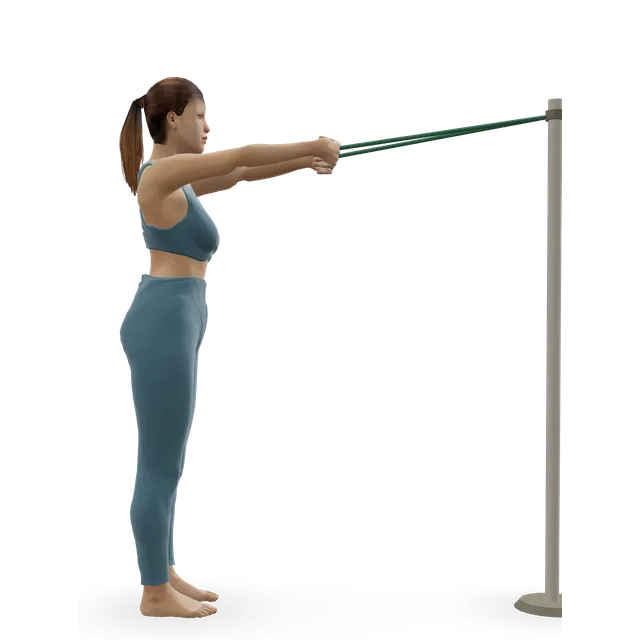
Band row demonstrated on the 3D figure3D demoBand rowBeginner · A band + An anchor point

3 sets of 10 to 15, stopping 2 to 3 reps short of failure · The move page's dose

Harder: Supported single-arm dumbbell row

Prone Y-T-W raises demonstrated on the 3D figure3D demoProne Y-T-W raisesBeginner · No equipment

2 sets of 6 to 8 of each letter · As in the upper back pain guide

Easier: Wall angel · Harder: Bent-over reverse fly

Band pull-apart demonstrated on the 3D figure3D demoBand pull-apartIntermediate · A band

2 to 3 sets of 12 to 15 · As in the upper back pain guide

Easier: Prone Y-T-W raises · Harder: Tuck back lever

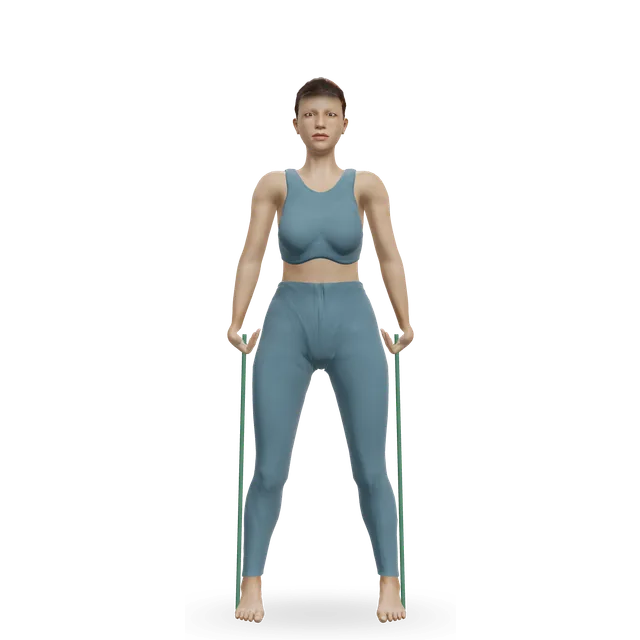
Band lateral raise demonstrated on the 3D figure3D demoBand lateral raiseBeginner · A band

2 minutes a day, 5 days a week, progressing the band · The trial dose in workers with neck and shoulder pain, as our neck pain when cycling guide uses it

Harder: Dumbbell lateral raise

Standing band external rotation demonstrated on the 3D figure3D demoStanding band external rotationBeginner · A band + An anchor point

2 to 3 sets of 15, light band, slow return, elbow at your side · As in the shoulder impingement guide, which takes 3 sets of 15 from the Holmgren trial

Easier: Stick-assisted external rotation (lying) · Harder: Side-lying external rotation

Scapular push-up (push-up plus) demonstrated on the 3D figure3D demoScapular push-up (push-up plus)Beginner · No equipment

3 sets of 10 to 15, on a wall or bench first · As in the shoulder impingement guide

Easier: Dumbbell shoulder-blade punch · Harder: Push-up

Move on when: Every set stays within the pain rule, and an easy 45-minute ride on the hoods or tops leaves the upper back and shoulders no worse the next morning.

Follow along: a timer, a cue and the next move, one step at a time.
Stage 3

Strength, and back to longer rides

From about week 6, 2 or 3 days a week, then ongoing; the NHS asks adults to do strengthening activities for all the major muscle groups, the shoulders and back included, on at least 2 days a week. Riding comes back by our suggested steps. After a broken collarbone, ribs or a dislocated shoulder, ride only when your team says you can.

Chest-supported dumbbell row demonstrated on the 3D figure3D demoChest-supported dumbbell rowBeginner · A dumbbell + A bench or box

3 sets of 8 to 12 · As in the upper back pain and shoulder impingement guides

Harder: Supported single-arm dumbbell row

Face pull demonstrated on the 3D figure3D demoFace pullIntermediate · A band

3 sets of 12 to 15 · As in the upper back pain and shoulder impingement guides

Easier: Prone Y-T-W raises · Harder: Tuck back lever

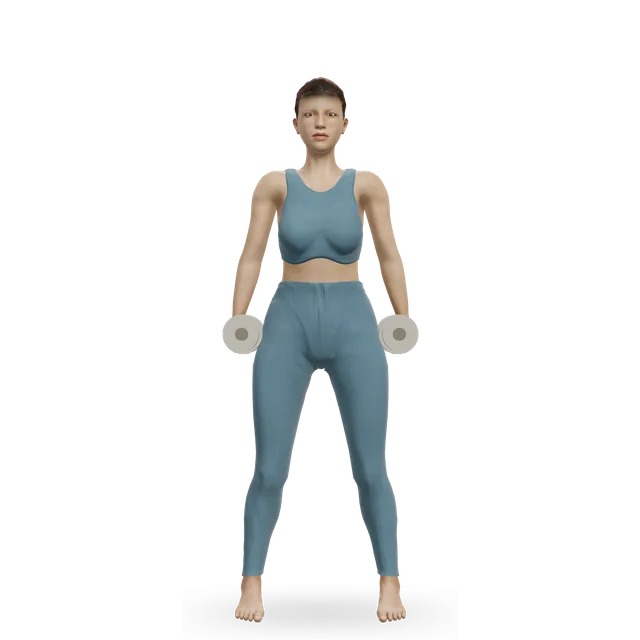
Dumbbell shrug demonstrated on the 3D figure3D demoDumbbell shrugBeginner · A dumbbell

2 to 3 sets of 8 to 12, stopping with 2 or 3 reps in reserve, pausing a second at the top · The move page's dose. The shrug is one of the trapezius pain trial's exercises, as our neck pain guides list them

Harder: Snatch shrug

Side plank demonstrated on the 3D figure3D demoSide plankIntermediate · No equipment

2 holds of 20 to 40 s each side · As in our strength workout for cyclists. Trunk support so the arms carry less on the bike (our reasoning, untested)

Easier: Knee side plank · Harder: Side plank with leg lift

Farmer's carry demonstrated on the 3D figure3D demoFarmer's carryBeginner · A dumbbell + A kettlebell

3 walks of 20 to 30 m · As in the upper back pain guide. Start light

Harder: Suitcase carry

Stationary cycling demonstrated on the 3D figure3D demoStationary cyclingBeginner · Cardio machine

Every other day: 20 to 30 min, easy, on the hoods or tops, with the bars raised if you can · Our suggestion. Change hand position and sit up every 10 to 15 minutes. Ride a similar route 3 or 4 times within the pain rule before adding anything, then add time, about 10% a week, before hills or harder efforts

Easier: Recumbent exercise bike · Harder: Air bike intervals

Move on when: Our suggestion: keep adding time, about 10% a week, while the pain rule holds. The drops, aero bars, long standing climbs, sprints, rough trails and fast group rides come back last, in short spells. Back on the road after a crash, you need to be able to grip, steer, brake and look over your shoulder safely.

Follow along: a timer, a cue and the next move, one step at a time.

What to change for now

What to change on the bike today (written steps)

Our 3D figure can't show these changes. They come from small lab studies in healthy riders, and where a step is our suggestion, it says so. Change one thing at a time, a few rides apart.

  • 1. Raise the bars or shorten the reach, with spacers, a shorter or higher stem, or a bar with a shorter reach. With racing bars, the bending load at the base of the neck was three times that of sitting upright in a lab study, and reach changes were taken up at the shoulders and elbows.
  • 2. Keep the saddle level, not nose-down. A saddle tilted 10 degrees nose-down made the elbow-straightening muscles work about 23% harder, because you slide forward onto your arms.
  • 3. Choose bars about as wide as your shoulders: matching widths lowered arm muscle activity in a lab study of 10 women.
  • 4. Keep your elbows soft, your grip light and your shoulders down, and change hand position and sit up every 10 to 15 minutes (our suggestion).
  • 5. Fewer long standing climbs and sprints for a while: loads through the arms were higher standing and at high power.
  • 6. Shorter rides, then build, because how much you ride is the best-supported link with overuse pain. Long, low and fast rides come back last.
  • 7. On rough trails and gravel, lower tyre pressures and wider tyres, and relax your arms over bumps (our suggestion; untested).
  • 8. After a crash, no riding outdoors until your fracture or shoulder team says you can, and indoor riding usually comes first (our suggestion). The NHS says no sport while a collarbone heals.

Sources 5, 7, 10, 8, 9, 36, 20

Braces, injections and surgery

We found no evidence for posture braces or taping in riders; the evidence favours strengthening. A steroid injection added no lasting benefit for rotator cuff pain in the largest trial. Surgery belongs to crash injuries, such as some broken collarbones and AC joint and rotator cuff injuries, and is your fracture or shoulder team's decision.

Sources 30, 31, 35, 17, 21

Positions to swap, and why

Habit or positionWhy it mattersInstead
Riding on with chest pain, breathlessness, or pain spreading to the arm, jaw, neck or backThese can be signs of a heart problem.Stop, and follow the warning signs: 999 for a possible heart attack.
A long, low reach and long spells in the drops or on aero barsWith racing bars, the bending load at the base of the neck was three times that of sitting upright in a lab study.Higher bars or a shorter reach, and the hoods and tops, with low positions in short spells.
A nose-down saddleYou slide forward onto your arms: the elbow-straightening muscles worked about 23% harder in a lab study.A level saddle.
Locked elbows, a tight grip and hunched shoulders for hoursThe same muscles hold the same effort for hours (our suggestion).Soft elbows, a light grip and shoulders down, changing hand position every 10 to 15 minutes.
Riding outdoors too soon after a crashA second fall risks the healing bone, and the NHS says no sport while a collarbone heals.Your team's plan, with indoor riding first (our suggestion).
Getting your upper back cracked as the fixManipulation did no better than a sham for upper back pain in a trial.Movement and strength, as in the plan.
Pulling your head down into a neck stretchPulling on the head at the end of the range is a lot for a sore neck, as our neck guides explain.Let the head's weight do the work.Try: Upper trap release
Heavy overhead pressing while the front of the shoulder hurtsOverhead pressing and raises above shoulder height usually bring rotator cuff pain on, as our shoulder impingement guide explains.Rows and band external rotation within the pain rule.Try: Standing band external rotation
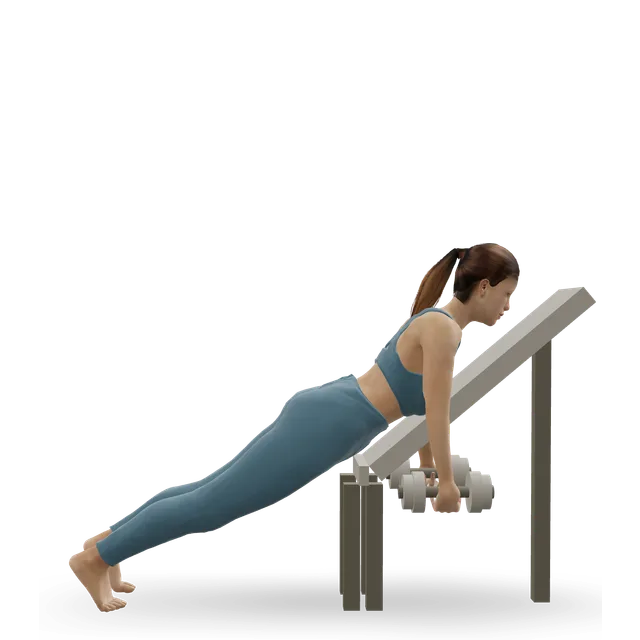
Bench dips while the front of the shoulder hurtsThey push the shoulder deep behind you under your body weight (our suggestion).Incline push-ups.Try: Incline push-up
The foam roller over the upper back with osteoporosis or a past spinal fractureOur upper back pain guide swaps it out in that case, and the roller's own guide says to clear it first.The low cobra.Try: Low cobra (Bhujangasana)

Routines to follow

More moves for this area

Questions people ask

Why does my upper back hurt when I cycle?

Holding part of your weight on the bars and keeping your head up to see the road works the shoulder-blade, upper back and neck muscles for hours, more so with a long, low reach and on long or hard rides. It usually looks like muscle fatigue, but we found no study of upper back pain in riders as an outcome.

Why do I get pain between my shoulder blades on the bike?

Usually tired muscles holding the position, made worse by a long, low reach, a nose-down saddle that slides you onto your arms, wide bars or a tight grip (our reading of small lab studies). Raise the bars or shorten the reach, level the saddle and change hand position often. The NHS advises seeing a GP for back pain that comes from the top of the back, between the shoulders.

Is it my bike fit?

Often partly: reach and bar height affect how much weight your arms and shoulders hold. No study shows a fit prevents upper back pain, so pair any change with strength work.

Is it bad posture?

Not in the way it's usually meant. Riders' upper backs were less rounded on the bike than when standing, rounding wasn't linked with shoulder pain, and reviews of low back pain find no agreement that posture causes it.

What exercises help upper back and shoulder pain from cycling?

Strengthening the shoulder-blade, neck and arm muscles has the best support: it reduced long-lasting neck pain in a Cochrane review, and 2 minutes a day of band work helped neck and shoulder pain in office workers. For pain at the front of the shoulder, rotator cuff and shoulder-blade exercise helps. None of these trials was in riders; the plan builds from gentle movement to bands and then rows.

Why does the front of my shoulder hurt on long rides?

Pain at the front or outside of the shoulder is usually the rotator cuff, and leaning on the bars loads it (our reading). A higher, shorter front end takes weight off your arms, and rotator cuff and shoulder-blade exercise helps this kind of pain in shoulder clinic trials.

Could upper back or shoulder pain on a ride be my heart?

It can. Call 999 for chest pain that doesn't go away, or pain that spreads to your arm, neck, jaw, shoulder, stomach or back, especially with sweating, feeling sick, light-headedness or breathlessness. Pain or tightness that comes on with effort, such as a climb, and eases after a few minutes' rest needs NHS 111: it can be angina.

I fell off and my shoulder hurts. What should I do?

Go to A&E if the shoulder looks out of place, has changed shape or swollen quickly, or the arm won't move, or if you have difficulty breathing, chest pain or are coughing up blood. In one hospital series, a third of riders' shoulder injuries were broken collarbones, and about a fifth each were dislocations of the joint at the end of the collarbone and rotator cuff tears. Sudden weakness lifting the arm after a fall needs a same-day check.

When can I ride after a broken collarbone?

When your fracture team says so: the NHS says most people recover in 6 to 8 weeks and shouldn't play sport while it heals. Professional riders with a single break were back racing after about 8 weeks on average, mostly after surgery, but they had medical teams, so that isn't a target. Indoor riding usually comes before the road.

Can I cycle with broken or bruised ribs?

The NHS says ribs usually heal by themselves within 2 to 6 weeks, and not to play sport or do exercise that makes the pain worse. Gentle indoor riding that doesn't hurt is usually fine before the road (our suggestion). Breathlessness or chest pain that's getting worse, or coughing up blood, is a 999 call.

Should I get my back cracked?

There's no need: in a trial of 143 people with upper back pain, manipulation did no better than a sham treatment, and everyone improved with time. Movement and strength work are the better bet.

Do I need a scan?

Not without warning signs. After a crash, a suspected broken collarbone needs an X-ray, and chest symptoms need an ECG and blood tests, not a back scan.

Related exercise guides

Other pain guides

Sources

  1. Wilber 1995 · Overuse injuries in 518 recreational cyclists (survey, Int J Sports Med)
  2. Dettori 2006 · Non-traumatic bicycle injuries (literature review, Sports Medicine)
  3. Briggs 2009 · How common upper back pain is in children, teenagers and adults (systematic review, BMC Musculoskelet Disord)
  4. Bini 2023 · Pain and body position on the bike in 71 road cyclists (retrospective study, Sports Biomech)
  5. Kolehmainen 1989 · Handlebar position, neck posture and load on the neck in 8 men (lab study, Clin Biomech)
  6. Chen 2012 · Handlebar height and the curves of the neck and lower back in 26 riders (lab study, Work)
  7. Brand 2020 · Saddle tilt, reach and upper body movement and muscle activity in 12 recreational cyclists (lab study, Res Q Exerc Sport)
  8. Costes 2016 · Riding position, power and loads through the arms in 17 cyclists (lab study, J Appl Biomech)
  9. Turpin 2017 · Arm and trunk muscle activity in seated and standing cycling (lab study, J Sports Sci)
  10. Lin 2025 · Handlebar width and muscle activity in 10 women cyclists (lab study, J Funct Morphol Kinesiol)
  11. Antequera-Vique 2023 · Cycling and the shape of the spine on and off the bike (systematic review, Sports Biomech)
  12. Muyor 2011 · Upper and lower back posture and pelvic tilt in highly trained cyclists (cross-sectional study, J Sports Sci Med)
  13. Muyor 2011 · The upper back in elite cyclists and non-athletes (cross-sectional study, J Back Musculoskelet Rehabil)
  14. Barrett 2016 · Upper back posture and shoulder pain: 10 studies (systematic review, Manual Therapy)
  15. Swain 2020 · Spine posture, physical exposure and low back pain (review of 41 systematic reviews, J Biomech)
  16. Fallon 2025 · Injury and illness across all competitive cycling disciplines: 44 studies (systematic review and meta-analysis, BMJ Open Sport Exerc Med)
  17. Goldstein 2016 · Shoulder injuries in 157 cyclists (hospital series, Isr Med Assoc J)
  18. Tan 2022 · Arm and shoulder injuries in 733 people hurt on bicycles (hospital series, Arch Bone Jt Surg)
  19. Nishimi 2016 · How often cyclists break a collarbone (survey of 140 professional and amateur riders, Acta Ortop Bras)
  20. NHS · Broken collarbone (past its review date: reviewed August 2023, review due August 2026)
  21. Konarski 2022 · Return to racing after a broken collarbone in professional road cyclists (records study, J Orthop)
  22. van der Ven 2019 · Return to cycling after plate fixation of a broken collarbone in 25 cyclists (case series, Clin J Sport Med)
  23. NHS · Broken or bruised ribs
  24. NHS · Dislocated shoulder
  25. NHS · Heart attack
  26. NHS · Angina
  27. NHS · Shoulder pain (past its review date: reviewed May 2023, review due May 2026)
  28. Johansson 2017 · New cases and the course of mid-back pain in the general population (systematic review, Eur J Pain)
  29. Crothers 2016 · Manipulation, an instrument-assisted massage technique or a sham for upper back pain (randomised trial of 143, Chiropr Man Therap)
  30. Gross 2015 · Exercises for mechanical neck disorders: 27 trials (Cochrane review)
  31. Andersen 2008 · Specific strength training vs general fitness training for chronic neck muscle pain (randomised trial of 48 women, Arthritis Rheum)
  32. Andersen 2011 · Small daily amounts of resistance training for frequent neck and shoulder pain (randomised trial of 198, Pain)
  33. Ylinen 2003 · Neck muscle training for chronic neck pain in 180 women (randomised trial, JAMA)
  34. Holmgren 2012 · Specific exercise and the need for surgery in subacromial impingement (randomised trial of 102, BMJ)
  35. Hopewell 2021 · Progressive exercise or best-practice advice, with or without a steroid injection, for rotator cuff disorders: GRASP (randomised trial of 708, Lancet)
  36. Visentini 2022 · Factors linked with overuse injury in cyclists: 18 studies (systematic review, J Sci Med Sport)
  37. Smith 2017 · Should exercises be painful in long-lasting muscle and joint pain? (systematic review and meta-analysis of 7 trials, BJSM)
  38. NHS · Back pain
  39. NHS · Chest pain (past its review date: reviewed August 2023, review due August 2026)
  40. Olmedillas 2012 · Cycling and bone health: 31 studies (systematic review, BMC Medicine)
  41. NHS · Physical activity guidelines for adults aged 19 to 64

Exercise education, not a diagnosis or treatment plan. It is written from the guidelines and studies listed above; review by a clinician is pending. If your pain follows an injury, is severe, is getting worse, or comes with any warning sign listed on this page, get it assessed. Health disclaimer.