Fascial adhesions: what adhesions are and aren't, after surgery and a caesarean, endometriosis, the knots and adhesions claims, what the evidence shows, and what helps
"Adhesions" means two different things. Inside the belly and pelvis, real adhesions are bands of scar tissue that join organs after surgery, a caesarean, an infection or endometriosis: most people who have had belly surgery have some, most never notice, and a few get a blocked bowel. Online, "fascial adhesions" usually means stiff, knotted muscles said to be glued fascia that a roller, tool or therapist can break up.
The honest headline: breaking adhesions up by hand has only been shown in rats, the human studies are small and uncontrolled, rollers can't break up fascia, and even cutting adhesions in an operation did no better than a look for long-term belly pain. New belly or bowel symptoms always need checking by a doctor first.
This guide starts with the belly signs that need help now, then explains both kinds of adhesion, what the evidence shows for hands-on release, rolling and surgery, what helps after an operation and with everyday stiffness, and who should avoid deep belly pressure.
Surgical adhesions are real bands of scar tissue inside the belly and pelvis, joining organs or the belly wall after surgery, infection, radiotherapy or endometriosis. "Fascial adhesions" is a popular name for stiffness and knots in muscles, which nobody has shown to be glued fascia.
In one older series (from 1990, which we read as a summary), 93% of 210 people having a repeat open belly operation had adhesions from earlier surgery. Most are only found when someone operates again.
About 2 in 100 people get a bowel blockage from adhesions after belly surgery, and adhesions cause over half of all small bowel blockages. Not being able to poo or fart at all is a 999 call: the signs are just below.
Daily belly mobilisation in the first days after surgery left fewer adhesions in rats. Studies in people are small, mostly without a comparison group, partly by the method's owners, and none measured adhesions breaking up.
Dense fascia needs forces far beyond the body's normal range to change shape, and the evidence that rolling releases "fascial adhesions" is limited or inconclusive. Rolling and stretching ease stiffness for a while; regular movement and strength work change it over weeks.
Hands-on treatment never replaces checking new belly or bowel symptoms. A&E means accident and emergency.
Call 999 or go to A&E
Call 999 or go to A&E: tummy pain that started suddenly and is severe, you're vomiting blood or your vomit looks green or like ground coffee, there's a lot of blood coming from your bottom or your poo is black and sticky, you cannot pee at all, you cannot poo or fart at all, you have spots or a rash that does not fade when you press it (it may be harder to see on brown or black skin), or you're struggling to breathe. Don't drive yourself.
If you've had belly surgery and get cramping tummy pain with vomiting, a swollen tummy and can't poo or fart, call 999: adhesions can block the bowel. This is our suggestion, from the emergency surgery guideline's description of a blocked small bowel and the NHS stomach ache page.
Call 999 or go to A&E now if you have a femoral hernia (a small lump at the top of your thigh, in your groin) and very bad tummy pain, you feel sick or you're being sick, you cannot fart or poo, you have a high temperature or you feel hot, cold or shivery, or you've suddenly become confused. Do not drive to A&E. With any other hernia and pain in or around it, a bloated tummy, feeling or being sick, vomiting blood or vomit that looks like coffee grounds, constipation, a high temperature or feeling hot, cold or shivery, or sudden confusion, get help from NHS 111.
If you have pelvic pain and any of these. Don't drive yourself to A&E.
It's severe, getting worse, or it hurts to move or touch the area.
You feel faint, dizzy or light-headed, or you pass out.
You have pain in the tip of your shoulder.
You have difficulty breathing.
You have heavy bleeding from your vagina.
You suddenly feel confused.
Real adhesions: inside the belly and pelvis
What they are
The World Society of Emergency Surgery's guideline describes adhesions as fibrous tissue joining surfaces or organs inside the belly that are normally separate. Surgery causes most, and radiotherapy, endometriosis, inflammation and tumours cause others. They form on the lining of the belly (the peritoneum), a different tissue from the fascia around muscles.
In a series from 1990 that we read as a summary, 93% of 210 people having an open belly operation after earlier surgery had adhesions from it, and 10.4% of people having a first operation had some. It's one older series, but a 2026 surgical review agrees that adhesions are common and adds that they're hard to see on scans, usually becoming apparent only when they block the bowel.
Pooling 196 papers, about 2 in 100 people (2.4%) had a bowel blockage from adhesions after belly surgery, fewer after keyhole surgery (1.4%) than open surgery (3.8%), and adhesions caused 56% of small bowel blockages. The studies varied a lot, so the figures are rough. Over 10 years after open surgery in Scotland, 5.7% of all readmissions were directly related to adhesions. Adhesions also make later operations longer and riskier.
A blocked small bowel causes tummy pain, vomiting, a swollen tummy and constipation. Most episodes settle with treatment in hospital without an operation (roughly 70% to 90%), and about 1 in 5 come back within 5 years. The NHS's 999 list for tummy pain includes not being able to poo or fart at all.
In 1,283 repeat caesareans, adhesions were found in 24.4% of women at a second caesarean and 42.8% at a third. An expert panel funded by a maker of adhesion barriers collects wider ranges from other studies (24% to 46% at a second, 43% to 75% at a third). Most cause no problems; our scar tissue guide covers the scar itself.
The NHS says some women need more surgery if surgery causes scarring that makes organs stick together (adhesions). The National Institute for Health and Care Excellence (NICE) recommends removing endometriosis and cutting adhesions when it doesn't involve the bowel, bladder or ureter, because this improves the chance of pregnancy. Neither NICE nor the European Society of Human Reproduction and Embryology (ESHRE) recommends any specific treatment without medicines or surgery for the pain, because the benefits and harms are unclear. Our endometriosis guide covers exercise and the pelvic floor.
Surgeons often find adhesions in people with long-term belly pain after earlier operations, but finding them doesn't show they cause the pain. In a blinded trial of 100 such people, pain eased as much after a camera look alone as after the adhesions were cut, and the authors concluded cutting them couldn't be recommended for this. A 2026 review found that 67% improved in 27 studies without a comparison group, but in 4 randomised trials (271 people) 38.9% improved after cutting against 36.2% after a look.
"Fascial adhesions" in muscles: what the phrase means, and what it doesn't
What people mean online
Fascia that has stuck to itself or to muscle, said to cause stiffness, knots and pain all over, and to need breaking up with rollers, tools or deep massage. You'll see it with body parts attached: the shoulder, neck, calves, feet, face and lower back.
Sticky is not scarred
Fascia researchers separate densification, a thickened glide layer thought to ease with movement and warmth, from fibrosis, true scarring after injury, surgery or long immobility. Our densification essay calls the first a leading theory and notes that the wellness world sells scarring language (adhesions, scar tissue, knots) to people who, on that view, mostly have the sticky kind. Real scarring between layers does happen after an injury or operation, and changes slowly; our scar tissue guide covers it.
Knots are tender spots in muscle whose nature is debated: critics argue the trigger point theory has been refuted while accepting that the symptoms are real. No study shows they are glued fascia, and there's no test for "fascial adhesions" in a living person's muscles. Our trigger points guide covers the debate.
A modelling study found that squashing or shearing dense fascia by even 1% needs very large forces, outside the body's normal range, and concluded that the release therapists feel can't come from the firm tissue changing shape. An evidence synthesis found the evidence for "fascial adhesion release" by rolling limited or inconclusive; in its detail, four small trials suggested better gliding between layers after rolling, but nobody has an agreed way to define or measure an adhesion in muscle. Reviews of how manual therapy works found support for changes in the nervous system and blood flow, not in the tissue.
In 30 rats, daily belly mobilisation from the day after surgery left fewer and milder adhesions at a week, and one session at a week showed signs of disrupted adhesions. In 147 rats, daily modelled manual therapy after surgery shrank the main adhesion; after an operation to cut adhesions, none of 15 treated rats grew the main one back against 3 of 12 untreated rats, a difference that could be chance. This is prevention in the first days after surgery, in rats, not breaking up old adhesions in people.
Soft tissue work for adhesion-related belly painEmerging evidence
A review found 9 studies of people aged about 11 to 89, 4 of them without randomisation; all 5 that measured pain reported less pain. The authors call this strong preliminary evidence, which we think overstates it: the studies are small and mixed, include the method owners' own studies, and none measured the adhesions. Our stomach guide gives the same review.
In 27 people with past bowel blockages from adhesions, about 20 hours of manual therapy over 5 days was followed by less pain and better quality of life, with no comparison group. In a study that wasn't randomised, 103 treated people reported fewer repeat partial blockages at 90 days than 136 untreated people recruited online (8.74% against 21.77%); the authors list the lack of randomisation and of a sham as limitations. The method's owners are authors of both.
Two women with 6 to 9 years of caesarean scar pain improved after 4 sessions of fascial scar release, in a case series. Our scar tissue guide covers scar massage.
Cutting adhesions for long-term painStrong evidence
In blinded randomised trials, cutting adhesions did no better than a keyhole look alone (4 trials, 271 people, 38.9% against 36.2% improved), even though uncontrolled studies report about two thirds improving. Surgery is still the treatment for a blocked bowel that doesn't settle.
Rolling gives short-term range and pain relief, but the evidence that it releases adhesions is limited or inconclusive, and rolling researchers conclude it works mainly through the nervous system.
We found no trial of exercise or massage to prevent adhesions in people, no trial of fascia blasting, scraping or massage guns for adhesions, and no treatment measured against adhesions seen at a later operation. The human manual therapy studies are small, mostly uncontrolled and partly by the method's owners. We read most studies' summaries (abstracts), not their full texts.
After belly surgery or a caesarean: breathe, draw in, slide, walk
The breathing, draw-in, heel slide and walking doses are our core exercises after bowel or stoma surgery routine's, where the walk builds towards 30 minutes a day by 2 to 3 months; the lateral breathing move page's own dose is 5 to 8 breaths at the start of every session. Supporting the wound when you cough is our suggestion. No trial shows that breathing, exercise or massage prevents or breaks up adhesions in people; this is for recovery and comfort.
Check first: follow your surgical team's plan. Tummy pain with vomiting, a swollen tummy, not being able to poo or fart, a wound that is red, hot, swollen or leaking, or a painful, swollen leg go to the warning signs, not to exercise.
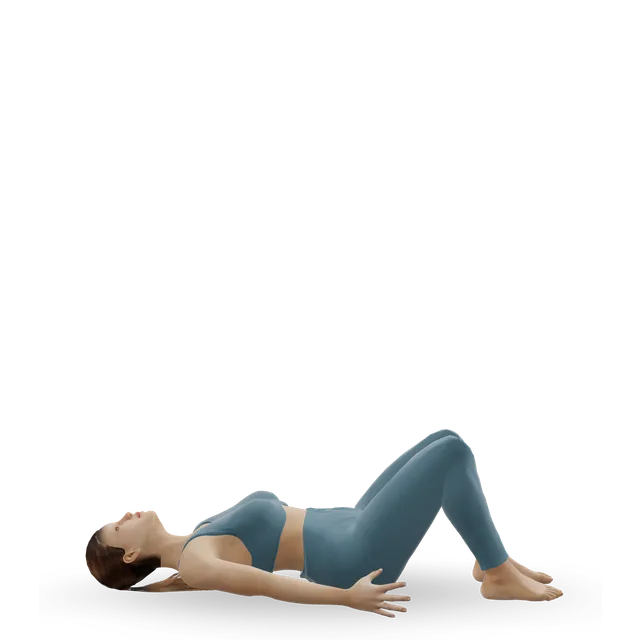
Lie on your back with your knees bent and a pillow under your head. Wrap your hands around your lower ribs, breathe in through your nose so the ribs widen into your hands, and breathe out slowly through pursed lips: 5 breaths.
As you breathe out, draw your belly button gently towards your spine and keep breathing: 3 to 5 holds of 5 to 10 seconds.
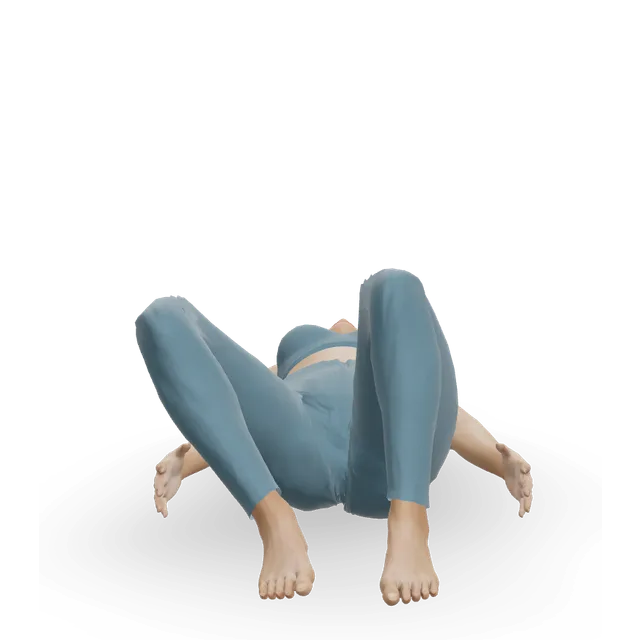
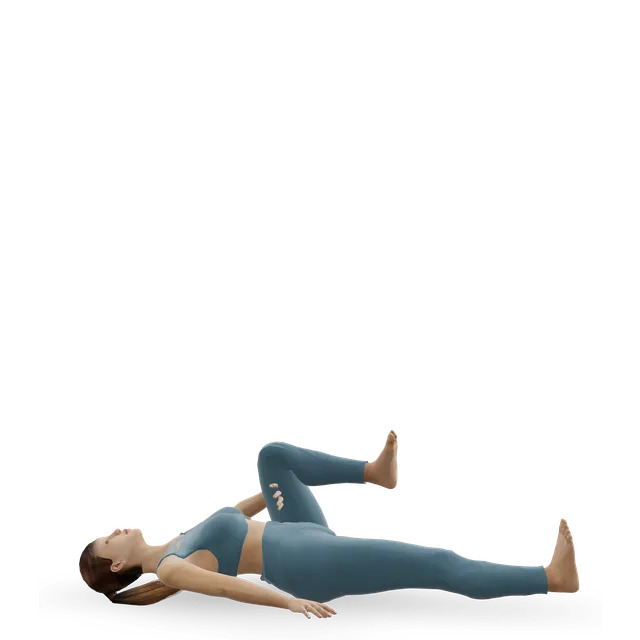
Slide one heel away as you breathe out, keeping your pelvis still: 3 to 5 each side.
Get up and walk for 5 to 10 minutes, adding a little each day.
Stop anything that pulls hard at the scar or hurts, and support the wound with a hand or a pillow when you cough.
Once the wound has fully healed, add scar massage, as our scar tissue guide shows.
Loading the 3D figure…
Drag to turn
Gets into position, then repeats the movement. Technical checks passed; qualified exercise review is pending.
Each dose names its source or is our editorial starting point. Doses are starting points, not prescriptions.
Recovering from belly surgery
Our core exercises after bowel or stoma surgery routine, and walking most days, building towards 30 minutes a day by 2 to 3 months, as that routine suggests. Your surgical team's plan comes first.
A healed scar
5 to 10 minutes, 2 to 3 times a day, and after a caesarean at least 4 times a week: our scar tissue guide's doses, from NHS scar leaflets. Start only once the wound has fully closed.
Constipation after surgery
Self tummy massage, each step 3 to 4 times, when you're most likely to need the toilet, such as after food and drink, or the night before: the move page's dose, from NHS Lothian's pelvic health physiotherapy booklet. Ask your surgical team first, and don't use it on recent scars.
Everyday stiffness called "adhesions"
Our tight fascia guide's 6-minute move break, first thing or after long sitting. If you like rolling, about 90 seconds for each muscle you roll, for example 2 or 3 slow rounds of 30 to 45 seconds: the rolling move pages' dose, from a review of rolling studies. Expect a few minutes of ease, then build strength over weeks.
Pain care through a GP or pain service, and pelvic health physiotherapy for a tight pelvic floor; our fascia and chronic pain and pelvic floor guides cover them. Having adhesions cut didn't ease long-term pain more than a look in blinded trials.
The surgery and postnatal routines are for recovery; the endometriosis and pelvic floor routines for pelvic pain; the fascia stretching routine for everyday stiffness. None breaks up adhesions.
have an abdominal aortic aneurysm, or feel a pulsing in your tummy;
have a stent in a kidney tube (ureter) or elsewhere in the abdomen;
have a hernia, or have had abdominal surgery recently, including a caesarean that hasn't fully healed;
have tummy, side or groin pain that hasn't been explained.
Tummy massage
Don't use tummy massage if you're pregnant, have any hernia in your tummy, have had recent tummy surgery or have recent scars, have cancer or a growth in your tummy, have Crohn's disease or ulcerative colitis, have IBS with a 'spastic colon', or have an unstable spinal injury. Stop if it hurts.
Harms
A woman's pancreas ruptured after a vigorous tummy massage, and a man on blood thinners had a large bleed in his tummy wall after using a massage gun there. Case reports show this can happen, not how often. Keep foam rollers, balls, scrapers, fascia blasters and massage guns off the tummy.
After surgery
After surgery, don't roll or press on the wound or the new scar until your surgical team says it has healed (our suggestion, in line with the expert consensus that open wounds are a reason not to roll). Our scar tissue guide covers when to start scar massage.
When belly, pelvic and scar symptoms need a GP
The 999 signs are near the top of this page.
Urgent GP appointment or NHS 111
Tummy pain that suddenly gets much worse, or tummy pain when you're pregnant, or with blood in your poo, unusual bleeding or discharge from your vagina, or diarrhoea or vomiting that hasn't gone away after a few days.
Bloating with vomiting, diarrhoea or constipation, with a stomach ache, with a high temperature, or with a swelling or lump in your tummy, or if you cannot pee, poo or fart.
You find it difficult to pee or poo, or there's blood in your pee or poo.
Tummy pain that is getting worse, or a bloated tummy.
The scar is swollen, painful or warm to the touch, or has pus coming out.
Redness spreading more than 2 centimetres from the scar that doesn't fade within 24 hours.
Stomach pain, bloating or indigestion that doesn't go away or keeps coming back, or a lump in your tummy.
Your bowel habit has changed for 4 weeks or more, especially if you're over 40, even if you've already been diagnosed with IBS.
The NHS says see a GP if you have any symptoms of bowel cancer, such as changes in your poo, blood in your poo, which may look red or black, tummy pain, a lump in your tummy or losing weight without trying. The NHS adds: try not to be embarrassed, because doctors are used to talking about these symptoms.
You think you might have endometriosis, or your symptoms affect your daily life, work or relationships.
A painful lump in a caesarean scar, especially one that swells or hurts around your period: rarely, this is endometriosis in the scar.
Pain that is getting worse instead of better, or that stops you doing everyday things.
UK advertising rules say claims to treat conditions that need medical supervision could discourage people from getting essential treatment. Don't stop a prescribed medicine without talking to your doctor, and don't put off seeing a GP.
Ask a GP for advice about symptoms that don't go away or keep coming back, and don't just talk to a therapist (our suggestion, adapted from the NHS page on complementary therapies).
Myths
"You can break up adhesions with massage"Mixed evidence
Daily mobilisation reduced adhesions forming in rats in the first days after surgery. In people, the studies are small, mostly uncontrolled, partly by the method's owners, and none measured adhesions breaking up, and hands can't deform dense fascia.
"Foam rolling breaks up fascial adhesions"Mixed evidence
The evidence for releasing "fascial adhesions" by rolling is limited or inconclusive, and rolling works mainly through the nervous system. Our foam rolling verdict says the same.
"Fascia blasting or scraping breaks up adhesions and scar tissue"
We found no trial of either for adhesions. Our fascia blasting verdict covers the tool, and a bruise is bleeding under the skin, not progress.
"Adhesions mean your stiffness can't change"Mixed evidence
Most everyday stiffness eases with regular movement and strength work over weeks, as our tight fascia guide sets out. Real scarring changes slowly and needs assessing.
It depends who's using the words. Surgeons mean bands of scar tissue inside the belly or pelvis, which are real and common after surgery. Online, it usually means stiff, knotted muscles said to be stuck fascia, which nobody has shown.
What are the symptoms of adhesions after surgery?
Most cause none. Some may play a part in long-term belly pain, and a few block the bowel: cramping tummy pain, vomiting, a swollen tummy and not being able to poo or fart, which needs a 999 call.
How common are adhesions after a C-section?
In one large study, about 1 in 4 women had adhesions at a second caesarean and 4 in 10 at a third. Most cause no problems.
Can you break up adhesions with massage?
Not that any study in people has shown. Daily mobilisation soon after surgery reduced adhesions forming in rats, but the human studies are small and uncontrolled, and none measured the adhesions.
How do I break up fascial adhesions at home?
You can't, and you don't need to: hands and rollers can't change dense fascia. Rolling and stretching ease stiffness for a while, and regular movement and strength work change it over weeks.
Are adhesions and scar tissue the same?
Adhesions are a kind of scar tissue: bands that form between surfaces inside the body that should slide apart. A scar on the skin is the patch where a wound healed, and our scar tissue guide covers it.
Muscle adhesions or knots: what's the difference?
Knots are tender spots in muscle whose nature is debated, and they aren't shown to be adhesions. Pressing one eases it for a while, and strength work helps more over weeks.
Does surgery to cut adhesions help pain?
In blinded trials of people with long-term belly pain, cutting adhesions did no better than a keyhole camera look alone. An operation can be needed for a blocked bowel, and with endometriosis to help fertility.
Can adhesions be seen on an ultrasound or scan?
Not easily. They often only become apparent when they block the bowel, or during an operation.
Does visceral manipulation free adhesions?
It did in rats, in the first days after surgery. We found no study showing it in people, and our visceral manipulation guide covers the therapy.
Can endometriosis cause adhesions?
Yes. Endometriosis and surgery for it can make organs stick together, and some women need more surgery because of it. Guidelines make no recommendation for any specific treatment without medicines or surgery for endometriosis pain.
When should I worry about tummy pain after surgery?
Call 999 for sudden severe tummy pain, vomit that looks green or like coffee grounds, or not being able to poo or fart at all. Get urgent help for pain that keeps getting worse, a swollen tummy, or a red, hot or leaking wound.
Movement education, not medical advice. Stop for sharp or increasing pain, numbness or tingling, and get individual advice if you are pregnant, after an injury or surgery, or managing a health condition. Health disclaimer.