Fascia guide

Tight fascia: what people mean by it, the symptoms they describe, "adhesions" and "stuck" fascia, what the evidence shows, what helps, and when stiffness needs checking

"Tight fascia" is how many people describe stiffness: a pull, a restriction or a stuck feeling that eases as you move and comes back after sitting. The feeling is real. What the words suggest, a sheet of tissue that has shrunk, dried out or glued itself down, is mostly not what research finds. Tightness is a feeling, not a measurement, and people who feel stiff often aren't stiffer when measured.

The honest headline: moving, rolling and stretching ease stiffness a little for a while, regular movement and strength work change it over weeks, and nothing in fascia needs breaking up.

This guide starts with the kinds of stiffness that need a doctor, then explains what fascia is, what scans can and can't show, what "adhesions" really are, a 6-minute move break, and what helps, with the numbers.

The short version

"Tight" is a feeling, not a measurement

In three experiments, people who felt stiff in the back were no stiffer on objective tests than people who didn't, and they overestimated the pressure put on their spine, which looks like the body protecting itself. No scan, blood test or hands-on test diagnoses "tight fascia" in one person, and judging stiffness by touch is unreliable.

Sources 1, 2

Scans show differences between groups, not a diagnosis

Across 14 studies, the lower back's fascia was thicker and stiffer on ultrasound in people with back pain, and older women had thicker lower back fascia than younger women. These studies measured people once, so they can't say what came first, and none gives a test for one person.

Sources 3, 4, 5

Nothing in fascia needs breaking up

Dense fascia needs forces far outside the body's normal range to change shape by even 1%, so hands and rollers can't unstick or break it up. Reviewers call the name "self-myofascial release" misleading, and the evidence for releasing "fascial adhesions" is limited or inconclusive.

Sources 6, 7, 8

Moving, rolling and stretching help a little, for a while

One session of rolling gives a short-term gain in range about equal to stretching. Weeks of stretching give lasting range, mostly because you tolerate more stretch, not because tissue gets longer.

Sources 9, 10, 11

Lasting change comes from regular movement and strength

Rolling programmes worked better when they ran longer than 4 weeks, strength training through a full range improved range as much as stretching, and connective tissue adapts to loading over weeks.

Sources 12, 13, 2

Some stiffness needs a doctor first

Swollen joints with long morning stiffness, new stiffness in both shoulders or hips over 50, stiffness with a fever or after a tick bite, new muscle aches on a statin, pain all over, or a swollen, painful calf: the warning signs are below.

Sources 14, 15

Check first: stiffness that needs help now

Rolling and stretching are never a test for these. A&E means accident and emergency.

Call 999: a painful leg and breathlessness

Calf or leg pain or swelling with breathlessness or chest pain. It could be a clot that has reached the lungs. Do not drive yourself to A&E.

Source 16

Call 999: a stiff neck with a fever

Call 999 or go to A&E: a stiff neck and you can't look at bright lights; a very painful headache; a very high or very low temperature, feeling hot or cold to the touch, or shivering; confusion, slurred speech or not making sense; a rash that does not fade when you press a glass on it; or a first seizure (fit). These can be signs of meningitis. Call too for any other symptoms you're worried might be meningitis.

Same day

  • Same day (urgent GP appointment or NHS 111): throbbing pain in one leg (rarely both), usually the calf or thigh; swelling in one leg (rarely both); red, blue or darkened skin around the painful area, which may be harder to see on brown or black skin; or swollen veins. This can be a deep vein thrombosis (DVT). It is more likely after surgery, a hospital stay, 3 or more days in bed, a journey of over 4 hours, pregnancy or a recent birth, cancer, a previous clot, or oestrogen-containing contraception or HRT.
  • Contact a GP immediately, go to 111.nhs.uk or call NHS 111: a new or frequent headache that usually comes on suddenly (your scalp may also feel sore or tender), pain in the jaw muscles or tongue when eating or talking, or problems with your sight, such as double vision or loss of vision in 1 or both eyes. With pain and stiffness around the shoulders, these can be signs of temporal arteritis (giant cell arteritis), which up to 1 in 5 people with polymyalgia rheumatica develop. If you suddenly can't see from 1 or both eyes, call 999 or go to A&E.
  • Call NHS 111: you take a statin and think you might be having a serious side effect, such as muscle cramps, severe pain or weakness, especially with a high temperature or red or brown pee.
  • Ask for an urgent GP appointment or contact NHS 111 if you have stiffness, aching muscles or joint pain with flu-like symptoms (feeling hot, cold or shivery) or a round or oval rash, after a tick bite or after visiting somewhere ticks live in the past 3 months (our suggestion, from the NHS Lyme disease page).

Sources 16, 15, 17, 18

What tight fascia is, and what it isn't

What people mean

People say "tight fascia" for a pulling or restricted feeling, less range than they expect, aches after sitting or sleeping, and tender bands or lumps under pressure. These feelings are real. The same feelings can come from muscles, tendons, joints, nerves or the fascia around them, and they can't be told apart by touch.

What fascia is

Fascia is the collagen-rich connective tissue that wraps and separates muscles and organs, from loose layers under the skin to tough sheets around muscles. Deep fascia is layered: dense collagen sheets with thin, slippery layers between them, rich in a water-holding substance called hyaluronan, which lets the sheets slide.

Sources 19, 2, 20, 21

What the feeling tracks

Stiffness is a perception your nervous system builds. In three experiments, feeling stiff in the back didn't match measured stiffness, and people who felt stiff overestimated the force pressed on their spine but were better at spotting small changes in it. The authors read this as protection rather than a readout of the tissue. Fascia is well supplied with sensory nerves, so it can add to the feeling, as can a sore muscle, a sensitive nerve or a protective rise in muscle tension.

Source 1

What scans show

Across 14 imaging studies of moderate to high quality, the lower back's fascia was thicker, stiffer (in 3 studies) and brighter on ultrasound in people with back pain, and thicker fascia went with higher pain ratings; how well its layers slide was unsettled. In one study of 121 people, sliding was about 20% lower with long-standing back pain. In 35 healthy women, the older group had 40% to 77% thicker lower back fascia, and thicker fascia went with less flexibility. All of these measured people once, and fascia researchers call ultrasound and elastography promising research tools, not tests for one person.

Sources 3, 4, 5, 2

Tight after hard exercise

In 11 people, the connective tissue over the biceps was 14% to 17% thicker for 2 to 4 days after hard lowering work than after ordinary work, and at 4 days the thickening went with tenderness. This is one real, short-lived kind of "tight fascia", and it settles on its own.

Source 22

The glide layer and "densification"

Hyaluronan has been measured in human fascia at about 6 micrograms per gram where fascia sticks to muscle, about 30 to 35 in the thigh's and belly's fascia, and 90 around the ankle, where there's most sliding. Cadaver work suggested that a "more packed" hyaluronan layer might lie behind some muscle pain, and a review calls this thickening densification and says it reverses easily. That is a hypothesis: our densification essay calls it a leading theory, and we found no study showing it in people with everyday stiffness.

Sources 20, 21, 23

Can fascia tighten on its own?

A little, and slowly. Lower back fascia contained a small number of contracting cells (a median of 1.52% of cells), while thigh and sole fascia had a median of none. In the lab, rat fascia contracted over about an hour, with forces the authors judged too small to change spinal stability within minutes to hours. So fascia doesn't clench like a muscle, and whether stress tightens fascia in people is untested.

Source 24

Morning stiffness

Stiffness after rest is normal and usually eases as you move. The NHS says morning stiffness from osteoarthritis usually wears off within 30 minutes of getting up, while in rheumatoid arthritis it often lasts longer, and the main symptom of polymyalgia rheumatica is morning stiffness lasting longer than 45 minutes. For back pain, the NHS suggests staying active and using a heat pack to relieve joint stiffness or muscle spasms.

Sources 14, 15, 25

"Adhesions" and "stuck" fascia

Real adhesions are scar tissue

After surgery, an injury, an infection or some diseases, collagen can bind layers together and tether nerves and other structures. This is scarring (fibrosis), it changes slowly if at all, and it needs assessing, not pressing. Our scar tissue guide covers scars after surgery.

Sources 2, 23

The everyday claim hasn't been shown

The idea that ordinary stiffness means fascia has glued itself down, and that a roller or a therapist can break it up, isn't supported. Dense fascia barely deforms under the forces of hands or rollers; a living review of 62 reviews found only critically low-quality support for tissue changes from hands-on work, against moderate-quality support for changes in nerves and blood flow; and a 2026 synthesis rated the evidence for "fascial adhesion release" as limited or inconclusive.

Sources 6, 7, 26, 8

What the "release" you feel is

The modelling study concluded that the release therapists and their clients feel can't be the firm tissue changing shape. The easing is real, but it comes mainly from the nervous system: how much stretch you tolerate, muscle tension and sensitivity.

Sources 6, 27

What the evidence says

One rolling session: more range for a whileStrong evidence

Across 26 trials, one session of rolling raised range of movement by a large amount against doing nothing, and by about the same as stretching. It didn't change measured stiffness: in 16 people, rolling the front of the thigh raised range and the point where they first felt the stretch, but passive stiffness stayed the same, and in 30 people, one session of rolling or stretching left the IT band's stiffness unchanged.

Sources 9, 28, 29

Rolling programmesEmerging evidence

Across 11 studies (290 people), weeks of rolling raised range by a moderate amount, and programmes longer than 4 weeks did better than shorter ones. It helped the hamstrings and the front of the thigh.

Source 12

Stretching programmes: mostly toleranceStrong evidence

Across 77 studies, stretch training raised range by a moderate amount, with held and contract-relax stretching doing better than bouncing or moving stretches. Programmes of 3 to 8 weeks changed muscle and tendon stiffness only trivially, so most of the gain is tolerating more stretch. Longer static stretching programmes of 3 to 12 weeks did lower muscle stiffness moderately across 10 studies.

Sources 10, 11, 27, 30

A long stretch and fascia stiffnessEmerging evidence

In 40 adults, one intense 5-minute static calf stretch briefly lowered deep fascia stiffness on an ultrasound measure, measured straight afterwards; 5 minutes of moving stretches didn't. Whether shorter, gentler stretches do the same is unknown.

Source 31

Strength through a full rangeEmerging evidence

Across 11 trials (452 people), strength training through a full range improved range about as much as stretching, though the trials were very different from each other.

Source 13

Hands-on myofascial releaseEmerging evidence

Across 8 trials, a therapist's myofascial release for long-term muscle and joint pain didn't reach the smallest change people notice in the better trials; the reviewers judged the evidence not enough to recommend it.

Source 32

Rolling for painEmerging evidence

The evidence supports short-term pain relief and brief changes in muscle stiffness and blood flow after rolling. Beliefs about lasting effects aren't supported by robust evidence.

Source 8

Where the evidence is thin

Few rolling or release trials compare against a sham, there is no clinical test for "tight fascia", and no trial has tested treatment for it as such. We read most studies' summaries (abstracts), not their full texts.

Ease stiffness that builds with stillness: a 6-minute move break

The cat-cow, rotation, hinge, world's greatest stretch and spiral reach doses are their move pages' (the spiral reach's is called editorial on its page); the rolling dose is the rolling move pages', from a review of rolling studies; the walk is our editorial starting point. No trial has tested this sequence.

  1. Check first: swollen joints with morning stiffness over 30 minutes, new stiffness in both shoulders or hips over 50, stiffness with a fever or after a tick bite, new muscle aches on a statin, or a swollen, painful calf go to the warning signs, not to stretching.
  2. Wake the spine: on all fours, 8 cat-cow waves, slower than feels natural.
  3. Rotate: 6 thoracic rotations each side, moving with the breath.
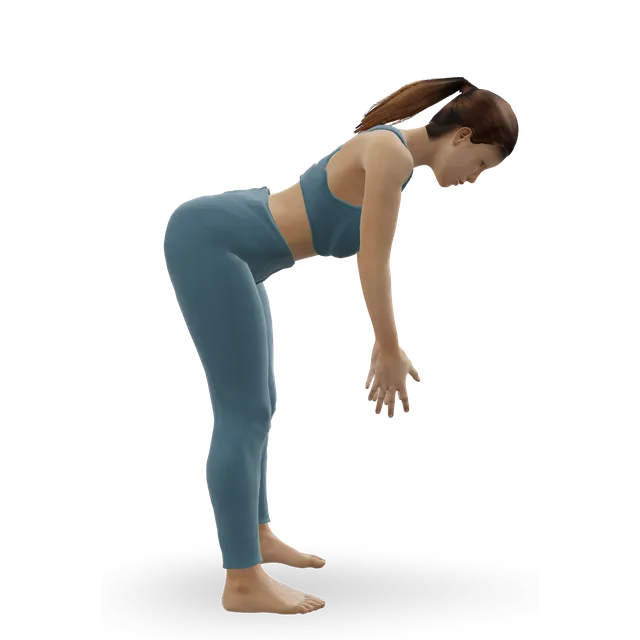
  4. Hinge: 5 slow hip hinge folds, 3 breaths at the bottom. With osteoporosis, keep your back long and fold only as far as your hips allow.
  5. Reach through the whole body: 4 slow world's greatest stretches each side, moving with the breath.
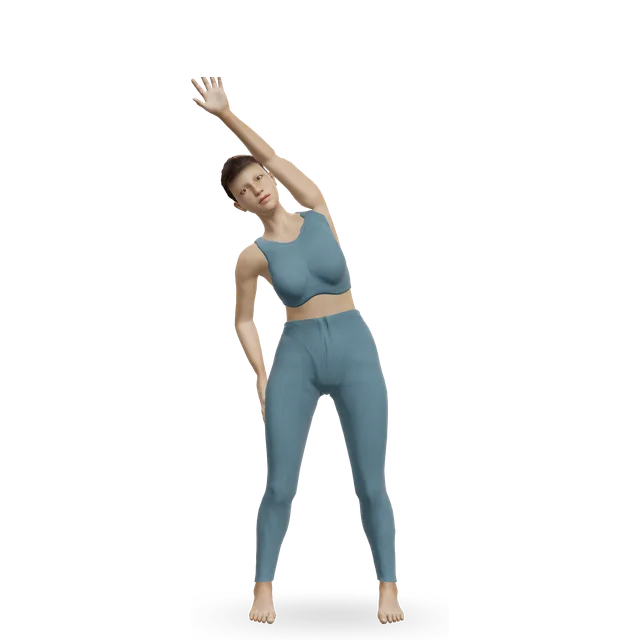
  6. Spiral: 5 to 8 slow standing spiral reaches each side.
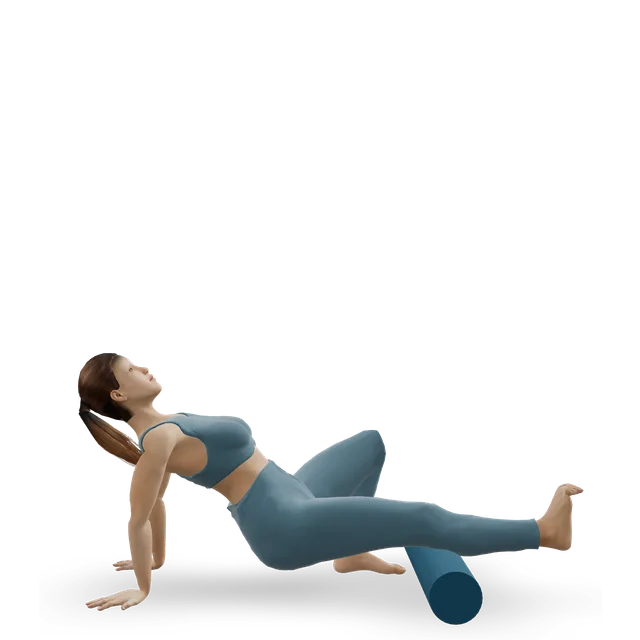
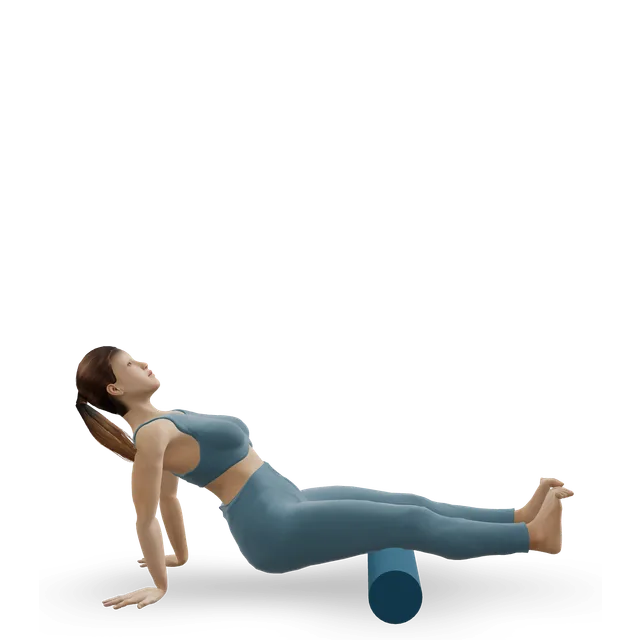
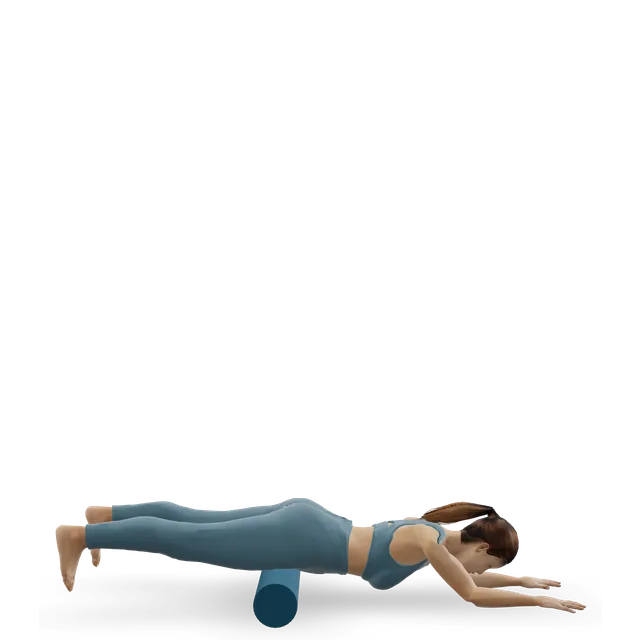
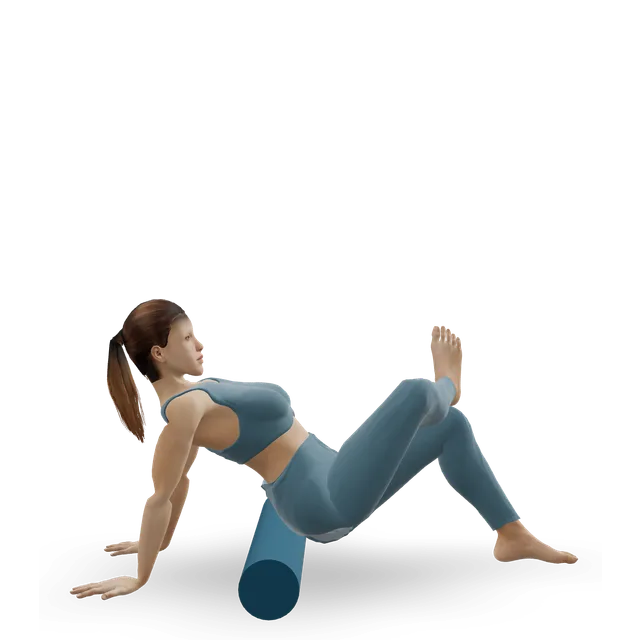
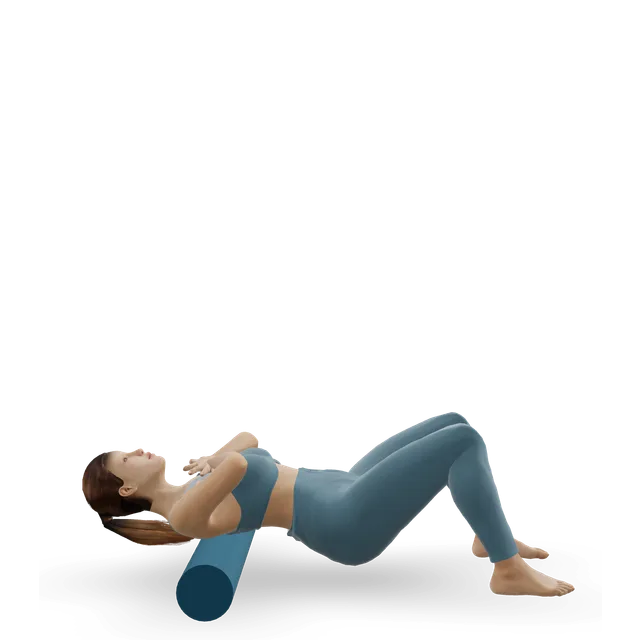
  7. Optional, roll what feels tight: about 90 seconds for each muscle, for example 2 or 3 slow rounds of 30 to 45 seconds, at a pressure you can breathe through. Not on a swollen calf, a bruise, the front of the neck or the bony spine.
  8. Walk for 2 to 5 minutes.

Loading the 3D figure…

Gets into position, then repeats the movement. Technical checks passed; qualified exercise review is pending.

The movement on the figure: World's greatest stretch

What helps: doses

Each dose names its source or is our editorial starting point. Doses are starting points, not prescriptions.

Move often, in many directions

Use the move break above first thing in the morning or after long sitting: our editorial starting point. Training raises collagen turnover in connective tissue and inactivity lowers it, so regular movement is the long game.

Source 2

Roll, if you like it

About 90 seconds for each muscle you roll, for example 2 or 3 slow rounds of 30 to 45 seconds: the rolling move pages' dose, from a review in which about 90 seconds per muscle was the least that eased soreness after exercise. The looser feeling lasts minutes, so roll just before you move.

Source 33

Stretch

Hold each stretch for 30 to 60 seconds: 30 seconds was as good as 60 in adults aged 21 to 39, and 60-second holds gained range fastest in people aged 65 to 97. Gains levelled off at about 4 minutes of stretching per area per session, so 2 rounds of a minute is plenty (our editorial reading).

Sources 34, 35, 36

Strengthen through a full range

Strength work through a full range, such as sit-to-stands, bridges and slow calf raises, 2 or 3 times a week: our editorial starting point, in line with trials where it improved range as much as stretching.

Source 13

Give it weeks

Lasting range came from programmes of several weeks, and rolling programmes did better beyond 4 weeks. Expect the day-to-day feeling to change first and range to follow.

Sources 12, 10

Move

Slow, comfortable movement in many directions, any time stiffness builds with stillness.

Roll (optional, short-term)

About 90 seconds per muscle at a pressure you can breathe through, just before you move.

Stretch and strengthen (lasting change)

Hold the stretches 30 to 60 seconds and do the strength moves 2 or 3 times a week, building slowly.

Routines to follow

The morning, desk and mobility routines suit stiffness from stillness; the foam roller routine is the optional extra.

Rolling and pressure: who should take care

Ask first

Keep the pressure light, or ask your doctor first, if you take blood thinners, which make bruising more likely, have very weak bones, or have a nerve condition such as peripheral neuropathy that leaves the skin numb: the NHS lists these among the reasons hands-on treatment such as osteopathy may not be safe. With osteoporosis, ask before sitting your full weight on a hard roller (our suggestion).

Fragile skin

Skip massage balls, guns and scraping tools on thin, fragile skin, for example after long-term steroid tablets (our suggestion).

Thin bones

With osteoporosis, ask before rolling the upper back or ribs: the NHS notes that a cough or sneeze can sometimes break a rib. UK experts advise avoiding positions that round the spine a lot.

Sources 37, 38

A swollen calf

Never roll a calf that is swollen, red or darkened, or throbbing: call 111, or 999 if you're also short of breath.

Expert cautions for rolling

In an expert consensus of 37 researchers, open wounds and broken bones were reasons not to roll, and inflammation, a clot, a bone infection or bone forming in a muscle after an injury were at least reasons for caution.

Source 39

After surgery

After surgery, don't roll or press on the wound or the new scar until your surgical team says it has healed (our suggestion, in line with the expert consensus that open wounds are a reason not to roll). Our scar tissue guide covers when to start scar massage.

Source 39

Pregnancy

Clots are more likely in pregnancy and for 6 weeks after giving birth, so never roll or massage a swollen or painful leg. In later pregnancy, avoid lying flat on your back for more than a few minutes.

Sources 40, 16

Hypermobility

With hypermobility or Ehlers-Danlos syndromes (EDS), go gently, with light pressure and short times, and see our fascia and hypermobility guide (our suggestion).

Bruises

A bruise is bleeding under the skin and means the pressure was too high.

Severe or repeated bleeding or bruising while you take blood thinners: call 111 or go to A&E.

When stiffness needs checking

The 999 and same-day signs are near the top of this page.

See a GP

  • Swelling in several joints, or morning stiffness that lasts more than 30 minutes: see a GP. It can be an inflammatory arthritis such as rheumatoid arthritis rather than osteoarthritis.
  • See a GP if you have pain and stiffness for more than a week, especially if you're over 50, it's in both shoulders (often the neck and hips too) and the stiffness lasts longer than 45 minutes in the morning. It can be polymyalgia rheumatica.
  • Muscle aches that you think started with a statin, or side effects that bother you or don't go away: speak to a pharmacist or doctor. Keep taking it unless you're advised to stop.
  • See a GP: new widespread pain with a fever, weight loss you can't explain, or swollen joints. Other conditions can cause pain all over, and swollen joints point to arthritis rather than fibromyalgia.

Sources 14, 15, 17, 41

Stiffness that doesn't behave like everyday stiffness

Stiffness tied to a specific injury or surgery. A hard restriction that never warms up. Progressive loss of range. Pain that sharpens rather than eases with motion.

Stiffness or aches that don't settle, keep getting worse, or come with swelling, a fever or weakness need a doctor, not more water.

See a GP about symptoms that don't go away or keep coming back.

Myths

"Tight fascia shows up on a scan"Mixed evidence

Research scans find differences between groups, such as thicker, stiffer lower back fascia in back pain, but there is no scan or test that diagnoses "tight fascia" in one person, and judging stiffness by touch is unreliable.

Sources 3, 4, 2

"You can break up adhesions with a roller"Mixed evidence

Dense fascia needs forces far beyond a roller's to change shape, rolling works mainly through the nervous system and blood flow, and the evidence for adhesion release is limited or inconclusive. Real adhesions after surgery are scar tissue, not something to crush.

Sources 6, 7, 26, 8

"That release I felt was my fascia letting go"Mixed evidence

The easing is real, but the firm tissue doesn't change shape under hands; the change is in sensation, tolerance and muscle tension.

Sources 6, 27

"Stretching lengthens tight fascia"Mixed evidence

Weeks of stretching change tolerance far more than tissue, and one intense 5-minute stretch lowered fascia stiffness only briefly.

Sources 11, 31

"Tight fascia is dehydrated fascia, so drink more water"Mixed evidence

In 50 adults, drinking 2 litres of water didn't change lower back fascia stiffness, though the study had no comparison group. Drink enough that your pee is pale yellow, as the NHS advises; our fascia hydration guide covers the rest.

Sources 42, 43

"Stress makes your fascia clench"Mixed evidence

Lower back fascia has a few slowly contracting cells, with small forces acting over minutes to hours. A stress link is untested in people.

Source 24

"Feeling stiff means something is damaged"Mixed evidence

Feeling stiff didn't match measured stiffness and looked like protection. Stiffness that eases within about half an hour fits ordinary aches and osteoarthritis; the warning signs above are the exceptions.

Sources 1, 14

Questions people ask

What does tight fascia feel like?

Usually a pulling, restricted or stuck feeling, aches after sitting or sleeping, and tender bands or lumps under pressure. The feeling is real, but it's built by your nervous system: in three experiments, people who felt stiff weren't stiffer when measured. "Tight" is a feeling, not something a scan or a touch can measure.

What are the symptoms of tight fascia?

There's no recognised list, because "tight fascia" isn't a diagnosis. People describe stiffness, less range, aching and tenderness, and the same feelings can come from muscles, joints, tendons or nerves. Stiffness with swollen joints, a fever, pain all over or a swollen calf needs a doctor.

What causes fascia to get tight?

Most often stillness: stiffness that builds with sitting or sleep and eases as you move. Hard, unfamiliar exercise can thicken the connective tissue over a muscle for a few days, and injury or surgery can leave real scar tissue. The idea that the glide layer turns sticky is a hypothesis that hasn't been shown in everyday stiffness.

Is it tight fascia or tight muscles?

You can't tell them apart by feel, and they don't stretch separately: muscle, tendon, fascia and nerves take the load together. Most of the range you gain from stretching comes from tolerating more stretch, whatever the tissue, so the answer is the same: move, load and give it time.

What are fascia adhesions?

Real adhesions are scar tissue that binds layers together after surgery, injury, infection or some diseases. "Adhesions" as the cause of everyday stiffness haven't been shown in people. Our scar tissue guide covers scars after surgery.

Can you break up stuck fascia with a foam roller?

No. Dense fascia needs forces far beyond what hands or rollers apply to change shape by even 1%, and the evidence for releasing "fascial adhesions" is limited or inconclusive. Rolling can ease stiffness and add range for a while, about as much as stretching.

How do I loosen tight fascia?

Move often and in many directions, use rolling or stretching for a short-term ease if you like them, and build strength through a full range, which improves range as much as stretching. Lasting change takes weeks.

Why does my fascia feel tight all over my body?

Widespread stiffness and pain is worth a GP visit rather than more release. Fibromyalgia, polymyalgia rheumatica, inflammatory arthritis, a statin side effect and, after a tick bite, Lyme disease can all cause it.

Why am I so stiff in the morning?

Stiffness after rest is normal and usually eases as you move; with osteoarthritis it usually wears off within 30 minutes. Morning stiffness that lasts longer, comes with swollen joints, or sits in both shoulders or hips for more than 45 minutes if you're over 50 needs a GP.

Can a scan show tight fascia?

Not for one person. Research ultrasound finds thicker, stiffer lower back fascia in groups of people with back pain, but there's no clinical test for "tight fascia", and judging stiffness by touch is unreliable.

Does drinking water help tight fascia?

We found no evidence that it does: drinking 2 litres left lower back fascia stiffness unchanged in 50 adults. Drink enough that your pee is pale yellow; our fascia hydration guide has the detail.

Does stress make fascia tight?

Lower back fascia contains a few cells that contract slowly over minutes to hours, with small forces. Whether stress tightens fascia in people is untested; our fascia and emotions guide covers the stored-tension claims.


Sources

  1. Stanton 2017 · Feeling stiffness in the back (three experiments, Scientific Reports)
  2. Zügel 2018 · Fascial tissue research in sports medicine (consensus statement, British Journal of Sports Medicine)
  3. Wilke 2026 · The thoracolumbar fascia in people with and without low back pain (meta-analysis of 14 studies, Sports Medicine Open)
  4. Langevin 2011 · Less sliding in the thoracolumbar fascia in chronic low back pain (study of 121 people, BMC Musculoskeletal Disorders)
  5. Wilke 2019 · Fascia thickness in younger and older women (study of 35 women, Journal of Anatomy)
  6. Chaudhry 2008 · A 3D model of how fascia deforms in manual therapy (modelling study, Journal of the American Osteopathic Association)
  7. Behm & Wilke 2019 · Do self-myofascial release tools release fascia? (narrative review, Sports Medicine)
  8. Siegel 2026 · Foam rolling: what the evidence supports and what practitioners believe (evidence synthesis and survey of 452 practitioners, BMC Sports Science, Medicine and Rehabilitation)
  9. Wilke 2020 · Foam rolling and range of movement (multilevel meta-analysis of 26 trials, Sports Medicine)
  10. Konrad 2024 · Stretch training and range of movement (meta-analysis of 77 studies, Journal of Sport and Health Science)
  11. Freitas 2018 · Can long-term stretching change muscle and tendon properties? (meta-analysis of 26 studies, Scandinavian Journal of Medicine and Science in Sports)
  12. Konrad 2022 · Foam rolling programmes and range of movement (meta-analysis of 11 studies, Sports Medicine)
  13. Afonso 2021 · Strength training against stretching for range of movement (meta-analysis of 11 trials, Healthcare)
  14. NHS · Rheumatoid arthritis: symptoms (past its review date: reviewed March 2023, review due March 2026)
  15. NHS · Polymyalgia rheumatica (past its review date: reviewed April 2023, review due April 2026)
  16. NHS · DVT (deep vein thrombosis)
  17. NHS · Statins
  18. NHS · Lyme disease
  19. Adstrum 2017 · Defining the fascial system (Fascia Research Society nomenclature paper, Journal of Bodywork and Movement Therapies)
  20. Stecco 2011 · Hyaluronan within fascia (cadaver and ultrasound study, Surgical and Radiologic Anatomy)
  21. Fede 2018 · How much hyaluronan human fascia contains (laboratory study, Journal of Anatomy)
  22. Tenberg 2022 · Connective tissue thickness and soreness after hard lowering exercise (randomised crossover trial of 11 people, Sports Medicine Open)
  23. Pavan 2014 · Densification against fibrosis of fascia (narrative review, Current Pain and Headache Reports)
  24. Schleip 2019 · Can fascia contract? (laboratory study of human and rat fascia, Frontiers in Physiology)
  25. NHS · Back pain
  26. Keter 2025 · How manual therapy works (living review of 62 reviews, PLoS One)
  27. Weppler & Magnusson 2010 · Increasing muscle extensibility: length or sensation? (review, Physical Therapy)
  28. Krause 2019 · Rolling the front of the thigh: stiffness, stretch sensation and fascial sliding (randomised crossover trial of 16 people, Human Movement Science)
  29. Pepper 2021 · Foam rolling, stretching and IT band stiffness (randomised trial of 30 people, International Journal of Sports Physical Therapy)
  30. Takeuchi 2023 · Long-term static stretching and muscle stiffness (meta-analysis of 10 studies, Scandinavian Journal of Medicine and Science in Sports)
  31. Warneke 2024 · Static and dynamic stretching and deep fascia stiffness (crossover trial of 40 people, European Journal of Applied Physiology)
  32. Laimi 2018 · Myofascial release for chronic muscle and joint pain (systematic review, Clinical Rehabilitation)
  33. Hughes & Ramer 2019 · How long to roll each muscle (systematic review of 22 studies, International Journal of Sports Physical Therapy)
  34. Bandy 1997 · How long and how often to stretch the hamstrings (randomised trial of 93 adults, Physical Therapy)
  35. Feland 2001 · How long to hold a hamstring stretch at 65 and over (randomised trial of 62 people, Physical Therapy)
  36. Ingram 2025 · The dose of static stretching for flexibility (meta-analysis and meta-regression of 189 studies, Sports Medicine)
  37. NHS · Osteoporosis (past its review date: reviewed October 2022, review due October 2025)
  38. Brooke-Wavell 2022 · Strong, steady and straight: UK consensus on exercise for osteoporosis (consensus statement, British Journal of Sports Medicine)
  39. Bartsch 2021 · Expert consensus on when not to foam roll (Delphi study of 37 experts, Journal of Clinical Medicine)
  40. NHS · Exercise in pregnancy
  41. NHS · Fibromyalgia (past its review date: reviewed October 2022, review due October 2025)
  42. Borecka 2026 · Drinking 2 litres of water and lower back fascia stiffness (single-group study of 50 adults, Journal of Clinical Medicine)
  43. NHS · Water, drinks and hydration (past its review date: reviewed May 2023, review due May 2026)

Movement education, not medical advice. Stop for sharp or increasing pain, numbness or tingling, and get individual advice if you are pregnant, after an injury or surgery, or managing a health condition. Health disclaimer.