Breathing & recovery
Core exercises after bowel or stoma surgery
Based on the first two levels of the UK stoma nurses' 2025 exercise recommendations (EXPASS) and NHS hospital physiotherapy leaflets. If your surgical team agrees, you can start the breathing and level 1 exercises in bed from the day after surgery. It also suits anyone with a stoma, or after a stoma reversal or other bowel surgery, who never did core rehabilitation: it's never too late to start. Breathe out on the effort, never hold your breath, and ease off if you notice bulging around your stoma or scar. This routine is expert advice, not a tested programme.
Breathe and connect (on your back with your knees bent, or sitting)
- Beginner · Abs · 3D demoBreathe in to widen your lower ribs; breathe out and gently draw in your lower tummy and pelvic floor togetherHarder: Roll-up (Pilates)
- Side-lying tummy draw-in3 to 5 holds of 5 to 10 sBeginner · Abs · 3D demoOn your back or your side. As you breathe out, draw your belly button gently towards your spine, then keep breathingHarder: Bird dog, one limb at a time
- Pelvic floor exercise (Kegel)3 to 5 holds of up to 10 sBeginner · Pelvic floor · 3D demoSqueeze as if stopping wind, then as if stopping wee, and keep breathing. Leave it out if you have an internal (J) pouch, unless your consultant recommends it



Level 1: head and feet stay down
- Pelvic tilt into bridge3 to 5 reps, hold 5 to 10 sBeginner · Glutes, Abs, Hamstrings · 3D demoTilt only: breathe out, draw your tummy in and flatten the small of your back. No bridge yetHarder: Glute bridge
- Hip windshield wipers3 to 5 reps each wayBeginner · Glutes, Adductors · 3D demoKnee rolls: feet hip-width, tummy gently drawn in, lower both knees slowly to one side with your shoulders down, hold 5 to 10 s, come back. Keep the range smallHarder: 90/90 switch
- Supine heel slide3 to 5 reps each sideBeginner · Hip flexors, Hamstrings, Quads · 3D demoSlide one heel away as you breathe out, keeping your pelvis stillHarder: Hip windshield wipers
- Bent-knee fall-out3 to 5 reps each sideBeginner · Abs, Adductors, Hip abductors · 3D demoLower one knee out to the side only as far as your pelvis stays stillEasier: Supine heel slideHarder: Dead bug heel taps



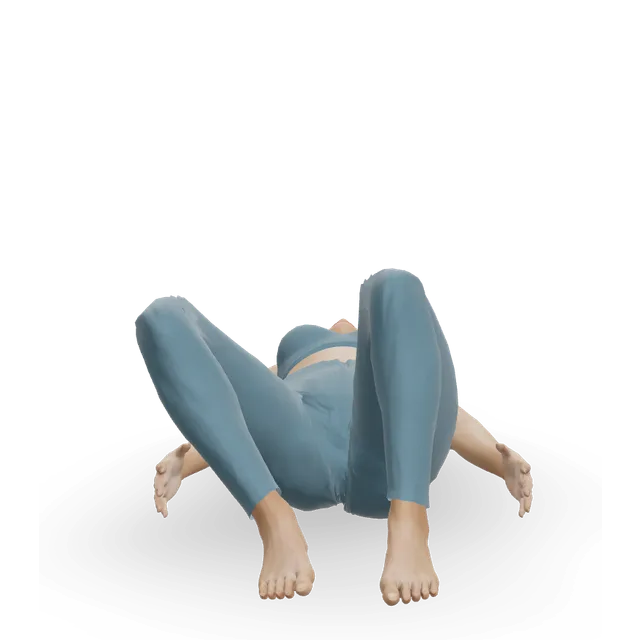
Level 2: one foot may lift (when level 1 is easy)
- Knee fold3 to 5 reps each sideBeginner · Abs, Hip flexors · 3D demoFloat one knee up to a right angle and back down, your pelvis stillEasier: Supine heel slideHarder: Dead bug heel taps
- Glute bridge3 to 5 repsBeginner · Glutes, Hamstrings, Abs · 3D demoLift your bottom, hold for a count of 3, lower slowly. Stop if you feel pulling at your scar or stomaEasier: Pelvic tilt into bridgeHarder: Glute kickback (quadruped hip extension)
- Cat-cow4 to 6 slow repsBeginner · Back, Abs · 3D demoOn hands and knees: keep your back flat and draw your tummy up for a count of 3, then a small cat and cowHarder: Half lord of the fishes (Ardha Matsyendrasana)



Sitting and standing
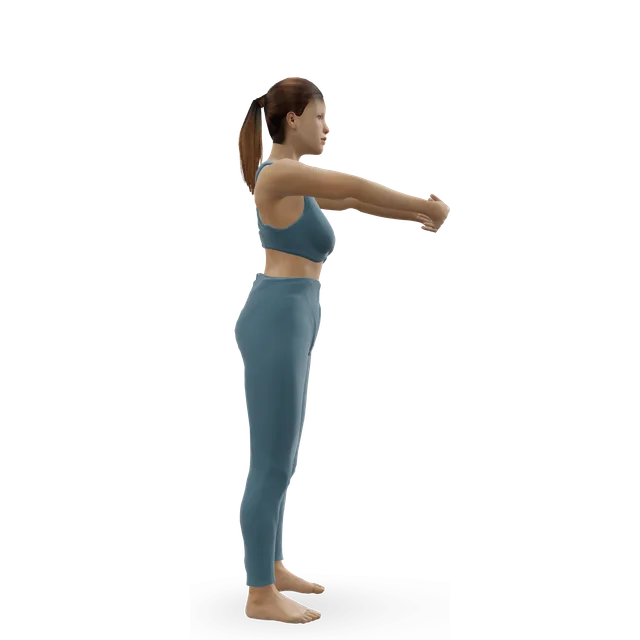
- Seated march30 sBeginner · Hip flexors, Quads, Abs · 3D demoSit tall and march your kneesHarder: Standing march
- Sit squat (partial squat)10 slow repsBeginner · Quads, Glutes, Hamstrings · 3D demoSmall squats, with your hands on a worktop or a chair backHarder: Bodyweight squat
- Slow calf raise10 repsBeginner · Calves · 3D demoPush up onto your toes, holding a supportEasier: Seated bent-knee calf raise (soleus raise)Harder: Standing dumbbell calf raise
- Treadmill walking5 to 10 minBeginner · Quads, Calves, Glutes · 3D demoWalk every day and add a little each time, on flat ground first. Aim for 30 minutes a day by 2 to 3 monthsHarder: Treadmill jogging



Tips
- Do the lying and sitting exercises twice a day at first: 3 to 5 repetitions, holding for 5 to 10 seconds, building to no more than 10 repetitions as it gets easier. You can do them in bed.
- Breathe out on the effort. Don't hold your breath, bear down or strain.
- Ease back, or go back a level, if you notice doming or bulging around your stoma or tummy, pressure around your stoma, pelvic floor or bottom, pulling, a stoma that pushes out further, or soreness that lasts more than 24 hours. Some tightness or discomfort is normal at first: try 3 or 4 repetitions, then check again.
- Leave out sit-ups and double leg raises while your tummy heals.
- Get medical advice for a blockage, a big change in your stoma output, a swollen or pale stoma, or a new bulge. With an ileostomy, contact your hospital urgently if your output is more than 2 litres a day for 3 days or more.
- Lifting advice varies: the NHS says no heavy lifting for 3 months after an ileostomy, Crohn's & Colitis UK says nothing heavier than a full kettle for the first 4 to 6 weeks, and the 2025 stoma nurses' recommendations say a fixed weight limit isn't needed if you learn to lift with good technique. Follow your own team's advice.
- When level 2 feels easy with no bulging, move on to Pilates for back pain, then beginner Pilates. Keep some core work going 2 to 3 times a week: the stoma nurses' recommendations suggest it for life.
The doses are suggested starting points, not a prescription. Choose a range you can control and stop for sharp or increasing pain, numbness or tingling. Get individual advice after an injury or surgery, or if you are pregnant or managing a health condition.
Guides that recommend it
Find more moves like these
More breathing & recovery




Bedtime stretch routine
A slow, 10-minute floor routine to unwind before sleep: child's pose, twists, happy baby and slow breathing.
10 minBeginner7 movesFirm cushion, A wall



Breathing exercises to relax
A 6-minute breathing routine: slow breathing, crocodile breathing, alternate nostril breathing, box breathing and 4-7-8 breathing.
6 minBeginner5 movesNo equipmentPostnatal exercises
A gentle 25-minute routine for the first weeks after birth: pelvic floor, breathing, tummy and hip exercises on the floor, sit-to-stands and a walk.
25 minBeginner12 movesA bench or box, Cardio machineQuestions people ask
How long does the core exercises after bowel or stoma surgery take?
About 20 minutes, including any warm-up and cool-down listed. Shorten it by doing fewer rounds; lengthen it by adding one.
What equipment do I need?
You need: A bench or box, A wall, Cardio machine. Each move links to its guide, where you can find an alternative if you are missing something.
Is it suitable for beginners?
It is written for beginners. 4 of its 14 moves have an easier option listed beside them if you need one.
How do I make it easier or harder?
Use the easier or harder option listed under each move, change the number of rounds, or adjust the rest. Progress one change at a time.