Active cycle of breathing techniques (ACBT) with huffing
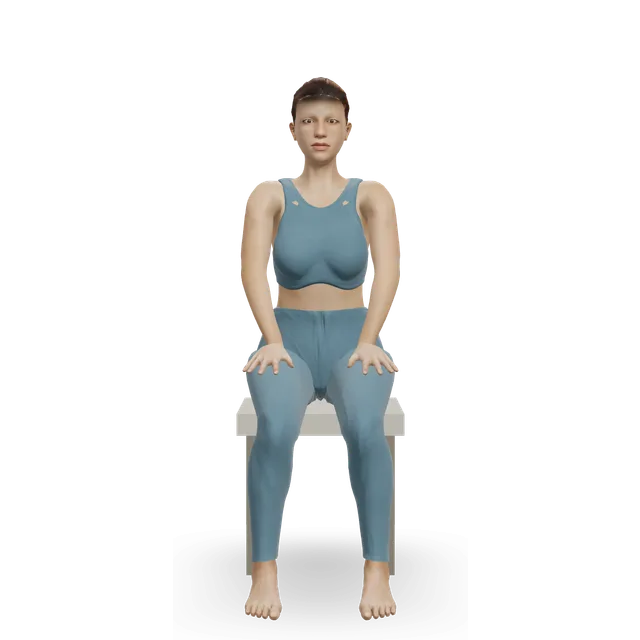
A cycle of relaxed breathing, a few slow deep breaths and one or two huffs that loosens mucus and moves it up so you can cough it out. NHS physiotherapists teach it to people with cystic fibrosis (CF) and other lung conditions that make a lot of mucus: learn it from yours. There is no 3D demo, because the figure can't show the breathing: follow the written steps.
Movement guide
Active cycle of breathing techniques (ACBT) with huffing
Source-researched guide. Clinical review is pending.
How to move
- Sit upright, or in the position your physiotherapist showed you, with your shoulders relaxed. Breathing control: rest a hand on your upper tummy and breathe gently, in through your nose and out through your nose or mouth, using as little effort as possible, until your breathing settles.
- Deep breaths: take 3 to 5 long, slow, deep breaths in, through your nose if you can. Pause for 2 to 3 seconds at the top of each, then breathe out gently through your mouth, like a sigh.
- Go back to breathing control for a few breaths, then repeat the deep breaths and breathing control several times.
- Huff once or twice, no more. For mucus lower down, take a normal breath in, then a long, active breath out through an open mouth, as if steaming up a mirror. For mucus higher up, take a deep breath in, open your mouth wide and huff out quickly.
- Listen for crackles. If you hear them, cough to clear the mucus and spit it into a tissue or pot. Avoid lots of coughing: it's tiring and makes the technique less effective.
- Go back to breathing control and repeat the whole cycle for about 10 to 15 minutes, or until your chest feels clear or you get two clear huffs.
Form cues
- Steam up a mirror: a huff is a long breath out through an open mouth, not a cough.
- Shoulders down, and breathe out like a sigh.
- One or two huffs, then rest with breathing control.
- Avoid: lots of coughing, or huffing again and again.
Practice and cautions
Once or twice a day when you're well, for about 10 to 15 minutes or until your chest feels clear, and an extra or longer session when you're unwell and bringing up more mucus: the Oxford University Hospitals leaflet's routine. Your CF physiotherapist sets your own. Around exercise, one or two huffs in rest breaks and after a session: an international consensus agreed that exercise with huffing helps clear mucus, though there's no medium- or long-term evidence that exercise can replace airway clearance.
Learn it from a respiratory or CF physiotherapist, who will check your technique and tell you how often and in which positions to do it. It doesn't replace the airway clearance plan, inhalers or nebulisers your team prescribes. Only do 1 or 2 huffs together: repeated huffing can make your chest feel tight. If you use a reliever inhaler, your physiotherapist may suggest taking it about 10 minutes before. Call 999 if you cough up more than just a few spots or streaks of blood, or blood with difficulty breathing, a very fast heartbeat or chest pain; for a few small streaks, ask for an urgent GP (general practitioner) appointment or call 111. This is movement education, not an assessment or treatment prescription. Stop for sharp or increasing pain, dizziness, numbness or tingling; seek individual guidance for symptoms, injury or restrictions.
Sources and review status
Sources support the educational description; they do not establish that this exercise is suitable for you.
- Oxford University Hospitals NHS Foundation Trust 2024 · The active cycle of breathing techniques (physiotherapy leaflet) ↗
- University Hospitals Birmingham NHS Foundation Trust 2025 · Active cycle of breathing technique (physiotherapy leaflet) ↗
- Williams 2022 · The Exeter Activity Unlimited statement on physical activity and exercise in cystic fibrosis (international expert consensus, Chronic Respiratory Disease) ↗
- Ward 2020 · Exercise as a substitute for airway clearance in cystic fibrosis: 12 studies (systematic review, Thorax) ↗
- Heinz 2022 · Exercise versus airway clearance techniques in cystic fibrosis: 4 trials, 86 people (Cochrane review) ↗
- NICE NG78 · Cystic fibrosis: diagnosis and management (2017) ↗
- NHS · Coughing up blood (blood in phlegm) ↗
No variation is labeled clinically validated.
What it works
Muscles
Works the chest and core. Individual muscles are not yet classified.
Equipment
None: body weight and floor space.
Level
Beginner.
Workouts that use it
Guides that use it
Similar moves

Browse more
Questions people ask
What muscles does the Active cycle of breathing techniques (ACBT) with huffing work?
It works the chest and core.
What equipment do I need for the Active cycle of breathing techniques (ACBT) with huffing?
No equipment: your body weight and a little floor space.
Is the Active cycle of breathing techniques (ACBT) with huffing good for beginners?
It is graded beginner, so it suits most people starting out.