Fascia guide

Fascia and fibromyalgia: what fibromyalgia is, the tight fascia claims, what massage and myofascial release can do, and pacing

Fibromyalgia is long-term pain all over the body, thought to come from changes in how the nervous system processes pain. Some clinics say tight or inflamed fascia is the hidden cause; that is a hypothesis, and the tissue studies don't back it. Massage and myofascial release can ease pain a little while you're having them, and the effects fade.

The honest headline: exercise, built up slowly and paced, is the best-supported treatment, and guidelines don't recommend massage.

This guide explains the fascia claims, what massage, myofascial release and foam rolling did in trials, how to try gentle release without a flare, how to pace, and when to see a GP.

The short version

Pain from changed pain processing

The NHS lists widespread pain, increased sensitivity to pain, stiffness, poor sleep, tiredness and problems with memory and concentration (fibro-fog), and says fibromyalgia is thought to involve changes in how the nervous system processes pain. Researchers call this nociplastic pain.

Sources 1, 2, 3

Fascia as the cause is a hypothesis

The paper that proposed inflamed fascia as the source presented no new data. A biopsy study found less collagen in muscle, not more, and the ultrasound studies are small, one-off comparisons that measured muscle, not fascia.

Sources 4, 5, 6, 7

Massage helps a little, for a while

Across 9 trials (404 people), 5 weeks or more of massage eased pain at the end of treatment, though how much is uncertain and nobody followed people up. In the two trials of myofascial release against a fake treatment, most gains had faded by 6 months to a year.

Sources 8, 9, 10

Guidelines don't recommend massage

The National Institute for Health and Care Excellence (NICE) couldn't make a recommendation on manual therapy and asked for more research. A 2024 summary table of the guidelines from EULAR (the European Alliance of Associations for Rheumatology) and Italy lists massage as "weak against"; we couldn't open the European guideline's own table, so this grade comes from that summary.

Sources 11, 12

Exercise comes first

Exercise was the only treatment the European guideline strongly recommended, NICE recommends a supervised group exercise programme, and the NHS lists exercise, talking therapies and medicines as the 3 main treatments.

Sources 13, 14, 15

Light pressure, and pace yourself

Fibromyalgia can make a small amount of pressure painful, so start gently. Pacing, balancing activity and rest, didn't reduce pain in trials, but it eased the impact of tiredness.

Sources 16, 17, 18

What fibromyalgia is, and why pressure can hurt

What fibromyalgia is

A long-term condition that causes pain all over the body, with increased sensitivity to pain, stiffness, poor sleep, tiredness, fibro-fog, headaches and irritable bowel syndrome (IBS). Symptoms change and can suddenly improve or worsen. The NHS says the cause is unknown, but it's thought to involve changes in the way the central nervous system processes pain messages, often set off by an injury, an infection or stress.

Clinical reviews put it at 2% to 8% of people. A review in the Lancet groups it with conditions where pain is more widespread or intense than the tissue or nerve damage would explain, and notes that these respond less well to treatments aimed at the tissues. NICE counts fibromyalgia as chronic primary pain.

Sources 1, 3, 2, 14

How it's diagnosed

The 2016 criteria need pain in at least 4 of 5 body regions, symptoms for at least 3 months and high enough scores for widespread pain and symptom severity, and the diagnosis stands whatever other conditions you have. They don't use a tender point examination. The NHS says there's no specific test, and a GP checks for other conditions: swollen joints may suggest arthritis rather than fibromyalgia.

Sources 19, 20, 21

Why pressure can hurt

Arthritis UK says fibromyalgia increases the sensitivity of your nerve endings, so you could feel pain from a small amount of pressure or minor knocks. The pain dampening that usually follows exercise is less reliable in fibromyalgia, and in one study of 20 women it didn't switch on during muscle contractions. In people with trigger points, injections caused more and longer soreness in those who also had fibromyalgia (9 people against 9).

Sources 16, 22, 23, 24

Fibromyalgia or myofascial pain syndrome?

Myofascial pain syndrome is pain in one region with tender trigger points; fibromyalgia is pain all over with tiredness and poor sleep. The two overlap, and research uses their criteria inconsistently. Our myofascial pain syndrome guide explains the difference.

Source 25

What massage changes

As elsewhere, mostly how the body feels for a while. Reviews of how hands-on therapy works point to the nervous system, not changes in the tissue.

Sources 26, 27

The fascia claims, checked

The hypothesis

A 2010 paper proposed that inflamed fascia is the source of the pain signals that lead to central sensitisation, the nervous system turning up its own volume, in fibromyalgia. It presented no new data, and it began by noting that no definite evidence of a muscle problem in fibromyalgia had been found.

Source 4

What biopsies found

A biopsy study found less collagen inside the muscle of 27 women with fibromyalgia than in 8 women without it: the opposite of thick, tight fascia.

Source 5

What ultrasound found

Ultrasound stiffness scans found stiffer trapezius muscles (89 people against 36) and rhomboid muscles (53 against 47) in fibromyalgia. These are small, one-off comparisons that measured muscle, not fascia, and they can't show which came first.

Sources 6, 7

Nerves, not fascia

Changes in small nerve fibres were found in about half of people with fibromyalgia across 8 studies (222 people): a nerve finding, not a fascia one.

Source 28

Our reading

Fascia may be one of many tissues that feel sore in fibromyalgia, but nothing shows it causes the condition, and we found no study showing that fascia is dehydrated or stuck in fibromyalgia. One 2026 review states that fascia problems contribute to fibromyalgia, but its summary gives no data for that claim.

Sources 2, 29

What the evidence says

MassageEmerging evidence

Across 9 trials (404 people), massage for 5 weeks or more eased pain, anxiety and depression at the end of treatment, but not sleep. How big the pain benefit is remains uncertain: the pooled result was compatible with anything from a tiny to a large effect, and there were no follow-up data. In a review of 167 trials, massage improved overall fibromyalgia symptom scores. Arthritis UK says massage can help some people, but the effects don't often last that long.

Sources 8, 30, 16

Myofascial release: it helps, then fadesMixed evidence

Against a fake treatment (a switched-off magnet device), 20 weeks of massage and myofascial release improved pain, anxiety, sleep and quality of life in 74 people after treatment and at 1 month, but at 6 months only sleep still differed. In 86 people against fake short-wave and ultrasound, benefits held at 6 months, but at a year only a few measures still differed. Reviews call the evidence moderate or report a large pooled effect, but a review that weighed the risk of bias found the effects in fibromyalgia didn't reach the smallest change people notice.

Sources 9, 10, 31, 32, 29, 33

Connective tissue massage and foam rollingEmerging evidence

Fifteen sessions of connective tissue massage eased pain by 37% in 48 people, but 6 months later pain was back to about 90% of where it started. A 20-week foam roller programme improved symptom scores and range of movement against no treatment in 66 people, and connective tissue massage beat foam rolling on function in 40. Neither trial had a fake treatment.

Sources 34, 35, 36

SleepEmerging evidence

In a network analysis of 65 trials, manual therapy against a placebo or sham had an uncertain effect on sleep, at low certainty, while aerobic plus flexibility exercise did better.

Source 37

Other hands-on methodsEmerging evidence

Cupping beat usual care but not sham cupping in 141 people. Bowen therapy and craniosacral therapy improved sleep against a still-hands placebo in 132 people. Our Bowen therapy and cupping guides cover them.

Sources 38, 39

What NICE and the NHS sayStrong evidence

NICE wasn't able to draw definite conclusions about manual therapy and made no recommendation, though it called the benefits against usual care promising and found no evidence of harm. The NHS's 3 main treatments are exercise, talking therapies and medicines.

Sources 11, 15

European guidance on massageEmerging evidence

A 2024 summary table of the EULAR and Italian guidelines lists massage under "weak against" recommendations. We couldn't open the European guideline's own table, so we take its grade from that summary rather than from the guideline itself.

Sources 12, 13

Exercise comes firstStrong evidence

In the European guideline, based on pooled trials, exercise was the only therapy given a strong recommendation. NICE recommends a supervised group exercise programme. Aerobic exercise eased pain by about 11 points out of 100 on low-quality evidence, strength training improved function, and mixed programmes improved pain by about 5% and function by 11%. Our exercise for fibromyalgia guide has the plan.

Sources 13, 14, 40, 41, 42

Where the evidence is thin

The massage trials are small, few followed people up, and only the myofascial release trials had a fake treatment. We found no trial that measured flares after deep massage, and none of fascia blasting, scraping or massage guns for fibromyalgia. We read most studies' summaries (abstracts), not their full texts.


Gentle release, paced: a 10-minute session for fibromyalgia

The breathing, cat-cow, rotation and breath reach doses are their move pages', and the breathing follows the NHS breathing exercise for stress. The self-massage dose is our editorial starting point, shorter than the 90 seconds on the rolling move pages because pressure can hurt more with fibromyalgia; the build-up rule is our exercise for fibromyalgia guide's. Massage eases fibromyalgia pain a little for a while; walking and strength work carry the evidence. No trial has tested this sequence.

  1. Check first: new swollen joints, a fever, weight loss you can't explain, or symptoms that are new or different need a GP before anything else. On a bad flare day, do less, not nothing.
  2. Breathe slowly for 5 minutes, breathing out for longer than you breathe in.
  3. Cat-cow: 8 waves, slower than feels natural.
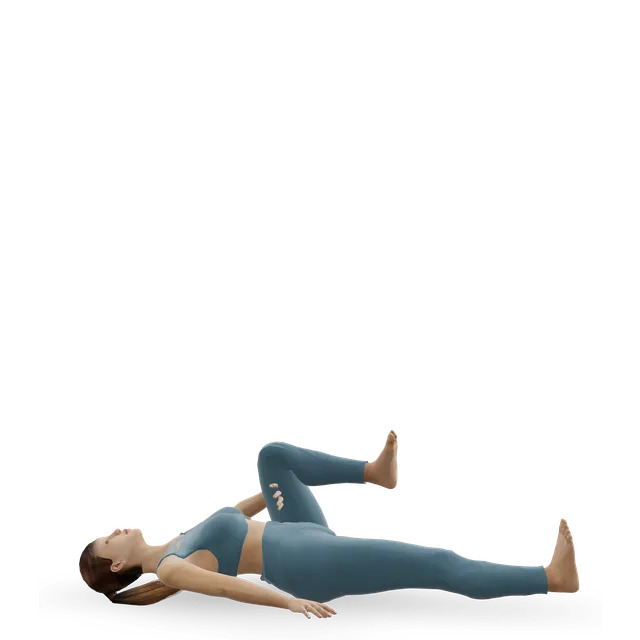
  4. Thoracic rotation: 6 slow turns each side, moving with the breath.
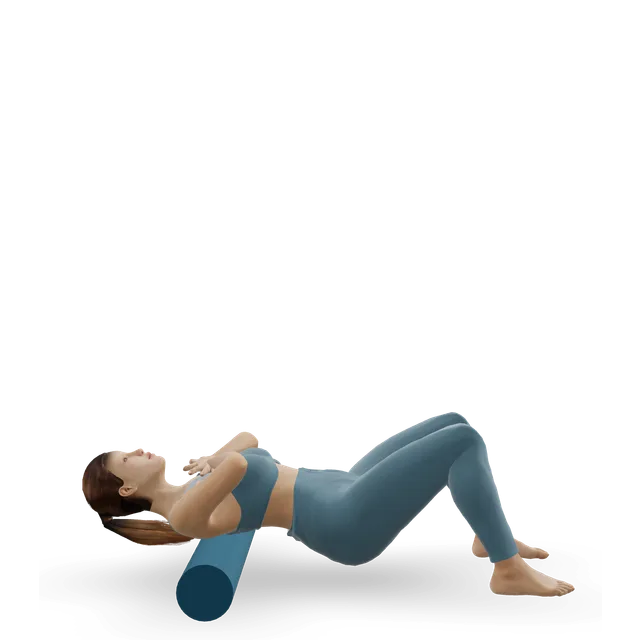
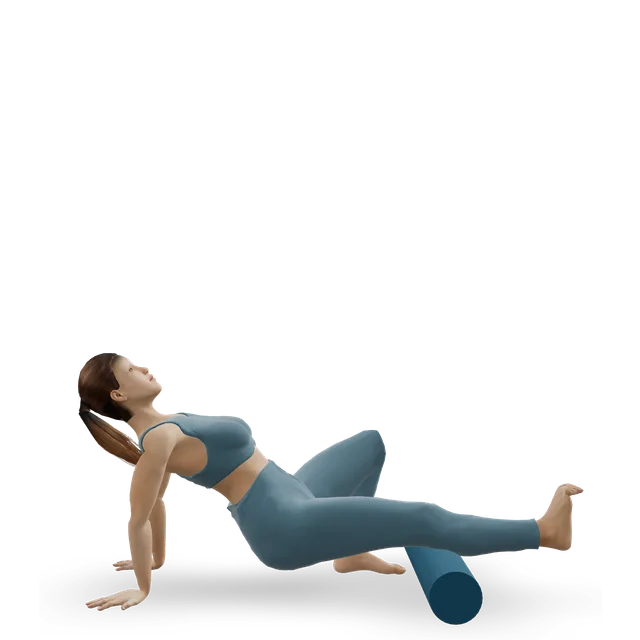
  5. Optional self-massage: pick one area that feels tight, for example the upper back on a soft foam roller, the calves, or your own hands on your thighs or shoulders. Use light pressure, no more than mild discomfort, for 30 to 60 seconds, then stop.
  6. Breath reach: 5 breaths, breathing out for longer than in.
  7. Next day: if you're no worse, add one area or 30 seconds the following week. If you had a flare lasting more than a day or two, go back to the last version that felt manageable.

Loading the 3D figure…

Gets into position, then repeats the movement. Technical checks passed; qualified exercise review is pending.

The movement on the figure: Cat-cow

What helps: doses and the order to try them

Each dose names its source or is our editorial starting point. Doses are starting points, not prescriptions.

Exercise first

Start with 5 to 10 minutes of easy walking or marching on 3 days and build towards 20 to 30 minutes on 2 to 3 days, and add light strength work twice a week, 1 set of 8 of each move building to 2 to 3 sets. These are our exercise for fibromyalgia guide's suggestions, working towards the doses in trials. NICE recommends a supervised group exercise programme.

Sources 14, 40

Calm breathing

Slow breathing for at least 5 minutes, as in the NHS breathing exercise for stress, is the slow breathing move page's dose. Crocodile breathing for 5 minutes at about 4 seconds in and 6 out, and resting in corpse pose for 5 to 10 minutes, are their move pages' doses.

Source 43

Gentle self-massage

Light pressure on one area for 30 to 60 seconds at first, no more than mild discomfort: our editorial starting point, shorter than the 90 seconds on the rolling move pages because fibromyalgia can make pressure hurt more. Add one area or 30 seconds a week if you're no worse the next day.

Source 16

Massage from a therapist

If you enjoy it, ask for light pressure and a shorter session, and change one thing at a time so you can tell what helped (our suggestion). The trials that helped ran for 5 weeks or more, and the effects don't often last long.

Sources 8, 16

Pacing: steady activity without the crash

What pacing is

Pacing means balancing activity and rest so you don't overdo it on good days or feel worse after doing too much. The NHS suggests taking time to relax each day.

Sources 16, 44

What trials foundEmerging evidence

In 7 trials, pacing didn't reduce pain, but it eased how much tiredness and joint stiffness got in the way. Across 6 studies it reduced fatigue. In 178 people with fibromyalgia, neither of two forms of pacing reduced pain or tiredness, though sleep and function improved, and the latest review rates confidence in pacing as very low.

Sources 17, 18, 45, 46

Good days and bad days

On a good day, stop before you're tired rather than catching up on everything. On a flare day, do less, not nothing: a few minutes of slow breathing and gentle movement. If a change leaves you worse for more than a day or two, go back to the last version that felt manageable. These are our suggestions; our exercise for fibromyalgia guide has the full plan.

Calm

Start or end a session with 5 minutes of slow breathing, and rest in corpse pose for 5 to 10 minutes after a longer one.

Move gently

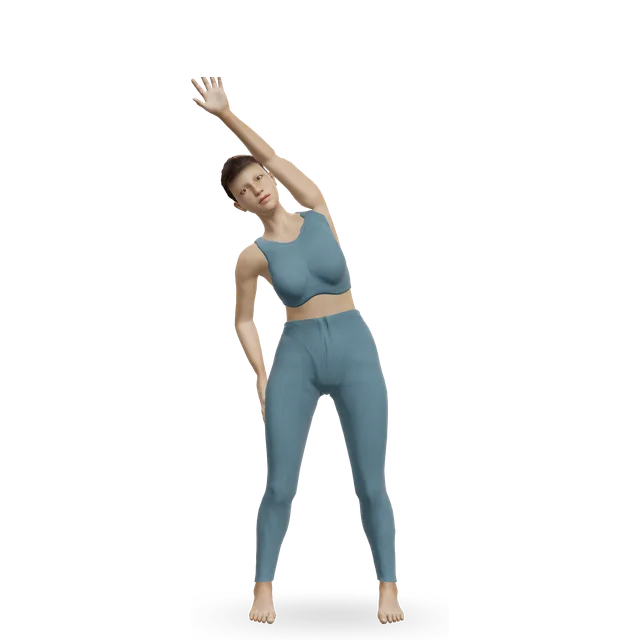
Slow and small: 8 cat-cows, 6 rotations and 3 side bends each side are the move pages' doses.

Gentle release (optional)

Light pressure on one area for 30 to 60 seconds at first, our editorial starting point, shorter than the move pages' 90 seconds.

Get active: the part with the evidence

March for 5 to 10 minutes on 3 days to start, and do 1 set of 8 of the strength moves twice a week, building to 2 to 3 sets: our exercise for fibromyalgia guide's suggestions.

Routines to follow

Gentle classes with stop points, and a short routine for flare days. Massage isn't a follow-along activity, so there's no release routine here.

Safety: deep pressure, flares and who should ask first

Deep pressure and flares

Fibromyalgia can make a small amount of pressure painful, and trigger point injections caused more and longer soreness in people with fibromyalgia. We found no trial that measured flares after deep massage, and the massage trials reported no side effects. Our editorial advice: light pressure, short sessions, one change at a time, and no fascia blasting, scraping or deep tissue "breaking up".

Sources 16, 24, 8

Expert cautions for rolling

In an expert consensus of 37 researchers, open wounds and broken bones were reasons not to roll, and inflammation, a clot, a bone infection or bone forming in a muscle after an injury were at least reasons for caution.

Source 47

Ask first

Keep the pressure light and skip balls, guns and scrapers if you take blood thinners, which make bruising more likely, or have a nerve condition such as peripheral neuropathy, where numb skin can't warn you that pressure is too hard. The NHS lists these among the reasons hands-on treatments may not be safe.

Sources 48, 49

Pregnancy

In later pregnancy, avoid lying flat on your back for more than a few minutes, so do floor work on your side or sitting. Never massage or roll a swollen or painful leg: a pregnant woman had a clot reach her lungs shortly after a leg massage.

Sources 50, 51

Massage guns

We found no trial of massage guns for fibromyalgia. Severe muscle breakdown followed heavy use of a gun on a young woman's thighs in a case report, so keep any gun light and brief, or leave it out.

Source 52

When to see a GP, and urgent help

Call 999

  • Chest pain that feels tight or like squeezing, or spreads to your arms, neck or jaw, or severe difficulty breathing.
  • Someone's life is at risk, or you feel you can't keep yourself safe.

Sources 53, 54

Urgent mental health help

If you are thinking about suicide or can't keep yourself safe, call 999 or go to A&E. For urgent help, call Samaritans free on 116 123, any time, or in England call 111 and select the mental health option. In the US, call or text 988.

Sources 54, 55

New widespread pain (our suggestion)

See a GP: new widespread pain with a fever, weight loss you can't explain, or swollen joints. Other conditions can cause pain all over, and swollen joints point to arthritis rather than fibromyalgia.

Sources 21, 14

See a GP

  • You think you have fibromyalgia and haven't been assessed: other conditions can look similar, and swollen joints point to arthritis.
  • Your symptoms change or new ones appear: NICE asks clinicians to look again at the diagnosis if the picture changes.
  • Activity is regularly followed by a delayed, out-of-proportion worsening that takes days or weeks to recover from, with unrefreshing sleep and brain fog, for 6 weeks or more. This can be a sign of ME/CFS.
  • You're over 50 and your shoulders, neck or hips are stiff for more than 45 minutes every morning.
  • Low mood, anxiety or poor sleep are getting on top of you: talking therapies such as CBT (cognitive behavioural therapy) and ACT (acceptance and commitment therapy) can help, and your GP can advise on treatment.

Sources 21, 14, 15

Myths

"Fibromyalgia is a fascia disease"Mixed evidence

The fascia model is a hypothesis put forward without new data, a biopsy study found less collagen in muscle, not more, and fibromyalgia is described as a change in how the nervous system processes pain.

Sources 4, 5, 2, 1

"Deep tissue massage or fascia blasting breaks up fibromyalgia knots"Mixed evidence

Dense fascia doesn't change shape at the forces hands or tools apply, fibromyalgia makes small amounts of pressure painful, and injections caused more soreness in people with fibromyalgia. Our fascia blasting verdict covers the tools.

Sources 56, 16, 24

"Myofascial release cures fibromyalgia"Mixed evidence

Gains in the trials with a fake treatment faded by 6 to 12 months, and a review of the better-quality trials found effects too small to matter.

Sources 9, 10, 33

"Tender points diagnose it, so test yourself"Mixed evidence

The current criteria count painful regions and symptoms, not tender points, a summary of European and Italian guidance lists the tender point examination as "weak against", and diagnosis needs a GP to rule other conditions out.

Sources 19, 12, 21

"If massage hurts, it's working"Mixed evidence

We found no trial showing deeper pressure works better in fibromyalgia, and pressure can hurt more than you expect. Stop anything that leaves you much worse the next day.

Source 16

Questions people ask

Is fibromyalgia a fascia problem?

Not as far as anyone has shown. The idea that inflamed fascia drives fibromyalgia is a hypothesis put forward without new data. The NHS and researchers describe changes in how the nervous system processes pain.

Does fibromyalgia affect fascia?

Fascia, like muscle and skin, can feel sore, and small ultrasound studies found stiffer muscles. But a biopsy study found less collagen in muscle, not more, and nothing shows fascia causes the condition.

Does myofascial release help fibromyalgia?

In trials against a fake treatment it eased pain, sleep and mood at the end of a 20-week course, but most gains had faded by 6 to 12 months. A review of the better-quality trials found effects too small to matter.

Is massage good for fibromyalgia?

It can help some people for a while: 5 weeks or more of massage eased pain at the end of treatment, though how much is uncertain. Arthritis UK says the effects don't often last that long, and guidelines don't recommend massage.

Can deep tissue massage make fibromyalgia worse?

It can feel worse, because fibromyalgia makes small amounts of pressure painful. Ask for light pressure and short sessions, and stop anything that leaves you much worse the next day.

Is foam rolling good for fibromyalgia?

A 20-week self-release programme improved symptom scores against no treatment in one trial of 66 people. Start with a soft roller, light pressure and 30 to 60 seconds on one area, and build up only if you're no worse the next day.

Can fascia blasting help fibromyalgia?

We found no trial, and bruising pressure is the opposite of what a sensitive nervous system needs. Our fascia blasting verdict explains why the bruises aren't progress.

What is the best treatment for fibromyalgia?

Exercise: it was the only treatment strongly recommended in European guidance, and NICE recommends a supervised group exercise programme. Talking therapies and some medicines help too. Our exercise for fibromyalgia guide has the plan.

What is pacing?

Balancing activity and rest so you don't overdo it on good days or feel worse after doing too much. Trials found it doesn't reduce pain, but it may ease the impact of tiredness.

Is it fibromyalgia or myofascial pain syndrome?

Myofascial pain syndrome is pain in one region with tender trigger points; fibromyalgia is pain all over with tiredness and poor sleep. They can overlap, and a GP can help tell them apart.

When should I see a GP?

If you think you have fibromyalgia and haven't been assessed, your symptoms change, or you have new widespread pain with a fever, weight loss or swollen joints. If you're thinking about suicide or can't keep yourself safe, call 999 or go to A&E; Samaritans are free on 116 123, any time.

Sources

  1. NHS · Fibromyalgia (past its review date: reviewed October 2022, review due October 2025)
  2. Fitzcharles 2021 · Nociplastic pain: understanding common pain conditions (review, Lancet)
  3. Clauw 2014 · Fibromyalgia (clinical review, JAMA)
  4. Liptan 2010 · Fascia: a missing link in fibromyalgia? (hypothesis paper, Journal of Bodywork and Movement Therapies)
  5. Gronemann 2004 · Collagen and muscle in fibromyalgia (biopsy study of 27 women and 8 controls, Rheumatology)
  6. Akan 2025 · Skin thickness and muscle stiffness in fibromyalgia (ultrasound comparison of 89 people and 36 controls, Clinics)
  7. Karayol & Karayol 2021 · Muscle stiffness in fibromyalgia on shear-wave ultrasound (comparison of 53 people and 47 controls, Journal of Physical Therapy Science)
  8. Li 2014 · Massage therapy for fibromyalgia (meta-analysis of 9 trials, PLoS One)
  9. Castro-Sánchez 2011 · Massage and myofascial release against a sham for fibromyalgia (randomised trial of 74 people, Evidence-Based Complementary and Alternative Medicine)
  10. Castro-Sánchez 2011 · Myofascial release against sham short-wave and ultrasound for fibromyalgia (randomised trial of 86 people, Clinical Rehabilitation)
  11. NICE NG193 · Rationale and impact, including the research recommendation on manual therapy
  12. Ferrández-Gómez 2024 · Physiotherapists and the fibromyalgia guidelines, with a summary table of the EULAR and Italian recommendations (cross-sectional survey, Rheumatology International)
  13. Macfarlane 2017 · EULAR revised recommendations for managing fibromyalgia (guideline, Annals of the Rheumatic Diseases)
  14. NICE NG193 · Chronic pain (primary and secondary) in over 16s: recommendations (2021)
  15. NHS · Fibromyalgia: treatment (past its review date: reviewed October 2022, review due October 2025)
  16. Arthritis UK · Fibromyalgia
  17. Guy 2019 · Pacing as a learned strategy for chronic pain (systematic review of 7 trials, American Journal of Occupational Therapy)
  18. Abonie 2020 · Activity pacing in long-term conditions with fatigue (meta-analysis of 6 studies, Disability and Rehabilitation)
  19. Wolfe 2018 · Fibromyalgia diagnosis and biased assessment (criteria study, PLoS One)
  20. Wolfe 2016 · 2016 revisions to the fibromyalgia diagnostic criteria (criteria paper, Seminars in Arthritis and Rheumatism)
  21. NHS · Fibromyalgia: diagnosis (past its review date: reviewed October 2022, review due October 2025)
  22. Rice 2019 · Exercise-induced pain relief in pain-free and chronic pain populations (review, Journal of Pain)
  23. Lannersten & Kosek 2010 · Pain inhibition during exercise in fibromyalgia and shoulder muscle pain (experimental study, Pain)
  24. Hong & Hsueh 1996 · Soreness after trigger point injections with and without fibromyalgia (clinical study of 18 people, Archives of Physical Medicine and Rehabilitation)
  25. Bourgaize 2019 · Fibromyalgia and myofascial pain syndrome: how studies define them (scoping review, Musculoskeletal Care)
  26. Behm & Wilke 2019 · Do self-myofascial release tools release fascia? (narrative review, Sports Medicine)
  27. Keter 2025 · How manual therapy works (living review of 62 reviews, PLoS One)
  28. Grayston 2019 · Small nerve fibre changes in fibromyalgia (meta-analysis of 8 studies, Seminars in Arthritis and Rheumatism)
  29. Ide 2026 · Connective tissue massage against myofascial release for fibromyalgia pain (meta-analysis, Complementary Therapies in Medicine)
  30. Kundakci 2022 · Non-drug treatments for the individual features of fibromyalgia (meta-analysis of 167 trials, Pain)
  31. Yuan 2015 · Different styles of massage for fibromyalgia (meta-analysis, Manual Therapy)
  32. Ughreja 2021 · Myofascial release for pain, sleep and quality of life in fibromyalgia (systematic review, Complementary Therapies in Clinical Practice)
  33. Laimi 2018 · Myofascial release for chronic musculoskeletal pain (systematic review, Clinical Rehabilitation)
  34. Brattberg 1999 · Connective tissue massage for fibromyalgia (randomised trial of 48 people, European Journal of Pain)
  35. Ceca 2017 · A self-myofascial release programme for fibromyalgia (randomised trial of 66 people, Journal of Sports Medicine and Physical Fitness)
  36. Elbasti & Baglan Yentur 2026 · Connective tissue massage against foam rolling for fibromyalgia (trial of 40 people, Irish Journal of Medical Science)
  37. Hudson 2025 · Treatments for sleep problems in fibromyalgia (network meta-analysis of 65 trials, Arthritis Care and Research)
  38. Lauche 2016 · Cupping against sham cupping and usual care for fibromyalgia (randomised trial of 141 people, Scientific Reports)
  39. Ughreja 2024 · Craniosacral therapy, Bowen therapy, still touch and exercise for sleep in fibromyalgia (randomised trial of 132 people, Journal of Integrative Medicine)
  40. Bidonde 2017 · Aerobic exercise training for adults with fibromyalgia (Cochrane review)
  41. Busch 2013 · Resistance exercise training for fibromyalgia (Cochrane review)
  42. Bidonde 2019 · Mixed exercise training for adults with fibromyalgia (Cochrane review)
  43. NHS · Breathing exercises for stress
  44. NHS · Fibromyalgia: self-help (past its review date: reviewed October 2022, review due October 2025)
  45. Racine 2019 · Two kinds of activity pacing for fibromyalgia (pilot randomised trial of 178 people, Journal of Pain)
  46. Antcliff 2026 · Operant activity pacing for chronic pain (systematic review, Clinical Journal of Pain)
  47. Bartsch 2021 · Expert consensus on when not to foam roll (Delphi study of 37 experts, Journal of Clinical Medicine)
  48. NHS · Herbal medicines and complementary therapies
  49. NHS · Anticoagulant medicines: side effects
  50. NHS · Exercise in pregnancy
  51. Sutham 2020 · A clot to the lungs after a leg massage in pregnancy (case report, BMC Pregnancy and Childbirth)
  52. Chen 2021 · Severe muscle breakdown after a massage gun (case report, Physical Therapy)
  53. NHS · Heart attack
  54. NHS · Where to get urgent help for mental health (past its review date: reviewed April 2023, review due April 2026)
  55. Samaritans · Contact a Samaritan: 116 123, free, any time
  56. Chaudhry 2008 · A 3D model of how fascia deforms in manual therapy (modelling study, Journal of the American Osteopathic Association)

Movement education, not medical advice. Stop for sharp or increasing pain, numbness or tingling, and get individual advice if you are pregnant, after an injury or surgery, or managing a health condition. Health disclaimer.