Bowen therapy (the Bowen technique): what a session involves, and what the evidence shows
Bowen therapy, or the Bowen technique, is a gentle hands-on therapy: the practitioner makes light rolling moves over muscles, tendons and connective tissue, usually through light clothing, then pauses, sometimes leaving the room. The research is small: against a fake treatment it eased pain for about a week, and an Australian government review found too little evidence to judge it.
Practitioners say the moves stimulate the nervous system and help the body rebalance itself. The one sham-controlled trial that measured the nervous system found signs of more fight-or-flight activity, not less, while a sleep trial in fibromyalgia found better sleep than with a placebo touch.
This guide covers what happens in a session, every controlled trial we found, how Bowen compares with other hands-on treatments, and safety and registration, with a free strap stretch, shown in 3D, for the one physical benefit UK advertising rules accept.
The practitioner rolls their fingers and thumbs over muscles, tendons and connective tissue with light pressure, usually through light clothing, then pauses. Sessions last 45 to 60 minutes. Tom Bowen developed it in Australia.
A 2011 review found 15 studies, only 1 of them a randomised trial, and a 2015 Australian government review found too little evidence to reach any conclusion about whether it works or is safe.
In 31 people with long-term pain in several places, pain was lower than with sham Bowen a week after 6 sessions, but not 6 weeks later, and everyday function didn't differ.
The nervous system: the trials point different ways
That trial's indirect measures of the nervous system, heart rate variability and skin conductance, suggested more fight-or-flight activity, not the calming practitioners describe. A trial in 132 people with fibromyalgia found better sleep quality with Bowen than with a still-hands placebo touch.
One session improved hamstring flexibility for a week in 120 healthy adults. UK advertising rules accept that short-term claim for healthy adults, along with claims about relaxation and stress.
No side effects were reported in a recent trial. Advertising rules don't accept claims to treat conditions without robust evidence. Bowen practitioners can join the voluntary register of the Complementary and Natural Healthcare Council (CNHC), which the Professional Standards Authority accredits.
You lie on a couch or sit, and the work is done on the skin or through light clothing, as you prefer, with towels or blankets to cover you. A first session, with a consultation about your medical history, is likely to last 60 to 90 minutes, and later ones 45 to 60 minutes. One UK association quotes £35 to £65 a session, depending on where you live.
The practitioner makes a series of 'cross-fibre, precise movements' over muscles, tendons and connective tissue, rolling the fingers and thumbs over the skin with light pressure, then pauses. During the pauses they 'frequently step away or out of the room', which the association says lets your body respond to the moves. People describe warmth, tingling, pressure, lightness or heaviness.
The association suggests 3 to 6 sessions, ideally with the first 3 within 4 weeks. People with fibromyalgia or chronic fatigue syndrome may get only a few moves at first, and a parent or carer must be present for children under 16.
One professional association says the moves 'stimulate the body's nervous system, encouraging relaxation and supporting the body's natural ability to rebalance itself', and that the pauses give the body time to respond. Another UK association says practitioners 'purposefully move the fascia' to relax or stimulate muscle fibres. The first also says Bowen 'does not claim to diagnose or cure medical conditions'.
Thomas Bowen (1916 to 1982) developed the technique in Geelong, Australia, from the 1950s. At his request, one of his students and his secretary documented it, and teaching reached the UK in 1993. One UK association's registered practitioners have at least 120 hours of training and 12 case studies, and do at least 2 days of training a year. In a survey of 80 Australian practitioners, clients most often came with stress, neck pain and sciatica.
A 2011 review screened 309 records and found 15 studies: 1 randomised trial, 2 quasi-experimental studies, 3 mixed-methods studies, 2 cross-sectional studies and 7 case studies. A 2015 Australian government review found no eligible randomised trials in people with a health condition, and concluded there was insufficient evidence 'to reach any conclusion' about Bowen's effectiveness or safety.
Against a fake treatment: brief reliefEmerging evidence
In a double-blind trial of 31 people with long-term pain in several places, 6 sessions over 8 weeks lowered pain more than sham Bowen 1 week afterwards, but not 6 weeks afterwards. Function didn't differ, and tests of how the nervous system processes pain didn't change.
The same trial measured heart rate variability and skin conductance, indirect signs of the nervous system's activity, and found evidence of more sympathetic (fight-or-flight) activation, not the calming practitioners describe. In healthy students, one session against a sham raised pain thresholds at only 2 of 10 spots, which the authors called inconsistent.
In 132 people with fibromyalgia, 12 weekly sessions improved sleep quality more than a still-hands placebo touch. That trial measured sleep, not the nervous system itself.
In the 132-person trial, Bowen and craniosacral therapy both improved sleep more than placebo touch, and Bowen and exercise both raised pressure-pain thresholds; there were no differences in quality of life, function or fatigue. In another trial, 78 people (median age 58, mostly women) who added 8 sessions over 12 weeks to their usual treatment had no less pain than those who didn't, but had better limb endurance, less interference from pain and better mental quality of life.
In 90 people with myofascial neck pain, 8 sessions over 12 weeks improved pain thresholds, neck movement, disability, anxiety and mood scores at 12 and 24 weeks, against continuing usual treatment. It was single-blinded, with no sham, and shares an author with the 78-person fibromyalgia trial.
In 120 healthy volunteers, one Bowen treatment improved hamstring flexibility against no treatment, with gains continuing over a week, measured by an assessor who didn't know the groups. The advertising regulator accepted this short-term claim for healthy, fit adults aged 18 to 50 without muscle or joint symptoms, but not claims of long-term flexibility or of help for people with symptoms.
Small studies, mostly without a comparison groupMixed evidence
Small studies without a comparison group report improvement in frozen shoulder (20 people), after a stroke (13 people, though grip strength fell) and in boys with developmental coordination disorder (10 boys, in movement but not in self-esteem or social measures). In a quasi-randomised study of 41 inpatients with back pain and depression, a programme including Bowen did about as well as conventional physiotherapy with relaxation.
Against other techniques: a win, a tie and a lossMixed evidence
In 30 people with upper back myofascial pain, Bowen eased pain and disability more than a tennis ball technique, with no untreated group. In 62 people with low back pain and tight hamstrings, it did as well as muscle energy technique. In 24 people with jaw joint problems, post-isometric relaxation did better than Bowen for pain, mouth opening and function. All three trials were small.
We found no trial comparing Bowen head to head with massage, myofascial release or Rolfing. In the fibromyalgia sleep trial, Bowen and craniosacral therapy both did better than placebo touch.
Our descriptions: Bowen uses light rolling moves with pauses; massage uses continuous strokes and kneading; myofascial release uses slow, sustained pressure and stretch; Rolfing uses deep pressure over a series of sessions; and craniosacral therapy uses still, very light touch. A modelling study suggests none of them can change the shape of dense fascia at the forces hands apply.
Slow breathing for at least 5 minutes, done regularly: the slow breathing move page's dose, from the NHS breathing exercise for stress, with once or twice a day as its editorial starting point. If you enjoy a Bowen session for relaxation, that's the claim advertising rules accept for it.
Hold a hamstring stretch for 30 seconds, 1 to 3 times each leg, at least 5 days a week: the strap stretch move page's dose. In the trial it cites, one 30-second hold a day gained as much hamstring range over 6 weeks as longer or repeated holds.
For fibromyalgia and long-term pain
The NHS says exercise has important benefits in fibromyalgia, including easing pain, and the National Institute for Health and Care Excellence (NICE) recommends a supervised group exercise programme for long-term pain with no clear cause. Our fibromyalgia and chronic pain guides cover how to build up.
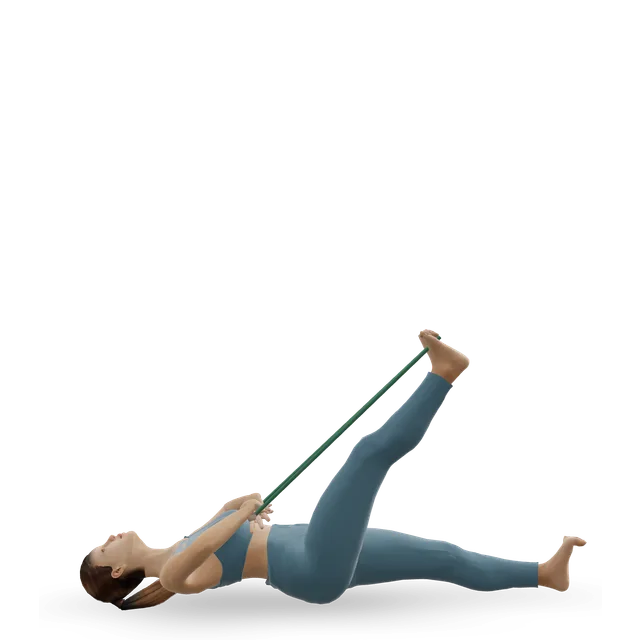
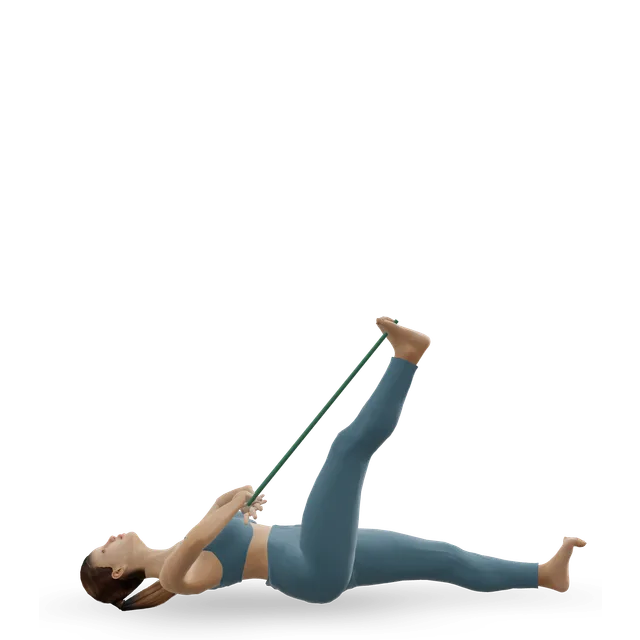
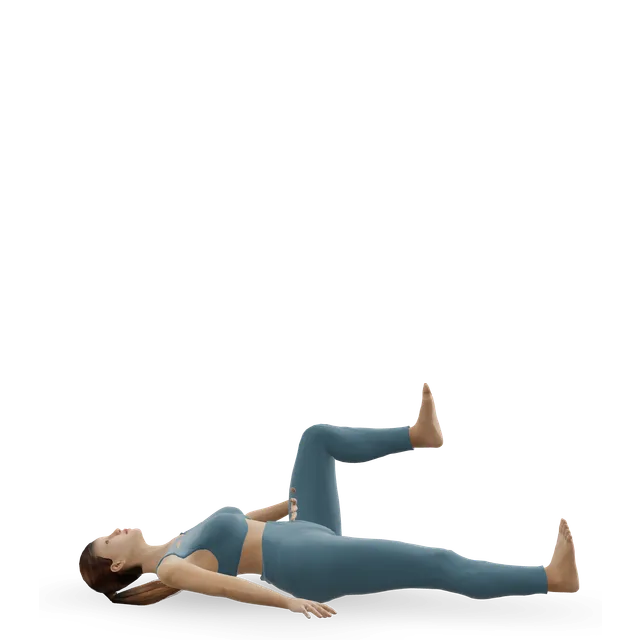
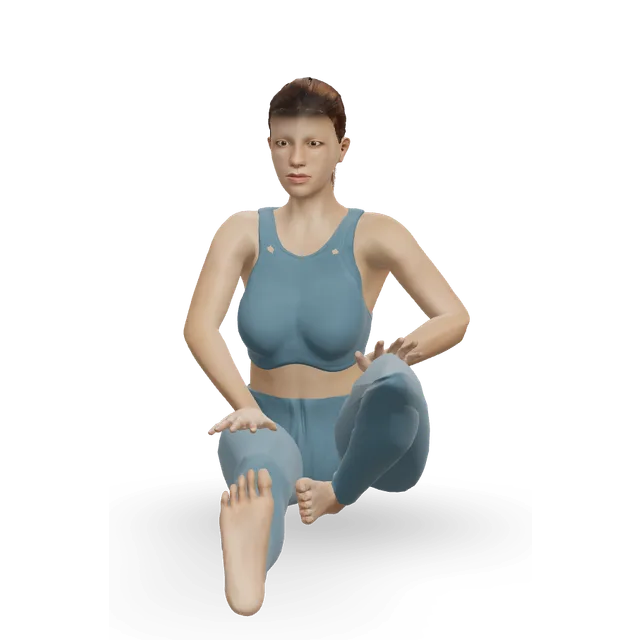
Hamstring flexibility without a therapist: a strap stretch
Steps, dose and caution from the move's page. One Bowen session improved hamstring flexibility for about a week in healthy adults (Marr 2011); our flexibility guide covers how range builds over weeks of regular stretching.
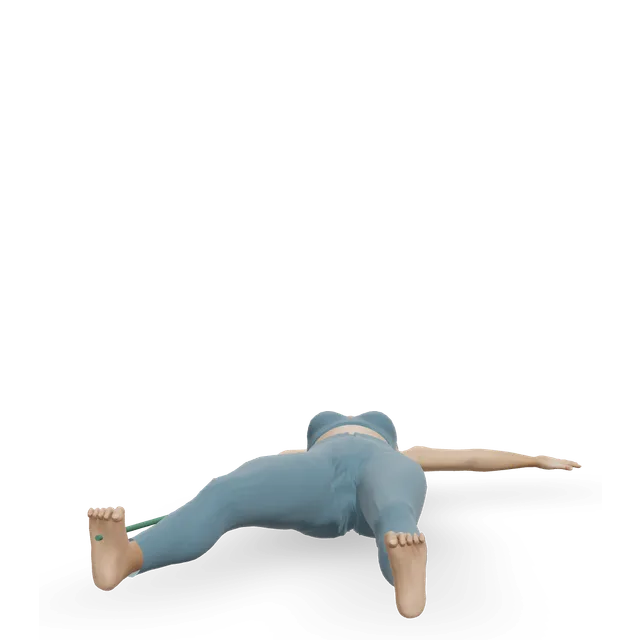
Lie on your back with one leg flat on the floor and a strap, belt or towel looped over the ball of the other foot.
Straighten the strapped leg and raise it until the hip is at about a right angle, the foot toward the ceiling.
Pull gently on the strap to draw the toes back and the leg a little closer, until the calf and the back of the thigh pull.
Hold for 30 seconds with easy breathing, then lower the leg and change sides.
Do 1 to 3 holds each leg, at least 5 days a week.
Tingling or burning down the leg is a nerve signal rather than a stretch: bend the knee and ease off.
Loading the 3D figure…
Drag to turn
Gets into position, then repeats the movement. Technical checks passed; qualified exercise review is pending.
Book it for relaxation or stress if you enjoy it: those are the claims UK advertising rules accept. It isn't a proven treatment for a diagnosed condition.
Check registration: Bowen therapy is on the CNHC's voluntary register, and one UK association asks its registered practitioners for at least 120 hours of training.
Tell the practitioner about your health conditions and medicines, as the NHS advises for any complementary therapy.
Keep up your medical care and any exercise programme, and don't stop a prescribed medicine without talking to your doctor.
If nothing has changed after 3 sessions, you don't need more (our view).
Light pressure, few reported harmsEmerging evidence
Bowen uses light pressure. In the 78-person fibromyalgia trial, no side effects related to Bowen were reported. Most other studies didn't report side effects, and we found no case reports of serious harm.
Tell the practitioner about any medical conditions and medicines, as the NHS advises for all complementary therapies. One fibromyalgia trial left out people taking blood thinners, so if you take one, ask for light pressure (our advice). A parent or carer must be present for children under 16.
UK advertising rules say claims to treat conditions that need medical supervision could discourage people from getting essential treatment. See a GP about symptoms that don't go away or keep coming back.
"Bowen resets the nervous system into rest-and-digest mode"Mixed evidence
The one sham-controlled trial that measured the nervous system, using indirect signs, found more fight-or-flight activity, and effects in healthy people were inconsistent. A sleep trial did find better sleep than with placebo touch. Many people find a session relaxing, but the evidence doesn't show a reset.
"Bowen is proven for frozen shoulder, sciatica, migraine and colic"Mixed evidence
There's only a small study without a comparison group for frozen shoulder, and we found no trials for the others. The advertising regulator found the evidence for claims like these not robust, and a government review found too little evidence for any condition.
Gains lasted about a week in healthy volunteers, and the advertising regulator accepted only a short-term claim. Our flexibility guide covers how regular stretching builds range.
A gentle hands-on therapy in which the practitioner makes light rolling moves over muscles, tendons and connective tissue, usually through light clothing, with pauses between sets of moves. It was developed by Tom Bowen in Australia, and it's also called the Bowen technique.
Does Bowen therapy work?
The evidence is thin. Against a fake treatment, pain was lower a week after a course of Bowen but not 6 weeks later, and an Australian government review found too little evidence to judge it. UK advertising rules accept claims that it helps relaxation and stress.
What happens in a Bowen session?
You lie on a couch or sit, and the practitioner makes small rolling moves with their fingers and thumbs, then pauses, sometimes leaving the room. A session usually lasts 45 to 60 minutes, and the first one, with a medical history, 60 to 90 minutes.
Why does the practitioner leave the room?
Bowen practitioners say the pauses give your body time to respond to the moves. We found no study comparing Bowen with and without the pauses.
Does Bowen therapy reset the nervous system?
That's the claim, but the evidence is mixed. The one sham-controlled trial that looked used indirect measures, heart rate variability and skin conductance, and found signs of more fight-or-flight activity, not less. A trial in fibromyalgia found better sleep than with a placebo touch, though it measured sleep rather than the nervous system.
Can Bowen therapy help back pain or sciatica?
We found no trials for sciatica. For low back pain with tight hamstrings, Bowen did about as well as another hands-on technique in one small trial, and NICE recommends exercise for long-term pain.
Does Bowen therapy help fibromyalgia?
In one trial it improved sleep more than a placebo touch, and in another it improved endurance and quality of life but not pain. The NHS says exercise has important benefits in fibromyalgia, including easing pain.
Does Bowen therapy help frozen shoulder?
Only a small study with no comparison group reports improvement. Our frozen shoulder guide covers the treatments with better evidence.
Is Bowen therapy safe?
It uses light pressure, and no side effects were reported in a recent trial. Tell the practitioner about your health conditions and medicines, keep up any medical care, and see a GP about symptoms that don't go away.
Bowen therapy or massage: which is better?
We found no trial comparing them directly. In small trials, Bowen did as well as some hands-on techniques and worse than others.
How do I find a qualified Bowen therapist?
Bowen therapy is on the Complementary and Natural Healthcare Council's voluntary register, which the Professional Standards Authority accredits. One UK association asks its registered practitioners for at least 120 hours of training and 2 days of training a year.
Movement education, not medical advice. Stop for sharp or increasing pain, numbness or tingling, and get individual advice if you are pregnant, after an injury or surgery, or managing a health condition. Health disclaimer.