Soreness: its best use
Across 99 studies of recovery methods, massage had the largest effect on soreness and tiredness after hard exercise. The trials were small, and nobody can be blinded to a massage.
Fascia guide
Sports massage and deep tissue massage are hands-on treatments for active people and aching muscles: long strokes, kneading, friction and firm pressure, usually for about an hour. After hard exercise, massage eases next-day soreness a little more than doing nothing, and many people feel more recovered and relaxed.
It doesn't make you stronger or faster, and it doesn't flush out lactic acid or toxins. Deeper isn't clearly better either: in the biggest trial, of people with chronic back pain, deep and gentle massage helped equally.
This guide covers what happens in a session, the evidence with numbers, how massage compares with foam rolling and massage guns, who should avoid it, and the rare serious harms.
Across 99 studies of recovery methods, massage had the largest effect on soreness and tiredness after hard exercise. The trials were small, and nobody can be blinded to a massage.
In 29 studies with 1,012 people, massage didn't improve strength, jumping, sprinting, endurance or fatigue, and long massages just before an event tended to slow sprints and lower strength.
In 401 people with chronic back pain, deep and relaxation massage helped equally, and deep courses had slightly more side effects. That's one back pain trial; nobody has tested deep against gentle sports massage.
Source 4
After hard exercise, massage slowed blood flow and the removal of lactate compared with resting, and it didn't change lactate inside the muscle. Lactate doesn't cause next-day soreness anyway.
Never have a leg massaged that could have a blood clot. Ask a doctor first if you take blood thinners, have very weak bones, a nerve condition or cancer, and tell the therapist if you're pregnant.
A set of massage techniques used on athletes and active people to help recovery or treat a problem. The most reported are long gliding strokes, kneading and deep friction across the muscle fibres; trials also used tapping, compression, vibration and stretching. It's used before, between and after events, and in rehabilitation.
There's no agreed definition: it usually means slower, firmer pressure meant to reach deeper layers. Cancer Research UK describes deep tissue massage as used for long-standing, deep muscular problems, and sports massage as used before or after sport or to help heal sports injuries.
The therapist should ask about your health, lifestyle and medical history first. You usually lie on a massage table in your underwear, covered by a towel or gown, with only the part being worked on uncovered. Most sessions last about an hour. Tell the therapist if you're uncomfortable: you can stop at any time, and a therapist should never massage your genital area or touch you in a sexual way.
You might feel a bit lightheaded, sleepy, tired or thirsty, or emotional or tearful for a while.
Source 9
Cancer Research UK gives a usual cost of £20 to £60 for a 30 to 90 minute private session (page last reviewed in 2022). Massage therapists don't have to be registered by law in the UK. The NHS suggests choosing one registered with an organisation accredited by the Professional Standards Authority, such as the Complementary and Natural Healthcare Council (CNHC), whose register includes sports massage. If you see a physiotherapist privately, the NHS advises checking they're registered with the Health and Care Professions Council (HCPC).
In a meta-analysis of 29 studies, massage reduced delayed-onset muscle soreness (DOMS) by about 13% (10 studies, 311 people). Across 99 studies, it had the largest effect on soreness and perceived fatigue of any recovery method, and in 11 trials (504 people), soreness fell most at 48 to 72 hours. The trials were small and unblinded.
Massage didn't improve strength, jumping, sprinting, endurance or fatigue in 29 studies (1,012 people). Short massages of 5 to 12 minutes helped performance recover a little over the next 10 minutes or so, most after hard mixed exercise, while longer massages did less.
In 16 trials (273 athletes), no recovery method, massage included, beat resting, and a fake bath did as well as the real methods, on very low to low certainty evidence. An umbrella review found no effect of massage on recovery between endurance training sessions.
Massage added about 7% flexibility against doing nothing in 7 studies, with one study driving much of it. A foam roller gives a similar short-term gain for free.
Across 37 randomised studies, single sessions reduced anxiety, blood pressure and heart rate. Boxers felt more recovered after a 20-minute massage than after rest, though they boxed no better in their next bout.
Nobody can be blinded to a massage. In a placebo-controlled trial, trigger point massage didn't reduce tension headaches more than fake ultrasound, and in elite endurance athletes a fake bath did as well as real recovery methods.
We found no trial of massage to prevent injuries, and reviews call the evidence limited.
In 401 adults with chronic low back pain (Cherkin 2011), 10 weekly sessions of structural massage, using deep, targeted techniques, or relaxation massage both beat usual care at 10 weeks, by similar amounts: 62% to 65% improved meaningfully, against 38%. The gains in daily function lasted to 26 weeks and were small by a year.
Source 4
Side effects possibly linked to massage, mostly more pain, followed 7% of structural courses and 4% of relaxation courses.
Source 4
In an experiment that made muscles sore, deep massage cut pain during a stretch by about half, while deep massage and light touch reduced tenderness equally.
Source 24
No trial has compared deep and gentle sports massage, so this is our extrapolation from one back pain trial: firmer pressure isn't clearly better. Agree a pressure you can relax into.
Source 4
A review found no commonly accepted definition. Most studies define deep tissue massage by the therapist's intention to reach deep layers, not by a set technique.
Source 12
A Cochrane review of 25 trials (3,096 people) found massage eased pain and helped function in the short term, not the long term. Its authors said they have very little confidence that massage is an effective treatment for low back pain.
Source 25
The National Institute for Health and Care Excellence (NICE) says to consider soft tissue techniques such as massage for low back pain, with or without sciatica, only as part of a treatment package that includes exercise, and for hip or knee osteoarthritis only alongside therapeutic exercise. Exercise therapy itself reduced chronic low back pain across 249 trials.
A 2024 Cochrane review of 33 studies found massage probably makes little or no difference against a placebo, on low certainty evidence, though most of those trials gave single sessions. In a dosing trial of 228 people, 60-minute sessions 2 or 3 times a week for 4 weeks improved neck function, while 30-minute sessions did no better than a waiting list.
Two weeks of deep tissue massage helped back pain equally with or without an anti-inflammatory drug in 59 people, but there was no group without massage, so it can't show the massage worked. In a trial of 40 office workers, four 45-minute sessions over 2 weeks beat no treatment only for bending backwards, measured the next day.
A Cochrane review found too little evidence for deep friction massage for tennis elbow or outer knee tendon pain (2 trials, 57 people). Trigger point massage didn't reduce tension headaches more than a placebo.
After thigh exercise, deep massage didn't raise blood flow in the main thigh artery or warm the muscle, though skin blood flow rose. After hard gripping, massage lowered forearm blood flow and slowed lactate removal compared with resting.
Boxers' blood lactate wasn't lower after massage, and in muscle samples, 10 minutes of massage after damaging exercise didn't change lactate in the muscle.
In muscle samples from 11 young men, massage after damaging exercise dampened inflammatory signals. A 2026 review notes that animal studies show faster repair, but faster muscle repair hasn't been shown in people.
Hands can't reshape dense fascia: a 3D model found that compressing the fascia of the thigh or sole by even 1% needs forces far beyond the normal range.
Source 36
A therapist did better than foam rolling in two small trials, in 30 students with a rounded-shoulder posture and in 36 basketball players. The two work differently: you receive a massage passively, while you control a roller yourself.
Rolling gives a short-term range gain similar to stretching's, and eases soreness a little, by about 6% in a review.
Pooled trials found no clear soreness benefit from percussion, on very low certainty evidence. Hands-on massage has much better evidence for soreness.
Our editorial steps, from Cancer Research UK's description of a session, NHS advice on choosing a therapist, the back pain trial (Cherkin 2011) and the timing reviews (Poppendieck 2016, Mine 2018). A massage can't be shown on the 3D figure.
These describe what trials used, not a prescription.
Trials mostly gave one session soon after hard exercise, and found the effect on soreness over the next few days.
Massages of 5 to 12 minutes helped short-term performance recovery more than longer ones.
Source 16
Nothing to gain: in 9 crossover trials, massage before performance didn't help strength, sprints or jumps, and sessions longer than about 9 minutes tended to make them worse. A movement warm-up does the job.
The largest trial used 10 weekly sessions of 50 to 60 minutes, after a first visit of 75 to 90 minutes.
Source 4
60-minute sessions 2 or 3 times a week for 4 weeks helped; 30-minute sessions didn't beat a waiting list.
Source 30
No trial has tested how often athletes should have one, so in our view how often is up to you, your budget and how you feel.
The NHS advises avoiding massage for the first couple of days after a sprain or strain.
Source 42
Between massages, about 90 seconds of rolling per sore muscle eases soreness a little, and easy walking keeps you moving.
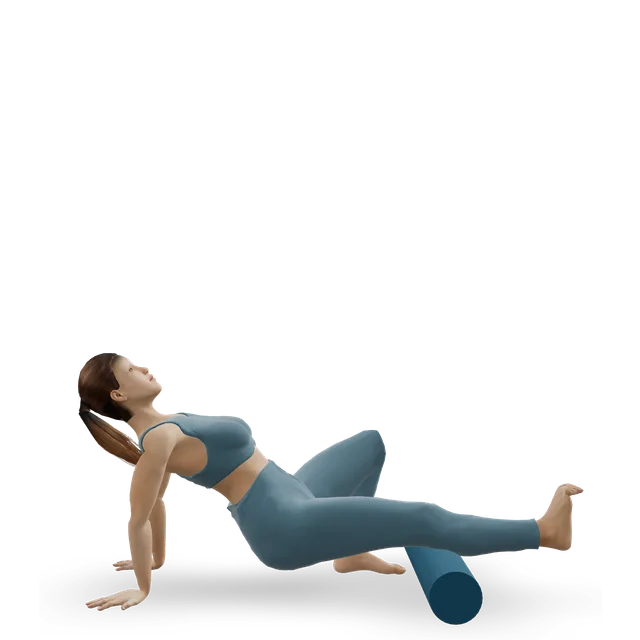 3D demoCalf foam rollingIntermediate · A foam roller
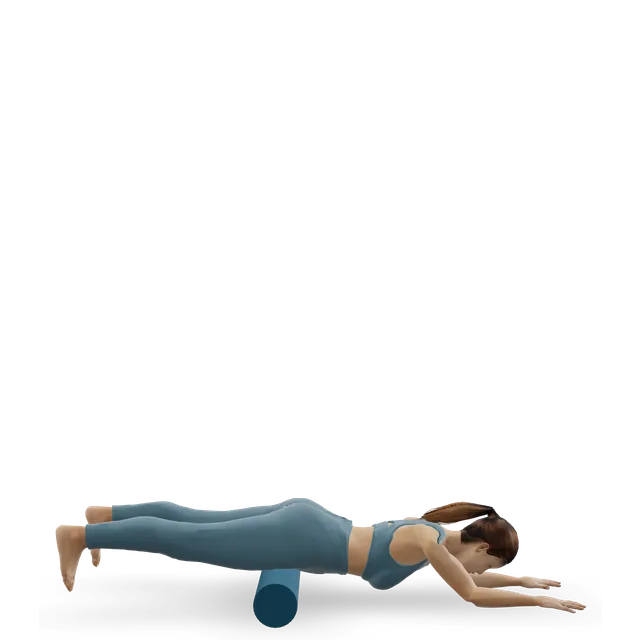 3D demoQuad foam rollingIntermediate · A foam roller
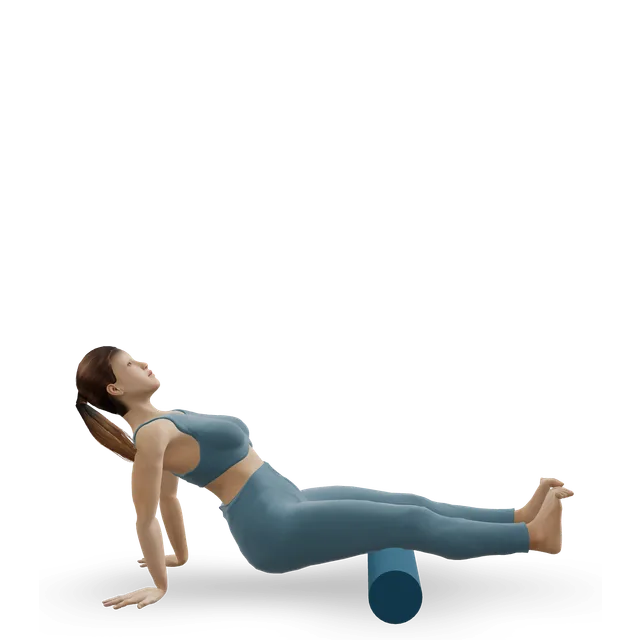 3D demoHamstring foam rollingBeginner · A foam roller
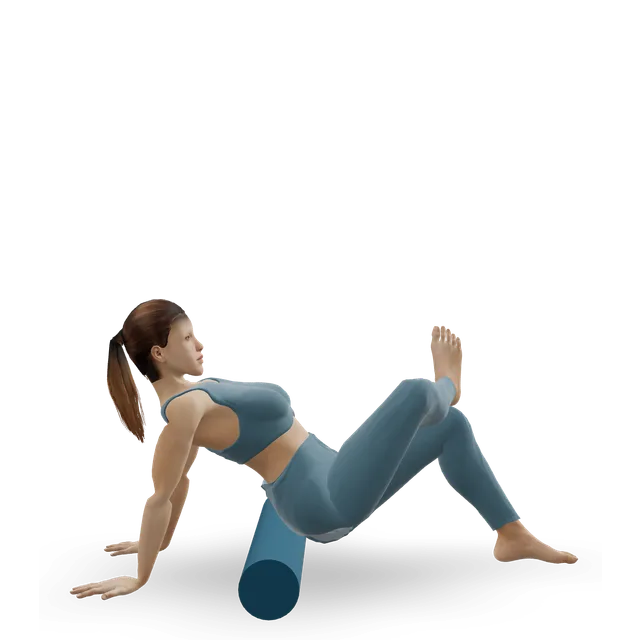 3D demoGlute and piriformis foam rollingIntermediate · A foam roller
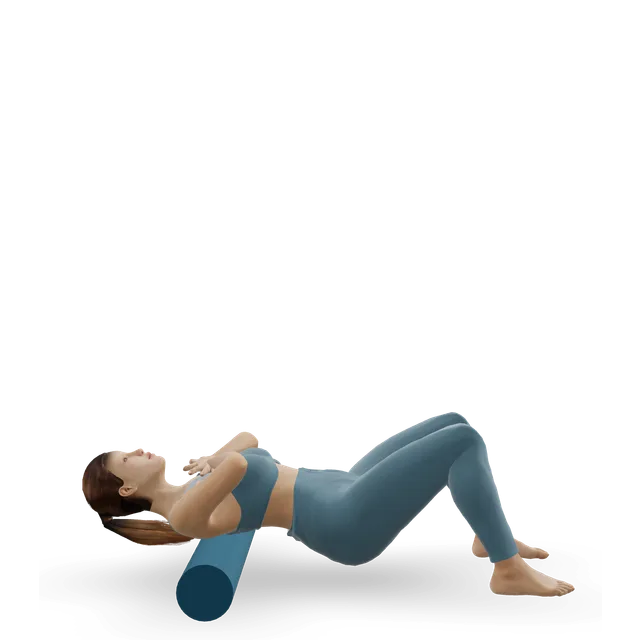 3D demoUpper back foam rollingIntermediate · A foam roller
 3D demoTreadmill walkingBeginner · Cardio machine
Guidelines put exercise first for back pain, with massage only alongside it; our back and neck pain guides have staged plans.
Free ways to recover, relax, and look after a sore back or neck.
A 25-minute easy session for rest days and sore muscles: easy cardio, a gentle mobility flow, optional rolling for sore spots, and slow breathing to finish.
25 minBeginner11 movesCardio machine, A wallA 10-minute cool-down for after a run, a class or a gym session: a few minutes of easy movement, stretches for the muscles you used, then slow breathing.
10 minBeginner9 movesCardio machine, A wallA 10-minute foam roller routine for calves, thighs, glutes and upper back: about a minute per area, moderate pressure, slow rolls.
10 minBeginner6 movesA foam rollerSeven stretches for after a run: calves, soleus, quads, hip flexors, hamstrings and glutes.
10 minBeginner7 movesA wallA 6-minute breathing routine: slow breathing, crocodile breathing, alternate nostril breathing, box breathing and 4-7-8 breathing.
6 minBeginner5 movesNo equipmentA gentle 15-minute Pilates-based routine for ongoing low back pain, built from neutral-spine moves with options for backs that dislike bending or arching.
15 minBeginner10 movesNo equipmentDeep neck holds and shoulder-blade strength in under 20 minutes: one of the best-supported kinds of exercise for a stiff, sore neck.
18 minBeginner11 movesA band, An anchor pointMassage can move a clot: in a single case report, a woman 25 weeks pregnant had a massive clot in her lungs shortly after a leg and foot massage. Never have a leg massaged that is swollen, throbbing, red or darkened: ask for an urgent GP appointment or call 111, and call 999 if you're also short of breath or have chest pain.
The NHS says chiropractic and osteopathy, which also use massage, may not be safe for people in the first three groups below; we apply the same caution to deep massage.
HealthLink BC, a Canadian health service, advises telling the therapist, choosing one with special training in pregnancy massage, sitting or lying on your side as pregnancy goes on, and avoiding massage of the belly, because firm massage of the pregnant belly could cause serious problems. Clots are more likely in pregnancy and for 6 weeks after giving birth.
No massage for the first couple of days after a sprain or strain, and none over broken, bleeding or bruised skin. Experts list a hard bony lump forming in a badly bruised muscle (myositis ossificans) as a reason for caution with pressure.
More pain afterwards was the commonest side effect, reported by 1.5% to 25% of people in back pain trials, with no serious events. Feeling lightheaded, sleepy, tired, thirsty or emotional for a while is common too.
Reviews of case reports found serious harms are probably very rare, and many followed unusual techniques, massage by untrained people, or spinal manipulation counted as massage. These single case reports show what can happen, not how often:
Our editorial advice: no deep pressure on the front or sides of the neck, the belly or the sides of the trunk. Tell the therapist about stents, clots and blood thinners, and choose a trained, registered therapist.
Massage after hard gripping slowed blood flow and lactate removal compared with resting, deep massage didn't raise thigh artery blood flow, boxers' blood lactate wasn't lower after massage, and muscle samples showed no change in lactate. Lactate doesn't cause next-day soreness anyway.
No study we found shows massage releases toxins. UK advertising rules accept claims about relaxation, stress, sleep and well-being for massage and expect robust evidence for anything more. Feeling thirsty afterwards is common, and drinking water is fine, but it isn't a detox.
Hands can't reshape dense fascia. Deep friction massage, designed to prevent abnormal scarring, showed no clear benefit in the only 2 trials for tendon pain, and deep tissue massage has no agreed definition.
Deep and relaxation massage helped chronic back pain equally, and deep courses had slightly more side effects. Light touch reduced experimental muscle tenderness as much as deep massage.
Massage before performance didn't help strength, sprints or jumps, and longer sessions tended to hurt them.
Massage raised skin blood flow but not muscle blood flow, slowed blood flow after exercise in another lab study, and hasn't been shown to speed muscle repair in people.
We found no trial testing it.
Source 23
More pain afterwards is the commonest side effect of massage, reported by 1.5% to 25% of people in back pain trials, and the benefit didn't depend on deeper, more uncomfortable pressure.
Serious harms are rare but documented in case reports: neck artery tears, organ injury, nerve damage and a dislodged clot.
A set of massage techniques, such as long strokes, kneading, friction, pressure and stretching, used on active people to help recovery or treat a problem. Cancer Research UK describes it as used before or after sport or to help heal sports injuries.
They overlap. Deep tissue massage has no agreed definition and usually means slower, firmer pressure aimed at deeper layers, while sports massage is defined by who it's for and when. In the biggest trial, of chronic back pain, deep and relaxation massage helped equally.
For sore muscles, a little: massage had the largest effect on soreness of any recovery method across 99 studies, though the trials were small and couldn't be blinded. It didn't improve strength, jumping, sprinting or endurance in 29 studies. Many people feel more recovered and relaxed afterwards.
It may feel intense, but it shouldn't be sharp or make you hold your breath. In a back pain trial, deeper massage didn't help more than gentle massage and caused slightly more side effects. Agree a signal to ease off.
Some soreness for a day or two is common: more pain afterwards was reported by 1.5% to 25% of people in back pain trials. Feeling lightheaded, sleepy, thirsty or emotional can happen too. Pain that is worse after 2 days, spreading bruising, numbness or new tummy or side pain needs checking.
After is where the evidence is. Before an event, massage didn't help, and long sessions tended to slow sprints and reduce strength, so a movement warm-up works better. Short massages of 5 to 12 minutes helped short-term recovery most.
No trial has tested regular maintenance massage for athletes. For chronic neck pain, 60-minute sessions 2 or 3 times a week for 4 weeks worked better than shorter ones, and for chronic back pain, the largest trial used weekly sessions for 10 weeks.
No. After hard exercise, massage slowed blood flow and lactate removal compared with rest, and lactate doesn't cause next-day soreness anyway. No study shows massage removes toxins; feeling thirsty afterwards is normal.
It can help back pain in the short term, but the evidence is low quality. NICE recommends it for low back pain and sciatica only as part of a package that includes exercise. Numbness or weakness in both legs, or a loss of feeling around your genitals or bottom, needs 999 or A&E.
A therapist did better than a foam roller in two small trials, but rolling gives a similar short-term flexibility gain and a little soreness relief for free. Massage has the edge for soreness and feeling recovered; rolling wins on cost and convenience.
Check with a doctor first if you might have a blood clot, take blood thinners, have very weak bones or a nerve condition, or are having cancer treatment. In pregnancy, tell the therapist, sit or lie on your side, and avoid any massage of your belly. A swollen, painful calf needs a doctor, not a massage.
No. Physiotherapists assess and treat injuries, and the NHS advises checking that a private physiotherapist is registered with the Health and Care Professions Council. Massage therapists don't have to be registered by law, so the NHS suggests one registered with an organisation accredited by the Professional Standards Authority, such as the CNHC.
Movement education, not medical advice. Stop for sharp or increasing pain, numbness or tingling, and get individual advice if you are pregnant, after an injury or surgery, or managing a health condition. Health disclaimer.