Pilates
Wheelchair Pilates: a 20-minute seated class for breathing, the trunk and the shoulders, with pressure relief between blocks
A seated class for wheelchair users, written for people with a spinal cord injury. It works your breathing, sitting posture and trunk, then the shoulder muscles that do the work of transfers and pushing, with a pressure-relief lean after each block. There are no leg moves, no floor work and no reaching overhead. You need a resistance band, a door anchor or a sturdy post, and a table or tray. Before you start, empty your bladder, check nothing is tight, and put your brakes on. No trial has tested this class, so its structure is our editorial choice, from the spinal cord injury exercise guidelines and the shoulder programme our wheelchair workout uses. It's strength and trunk work: for your heart and fitness, add seated cardio such as an arm bike.
Settle and breathe (about 4 minutes)
- Lateral breathing (Pilates breathing)5 to 8 breathsBeginner · Abs · 3D demoBrakes on. Hands on your lower ribs; breathe into the sides and back of your ribs and out through pursed lips, with no holdsHarder: Roll-up (Pilates)
- Shoulder rolls10 each wayBeginner · Shoulders, Back, Neck · 3D demoSmall circles if a shoulder is soreHarder: Shoulder CARs (controlled articular rotations)
- Chin tuck5 reps, 3 s holdBeginner · Neck · 3D demoSlide your head straight backEasier: Lying chin tuckHarder: Isometric neck holds (four-way)
- Seated upper-back lift (sit tall, shoulders back)3 to 5 holds of 3 to 5 sBeginner · Back, Shoulders, Neck · 3D demoSit tall and draw your shoulder blades back; keep your back on the backrest if your balance is limitedEasier: Elbows backHarder: Prone Y-T-W raises




Trunk (about 6 minutes, starting with a pressure-relief lean)
- Thoracic rotation5 each sideBeginner · 3D demoFirst, lean to each side for a slow count of 20, an arm hooked round your chair, and come back up slowly. Then turn, arms crossed on your chest or one hand on the wheel, hips still (the demo shows it standing)Easier: Side-lying open bookHarder: World's greatest stretch
- Table slide (seated forward reach)8 slow repsBeginner · Shoulders, Back · 3D demoForearm on a table or tray; slide forward from your hips, then come back up slowlyEasier: Pendulum exercise (Codman's pendulum)Harder: Overhead lat stretch at a bench (elbows on the bench)
- Breath reach5 breathsBeginner · 3D demoArms rise as you breathe in, only to shoulder height if your shoulders hurt, and lower on a longer breath out (the demo shows it standing)Harder: Slow breathing (6 breaths a minute)
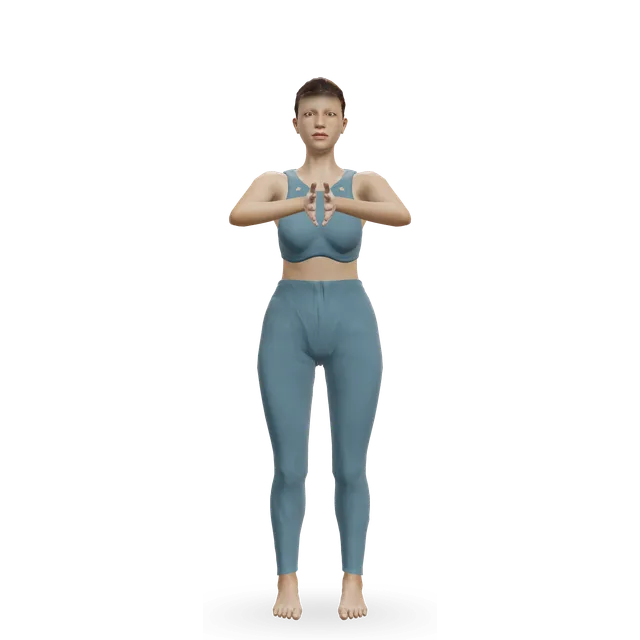
- Isometric chest squeeze (palm press)6 holds of 5 sBeginner · Chest, Shoulders, Triceps · 3D demoPalms together at chest height; keep breathing and rest as long as you heldHarder: Machine chest fly (pec deck)



Shoulders (about 7 minutes, starting with a pressure-relief lean)
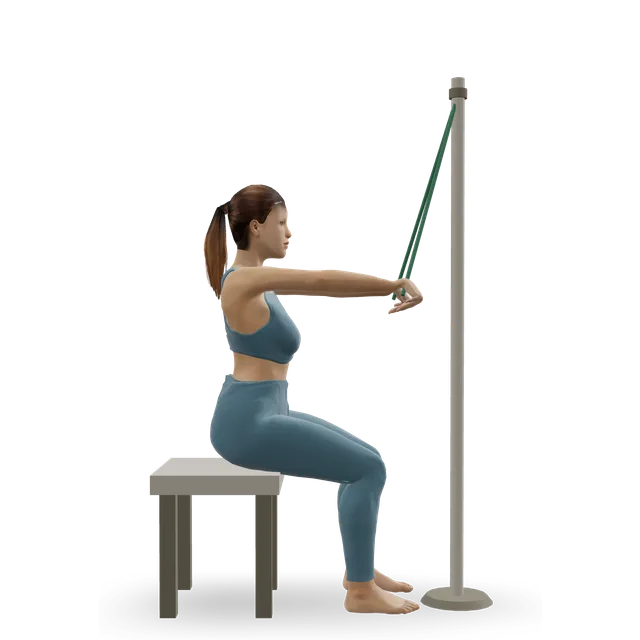
- Band row15Beginner · Back, Biceps, Shoulders · 3D demoFirst, the pressure-relief lean, as before. Then, with the band anchored at chest height in front of you, draw your shoulder blades back, elbows closeHarder: Supported single-arm dumbbell row
- Standing band external rotation8 each armBeginner · Shoulders, Back · 3D demoSit side-on to the anchor at elbow height, elbow tucked at your side and bent to a right angle; turn the forearm outEasier: Stick-assisted external rotation (lying)Harder: Side-lying external rotation
- Beginner · Back, Chest, Triceps · 3D demoBand anchored above you; start with straight arms at shoulder height and pull down to your sidesHarder: Straight-arm pulldown
- Doorway chest opener30 s each sideBeginner · Chest, Shoulders · 3D demoWheel side-on into a doorway, forearm on the frame, elbow at or below shoulder height, and turn your chest awayEasier: Elbows backHarder: Fish pose (Matsyasana)



Finish (about 3 minutes, starting with a pressure-relief lean)
- Beginner · 3D demoFirst, the pressure-relief lean. Then breathe in for about 4 and out for about 6, with no holdsEasier: Breath reachHarder: Crocodile breathing (prone diaphragmatic breathing)

Tips
- Before you start: empty your bladder, check that straps, clothing, shoes and leg bags aren't tight, put your brakes on and anchor the band securely. At T6 or above, have a cold drink and a fan to hand.
- If you get a pounding headache, flushing or sweating above your injury, or a stuffy nose, stop, sit up, drop your feet and look for the cause: our Pilates for spinal cord injury guide has the steps, and when to call 999.
- Keep every exercise pain-free; shoulder pain is a reason to see your physiotherapist, not to push on.
- Relieve pressure at least every 15 minutes through the rest of your day too, as the Salisbury spinal centre advises, or as often as your own team says.
- Do the class 2 to 3 times a week (our suggestion), and add seated cardio on other days: the guidelines ask for at least 20 minutes of aerobic exercise twice a week.
- With tetraplegia, loop the band round your wrists or use grip aid gloves, and ask your therapist which moves suit you.
The doses are suggested starting points, not a prescription. Choose a range you can control and stop for sharp or increasing pain, numbness or tingling. Get individual advice after an injury or surgery, or if you are pregnant or managing a health condition.
Guides that recommend it
Find more moves like these
More pilates




Beginner Pilates workout
A 20-minute mat Pilates workout for complete beginners. It covers breathing, spine position and the foundation moves, each with an easier option.
20 minBeginner13 movesNo equipment

10-minute Pilates abs
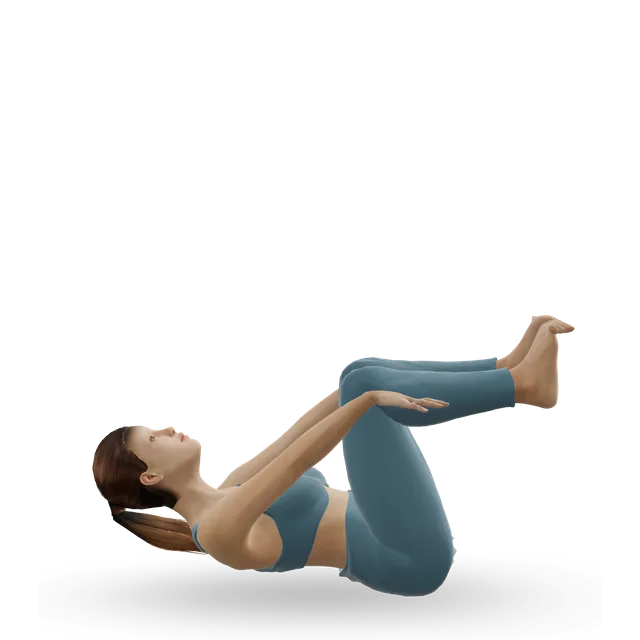
Ten minutes of the classic Pilates abdominal series: the hundred, the roll-up and the series of five, with a plank to finish.
10 minIntermediate11 movesNo equipment
Full-body mat Pilates workout
A 30-minute intermediate mat Pilates class that follows the classical order, from the hundred to the push-up, with prep versions of the hardest moves.
30 minIntermediate22 movesNo equipmentQuestions people ask
How long does the wheelchair pilates: a 20-minute seated class for breathing, the trunk and the shoulders, with pressure relief between blocks take?
About 20 minutes, including any warm-up and cool-down listed. Shorten it by doing fewer rounds; lengthen it by adding one.
What equipment do I need?
You need: A bench or box, A band, An anchor point, A wall. Each move links to its guide, where you can find an alternative if you are missing something.
Is it suitable for beginners?
It is written for beginners. 7 of its 13 moves have an easier option listed beside them if you need one.
How do I make it easier or harder?
Use the easier or harder option listed under each move, change the number of rounds, or adjust the rest. Progress one change at a time.