Pilates guide

Pilates for spinal cord injury: levels and completeness, seated and mat work, the core and breathing, skin and blood pressure, and a class

Pilates can be done from a wheelchair, on a mat or on equipment, adapted to your level of injury, and it can help sitting posture, trunk control and shoulder strength. It doesn't repair the spinal cord or help you walk again, and no Pilates trial in spinal cord injury has published results.

So it works best as part of the strength and trunk work, beside the aerobic exercise the spinal cord injury guidelines ask for. Your spinal injuries centre's advice comes first, especially in the first year after injury.

This guide covers how your level and completeness change what you can do, seated and mat work, the core and breathing, protecting your skin and shoulders, autonomic dysreflexia and low blood pressure, moves to change or leave out, what the evidence shows, and our free 20-minute wheelchair Pilates class, with pressure relief built in.

The short version

Pilates can be done from a wheelchair

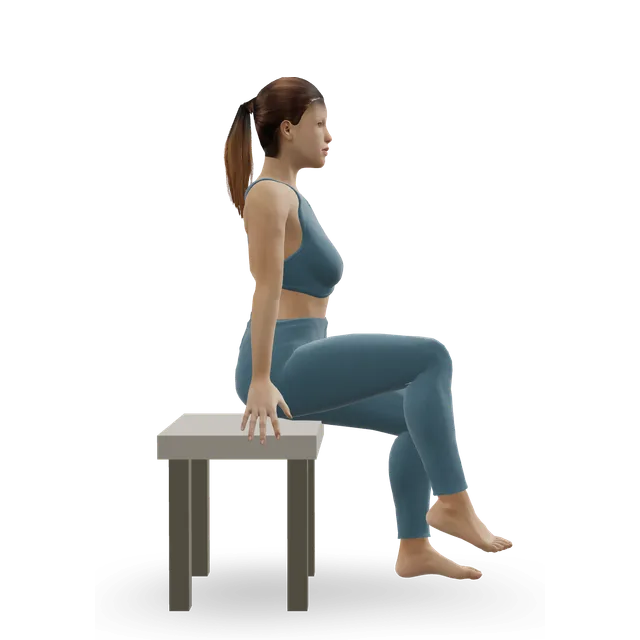
Much of Pilates works sitting: the NHS has a chair-based Pilates class for people "who have difficulty getting down on the floor and prefer the support of a chair". In 15 wheelchair users with multiple sclerosis (MS), 12 weeks of Pilates was "well tolerated" and went with better sitting balance and less shoulder and back pain, though there was no comparison group.

Sources 1, 2

No Pilates trial has published results

We searched and found one registered trial, of reformer Pilates in 18 people with paraplegia, finished in 2019 with no results posted or published. Pilates is rarely used in rehabilitation: in US spinal centres, 3% of 1,376 people had any complementary therapy such as yoga or Pilates.

Sources 3, 4, 5

It doesn't restore movement or feeling

Pilates doesn't repair the spinal cord, and no study shows it helps people walk again. What trunk exercise in general can do is improve sitting balance and reach.

Sources 6, 3

It sits beside the exercise that does most for your health

The international guidelines ask for at least 20 minutes of moderate to vigorous aerobic exercise twice a week, plus 3 sets of strength exercises for each major muscle group you can use, twice a week. Pilates can be part of the strength and trunk work, not the cardio. Our exercise after a spinal cord injury guide has the plan.

Sources 7, 8

At T6 or above, know autonomic dysreflexia

If your injury is at the sixth thoracic level (T6) or higher, a pounding headache, flushing or sweating above your injury, or a stuffy nose can mean a dangerous rise in blood pressure. Empty your bladder before a class, check nothing is tight, and know what to do (below).

Sources 9, 10, 11, 12

Look after your skin, blood pressure, shoulders and bones

You may not feel friction or pressure on paralysed limbs, so relieve pressure regularly and check your skin after mat work. Come up from lying slowly, keep weight off sore shoulders, and never force a stretch on a paralysed limb, because the bones below an injury break more easily.

Sources 13, 14, 11, 15, 16

Spinal cord injury, and what a Pilates class asks

What a spinal cord injury is

Damage to the spinal cord disrupts messages between the brain and the body, so movement and feeling are reduced or lost below the injury. The World Health Organization (WHO) estimates that in 2021 "approximately 15.4 million people were living with SCI", and lists complications including spasticity, long-lasting pain, urinary tract infections, pressure ulcers, breathing problems, autonomic dysreflexia, blood clots and thinning bones. Our exercise after a spinal cord injury guide explains levels, causes and numbers in more detail.

Sources 17, 18

Level and completeness

The Spinal Injuries Association (SIA): "Paraplegia affects the movement and sensation in your legs and abdominal muscles." "Tetraplegia affects movement and sensation in all four limbs, as well as abdomen and chest muscles." And "Those with tetraplegia and high-level paraplegia of T8 and above may also have respiratory compromise and weakened cough." In an incomplete injury, some movement or feeling remains below the level.

For Pilates, this means the higher the injury, the fewer trunk muscles you can switch on yourself, so a class shifts from core work towards sitting balance, posture, breathing and the muscles you can use (our reading).

Source 18

What a Pilates class asks

Getting down to a mat (a transfer that can drag the skin), lying for long spells (pressure on the base of the spine and the heels), curl-ups that need working tummy muscles, weight on the hands (more load for shoulders that already do transfers and pushing), reaching overhead, stretches of paralysed limbs, and on equipment, springs and straps. Each point has a change in the moves sections below. A US disability exercise centre's Pilates guide says that on Pilates equipment, "a trained instructor should be spotting the individual at all times to ensure safety".

Sources 19, 11, 15, 20, 16, 21

You may not feel the warning

The SIA's exercise factsheet: you may not "have the pain feedback to tell you when exercise is imposing too much friction or pressure on your paralysed limbs. Carers and instructors need to bear this continually in mind." Pain or irritation below the injury can also set off dysreflexia "even if the pain or discomfort cannot be felt in the usual way".

Sources 13, 9

How people differ

The exercise guidelines were written for adults aged 18 to 64, more than a year after injury, with an injury at C3 or below. They "may also be appropriate" earlier after injury, at 65 or over, or with other conditions, but people in these groups "should consult a health care provider prior to beginning an exercise program". In rehabilitation, follow your spinal centre's programme.

Source 7

By level of injury

Our summary, from the sources in each note. Your spinal team will tell you what suits your injury.

Tetraplegia

Sitting posture, breathing, neck and shoulder moves and supported reaching, with help for transfers and grip aids or bands looped round the wrists. Breathing and coughing can be weaker, and blood pressure can drop when you sit up. Breathing muscle training uses a handheld device and a plan from your team; Pilates breathing doesn't replace it.

Sources 18, 22, 11, 15

Paraplegia at T6 or above

The seated class works, with extra care: know the signs of autonomic dysreflexia, come up from lying slowly, and keep cool, because sweating can be reduced. With an injury at T8 or above, breathing and coughing can be weaker.

Sources 11, 10, 18

Paraplegia below about T6

The tummy muscles may still be partly or fully paralysed, so seated trunk work, reaching and the shoulder exercises suit most people; mat work needs a safe transfer and pressure relief. Watch your shoulders, skin and bones.

Sources 18, 15, 6

An incomplete injury

Depending on what you can move, mat moves such as the pelvic tilt, heel slides and knee folds may suit, and some people stand at a wall or chair. The same rules on dysreflexia and blood pressure apply if your injury is at T6 or above (our suggestion).

Sources 7, 6

What the evidence says

No Pilates trial in spinal cord injury has published results, so most of this is about exercise in general, and several studies are small and uncontrolled.

No Pilates trial has published resultsStrong evidence

Our searches of PubMed, Europe PMC and ClinicalTrials.gov on 2 November 2026 found one trial: 18 people with injuries at T2 or below, more than 2 years after injury, randomised to 8 weeks of reformer Pilates with an instructor or a home exercise programme. It was completed in 2019, and no results have been posted or published.

Sources 3, 4

Pilates in wheelchair users with MSMixed evidence

In 15 wheelchair users with MS, 12 weeks of Pilates went with better sideways sitting balance, sitting posture and shoulder and back pain, and people enjoyed it. There was no comparison group, and MS isn't a spinal cord injury.

Source 2

A pilot in a spinal cord diseaseMixed evidence

In 8 people with HTLV-1 myelopathy, a spinal cord disease caused by a virus (human T-cell lymphotropic virus 1; 2 of them wheelchair users), 20 Pilates sessions over 10 weeks went with less pain and better balance, trunk control and quality of life, and "after 10 weeks without Pilates, there were significant changes in terms of increasing pain and regression of mobility". There was no comparison group.

Source 23

Trunk exercise and sitting balanceEmerging evidence

A 2025 review of 17 studies (432 people) found exercise improved static and dynamic sitting balance by large amounts (standardised mean differences of 1.21 and 1.01) and how far people could reach. We could read only its abstract: its search ended in June 2020, it mixed randomised and non-randomised studies, and one of its intervals doesn't contain its own estimate.

Newer trials are small: in 44 people in rehabilitation, 6 weeks of breathing muscle training improved sitting balance more than rehabilitation alone, and kayak ergometer and conventional trunk training improved trunk control about equally in 36 people. Seated trunk work, the Pilates-like part, is what has the support, and it improves sitting balance, not walking.

Sources 6, 24, 25

Exercise after spinal cord injury: the guidelinesStrong evidence

The 2018 guidelines rest on 211 studies, 189 of them in people injured more than a year earlier, with moderate confidence that exercise improves fitness, strength and heart health markers. For fitness and strength: "20 min of moderate to vigorous intensity aerobic exercise 2 times per week AND 3 sets of strength exercises for each major functioning muscle group, at a moderate to vigorous intensity, 2 times per week" (a strong recommendation). A 2026 Cochrane review of 17 trials (505 people) adds that training may increase fitness, with low certainty, and that its effects on quality of life, mood and harms are very unclear.

Sources 7, 26

Mood and quality of lifeEmerging evidence

In 19 trials (797 adults under 65), exercise improved overall wellbeing and quality of life by small to moderate amounts, with low certainty. In 3 of the studies, 4 serious side effects were probably caused by the exercise.

Source 27

Arm cranking does the cardioEmerging evidence

In 18 studies with 235 people, arm cranking for 30 to 40 minutes, 3 to 5 times a week, improved fitness with moderate certainty, and no evidence suggested it raises the risk of shoulder pain. Pilates doesn't replace this.

Source 28

Yoga and mind-body programmesMixed evidence

The one randomised trial of yoga alone (23 people, seated, 6 weeks) lowered depression with no change in pain, and "There were no adverse events reported." Across 5 studies of mind-body programmes, pain ratings fell by about 1.3 points on a 0 to 10 scale. No Pilates study has measured mood after spinal cord injury.

Sources 29, 30

Breathing muscle training is a different thingEmerging evidence

After a neck injury, training with a handheld device raised the amount you can breathe out (vital capacity) by about 0.4 litres and made the breathing muscles stronger, without changing breathlessness (11 studies, 212 people). A 2025 review agrees, noting the studies' "poor methodological quality". Pilates breathing is a relaxed breathing pattern, not this kind of training.

Sources 22, 31

Stretching paralysed limbsStrong evidence

Across 49 studies, high-quality evidence found regular stretching made no clinically important short-term difference to joint range in neurological conditions (about 2 degrees), and side effects included skin breakdown, bruising, blisters and pain. Spinal teams still use positioning and stretches for comfort and spasm, so follow their plan.

Source 20

How much, and how to start

The guideline amounts come first

At least 20 minutes of moderate to vigorous aerobic exercise twice a week, plus strength work for each major muscle group you can use twice a week; for heart and metabolic health, build to 30 minutes of aerobic exercise 3 times a week. The UK Chief Medical Officers add: "Even a little movement is better than nothing."

Sources 7, 8

Where Pilates fits

Two or three Pilates sessions a week for the trunk, breathing and shoulders is a reasonable start (our editorial starting point, matching the guidelines' twice-weekly strength work and the 3 days a week the STOMPS (Strengthening and Optimal Movements for Painful Shoulders) programme used).

Sources 7, 32

One to one first

In a studio, a one-to-one session with a teacher who knows spinal cord injury is safer than a mixed mat class until you know your routine, and on equipment the teacher should spot you throughout (our suggestion, with a US disability exercise centre's advice).

Source 21

Relieve pressure through a class

The Salisbury spinal centre's manual: "Relieve pressure at least once every 15 minutes." Canadian safety tips suggest shifting your weight every 10 to 15 minutes if pressure is a concern, and the SIA says some people need it "every 20 minutes or so, while others can last much longer". No trial has tested how often: follow your own team's routine. Our class builds a lean in between blocks.

Sources 14, 12, 19

Settle and breathe, sitting

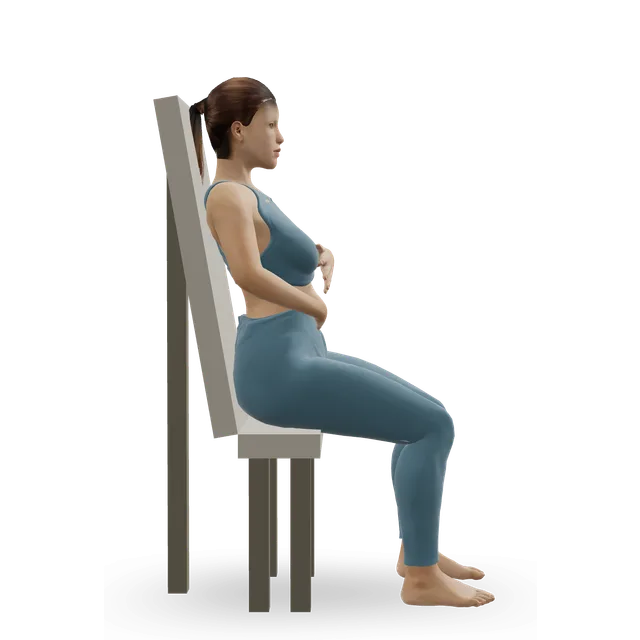
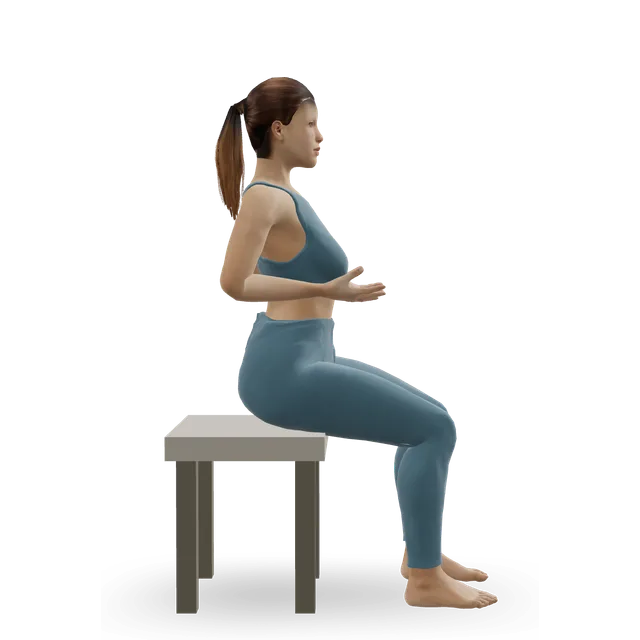
In your wheelchair with the brakes on, or on a firm chair. Lateral breathing: 5 to 8 breaths (from the move page's dose); slow breathing: 2 minutes, with no holds (our somatic and veterans Pilates classes); the seated upper-back lift: 3 to 5 repetitions, each held 3 to 5 seconds (from the move page's dose), with your back on the backrest if your trunk balance is limited.

Trunk, sitting

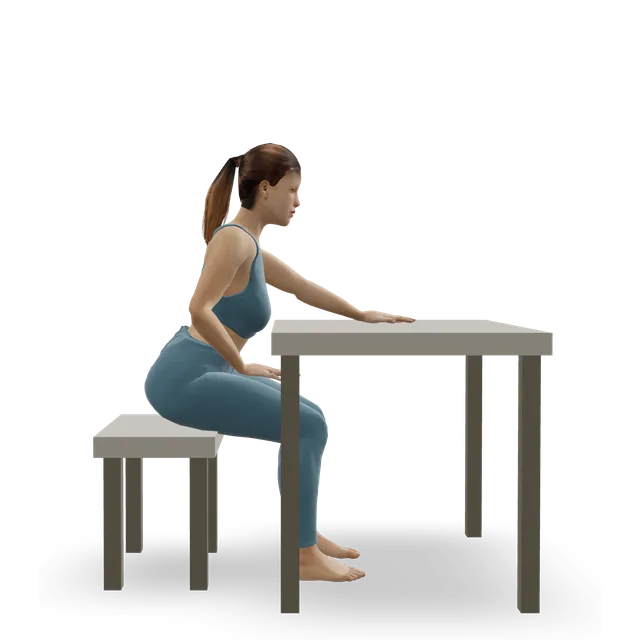
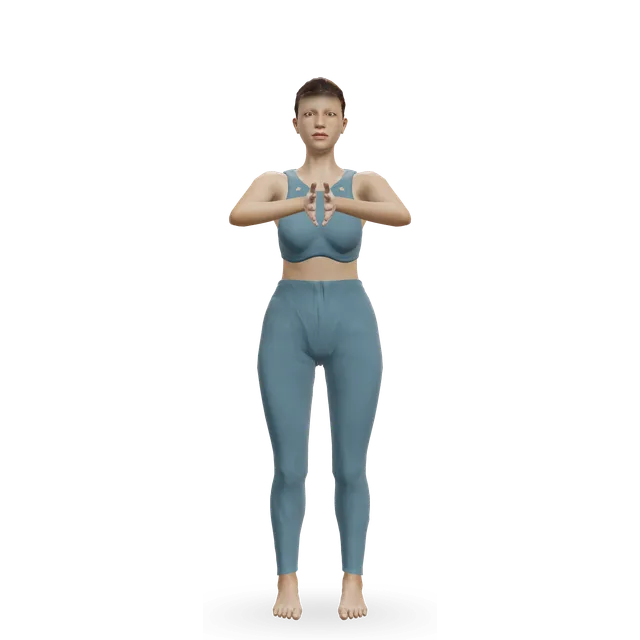
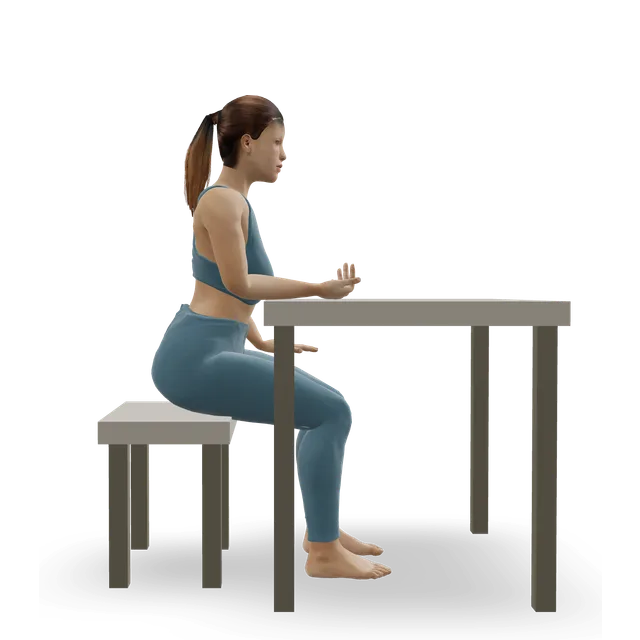
The seated twist: 5 each side, arms crossed or a hand on the wheel (our wheelchair workout); the table slide: 8 slow reaches along a table (the seated chair yoga class's dose); the breath reach: "5 breaths, exhale longer than inhale" (the move page's dose), arms no higher than your shoulders if they hurt; the palm press: 6 holds of 5 seconds (our seated chair Pilates class). Come back up slowly if your blood pressure drops when you lean.

Shoulders: the STOMPS exercises

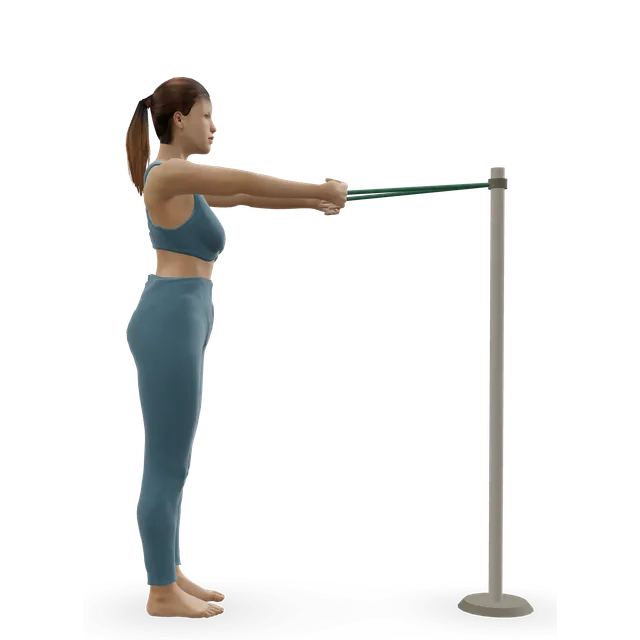
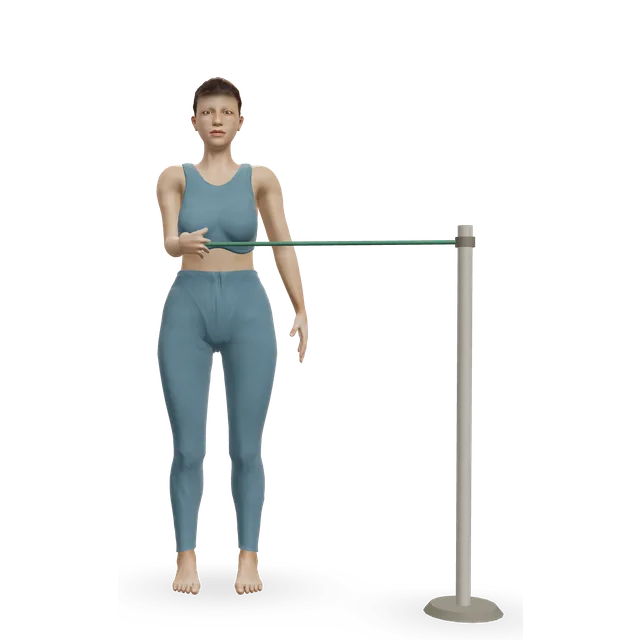
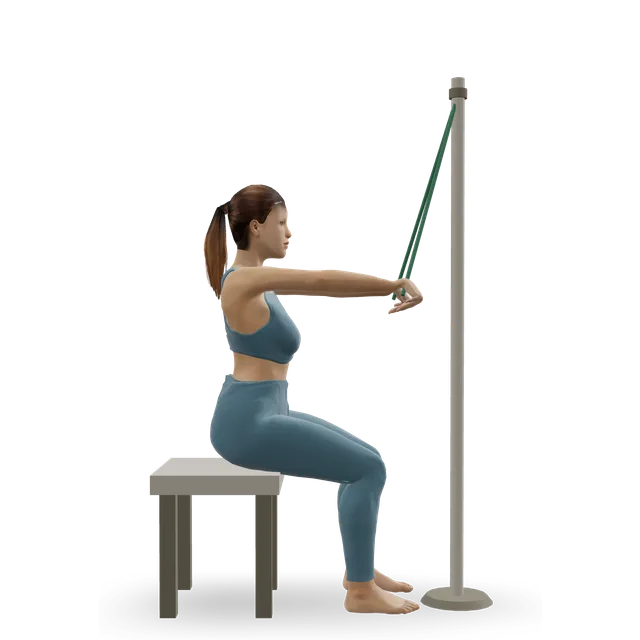
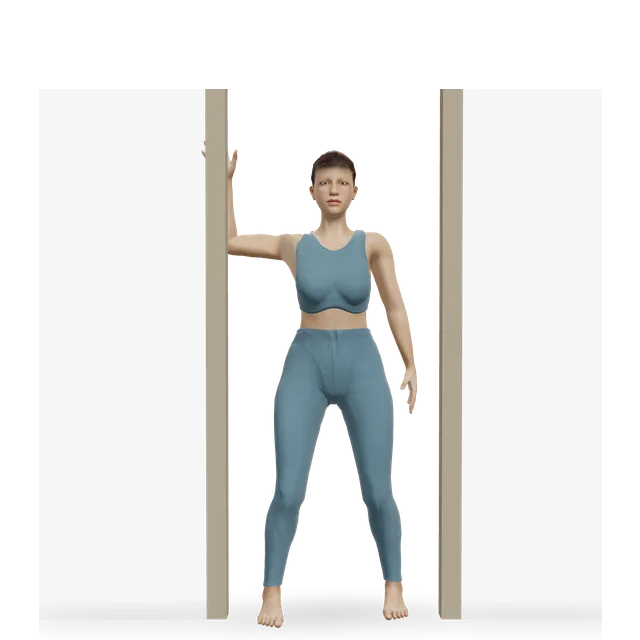
From our wheelchair workout: band row 15; band external rotation 8 each arm; seated band pull-down 8, from shoulder height, never overhead (its page gives the STOMPS trial's 3 sets of 8, 3 days a week); doorway chest opener 30 seconds each side, elbow at or below shoulder height. Keep every one pain-free.

Neck and hands

Chin tuck: 5 reps with a 3-second hold (our veterans Pilates class); shoulder rolls: 10 each way (our wheelchair workout); tendon glides: 4 to 6 of each position, holding each for 5 seconds (from the move page's dose). With tetraplegia, ask your hand or occupational therapist before the hand exercises.

On a mat, if it suits you

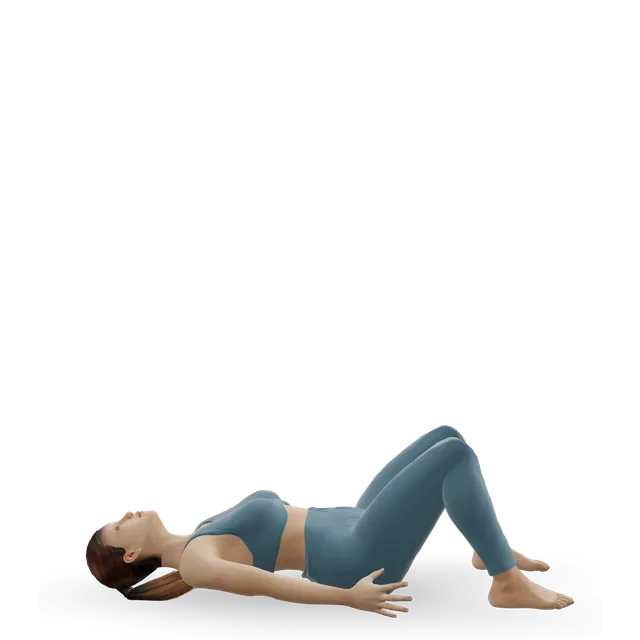
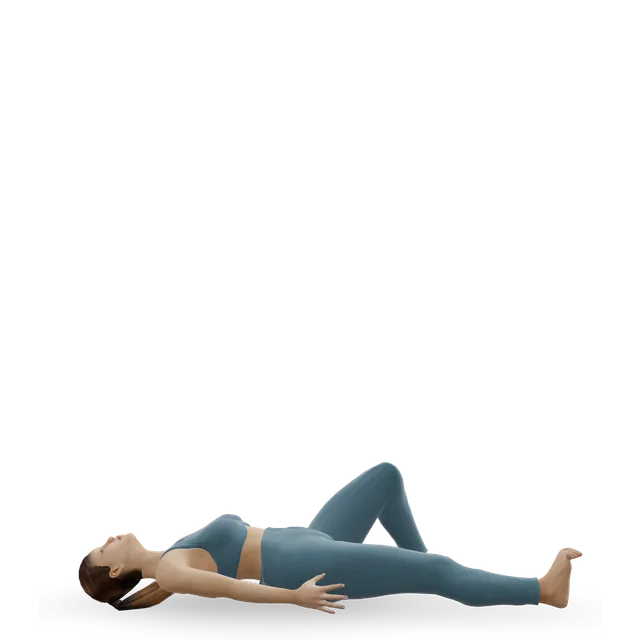
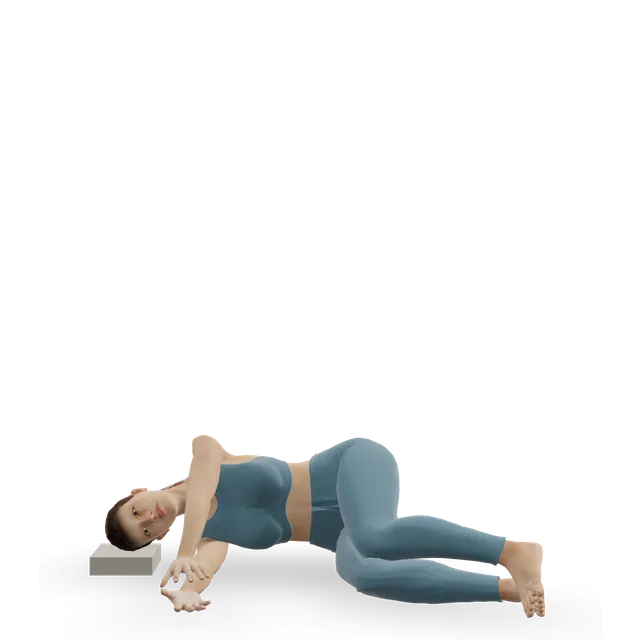
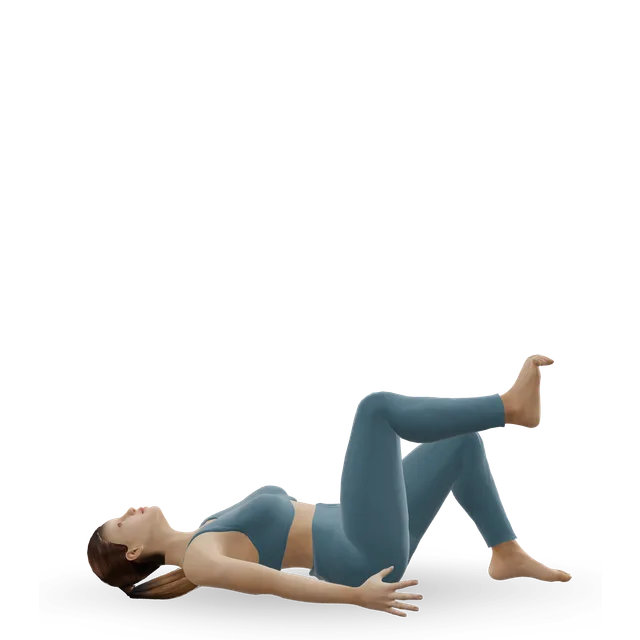
For an incomplete injury, or with help: a padded surface, pressure relief, and a skin check afterwards. Pelvic tilt into bridge: 6 slow (our somatic and veterans classes); heel slide: 5 slow each side (our somatic class); side-lying open book: 5 each side, head on a pillow (our veterans class); knee fold: 2 sets of 5 to 10 each side, every other day (from the move page's dose).

The pressure-relief lean, between blocks

Our wording of the pressure-relief lean's move page, which follows the Salisbury spinal centre's manual: at least every 15 minutes, for a slow count of 20 each time. No trial has tested how often. The move has written steps and no 3D demo yet.

  1. Put your brakes on.
  2. Hook one arm around the back of your wheelchair and lean to the other side, so the weight comes off that buttock. Count to 20 slowly.
  3. Come back upright, then lean the other way for another slow count of 20.
  4. If you have the arm strength and balance, or someone to help, lean forwards with your chest towards your knees and your arms on your thighs, for a slow count of 20.
  5. Sit back up slowly, especially if your blood pressure tends to drop when you change position.

Moves to change or leave out

Each change is our suggestion, from the sources named; none has been tested in a trial.

Curl-ups and head lifts

The Hundred, chest lift, roll-up, criss-cross and single and double leg stretch need working tummy muscles, which paraplegia and tetraplegia affect. Leave them out unless your physiotherapist has shown you a version, and keep your head down.

Source 18

Weight on the hands

The leg pull front, push-up, side bend and planks add load to shoulders that already do transfers and pushing: the upper limb guideline says "Pressure during transfers has been shown to be 2.5 times greater than that recorded when the shoulder is not bearing weight". Leave them out with shoulder pain.

Sources 15, 32

Arms overhead

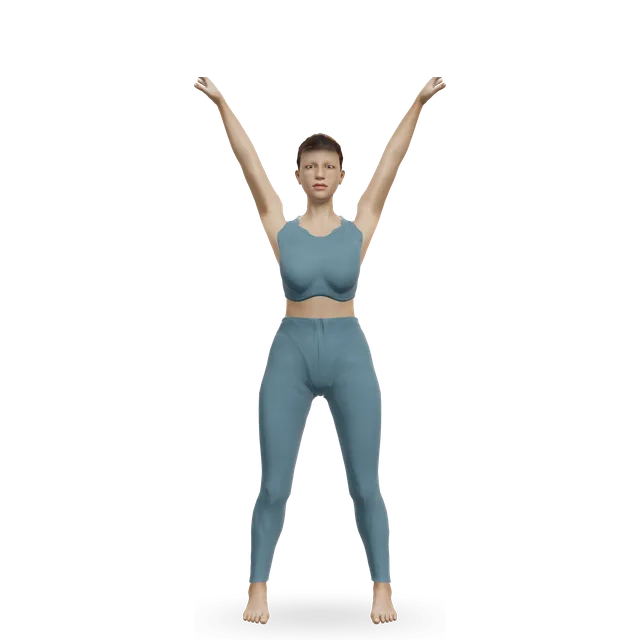
The guideline: "Individuals with spinal cord injury should avoid tasks that require the arm to be above shoulder height." Keep reaches and side bends at or below shoulder height if your shoulders hurt.

Source 15

Legs overhead and rolling

The roll-over, jack knife, control balance, boomerang, rolling like a ball, the seal, the open-leg rocker and the corkscrew put weight on the neck, drag the skin of the back and buttocks, and move you head-down then head-up, which can drop your blood pressure at T6 or above. Leave them out.

Sources 11, 33

Lying face down

The swan, swimming and single and double leg kicks put pressure on hips and knees you may not feel, and are hard to get out of. Skip them unless your team has shown you a safe way.

Source 13

Stretches of paralysed limbs

The spine stretch forward, the saw and seated forward folds, especially if a teacher pushes you further: they don't lastingly improve range, and a review of fractures after spinal cord injury found some came from "physiologic ranging/loading of the joint (23%)". Never let anyone push a paralysed limb.

Sources 20, 16

Equipment

Reformer, Cadillac and chair work: only one to one, with a teacher spotting you, and check that straps don't press on skin you can't feel, as pressure can set off dysreflexia. No trial has reported results for equipment Pilates in spinal cord injury.

Sources 21, 3, 10

Skin, dysreflexia, blood pressure and heat

Skin and pressureStrong evidence

The SIA: "Check your skin for unusual marks twice daily", and "Try to avoid shearing damage to the skin while transferring." Check your skin after every mat session too (our suggestion), and don't exercise on a mark or sore over a pressure area.

Sources 33, 19, 14, 12

Autonomic dysreflexia: who is at riskStrong evidence

The SIA calls it "a sudden and potentially lethal rise in blood pressure" that "most commonly affects those with injuries at or above T6 level". It's set off by pain or irritation below the injury, most often a full bladder, and also a blocked bowel, a pressure ulcer, tight clothing or straps. The SIA: "Autonomic dysreflexia should ALWAYS be treated as a medical emergency".

Sources 10, 9, 11

The signs

The signs can include the following, and sometimes there are few or none:

  • a pounding headache
  • flushing, blotchy or darker skin, and sweating, above your injury
  • pale skin below your injury
  • a stuffy nose
  • blurred vision or a tight chest
  • a slow or fast heartbeat
  • goose bumps or feeling anxious

Sources 9, 10, 11

What to do at once

The SIA's steps, which the spinal cord medicine guideline agrees with. If it starts while you're lying on a mat, sitting up comes first, with help if you need it (our suggestion).

  • Stop exercising. Sit up and drop your feet.
  • Loosen any clothing, straps or shoes, and check nothing is pressing on your skin.
  • Check your bladder first: a full bag, a kink in the tube, a bag above your bladder or a closed tap. If a catheter won't drain within 2 to 3 minutes, it needs changing.
  • Then check your bowel, then your skin and anything else below your injury that could hurt.
  • Use your prescribed dysreflexia medicine if you have a plan for it; your blood pressure can drop afterwards.
  • Call 999 if you can't find and remove the cause, or the symptoms don't settle.

Sources 10, 9, 11

Getting up from the matStrong evidence

The guideline: low blood pressure on sitting up "may occur in individuals with lesions at T6 and above on the assumption of an upright posture from a supine position, regardless of whether symptoms occur". Come up in stages: roll to your side, push up to sitting, and pause before moving on. If you feel faint, tilt back or recline and wait.

Source 11

HeatStrong evidence

Below a high injury you may not sweat normally, so you can overheat. The guideline: "Monitor for signs and symptoms of hyperthermia in individuals with SCI at or above T6 who are at risk for developing hyperthermia when exposed to a hot environment." Work somewhere cool, and leave out hot Pilates (our suggestion).

Sources 11, 14

ShouldersStrong evidence

Shoulder problems "are common in both paraplegia and tetraplegia (between 30 percent and 60 percent)", the upper limb guideline says. In the STOMPS trial of 80 people with paraplegia and shoulder pain, a 12-week home programme of shoulder strengthening and stretching cut pain to about a third; our class includes its exercises.

Sources 15, 32

BonesStrong evidence

Bones below the injury get weaker, and fractures happen in everyday moves, including transfers and moving the joints. Handle your legs carefully getting on and off a mat, and avoid knocks.

Source 16

Classes to follow

Our 20-minute wheelchair Pilates class is all seated, with breathing, trunk work and the STOMPS shoulder exercises, and a pressure-relief lean between blocks. It's our editorial plan, built from the guidelines and the shoulder programme the site already uses: no trial has tested it. The wheelchair workout adds seated cardio; the seated chair Pilates class suits an incomplete injury with useful leg movement (skip its leg block otherwise).

When to get help

This is general information, not a diagnosis. A&E means accident and emergency; in the US, call 911 for 999, and use your doctor's urgent line or urgent care for NHS 111.

Call 999 for dysreflexia you can't settle

The SIA says that if you have the signs of autonomic dysreflexia and the cause can't be found, treat it as a medical emergency and call 999.

The SIA's words: "If you're experiencing any of the symptoms above and the cause can't be found then this needs to be treated as a medical emergency."

Sources 9, 10

Chest pain or collapse

Call 999 if:

  • You get sudden pain or discomfort in your chest that doesn't go away; it can feel like squeezing or pressure, burning or indigestion.
  • The pain spreads to your left or right arm, or your neck, jaw, stomach or back.
  • You have chest pain and feel sweaty, sick, light-headed or short of breath.
  • Someone faints while exercising, can't be woken within 1 minute, or has chest pain or a pounding, fluttering or irregular heartbeat.

Sources 34, 35, 36

Breathlessness

Call 999 or go to A&E (accident and emergency) straight away for severe difficulty breathing (gasping, choking or not able to get words out), a chest that feels tight or heavy, pain that spreads to your arms, back, neck and jaw, lips or skin turning very pale, blue or grey, or sudden confusion. If you're more short of breath than usual, or your heart is racing, fluttering or skipping beats, contact NHS 111.

Source 37

Stop the session if

You feel any pain or become unwell, as the NHS advises for its Pilates videos, and especially for chest pain or pressure, unusual breathlessness, dizziness or fainting. If you have a health problem, an injury or any symptoms, get advice from a healthcare professional, such as a GP, before you start.

Also stop if you notice signs of dysreflexia, feel overheated, or feel faint when you sit up: tilt back or recline and wait (our suggestion, from the spinal cord medicine guideline).

Sources 38, 11

Pressure ulcers: get an urgent GP appointment or call NHS 111

The National Health Service (NHS) says get urgent advice for a pressure ulcer with:

  • red, hot or swollen skin around it
  • pus coming from it
  • a high temperature
  • pain that's severe or getting worse

Source 39

A knock, a fall or a swollen leg

If a leg or arm looks swollen, red, hot or out of shape after a knock, a fall or a transfer, get it checked the same day, even if it doesn't hurt: bones below the injury break more easily (our suggestion).

Source 16

Tell your spinal team or GP soon

  • shoulder, elbow or wrist pain, or numbness in your hands: the upper limb guideline says treat pain early
  • a red mark over a pressure area: stay off it until it fades, and see a GP if a patch doesn't change colour when you press it
  • frequent light-headedness when you sit up
  • new or worse spasms
  • any new loss of movement or feeling, or a change in your bladder or bowels (our suggestion)

Sources 15, 14, 39, 11

Don't exercise when you're unwell

The SIA: "Don't exercise if you are feeling ill, and that includes having a bladder infection, pressure sore or unusual spasticity."

Source 40

Before you start

The NHS advises getting advice from a healthcare professional first if you have a health problem, an injury or symptoms, or have recently had a heart attack or an operation.

Empty your bladder, check nothing is tight (straps, clothing, shoes and leg bags), put your brakes on and anchor bands securely, and at T6 or above have a cold drink and a fan to hand (our suggestion; the Canadian safety tips say empty your bladder before exercise).

Sources 38, 12

Myths

"People with a spinal cord injury can't do Pilates"Strong evidence

Much of Pilates can be done sitting: the NHS publishes a chair-based Pilates class, wheelchair users with MS found Pilates well tolerated, and our class is all seated. What changes is the set-up: pressure relief, skin, blood pressure and shoulders.

Sources 1, 2

"Pilates will help you walk again"Strong evidence

No study shows it. The only Pilates trial in spinal cord injury has no results, and trunk exercise improves sitting balance and reach, not walking. Ask your spinal centre what's realistic for your injury.

Sources 3, 6

"If you can't feel it, it can't hurt you"Strong evidence

Pain or irritation below the injury can set off dysreflexia even when you can't feel it, and you may not notice friction or pressure on paralysed limbs, the SIA says.

Sources 9, 13

"Daily stretching stops paralysed joints stiffening"Strong evidence

High-quality evidence found no meaningful short-term effect on joint range in neurological conditions, with skin breakdown and bruising among the side effects. Stretch for comfort and spasm as your team advises.

Source 20

"Pilates is enough exercise"Strong evidence

The guidelines ask for aerobic exercise and strength work twice a week or more; Pilates is part of the strength and trunk work.

Source 7

"Pilates breathing trains your breathing muscles"Emerging evidence

Breathing muscle training after a neck injury uses a handheld device and a plan from your team. Pilates breathing is a relaxed breathing pattern, not a training load.

Sources 22, 31

"You need a reformer for real Pilates"Strong evidence

Mat and chair Pilates are Pilates, and the NHS's own Pilates videos are mat and chair classes. Equipment needs a teacher spotting you.

Sources 1, 38, 21

Questions people ask

Can you do Pilates with a spinal cord injury?

Yes, adapted to your injury. Much of it can be done in your wheelchair or on a firm chair, and mat work is possible with a safe transfer and a padded surface. Ask your spinal team first, especially in the first year after injury.

Is Pilates good for paraplegics?

It can help sitting posture, trunk control and shoulder strength, alongside the aerobic and strength exercise the guidelines ask for. No Pilates trial in spinal cord injury has published results, so the support comes from trunk exercise in general and from Pilates in other conditions.

Will Pilates help me walk again?

No study shows it. Pilates doesn't repair the spinal cord; trunk exercise improves sitting balance and reach, not walking. Your spinal centre can tell you what's realistic for your injury.

What is wheelchair Pilates?

Pilates done sitting in your wheelchair with the brakes on: breathing, sitting tall, trunk rotation, reaching and band work for your shoulders, with a pressure-relief lean every few minutes. Our 20-minute wheelchair Pilates class follows that order.

Can I do Pilates with tetraplegia?

Some of it: breathing, sitting posture, neck and shoulder moves and supported reaching, with help for transfers and grip aids for bands. Breathing muscle training after a neck injury needs a device and your team's plan, which Pilates doesn't replace.

Which Pilates moves should I avoid?

Curl-ups and head lifts if your tummy muscles don't work, weight on your hands if your shoulders hurt, arms overhead with shoulder pain, legs-overhead and rolling moves, and any stretch a teacher pushes on a paralysed limb. Bones below the injury break more easily.

What is autonomic dysreflexia, and why does it matter in a class?

It's a sudden, dangerous rise in blood pressure, most common with injuries at T6 or above, set off by something below the injury such as a full bladder or a tight strap. Empty your bladder first, and if you get a pounding headache, flushing or sweating above your injury, stop, sit up and look for the cause.

How do I protect my skin during Pilates?

Relieve pressure regularly (the Salisbury spinal centre says at least every 15 minutes), avoid dragging your skin during transfers, pad the mat, and check your skin after floor work. You may not feel friction or pressure on paralysed limbs.

Why do I feel faint when I sit up after mat work?

With an injury at T6 or above, blood pressure can fall when you move from lying to sitting, sometimes without warning. Come up in stages, and if you feel faint, tilt back or recline and wait.

Is reformer Pilates good for spinal cord injury?

It may let you work with spring support, but it hasn't been tested: the one trial was never reported. Do it one to one, with a teacher spotting you and checking that straps don't press on skin you can't feel.

How often should I do Pilates with a spinal cord injury?

Two to three sessions a week is a reasonable start (our suggestion), alongside at least 20 minutes of aerobic exercise twice a week and strength work for each muscle group you can use twice a week.

Can Pilates help my shoulder pain?

Shoulder strengthening and stretching cut pain to about a third in 80 people with paraplegia in the STOMPS trial, and our wheelchair Pilates class includes those exercises. See a physiotherapist if shoulder pain keeps coming back.

Sources

  1. NHS · Chair-based Pilates exercise video (past its review date: reviewed August 2022, review due August 2025)
  2. van der Linden 2014 · Pilates for 15 people with multiple sclerosis who use a wheelchair (feasibility study without a control group, Disabil Rehabil)
  3. ClinicalTrials.gov · NCT04360447: reformer Pilates or home exercise in 18 people with paraplegia (completed 2019; no results posted or published)
  4. PubMed · Our search for Pilates studies in spinal cord injury, paraplegia, tetraplegia, wheelchair users or myelopathy: 9 records, no trial results (2 November 2026; Europe PMC and ClinicalTrials.gov also searched)
  5. Taylor 2019 · Complementary therapies, including yoga and Pilates, in US spinal cord injury rehabilitation: 1,376 people (observational study, J Spinal Cord Med)
  6. Okawara 2025 · Exercise for trunk control and sitting balance after spinal cord injury: 17 studies, 432 people (systematic review and meta-analysis, Neurol Sci; searched to June 2020)
  7. Martin Ginis 2018 · Exercise guidelines for adults with spinal cord injury, built on 211 studies (guideline, Spinal Cord; read in full; its correction changes only author affiliations)
  8. UK Chief Medical Officers · Physical activity for disabled adults (infographic text, updated July 2026)
  9. Spinal Injuries Association · Autonomic dysreflexia (web page)
  10. Spinal Injuries Association 2022 · Autonomic dysreflexia (factsheet)
  11. Krassioukov 2021 · Autonomic dysreflexia, blood pressure, sweating and temperature after spinal cord injury (Consortium for Spinal Cord Medicine guideline, J Spinal Cord Med; read in full)
  12. SCI Guidelines, University of British Columbia · Safety tips for physical activity after spinal cord injury
  13. Spinal Injuries Association 2024 · Diet and exercise (factsheet)
  14. Duke of Cornwall Spinal Treatment Centre, Salisbury · Living with a spinal cord injury (patient manual; read in full)
  15. Consortium for Spinal Cord Medicine 2005 · Preservation of upper limb function after spinal cord injury (guideline, J Spinal Cord Med; read in full)
  16. Zleik 2019 · Osteoporosis and fractures after spinal cord injury (systematic scoping review, J Spinal Cord Med; read in full)
  17. World Health Organization 2024 · Spinal cord injury (fact sheet)
  18. Spinal Injuries Association 2023 · What is a spinal cord injury? (factsheet)
  19. Spinal Injuries Association · Pressure ulcers: the basics (factsheet, review August 2024)
  20. Harvey 2017 · Stretch for the treatment and prevention of contractures: 49 studies (Cochrane review; read in full)
  21. NCHPAD · Pilates for individuals with spinal cord injury (US disability exercise centre's practice article, by a physiotherapist)
  22. Berlowitz 2013 · Breathing muscle training after a neck injury: 11 studies, 212 people (Cochrane review; read in full)
  23. Klautau 2020 · Pilates in 8 people with HTLV-1 myelopathy, a spinal cord disease (pilot study without a control group, J Bodyw Mov Ther)
  24. Gambhir 2026 · Breathing muscle training and sitting balance in 44 people in spinal cord injury rehabilitation (randomised trial, Arch Phys Med Rehabil)
  25. Rodríguez-Barragán 2026 · Kayak ergometer or conventional trunk training after spinal cord injury: 36 people (randomised trial, J Spinal Cord Med)
  26. Ilha 2026 · Exercise training for fitness after spinal cord injury: 17 trials, 505 people (Cochrane review)
  27. Ponzano 2024 · Exercise, mental health and quality of life after spinal cord injury: 19 trials (meta-analysis, Arch Phys Med Rehabil)
  28. Chiou 2022 · Arm-crank exercise in adults with long-standing spinal cord injury: 18 studies (systematic review, Front Physiol; read in full)
  29. Curtis 2017 · Seated yoga after spinal cord injury: 23 people (pilot randomised trial, J Pain Res; read in full)
  30. Reilly 2025 · Mindfulness-based programmes, including yoga, after spinal cord injury: 7 studies (systematic review and meta-analysis, Clin Neurol Neurosurg)
  31. Rodrigues 2025 · Breathing muscle training after a neck injury: 9 studies (systematic review, J Spinal Cord Med; read in full)
  32. Mulroy 2011 · Shoulder strengthening for painful shoulders in paraplegia, the STOMPS trial: 80 people (randomised trial, Phys Ther)
  33. Spinal Injuries Association · Skin management (web page)
  34. NHS · Chest pain (past its review date: reviewed August 2023, review due August 2026)
  35. NHS · Heart attack
  36. NHS · Fainting
  37. NHS · Shortness of breath
  38. NHS · Pilates video for beginners, with its safety advice
  39. NHS · Pressure ulcers (pressure sores) (past its review date: reviewed July 2023, review due July 2026)
  40. Spinal Injuries Association · Get active (web page)

Exercise education, not a personal prescription, and clinical review of these guides is pending. If you are pregnant, have a health condition or have had recent surgery, check with a doctor, midwife or physiotherapist before starting, and stop for sharp or increasing pain. Health disclaimer.