Yoga after a spinal cord injury: seated practice, skin and pressure relief, dysreflexia, spasms and stretching, and a class
Yoga can be done from a wheelchair, and after a spinal cord injury it may help with mood and calm. The evidence is small: in the one randomised trial, 23 people, 6 weeks of seated yoga lowered depression compared with a waiting list, but it didn't change pain. Yoga doesn't repair the spinal cord, and it sits alongside your rehabilitation and the aerobic and strength exercise the spinal cord injury guidelines ask for, not instead of them.
This guide covers a seated practice, pressure relief and skin, autonomic dysreflexia if your injury is at T6 or above, low blood pressure and heat, spasms and what stretching can and can't do, your shoulders, getting onto the floor and when to get help, with a seated class and a wheelchair workout to follow. Your spinal injuries centre's advice comes first.
It adds breathing, gentle movement and calm alongside the exercise that does the most for your health: at least 20 minutes of moderate to vigorous aerobic exercise twice a week, plus strength exercises for each muscle group you can use, twice a week. Your spinal team's advice comes first.
In the one randomised trial of yoga alone, 23 people did seated yoga twice a week for 6 weeks: depression fell and self-compassion rose compared with a waiting list, pain didn't change, and no side effects were reported.
Empty your bladder before you start and check nothing is tight. A pounding headache, flushing or sweating above your injury, or a stuffy nose means stop, sit up, drop your feet and look for the cause.
The Salisbury spinal centre says "Relieve pressure at least once every 15 minutes.", avoid dragging your skin in transfers, and check your skin afterwards.
Stretching won't stop joints stiffening, and paralysed limbs are fragile
Across 49 studies, regular stretching made no meaningful short-term difference to joint range in neurological conditions, and caused skin damage and bruising in some. Bones below the injury break more easily. Never force a pose, or let a helper push you into one.
They do the work of walking. Keep your arms at or below shoulder height if your shoulders hurt, skip poses that put your weight through your hands, and add the shoulder exercises from the STOMPS trial.
Spinal cord injury, and what a yoga class asks of it
What changes in the body
Our exercise after a spinal cord injury guide explains levels, complete and incomplete injuries, tetraplegia and paraplegia. For a yoga class, what matters most: autonomic dysreflexia, a sudden, dangerous rise in blood pressure, which "can occur in anyone with a spinal cord injury (SCI) at or above thoracic level 6 (T6)"; low blood pressure when you sit up; poor temperature control below the injury; fragile bones below a complete injury; and shoulder problems, which the upper limb guideline says "are common in both paraplegia and tetraplegia (between 30 percent and 60 percent)".
The Spinal Injuries Association (SIA) says you may not "have the pain feedback to tell you when exercise is imposing too much friction or pressure on your paralysed limbs. Carers and instructors need to bear this continually in mind. Failure to do so can lead to bruises, sprains, pressure sores, and fractures." That is the main difference between an ordinary yoga class and an adapted one.
The Salisbury spinal centre: "Spasms can act as a warning mechanism to identify pain or problems below the level of sensation", such as a pressure ulcer, an ingrown toenail, constipation or a urine infection, and "Staying supple will help reduce spasm."
The NHS (National Health Service) has no spinal cord injury page. Its paralysis page says to call 999 for paralysis or weakness "that happened suddenly" or "that causes problems with speech, breathing or swallowing".
A PubMed search found 30 records and one randomised trial of yoga alone. In Toronto, 23 people did seated Iyengar yoga, two 50 to 60 minute classes a week for 6 weeks, or waited. Depression was lower and self-compassion higher after yoga, but "There were no demonstrated improvements in pain intensity, pain interference, or pain catastrophizing." and "There were no adverse events reported." The trial wasn't blinded, the yoga group included no one with tetraplegia, and the journal isn't indexed in MEDLINE.
In 48 people in rehabilitation, yoga with naturopathy (including hot and cold spinal compresses) was added to physiotherapy, but "there was a significant improvement in functional outcomes in both the yoga and naturopathy group and the control group", and the yoga can't be separated from the rest. A non-randomised study of meditation reported effects too large to be believable. In a programme evaluation, only 5 people finished and "Significant changes were not found on any of the outcome scores." One man with an incomplete neck injury gained balance and strength, but "No changes were noted in gait velocity".
In 12 people, ujjayi breathing raised blood oxygen a little in one lab session (97.6% against 96.1%). After a neck injury, training the breathing muscles with a handheld device is what has the evidence: across 11 studies, it raised the amount you can breathe out by about 0.4 litres, with "no adverse effects".
Mindfulness programmes, sometimes with yogaMixed evidence
Across 7 studies of yoga, imagery, biofeedback and meditation, pain ratings fell by about 1 point on a 0 to 10 scale, but anxiety and depression didn't change clearly. An earlier review: "The findings in this review provide mixed support for the use of mindfulness to improve outcomes after SCI."
In 20 interviews, people named cost, transport and access as barriers, and teachers who didn't know about spinal cord injury, so that "limited instructor knowledge of SCI shifted the burden of adaptation onto participants". A wheelchair yoga module was checked by experts, but "future studies need to be conducted to determine the protocol's feasibility and effectiveness".
The exercise guidelines yoga sits besideStrong evidence
"For cardiorespiratory fitness and muscle strength benefits, adults with a SCI should engage in at least 20 min of moderate to vigorous intensity aerobic exercise 2 times per week AND 3 sets of strength exercises for each major functioning muscle group, at a moderate to vigorous intensity, 2 times per week (strong recommendation)." The guideline has no yoga or stretching recommendation. A 2026 Cochrane review found exercise training may improve fitness, with low certainty. Our exercise after a spinal cord injury guide covers the guidelines in full.
"There was high-quality evidence that stretch did not have clinically important short-term effects on joint mobility in people with neurological conditions (MD 2°; 95% CI 0° to 3°; 26 studies with 699 participants)", and "Five studies involving 145 participants reported eight adverse events including skin breakdown, bruising, blisters and pain". Spinal teams still use positioning and stretches for comfort and spasm, so follow their plan.
The upper limb guideline: "Individuals with spinal cord injury should avoid tasks that require the arm to be above shoulder height." In the STOMPS trial of 80 people with paraplegia and shoulder pain, a home strengthening and stretching programme cut pain to about a third.
The guidelines "may also be appropriate" earlier than a year after injury, at 65 or over, or with other conditions, but people in these groups "should consult a health care provider prior to beginning an exercise program". In rehabilitation, follow your spinal centre's programme.
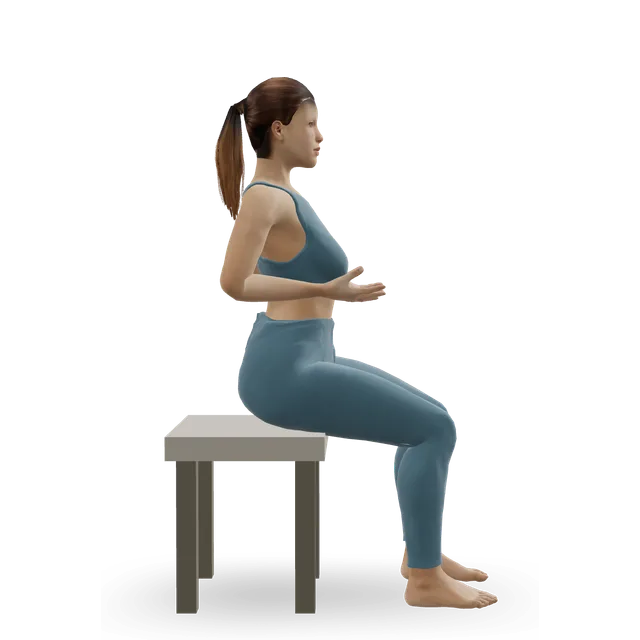
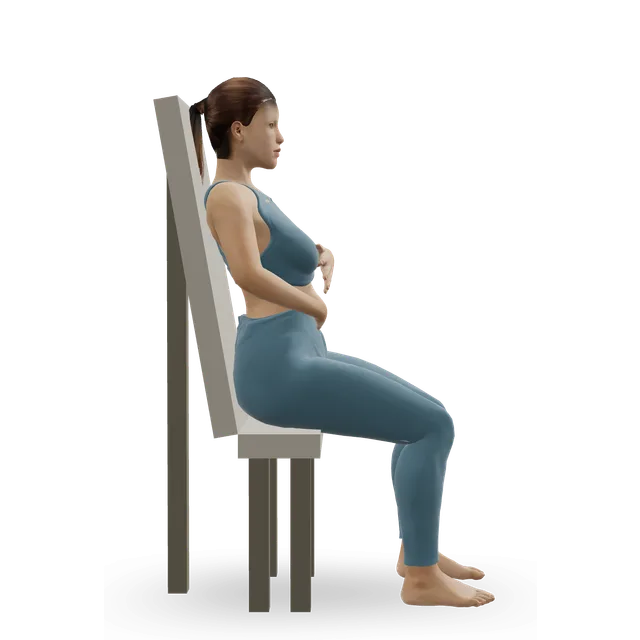
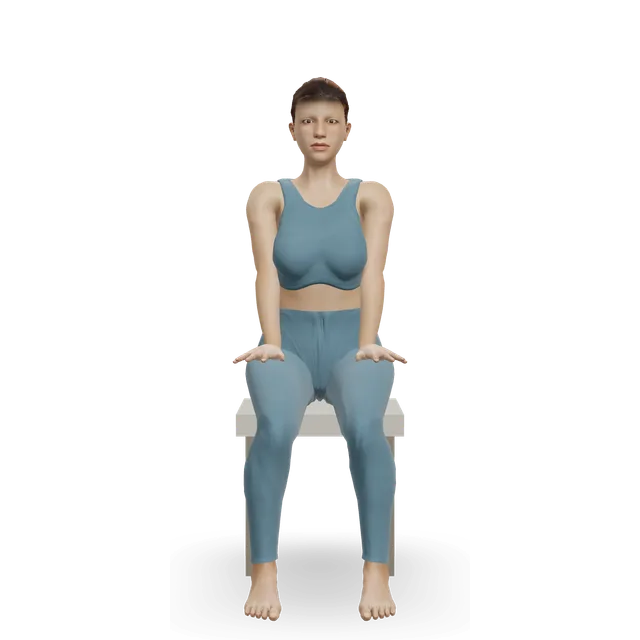
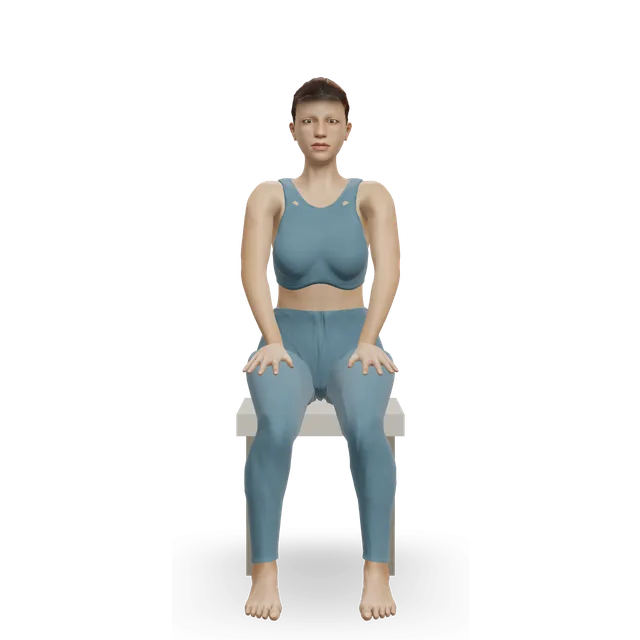
Everything here can be done in your wheelchair with the brakes on, or on a firm chair. Seated upper-back lift: 3 holds of 5 seconds; slow breathing: 2 minutes, in for about 4 and out for about 6, with no holds (our seated chair yoga class). Lateral breathing: the move page's dose, "5 to 8 breaths at the start of every session".
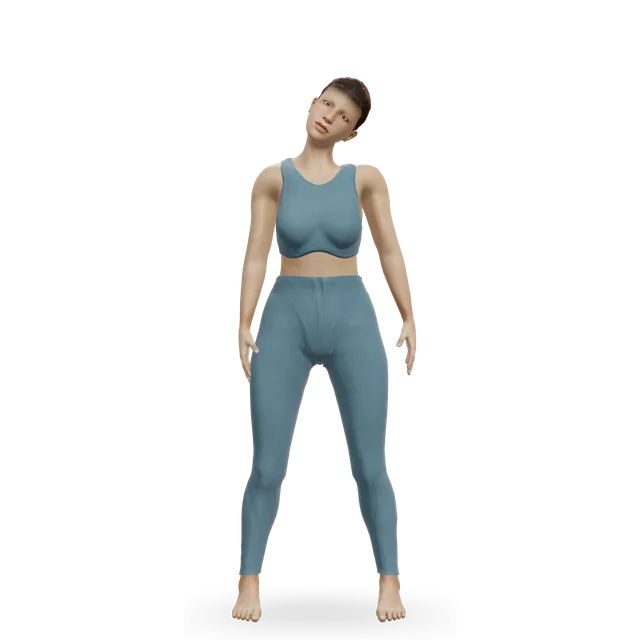
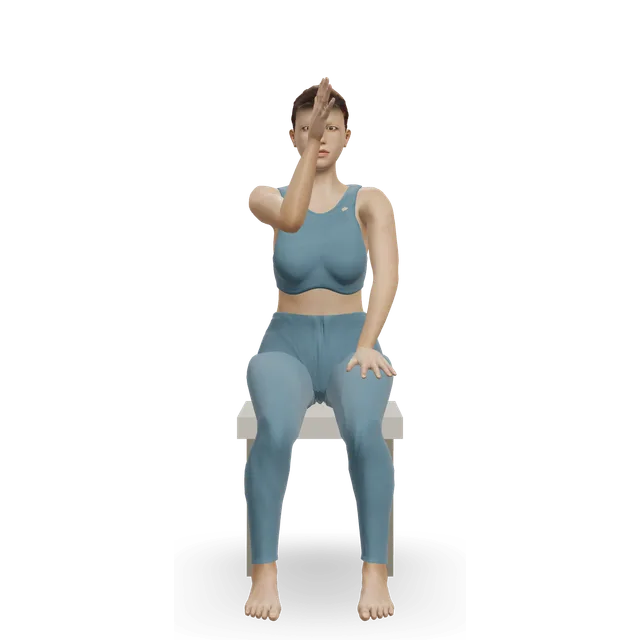
Breath reach, sitting: the move page's dose, "5 breaths, exhale longer than inhale", with your arms at shoulder height if your shoulders hurt. Shoulder rolls: 10 each way; chin tuck: 5 holds of 3 seconds; side neck stretch: 2 holds of 10 seconds each side (our seated chair yoga class).
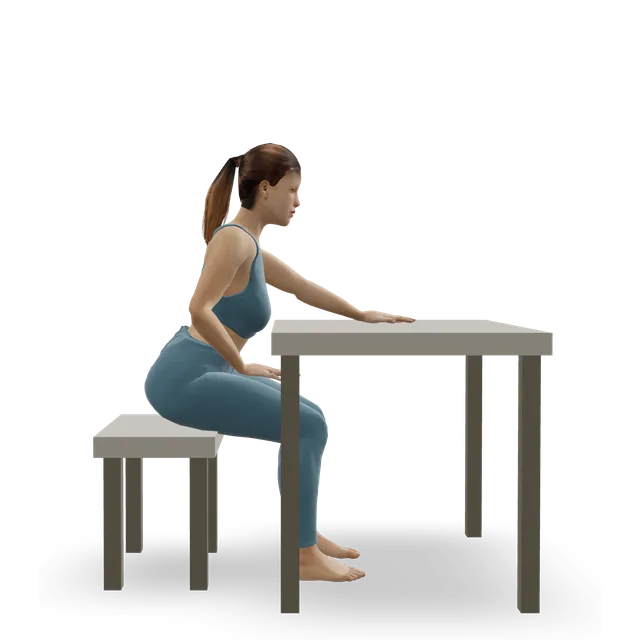
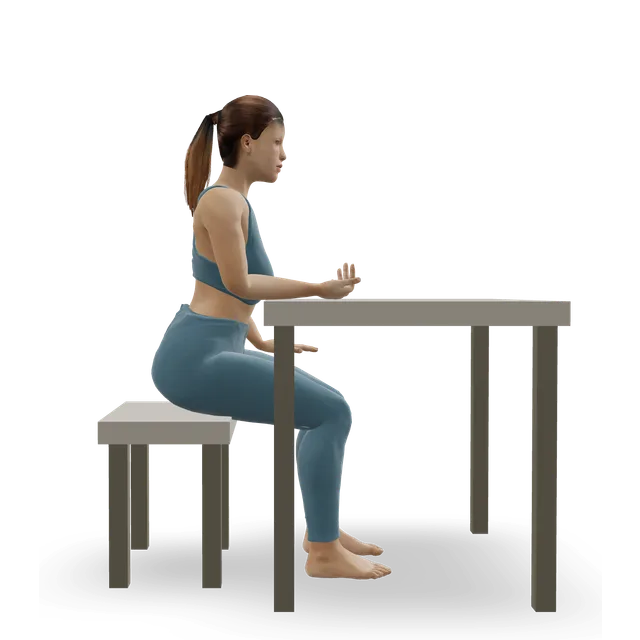
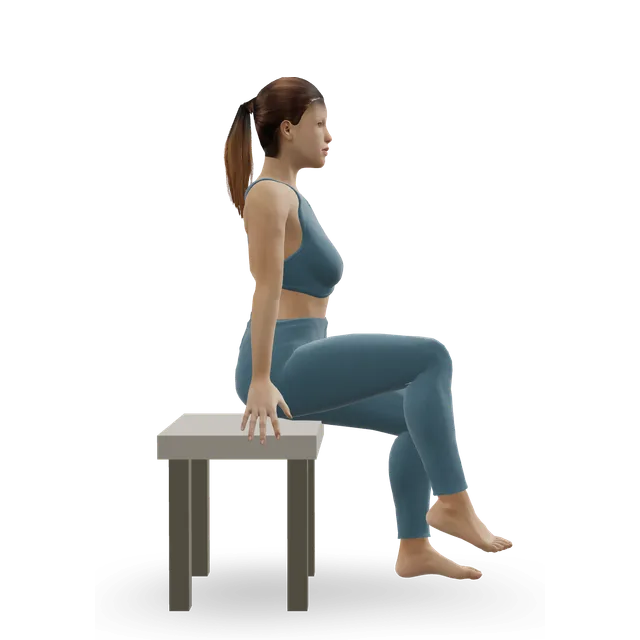
Cat-cow sitting: 8 slow waves; thoracic rotation: 5 each side with 5-second holds, holding the armrest or wheel if your trunk balance is limited; table slide: 8 slow reps; seated side bend: 2 each side, 10 to 20 seconds, only if your trunk balance is good (our seated chair yoga class). Come back up slowly from the table slide if your blood pressure drops when you lean.
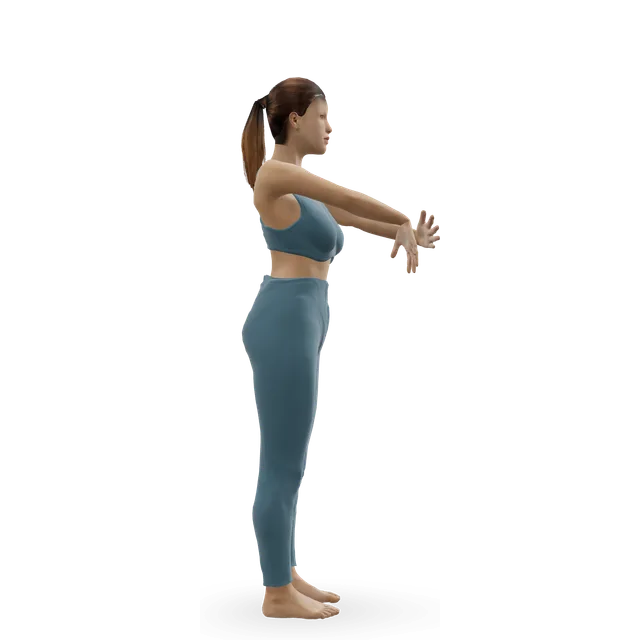
Tendon glides: the move page's dose, "4 to 6 of each position, holding each for 5 seconds". Wrist stretch: 2 holds of 20 seconds each side (our seated chair yoga class). With tetraplegia, ask your hand or occupational therapist first, as our exercise guide says.
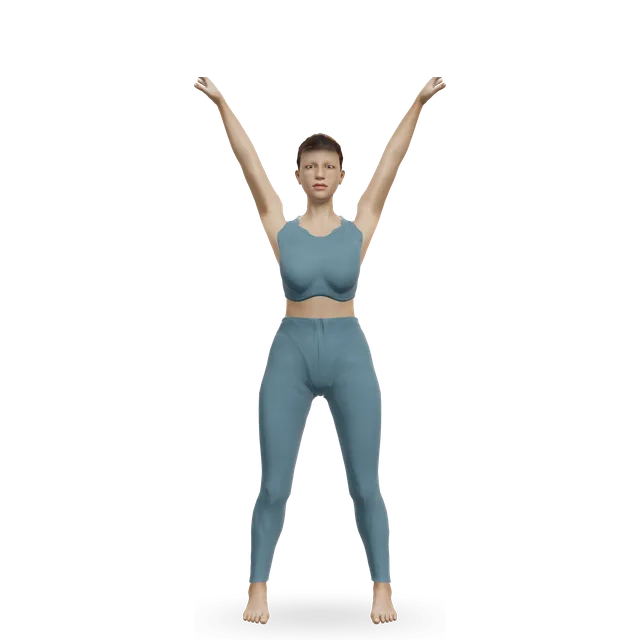
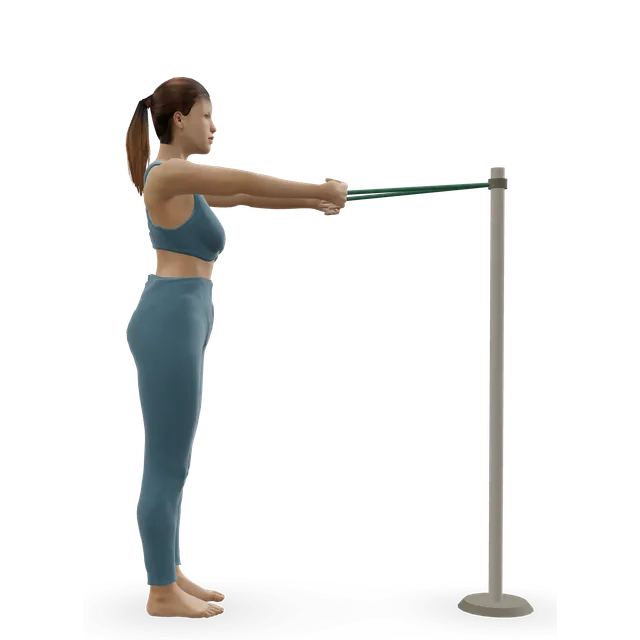
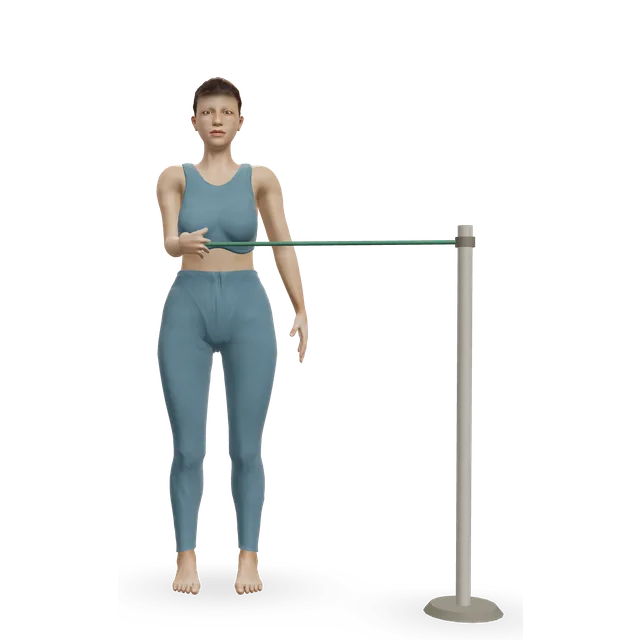
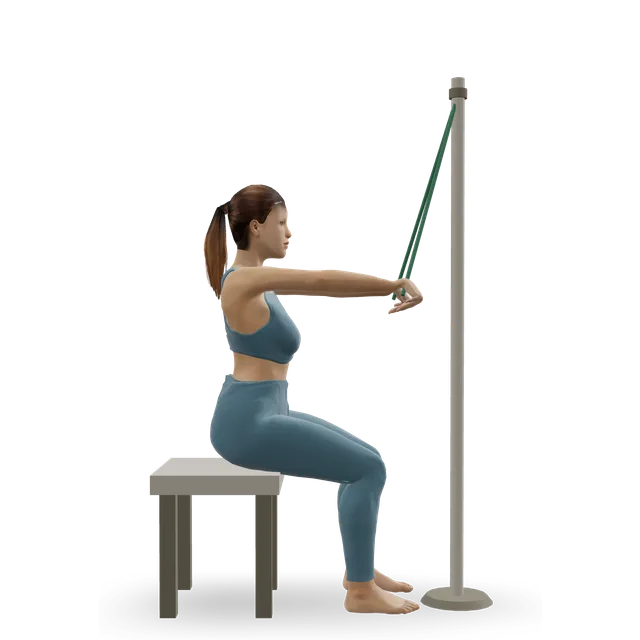
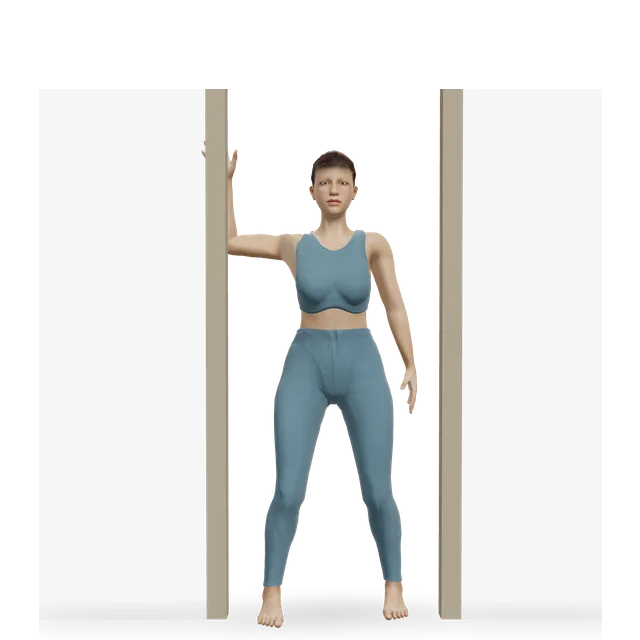
The STOMPS exercises, from our wheelchair workout: band row 15; band external rotation 8 each arm; seated band pull-down 8 (its page gives the trial's 3 sets of 8); doorway chest opener 30 seconds each side, elbow at or below shoulder height. Keep every one pain-free.
The pressure-relief lean has written steps only, with no 3D demo yet; these are the steps from its move page. The Salisbury spinal centre: "Relieve pressure at least once every 15 minutes." The SIA says some people need it "every 20 minutes or so, while others can last much longer"; follow your own team's routine.
Put your brakes on.
Side lean: hook one arm around the back of your wheelchair and lean to the opposite side, so the weight comes off that buttock. Count to 20 slowly.
Come back upright, then lean the other way for another slow count of 20.
Forward tilt, if you have the arm strength and balance, or someone to help: bend forwards, moving your chest towards your knees, and balance by leaning your arms on your thighs or your wheelchair. This lifts the weight of your buttocks off the seat. Hold it for a slow count of 20 too (our suggestion: the manual gives the count for the other methods).
Sit back up slowly, especially if your blood pressure tends to drop when you change position.
The upper limb guideline suggests "forward leaning, side-to-side shifting, and depression-style maneuvers", and the SIA says "Lifting can put pressure on your shoulders, so consider how leaning side-to-side or forwards can reduce that strain."
The SIA: "Check your skin for unusual marks twice daily, once in the morning before you get out of bed and on getting into bed in the evening." Check after a class too, especially after time on the floor (our suggestion), and "Try to avoid shearing damage to the skin while transferring."
"Autonomic dysreflexia (AD), with its sudden and severe rise in blood pressure, is a potentially life-threatening condition that can occur in anyone with a spinal cord injury (SCI) at or above thoracic level 6 (T6)." (the 2021 Consortium for Spinal Cord Medicine guideline) The SIA: "Autonomic dysreflexia should ALWAYS be treated as a medical emergency".
The SIA's steps, which the spinal cord medicine guideline agrees with:
Stop exercising. Sit up and drop your feet.
Loosen any clothing, straps or shoes, and check nothing is pressing on your skin.
Check your bladder first: a full bag, a kink in the tube, a bag above your bladder or a closed tap. If a catheter won't drain within 2 to 3 minutes, it needs changing.
Then check your bowel, then your skin and anything else below your injury that could hurt.
Use your prescribed dysreflexia medicine if you have a plan for it; your blood pressure can drop afterwards.
Call 999 if you can't find and remove the cause, or the symptoms don't settle.
"Be aware that AD may appear with minimal or no symptoms (silent AD or those with cognitive/verbal communication issues) despite a significantly elevated BP." The SIA: "Always carry an emergency medical card that describes AD and the treatment needed because not all healthcare staff are familiar with the condition. You can get a free emergency medical card from SIA."
After an injury at T6 or above, blood pressure can drop when you sit up from lying, often without symptoms: in one study, in 7 of 14 people with a neck injury and 2 of 11 with a mid-back injury. Change position slowly, and if you feel faint, tilt back or recline and wait.
The guideline: "Monitor for signs and symptoms of hyperthermia in individuals with SCI at or above T6 who are at risk for developing hyperthermia when exposed to a hot environment." The Salisbury centre: "After injury it's unlikely you will be able to control your body temperature below the level of your injury". Practise somewhere cool, with a fan, a water spray and cold drinks, and leave out hot yoga (our suggestion). The SIA warns that a wheelchair's frame and armrests can get hot enough to burn skin you can't feel.
Each change is our suggestion, from the sources named; none has been tested in a trial.
Getting onto the floor
Only with a safe transfer, a padded mat and help if you need it, and a skin check afterwards. Floor transfers can shear the skin, and fractures below a complete injury happen in everyday moves, including transfers. Most of a useful practice can be done in your chair.
Forced or helper-pushed stretches of paralysed limbs
Bound angle, pigeon, deep seated forward folds pressed by a helper and lotus: they don't improve range, and a review of fractures after spinal cord injury found some came from "physiologic ranging/loading of the joint (23%)".
Downward dog, plank, four-limbed staff and sun salutations add to the load transfers already put through your shoulders: "Pressure during transfers has been shown to be 2.5 times greater than that recorded when the shoulder is not bearing weight". Leave them out with shoulder pain.
Headstands, shoulder stands and the plough bring no benefit here, and coming up quickly risks a drop in blood pressure at T6 or above. Keep breathing slow, and leave out hot yoga.
With glaucoma, or high blood pressure that isn't under control, skip headstands, shoulder stands and long head-down holds. With osteoporosis, swap deep forward folds for a flat-back hinge from the hips, and twist smoothly. In pregnancy, our yoga in pregnancy guide covers the changes. NCCIH advises beginners to avoid headstands, shoulder stands, the lotus position and forceful breathing.
The seated chair yoga class is the base: 15 minutes, all sitting, shaped like the seated class in the spinal cord injury trial. The wheelchair workout gives the seated cardio and shoulder strength the guidelines ask for. The chair yoga for MS class adds a standing block at a chair for an incomplete injury with some standing. Relieve pressure every 15 minutes through any class.
This is general information, not a diagnosis. A&E means accident and emergency; in the US, call 911 for 999.
Call 999 for dysreflexia you can't settle
The SIA says that if you have the signs of autonomic dysreflexia and the cause can't be found, treat it as a medical emergency and call 999.
The SIA's words: "If you're experiencing any of the symptoms above and the cause can't be found then this needs to be treated as a medical emergency. Please call 999 to obtain emergency medical attention."
Call 999 or go to A&E (accident and emergency) straight away for severe difficulty breathing (gasping, choking or not able to get words out), a chest that feels tight or heavy, pain that spreads to your arms, back, neck and jaw, lips or skin turning very pale, blue or grey, or sudden confusion. If you're more short of breath than usual, or your heart is racing, fluttering or skipping beats, contact NHS 111.
Get a leg or arm checked the same day if it looks swollen, red, hot or misshapen after a knock, a fall or a transfer, even if it doesn't hurt: a broken bone below the injury can set off dysreflexia and heal slowly, so early care matters (our suggestion).
A joint pain that is sharp, gets worse during a session, lingers into the next day or changes how you move is a reason to use an easier version, and to see a GP or physiotherapist if it keeps happening (the rule in our plans). Muscle soreness for a day or two after something new is normal. In a hot class, stop if you feel dizzy, sick or unwell; our hot yoga guide lists the signs of heat illness.
Below your injury there may be no pain to warn you, so check your skin after every session (our suggestion).
You can say no to any hands-on adjustment, and a teacher registered with Yoga Alliance must get your explicit consent each time.
Myths
"Yoga cures paralysis"Strong evidence
No study shows it. The trial measured mood and pain, not movement, and in one man with an incomplete injury, balance and strength improved but walking speed didn't. Yoga doesn't repair the spinal cord; ask your spinal centre what's realistic for your injury.
"Daily stretching will stop my joints stiffening"Strong evidence
High-quality evidence found no meaningful short-term effect on joint range in neurological conditions, with skin breakdown and bruising among the side effects. Stretch for comfort and spasm as your team advises.
It may help with mood and calm: in a small trial, 6 weeks of seated yoga lowered depression and raised self-compassion compared with a waiting list, with no side effects reported. It didn't change pain, and the evidence is thin.
Can you do yoga in a wheelchair?
Yes. The trial class was done sitting, with arm work, gentle twists, neck stretches and breathing. Put your brakes on, relieve the pressure on your seat regularly, and keep your arms at or below shoulder height if your shoulders hurt.
What yoga poses are good for paraplegia?
Seated poses: sitting tall, slow breathing, gentle twists holding the wheel, side bends if your balance allows, neck stretches and shoulder work with a band. Leave out poses that put your weight through your hands if your shoulders hurt.
Can people with tetraplegia do yoga?
Yes, with more adaptation: short sessions with long rests, help or straps instead of grip, and slow breathing. The Spinal Injuries Association advises people with tetraplegia to exercise for short periods with long rest breaks.
Can yoga help me walk again?
No study shows it. Exercise improves fitness, strength and mood, but it doesn't repair the spinal cord; your spinal team can tell you what's realistic for your injury.
Is yoga safe with autonomic dysreflexia?
Yes, if you prepare: empty your bladder first, loosen anything tight, keep cool and know the signs. If you get a pounding headache, flushing or sweating above your injury or a stuffy nose, stop, sit up, drop your feet and look for the cause; call 999 if you can't find it.
Does stretching help spasticity after a spinal cord injury?
Stretching can ease spasms for some people, but high-quality evidence shows regular stretching doesn't improve joint range in neurological conditions, and it can damage skin. Follow your physiotherapist's plan and never force a paralysed limb.
Should I get out of my wheelchair to do yoga on the floor?
Only if you can transfer safely, with help if needed, on a padded mat, and you check your skin afterwards. Most of a useful practice can be done in your chair.
Is hot yoga OK after a spinal cord injury?
Not with an injury at T6 or above: you may not sweat below the injury and can overheat without warning. Keep the room cool and have a fan, water spray and cold drinks ready.
How much exercise do I need besides yoga?
At least 20 minutes of moderate to vigorous aerobic exercise twice a week and strength exercises for each working muscle group twice a week. For heart health, the guidelines suggest building to 30 minutes of aerobic exercise 3 times a week.
Can breathing exercises help after a neck injury?
Slow breathing is safe and calming. Training your breathing muscles with a handheld device improved breathing strength in trials after a neck injury; do it with a plan from your team.
What is adaptive yoga?
Yoga adapted to your body: seated or supported poses, props, and a teacher who understands your injury. People with spinal cord injuries say teachers' knowledge, cost and transport are the main barriers, so ask a class about these before you go.
Exercise education, not a personal prescription, and clinical review of these guides is pending. If you are pregnant, have a health condition such as glaucoma, high blood pressure or osteoporosis, or have had recent surgery, check with a doctor, midwife or physiotherapist before starting, and stop for sharp or increasing pain. Health disclaimer.