Pilates
Pilates for MS: seated, standing and mat options
This session for multiple sclerosis (MS) has three parts you can mix to suit the day: seated, standing beside a worktop or sturdy chair, and on a mat if you can get down and up safely. Start with 4 repetitions of each move and add 2 every fortnight, up to 10, as a home Pilates trial in people with MS did; twice a week, about two days apart, is a good start. Keep the room cool, sip cold water and rest between moves. Stop before you're exhausted. If your symptoms flare with heat, cool down: they should settle within a few hours. Sudden weakness or numbness in one arm, sudden loss or blurring of vision, or sudden problems with balance and co-ordination need 999 (911 in the US).
Seated warm-up
- Beginner · Abs · 3D demoSit tall with your feet flat; breathe into the sides of your ribsHarder: Roll-up (Pilates)
- Seated march1 minBeginner · Hip flexors, Quads, Abs · 3D demoLift each knee in turn; hold the chair seat if you need toHarder: Standing march
- Seated upper-back lift (sit tall, shoulders back)3 to 5 reps, held 3 to 5 sBeginner · Back, Shoulders, Neck · 3D demoSit tall, shoulders gently back and downEasier: Elbows backHarder: Prone Y-T-W raises
- Thoracic rotation4 each sideBeginner · 3D demoTurn through your upper back with the breathEasier: Side-lying open bookHarder: World's greatest stretch




Standing, beside support
- Sit to stand from a chair4 to 10 repsBeginner · Quads, Glutes, Hamstrings · 3D demoHands on your thighs or the chair arms if needed. Seated option: the seated knee extensionEasier: Sit to stand, pushing on the thighsHarder: Bodyweight squat
- Wall side leg lift (standing side kick at the wall)4 to 10 each sideBeginner · Hip abductors, Glutes, Abs · 3D demoOne hand on the wallHarder: Lateral band walk, band at the feet
- Side-stepping (sideways walking)10 steps each wayBeginner · Hip abductors, Glutes, Adductors · 3D demoAlong a kitchen worktopHarder: Lateral band walk
- Semi-tandem stance2 or 3 holds of 10 to 30 s, each foot forwardBeginner · Calves, Hip abductors · 3D demoFingertips on the worktop; touch down whenever you need to. Harder: the single-leg standHarder: Tandem stance and heel-to-toe walk




On the mat, or skip to the cool-down
- Pelvic tilt into bridge4 to 10 repsBeginner · Glutes, Abs, Hamstrings · 3D demoSlow up, slow downHarder: Glute bridge
- Dead bug heel taps4 to 10 each sideBeginner · Abs, Hip flexors · 3D demoHead down. Easier: the knee foldEasier: Bent-knee fall-outHarder: Forearm plank
- Clamshell4 to 10 each sideBeginner · Hip abductors, Glutes · 3D demoHips stackedEasier: Supine isometric hip abduction (belt press)Harder: Lateral band walk
- Bird dog, one limb at a time4 to 10 each arm and legBeginner · Abs, Back, Glutes · 3D demoKneel on padding; leave it out if kneeling is hardEasier: Side-lying tummy draw-inHarder: Bird dog
- Supine hamstring stretch with a strap2 holds of 30 s each legBeginner · Hamstrings, Calves · 3D demoUse a strap or towel; a slightly bent knee is fineEasier: Leg-up hamstring stretchHarder: Contract-relax hamstring stretch (PNF)





Seated cool-down
- Seated overhead side bend2 holds of 10 to 20 s each sideBeginner · Back, Abs · 3D demoReach up and over to each sideHarder: Overhead lat stretch at a bench (elbows on the bench)

Tips
- Pick your part for the day: seated only is still a full session.
- Before you start, cool the room or open a window, have cold water to hand, and wear light layers.
- If you need longer to recover than the session took, do less next time.
- This adds balance and control. Keep up walking or cycling and strength exercise as well, which NICE (the National Institute for Health and Care Excellence) recommends for MS fatigue and mobility.
The doses are suggested starting points, not a prescription. Choose a range you can control and stop for sharp or increasing pain, numbness or tingling. Get individual advice after an injury or surgery, or if you are pregnant or managing a health condition.
Guides that recommend it
Find more moves like these
More pilates


Beginner Pilates workout
A 20-minute mat Pilates workout for complete beginners. It covers breathing, spine position and the foundation moves, each with an easier option.
20 minBeginner13 movesNo equipment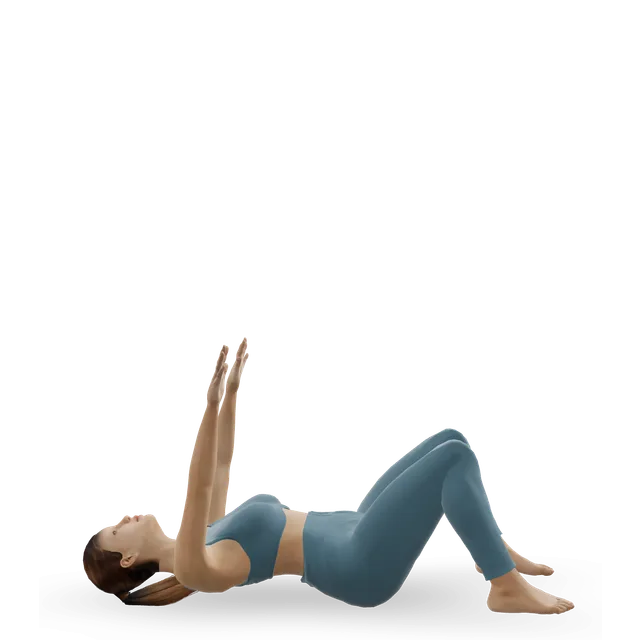

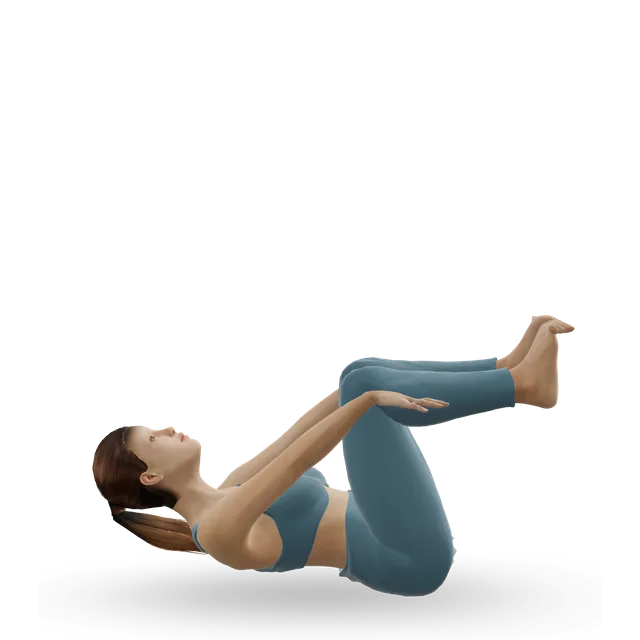
10-minute Pilates abs
Ten minutes of the classic Pilates abdominal series: the hundred, the roll-up and the series of five, with a plank to finish.
10 minIntermediate11 movesNo equipment
Full-body mat Pilates workout
A 30-minute intermediate mat Pilates class that follows the classical order, from the hundred to the push-up, with prep versions of the hardest moves.
30 minIntermediate22 movesNo equipmentQuestions people ask
How long does the pilates for ms: seated, standing and mat options take?
About 25 minutes, including any warm-up and cool-down listed. Shorten it by doing fewer rounds; lengthen it by adding one.
What equipment do I need?
You need: A bench or box, A wall. Each move links to its guide, where you can find an alternative if you are missing something.
Is it suitable for beginners?
It is written for beginners. 7 of its 14 moves have an easier option listed beside them if you need one.
How do I make it easier or harder?
Use the easier or harder option listed under each move, change the number of rounds, or adjust the rest. Progress one change at a time.