Pilates guide

Pilates for dementia and memory: balance, routine, carers, and seated and standing moves

Pilates can be a gentle, sociable way to stay active with dementia or memory problems, done in a chair or standing at one, ideally with someone you know. It won't slow or prevent dementia: the only Pilates study in people with dementia, an unpublished thesis, found no significant difference, and exercise in general hasn't been shown to slow dementia. What exercise can do is help with strength, balance and everyday activities, and falls guidelines recommend balance and strength training for people with mild to moderate dementia.

This guide covers what the studies show for dementia and for memory problems short of dementia, balance and falls, how to keep a session simple and the same each time, what carers can do, the floor question, seated and standing moves, a 25-minute class to do together, and the warning signs, including sudden confusion and a fall with a head injury.

The short version

An activity, not a treatment

The NHS lists dance, tai chi, yoga and walking groups among activities that help people live well with dementia, and Alzheimer's Society says there are dementia-friendly yoga and Pilates classes around the UK. Pilates can sit in that list, done sitting or standing at a chair.

Sources 1, 2

Pilates has hardly been tested in dementia

The only study we found is an unpublished master's thesis: 26 women with mild dementia in two care homes, not randomised. After 12 weeks the Pilates and comparison groups didn't differ significantly on memory and thinking or on balance and walking.

Sources 3, 4

Exercise hasn't been shown to slow dementia

In the largest trial, 4 months of hard supervised exercise didn't slow decline in thinking. Alzheimer's Society says physical activity hasn't been shown to slow or prevent dementia from progressing.

Sources 5, 6

It may help everyday life and fitness

Reviews found exercise may help people keep doing daily activities and improve physical performance, on low-quality evidence.

Sources 7, 8

Falls are the main physical risk

In one UK study, people with dementia fell nearly 8 times as often as people without it. Falls guidelines recommend balance and strength exercise for mild to moderate dementia, and most mat Pilates hardly challenges balance, so this guide adds standing work at the chair.

Sources 9, 10, 11

Keep it simple, the same, and together

The same short sequence in the same order each time, shown as well as said, with someone beside the person and the chair against a wall. Sudden confusion, or a fall with a head injury, needs urgent help.

Source 15

Dementia, memory problems and Pilates

What dementia is

The NHS: "Dementia is a syndrome (a group of related symptoms) associated with an ongoing decline of brain functioning." It isn't only memory: it "can also affect the way you speak, think, feel and behave", and it isn't a natural part of ageing. More than 944,000 people in the UK have dementia, 1 in 11 of those over 65.

Source 16

Symptoms that matter for exercise

Problems with understanding, judgement, mood, movement and daily activities. In vascular dementia, walking can change; in dementia with Lewy bodies, the NHS lists "becoming slower in their physical movements" and "repeated falls and fainting". So a session needs to be easy to follow, steady on the feet and careful with getting up.

Sources 16, 17

Memory problems short of dementia

Mild cognitive impairment (MCI) means memory or thinking problems that are more than expected for your age but don't stop you managing daily life. An international guideline says about 10% to 15% of people with MCI develop dementia each year, against 1% to 2% without it.

Source 18

Delirium is different, and urgent

Dementia UK says delirium "is a state of intense mental confusion that comes on suddenly" and "Is a medical emergency that needs urgent care". In dementia, look for confusion that is suddenly much worse than usual, unusual sleepiness or agitation, or someone who suddenly can't follow a routine they know; NICE asks staff to look for changes over hours or days.

Sources 19, 20, 21

What a Pilates session for dementia looks like

Seated breathing and gentle joint and spine moves, then a short block standing at a chair for legs and balance, then a seated rest. In the best trial of classes for people with cognitive impairment and their care partners, sessions started seated, built up slowly over 12 weeks with "step-by-step instructions (to minimize cognitive demands)", and opened and closed the same way each time.

Sources 15, 37

What the evidence says

The one Pilates study in dementiaMixed evidence

An unpublished master's thesis from Turkey: 26 women with mild dementia in two care homes, one home doing Pilates (30 to 45 minutes, 3 times a week for 12 weeks, some moves seated) and the other not. Scores rose within the Pilates group, but at the end the groups didn't differ significantly on the MMSE, a memory and thinking test (p = 0.138), or on a balance and walking test (p = 0.096). It wasn't randomised or peer reviewed.

Source 3

No published Pilates trial in dementiaStrong evidence

Our searches of PubMed and ClinicalTrials.gov in November 2026 found no published Pilates trial in dementia or Alzheimer's disease, and no review pooling Pilates trials for thinking. One Pilates trial in people with mild cognitive impairment is registered in Brazil but hasn't reported.

Source 4

Memory problems short of dementia, and healthy older womenEmerging evidence

In 28 women with MCI, both Pilates and balance and core training improved thinking scores over 8 weeks, with no inactive comparison group. In 110 women aged 60 and over, 12 weeks of Pilates improved word fluency and attention-switching tests but not the MMSE. In a non-randomised trial, word fluency and recall improved within a group doing Pilates with thinking tasks built in.

Sources 12, 13, 22

Exercise in dementia: daily activities, not slowing itEmerging evidence

A Cochrane review of 17 trials found exercise may help people with dementia carry out daily activities, on very low-quality evidence, with no clear effect on thinking. In the DAPA trial (494 people), 4 months of moderate to high intensity exercise left thinking scores slightly worse at 12 months, of uncertain importance, and fitness better. Home exercise needing little or no equipment improved physical performance and daily activities a little (26 trials, low certainty).

Sources 7, 5, 8, 23

Falls in dementiaEmerging evidence

People with dementia fell nearly 8 times as often as people without it in a year-long UK study. The World Falls Guidelines recommend an exercise programme for people with MCI or mild to moderate dementia living at home. In trials, the effect on falls is mixed: fewer falls overall in one review but no fewer fallers, only 2 of 12 trials reducing falls in another, and fewer falls in care homes when exercise was kept up.

Sources 9, 10, 24, 25, 26

Pilates and balance in older adultsEmerging evidence

In 39 trials in people aged 60 and over, Pilates improved balance and strength scores, about as much as other exercise, but hasn't been shown to reduce counted falls. Few mat exercises challenge balance much. One review found less fear of falling with Pilates in healthy older adults, and another didn't.

Sources 27, 28, 11, 29

PreventionMixed evidence

Active people are about 20% less likely to develop dementia in long-term studies, but part of that is because activity drops in the years before diagnosis. The WHO recommends physical activity to lower the risk of decline in thinking. No study has measured dementia with Pilates.

Sources 30, 31, 14, 32

Yoga, for comparisonMixed evidence

Ten small yoga studies in MCI or dementia were all at high risk of bias. Pilates sits in the same place: possible, pleasant and sociable, unproven for dementia itself.

Source 33

Balance and falls

What falls guidelines recommend

Exercise that challenges balance and builds strength, made a little harder over weeks, with carers involved, and smaller groups or one-to-one supervision in more severe dementia. NICE asks services to allow for the extra support people with dementia need to take part.

Sources 10, 43, 34

Stand up for balance

Sitting doesn't train standing balance, so add a short block at the chair: sit to stand, marching, calf raises, side leg lifts and a narrow stance, holding on. The NHS balance exercises are the same kind of moves.

Sources 11, 38

Getting up after a fall

The World Falls Guidelines say "One in 8 older adults who fall report lying on the floor for more than 1 hour". The NHS steps start: "Roll onto your side, then use your arms to push yourself onto your hands and knees." The floor section below says when to practise this.

Sources 10, 41

Blood pressure and falls

In the UK study, a drop in blood pressure on standing that caused symptoms roughly doubled the risk of falls in dementia. Get up slowly, and see our Pilates for low blood pressure guide.

Sources 9, 17

Doing it together

Keep it simple and the same

Use the same few moves in the same order every time, show each move as you say it in a few words, and use the person's name. Leave out moves with many parts (our suggestion, from the carer-and-person trial's step-by-step teaching).

Source 15

Choose the time and the room

Many people are at their best in the morning. Use a calm room without background music or other people talking, a firm chair against a wall, and a drink within reach (our suggestion).

Before you start

Check the person is comfortable, has had a drink and been to the toilet, and is settled. The NHS says a shared activity "can make both of you happier and able to enjoy quality time together".

Source 1

If the person becomes upset

Stop, sit together, talk calmly and try another day. If the confusion is sudden or much worse than usual, it may be delirium: see the warning signs below.

Sources 19, 34

Hands-on help

Ask before touching, guide rather than pull, and never lift someone up by the arms (our suggestion). The NHS says not to try to lift someone after a fall yourself.

Source 41

Carers matter too

The NHS: "It's important to remember that your needs as a carer are as important as the person you're caring for." NICE says carers of people with dementia are at increased risk of depression. In the carer-and-person classes trial, care partners managed stress better.

Sources 35, 34, 15

When to start with a professional

You're frail, have moderate to severe dementia, have had a spinal fracture or fall regularly: the UK guidelines say new exercise might best be supervised by a trained professional at first.

Source 36

The floor

Keep to the chair unless a physiotherapist says otherwise

Don't get down to the floor and up again unless a physiotherapist has taught the person how; keep everything in the chair or standing at it (our suggestion).

Practising getting up from the floor in steps, starting with the last step, helped older adults get up unaided in a review of 7 studies and a 2026 UK trial, but those trials left out people who couldn't follow instructions, so it hasn't been tested in dementia.

Sources 39, 40

Sitting: breathe, joints and seated Pilates

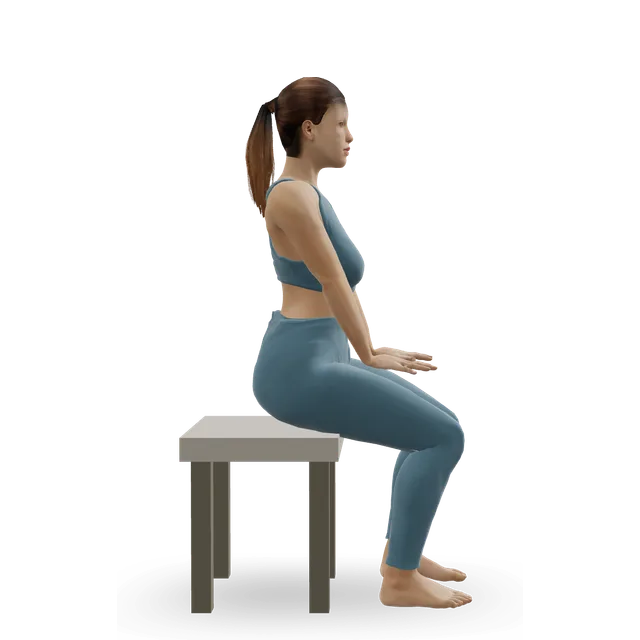
On a firm chair against a wall, feet flat. Lateral breathing: 5 easy breaths (adapted from the move page's dose of 5 to 8 breaths). Seated upper-back lift: "3 to 5 repetitions, each held 3 to 5 seconds" (the move page's dose). Seated march: "1 to 2 minutes as a warm-up" (the move page's dose). Shoulder rolls and ankle circles: 5 each way (adapted from the move pages' doses). Thoracic rotation: 3 each side, seated, arms crossed (adapted from the move page's dose). Seated side bend: 2 each side, 10-second holds (adapted from the move page's dose). Seated knee extension: 5 each leg (adapted from the move page's dose). Chest squeeze: 5 holds of 5 seconds, breathing throughout (adapted from the move page's dose). Breath reach: "5 breaths, exhale longer than inhale" (the move page's dose).

Standing at the chair, with someone beside you

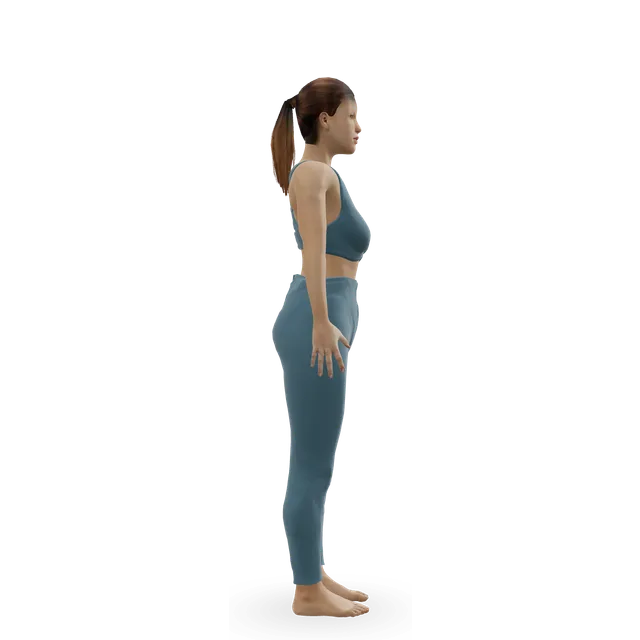
Optional, and only with someone beside the person. Sit to stand: 3 to 5; standing march: 1 minute, holding a second chair or a counter; slow calf raise: 5 to 8 (our chair yoga for dementia class's doses); semi-tandem stance: 2 holds of 10 seconds each way, a hand on the chair (our Pilates for balance class's dose). Wall side leg lift: 5 each side, a hand on the chair (adapted from the move page's dose). Side-stepping: "10 steps each way, next to a counter" (the move page's dose), with the companion on the open side.

Memory problems short of dementia: on the mat

For people with MCI who can get down to the floor safely, with someone present and a sturdy chair close by. Knee fold: "2 sets of 5 to 10 each side, every other day" (the move page's dose). Side kick: "8 to 10 each side" (the move page's dose). Pelvic tilt into bridge: 8 slow reps (our editorial starting point). Getting up and down from the floor: "5 to 8 slow cycles down and up" (the move page's dose), once it has been taught. Once a move is familiar, say a word list or count backwards as you do it, as a game rather than a test (our suggestion, from the Pilates trial that built in thinking tasks).

What to change or leave out

Rolling and legs-overhead moves

Leave out rolling like a ball, the seal, the open-leg rocker, the roll-over and the jack knife: they need quick coordination and bend the spine a long way, and their own osteoporosis cautions apply at this age (our suggestion).

Moves with many parts

Leave out the criss-cross, double-leg stretch and corkscrew, or teach one part at a time (our suggestion).

Breath counts

Skip the hundred's breathing count and keep breathing easy, with no holding (our suggestion).

Dizziness from medicines

Some dementia medicines, such as donepezil, commonly cause dizziness and daytime sleepiness (in more than 1 in 100 people). Stand up slowly, pause before moving and keep a hand on the chair (our suggestion).

Source 42

Dizziness on standing

Dizziness or light-headedness when you stand, or a fall caused by dizziness: ask for your blood pressure to be checked lying, sitting and standing.

Classes to follow

Our 25-minute chair Pilates class is built for doing together: the same order every time, a seated start, an optional standing block for legs and balance, and a seated rest. No trial has tested it: its order and doses are our editorial choice, from our chair classes, the NHS sitting and balance exercises and the falls guidelines. Twice a week is what most dementia exercise trials used. The seated class suits days when standing isn't possible; the balance and over-50 classes suit memory problems short of dementia.

Same-order chair Pilates for dementia: a 25-minute class to do together

A 25-minute chair Pilates class to do with someone living with dementia: breathing, seated moves, an optional standing block for legs and balance, and a rest.

25 minBeginner16 movesA bench or box, Something with weight

Chair Pilates workout

A 20-minute chair Pilates workout for beginners and older adults: breathing, sitting tall, gentle spine and leg moves, and a standing finish at the chair.

20 minBeginner14 movesA bench or box, Something with weight

Seated chair Pilates: 15 minutes, no standing

A 15-minute chair Pilates class done entirely sitting down, in a chair or wheelchair: breathing, spine moves, and leg and arm strength with water bottles.

15 minBeginner13 movesA bench or box, Something with weight

Chair yoga for dementia: a 30-minute class to do together

A 30-minute chair yoga class to do with someone living with dementia: slow breathing, gentle seated moves, an optional standing block and a seated rest.

30 minBeginner15 movesA bench or box, Something with weight

Strength and balance exercises for seniors

A 40-minute strength and balance session for over-65s, built from the Otago home programme and NHS exercises, using a chair, a counter and a step.

40 minBeginner18 movesA bench or box, Something with weight

Standing Pilates for balance: a 25-minute counter and mat class

A 25-minute Pilates class for steadier balance: standing balance and leg strength at a kitchen counter, then mat work for your trunk and hips.

25 minBeginner17 movesA wall, A bench or box

Beginner Pilates for over-50s

A 20-minute beginner mat Pilates session for over-50s with no deep or repeated rounding of the spine, plus back strengthening and standing balance.

20 minBeginner13 movesA wall

A plan to follow

For early dementia or memory problems, with support: strength and balance plus walks.

Warning signs: when to get help

These follow our exercise for dementia and yoga for dementia guides, word for word, with the head injury line from our Pilates guides and the chest pain and fainting lines from our other Pilates guides. This is general information, not a diagnosis. A&E means accident and emergency; in the US, call 911 for 999, and use your doctor's urgent line or urgent care for NHS 111.

Call 999

Call 999 (911 in the US) for chest pain that feels tight or like squeezing, or spreads to the arms, neck or jaw; signs of a stroke, such as face weakness, arm weakness or speech problems; or a fall where someone may have hurt their head, neck, back or hip, or can't get up. Keep them warm and comfortable, and don't try to lift them yourself.

Sources 47, 46, 41

Sudden confusion: call 999 or go to A&E

The NHS says: go to A&E or call 999 if someone suddenly becomes confused. For someone with dementia, that includes confusion that is suddenly much worse than usual (our wording). Sudden confusion (delirium) has causes that need treating quickly, such as an infection, a stroke, low blood sugar in people with diabetes, a head injury or some medicines; urine infections are a common cause in people with dementia.

Sources 19, 20

A fall with a head injury

Call 999 if someone has hit their head and has been knocked out and hasn't woken up, can't stay awake or keep their eyes open, has a fit, has fallen from a height of more than 1 metre or 5 stairs, has problems with their vision or hearing, has clear fluid coming from their ears or nose, has new numbness or weakness, has problems with walking, balance, understanding, speaking or writing, hit their head at high speed, or their behaviour has changed. Get help from NHS 111 if they're being sick, feel dizzy or take medicine that thins the blood. If you're told to go to A&E (accident and emergency), don't drive yourself there if you have hit your head.

Sources 44, 45

NHS 111

A fall that may have left you in pain, injured or unwell.

Source 41

See a GP

  • Someone feels unwell: chest or urine infections can make someone very confused if they aren't treated promptly. Confusion that comes on suddenly is the 999 line above.
  • An activity causes pain or makes someone unwell, dizzy or short of breath.
  • Falls or near-falls, or heart problems, high blood pressure, dizziness or balance problems, before starting something new.
  • Low mood: depression is very common in dementia, and talking treatments can help.
  • You're becoming increasingly forgetful, particularly if you're over 65, or you're worried about someone.
  • You've had a fall or you're worried about your balance.

Sources 19, 16, 41

Chest pain or fainting: call 999

Call 999 if:

  • You get sudden pain or discomfort in your chest that doesn't go away; it can feel like squeezing or pressure, burning or indigestion.
  • The pain spreads to your left or right arm, or your neck, jaw, stomach or back.
  • You have chest pain and feel sweaty, sick, light-headed or short of breath.
  • Someone faints while exercising, can't be woken within 1 minute, or has chest pain or a pounding, fluttering or irregular heartbeat.

Sources 48, 49, 47

Breathlessness

Call 999 or go to A&E (accident and emergency) straight away for severe difficulty breathing (gasping, choking or not able to get words out), a chest that feels tight or heavy, pain that spreads to your arms, back, neck and jaw, lips or skin turning very pale, blue or grey, or sudden confusion. If you're more short of breath than usual, or your heart is racing, fluttering or skipping beats, contact NHS 111.

Source 50

Stop and rest if you feel

Dizzy, faint, unusually breathless, or sharp or increasing pain. Sit until it passes, and see a GP if you keep getting dizzy or faint when you stand up.

Stop the session if

You feel any pain or become unwell, as the NHS advises for its Pilates videos, and especially for chest pain or pressure, unusual breathlessness, dizziness or fainting. If you have a health problem, an injury or any symptoms, get advice from a healthcare professional, such as a GP, before you start.

Source 51

Before you start

The NHS advises getting advice from a healthcare professional first if you have a health problem, an injury or symptoms, or have recently had a heart attack or an operation.

Source 51

Myths

"Pilates prevents dementia"Mixed evidence

No study has measured dementia with Pilates. Active people get dementia less often, partly because activity drops before diagnosis. That agrees with our exercise for dementia and yoga for dementia guides.

Sources 4, 30, 31

"Pilates slows or reverses dementia"Strong evidence

No Pilates study has measured progression, exercise didn't slow decline in the largest trial, and Alzheimer's Society says physical activity hasn't been shown to slow dementia.

Sources 5, 6, 7

"Pilates improves memory in dementia"Mixed evidence

The one study found no significant difference from the comparison group at the end.

Source 3

"People with dementia can't do Pilates"Emerging evidence

Seated and standing work at a chair is possible, and exercise trials in mild to moderate dementia had good attendance. NICE asks for activities tailored to the person's preferences.

Sources 5, 15, 34

"Mat Pilates trains balance"Emerging evidence

Few mat exercises challenge balance. Balance needs standing practice, which is why the class adds it.

Source 11

"It's too risky to exercise with dementia"Strong evidence

Falls guidelines recommend exercise for mild to moderate dementia, and the UK guidelines suggest supervision at first with moderate to severe dementia, not avoiding it.

Sources 10, 36

Questions people ask

Is Pilates good for dementia?

It can be a good activity: gentle, sociable and good for strength and balance, done sitting or standing at a chair. It isn't a treatment: the only study in people with dementia, an unpublished one in 26 women, found no significant difference from doing nothing.

Can Pilates slow dementia or improve memory?

No study shows it. In the largest exercise trial in dementia, 4 months of hard exercise didn't slow decline in thinking, and Alzheimer's Society says physical activity hasn't been shown to slow dementia.

Is Pilates good for Alzheimer's?

The same answer: we found no published Pilates trial in Alzheimer's disease. Exercise in general may help people keep doing daily activities, on weak evidence.

Is Pilates good for cognitive function?

Possibly a little in healthy older women: 12 weeks of Pilates improved word fluency and attention tests, but not an overall thinking score. One small trial in mild memory problems found gains with Pilates and with balance training.

Can Pilates prevent dementia?

No study has tested that. Active people get dementia less often, partly because activity drops years before diagnosis, so being active is one of several things that may lower your risk, not a guarantee.

What kind of Pilates suits someone with dementia?

Short seated and standing sessions at a chair, with the same moves in the same order each time, shown as well as said, and someone beside them. Our 25-minute chair class is built that way.

Is mat Pilates safe with dementia?

Getting down to the floor and up again is the risky part. Keep to the chair and standing unless a physiotherapist has taught the person how to get down and up.

Will Pilates help prevent falls?

Falls guidelines recommend balance and strength training for mild to moderate dementia, though trials in dementia are mixed. Pilates improves balance scores in older adults, but mat work alone hardly challenges balance, so add standing work.

How often should we do it?

Twice a week was the usual dose in dementia exercise trials; shorter sessions on more days are fine. Walk on other days if you can.

What if the person gets upset or confused during the session?

Stop, sit together, talk calmly and try another day. If the confusion is sudden or much worse than usual, it may be delirium: call 999 or go to A&E.

Should a carer join in?

Yes, if you can: doing it together keeps it safe and simple, and in a trial of classes for people with memory problems and their care partners, quality of life improved and care partners coped better with stress.

Is reformer Pilates OK with dementia?

Getting on and off a moving carriage and remembering spring changes add risk, so we'd keep to a chair unless a teacher works one to one with someone who already knows the reformer.

Sources

  1. NHS · Activities for dementia
  2. Alzheimer's Society · Exercise types and ideas for people with dementia
  3. Çağlar 2019 · 12 weeks of Pilates in 26 women with mild dementia (master's thesis, Bursa Uludağ University; read in full)
  4. PubMed and ClinicalTrials.gov · Our searches for Pilates studies in dementia, mild cognitive impairment and thinking (November 2026)
  5. Lamb 2018 · Moderate to high intensity exercise in 494 people with dementia (DAPA randomised trial, BMJ)
  6. Alzheimer's Society · Physical activity, movement and exercise for people with dementia
  7. Forbes 2015 · Exercise programmes for people with dementia: 17 trials (Cochrane review)
  8. Tou 2025 · Home exercise with little or no equipment in dementia: 26 trials (systematic review and meta-analysis, J Am Med Dir Assoc)
  9. Allan 2009 · Falls in 179 older people with and without dementia over a year (cohort study, PLoS One)
  10. Montero-Odasso 2022 · World guidelines for falls prevention in older adults (guideline, Age Ageing; read in full)
  11. Barker 2015 · Pilates for balance in older adults: 6 studies (systematic review and meta-analysis, Arch Phys Med Rehabil)
  12. Greblo Jurakic 2017 · Pilates or balance training in 28 women with mild cognitive impairment (pilot randomised trial, Aging Clin Exp Res)
  13. García-Garro 2020 · Pilates and thinking in 110 women aged 60 and over (randomised trial, Int J Environ Res Public Health; read in full)
  14. WHO 2019 · Risk reduction of cognitive decline and dementia (guideline, executive summary)
  15. Barnes 2024 · Live-streamed movement classes for 97 people with cognitive impairment and their care partners (randomised trial, Alzheimers Dement TRCI; read in full)
  16. NHS · What is dementia? (past its review date: reviewed July 2023, review due July 2026)
  17. NHS · Symptoms of dementia (past its review date: reviewed July 2023, review due July 2026)
  18. Veronese 2023 · Physical activity for mild cognitive impairment and dementia (international guideline, Eur Geriatr Med; read in full)
  19. NHS · Sudden confusion (delirium)
  20. Dementia UK · Delirium and dementia (updated June 2025)
  21. NICE · Delirium: prevention, diagnosis and management (CG103)
  22. da Silva 2022 · Pilates with thinking tasks in 47 postmenopausal women (non-randomised trial, Int J Environ Res Public Health; read in full)
  23. Balbim 2022 · Exercise and thinking in dementia: 28 studies (systematic review and meta-analysis, Br J Sports Med)
  24. Li 2021 · Exercise and falls in people with cognitive impairment: 9 studies (systematic review and meta-analysis, Age Ageing; read in full)
  25. Jehu 2023 · Exercise and falls in people living with dementia: 12 trials (systematic review, J Alzheimers Dis)
  26. Dyer 2025 · Preventing falls in care homes: 104 trials (Cochrane review)
  27. Fernández-Rodríguez 2021 · Pilates in older adults: 39 trials (systematic review and meta-analysis, Physiotherapy)
  28. de Campos Júnior 2024 · Pilates and balance in older adults: 39 studies (systematic review, Complement Ther Clin Pract)
  29. da Silva 2021 · Pilates and falls risk in healthy older adults: 12 trials (systematic review and meta-analysis, Front Med)
  30. Iso-Markku 2022 · Physical activity and dementia: 58 studies (systematic review and meta-analysis, Br J Sports Med)
  31. Kivimäki 2019 · Inactivity and dementia in 404,840 people: 19 cohorts (pooled analysis, BMJ)
  32. NHS · Can dementia be prevented? (past its review date: reviewed July 2023, review due July 2026)
  33. Karamacoska 2023 · Yoga for people with mild cognitive impairment or dementia: 10 studies (systematic review, BMC Geriatr)
  34. NICE · Dementia: assessment, management and support (NG97)
  35. NHS · Looking after someone with dementia
  36. UK Chief Medical Officers · Physical activity guidelines (2019)
  37. NHS · Sitting exercises
  38. NHS · Balance exercises
  39. Leonhardt 2020 · Teaching older people to get up from the floor: 7 studies (systematic review, Aging Clin Exp Res)
  40. Seeley 2026 · Floor-rise training in 61 older adults (pilot cluster randomised trial, Age Ageing; read in full)
  41. NHS · Falls
  42. NHS · Side effects of donepezil (past its review date: reviewed March 2023, review due March 2026)
  43. NICE · Falls: assessment and prevention in older people (NG249)
  44. NHS · Head injury and concussion
  45. NICE · Head injury: assessment and early management (NG232)
  46. NHS · Symptoms of a stroke
  47. NHS · Heart attack
  48. NHS · Chest pain (past its review date: reviewed August 2023, review due August 2026)
  49. NHS · Fainting
  50. NHS · Shortness of breath
  51. NHS · Pilates for beginners (exercise video, with safety information)

Exercise education, not a personal prescription, and clinical review of these guides is pending. If you are pregnant, have a health condition or have had recent surgery, check with a doctor, midwife or physiotherapist before starting, and stop for sharp or increasing pain. Health disclaimer.