Yoga flows
Chair yoga for dementia: a 30-minute class to do together
Chair yoga is one of the activities people with dementia can enjoy, even in the later stages, and in a small trial nobody was hurt. This class follows that trial's pattern of breathing, poses and relaxation, with moves dementia yoga teachers find useful. Sit beside or facing each other, keep the same order every time, show each move as you say it in a few words, and stop if anything hurts or the person is upset. It won't slow dementia; it's a gentle activity to share.
Arrive and breathe (4 minutes)
- Seated upper-back lift (sit tall, shoulders back)3 holds of 3 to 5 sBeginner · Back, Shoulders, Neck · 3D demoSit tallEasier: Elbows backHarder: Prone Y-T-W raises
- Beginner · 3D demoHands on your tummy; breathe in, breathe outEasier: Breath reachHarder: Crocodile breathing (prone diaphragmatic breathing)
- Breath reach5 breathsBeginner · 3D demoSeated (the demo shows it standing): arms up as you breathe in, down as you breathe outHarder: Slow breathing (6 breaths a minute)



Joints (5 minutes)
- Shoulder rolls5 each wayBeginner · Shoulders, Back, Neck · 3D demoShoulders up, back and downHarder: Shoulder CARs (controlled articular rotations)
- Ankle circles5 each way, each footBeginner · Calves, Shins · 3D demoCircle your footHarder: Ankle CARs (controlled articular rotations)
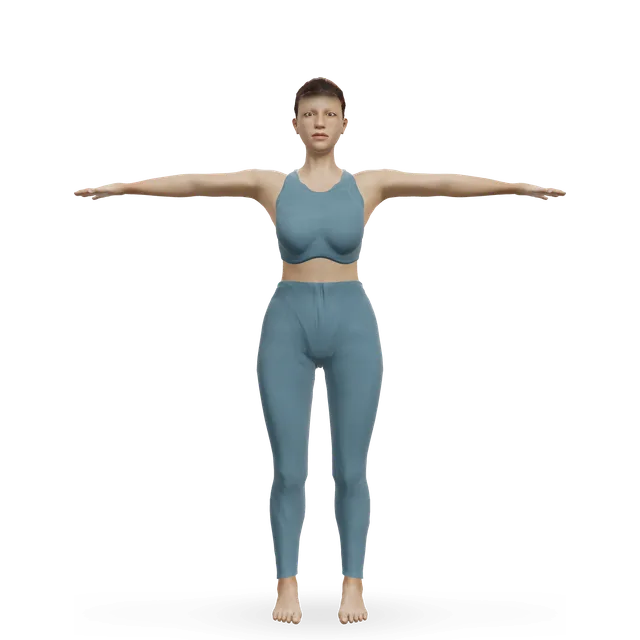
- Seated march1 minBeginner · Hip flexors, Quads, Abs · 3D demoMarch, holding the sides of the seatHarder: Standing march



Seated poses (7 minutes)
- Thoracic rotation3 each side, 3 s holdsBeginner · 3D demoSeated (the demo shows it standing): turn to look behind you, slowlyEasier: Side-lying open bookHarder: World's greatest stretch
- Seated overhead side bend2 each side, 10 s holdsBeginner · Back, Abs · 3D demoReach up and overHarder: Overhead lat stretch at a bench (elbows on the bench)
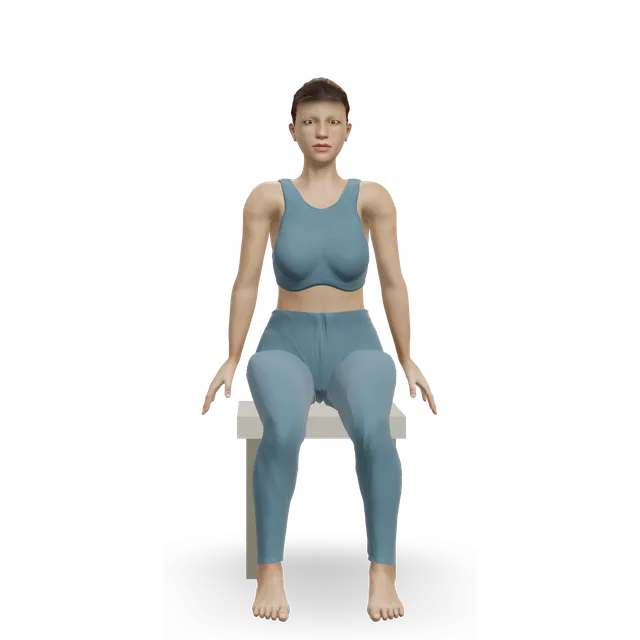
- Chair leg extension and sweep5 each legBeginner · Hamstrings, Calves, Adductors · 3D demoStraighten your leg, then lower itHarder: Contract-relax hamstring stretch (PNF)
- Seated knee extension (chair)5 each legBeginner · Quads · 3D demoUp slowly, down slowly, no weightEasier: Quad set (static quads)Harder: Leg extension



Standing at the chair, optional (6 minutes)
- Beginner · Quads, Glutes, Triceps · 3D demoPush on your thighs to stand; someone beside youHarder: Bodyweight squat
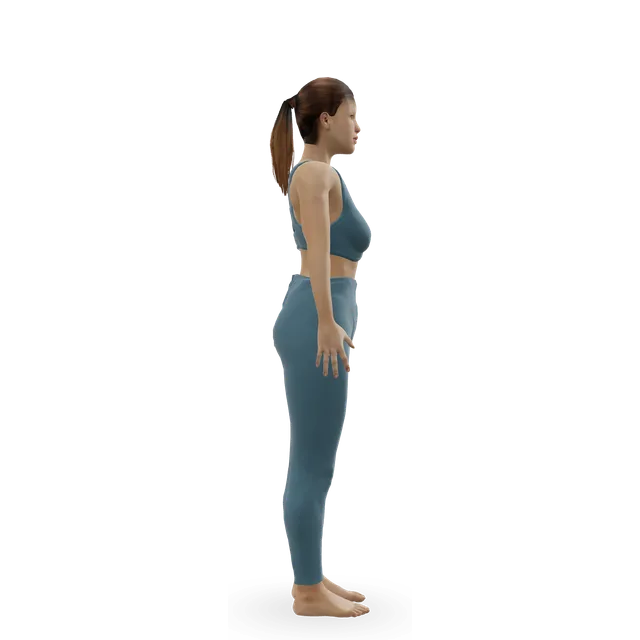
- Mountain pose (Tadasana)5 breathsBeginner · Calves, Back, Abs · 3D demoStand tall, a hand on the back of the chairHarder: Tree pose (Vrksasana)
- Tree pose (Vrksasana)3 breaths each sideBeginner · Glutes, Hip abductors, Calves · 3D demoHeel against your ankle, toes on the floor, hand on the chairEasier: Mountain pose (Tadasana)Harder: Standing hand-to-big-toe pose (Utthita Hasta Padangusthasana)
- Slow calf raise5 to 8Beginner · Calves · 3D demoUp on your toes, down slowly, holding the chairEasier: Seated bent-knee calf raise (soleus raise)Harder: Standing dumbbell calf raise



Rest, sitting (5 minutes)
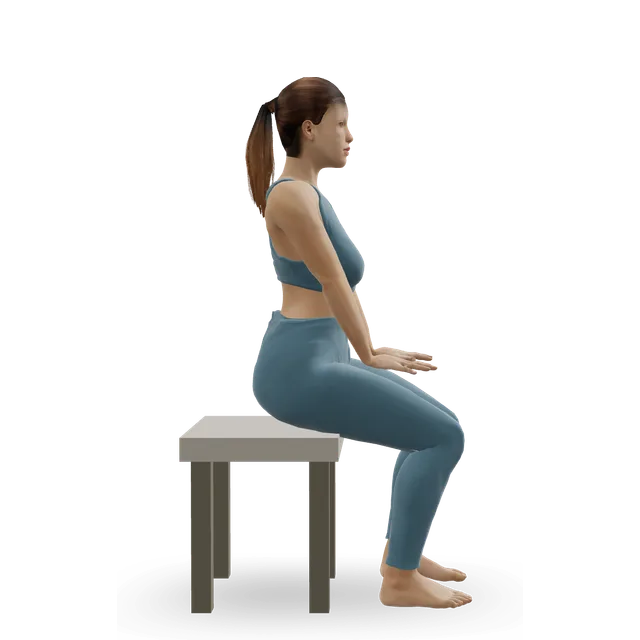
- Slow breathing (6 breaths a minute)3 to 5 minBeginner · 3D demoSitting, eyes closed if you like; breathe slowly, with no holdingEasier: Breath reachHarder: Crocodile breathing (prone diaphragmatic breathing)
Tips
- Sit beside or facing each other and do it together, with the same moves in the same order every time. Show each move as you say it, in a few words, and use the person's name.
- Before you start, check the person is comfortable, has had a drink and been to the toilet, and is settled. If they're upset or unwell, stop and try another day.
- The standing block is optional: do it only with someone beside the person and the chair against a wall, and skip it on tired days. With moderate to severe dementia, start with a trained teacher or physiotherapist.
- If the person enjoys it, add knee taps and a humming breath, as dementia yoga teachers do: our yoga for dementia guide has the steps.
- Twice a week is what the trials used. Shorter sessions on more days are fine (our suggestion).
- Stop and get help for chest pain, a fall, dizziness that doesn't pass, or sudden confusion: the warning signs are on our yoga for dementia guide.
- It won't slow dementia; it's a gentle, shared activity. For falls, add our strength and balance exercises for seniors, with support.
The doses are suggested starting points, not a prescription. Choose a range you can control and stop for sharp or increasing pain, numbness or tingling. Get individual advice after an injury or surgery, or if you are pregnant or managing a health condition.
Guides that recommend it
Find more moves like these
More yoga flows


Beginner yoga flow
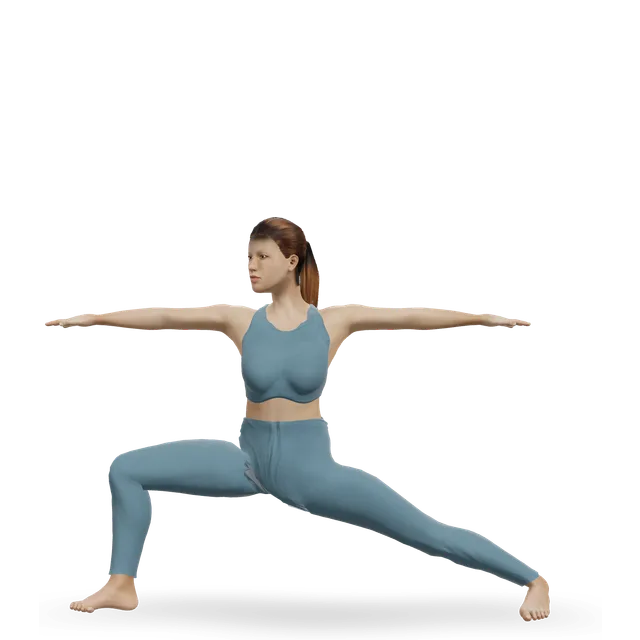
A 20-minute beginner yoga sequence: mountain, chair, warrior II, triangle, tree, down dog, cobra and child's pose.
20 minBeginner11 movesA step

Sun salutation flow
A 20-minute flow built on sun salutations A and B, with warrior poses and a short cool-down.
20 minIntermediate8 movesNo equipment



Yoga for tight hips
A hip-opening yoga sequence: low lunge, lizard, goddess, pigeon, bound angle and happy baby.
25 minBeginner10 movesA wallQuestions people ask
How long does the chair yoga for dementia: a 30-minute class to do together take?
About 30 minutes, including any warm-up and cool-down listed. Shorten it by doing fewer rounds; lengthen it by adding one.
What equipment do I need?
You need: A bench or box, Something with weight, A wall. Each move links to its guide, where you can find an alternative if you are missing something.
Is it suitable for beginners?
It is written for beginners. 6 of its 15 moves have an easier option listed beside them if you need one.
How do I make it easier or harder?
Use the easier or harder option listed under each move, change the number of rounds, or adjust the rest. Progress one change at a time.