What usually causes itEmerging evidence
In adults, pain on the inner side that builds up without an injury most often comes from the tibialis posterior tendon. It runs behind and below the inner ankle bone to the arch and is the arch's main support. A review in the BMJ called it a common cause of a foot flattening in adult life, most often in women over 40, and quoted a figure of up to 1 in 10 older women from the authors' earlier study. It also said most people are first told they have a sprain or arthritis.
Sprains of the inner (deltoid) ligament are less common than many people think. The American Academy of Orthopaedic Surgeons (AAOS) says around 90% of ankle sprains happen when the foot rolls inwards and injures the outer ligaments, without citing a study; in one cohort of 1,206 sprains at a US military academy, 5.1% were inner sprains. Arthritis UK describes the tendon problem as pain, warmth and swelling running from the inside of the calf to the arch.
Sources 1, 2, 3, 4, 5
The tibialis posterior tendon: how it shows itselfEmerging evidence
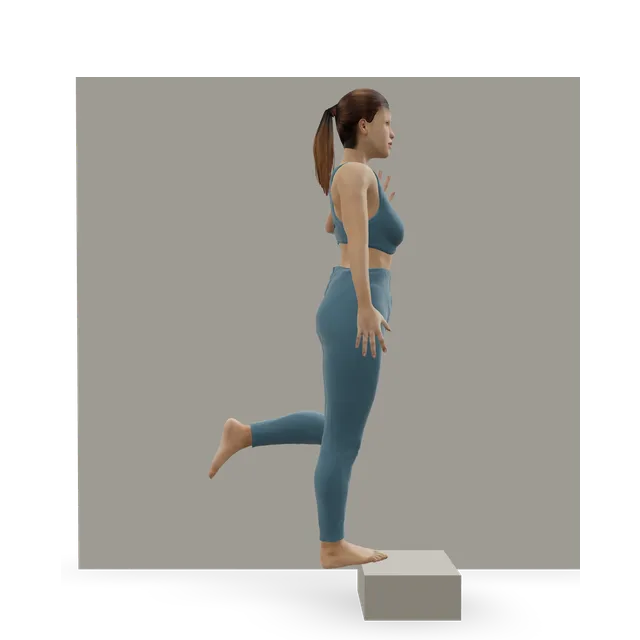
Early on, there's a vague ache along the inner side of the foot and swelling behind the inner ankle bone, usually with no injury. As it goes on, the arch drops, the heel tips outwards when you look from behind, and rising onto tiptoe on that leg becomes hard or impossible: a normal foot manages 8 to 10 single-leg heel raises, the review says. Later still, the inner pain can ease while the outer side of the ankle starts to hurt, as the heel bone presses against the outer ankle bone.
Risk factors in the review and on the AAOS page include flat feet, high blood pressure, diabetes, steroid injections near the tendon, inflammatory arthritis and obesity. The AAOS adds that it's worse in unsupportive footwear such as sandals.
Sources 1, 2
After an injury: inner sprains and the squeezed inner sideEmerging evidence
A sprain of the inner ligament happens when the foot is forced outwards. Reviews say it's more common than once thought alongside high ankle sprains, outer sprains and fractures, often with cartilage damage. Tenderness, bruising and swelling over the ligament are poor guides to how badly it's hurt; a flat-looking foot that corrects when you rise onto tiptoe suggests the inner side has become loose.
Scans need matching to symptoms. At keyhole surgery, 40% of 148 ankles with long-standing instability had an inner ligament injury, and on magnetic resonance imaging (MRI), 72% of 47 ankles operated on for outer instability showed inner ligament changes, though none of those people had inner pain. An imaging review adds that long-standing inner ankle pain has other causes too, such as a trapped nerve.
An ordinary rolled ankle can squeeze the deep part of the inner ligament between the bones. In case series of 6 and 25 people, this usually settled without treatment, and occasionally scar tissue kept the inner side sore with activity; a few people needed keyhole surgery. Pinching at the front inner corner of the joint (anteromedial impingement) is a less common cause: 93% of 41 people were satisfied after keyhole surgery in one series, which had no comparison group.
Sources 6, 7, 8, 9, 10, 11, 12, 13, 14, 15
Nerves, the big toe tendon and boneEmerging evidence
A trapped nerve behind the inner ankle bone (tarsal tunnel syndrome) causes burning, tingling or numbness into the sole and toes, worse with standing and walking. One single-author review says the pain is typically worse at night, and another says tapping over the nerve sets it off in more than half of people.
The tendon that bends the big toe (flexor hallucis longus) also runs behind the inner ankle. Its pain is classic in ballet dancers, but at one US foot and ankle service it was common in people who don't dance, and in another series, 45 of 81 people had first been treated for plantar fasciitis.
One spot on the inner ankle bone itself, built up with running or jumping, can be a stress fracture. It's rare: in 8 people, the first X-ray showed it in only 3. A review lists it among the high-risk sites that heal less well, and Health New Zealand says a stress fracture can become a constant dull ache, even at night.
Sources 16, 17, 18, 19, 20, 21, 22, 23
Causes that aren't the muscles, tendons and jointsStrong evidence
A sudden, very painful, hot, red, swollen ankle with no injury can be gout, which often starts overnight and can affect the ankle, or a joint infection, which is urgent. Burning pain or pins and needles in the foot can come from a nerve in the back, NHS inform says. Burning, tingling or numbness in both feet points to nerve damage, which our foot pain at night guide covers, and a hot, swollen foot in someone with diabetes needs the diabetes foot team, as the warning signs say.
Flat feet are common and usually nothing to worry about, the NHS says. See a GP if they're painful, stiff, weak or numb, if they're new, or if only one foot is affected.
Sources 24, 25, 26, 27, 28
Tests and scansEmerging evidence
Most inner ankle problems are diagnosed by examination: tenderness along the tendon, whether you can rise onto tiptoe on that leg, and the shape of the foot from behind. X-rays taken standing show how far the foot has changed shape and whether the joints below are worn. Ultrasound or MRI can show the tendon, an inner ligament injury, or a stress fracture the first X-ray missed, and nerve tests are for suspected tarsal tunnel syndrome.
After an injury, the National Institute for Health and Care Excellence (NICE) asks clinicians to use the Ottawa ankle rules, from age 5, to decide on an X-ray: whether you can take four steps, and whether the back edge or tip of either ankle bone is tender. In the study that refined them, they picked up every ankle fracture; across 27 studies of 15,581 people, a normal result made a break very unlikely, and the rules cut X-rays by 30% to 40%.
Sources 1, 2, 7, 21, 16, 29, 30, 31
How it usually goesEmerging evidence
Tibialis posterior tendon problems tend to progress if they're ignored, and the AAOS says the pain may last more than 3 months; early stages are usually managed without surgery. Inner ligament injuries are mostly treated with a short spell of protection, and the squeezed inner side after an ordinary sprain usually settles. In the case series, a stress fracture of the inner ankle bone meant at least 3 months (an average of 4) without running and jumping. Flexor hallucis longus pain settled without surgery in 37 of 58 people in one series. No one can promise a timescale.
Sources 2, 1, 7, 13, 21, 20