Yoga flows
Gentle yoga after breast cancer: a 25-minute class for the shoulder, chest and breath, with no planks, no twists and no weight on your arms
Twenty-five minutes of gentle yoga for after breast cancer treatment, once your wounds have healed, the stretching exercises from your breast team's leaflet are comfortable and your team agrees; after a reconstruction, only with your surgeon's or physiotherapist's agreement. It follows the focus of a yoga trial for the shoulder after breast cancer surgery (shoulder and upper back flexibility, back strengthening and breathing) and the order of the breast team's leaflet, not the trial's exact poses. There are no planks, no twists and no weight on your arms. It adds to the breast team's exercises and physiotherapy, never replacing them. The structure is our own and untested: no trial has tested this class.
Arrive, seated (about 5 minutes)
- Beginner · 3D demoIn for about 4, out for about 6, hands resting on your thighsEasier: Breath reachHarder: Crocodile breathing (prone diaphragmatic breathing)
- Breath reach5 breaths, exhale longer than inhaleBeginner · 3D demoSeated (the demo shows it standing); arms rise only as high as is comfortableHarder: Slow breathing (6 breaths a minute)
- Seated upper-back lift (sit tall, shoulders back)3 to 5 repetitions, each held 3 to 5 secondsBeginner · Back, Shoulders, Neck · 3D demoSit tall, shoulder blades gently back and downEasier: Elbows backHarder: Prone Y-T-W raises



Shoulders and chest (about 6 minutes)
- Shoulder rolls10 to 15 slow circles each way, once or twice throughBeginner · Shoulders, Back, Neck · 3D demoSmaller circles if your shoulder or chest feels tightHarder: Shoulder CARs (controlled articular rotations)
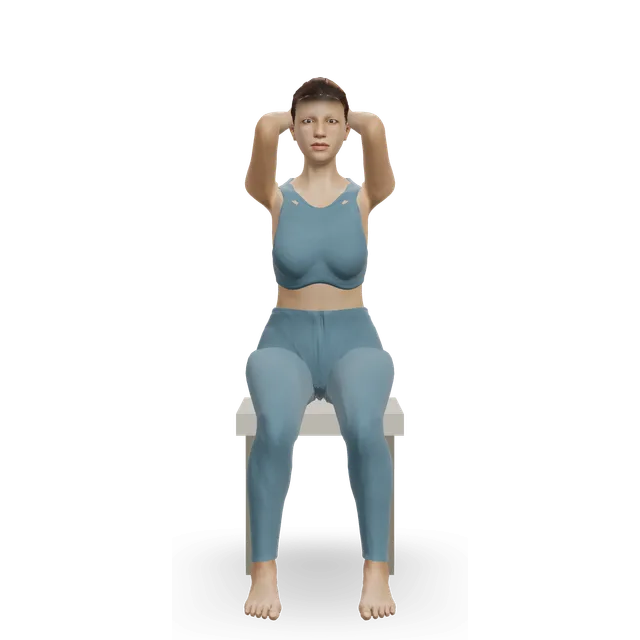
- Beginner · Chest, Shoulders · 3D demoSitting: hands behind your head, elbows forward, then open them out to the sidesHarder: Fish pose (Matsyasana)
- Cat-cow8 waves, slower than feels naturalBeginner · Back, Abs · 3D demoSeated (the demo shows all fours): hands on your knees; small and smoothHarder: Half lord of the fishes (Ardha Matsyendrasana)
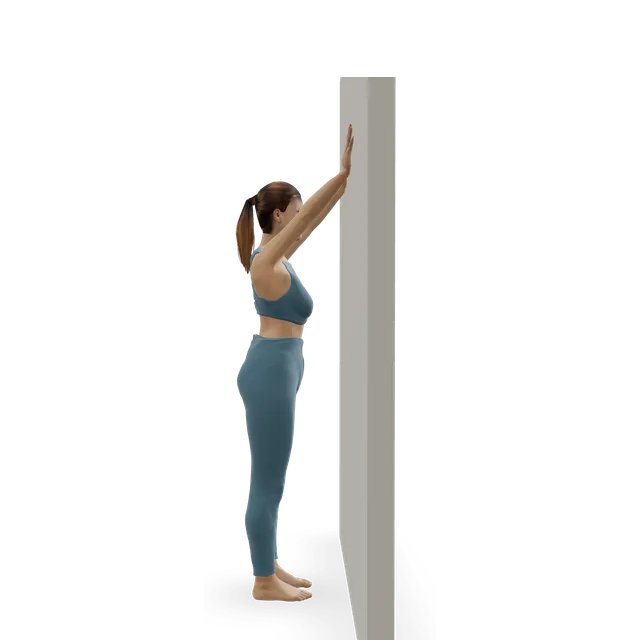
- Wall climb (finger walk up the wall)5 times, holding the top for a count of 10Beginner · Shoulders, Back · 3D demoFacing the wall, then side-on; walk your fingers up to a stretch, never painHarder: Sleeper stretch
- Doorway chest opener2 holds of 20 to 30 sBeginner · Chest, Shoulders · 3D demoElbow below shoulder height at first; ease off at any pulling on the scarEasier: Elbows backHarder: Fish pose (Matsyasana)



Stand with a chair (about 6 minutes)
- Mountain pose (Tadasana)Stand for 5 to 10 slow breathsBeginner · Calves, Back, Abs · 3D demoOne hand on the chair back; palms turned forward to open the chestHarder: Tree pose (Vrksasana)
- Chair pose (Utkatasana)2 holds of 3 to 5 breathsBeginner · Quads, Glutes, Shoulders · 3D demoHold the chair; arms down if one feels heavyHarder: Revolved chair pose (Parivrtta Utkatasana)
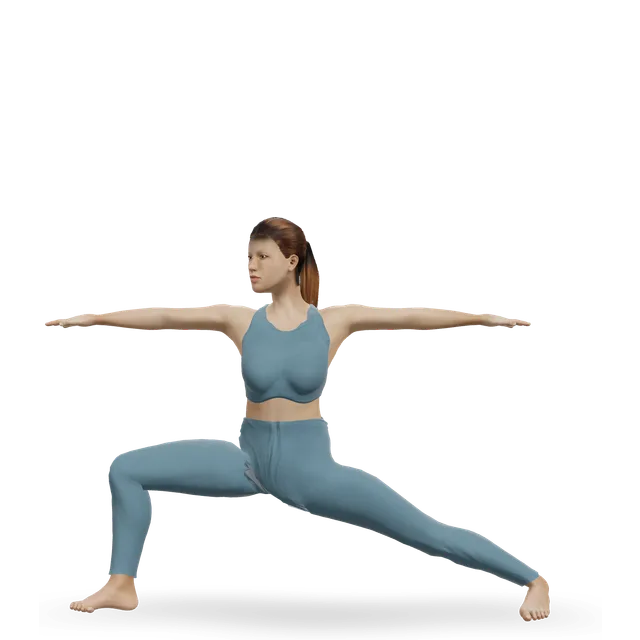
- Warrior II (Virabhadrasana II)3 to 5 breaths each sideIntermediate · Quads, Glutes, Adductors · 3D demoArms to shoulder height only if comfortable, or hands on your hipsEasier: Chair pose (Utkatasana)Harder: Extended side angle (Utthita Parsvakonasana)
- Tree pose (Vrksasana)2 holds of 20 to 30 s each sideBeginner · Glutes, Hip abductors, Calves · 3D demoA hand on the chair; foot at your ankleEasier: Mountain pose (Tadasana)Harder: Standing hand-to-big-toe pose (Utthita Hasta Padangusthasana)




Lying (about 5 minutes)
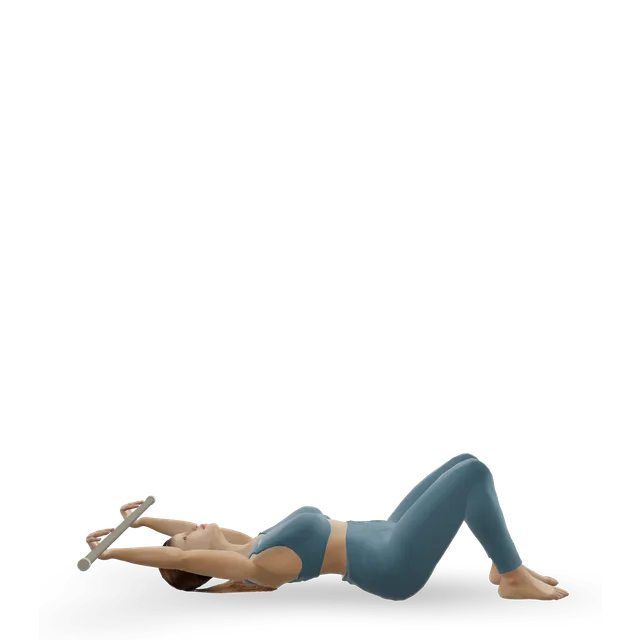
- Arm lift lying down, with a stick5 times, holding for a count of 10Beginner · Shoulders, Chest · 3D demoKnees bent; lift the stick only as far as is comfortableHarder: Crab reach
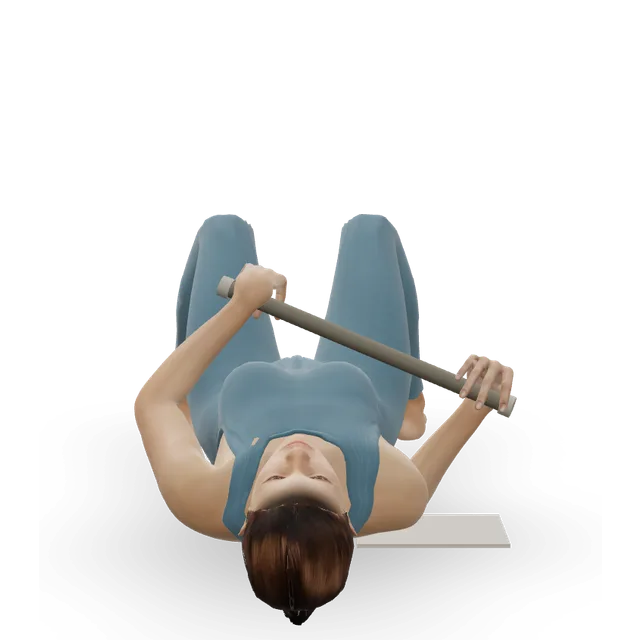
- Stick-assisted external rotation (lying)10 slow repetitionsBeginner · Shoulders, Chest · 3D demoElbow at your side on a folded towel; pain-freeHarder: Standing band external rotation
- Glute bridge6 to 8 slow liftsBeginner · Glutes, Hamstrings, Abs · 3D demoSkip it in the first weeks after a tummy (DIEP or TRAM) flap unless your team agreesEasier: Pelvic tilt into bridgeHarder: Single-leg glute bridge

Rest (3 minutes or more)
- Beginner · Adductors, Chest · 3D demoCushions under your thighs and head; arms resting on pillows, opened only as far as is comfortableHarder: Wide-angle seated forward fold (Upavistha Konasana)

Tips
- Start only when your wounds have healed, the leaflet's stretches are comfortable and your breast team agrees; after a reconstruction, ask your surgeon or physiotherapist first.
- Wear your compression garment if you've been given one. Stop if your arm, hand, breast or chest swells, aches or feels heavy, and contact your breast care nurse or lymphoedema specialist.
- A stretching or pulling feeling is normal; pain isn't. Ease off and go less far next time.
- Twice a week is a good start, alongside walking. On tired days, do the breathing and the rest only.
- With a line, low blood counts or cancer in the bones, follow your team's advice first; this class has no twists and no deep folds.
- Finish with corpse pose if you like: lie still for at least 5 minutes, up to 10, with a blanket and a pillow under your arm.
- Our yoga for breast cancer guide lists the warning signs. During chemotherapy, a temperature over 37.5°C or below 36°C means calling your hospital's number straight away.
The doses are suggested starting points, not a prescription. Choose a range you can control and stop for sharp or increasing pain, numbness or tingling. Get individual advice after an injury or surgery, or if you are pregnant or managing a health condition.
Guides that recommend it
Find more moves like these
More yoga flows
Beginner yoga flow
A 20-minute beginner yoga sequence: mountain, chair, warrior II, triangle, tree, down dog, cobra and child's pose.
20 minBeginner11 movesStep


Sun salutation flow
A 20-minute flow built on sun salutations A and B, with warrior poses and a short cool-down.
20 minIntermediate8 movesNo equipment



Yoga for tight hips
A hip-opening yoga sequence: low lunge, lizard, goddess, pigeon, bound angle and happy baby.
25 minBeginner10 movesWallQuestions people ask
How long does the gentle yoga after breast cancer: a 25-minute class for the shoulder, chest and breath, with no planks, no twists and no weight on your arms take?
About 25 minutes, including any warm-up and cool-down listed. Shorten it by doing fewer rounds; lengthen it by adding one.
What equipment do I need?
You need: A bench or box, A wall, Other / check instructions, Firm cushion. Each move links to its guide, where you can find an alternative if you are missing something.
Is it suitable for beginners?
It is written for beginners. 6 of its 16 moves have an easier option listed beside them if you need one.
How do I make it easier or harder?
Use the easier or harder option listed under each move, change the number of rounds, or adjust the rest. Progress one change at a time.