Back pain after shovelling snow: lifting and throwing, the first big fall, the heart, and what helps

Back pain after shovelling snow is common, and it is nearly always ordinary low back pain or a strained muscle from lifting and throwing heavy, wet snow, and we think the first big fall of the winter is a common time for it. It usually eases a lot within a few weeks. Shovelling is hard work for the heart as well as the back, so this guide puts the heart first, then shows how to clear snow with less strain: pushing rather than throwing, small scoops held close, short spells and a gritted path.

It starts with the signs that need help, from a 999 call or accident and emergency (A&E) for chest pain or tightness, pain spreading to your arm, jaw or back, or numbness around your genitals or bottom, to a general practitioner (GP) or the National Health Service's 111 line (NHS 111) the same day for back pain with a fever, and a GP soon for sudden back pain after a slip on ice from 50. It then covers who should leave snow clearing to someone else, in the heart charities' own words, what sets a back off when shovelling, lifting without the myths, shovels and handles, falls on ice and osteoporosis, how much pain is fine, and a three-stage plan with a 3D demo of every move.

When to get help first

Exercise is for pain that has been checked or is clearly mild and settling.

Get urgent medical help if

  • Call 999: chest pain that feels tight or like squeezing on your chest; chest pain that's spreading to your arms, neck or jaw; severe difficulty breathing (you're gasping, choking or not able to get words out); lips or skin that are pale, blue or grey (on brown or black skin this may be easier to see on the palms of the hands); or someone who has passed out and is not responding normally. It could be a heart attack. Don't drive yourself to A&E.
  • Call 999: sudden pain or discomfort in your chest that does not go away (it can feel like squeezing or pressure inside your chest, burning or indigestion); pain that spreads to your left or right arm, or your neck, jaw, stomach or back; or chest pain and you feel sweaty, sick, light-headed or short of breath. You could be having a heart attack.
  • Call 999 or go to A&E: back pain with chest pain, or back pain that started after a serious accident, such as a car crash.
  • Get help from NHS 111: pain or tightness in your chest, neck, shoulders, jaw or arms that comes and goes, often brought on by exercise, stress, emotion or cold and easing after a few minutes' rest. It can be angina, a sign of a heart problem. If you've been diagnosed with angina, get help from NHS 111 too if it feels worse than before, is happening more often, lasts longer or happens when you're resting.
  • Stop shovelling straight away if you get chest pain, tightness or pressure, pain spreading to an arm, your jaw, neck or back, or you feel breathless, sweaty, sick or light-headed (our suggestion, built on the NHS and the American Heart Association). If the pain feels tight or squeezing, spreads to your arms, neck, jaw or back, comes with breathlessness, sweating or feeling sick, or doesn't go away, call 999 now. If milder symptoms ease within a few minutes of rest, don't go back to shovelling that day: get help from NHS 111, as the angina line above says.
  • Call 999 or go to A&E: loss of feeling or numbness around the genitals or bottom, new trouble peeing or controlling your bladder or bowels, changes in genital sensation during sex or problems with erections or orgasm, or pain, tingling, weakness or numbness in both legs. These are signs of cauda equina syndrome, which needs treating in hospital urgently. Don't drive yourself.
  • Call 999 or go to A&E: leg pain with numbness around the genitals or bottom, new trouble starting or controlling peeing, not knowing when you need to poo or losing control of it, sciatica in both legs, or weakness or numbness in both legs that is severe or getting worse. These can be signs of cauda equina syndrome, which needs treating in hospital as soon as possible.
  • Call 999: after a fall, you may have hurt your head, neck, back or hip, or you cannot get up.
  • Call 999 or go to A&E: severe hip pain after a fall or injury, or you cannot stand, walk or put weight on the leg. In an older adult this can be a broken hip; the leg may be at an odd angle or look shorter. Don't drive to A&E: call 999 and ask for an ambulance.
  • Call 999 or go to A&E after an injury (don't drive yourself) if the arm, wrist or hand is numb, tingling or has pins and needles; a bone is sticking out or a bad cut is bleeding heavily; or the arm or wrist has changed colour or shape, or is at an odd angle.
  • Call 999: sudden, severe pain in the tummy or back, which can come with breathlessness, pale or grey skin, or collapse. It can be a burst abdominal aortic aneurysm, most common in men aged 65 or over and in people who smoke or used to smoke.
  • Call 999 or go to A&E: pain spreading from the tummy to the back, with vomiting.
  • Same day (GP or NHS 111): back pain and you feel hot, cold, shivery or generally unwell, or severe pain that starts suddenly or is getting worse quickly.
  • Ask for an urgent GP appointment or get help from NHS 111 if you think you may have a kidney infection (often pain in your lower back or side, with burning or stinging when you pee or needing to pee more often) and you have a very high temperature or feel hot, cold or shivery, a temperature below 36C, pain in the lower tummy or in the back just under the ribs, blood in your pee, you feel or are sick, you haven't had a pee all day, or you're pregnant. Call 999 or go to A&E if you're confused, drowsy or have difficulty speaking.
  • Same day: leg weakness that is getting worse; new leg pain with a history of cancer, HIV, TB or inflammatory arthritis; or leg pain with a fever, feeling unwell, loss of appetite, unexplained weight loss or night sweats.
  • Same day: leg weakness that is getting worse.
  • Same day (urgent GP appointment or NHS 111): new difficulty lifting the front of your foot or toes (foot drop), or a foot that slaps down or catches as you walk, especially if it is getting worse. Weakness in both legs, or with numbness around the genitals or bottom or bladder or bowel changes, is the 999 emergency above.
  • Same day: you have or have had cancer, and new back pain that is severe and doesn't let up, is getting steadily worse, is worse at night and disturbs your sleep, is worse when you cough, sneeze or strain, or comes with tenderness over the spine. Contact your cancer team or GP urgently. With cancer, new weakness, difficulty walking, numbness or bladder or bowel problems are an emergency.
  • Contact your GP or midwife urgently: back pain in the second or third trimester of pregnancy, or back pain in pregnancy with a fever, vaginal bleeding, pain when you pee, or pain in one or more of your sides (under your ribs). It could be early labour or an infection.
  • Same day: new numbness, pain or weakness in your legs after a spinal fracture. Very occasionally a piece of broken bone presses on the nerves, and an NHS trust says it needs to see you urgently if this happens. Contact your fracture team or GP, or call NHS 111.
  • Same day (urgent GP appointment or NHS 111): sudden, severe pain in one joint, with swelling, a change in skin colour or difficulty moving it, especially if you feel unwell, hot, cold or shivery or have a high temperature (although not everyone has one). It could be an infection in the joint, gout or calcium crystals (pseudogout), and only a sample of fluid from the joint can tell them apart.

See a doctor or physiotherapist if

  • Sudden new back pain after a minor fall, lift, cough or sneeze, from 50 or past the menopause, or if you take long-term steroid tablets; or height loss, a curved spine or a change in posture: see a GP. It can be a spinal fracture.
  • Unexplained back pain with muscle spasms, loss of height, or a curved spine or change in posture: a possible osteoporotic spinal fracture, more likely with older age or long-term steroid tablets.
  • You're 50 or over, or past the menopause, and have broken a bone in a fall from standing height or less, or you take steroid tablets long term: ask your GP about a fracture risk assessment. NICE recommends offering a bone density (DXA) scan after a broken hip or spine from thin bones, or another major fragility fracture, such as a broken wrist or shoulder, in the last 2 years.
  • You have heart disease, have had a heart attack, a stroke, bypass surgery or a stent, or have risk factors such as high blood pressure, diabetes, high cholesterol, smoking or not usually being active, and snow needs clearing: the American Heart Association says to get someone else to do it, and the NHS advises people with angina to speak to their doctor before taking up a new activity. If you're not sure, ask your GP or cardiac team first (our suggestion).
  • Pain, tingling or numbness spreading below the knee that isn't settling after a few weeks, is getting worse or stops your normal activities: see a GP.
  • Pain that is not improving after a few weeks, is getting worse, or is stopping your normal activities.
  • Back pain that hasn't improved after a few weeks of looking after it at home, stops you doing day-to-day activities, worries you, or you're struggling to cope.
  • Pain that doesn't improve with rest or is worse at night, or pain that is worse when you sneeze, cough or poo.
  • Unexplained weight loss, or a lump, swelling or change in the shape of your back.
  • Pain at the top of the back, between the shoulders, rather than in the lower back.
  • Back pain that started before 45 and has lasted more than 3 months, especially if it started before 35, wakes you in the second half of the night, comes with buttock pain, gets better with movement or within 48 hours of anti-inflammatory painkillers, or you have or have had arthritis, pain where a tendon attaches to bone (enthesitis) or psoriasis, or a parent, brother, sister or child with spondyloarthritis. These can point to inflammatory back pain (axial spondyloarthritis, such as ankylosing spondylitis). The National Institute for Health and Care Excellence (NICE) asks GPs to refer people with 4 or more of these 9 features to a rheumatologist, and to do a blood test for the HLA-B27 gene marker if exactly 3 are present, referring if it is positive.
  • Bending and lifting keep getting harder week after week despite the changes in this guide and the plan: our suggestion is to see a GP or physiotherapist. In many areas you can refer yourself to NHS physiotherapy.

Where does it hurt?

Location narrows the likely causes; it does not diagnose.

The low back, across or to one side, sore while clearing snow or stiff the next morning

Ordinary back pain after more lifting and throwing than your back is used to. This guide covers it, and our back pain guide goes further.

Read: Back pain →

The back went suddenly as you lifted or threw a scoop, and it's stiff and sore to move

Usually ordinary back pain, often called a spasm or a pulled muscle. It usually settles within weeks.

Read: Back spasm and pulled back muscle →

Worse bending forward or sitting, easing when you stand or arch back

Often called disc-type pain: favour the direction that eases it for now.

Read: Herniated or bulging disc →

Pain, tingling or numbness down one leg below the knee, worse coughing or sneezing

Sciatica. Stop or shrink anything that sends it further down the leg.

Read: Sciatica →

Worse twisting, catching as you throw snow to the side

Usually ordinary back pain. Our twisting guide covers turning with your feet.

Read: Back pain when twisting →

Between the shoulder blades or the middle of the back after a long session

Usually the upper back muscles. The NHS asks for a GP check for pain between the shoulders, and heart pain can spread there: see the warning signs.

Read: Upper back pain →

The back or between the shoulder blades with chest pain, breathlessness, sweating or feeling sick, during or after shovelling

This may be the heart, not the back: stop and call 999, as the warning signs say.

The shoulder, the collarbone or the shoulder blade after shovelling

Usually the rotator cuff or the shoulder blade muscles. Our shoulder pain after shovelling guide covers it.

Read: Shoulder pain after shovelling →

The low back or the tailbone after a slip on ice, sore to sit

Usually a bruise that settles. Our tailbone pain guide covers sitting and the signs of a break.

Read: Tailbone pain →

Sudden mid or low back pain after a slip or a heavy scoop, from 50 or with long-term steroid tablets

A possible osteoporotic spinal fracture: see a GP, as the warning signs say.

Read: Spinal compression fracture →

Hip or groin pain after a fall on ice, and you can't stand or put weight on the leg

Possibly a broken hip: call 999, as the warning signs say.

Read: Broken hip →

After digging soil or shovelling in the garden rather than snow

Our back pain after gardening guide covers digging, lifting and pacing in the garden.

Read: Back pain after gardening →

Back pain for more than 3 months, flaring every winter

Long-lasting (chronic) back pain, with good and bad days.

Read: Chronic low back pain →

Back pain with a fever, burning when you pee, or pain spreading from the tummy

This may not be the back at all: see the warning signs.

Understand it

Usually ordinary back pain or a strained muscleStrong evidence

The NHS says a common cause of back pain is an injury like a pulled muscle, and that back pain usually improves within a few weeks but can last longer or keep coming back. NHS inform lists doing more activity than you normally would among the things that bring it on.

In 17 winters of US emergency department data, about 11,500 people a year were treated for snow shovelling injuries and emergencies, about 4 in every 100,000 people. A third had hurt the lower back, most injuries were soft tissue strains, and 5.8% needed a hospital stay. US orthopaedic surgeons name sprains and strains of the back and shoulders as the commonest snow clearing injuries. Emergency figures miss everyone who stayed at home, so ordinary sore backs are far commoner than this, and serious injury far rarer: one Swiss university hospital found 21 shovelling admissions in 13 winters, among about 350,000 emergency cases.

Sources 1, 2, 3, 4, 5

What sets it off: heavy scoops, throwing and twistingEmerging evidence

US orthopaedic surgeons say that holding a shovelful of snow with your arms outstretched puts too much weight on your spine, and that you shouldn't throw snow over your shoulder or to the side. In a lab study, the load on the low back rose with how far the upper body bent forward.

In 999 people with a new episode of low back pain, each compared with themselves over the 4 days before it began, short-lived triggers raised the odds: heavy loads, awkward postures, moderate or vigorous activity, tiredness and being distracted during a task (from about 2.7 to 25 times the odds). These are relative, short-term risks, not a sign of damage, and people seldom recognised tiredness, distraction or a load held away from the body. In 416 people with back pain followed for a year, more hours of lifting and bending raised the odds of a flare a little but didn't predict being worse a year later. A long session of heavy, wet snow piles these triggers together; that is our reading, not a measured finding.

Shovelling also keeps you bent forward: in 10 men clearing snow, the trunk bent about 49 degrees with a straight shaft. After 20 minutes of full bending, 47 volunteers' lower backs stayed looser for some minutes, and the authors suggest standing and walking before a demanding lift.

Sources 4, 6, 7, 8, 9, 10, 11, 12

Shovelling is a workout, not a choreStrong evidence

The Compendium of Physical Activities rates shovelling snow by hand at 5.3 METs (metabolic equivalents, multiples of the energy you use at rest) at moderate effort and 7.5 at vigorous effort, against 3.0 for vacuuming. The NHS counts heavy gardening, such as digging and shovelling, as muscle strengthening. Like any workout, it needs building up to.

Sources 13, 14, 15

The first big fall, and why it isn't the cold on your musclesEmerging evidence

No study has measured a first-snowfall peak in back pain. US orthopaedic surgeons say snow removal can be especially dangerous if you don't exercise regularly, and the Heart and Stroke Foundation of Canada says a longer warm-up is needed in cold weather.

Cold itself didn't trigger back pain: temperature, humidity, air pressure, wind and rain had no link with new back pain in 993 people, and a reanalysis of 981 agreed. So the likely culprit is a big, unfamiliar load done fast after weeks of less activity (our reading), not the cold on your muscles.

Sources 4, 16, 17, 18

The heart: hard work, and a small rise in heart attacks after heavy snowEmerging evidence

Shovelling heavy snow is hard work for the heart. In 10 unfit men aged about 32, heart rate reached 86% of maximum after 2 minutes and 97% after 10, and blood pressure went slightly higher than at the peak of a treadmill test; the fitter the man, the lower his relative heart rate. When men shovelled at their own pace, including men with heart disease that caused no symptoms, it took about three quarters of their peak heart rate: hard, but within the range used for aerobic training.

Heart attacks rise a little after heavy snow, mainly in men. In Quebec, in 128,073 hospital admissions and 68,155 deaths from heart attacks over 33 winters, men had 16% higher odds of admission and 34% higher odds of death the day after 20 cm of snow, while women showed no clear rise. Because such days are rare, fewer than 1 in 100 of those heart attack admissions came the day after 20 cm or more of snow. A British Columbia study found a similar, borderline rise, a Calgary study found none, and in subarctic Tromsø the weather made little difference except in people over 65.

Heart emergencies are a small share of shovelling emergencies but nearly all the deaths: 6.7% of the US emergency visits, including every death the study counted. Those affected are mostly men and people who rarely exercise and have high blood pressure, high cholesterol, diabetes or a smoking habit, or earlier heart disease or a stent; in Detroit, 33 of 36 sudden heart deaths during snow removal were in men. But after a New York blizzard most people with shovelling-related heart attack or angina had no known heart disease, and a quarter of women's heart attack or angina visits were linked with shovelling. For most people the risk on any one day is very small.

Sources 19, 20, 21, 22, 23, 24, 25, 26, 3, 27, 28, 29, 30, 31

Why the effort matters, and how being active protects youStrong evidence

Heavy exertion is a short-lived trigger for heart attacks, mainly in people who rarely exercise. In 1,228 people after a heart attack, heavy exertion raised the risk in the following hour about 6 times overall, but far more in people who exercised less than once a week than in those who exercised 5 or more times a week; a German study found the same pattern, and across 52 countries physical activity in the hour before roughly doubled the odds. Regular activity is protective.

Shovelling is mostly arm work, and arm work raises heart rate more than leg work for the same effort. The American Heart Association adds that straining to lift heavy loads makes people hold their breath, which causes big increases in heart rate and blood pressure. Cold adds to it: in 20 people with stable coronary heart disease, arm exercise at minus 15 C raised the heart's workload by about a fifth against the same work indoors, cold air brings angina on sooner, and in England and Wales each 1 degree C fall in daily temperature went with a 2% higher risk of a heart attack over the next 4 weeks. In Finland, snow shovelling was one of the three commonest activities at the time of exercise-related sudden cardiac deaths.

Sources 32, 33, 34, 35, 36, 37, 38, 39, 40

Slips on ice, roofs and snow blowersStrong evidence

After an ice storm in Indianapolis, back injury was the commonest injury from falls on ice (19.3% of 327 injuries), and fractures were mostly of the ankle, wrist and hip, rising with age. In Cardiff, fractures rose almost 3 times on days of snow and ice in 1981, wrist and forearm fractures about 7 times, and 2.2 times 33 years later. In Sweden, slipping on ice or snow caused 9% of all adult fractures, 1.4% of them in the spine. In Norway, fall fractures in people aged 65 to 79 were about 40% more common from October to March, and in the US a third of older people's winter falls outdoors were weather related, nearly all slips on ice or snow. Working-age adults fall too, most often in the morning, and in older adults freezing rain raised falls more than snowstorms did.

The most serious back injuries tied to snow clearing come from falls: in New York State and Helsinki, people who fell from roofs while clearing snow broke the spine and limbs, and Helsinki's were nearly all men. Snow blowers move the risk rather than remove it: they cause hand injuries in the chute, and almost all snow blower deaths in US emergency data were from the heart. With osteoporosis, the Royal Osteoporosis Society suggests trying to avoid going out in bad weather, especially when it is icy or snowy.

Sources 41, 42, 43, 44, 45, 46, 47, 48, 49, 50, 51, 52

When a scan mattersStrong evidence

Not for back pain after shovelling. The National Institute for Health and Care Excellence (NICE) says don't routinely offer imaging outside specialist care for low back pain, with or without sciatica. A scan matters for the warning signs: an emergency magnetic resonance imaging (MRI) scan for suspected cauda equina syndrome, an X-ray after a fall on ice with a possible fracture, and in specialist care when the result would change treatment. Chest pain needs an electrocardiogram (ECG) and blood tests in hospital, not a back scan.

Sources 53, 54

How it usually goesStrong evidence

In 47 groups of people with low back pain, average pain in new back pain fell from 56 out of 100 to 26 within 6 weeks, then more slowly; an earlier review found a fall from 52 to 23. NHS inform says the biggest change usually comes in the first couple of weeks, and most problems improve within 6 weeks.

Back pain often comes back: within a year of recovering, 69% had another episode in one cohort. That is common, not a sign of damage, and it is why the plan keeps going through the winter. No one can promise a date.

Sources 55, 56, 2, 10, 57

What helps, and how strong the evidence is

The heart first: who should leave it to someone elseStrong evidence

The heart charities and health services agree, though as advice rather than trial evidence: if you have heart disease or its risk factors, someone else should clear the snow, or you should check with your doctor first. Their own words are in the written steps below. The British Heart Foundation and the NHS have no snow shovelling pages of their own, so their cold-weather and angina advice is given instead.

Sources 36, 16, 58, 59, 60, 4

Push, don't throw: guidance, not trialsEmerging evidence

No trial has tested a way of shovelling for back pain. The American Heart Association advises pushing or sweeping snow rather than lifting and throwing it, saying it takes a little less exertion, and US orthopaedic surgeons also say push rather than lift. A Finnish field study found that pushing very deep snow was just as hard on the heart as shovelling it (heart rate about 141 to 142 in 9 men), so deep snow is hard work either way. The Health and Safety Executive (HSE) says that pushing instead of lifting takes less effort but still carries some risk.

Small scoops held close, walking the scoop to the pile, and turning your feet rather than twisting all follow the orthopaedic surgeons', the Heart and Stroke Foundation's and the HSE's advice, and fit the trigger study, where heavy loads held away from the body and awkward postures raised the short-term risk.

Sources 4, 36, 21, 61, 16, 62

Shovels and handles: lab evidence onlyEmerging evidence

A bent shaft let people stand a little more upright (trunk bending 41.4 degrees against 49.2 in 10 men) and lowered the low back's load by about 12% to 17% in 8 volunteers. These were lab studies of 8 to 10 healthy volunteers, with no pain outcome, and add-on handles in another study traded forward bending for more twisting. A second handle allowed a more upright posture without saving energy.

In a lab, people strongly preferred lighter shovels, and too big a blade or too heavy a shovel raised the effort. The Heart and Stroke Foundation suggests a smaller blade for wet snow, and the orthopaedic surgeons a shovel that suits your height and strength. So choose a light shovel that lets you stand taller, but how you shovel matters more than the shovel.

Sources 11, 6, 63, 64, 65, 66, 16, 4

Bending isn't dangerous, and "lift with your legs" isn't what the evidence saysStrong evidence

Bending your lower back while lifting hasn't been shown to cause back pain, on low-quality evidence from 11 studies. A review of lab studies found no biomechanical case for squatting to protect the back, and training in lifting technique, with or without lifting aids, didn't prevent back pain in 9 trials of 20,101 workers (moderate quality).

The HSE's practical version: keep the load close to your waist, start with a slight bend of your back, hips and knees rather than a full stoop or a deep squat, and turn with your feet rather than twisting. It adds that good technique is not a substitute for changing the task, which for snow means pushing, smaller scoops and fewer throws.

Sources 67, 68, 69, 62

Exercise has the best evidence; belts don't helpStrong evidence

Across 249 trials, exercise reduced long-lasting low back pain by about 15 points out of 100 against no treatment, usual care or placebo, on moderate-certainty evidence. For prevention, across 21 trials and 30,850 people, exercise with education roughly halved the chance of a new episode, while education alone, back belts and shoe insoles didn't. In 701 people who had recovered, a walking and education programme nearly doubled the time to the next episode (208 days against 112). NICE says consider a group exercise programme and keep up normal activities.

NICE says don't offer belts or corsets for low back pain, and lumbar supports didn't prevent back pain in trials. The NHS suggests anti-inflammatory medicine like ibuprofen if it suits you, says paracetamol on its own isn't recommended for back pain, and suggests a heat pack for stiffness or muscle spasms.

Sources 70, 71, 72, 53, 73, 1

With osteoporosisStrong evidence

The UK consensus on exercise for osteoporosis recommends safe lifting rather than instructions such as "don't lift", the hip hinge for bending, smooth and comfortable twisting, and changing or avoiding sustained, repeated or end-range bending. The Royal Osteoporosis Society says bending forward is generally safe and won't cause a spinal fracture, and suggests avoiding icy or snowy outings. A heavy, repeated bend-and-throw is the kind of loaded, repeated bending the consensus advises changing (our reading): push the snow, or ask for help. The society's pages are past their review dates and marked as being updated.

Sources 74, 75, 52

How much pain is OK while you exercise?

The back pain rule, and judge a clearing session by the next morningEmerging evidence

Some discomfort during exercise is fine, and it does not mean you are doing damage: the WHO counts "hurt does not necessarily mean harm" among the messages people with back pain need. Aim for pain you would call mild to moderate, no more than about 5 out of 10. It should settle within an hour or so, and your back should be no worse the next morning. If it is worse, do less next time (fewer reps, a smaller range, a lighter load), not nothing.

Leg symptoms are the exception: stop or shrink any movement that sends pain, pins and needles or numbness further down your leg. If leg symptoms move back towards your spine, that is a good sign, even if your back aches a little more for a while.

If pain climbs day after day, or you notice any warning sign, stop and get it checked. The 5 out of 10 figure matches this site's other pain guides and has not been tested in a back pain trial; in trials of long-lasting muscle and joint pain, exercise that allowed some pain did no harm.

For bending in daily life (our suggestion): a dull ache or stiffness as you bend that eases when you straighten up is fine, and the next morning is the test for yesterday's bending. A sharp catch that stops you, or pain that spreads down a leg, means smaller, slower and lighter bends for now, or the knees, a low stool or a half-kneel for floor jobs. A flare after a heavy or awkward lift is common and usually settles; NHS inform says don't "brace or hold yourself still".

For clearing snow (our suggestion, built on the rules above, the trigger study and the heart charities' advice): judge a session by the next morning. Work in spells of 10 to 15 minutes, pushing rather than lifting; a back ache up to about 5 out of 10 that settles within an hour or so of stopping is fine. If your back is worse the next morning, clear the next fall in shorter spells with smaller scoops, or get help. Chest pain or tightness, pain spreading to the arm, jaw or back, breathlessness, sweating or feeling faint are never pain-rule questions: stop and see the warning signs.

Sources 76, 1, 2, 7, 36

The exercise plan: 3 stages

Start at the first stage. Each move opens a full guide with a 3D demo.

Stage 1

Settle: keep moving, and find the direction that eases it

About the first 2 weeks. Walk several times a day, keep whichever gentle movement eases your pain (the knee to chest if bending forward eases it, the press-up if arching back does; you don't need both), and leave heavy clearing to someone else for now. With pain down a leg, our sciatica guide has the same first stage. With any warning sign, get checked first.

Treadmill walking demonstrated on the 3D figure3D demoTreadmill walkingBeginner · Cardio machine

5 to 10 min, several times a day · As in our back pain when bending guide (from our back pain guide). Walking outdoors counts; choose gritted paths and shoes that grip (our suggestion)

Harder: Treadmill jogging

Cat-cow demonstrated on the 3D figure3D demoCat-cowBeginner · No equipment

8 waves, slower than feels natural · The move page's dose. Pad your knees

Harder: Half lord of the fishes (Ardha Matsyendrasana)

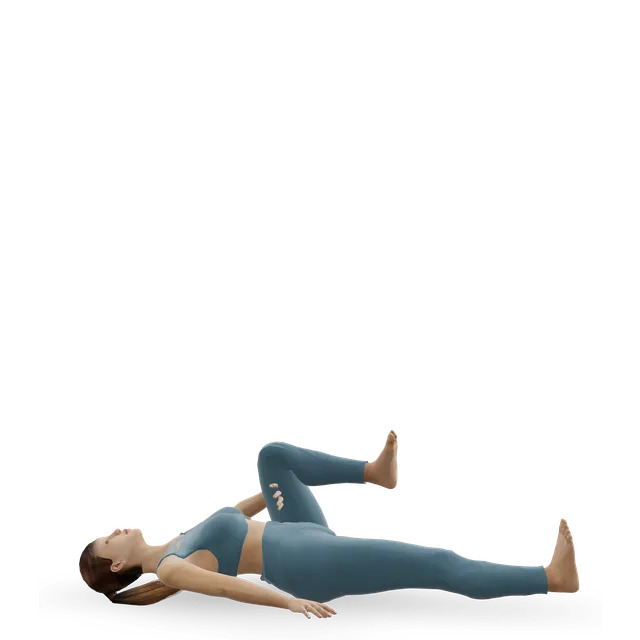
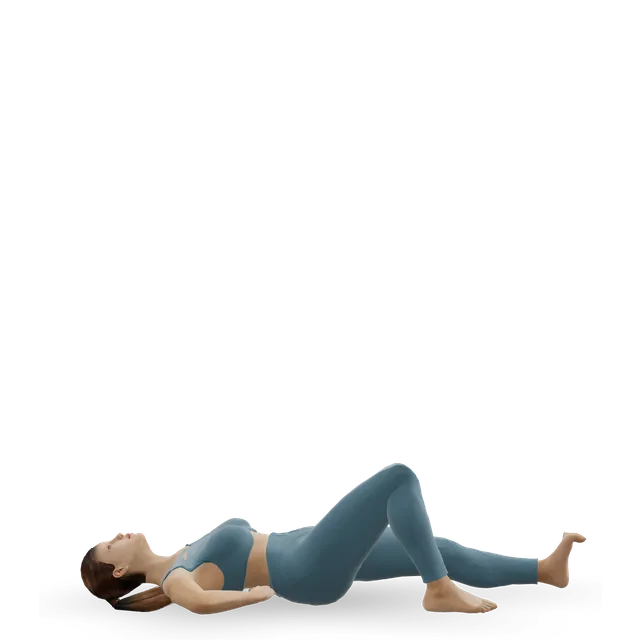
Single knee-to-chest stretch demonstrated on the 3D figure3D demoSingle knee-to-chest stretchBeginner · No equipment

Hold 20 to 30 seconds, 2 to 4 times each side · From the move page's dose (an editorial starting point). Keep it only if bending forward eases your pain; leave it out if it sends pain down a leg, as the move page says

Harder: 90/90 hip lift-off

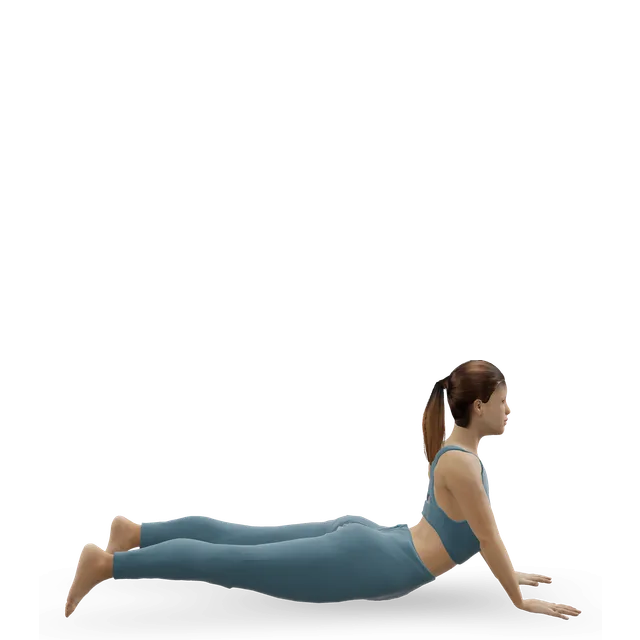
Prone press-up (McKenzie press-up) demonstrated on the 3D figure3D demoProne press-up (McKenzie press-up)Beginner · No equipment

10 slow repetitions, 3 to 5 times a day, while it helps · From the move page's dose (an editorial starting point). Keep it only if arching back eases your pain; skip it with spinal stenosis or if arching brings on leg symptoms, as the move page says

Easier: Sphinx pose (Salamba Bhujangasana)

Hip windshield wipers demonstrated on the 3D figure3D demoHip windshield wipersBeginner · No equipment

10 slow passes side to side, 2 rounds · From the move page's dose (an editorial starting point); like NHS inform's knee rolls, as our bending guide notes

Easier: Supine heel slide · Harder: 90/90 switch

Pelvic tilt into bridge demonstrated on the 3D figure3D demoPelvic tilt into bridgeBeginner · No equipment

8 to 10 slow reps · As in our back pain when bending guide (like NHS inform's pelvic tilt). With osteoporosis, peel up only part of the way, as the move page says

Harder: Glute bridge

Move on when: You can walk for 15 to 20 minutes, get through normal daily tasks and bend to a table or worktop, and your back is no worse the next morning (our bending guide's test).

Follow along: a timer, a cue and the next move, one step at a time.
Stage 2

Build: bend, lift and resist a twist on purpose

About weeks 2 to 6: 2 or 3 sessions a week, plus walking on most days. Practise bending from the hips, lifting light loads close to you and holding the trunk steady against a turn, as our bending and twisting guides do. This order is our suggestion.

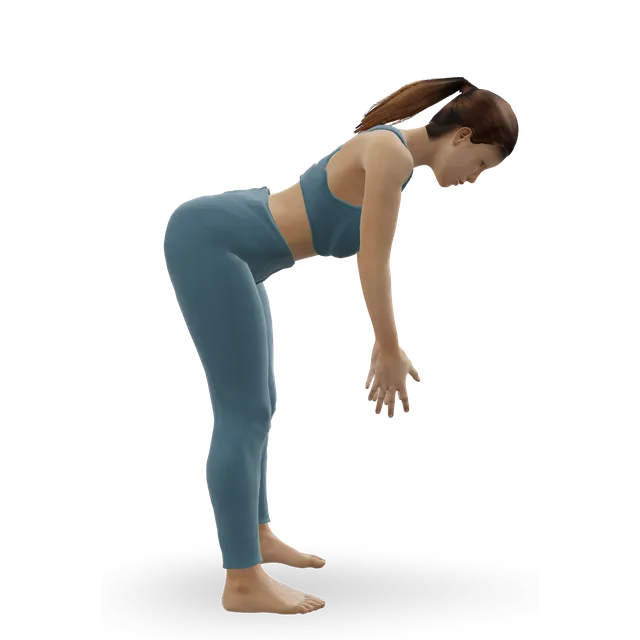
Hip hinge fold demonstrated on the 3D figure3D demoHip hinge foldBeginner · No equipment

5 slow folds, 3 breaths at the bottom · The move page's dose. The unloaded bend from the hips; with osteoporosis, stop when the back starts to round, as the move page says

Harder: Seated forward fold (Paschimottanasana)

Hip-hinge practice demonstrated on the 3D figure3D demoHip-hinge practiceBeginner · No equipment

2 to 3 sets of 10 · As in our back pain when bending guide

Harder: Kettlebell deadlift

Glute bridge demonstrated on the 3D figure3D demoGlute bridgeBeginner · No equipment

2 to 3 sets of 10 · As in our back pain when bending guide

Easier: Pelvic tilt into bridge · Harder: Single-leg glute bridge

Bird dog demonstrated on the 3D figure3D demoBird dogBeginner · No equipment

2 to 3 sets of 6 to 8 each side, 3 to 5 s holds · As in our back pain when bending guide. Pad your knees

Easier: Bird dog, one limb at a time · Harder: Bear crawl

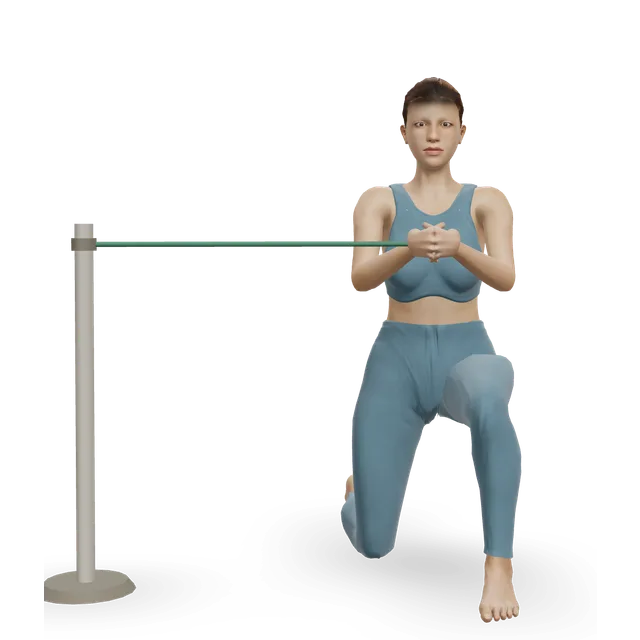
Half-kneeling Pallof press demonstrated on the 3D figure3D demoHalf-kneeling Pallof pressBeginner · A band + An anchor point

2 to 3 sets of 8 to 10 each side · As in our twisting guide (from our back pain guide). It trains the trunk to resist a turn, the opposite of a twisting throw; pad the knee

Harder: Pallof press

Sit to stand from a chair demonstrated on the 3D figure3D demoSit to stand from a chairBeginner · A bench or box

3 sets of 8 to 10 · As in our back pain when bending guide. The bend at the hips and knees you'll use to scoop

Easier: Sit to stand, pushing on the thighs · Harder: Bodyweight squat

Move on when: Every set feels controlled, you can pick a light bag up from the floor and carry it, and a 20 to 30 minute walk with some light pushing (a pram or a trolley) leaves your back no worse the next morning (editorial).

Follow along: a timer, a cue and the next move, one step at a time.
Stage 3

Strengthen: lift, carry, push and turn with your feet

From about week 6, 2 or 3 sessions a week, and ongoing: loaded bending, carrying, pushing and turning strength, as our bending guide's last stage, while snow clearing comes back by the written steps below. No trial has tested how shovelling comes back after back pain, so the order is our suggestion.

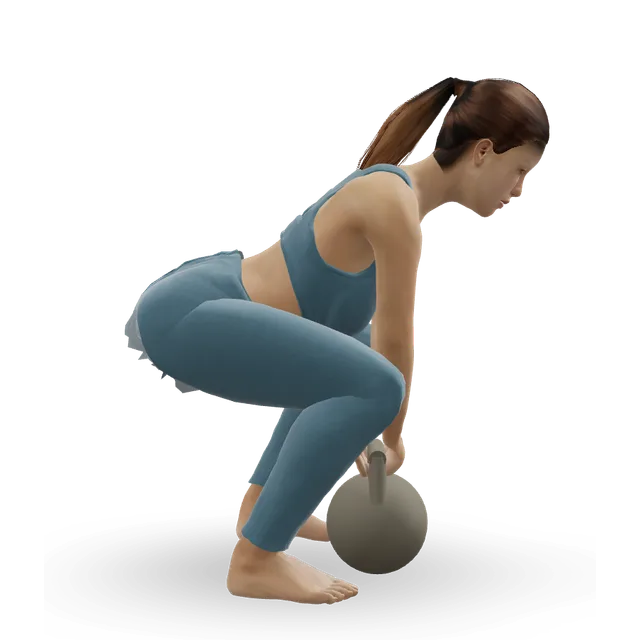
Kettlebell deadlift demonstrated on the 3D figure3D demoKettlebell deadliftBeginner · A kettlebell

3 sets of 8 to 10, light to start · As in our back pain when bending guide. The loaded bend from the floor, keeping the weight close: practice for a scoop

Easier: Hip-hinge practice · Harder: Dumbbell Romanian deadlift

Dumbbell goblet squat demonstrated on the 3D figure3D demoDumbbell goblet squatIntermediate · A dumbbell

3 sets of 8 to 10 · As in our back pain when bending guide. Holding the weight close to your chest, as you'd hold a full shovel

Easier: Bodyweight squat · Harder: Barbell front squat

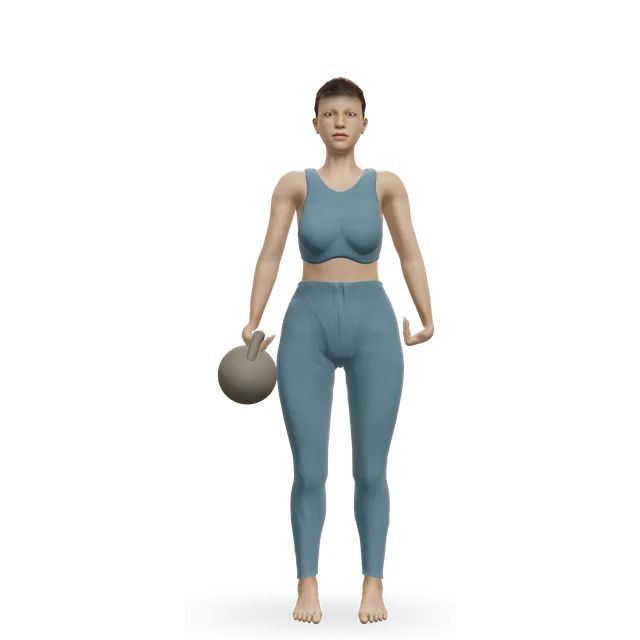
Suitcase carry demonstrated on the 3D figure3D demoSuitcase carryIntermediate · A dumbbell + A kettlebell

3 walks of 20 to 30 m each side · As in our back pain when bending guide. Walking a load to the pile rather than throwing it; if you can't stay level, the weight is too heavy, as the move page says

Easier: Farmer's carry · Harder: Overhead carry (waiter's walk)

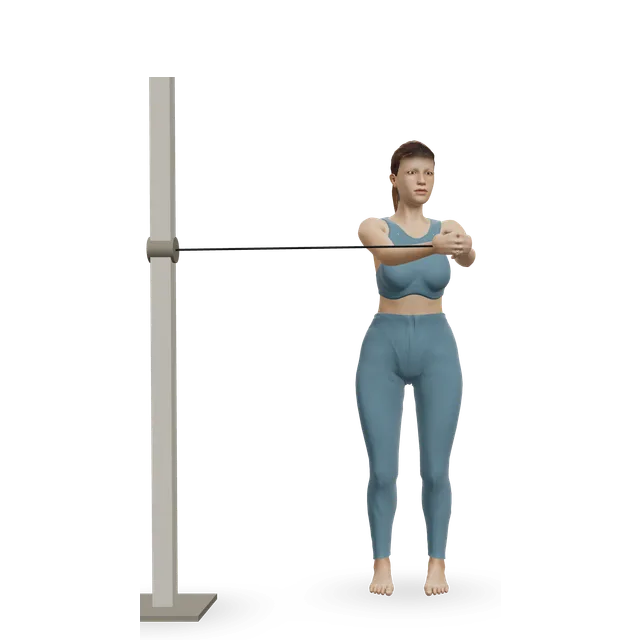
Cable press and rotation demonstrated on the 3D figure3D demoCable press and rotationIntermediate · A cable machine

2 to 3 sets of 8 to 10 each side, light and slow · As in our twisting guide (editorial; the move page gives no dose). Turn the whole body by pivoting your feet, the way to tip a scoop onto the pile; hold the Pallof press square first

Easier: Half-kneeling Pallof press · Harder: Cable wood chop

Side plank demonstrated on the 3D figure3D demoSide plankIntermediate · No equipment

3 holds of 20 to 30 s each side · As in our back pain when bending guide

Easier: Knee side plank · Harder: Side plank with leg lift

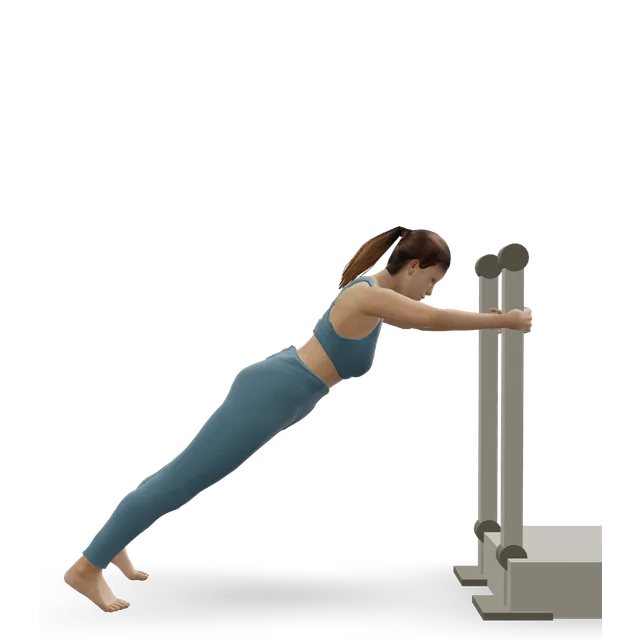
Sled push demonstrated on the 3D figure3D demoSled pushIntermediate · A sled

4 to 8 pushes of 15 to 20 metres with a load you can keep moving briskly, walking back between · From the move page's dose (an editorial starting point). If you train at a gym: pushing practice for a snow pusher. Keep breathing and keep loads moderate if your blood pressure is uncontrolled, as the move page says; with heart disease, follow your cardiac team's advice (our suggestion)

Easier: Prowler sprint (light sled push) · Harder: Alternate-leg box push-off

Move on when: Our suggestion: a normal snowfall, cleared in spells by pushing and small scoops, leaves your back no worse the next morning. Keep the strength work and walking going through the winter: exercise with education roughly halved the chance of the next episode in trials, and regular activity lowers the heart's response to sudden hard work. If it flares, go back to the stage 1 moves for a few days, not to bed.

Follow along: a timer, a cue and the next move, one step at a time.

What to change for now

Who should leave snow clearing to someone else (in their own words)

If you have heart disease or its risk factors, the heart charities and the NHS say leave it to someone else or check with your doctor first. Here is what each says. If you're not sure where you stand, ask your GP or cardiac team.

  • 1. American Heart Association (2026): "If you have known or suspected heart disease or risk factors for heart disease, get someone else to do your snow removal for you". Its cardiologist names "a sedentary lifestyle or obesity, being a current or former smoker, having diabetes, high cholesterol or high blood pressure, as well as people who have had a heart attack or stroke", and adds that "Anyone with these characteristics, including people who have undergone bypass surgery or coronary angioplasty, should not be shoveling snow". If you must, "start gradually and pace yourself".
  • 2. Heart and Stroke Foundation of Canada: snow shovelling "is a vigorous exercise", and "Especially if you have been diagnosed with heart disease, be aware that shovelling can strain your cardiovascular system". It also says shovelling or pushing a car out of a snow bank "can place a dangerous strain on the heart".
  • 3. British Heart Foundation (cold weather): "If you have heart or respiratory problems, cold air can make it harder to breathe. So it's best to avoid exercising outdoors on days when it is particularly cold."
  • 4. The NHS (angina): avoid things that trigger your angina attacks as much as possible, "like stress, cold temperatures or eating large meals", and "speak to your doctor before you take up a new activity or if you're worried about exercising".
  • 5. US orthopaedic surgeons: if you have a medical condition or don't exercise regularly, speak to your doctor before shovelling, and "You may also wish to consider hiring someone to remove the snow, rather than doing it yourself."

Sources 36, 16, 58, 59, 60, 4

Clearing snow (written steps)

Our 3D figure can't show these. They come from US orthopaedic surgeons, the Heart and Stroke Foundation, the American Heart Association, GOV.UK, the HSE and the NHS; where a step is our suggestion, it says so. None has been tested as a treatment for back pain.

  • 1. Heart first: with heart disease or its risk factors, get someone else to clear it, or check with your doctor first (the steps above).
  • 2. Don't start straight after a big meal (the NHS names large meals among angina triggers; the timing is our suggestion), and dress in layers with a hat and gloves (our suggestion).
  • 3. Warm up your muscles for about 10 minutes with light exercise, as the orthopaedic surgeons advise; the Heart and Stroke Foundation says a longer warm-up is needed in cold weather.
  • 4. Clear early and often, a little after each fall, before it packs down: GOV.UK says it's easier to move fresh, loose snow.
  • 5. A light shovel that suits your height, with a smaller blade for wet snow; a bent shaft if it helps you stand taller (lab evidence only).
  • 6. Push the snow where you can; when you must lift, take small scoops, hold the shovel close, bend at your hips and knees, and walk the scoop to the pile.
  • 7. Never throw snow over your shoulder or to the side; turn your feet to tip it out.
  • 8. Spells of 10 to 15 minutes with short rests, switching hands and the side you shovel on (the spell length is our suggestion; switching sides is the Heart and Stroke Foundation's).
  • 9. Grit or salt the path, don't use water (it can refreeze into black ice), and take extra care on steps, as GOV.UK advises; wear shoes that grip (our suggestion).
  • 10. Don't climb onto a roof or a ladder to clear snow: falls from roofs after heavy snow cause spinal fractures (our suggestion: leave roofs to professionals).
  • 11. Stop at once for chest pain or tightness, breathlessness, sweating or feeling faint, and follow the warning signs.

Sources 4, 16, 36, 77, 62, 60, 11, 49, 50

If your back goes while clearing snow (written steps)

These come from the NHS and NHS inform. If you have any of the warning signs, get help first.

  • 1. Keep moving gently and try to carry on with your daily activities; the NHS says don't stay in bed for long periods.
  • 2. An anti-inflammatory such as ibuprofen, if it suits you; the NHS says paracetamol on its own isn't recommended for back pain. A heat pack wrapped in a tea towel can ease stiffness or muscle spasm.
  • 3. NHS inform says don't brace or hold yourself still: your back is designed to be mobile.
  • 4. Most new back pain eases a lot within 6 weeks, with the biggest change in the first couple of weeks.

Sources 1, 2, 55

Shovelling comes back (written steps)

No trial has tested how snow clearing comes back after back pain. These steps are our suggestion, built on the trigger study and the charities' advice.

  • 1. Light snow first: sweep or push a thin fall from a short path.
  • 2. Then short spells of pushing on a longer path or drive, with rests between.
  • 3. Then small scoops where pushing won't do, walked to the pile, still in spells.
  • 4. When a session has left your back no worse the next morning for two or three falls, make the next one a little longer.
  • 5. Keep walking and strength work going through the winter, so the first big fall isn't the first hard work your back and heart have done in weeks.
  • 6. If it flares, a few lighter days and the stage 1 moves, not bed.

Sources 7, 4, 36, 32

Positions to swap, and why

Habit or positionWhy it mattersInstead
Clearing the whole drive in one go after a heavy fallHeavy loads, vigorous activity and tiredness are short-term triggers for back pain, and sudden heavy work is when the heart is most at risk in people who rarely exercise.Spells of 10 to 15 minutes, clearing after each fall, or help.
Big, wet scoops held at arm's lengthUS orthopaedic surgeons say holding a shovelful of snow with your arms outstretched puts too much weight on your spine.Small scoops held close; the goblet squat trains holding a load close.
Throwing snow over your shoulder or to the sideThe orthopaedic surgeons say don't, and the HSE says avoid twisting while your back is bent.Walk the scoop to the pile and turn your feet; the Pallof press with rotation trains the turn.
Lifting every scoopThe American Heart Association says pushing or sweeping takes a little less exertion than lifting and throwing.Push or sweep where you can; the sled push trains it.
Bent over the shovel for half an hour, then lifting a heavy scoopAfter long, full bending the lower back stays looser for some minutes, in a lab study.Stand tall and walk between spells.
Holding your breath to lift, straight after a big mealThe American Heart Association says straining with a held breath raises heart rate and blood pressure, and the NHS names large meals among angina triggers.Warm up first, breathe out as you lift, and eat later (our suggestion).
Using water to clear iceGOV.UK says it might refreeze and turn to black ice.Salt, or ash or sand for grip.
A back belt for clearing snowBelts didn't prevent back pain in trials, and NICE says don't offer them.The changes above and the plan.
Toe touches to stretch out afterwards, if bending forward sends pain down a legThe move page says leave it out if bending forward sends pain down a leg.The direction that eases you: the press-up if arching back eases it.
Lying down for the rest of the dayThe NHS says don't stay in bed for long periods.A walk.
Asking for a scan to find out what shovelling didNICE advises against routine imaging for low back pain.Get checked if a warning sign appears.

Routines to follow

More moves for this area

Questions people ask

Why does my back hurt after shoveling snow?

Usually it's ordinary back pain or a strained muscle from lifting and throwing heavy scoops, often with a twist and after weeks of less activity. Heavy loads, awkward postures, tiredness and distraction all raised the short-term risk of a new episode in a large study. It isn't a sign of damage, and most new back pain eases a lot within about 6 weeks.

How long does back pain from shoveling snow last?

Most new back pain improves most in the first 6 weeks, with the biggest change in the first couple of weeks. If it isn't improving after a few weeks, see a GP or physiotherapist. No one can promise a date.

How do I relieve back pain from shoveling snow?

Keep moving gently, take ibuprofen if it suits you and use a heat pack for stiffness or spasm, as the NHS advises, and don't stay in bed. Walk several times a day and use the stage 1 moves. Call 999 or go to A&E for numbness around your genitals or bottom, new bladder or bowel problems, or weakness in both legs.

Can shoveling snow cause a heart attack?

It can, rarely, and mostly in people who rarely exercise and have heart disease or its risk factors. Heart attacks rise a little after heavy snow, mainly in men, but in a large Quebec study fewer than 1 in 100 heart attack admissions came the day after 20 cm or more of snow. Stop and call 999 for chest pain or tightness, or pain spreading to your arm, jaw or back with breathlessness or sweating.

Who shouldn't shovel snow?

The American Heart Association says people with known or suspected heart disease or its risk factors should get someone else to clear the snow, including anyone who has had bypass surgery or a stent. The Heart and Stroke Foundation of Canada says shovelling can strain the heart if you have heart disease, and the NHS advises people with angina to avoid cold and speak to a doctor before a new activity. If you're unsure, ask your GP.

Is it better to push or lift snow?

Push where you can: the American Heart Association says pushing or sweeping takes a little less exertion than lifting and throwing, and US orthopaedic surgeons also advise pushing. But a Finnish field study found pushing very deep snow just as hard on the heart as shovelling it, so clear deep snow in layers and short spells.

Does an ergonomic or bent-handle shovel help?

It may make shovelling more comfortable: a bent shaft reduced trunk bending and the low back's load in lab studies. Those were small studies of 8 to 10 healthy volunteers, with no pain outcome, so no one knows whether it prevents back pain. How you shovel matters more than the shovel.

Should I lift with my legs?

Not exactly. The HSE says a slight bend of your back, hips and knees at the start of a lift is better than a full stoop or a deep squat, with the load close and no twisting. Squatting hasn't been shown to protect the back.

Why does my upper back hurt after shoveling?

Usually the upper back and shoulder blade muscles after a lot of lifting and throwing. But heart attack pain can spread to the back, so pain there with chest discomfort, breathlessness or sweating is a 999 call. The NHS asks for a GP check for back pain between the shoulders.

I slipped on ice and hurt my back. What should I do?

Call 999 if you may have hurt your head, neck, back or hip, or you can't get up. From 50, or if you take long-term steroid tablets, sudden back pain after a slip needs a GP, because it can be a spinal fracture. Otherwise it is usually a bruise or a strain that settles; back injury was the commonest injury after an ice storm.

Can I shovel snow with sciatica?

Push rather than lift, keep spells short, and stop or shrink anything that sends pain further down your leg, as the back pain rule says. Weakness in both legs or numbness around your bottom is a 999 call.

When should I worry?

Call 999 for chest pain or tightness, pain spreading to your arm, jaw or back, or breathlessness or sweating while or after you shovel, and for numbness around your genitals or bottom or new bladder or bowel trouble. Get a same-day check for back pain with a fever, and see a GP for sudden back pain after a slip from 50. In the US, call 911 where this page says 999.

Other pain guides

Sources

  1. NHS · Back pain
  2. NHS inform · Back problems
  3. Watson 2011 · Snow shovelling injuries and emergencies treated in US emergency departments, 1990 to 2006 (national injury surveillance study, Am J Emerg Med)
  4. American Academy of Orthopaedic Surgeons, OrthoInfo · Prevent snow shoveling and snowblowing injuries
  5. Sauter 2015 · Emergency admissions after snow shovelling over 13 winters in Bern (hospital record study, Swiss Med Wkly)
  6. Lewinson 2014 · Snow shovel shaft shape and the load on the low back in 8 volunteers (lab study, Appl Ergon)
  7. Steffens 2015 · What triggers an episode of acute low back pain? 999 people (case-crossover study, Arthritis Care Res)
  8. Parreira 2015 · Can people tell what triggered their back pain? (secondary analysis of a case-crossover study, Pain)
  9. Machado 2016 · Short-lived activities and back pain that does or doesn't last (case-crossover study, Spine J)
  10. Suri 2025 · Lifting, bending and other activities, flares and function a year later in 416 people with back pain (case-crossover study within a cohort, JAMA Netw Open)
  11. McGorry 2003 · Shovel shaft shape, technique and trunk bending in 10 men clearing snow (lab study, Appl Ergon)
  12. McGill 1992 · How the lower back loosens after 20 minutes of full bending, in 47 volunteers (lab study, Clin Biomech)
  13. Compendium of Physical Activities · Lawn and garden, including snow clearing (energy cost table, 2024 Adult Compendium)
  14. Compendium of Physical Activities · Home activities (energy cost table, 2024 Adult Compendium)
  15. NHS · Physical activity guidelines for adults aged 19 to 64
  16. Heart and Stroke Foundation of Canada · Stay heart healthy in the winter
  17. Steffens 2014 · Weather and new low back pain in 993 people (case-crossover study, Arthritis Care Res)
  18. Beilken 2017 · Don't blame the weather for acute low back pain, in 981 people (case-crossover study, Pain Med)
  19. Franklin 1995 · The heart's work during heavy snow shovelling, in 10 men (study, JAMA)
  20. Sheldahl 1992 · Self-paced snow shovelling in men with and without coronary artery disease (field study, J Am Coll Cardiol)
  21. Smolander 1995 · Clearing deep snow with a shovel or a snow pusher: the effort in 9 men (field study, Ergonomics)
  22. Auger 2017 · Snowfall and heart attacks in Quebec: 128,073 admissions and 68,155 deaths (case-crossover study, CMAJ)
  23. Gan 2020 · Snowfall, temperature and deaths from heart attacks in British Columbia (case-crossover study, Am J Epidemiol)
  24. Southern 2006 · Heart attacks on snow days in Calgary (hospital data study, Can J Cardiol)
  25. Hopstock 2012 · Daily weather and first heart attacks in 32,110 people in Tromsø (cohort study, J Epidemiol Community Health)
  26. Glass 1979 · Deaths from heart disease after six Massachusetts blizzards (death certificate study, Lancet)
  27. Chowdhury 2003 · Sudden cardiac deaths during snow removal around two Detroit snowfalls (medical examiner study, Am J Cardiol)
  28. Nichols 2012 · Snow shovelling and acute coronary syndromes in 500 people in Kingston, Ontario (chart review, Clin Res Cardiol)
  29. Blindauer 1999 · The 1996 New York blizzard and emergency visits other than injuries (chart review, Am J Emerg Med)
  30. Janardhanan 2010 · Heart attacks in people shovelling snow during a record snowfall, with earlier series (case series and review, Am J Cardiol)
  31. American Heart Association · Snow shoveling, cold temperatures combine for perfect storm of heart health hazards (news release, January 2024)
  32. Mittleman 1993 · Heavy exertion as a trigger of heart attack, and protection from regular exercise, in 1,228 people (case-crossover study, N Engl J Med)
  33. Willich 1993 · Physical exertion as a trigger of heart attack in 1,194 people in Germany (case-control and case-crossover study, N Engl J Med)
  34. Smyth 2016 · Physical activity and anger as triggers of first heart attacks in 52 countries: INTERHEART (case-crossover study, Circulation)
  35. Freyschuss 1975 · Arm and leg exercise compared in 30 women and men (lab study, Scand J Clin Lab Invest)
  36. American Heart Association · Shoveling snow can be dangerous in extreme cold (news release, February 2026)
  37. Valtonen 2022 · Arm exercise in the cold in 20 people with stable coronary artery disease (lab crossover study, Eur J Appl Physiol)
  38. Ikäheimo 2018 · Heart disease, cold exposure and exercise (review, Temperature)
  39. Bhaskaran 2010 · Cold days and heart attacks in England and Wales: 84,010 admissions (time series study, BMJ)
  40. Toukola 2015 · Sudden cardiac deaths during exercise in Finland: 1,204 deaths (autopsy study, Ann Med)
  41. Smith 1998 · Fractures and other injuries from falls after an ice storm: 259 people (emergency department study, Am J Emerg Med)
  42. Ralis 1981 · An epidemic of fractures during a period of snow and ice in Cardiff (hospital study, Br Med J)
  43. Al-Azzani 2016 · Fractures during snow and ice in Cardiff, 33 years on (hospital study, BMJ Open)
  44. Ivdal 2025 · Fractures from slipping on ice or snow: 50,500 fractures in the Swedish Fracture Register (register study, Acta Orthop)
  45. Bulajic-Kopjar 2000 · Winter and fall-related fractures in Norwegians aged 65 and over (population cohort, Inj Prev)
  46. Kakara 2021 · Seasons and where people aged 65 and over fall: US emergency department visits in 2015 (national surveillance study, J Safety Res)
  47. Gevitz 2017 · Winter weather and fall injuries in Philadelphia emergency departments, 2006 to 2011 (surveillance study, Public Health Rep)
  48. Mondor 2015 · Weather warnings and fall injuries in Montreal adults aged 65 and over (cohort study, Age Ageing)
  49. Pipas 2002 · Falls from roofs after heavy snowfalls: 59 people in Syracuse, New York (emergency department series, Am J Emerg Med)
  50. Aulanko 2012 · Falls while shovelling snow from roofs: 46 people admitted in a Helsinki winter (trauma series, Scand J Surg)
  51. Loder 2020 · Snow blower injuries and emergencies in US emergency departments, 2003 to 2018 (national injury surveillance study, Cureus)
  52. Royal Osteoporosis Society · Getting back to everyday activities after a broken bone (past its review date: reviewed January 2022, review due January 2025)
  53. NICE NG59 · Low back pain and sciatica in over 16s: assessment and management (2016, updated 2026)
  54. NHS · Heart attack
  55. Wallwork 2024 · How new, recent and persistent low back pain usually goes: 95 studies (systematic review and meta-analysis, CMAJ)
  56. Menezes Costa 2012 · How new and persistent low back pain usually goes (meta-analysis of 33 cohorts, CMAJ)
  57. da Silva 2019 · Low back pain often comes back: 69% within a year of recovering (cohort study, J Physiother)
  58. Heart and Stroke Foundation of Canada · Don't fall victim to the holiday heart attack
  59. British Heart Foundation · Will cold weather affect my heart condition?
  60. NHS · Angina
  61. Health and Safety Executive · Pushing and pulling loads: overview (guidance)
  62. Health and Safety Executive · Good handling technique (guidance)
  63. Kotowski 2009 · Add-on shovel handles, bending and twisting in farm youth (lab study, J Agromedicine)
  64. Bridger 1997 · A two-handled shovel and workload in 10 volunteers (lab study, Ergonomics)
  65. Degani 1993 · A two-shaft shovel and low back muscle activity when digging (lab and field study, Appl Ergon)
  66. Freivalds 1990 · Shovel blade size and weight and the effort of shovelling, in 5 volunteers (lab study, Appl Ergon)
  67. Saraceni 2020 · Bending the back while lifting and low back pain (systematic review and meta-analysis, J Orthop Sports Phys Ther)
  68. van Dieën 1999 · Stoop or squat: what lab studies of lifting technique show (review, Clin Biomech)
  69. Verbeek 2011 · Lifting advice and lifting aids for preventing back pain in workers: 9 trials, 20,101 workers (Cochrane review)
  70. Hayden 2021 · Exercise for long-lasting low back pain: 249 trials (Cochrane review)
  71. Steffens 2016 · Preventing low back pain: 21 trials, 30,850 people (systematic review and meta-analysis, JAMA Intern Med)
  72. Pocovi 2024 · Walking and education to prevent low back pain coming back: 701 people (randomised trial, Lancet)
  73. van Duijvenbode 2008 · Lumbar supports for preventing and treating low back pain (Cochrane review)
  74. Brooke-Wavell 2022 · Strong, steady and straight: UK consensus on exercise for osteoporosis (consensus statement, Br J Sports Med)
  75. Royal Osteoporosis Society · Bending forward (past its review date: reviewed February 2019, review due February 2022)
  76. Smith 2017 · Should exercises be painful in long-lasting muscle and joint pain? (meta-analysis of 7 trials, Br J Sports Med)
  77. GOV.UK · Clear snow from a road, path or cycleway

Exercise education, not a diagnosis or treatment plan. It is written from the guidelines and studies listed above; review by a clinician is pending. If your pain follows an injury, is severe, is getting worse, or comes with any warning sign listed on this page, get it assessed. Health disclaimer.