Back pain after moving house: boxes, furniture, stairs and twisting, lifting for now and what helps

Back pain after moving house is common, and it is nearly always ordinary low back pain: a day or more of lifting boxes and furniture, carrying them up and down stairs, bending to pack and turning in doorways, often while tired and in a hurry. It isn't a sign of damage, and new back pain usually improves a lot within about 6 weeks. No lifting technique or back belt has been shown to prevent it, so lighter boxes, a trolley, a second pair of hands and a move spread over days matter most.

It starts with the signs that need help, from a 999 call for numbness around the genitals or bottom, weakness in both legs or chest pain while lifting, to a general practitioner (GP) or the National Health Service's 111 line (NHS 111) the same day for back pain with a fever, and a GP check for sudden back pain after a lift from 50. It then covers how to tell ordinary back pain from sciatica or a fracture, the Health and Safety Executive's (HSE) lifting advice in its own words, what to change about the move, how much pain is fine, and a three-stage plan with a 3D demo of every move.

When to get help first

Exercise is for pain that has been checked or is clearly mild and settling.

Get urgent medical help if

  • Call 999: chest pain that feels tight or like squeezing on your chest; chest pain that's spreading to your arms, neck or jaw; severe difficulty breathing (you're gasping, choking or not able to get words out); lips or skin that are pale, blue or grey (on brown or black skin this may be easier to see on the palms of the hands); or someone who has passed out and is not responding normally. It could be a heart attack. Don't drive yourself to A&E.
  • Stop lifting and carrying straight away if you get chest pain, tightness or pressure, pain spreading to an arm, your jaw, neck or back, or you feel breathless, sweaty, sick or light-headed. If the pain feels tight or squeezing, spreads to your arms, neck, jaw or back, comes with breathlessness, sweating or feeling sick, or doesn't go away, call 999 now. If milder symptoms ease within a few minutes of rest, don't go back to lifting that day: get help from NHS 111, as the angina line says (our suggestion, built on the NHS heart attack and angina pages and our snow shovelling guide's line).
  • Call 999 or go to A&E: back pain with chest pain, or back pain that started after a serious accident, such as a car crash.
  • Get help from NHS 111: pain or tightness in your chest, neck, shoulders, jaw or arms that comes and goes, often brought on by exercise, stress, emotion or cold and easing after a few minutes' rest. It can be angina, a sign of a heart problem. If you've been diagnosed with angina, get help from NHS 111 too if it feels worse than before, is happening more often, lasts longer or happens when you're resting.
  • Call 999 or go to A&E: loss of feeling or numbness around the genitals or bottom, new trouble peeing or controlling your bladder or bowels, changes in genital sensation during sex or problems with erections or orgasm, or pain, tingling, weakness or numbness in both legs. These are signs of cauda equina syndrome, which needs treating in hospital urgently. Don't drive yourself.
  • Call 999 or go to A&E: leg pain with numbness around the genitals or bottom, new trouble starting or controlling peeing, not knowing when you need to poo or losing control of it, sciatica in both legs, or weakness or numbness in both legs that is severe or getting worse. These can be signs of cauda equina syndrome, which needs treating in hospital as soon as possible.
  • Call 999: after a fall, you may have hurt your head, neck, back or hip, or you cannot get up.
  • Call 999 or go to A&E: severe hip pain after a fall or injury, or you cannot stand, walk or put weight on the leg. In an older adult this can be a broken hip; the leg may be at an odd angle or look shorter. Don't drive yourself.
  • Call 999 or go to A&E if something heavy has crushed the foot, rather than only a toe, and the foot has changed shape or points at an odd angle, a bone is sticking out, or the toes look blue or white, feel numb or are cold to touch. Several bones may be broken. Don't drive yourself.
  • Call 999 or go to A&E after an injury (don't drive yourself) if the arm, wrist or hand is numb, tingling or has pins and needles; a bone is sticking out or a bad cut is bleeding heavily; or the arm or wrist has changed colour or shape, or is at an odd angle.
  • Call 999: sudden, severe pain in the tummy or back, which can come with breathlessness, pale or grey skin, or collapse. It can be a burst abdominal aortic aneurysm, most common in men aged 65 or over and in people who smoke or used to smoke.
  • Call 999 or go to A&E: pain spreading from the tummy to the back, with vomiting.
  • Same day (GP or NHS 111): back pain and you feel hot, cold, shivery or generally unwell, or severe pain that starts suddenly or is getting worse quickly.
  • Ask for an urgent GP appointment or get help from NHS 111 if you think you may have a kidney infection (often pain in your lower back or side, with burning or stinging when you pee or needing to pee more often) and you have a very high temperature or feel hot, cold or shivery, a temperature below 36C, pain in the lower tummy or in the back just under the ribs, blood in your pee, you feel or are sick, you haven't had a pee all day, or you're pregnant. Call 999 or go to A&E if you're confused, drowsy or have difficulty speaking.
  • Same day: leg weakness that is getting worse; new leg pain with a history of cancer, HIV, TB or inflammatory arthritis; or leg pain with a fever, feeling unwell, loss of appetite, unexplained weight loss or night sweats.
  • Same day: leg weakness that is getting worse.
  • Same day (urgent GP appointment or NHS 111): new difficulty lifting the front of your foot or toes (foot drop), or a foot that slaps down or catches as you walk, especially if it is getting worse. Weakness in both legs, or with numbness around the genitals or bottom or bladder or bowel changes, is the 999 emergency above.
  • Same day: you have or have had cancer, and new back pain that is severe and doesn't let up, is getting steadily worse, is worse at night and disturbs your sleep, is worse when you cough, sneeze or strain, or comes with tenderness over the spine. Contact your cancer team or GP urgently. With cancer, new weakness, difficulty walking, numbness or bladder or bowel problems are an emergency.
  • Contact your GP or midwife urgently: back pain in the second or third trimester of pregnancy, or back pain in pregnancy with a fever, vaginal bleeding, pain when you pee, or pain in one or more of your sides (under your ribs). It could be early labour or an infection.
  • Same day (urgent GP appointment or NHS 111): sudden, severe pain in one joint, with swelling, a change in skin colour or difficulty moving it, especially if you feel unwell, hot, cold or shivery or have a high temperature (although not everyone has one). It could be an infection in the joint, gout or calcium crystals (pseudogout), and only a sample of fluid from the joint can tell them apart.
  • Same day: new numbness, pain or weakness in your legs after a spinal fracture. Very occasionally a piece of broken bone presses on the nerves, and an NHS trust says it needs to see you urgently if this happens. Contact your fracture team or GP, or call NHS 111.

See a doctor or physiotherapist if

  • Sudden new back pain after a minor fall, lift, cough or sneeze, from 50 or past the menopause, or if you take long-term steroid tablets; or height loss, a curved spine or a change in posture: see a GP. It can be a spinal fracture.
  • Unexplained back pain with muscle spasms, loss of height, or a curved spine or change in posture: a possible osteoporotic spinal fracture, more likely with older age or long-term steroid tablets.
  • You're 50 or over, or past the menopause, and have broken a bone in a fall from standing height or less, or you take steroid tablets long term: ask your GP about a fracture risk assessment. NICE recommends offering a bone density (DXA) scan after a broken hip or spine from thin bones, or another major fragility fracture, such as a broken wrist or shoulder, in the last 2 years.
  • You have heart disease, have had a heart attack, a stroke, bypass surgery or a stent, have angina, or don't usually do much physical activity, and a move is coming: get help with the heavy lifting, or use professional movers, and ask your GP or cardiac team how much lifting is right for you (our suggestion, built on two 1993 studies of heavy exertion and heart attacks and the NHS angina page's advice to speak to your doctor before you take up a new activity).
  • Pain, tingling or numbness spreading below the knee that isn't settling after a few weeks, is getting worse or stops your normal activities: see a GP.
  • Pain that is not improving after a few weeks, is getting worse, or is stopping your normal activities.
  • Back pain that hasn't improved after a few weeks of looking after it at home, stops you doing day-to-day activities, worries you, or you're struggling to cope.
  • Pain that doesn't improve with rest or is worse at night, or pain that is worse when you sneeze, cough or poo.
  • Unexplained weight loss, or a lump, swelling or change in the shape of your back.
  • Pain at the top of the back, between the shoulders, rather than in the lower back.
  • Back pain that started before 45 and has lasted more than 3 months, especially if it started before 35, wakes you in the second half of the night, comes with buttock pain, gets better with movement or within 48 hours of anti-inflammatory painkillers, or you have or have had arthritis, pain where a tendon attaches to bone (enthesitis) or psoriasis, or a parent, brother, sister or child with spondyloarthritis. These can point to inflammatory back pain (axial spondyloarthritis, such as ankylosing spondylitis). The National Institute for Health and Care Excellence (NICE) asks GPs to refer people with 4 or more of these 9 features to a rheumatologist, and to do a blood test for the HLA-B27 gene marker if exactly 3 are present, referring if it is positive.
  • Bending and lifting keep getting harder week after week despite the changes in this guide and the plan: our suggestion is to see a GP or physiotherapist. In many areas you can refer yourself to NHS physiotherapy.

Where does it hurt?

Location narrows the likely causes; it does not diagnose.

The low back, across or to one side, came on as you lifted a box or the next morning, with no pain down the leg

Stiff and sore to move: ordinary back pain, often called a pulled muscle or spasm. It usually settles within weeks.

Read: Back spasm and pulled back muscle →

Worse bending or sitting, easing when you stand or arch back (or the reverse), sometimes into the buttock

Often called disc-type pain: favour the direction that eases it for now.

Read: Herniated or bulging disc →

Pain, tingling or numbness down one leg below the knee

Sciatica, usually from a disc. Weakness or numbness in both legs is a 999 call.

Read: Sciatica →

Worse turning with a load in a doorway or on the stairs

Ordinary back pain set off by a twist: turn with your feet for now.

Read: Back pain when twisting →

Worse carrying boxes up and down the stairs

Our stairs guide covers the rail, one step at a time and carrying.

Read: Back pain on stairs →

Lifting in general: from the floor, the boot of a car or a low shelf

Our bending guide covers how to bend and lift for now.

Read: Back pain when bending →

Between the shoulder blades or in the mid back after carrying furniture

Usually the upper back muscles; the NHS asks for a GP check for pain between the shoulders.

Read: Upper back pain →

Sudden back pain after a lift, from 50 or on long-term steroid tablets

A possible spinal fracture from thin bones: see a GP, as the warning signs say.

Read: Spinal compression fracture →

The shoulder or arm after carrying or lifting boxes overhead

Our carrying guide covers loads, straps and a plan.

Read: Shoulder pain from carrying →

Chest pain, or pain spreading to the arm, jaw or back, with breathlessness or sweating, while lifting

This may be the heart: stop and call 999, as the warning signs say.

Numbness around the genitals or bottom, new bladder or bowel trouble, or both legs weak

Possible cauda equina syndrome: call 999, as the warning signs say.

Understand it

Common, ordinary back pain that usually improvesStrong evidence

No study has counted back pain after a house move, and no journal study gives rates for removal workers. What the evidence shows is that this is ordinary back pain: NHS inform lists "lifting something awkwardly" and "doing more activity than you normally would" among the things that influence back pain, and the NHS says a common cause is "an injury like a pulled muscle", a strain, and that back pain "often gets better on its own".

In a review of 95 studies, average pain in new back pain fell from 56 out of 100 to 26 at 6 weeks and 21 at a year, with "substantial improvements in levels of pain and disability within the first 6 weeks" (moderate certainty); an earlier review of 33 cohorts found the same shape. NHS inform says you should see the biggest change in the first couple of weeks, and most problems should have improved within 6 weeks. Back pain often comes back, which is why the last stage of the plan matters. No one can promise a date.

Sources 1, 2, 3, 4

What sets it off: heavy loads, tiredness and distractionEmerging evidence

In 999 adults in Sydney with a new episode of low back pain, each person's activities in the 2 hours before it started were compared with their own usual hours. Being distracted during a task raised the odds most, about 25-fold, and handling a heavy load raised them about 6-fold at 40 (13.6-fold at 20 and 2.7-fold at 60). In the same people followed for a year, heavy loads, awkward postures and being tired during a task raised the odds of both short and longer-lasting episodes. These odds are compared with the same person's usual day: most heavy lifts don't set off back pain, and a trigger is the last straw, not proof of damage.

In workers who lift every day, the odds of new back pain rose by about 11% for each extra 10 kg lifted and 9% for each extra 10 lifts a day. A move packs a lot of that into a few days. The HSE's list of handling risks includes "twisting, stooping or reaching upwards", "long carrying distances", "insufficient rest or recovery time" and loads that are "too large for the handler to see over".

Sources 6, 7, 5, 8

When it isn't the back: the heart, and rare causesEmerging evidence

Heavy exertion can, rarely, trigger a heart attack, mostly in people who don't usually exercise: two studies published in 1993, of 1,228 and 1,194 people who had had a heart attack, found the risk briefly higher in the hour after heavy exertion, and much higher in people who rarely exercised. They didn't give an absolute risk, and for nearly everyone a move is safe. The point is to know the signs: the NHS lists chest pain that may spread to the arm, neck and jaw, and angina is often brought on by exercise and eases after a few minutes of rest.

Cauda equina syndrome, a spinal fracture, infection and cancer are rare causes of back pain. A fall on the stairs or a box dropped on the foot can cause a break, and NHS inform asks you to phone 111 if "there has been a new, significant trauma within the last 7 days, for example a fall from height or direct blow to the back". A hot, swollen joint with a high temperature can be a joint infection, which needs checking straight away, the NHS says. From 50, or on long-term steroid tablets, sudden back pain after a lift can be a spinal fracture from thin bones: NICE's osteoporosis guideline covers finding these fractures, and an NHS trust says that very occasionally a piece of broken bone presses on the nerves, so new leg weakness needs to be seen urgently. Back pain that started before 45 and has lasted more than 3 months, with some of the features the warning signs list, can be inflammatory back pain, which NICE asks GPs to refer to a rheumatologist. The warning signs cover them.

Sources 9, 10, 11, 12, 1, 2, 13, 36, 37, 35

When a scan helpsStrong evidence

Not for ordinary back pain after a move. NICE says "Do not routinely offer imaging in a non-specialist setting" for low back pain, and in people with no back pain at all, disc wear on scans rose from 37% at 20 to 96% at 80, and disc bulges from 30% to 84%, so a scan finding rarely explains new pain. Scans are for the warning signs, a possible fracture, and leg symptoms that aren't settling when an injection or surgery is being considered.

Sources 14, 15

What helps, and how strong the evidence is

No lifting technique has been shown to prevent back painStrong evidence

Training workers in lifting technique, with or without lifting aids, didn't prevent back pain: in 9 trials of 20,101 workers, none showed a preventive effect, and back pain was similar with training as without it (moderate-quality evidence). A second review found "no evidence to support use of advice or training in working techniques with or without lifting equipment for preventing back pain".

Lab studies found no case for squatting to protect the back: "The biomechanical literature does not provide support for advocating the squat technique as a means of preventing low back pain", and squatting only lowered the load when the load could be lifted from between the feet. Rounding the lower back while lifting wasn't a risk factor for back pain, on low-quality evidence. So bending is not dangerous, and no technique makes heavy lifting injury-proof.

Sources 16, 17, 18, 19

The HSE's lifting advice, in its own wordsStrong evidence

The HSE's good handling technique is still sensible: plan the lift; keep the load close to your waist for as long as possible while lifting; "Slight bending of your back, hips and knees at the start of the lift is preferable to either fully flexing your back (stooping) or fully flexing your hips and knees (full/deep squatting)"; "Turning by moving your feet is better than twisting and lifting at the same time"; and "Don't lift or handle more than you can easily manage". It adds that good technique "is not a substitute" for lifting aids or a better task.

The HSE's guideline weights for a load held close are highest around waist height and lowest at the floor and above the shoulders: for men, 25 kg between knuckle and elbow height and 10 kg below mid-lower-leg height; for women, 16 kg and 7 kg. They are workplace filters, "not 'safe limits'", and not targets for a sore back. The NHS's own advice is shorter: its sciatica page says "use a safe technique when lifting heavy objects".

Sources 20, 8, 21

Less, smaller, closer and shared: lowering the loadEmerging evidence

The HSE's first step is to avoid the lift, for example with "a pallet truck, an electric or hand-powered hoist", and it says "Putting the load on a trolley and pushing it is one way of avoiding carrying". It asks whether a load can be made "lighter or less bulky", "easier to grasp" and "more stable".

Small lab studies point the same way, though none measured injury. Wide boxes loaded the back heavily however they were lifted, and handles that allowed a high grip lowered the load. In one man with a pressure sensor in a disc, lifting 20 kg with a rounded, reaching back gave 2.3 MPa and "close to the body, 1.1 MPa". Two-person lifts lowered the estimated load on the lower spine by about 20% per person in 10 men, and leaning a hand on your thigh lowered back load by up to about a quarter in light lifts from the floor.

Sources 22, 23, 8, 24, 25, 26, 27

Back belts don't protect youStrong evidence

In 13,873 retail workers who handled goods, neither wearing a belt daily nor a store policy requiring belts lowered back injury claims or back pain. In prevention trials, belts made no difference (risk ratio 1.01), a Cochrane review found supports no better than nothing or training for prevention, and NICE says "Do not offer belts or corsets" for low back pain.

Sources 28, 29, 30, 14

Keep moving: exercise helps, and lowers the chance of the next episodeStrong evidence

The NHS says stay active, try to continue your daily activities and don't stay in bed for long periods; in trials, advice to stay active gave small benefits over bed rest for new back pain. For back pain that lasts, exercise reduced pain by about 15 points out of 100 in a review of 249 trials, on moderate-certainty evidence, with mostly minor side effects such as sore muscles, and NICE says consider a group exercise programme.

To lower the chance of the next episode, exercise with education gave a risk ratio of 0.55 (moderate quality) and exercise alone 0.65, while education alone, back belts and shoe insoles made no difference. The NHS suggests an anti-inflammatory such as ibuprofen if it suits you, says paracetamol on its own isn't recommended for back pain, and suggests a heat pack for stiffness or spasm.

Sources 1, 31, 32, 14, 29

How much pain is OK while you exercise?

The back pain rule, and judge a moving day by the next morningEmerging evidence

Some discomfort during exercise is fine, and it does not mean you are doing damage: the WHO counts "hurt does not necessarily mean harm" among the messages people with back pain need. Aim for pain you would call mild to moderate, no more than about 5 out of 10. It should settle within an hour or so, and your back should be no worse the next morning. If it is worse, do less next time (fewer reps, a smaller range, a lighter load), not nothing.

Leg symptoms are the exception: stop or shrink any movement that sends pain, pins and needles or numbness further down your leg. If leg symptoms move back towards your spine, that is a good sign, even if your back aches a little more for a while.

If pain climbs day after day, or you notice any warning sign, stop and get it checked. The 5 out of 10 figure matches this site's other pain guides and has not been tested in a back pain trial; in trials of long-lasting muscle and joint pain, exercise that allowed some pain did no harm.

For bending in daily life (our suggestion): a dull ache or stiffness as you bend that eases when you straighten up is fine, and the next morning is the test for yesterday's bending. A sharp catch that stops you, or pain that spreads down a leg, means smaller, slower and lighter bends for now, or the knees, a low stool or a half-kneel for floor jobs. A flare after a heavy or awkward lift is common and usually settles; NHS inform says don't "brace or hold yourself still".

For moving house (our suggestion, built on the rules above, the trigger studies and the HSE's advice on varying work and rest): judge a day's lifting by the next morning. A back ache up to about 5 out of 10 while you lift and carry is fine if it settles within an hour or so of stopping and your back is no worse the next morning. If it builds past that, stop for the day or switch to light jobs, such as packing at a table or unpacking at waist height, and make the next day's loads smaller and the spells shorter, with help for anything heavy. A sharp catch that stops you, pain spreading down a leg, numbness around your bottom, or chest pain while lifting aren't pain-rule questions: see the warning signs.

Sources 33, 34, 6, 8

The exercise plan: 3 stages

Start at the first stage. Each move opens a full guide with a 3D demo.

Stage 1

Settle: keep moving, and find the direction that eases it

About the first 2 weeks, little and often. Walk several times a day, keep whichever gentle movement eases your pain (the knee to chest if bending forward eases it, the press-up if arching back does; you don't need both), and leave heavy lifting and floor-level unpacking to someone else for now. With pain down a leg, our sciatica guide's first stage is the same. With any warning sign, get checked first.

Treadmill walking demonstrated on the 3D figure3D demoTreadmill walkingBeginner · Cardio machine

5 to 10 min, several times a day · As in our back pain when bending guide (from our back pain guide). Walking round the new house and the neighbourhood counts

Harder: Treadmill jogging

Cat-cow demonstrated on the 3D figure3D demoCat-cowBeginner · No equipment

8 waves, slower than feels natural · The move page's dose. Pad your knees

Harder: Half lord of the fishes (Ardha Matsyendrasana)

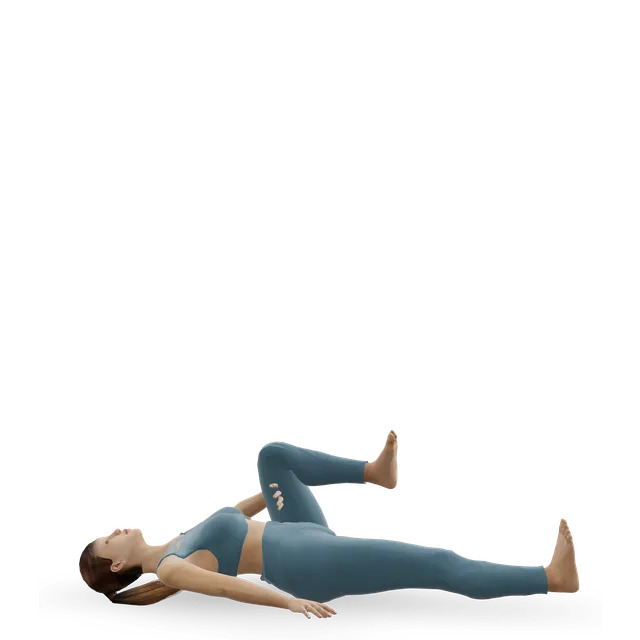
Single knee-to-chest stretch demonstrated on the 3D figure3D demoSingle knee-to-chest stretchBeginner · No equipment

Hold 20 to 30 seconds, 2 to 4 times each side · From the move page's dose (an editorial starting point). Keep it only if bending forward eases your pain; leave it out if it sends pain down a leg, as the move page says

Harder: 90/90 hip lift-off

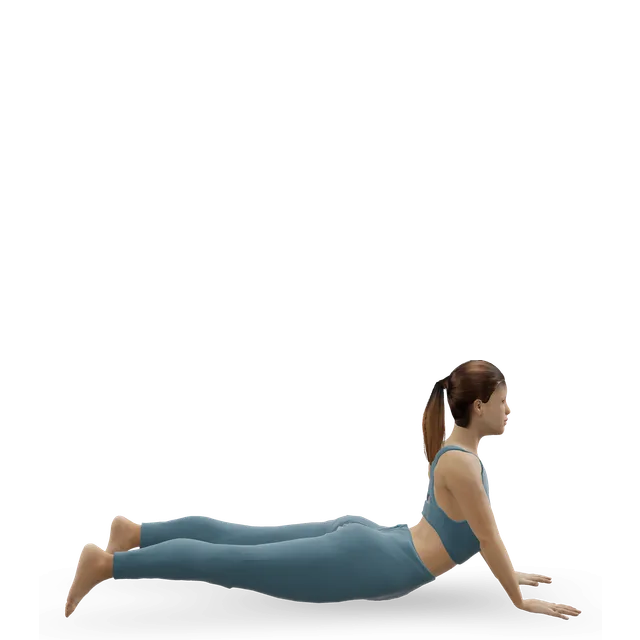
Prone press-up (McKenzie press-up) demonstrated on the 3D figure3D demoProne press-up (McKenzie press-up)Beginner · No equipment

10 slow repetitions, 3 to 5 times a day, while it helps · From the move page's dose (an editorial starting point). Keep it only if arching back eases your pain; skip it with spinal stenosis or if arching brings on leg symptoms, as the move page says

Easier: Sphinx pose (Salamba Bhujangasana)

Hip windshield wipers demonstrated on the 3D figure3D demoHip windshield wipersBeginner · No equipment

10 slow passes side to side, 2 rounds · From the move page's dose (an editorial starting point); like NHS inform's knee rolls, as our bending guide notes

Easier: Supine heel slide · Harder: 90/90 switch

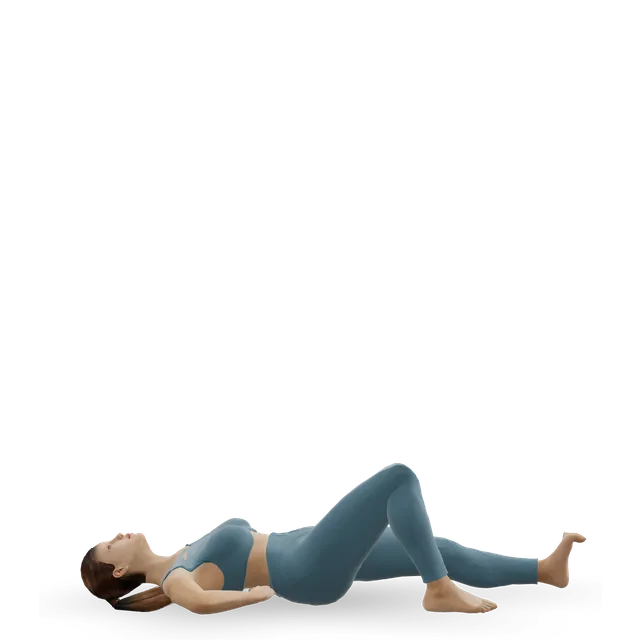
Pelvic tilt into bridge demonstrated on the 3D figure3D demoPelvic tilt into bridgeBeginner · No equipment

8 to 10 slow reps · As in our back pain when bending guide (like NHS inform's pelvic tilt)

Harder: Glute bridge

Move on when: You can walk for 15 to 20 minutes, get through normal daily tasks and bend to a table or worktop, and your back is no worse the next morning (our bending guide's test).

Follow along: a timer, a cue and the next move, one step at a time.
Stage 2

Build: bend, lift light and get down to the floor on purpose

About weeks 2 to 6, 2 or 3 sessions a week plus walking on most days: bend from the hips, build the trunk and hips, and get down to and up from the floor for low cupboards and unpacking, as our bending and vacuuming guides do. The order is our suggestion.

Hip hinge fold demonstrated on the 3D figure3D demoHip hinge foldBeginner · No equipment

5 slow folds, 3 breaths at the bottom · The move page's dose. The unloaded bend from the hips; with osteoporosis, stop when the back starts to round, as the move page says

Harder: Seated forward fold (Paschimottanasana)

Hip-hinge practice demonstrated on the 3D figure3D demoHip-hinge practiceBeginner · No equipment

2 to 3 sets of 10 · As in our back pain when bending guide

Harder: Kettlebell deadlift

Glute bridge demonstrated on the 3D figure3D demoGlute bridgeBeginner · No equipment

2 to 3 sets of 10 · As in our back pain when bending guide

Easier: Pelvic tilt into bridge · Harder: Single-leg glute bridge

Bird dog demonstrated on the 3D figure3D demoBird dogBeginner · No equipment

2 to 3 sets of 6 to 8 each side, 3 to 5 s holds · As in our back pain when bending guide. Pad your knees

Easier: Bird dog, one limb at a time · Harder: Bear crawl

Sit to stand from a chair demonstrated on the 3D figure3D demoSit to stand from a chairBeginner · A bench or box

3 sets of 8 to 10 · As in our back pain when bending guide. The bend at the hips and knees you'll use to pick up a box

Easier: Sit to stand, pushing on the thighs · Harder: Bodyweight squat

Get up and down from the floor demonstrated on the 3D figure3D demoGet up and down from the floorBeginner · No equipment

5 to 8 slow cycles down and up, changing the leading leg · From the move page's dose (an editorial starting point). For unpacking low cupboards; kneel on a cushion, and with acute back pain check which positions are allowed first, as the move page says

Easier: Sit to stand from a chair · Harder: Bodyweight get-up

Move on when: Every set feels controlled, you can lift a light box from a low shelf and from the floor, close to you, and your back is no worse the next morning (editorial).

Follow along: a timer, a cue and the next move, one step at a time.
Stage 3

Strengthen: lift, carry, climb and turn with your feet

From about week 6, 2 or 3 sessions a week, and ongoing: loaded lifting from the floor held close, carrying on one side and up steps, and resisting a twist, while heavy lifting and moving comes back by the written steps below. Keep it going after the pain has gone: exercise with education is what lowered the chance of the next episode in trials. How lifting comes back is our suggestion.

Kettlebell deadlift demonstrated on the 3D figure3D demoKettlebell deadliftBeginner · A kettlebell

3 sets of 8 to 10, light to start · As in our back pain when bending guide. The loaded lift from the floor, the weight close: practice for a box

Easier: Hip-hinge practice · Harder: Dumbbell Romanian deadlift

Dumbbell goblet squat demonstrated on the 3D figure3D demoDumbbell goblet squatIntermediate · A dumbbell

3 sets of 8 to 10 · As in our back pain when bending guide. Holding a load close to your chest

Easier: Bodyweight squat · Harder: Barbell front squat

Suitcase carry demonstrated on the 3D figure3D demoSuitcase carryIntermediate · A dumbbell + A kettlebell

3 walks of 20 to 30 m each side · As in our back pain when bending guide. Carrying on one side; if you can't stay level, the weight is too heavy, as the move page says

Easier: Farmer's carry · Harder: Overhead carry (waiter's walk)

Step-up demonstrated on the 3D figure3D demoStep-upBeginner · A step

3 sets of 8 to 10 each leg, low step first · As in our vacuuming guide (from our knee pain guide). Stairs, then stairs with a light load

Easier: Low step-up · Harder: Dumbbell step-up

Half-kneeling Pallof press demonstrated on the 3D figure3D demoHalf-kneeling Pallof pressBeginner · A band + An anchor point

2 to 3 sets of 8 to 10 each side · As in our back pain when bending guide. It trains the trunk to resist a twist: turn with your feet in doorways; pad the knee

Harder: Pallof press

Side plank demonstrated on the 3D figure3D demoSide plankIntermediate · No equipment

3 holds of 20 to 30 s each side · As in our back pain when bending guide

Easier: Knee side plank · Harder: Side plank with leg lift

Move on when: Our suggestion: a day of lifting and carrying, in spells with breaks, leaves your back no worse the next morning. Keep two strength days a week. If it flares, go back to the stage 1 moves for a few days, not to bed, then build again.

Follow along: a timer, a cue and the next move, one step at a time.

What to change for now

Moving house with a sore back, or to spare it (written steps)

Our 3D figure can't show these. They come from the HSE's guidance for work, used here at home, and small lab studies; no study has tested any of them for back pain after a move, none promises that a technique prevents injury, and where a step is our suggestion, it says so.

  • 1. Book help early: professional movers or friends for furniture and heavy boxes, and a sack truck, trolley or furniture sliders for the rest. The HSE says putting the load on a trolley and pushing it is one way of avoiding carrying.
  • 2. Smaller boxes: heavy things such as books in small boxes, light things in big ones, boxes with handholds, and nothing so big you can't see over it.
  • 3. Spread it out: pack a few boxes a day over a week or two, rather than all in one day (our suggestion, from the trigger studies).
  • 4. Plan each lift and clear the route first, especially stairs and doorways (the HSE).
  • 5. Slide the load towards you, keep it close to your waist, start with a slight bend of your back, hips and knees, and turn with your feet, not your back (the HSE).
  • 6. Don't lift more than you can easily manage; two people for anything heavy or awkward, agreeing who leads (the HSE; the team lifting lab study).
  • 7. For long lifts, rest the load halfway on a table or the stairs (the HSE), and rest on landings when carrying up stairs (our suggestion).
  • 8. Take breaks between loads, alternate heavy and light jobs (the HSE suggests varying work so one set of muscles rests while another works), and stop when you're tired or distracted.
  • 9. Unpack at waist height on a table, and kneel or sit on a low stool for floor-level jobs (our suggestion, as in our bending guide).
  • 10. After the move: a proper bed as soon as you can, a short walk the next morning, and the stage 1 moves (our suggestion).

Sources 23, 8, 24, 20, 26, 6, 7

Heavy lifting comes back (written steps)

No trial has tested how lifting should come back after back pain. These steps are our suggestion, built on the HSE's guidance and the trigger studies.

  • 1. Light loads close to you first, from waist height, then a low shelf, then the floor.
  • 2. Then heavier loads, one change at a time: weight, height, distance or how many.
  • 3. Keep to well under the HSE's guideline weights while your back is sore; they are workplace filters, not targets.
  • 4. Long lifting days only when a normal day's lifting leaves your back no worse the next morning.

Source 8

Positions to swap, and why

Habit or positionWhy it mattersInstead
Packing everything into a few big, heavy boxesWide, bulky loads loaded the back heavily however they were lifted, and the HSE asks for lighter, less bulky loads.Smaller boxes with handholds; the kettlebell deadlift practises the close lift.Try: Kettlebell deadlift
Doing the whole move in one dayHeavy loads, tiredness and distraction were among the strongest short-term triggers of a new episode.Spread packing and lifting over days, with breaks between loads.
Lifting a heavy box at arm's length, or reaching over a car bootHolding a load away from the body raised disc pressure, and the HSE's guideline weights fall with the arms stretched out.Slide it towards you first, then lift it close; the goblet squat trains holding a load close.Try: Dumbbell goblet squat
Twisting with a load in a doorway or on the stairsThe HSE says turning by moving your feet is better than twisting and lifting at the same time.Turn with your feet; the half-kneeling Pallof press trains resisting a twist.Try: Half-kneeling Pallof press
Carrying a box you can't see over down the stairsThe HSE's carrying guidance assumes the load doesn't block your view, and a fall is a bigger risk than the back.Smaller loads, a clear route, a free hand for the rail and someone guiding.
Lifting heavy furniture aloneTwo-person lifts lowered the load on the lower spine by about 20% each in a lab study.Two people, a trolley or movers.
Lifting while distracted, rushed or exhaustedBeing distracted during a task raised the odds of a new episode the most in the trigger study.One lift at a time, with your attention on it; stop when you're tired.
Wearing a back belt to protect your backBelts didn't prevent back pain or injury in large studies, and NICE says don't offer them.Lighter, closer, shared loads, and strength in stage 3.
Staying in bed after the moveThe NHS says don't stay in bed for long periods.Short walks through the day.Try: Treadmill walking
Toe touches or bouncing forward bends, if bending sends pain down a legThe move page says leave it out if bending forward sends pain down a leg.The hip hinge fold, within comfort.Try: Hip hinge fold
Asking for a scan to see what's damagedNICE advises against routine imaging, and disc changes are common in people without back pain.Get checked if a warning sign appears.

Routines to follow

More moves for this area

Questions people ask

Why does my back hurt after moving house?

Usually it's ordinary back pain after more lifting, carrying, bending and twisting than your back is used to, often set off by a heavy or awkward lift when you were tired or distracted. It isn't a sign of damage, and most new back pain improves a lot within 6 weeks.

How long does back pain from moving last?

The biggest change usually comes in the first couple of weeks, and most back problems have improved within 6 weeks, NHS inform says. See a GP if it isn't improving after a few weeks, and get help sooner for any warning sign. No one can promise a date.

Should I rest or keep moving?

Keep moving: the NHS says stay active and don't stay in bed for long periods. Short walks, the gentle moves in stage 1 and heat for stiffness help. Leave heavy lifting for now.

Did I pull a muscle or slip a disc?

Pain across the low back, stiff to move, with no pain down the leg, is ordinary back pain, often called a pulled muscle. Pain, tingling or numbness down one leg below the knee is sciatica, usually from a disc, and our sciatica guide covers it. Both usually settle.

What's the right way to lift boxes?

The HSE's advice: plan the lift, keep the box close to your waist, start with a slight bend of your back, hips and knees, turn with your feet rather than twisting, and don't lift more than you can easily manage. No technique has been shown to prevent back pain, so lighter boxes, help and a trolley matter more.

Should I lift with my legs, not my back?

A full squat isn't proven safer than bending, and rounding the back while lifting wasn't a risk factor in studies. A slight bend of the back, hips and knees, with the load close, is the HSE's advice.

Will a back belt protect me while I move?

No: back belts didn't prevent back pain or injury in large studies, and NICE says don't offer them for back pain. Lighter boxes, a trolley and a second pair of hands do more for your back than a belt.

How heavy a box can I safely lift?

There's no safe weight for everyone. The HSE's workplace guideline weights for a load held close are highest around waist height (25 kg for men and 16 kg for women) and much lower near the floor, and it says they aren't safe limits. With a sore back, lift much less and get help.

Can I carry boxes upstairs with a sore back?

Carry small, light boxes, with a clear route and a free hand for the rail, rest on the landing, and leave heavy items to two people or movers. Our stairs guide covers the stairs themselves.

Could chest pain while lifting be my heart?

It can be. Heavy exertion can trigger a heart attack, mostly in people who don't usually exercise, so stop at once. Call 999 for chest pain, or pain spreading to the arm, jaw or back, with breathlessness or sweating.

I'm over 50 and my back suddenly hurt after lifting a box. What should I do?

See a GP: sudden back pain after a minor lift from 50, or with long-term steroid tablets, can be a spinal fracture from thin bones. Numbness around the genitals or bottom, or weakness in both legs, is a 999 call.

When should I worry about back pain after moving?

Call 999 for numbness around your genitals or bottom, new bladder or bowel problems, weakness in both legs, or back pain with chest pain. Get a same-day check for back pain with a fever or feeling unwell, or pain that is severe and getting worse quickly. In the US, call 911 where this page says 999.

Other pain guides

Sources

  1. NHS · Back pain
  2. NHS inform · Back problems
  3. Wallwork 2024 · How new and persistent low back pain changes over a year: 95 studies (systematic review and meta-analysis, CMAJ)
  4. da C Menezes Costa 2012 · The course of new and persistent low back pain: 33 cohorts, 11,166 people (meta-analysis, CMAJ)
  5. Coenen 2014 · Lifting at work and back pain: 8 cohort studies (meta-analysis, Occup Environ Med)
  6. Steffens 2015 · What sets off a new episode of low back pain: 999 people (case-crossover study, Arthritis Care Res)
  7. Machado 2016 · Short-lived activities and back pain that lasts or doesn't, in the same 999 people over 12 months (case-crossover study, Spine J)
  8. Health and Safety Executive · Manual handling at work: a brief guide (INDG143, 2020)
  9. Mittleman 1993 · Heavy exertion as a trigger of heart attacks in 1,228 people (case-crossover study, N Engl J Med)
  10. Willich 1993 · Strenuous exertion as a trigger of heart attacks in 1,194 people (case-control and case-crossover study, N Engl J Med)
  11. NHS · Heart attack: symptoms
  12. NHS · Angina
  13. NHS · Septic arthritis
  14. NICE · Low back pain and sciatica in over 16s: assessment and management (NG59, guideline)
  15. Brinjikji 2015 · Spine changes on scans in 3,110 people without back pain: 33 studies (systematic review, AJNR Am J Neuroradiol)
  16. Verbeek 2011 · Lifting advice, training and aids for preventing back pain: 9 trials, 20,101 workers (Cochrane systematic review)
  17. Martimo 2008 · Lifting training and equipment for preventing back pain: 6 trials, 17,720 workers (systematic review, BMJ)
  18. van Dieën 1999 · Stoop or squat: lab studies of lifting technique (review, Clin Biomech)
  19. Saraceni 2020 · Bending the lower back while lifting and back pain (systematic review and meta-analysis, J Orthop Sports Phys Ther)
  20. Health and Safety Executive (HSE) · Manual handling at work: good handling technique
  21. NHS · Sciatica
  22. Health and Safety Executive · Manual handling at work: avoid hazardous manual handling
  23. Health and Safety Executive · Pushing and pulling loads: overview (RAPP tool guidance)
  24. Kingma 2010 · Lifting a box too wide to fit between the knees, in 11 men (lab study, Ergonomics)
  25. Wilke 1999 · Pressure inside a lower back disc in daily life, in one volunteer (measurement study, Spine)
  26. Dennis 2002 · Spinal load lifting alone and in pairs, in 10 men (lab study, Ergonomics)
  27. Kingma 2016 · A hand on the thigh and back load when lifting, in 10 men (lab study, J Biomech)
  28. Wassell 2000 · Back belts and back pain and injury in 13,873 retail workers (prospective cohort study, JAMA)
  29. Steffens 2016 · Preventing low back pain: 21 trials, 30,850 people (systematic review and meta-analysis, JAMA Intern Med)
  30. van Duijvenbode 2008 · Lumbar supports for preventing and treating low back pain: 15 studies (Cochrane systematic review)
  31. Dahm 2010 · Advice to stay active against bed rest for new back pain and sciatica: 10 trials (Cochrane systematic review)
  32. Hayden 2021 · Exercise for long-lasting low back pain: 249 trials (Cochrane systematic review)
  33. NHS inform · Exercises for back pain
  34. Smith 2017 · Should exercise be painful? 7 trials of long-lasting muscle and joint pain (systematic review and meta-analysis, Br J Sports Med)
  35. NICE NG65 · Spondyloarthritis in over 16s: diagnosis and management
  36. NICE NG259 · Osteoporosis: risk assessment (2026)
  37. Essex Partnership University NHS Foundation Trust · Vertebral compression fracture (patient leaflet, 2025)

Exercise education, not a diagnosis or treatment plan. It is written from the guidelines and studies listed above; review by a clinician is pending. If your pain follows an injury, is severe, is getting worse, or comes with any warning sign listed on this page, get it assessed. Health disclaimer.