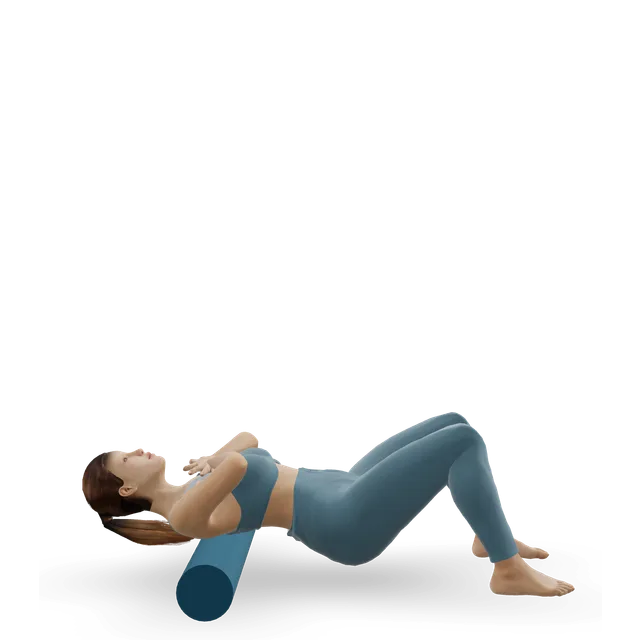
Common, and usually the muscles or the rotator cuffStrong evidence
Shoulder pain is common, and NHS inform lists lifting something awkwardly among its everyday causes. Carrying usually loads the muscle on top of the shoulder (the upper trapezius) under a strap, the rotator cuff tendons that lift and turn the arm, or the muscles around the shoulder blade.
Rotator cuff changes are a normal part of ageing: in 6,112 shoulders, they rose from 9.7% of people aged 20 and under to 62% at 80 and over, with or without symptoms. So a scan showing wear doesn't prove the shopping or the baby caused it.
Sources 1, 2, 3
Under the strapEmerging evidence
In 8 people holding their arms out while wearing a backpack of up to 20 kg, the upper trapezius under the strap tired sooner than the shoulder muscle beside it, which the authors put down to the strap squeezing the muscle and its blood flow. In 10 children, pressure under the straps rose with the load and was higher with the bag hanging low, and pain was greater with the backpack over one shoulder than over both. On a manikin carrying 20 kg, wider straps spread the pressure, and it was lowest with 8 cm straps and the load packed high. These are small lab studies.
Sources 4, 5, 6
One strap, handbags and backpacksEmerging evidence
In 10 children aged 11 to 13, a one-strap bag hitched the shoulder up by about 16 to 18 degrees and bent the spine sideways, while a two-strap backpack kept them close to carrying nothing. In 13 women carrying a handbag of 5% to 10% of their body weight, "The spinal curvature was not affected from carrying a handbag", but the muscles on the carrying side worked harder, and discomfort was felt first in the upper trapezius on that side and the finger muscles. A loaded backpack also pulled children's heads forward and made the neck and upper trapezius work harder. These short lab studies measured posture and muscle activity, not who goes on to have pain.
Sources 7, 8, 9
Lifting, work and the rotator cuffEmerging evidence
In workers, forceful, repeated and raised-arm work and job stress are linked with rotator cuff tendon pain, and a 2024 update found the strongest evidence for raised arms, repetition, force and vibration. Neither review looked at carrying bags, and no included study looked at rotator cuff tears. Baggage handlers who lifted for 10 to 19 years had about twice the rate of hospital-diagnosed shoulder disorders of those with under 3 years, and cabin crew rated carry-on bags their hardest task on the shoulders. These are people lifting at work every day.
Sources 10, 11, 12, 13
Babies and toddlers: small lab studies, mostly with dummiesEmerging evidence
Carrying a baby is a long, lopsided hold that gets heavier every month. In a survey of 227 Nigerian mothers, most of whom carried their babies on their backs, "Low back pain (82.8%) and upper back pain (74.9%) were the most reported musculoskeletal discomforts". In 11 mothers lifting their own 15-week-old babies, lifting from the floor was the most demanding, a car seat added about 4 kg, and at the changing table they bent and twisted sideways.
In a review of 14 small lab studies, mostly in women carrying dummies, carrying in arms was more uncomfortable than using a sling or carrier, because the body is held lopsided; carrying in arms cost about 16% more energy than a sling and loaded the hips and knees more than a front carrier, and a carrier kept walking close to carrying nothing. Carrying a 6 kg dummy on one hip bent and twisted the upper back towards that side, and the authors suggest alternating sides. The baby's weight mattered more for pressure on the shoulders than the style of carrier.
Sources 14, 15, 16, 17, 18, 19, 20, 21
The thumb side of the wrist in new parentsEmerging evidence
De Quervain's, a painful tendon on the thumb side of the wrist, was diagnosed in 0.7% of US women in the year after a birth against 0.2% of other women, and in about 2.1% of Korean women around pregnancy and the months after. A heavier baby or twins didn't raise the risk in one study, and its authors suggest that lifting the baby many times a day with the wrist bent matters more than the baby's weight; that is their hypothesis, not a tested finding. In carers, fathers included, it went with how often they lifted, not the baby's weight. Our De Quervain's guide covers it.
Sources 22, 23, 24, 25, 26
The nerves: from the neck, and under heavy strapsEmerging evidence
Pins and needles or a cold arm with neck pain can come from a nerve in the neck. Heavy pack straps can also press on the nerves of the arm: "Rucksack palsy is a traction or compression injury to the brachial plexus, caused by the shoulder straps of the rucksack." In Dutch soldiers it affected about 25 per 100,000 a year, carrying packs that averaged 40 kg; only 41% had pain, most had tingling, and many had a shoulder blade that stuck out. Single nerves to the shoulder blade and the trapezius can be affected too. Everyday bags are far lighter, so this is rare outside the military (our reading).
Sources 27, 28, 29
Myths: school bags and scoliosis, and carrying on one hipEmerging evidence
Children's backpacks don't cause scoliosis. US orthopaedic surgeons say "Heavy backpacks do not cause scoliosis", reviews by children's orthopaedic surgeons found no link between bag weight or design and a curved spine, and in a screening survey of 1,619 children, heavier bags weren't linked with signs of scoliosis. One short review claims a link, with no numbers in its abstract.
Carrying a baby on one hip bends and twists the upper back and works one side harder at the time, which is why switching sides helps. No study shows lasting damage, and reviews of 41 reviews and of 54 studies found no agreement that postures or the curves of the spine cause back pain.
Sources 30, 31, 32, 33, 34, 20, 35, 36
When it isn't the shoulderStrong evidence
The NHS heart attack page lists chest pain that may spread to the arm, neck and jaw, and the NHS chest pain page names pain that spreads to the left or right arm, so shoulder or arm pain with chest pain, breathlessness or sweating is a 999 call. A blood clot in a leg is more likely in pregnancy and the 6 weeks after a birth, the NHS says, and a clot can rarely form in an arm after heavy, repeated arm work. A fall while carrying can dislocate or break the shoulder. Rarely, cancer. The warning signs cover them.
Sources 37, 38, 39, 40
When a scan matters, and how it usually goesStrong evidence
For ordinary shoulder pain from carrying, no scan is needed at first: the NHS says a health professional examines you and may send you for tests, such as an X-ray. An X-ray matters after a fall with a possible break or dislocation. Sudden weakness lifting the arm after an injury needs a same-day check, because a fresh tear may need a specialist soon, and since cuff changes are common without pain, a scan finding needs to match your symptoms.
The NHS says you usually need about 2 weeks of looking after it yourself before shoulder pain starts to ease, and "It can take 6 months or longer to recover from shoulder pain"; NHS inform says new shoulder pain should begin to settle within 6 weeks in many cases. Across 16 studies, about half of new shoulder problems had fully recovered within 6 months, with high pain at the start the clearest sign of a slower course. Strap aches often ease within hours to days of lightening the load (our reading). No one can promise a date.
Sources 1, 41, 3, 2, 42