What nobody has countedEmerging evidence
No study counts back pain in hikers. On the Appalachian Trail, 36% of 280 long-distance hikers reported sudden joint pain and 64% blisters; in a later survey of 1,295, 61% reported muscle, joint or bone complaints and 11% stopped their hike because of them. Neither gives a share for the back. On the John Muir Trail, pack strap pain was the third commonest complaint, in 46% of 771 backpackers.
The nearest count of back trouble comes from soldiers, not hikers: after one hard 20 km march carrying 46 kg, 24% of 335 soldiers were injured, and back problems made up 23% of the injuries. Military reviews call lower back injuries from load carriage not uncommon. Soldiers carry far more than most hikers, for longer, so this page's map is built from those studies, lab and modelling studies of packs and slopes, studies of the conditions, and NHS, NHS inform and NICE pages, and it says so.
Sources 1, 2, 3, 4, 5, 6
What a pack does to the backEmerging evidence
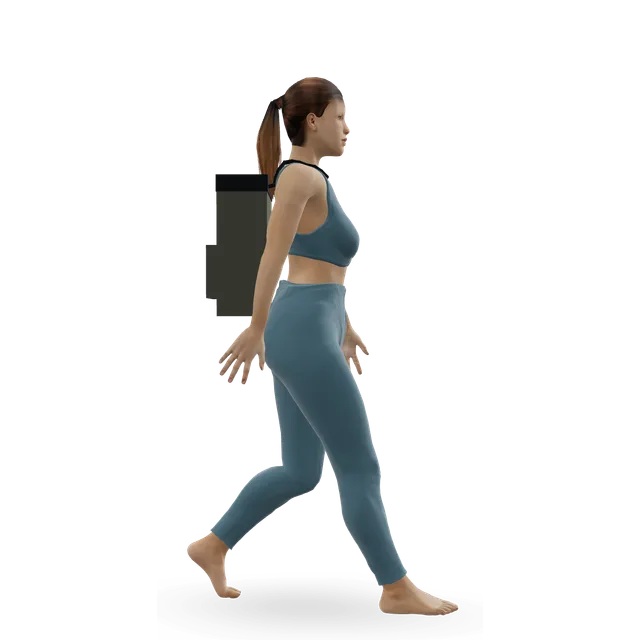
To balance a pack you lean forward. Across 54 studies, carrying a backpack increased trunk lean; in 20 soldiers the trunk bent further forward as the load rose from 8 to 50 kg, with the head pushed forward too; and in infantry soldiers the trunk leaned forward 10 degrees or more with packs of 10.7 to 17.5 kg. In 15 experienced women hikers walking 8 km, a pack of 20% of body weight already changed their trunk posture and raised shoulder discomfort, and the longer they walked, the more their shoulders, neck and upper back ached.
Inside the back, a computer model of 6 Marines carrying 38 kg found higher forces through the lowest lumbar joint with a pack than without, similar whether the load hung from the shoulders or the hip belt. In 6 adults scanned upright, a pack of 10% of body weight squashed the two lowest discs, though it didn't change the overall curve. The back muscles work less than you might expect: a review says their activity is lower with a pack than without until loads pass 30 to 40 kg. None of these studies measured back pain.
Sources 7, 8, 9, 10, 11, 12, 13
How the load is carried: the hip belt and packingEmerging evidence
In 12 Marines scanned upright, an evenly spread load didn't change the shape of the lower back, but with 80% of it at the back, the base of the lower back bent forward more. A hip belt shares the load: in one lab study of 11 men carrying up to 40.8 kg, about 30% of the vertical force went through the belt to the pelvis and the shoulders carried the rest, and the pack pushed forward on the lower back at every step. In a computer model of walking on slopes with a heavy pack, the belt lowered the load on the lower back only on the way down. That one lab study and one model are the whole evidence for the belt's share.
Discomfort follows pressure, and the authors of a pack fitting study found the hips tolerate pressure better than the shoulders. Military reviews say a load close to the body keeps you nearer upright, and that hip belts take pressure off the shoulders and add comfort. So a well-packed bag with the belt done up spreads the load; it doesn't remove it.
Sources 14, 15, 16, 6, 17
Uphill and downhillEmerging evidence
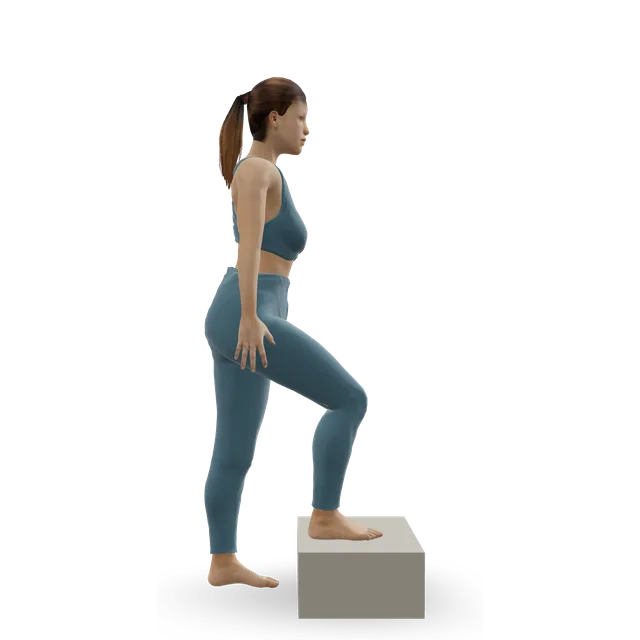
In 8 healthy adults on a treadmill, steeper climbs tipped the pelvis and trunk progressively forward, and descents tipped them back. In 20 healthy women walking on 5 degree slopes, the lower back sat 3 to 4 degrees more arched going down and less arched going up, and it moved through a bigger range downhill; the authors suggested that people for whom arching is a problem avoid long downhill walking, and that level or uphill may be easier.
With a heavy pack, a model of walking on 10 degree slopes with 40% of body weight on the back found the largest forces in the lower back walking uphill with the load on the shoulders, about 1.6 times body weight of shear and 5.2 times of compression, and the authors concluded that walking uphill with heavy loads may raise the risk of overuse injury. That is one modelling study, with no pain measured. Our reading: a long climb with a heavy pack is the hardest work for the back, and long descents arch it more, which matters most if arching is what hurts.
Sources 18, 19, 17
How the causes are told apartEmerging evidence
An ache across the lower back that builds through a long day with a pack and eases when you take it off, with no leg symptoms, is ordinary back pain; NHS inform lists doing more activity than you normally would among the things that bring it on. Pain that is worse on long descents, standing still or arching back, easing when you lean forward, from mid-life, is often labelled facet joint pain, but the label can't be confirmed: in 176 people only 15% responded to a confirming facet injection, no examination test for the facet joints was informative in a review, and facet arthritis on CT scans had no link with back pain in a community study.
Buttock or leg ache, heaviness or tingling that comes on with walking or standing and eases when you sit or lean forward, usually from 50, is the pattern of lumbar spinal stenosis: a review describes pain provoked by arching and relieved by bending forward, and puts it at about 11% of US adults. In a treadmill test of 45 people, those with stenosis walked longer on a slope than on the flat. That climbs suit it better than descents or long flat stretches is our reading, extrapolated from that test and the lab study above, not from a hiking study.
Pain down one leg below the knee with tingling, numbness or weakness is sciatica, which the NHS says usually gets better in a few weeks to a few months. A calf, thigh or buttock ache after a set distance that goes within a few minutes of standing still can be narrowed arteries. An ache across the shoulders or between the shoulder blades that builds through the day is usually the pack straps, and numbness, tingling or weakness in an arm under the straps can be the straps squeezing the nerves to the arm, which a review of soldiers calls rucksack palsy. Chest pain or tightness on a climb that eases with rest is not the back: see the warning signs.
Sources 20, 21, 22, 23, 24, 25, 26, 27, 28, 29, 30, 31, 32, 33
When a scan helps, and how it usually goesStrong evidence
Not usually. The National Institute for Health and Care Excellence (NICE) says don't routinely offer imaging for low back pain outside specialist care. In scans of 3,110 people without back pain, disc degeneration rose from 37% at 20 to 96% at 80. Stenosis is confirmed with a scan only when treatment depends on it, and the warning signs decide who needs tests.
Across 33 groups of 11,166 people, new back pain fell from 52 to 23 out of 100 by 6 weeks and to 6 by a year; NHS inform says new back problems should begin to settle within 6 weeks. With stenosis followed for up to 3 years without surgery, about a third improved and about half stayed the same. Back pain often comes back, which is why keeping walking going, as in the trial that delayed the next bout, is worth it. No one can promise a date.
Sources 34, 35, 24, 36, 20, 37