Pain guide · Hip pain

Hip pain when hiking: uphill and downhill, the outer hip, the groin, the pack, poles and what helps

Hip pain when hiking is usually muscles and tendons around the hip meeting more climbing, descent, distance or pack weight than they are used to. In lab studies of healthy young adults, climbs more than doubled the hip's work, so the front of the hip and the buttock take the strain on the way up; long days load the outer hip tendons; and descents add a little load to the hip and a lot to the knee. Nobody has counted hip pain in hikers, so this map rests on those lab studies, not on counts. Where it hurts is the best clue: a pulling ache at the front of the hip is usually the hip flexors, a deep groin pinch the hip joint, the bony point on the outside the gluteal tendons, and a burning patch on the outer thigh a nerve squeezed by the hip belt. A slower pace on climbs, poles, a lighter pack and shorter, flatter routes usually help, and hiking doesn't wear out hips.

This guide starts with the signs that need help, from a 999 call for severe hip pain after a fall or a leg you can't put weight on, to a same-day check through the National Health Service's 111 line (NHS 111) or a general practitioner (GP) for a hot, swollen hip with a fever, a swollen, throbbing calf after a long day or journey, or a child with hip, thigh or knee pain and a limp, and how to call Mountain Rescue. It then maps the causes by where it hurts, explains what the studies of slopes, packs and poles show, and don't, shows how to change your hikes today, and gives a three-stage plan with a 3D demo of every move, back to the hills.

When to get help first

Exercise is for pain that has been checked or is clearly mild and settling.

Get urgent medical help if

  • Call 999 or go to A&E: severe hip pain after a fall or injury, or you cannot stand, walk or put weight on the leg. In an older adult this can be a broken hip; the leg may be at an odd angle or look shorter. Don't drive yourself.
  • Call 999 or go to A&E: tingling or loss of feeling in the hip or leg after an injury.
  • Ask for an urgent GP appointment or get help from NHS 111 if you have severe hip pain that started suddenly but you've not had a fall or injured your hip, your hip is swollen and feels hot, the skin around your hip has changed colour, or you have hip pain, feel generally unwell and have a high temperature (or feel hot, cold or shivery). A hot, swollen hip with a high temperature can be a joint infection.
  • Call 999 or go to A&E if your child gets sudden pain in their hip, knee or thigh (hip problems can sometimes be felt in the thigh or knee) or cannot put any weight on their leg. If your child is limping, ask for an urgent GP appointment or get help from NHS 111 the same day. This applies to teenagers too, and in some children knee pain is the only sign.
  • Go to A&E: a teenager with sudden pain at the front or top of the hip bone after a sprint, kick or jump, often with a pop. A piece of growth plate can pull off the pelvis (an avulsion fracture), and it needs an X-ray.
  • Same day, and stop the long walks now: groin or front-of-hip pain, sometimes felt in the thigh or knee, that built up after you walked much more than usual (a long-distance walk, a hike, a new job on your feet or military training), and hurts with every step, at night or makes you limp. Keep weight off the leg, using crutches if you have them, and get an urgent GP appointment or help from NHS 111 the same day: a stress fracture of the hip (femoral neck) needs urgent imaging.
  • Call 999 or go to A&E if you have sciatica on both sides, weakness or numbness in both legs that's severe or getting worse, or numbness around or under your genitals, or around your bottom (anus); if you find it hard to start peeing, cannot pee or cannot control when you pee; or if you do not notice when you need to poo or cannot control when you poo, and this is not normal for you. These could be symptoms of a serious back problem that needs to be treated in hospital as soon as possible.
  • Call 999 or go to A&E now if you have a femoral hernia (a small lump at the top of your thigh, in your groin) and very bad tummy pain, you feel sick or you're being sick, you cannot fart or poo, you have a high temperature or you feel hot, cold or shivery, or you've suddenly become confused. Do not drive to A&E. With any other hernia and pain in or around it, a bloated tummy, feeling or being sick, vomiting blood or vomit that looks like coffee grounds, constipation, a high temperature or feeling hot, cold or shivery, or sudden confusion, get help from NHS 111.
  • Call 999: chest pain that started suddenly, or spreads to your arm, neck or jaw, or your chest feels tight. This could be a heart attack. Do not drive yourself to A&E.
  • Get help from NHS 111: pain or tightness in your chest, neck, shoulders, jaw or arms that comes and goes, often brought on by exercise, stress, emotion or cold and easing after a few minutes' rest. It can be angina, a sign of a heart problem. If you've been diagnosed with angina, get help from NHS 111 too if it feels worse than before, is happening more often, lasts longer or happens when you're resting.
  • Call 999 or go to A&E if breathing suddenly becomes difficult, if pain in your chest or upper back comes on suddenly with breathlessness or a very fast heartbeat, or if someone passes out. Do not drive yourself. It can be a blood clot that has reached the lungs.
  • Same day (urgent GP appointment or NHS 111): throbbing pain in one leg (rarely both), usually the calf or thigh; swelling in one leg (rarely both); red, blue or darkened skin around the painful area, which may be harder to see on brown or black skin; or swollen veins. This can be a deep vein thrombosis (DVT). It is more likely after surgery, a hospital stay, 3 or more days in bed, a journey of over 4 hours, pregnancy or a recent birth, cancer, a previous clot, or oestrogen-containing contraception or HRT.
  • Ask for an urgent GP appointment or get help from NHS 111: sudden swelling, redness, heat and pain in the calf, which could be a blood clot. Go to A&E: severe pain after an injury, which can mean a broken bone; or you cannot put any weight on the leg.
  • Call 999 or go to A&E: a foot or leg that is suddenly cold, pale, numb, weak or very painful without an injury. A sudden loss of blood supply is a vascular emergency.
  • For an injury, illness or someone lost or overdue, dial 999 or 112 and ask for the Police, then Mountain Rescue.

See a doctor or physiotherapist if

  • Hip pain that stops normal activities or disturbs sleep, keeps getting worse or keeps coming back, or has not improved after 2 weeks of looking after it at home.
  • Stiffness lasting more than 30 minutes after waking.
  • Bone pain that is constant or worse at night, especially with a lump, unexplained weight loss, fever or tiredness, or a past history of cancer.
  • Hip or groin pain that hasn't settled after 6 weeks, especially with a normal X-ray, or new hip pain if you take high-dose steroids, drink heavily, or have sickle cell disease or lupus: ask your GP about an MRI (magnetic resonance imaging) scan and a hip specialist. It can be avascular necrosis, which an X-ray can miss early on.
  • A lump in the groin, upper thigh or tummy, especially one that appears when you cough or strain and goes when you lie down: see a GP, as it may be a true hernia. A femoral hernia (a small lump at the top of the thigh, mainly in women over 50, though it can happen to anyone) needs treating in hospital.
  • A lump in your groin with hip or groin pain: contact your GP. For pain or swelling around your testicles, ask for an urgent GP appointment or get help from NHS 111.
  • Painful catching or locking deep in the groin, or a hip that gives way: get it assessed.
  • Outer hip pain that hasn't improved within 6 weeks of following this advice, or that gets worse: talk to a GP or physiotherapist. In many areas you can refer yourself.
  • A stress fracture from ordinary activity, more than one stress fracture, periods that have stopped or become irregular, or worries that you're eating too little for your training: see a GP about bone health and energy intake.
  • Leg ache when you walk that goes after a few minutes' rest: possible peripheral arterial disease (narrowed leg arteries), especially if you smoke or have diabetes.
  • Buttock or leg pain, heaviness or tingling that comes on when you stand or walk and only eases when you sit or bend forward, or the distance you can walk keeps shrinking: see a GP or physiotherapist (possible spinal stenosis). Leg weakness that is getting worse, or numbness around your genitals or bottom, is urgent (above).
  • Pain, tingling or numbness spreading below the knee that isn't settling after a few weeks, is getting worse or stops your normal activities: see a GP.

Where does it hurt?

Location narrows the likely causes; it does not diagnose.

A pulling ache at the front of the hip or top of the thigh on climbs and high steps, as you lift the knee

Usually the hip flexors working harder than usual: the commonest front-of-hip pattern on climbs in our reading of lab studies, though nobody counts it.

Read: Hip flexor pain →
A deep pinch in the groin on high steps, steep climbs or sitting low on a rock, in a younger active adult

Possibly hip impingement or a labral problem, which needs symptoms, examination and imaging together to diagnose.

Read: Hip impingement (FAI) →
A deep groin, buttock or front-of-thigh ache from mid-life, stiff after sitting and for less than 30 minutes in the morning

Often hip arthritis, which is diagnosed without an X-ray. Hiking with poles is a sensible way to keep active with it.

Read: Hip arthritis →
The bony point on the outside of the hip, sore after long days, on uneven or sloping paths, and to lie on at night in a tent

Usually the gluteal tendons (often called hip bursitis). Education and strengthening beat an injection in a large trial.

Read: Hip bursitis (gluteal tendinopathy) →
A burning, tingling or numb patch on the front and outer thigh under the hip belt, with no weakness

A squeezed skin nerve (meralgia paresthetica). Loosen or move the belt and lighten the pack; it almost always settles.

Read: Meralgia paresthetica →
Deep in the buttock or at the sitting bone on steep climbs

The buttock muscles working hard on the way up, or high hamstring tendon pain, which builds gradually and is worse sitting.

Read: High hamstring tendinopathy →
The inner thigh close to the groin after a slip, a big stride or a scramble

Usually an adductor (groin) strain.

Read: Groin strain →
A lump in the groin or at the top of the thigh, sometimes with a heavy, dragging feeling

A possible hernia: see a GP, and read the warning signs for when it is urgent.

Read: Groin pain →
Groin or front-of-hip pain that built up after far more walking than usual, hurting with every step or at night

A possible stress fracture of the hip, rare but serious: stop the long walks and get it checked the same day.

Read: Stress fracture →
Buttock pain with low back pain, or pain down the leg below the knee

Pain from the back: our lower back and hip pain and sciatica guides help tell them apart, and our lower back pain when hiking guide covers the back on the trail.

Read: Lower back and hip pain →
A cramping ache in the calf, thigh or buttock on walking that goes after a few minutes standing still

Possibly narrowed leg arteries, more likely if you smoke or have diabetes: see a GP.

Read: Calf pain when walking →
Thighs and buttocks sore for a few days after a big descent or a first long day

Usually muscle soreness, which fades within days. A short practice descent before a big trip helps.

Read: Hip pain after a workout →
A child or teenager with hip, thigh or knee pain or a limp after a walk

Hip problems in children can be felt in the thigh or knee: get it checked the same day, as the warning signs say.

Read: Hip pain in children →
The knee when hiking, or the hip when you walk on the flat, on stairs or on the treadmill

Our knee pain when hiking guide and our hip pain when walking, on stairs and on the treadmill guides cover each.

Read: Knee pain when hiking →
The shin on long days, descents or with a pack

Our shin pain when hiking guide covers shin splints, a stress fracture, descents, the pack and laces, and a plan back to the hills.

Read: Shin pain when hiking →

Understand it

What nobody has countedEmerging evidence

No survey of hikers gives a share for hip pain. On the Appalachian Trail, 36% of 280 long-distance hikers reported acute joint pain, and 61% of 1,295 reported a muscle or joint complaint, 28% from overuse; on the John Muir Trail, pack strap pain was the third commonest complaint (46%). Across 7 studies of 17,757 injured hikers, the legs were the commonest injured site in every study, and most injuries were minor; in 5,665 hikers who fell in the Austrian Alps, 37.8% of non-fatal injuries were to the ankle and foot.

So the map on this page is built from lab studies of slopes, packs and poles, mostly in healthy young adults, military load carriage, studies of the conditions, and NHS, NHS inform and NICE pages, not from counts of hikers, and it says so.

Sources 1, 2, 3, 4, 5

Uphill is hip workEmerging evidence

In 20 adults, the hip's pushing work more than doubled from level ground to a 9 degree slope, and on an 18 degree ramp it rose almost six times. In 9 adults on steep slopes, the extra effort going up came mainly from the hip extensors (the buttock and back of the hip), and in 11 men the hip bent further at each step as the slope steepened. Uphill walking raised the modelled forces through every leg joint as the slope steepened in 18 men.

So climbs ask the buttock muscles to push and the front of the hip to bend further, step after step. A front of the hip or a buttock that aches on a long climb is usually muscles and tendons working harder than usual (our reading).

Sources 6, 7, 8, 9, 10

Downhill is mostly the knee, a little more for the hipEmerging evidence

In 12 people, the turning forces at the hip were only slightly larger walking downhill, while the knee's were much higher. Modelling in 18 men found downhill walking raised the force through the hip and the work of the big buttock muscle, while the knee took a larger share of the braking. The only measured hip forces come from 6 people with instrumented hip replacements: the peak was 300% of body weight walking on a flat treadmill, 319% on a 10% climb and 335% on a 10% descent.

Descents matter for another reason: 75.3% of hikers who fell in the Austrian Alps fell on the way down.

Sources 11, 10, 12, 7, 13, 5

The pack, the hip belt and long daysEmerging evidence

In a computer model of 6 Marines carrying 38 kg, a pack raised the forces through the hip joint, and they were similar whether the weight hung from the shoulders or the hip belt. In 9 men carrying 15 to 25 kg, a tighter hip belt didn't change how they walked. In 15 women hikers carrying up to 40% of their body weight over 8 km, the way they walked changed to absorb the load and became less stable at 30% and 40%; the authors suggested a 30% limit, a ceiling rather than a target. In soldiers, hip belts take pressure off the shoulders and add comfort, and load carriage injuries cluster in the legs.

A long day with a hip belt can also squeeze the skin nerve of the outer thigh: 10 of 280 Appalachian Trail hikers had it, and 98% of the numbness and tingling on that trail had settled at follow-up. The nerve only carries feeling, so there is no weakness.

Sources 14, 15, 16, 17, 18, 19, 20, 21

How the causes are told apartEmerging evidence

A pulling ache at the front of the hip on climbs, as you lift the knee, is usually the hip flexors; a consensus lists hip flexor-related groin pain among the defined causes of groin pain in athletes. A deep pinch in the groin on high steps in a younger active adult can be hip impingement, which needs symptoms, examination signs and imaging together. A deep groin, buttock or front-of-thigh ache from mid-life, stiff after sitting and for less than 30 minutes in the morning, is often hip arthritis, which NICE diagnoses without imaging; hip joint pain was felt in the buttock in 71% of 51 people and never in the lower back.

The bony point on the outside of the hip, sore after long days, on sloping paths and to lie on at night, is usually the gluteal tendons, with pain on standing on one leg, stairs and walking; squeezing the tendons and the knee drifting across are key factors. A burning or numb patch on the outer thigh under the belt is a squeezed skin nerve. The inner thigh after a slip is usually an adductor strain, and a lump in the groin can be a hernia; a femoral hernia is a small lump at the top of the thigh, in the groin. Thighs and buttocks sore for a few days after a big descent are muscle soreness; a short downhill walk a week before cut the damage by 47% to 64% in young men.

Groin or front-of-hip pain that built up after far more walking than usual, hurting with every step or at night, can be a stress fracture of the hip: rare, but a high index of suspicion is needed, a normal X-ray doesn't rule it out, and in military recruits pelvic stress fractures were far commoner in women. A calf, thigh or buttock ache that goes within minutes of standing still can be narrowed arteries. A swollen, throbbing calf or thigh after a long day or a journey of more than 4 hours can be a blood clot. A child or teenager with hip, thigh or knee pain or a limp needs checking: the NHS says a limp with no obvious cause should always be checked by a GP, and a slipped growth plate at the hip usually happens between 11 and 17.

Sources 22, 23, 24, 25, 26, 27, 21, 28, 29, 30, 31, 32, 33, 34, 35, 36, 37, 38

When a scan helps, and how it usually goesStrong evidence

Not at first for most: NICE diagnoses hip arthritis without imaging, gluteal tendon pain is diagnosed by examination, and impingement needs symptoms and examination first, with imaging to confirm. A suspected stress fracture needs imaging the same day, and an MRI (magnetic resonance imaging) scan if the X-ray is normal. A fall with severe pain needs an X-ray, and a groin lump needs a GP to examine it.

The NHS asks for a GP visit if hip pain hasn't improved after 2 weeks at home, and NHS inform says most new hip problems begin to settle within 6 weeks. Muscle soreness after a descent fades within days. Outer hip pain is slower: in the LEAP trial, education and exercise was still ahead of an injection at a year (51 of 65 against 36 of 63 rated a success). For hip-related pain in active adults, exercise should last at least 3 months. Belt numbness almost always settles. No one can promise a date.

Sources 24, 26, 23, 31, 39, 40, 41, 29, 42, 43, 20

What helps, and how strong the evidence is

Pace, step length and poles: lab readings, untested against hip painEmerging evidence

No trial has tested a change to hiking for hip pain. In 192 people with and without hip pain, every hip moment rose with walking speed, and on the flat the hip's work more than doubled from 1.0 to 1.5 metres a second, so slowing down on climbs is the best-supported change. In the one study of step length, cadets carrying 20 kg on the flat found their own step length safest, and in women recruits slower marches at their own step length, with other changes, cut pelvic stress fractures from 11.2% to 0.6%.

Poles: on a steep descent they cut knee loads by 12% to 25% in 8 men; with packs of 15% and 30% of body weight they lowered the turning forces at every leg joint, the hip included, though the study's summary gives no size; after a walk up and down Snowdon they reduced soreness and strength loss; and in 10 people with hip arthritis they lowered the outer hip muscle's work (about 41% to 45% of its maximum against 55%). But on the flat they didn't unload the knee, and in 6 people with hip replacements fitted with sensors, poles didn't lower the peak force through the hip on the flat or on 10% slopes. A review concludes they reduce leg loading but cost a little more effort, and help most with a heavy pack. A stick held in the hand opposite a painful arthritic hip cut the side-to-side hip load by about a quarter and walking pain from 42 to 26 out of 100. In a survey of 1,295 long-distance hikers, poles or sticks and training beforehand went with fewer complaints, an association rather than proof.

Sources 44, 6, 45, 33, 46, 47, 48, 49, 50, 51, 13, 52, 53, 2

Outer hip pain: education and exercise beat an injectionStrong evidence

In the LEAP trial of 204 people aged 35 to 70 with outer hip (gluteal tendon) pain, education plus exercise (14 physiotherapy sessions over 8 weeks) was a success at 8 weeks for 51 of 66, against 38 of 65 after a steroid injection and 20 of 68 with wait and see, and stayed ahead of the injection at a year. The education focused on avoiding positions that squash the tendons against the bony point of the hip and on building load gradually; a review names cutting down sustained or repeated hip adduction (the knee drifting across) as one target.

Sources 42, 26

Hip arthritis: exercise is safe and recommended, with small average benefitsMixed evidence

NICE says offer exercise tailored to everyone with osteoarthritis, warns that joint pain may rise when you start, and suggests considering walking sticks. The 2026 Cochrane update of 18 trials (1,368 people) found exercise probably improves hip arthritis pain and function slightly, by amounts unlikely to be clinically meaningful. In 152 people aged 60 and over, supervised Nordic walking (walking with poles) improved function more than strength training or home exercise, with gains to 12 months. So walking and hiking with poles is a sensible, tested way to stay active with hip arthritis, not a cure.

Sources 24, 54, 55

Front-of-hip and groin pain in active adults: give exercise 3 monthsEmerging evidence

A consensus of hip specialists recommends exercise-based treatment for at least 3 months for hip-related pain in young and middle-aged active adults, and says physical activity, which may include sport, is recommended. For impingement, conservative care, rehabilitation and surgery are all options. Our hip flexor, hip impingement and groin strain guides cover their plans.

Sources 43, 23

Soreness and descents: practise firstEmerging evidence

In young men, 5 minutes of downhill walking a week before a 40-minute descent cut strength loss, soreness and markers of muscle damage by 47% to 64%, and a 20-minute descent protected for more than 4 weeks in another trial; poles reduced soreness after a mountain walk. These are small trials in young adults, and they measured the thigh rather than the hip.

Sources 29, 56, 48

The pack: lighter is better, but the evidence is mixedMixed evidence

In 128 long-distance hikers, heavier packs went with more numbness and tingling (35% with 4.5 to 9 kg, 69% with more than 14 kg) but not with more joint pain or sprains. A heavier pack for your body weight went with injury on 12-day treks in 1,206 mostly teenage trekkers, but pack weight didn't predict injury on outdoor leadership courses, and a higher base pack weight went with illness or injury on the John Muir Trail. No trial sets a safe pack weight; the 30% ceiling comes from one lab study of 15 women.

Sources 57, 58, 59, 3, 17, 14

Hiking doesn't wear out hipsEmerging evidence

Across 25 studies, hip and knee arthritis affected 3.5% of recreational runners, whose hips take more load than hikers', against 10.2% of inactive people. In 85,706 UK adults wearing activity monitors, more time in brisk activity went with slightly less new hip or knee arthritis. The raised risk is with years of heavy lifting and carrying at work (about 1.6 times the odds), and the evidence on walking at work is very weak. These are observational studies, so they can't show cause.

Sources 60, 61, 62

How much pain is OK while you exercise?

Up to about 5 out of 10 on the trail, back to usual by the next morningEmerging evidence

This guide uses the hip hub's rule, for the exercises and for your walks. During the exercise, pain up to about 5 out of 10 is acceptable. It should settle within an hour or so, and your hip should be no worse that night or the next morning. If it is, do less next time (fewer repetitions, a smaller range, a lighter load), not nothing.

Pain can go up a little when you start a new exercise programme; guidelines for arthritis say so and still recommend keeping going. If pain climbs week after week, or a warning sign appears, stop and get it checked.

With outer hip pain, our hip bursitis guide adds its rule: The LEAP programme accepted no increase in outer hip pain during squats, bridges and side-stepping, because pain there suggested the tendon was being squeezed. During heavier strengthening, pain up to about 5 out of 10 was fine if it eased afterwards and was no worse that night or the next morning.

With pain at the front of the hip, our hip flexor guide keeps the first stage at 3 out of 10 or less; with outer hip pain, our hip bursitis guide asks for no extra outer hip pain during the holds and nights no worse (our suggestion, borrowed from those guides). Groin pain that builds with every step, a lump in the groin, a hot hip and a child's limp aren't pain-rule questions: see the warning signs.

On the hill (our suggestion, built on the same rule): judge each walk by the last hour, by that night and by the next morning. Choose the route, distance, climb, descent, pace and pack where your hip stays at 5 out of 10 or less and is back to its usual level by the next morning, aiming for 0 to 3. If a walk breaks the rule, go back to the last walk that was fine, not to none, as our knee pain when hiking guide advises. With outer hip pain, a hip that aches more that night in your sleeping bag is the signal to go shorter next time. Soreness in both thighs or buttocks a day or two after a big day is judged by whether it is fading. Arthritis UK's advice for walkers fits: listen to your body, start slowly and build up gradually. A swollen calf isn't a pain-rule question either: see the warning signs.

Sources 64, 24, 42

The exercise plan: 3 stages

Start at the first stage. Each move opens a full guide with a 3D demo.

Stage 1

Settle: shorter, flatter walks, and load the hip gently

About weeks 0 to 2: walking most days, the holds twice a day, the rest daily or every other day. Keep walking within the pain rule with the written changes below (shorter, flatter, slower, with poles, the pack light), and start the LEAP programme's first holds for the outer hip and our hip flexor guide's gentle hip flexor work. With a clear diagnosis (gluteal tendon pain, a hip flexor strain, impingement or a labral tear, hip arthritis, a groin strain, a stress fracture, a hip replacement), that guide's plan, or your team's, comes first.

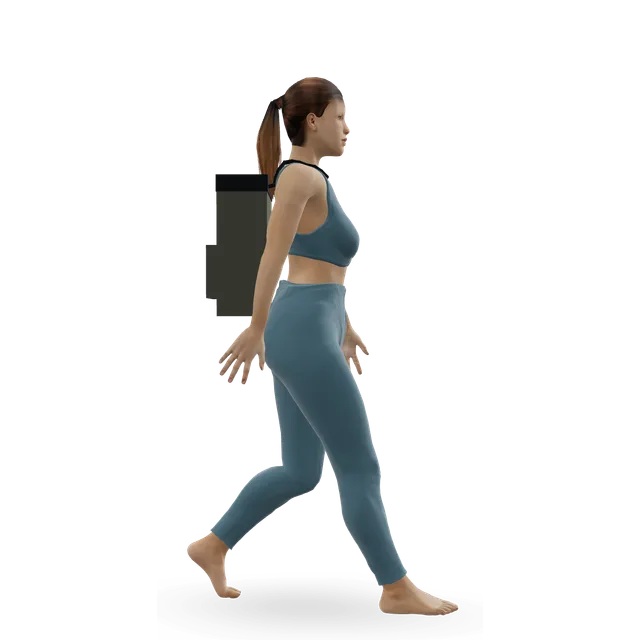
Treadmill walking demonstrated on the 3D figure3D demoTreadmill walkingBeginner · Cardio machine

About 10 to 20 minutes on the flat at a comfortable pace, once or twice a day, with poles outdoors if you have them · As in our hip pain when walking guide (editorial); walking outdoors counts the same. The move page gives no dose

Harder: Treadmill jogging

Supine isometric hip abduction (belt press) demonstrated on the 3D figure3D demoSupine isometric hip abduction (belt press)Beginner · A band

3 to 5 holds of 5 to 10 seconds, twice a day, at a light effort: the starting dose in the LEAP trial programme. · The move page's dose. For outer hip pain; lying on your back, not your side, as the move page says

Harder: Lateral band walk

Standing wall-press hip abduction demonstrated on the 3D figure3D demoStanding wall-press hip abductionBeginner · A wall

3 to 5 holds of 5 to 15 seconds each side, twice a day: the standing hold in the LEAP trial programme. · The move page's dose. Keep the standing hip level rather than sagging out, as the move page says

Easier: Supine isometric hip abduction (belt press) · Harder: Lateral band walk

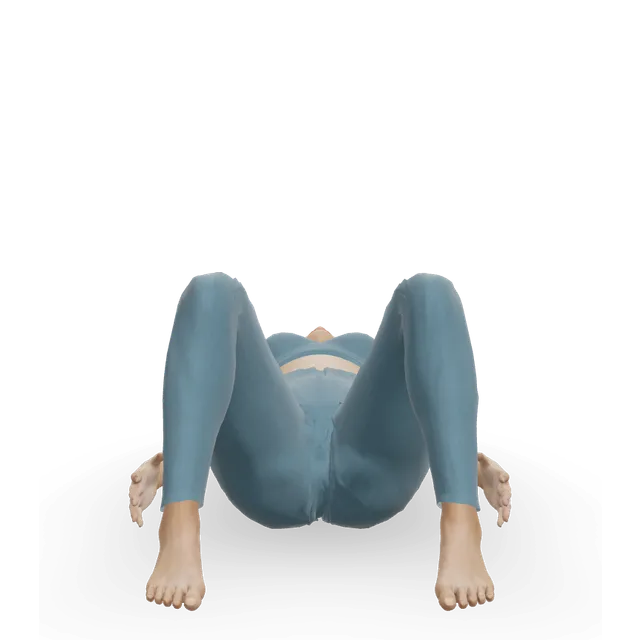
Glute bridge demonstrated on the 3D figure3D demoGlute bridgeBeginner · No equipment

10 slow reps, once a day, knees hip-width apart · As in our hip bursitis and elliptical hip guides (the LEAP programme's first week)

Easier: Pelvic tilt into bridge · Harder: Single-leg glute bridge

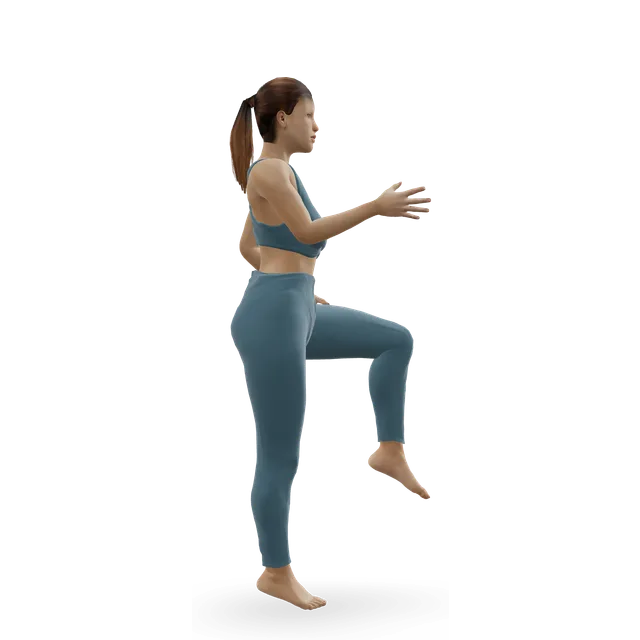
Standing march demonstrated on the 3D figure3D demoStanding marchBeginner · No equipment

10 each side, low knee, keeping front-of-hip pain at 3 out of 10 or less · As in our hip flexor guide's first stage (editorial)

Easier: Seated march · Harder: Standing band hip flexion

Single-leg stand demonstrated on the 3D figure3D demoSingle-leg standBeginner · A wall

3 holds of 10 to 30 seconds each side, pelvis level, a hand near a support · As in our hip bursitis guide, as our hip pain when walking guide uses it

Easier: Tandem stance and heel-to-toe walk · Harder: Single-leg reach matrix

Move on when: You can walk 30 minutes on the flat within the pain rule and be no worse the next morning, and none of the holds raises outer hip pain (editorial, as in our hip pain when walking and hip bursitis guides).

Follow along: a timer, a cue and the next move, one step at a time.
Stage 2

Build: one-leg strength, step-ups and gentle hills

About weeks 2 to 6: strength 3 days a week, walking most days. The LEAP programme's step from two legs to one, the step-up that every climb repeats, hip flexor loading, and walks that lengthen with gentle hills.

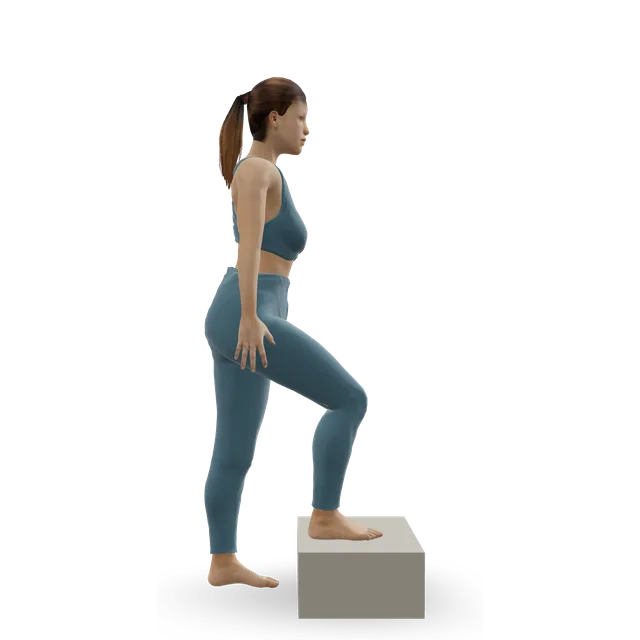
Step-up demonstrated on the 3D figure3D demoStep-upBeginner · A step

2 sets of 8 each side, low step, pelvis level, building to a normal stair · As in our hip bursitis guide (editorial): the climb in miniature

Easier: Low step-up · Harder: Dumbbell step-up

Split squat demonstrated on the 3D figure3D demoSplit squatIntermediate · No equipment

5 slow reps each side, short range, building to 2 sets of 5 to 10 · As in our hip bursitis guide (the LEAP programme's offset squat step)

Easier: Bodyweight squat · Harder: Reverse lunge

Lateral band walk demonstrated on the 3D figure3D demoLateral band walkBeginner · A band

10 to 15 steps each way with a band · As in our hip bursitis guide; the LEAP programme added band side steps from week 3

Easier: Hip abduction machine · Harder: Lateral band walk, band at the feet

Straight-leg raise demonstrated on the 3D figure3D demoStraight-leg raiseBeginner · No equipment

2 to 3 sets of 8 to 10 · As in our hip flexor guide (editorial): loading the hip flexors that lift you up each step

Easier: Quad set (static quads) · Harder: Leg extension

Trail running and walking demonstrated on the 3D figure3D demoTrail running and walkingBeginner · No equipment

20 to 30 minutes of brisk walking at first, on paths and gentle slopes, with poles · Adapted from the move page's dose (its brisk walking part); its short runs wait, and the paths, gentle slopes and poles are our suggestion. Its caution says consider walking poles

Harder: Treadmill running

Rucking (loaded walking) demonstrated on the 3D figure3D demoRucking (loaded walking)Intermediate · Something with weight

20 to 30 minutes on the flat with a light pack, about 10% of your body weight · Editorial, as in our knee pain when hiking guide; the move page also says start at about a tenth of body weight. The move page gives no dose

Easier: Treadmill walking · Harder: Sprint intervals

Move on when: You can stand on the sore leg for 30 seconds with the pelvis level and no outer hip pain (our hip bursitis guide's test), 10 step-ups each side are controlled, and an hour's walk with gentle hills leaves the hip no worse the next morning (editorial).

Follow along: a timer, a cue and the next move, one step at a time.
Stage 3

Back to the hills: descents, the pack and long days

From about week 6, strength twice a week, then ongoing: the controlled lowering and single-leg strength that descents and rough ground need, and your hikes coming back by the written steps below, with the full pack, the steepest descents and back-to-back days last. No study has tested a return to hiking after hip pain, so the order is editorial, as in our knee pain when hiking guide.

Patrick step-down demonstrated on the 3D figure3D demoPatrick step-downIntermediate · A step

2 to 3 sets of 8 slow each leg, lowering over 3 seconds from a low step · As in our knee pain when hiking guide (our hiking training workout's dose, editorial): the step down every descent repeats

Easier: Bodyweight squat · Harder: Skater squat

Single-leg Romanian deadlift demonstrated on the 3D figure3D demoSingle-leg Romanian deadliftAdvanced · A dumbbell

2 sets of 8 each leg, fingertips on a wall at first · As in our knee pain when hiking guide (our hiking training workout's dose, editorial)

Easier: Dumbbell Romanian deadlift

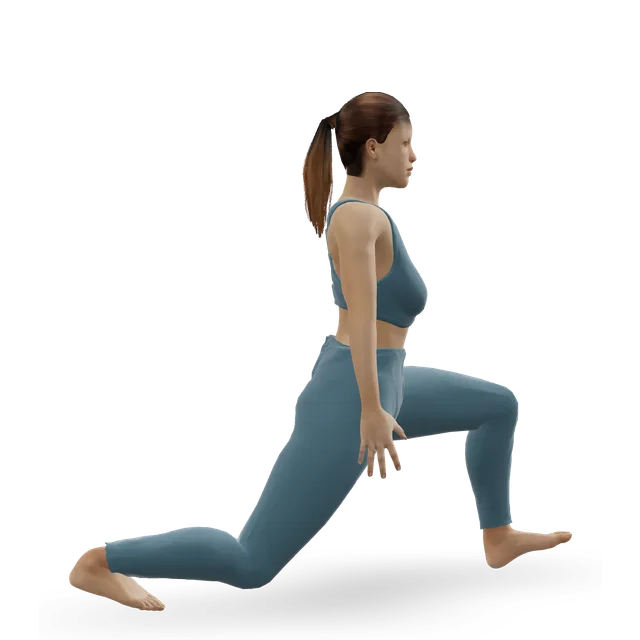
Reverse lunge demonstrated on the 3D figure3D demoReverse lungeIntermediate · No equipment

3 sets of 8 each side · As in our hip flexor guide's last stage (editorial)

Easier: Split squat · Harder: Split squat with dumbbells

Single-leg glute bridge demonstrated on the 3D figure3D demoSingle-leg glute bridgeIntermediate · No equipment

2 to 3 sets of 8 each side · As in our hip bursitis guide (editorial)

Easier: Glute bridge · Harder: Barbell hip thrust

Stair climbing demonstrated on the 3D figure3D demoStair climbingIntermediate · A step

1 to 3 flights at first, building to 6 to 8 climbs of 30 to 60 seconds, walking down slowly between them and holding the rail · As in our knee pain when hiking guide (editorial; the move page gives no dose)

Easier: Treadmill walking · Harder: Sprint intervals

Rucking (loaded walking) demonstrated on the 3D figure3D demoRucking (loaded walking)Intermediate · Something with weight

20 to 45 minutes with a pack at about 10% of your body weight, adding load or time in small steps, never both at once, staying under about 30% · As in our knee pain when hiking guide (our hill and stair workout's dose, editorial); 30% is the ceiling one study suggested for women hikers

Easier: Treadmill walking · Harder: Sprint intervals

Move on when: Your usual hikes, with your usual pack and descents, pass the pain rule for 2 weeks. Keep two strength days a week for the long term, and if a hike flares your hip, go back to the last walk that was fine, not to none (editorial).

Follow along: a timer, a cue and the next move, one step at a time.

What to change for now

Your hike for now (written steps)

Our 3D figure can't show poles, pace, step length, the route or your pack. These steps come from lab studies of slopes, packs and poles, military load carriage, NHS pages, a UK mountaineering body's technique page and our hiking guides; where a step is our suggestion or our reading, it says so. None has been tested against hip pain in hikers. Keep what passes the pain rule.

  • 1. Route: shorter, flatter routes and shorter days for now; split a long walk into two, and choose paths without big steps or long, steep climbs (our suggestion, as in our knee pain when hiking guide).
  • 2. Pace: slow down on climbs, where the hip does most of the work, because hip moments rise with speed. A pace where you can talk but not sing is moderate, as the NHS describes it.
  • 3. Step length: your own natural step, not overstriding (our reading). No study has tested shorter steps downhill for the hip.
  • 4. Poles: two poles, on climbs and especially descents. On steep steps down, the British Mountaineering Council's technique is to place your hands on top of the handles, lean forward with the poles below the step, put some weight on them and step down lightly. Poles lowered hip moments downhill with packs and outer hip muscle work in hip arthritis, though they didn't lower measured hip force in people with hip implants. With a sore hip and one pole or stick, hold it in the opposite hand (our reading of a cane study; our hip pain when walking guide says the same).
  • 5. Big steps and stiles: step up with the stronger leg and down with the sore one, using a pole or a hand on a rock, and go round rather than over where you can (our suggestion).
  • 6. The pack: as light as you can, packed close to your back, the hip belt fastened snugly on the bony rim of the pelvis but not crushed. The belt eases the shoulders but not the hip joint, and a tight belt can squeeze the thigh's skin nerve, so loosen or move it if the outer thigh burns or goes numb (our suggestion).
  • 7. Rests: stop before the hip gets sore, not after, and sit higher rather than low on a rock with your knees crossed, because crossing the legs squeezes the outer hip tendons (our suggestion, from the LEAP education).
  • 8. Overnight, with outer hip pain: a thicker sleeping mat, a pillow or rolled jacket between the knees, and not lying on the sore side (our suggestion, from the LEAP education).
  • 9. Before a big trip: train first, since hikers who didn't train beforehand reported more injuries in a survey, and practise a short descent a week or two before.
  • 10. Getting there: on long drives, flights or train journeys, get up and move about every hour or so and drink plenty of fluids, as the NHS advises to lower the risk of a clot.
  • 11. Safety: carry a phone, tell someone your route, and in an emergency dial 999 or 112 and ask for the Police, then Mountain Rescue.

Sources 44, 6, 65, 66, 47, 49, 53, 18, 14, 21, 42, 2, 29, 35

How hikes come back (written steps)

No study has tested how hiking comes back after hip pain, so these steps are our suggestion unless a source is named, following our knee pain when hiking guide's order.

  • 1. Distance on the flat, with poles.
  • 2. Gentle climbs at a slow, steady pace.
  • 3. Gentle descents, then longer climbs and descents.
  • 4. Rough ground and scrambles.
  • 5. The pack, starting light and adding weight or distance, never both at once, as our hiking and rucking guides say.
  • 6. Back-to-back long days last, as our hike training guide suggests before a multi-day trip. A week or so before a long descent, add a short downhill walk or a few minutes of slow step-downs, which protected thighs in small trials. If a hike flares your hip, go back a step, not to none.

Sources 29, 56

Positions to swap, and why

Habit or positionWhy it mattersInstead
A long, steep climb at your usual pace while the hip is soreClimbing doubles or more the hip's work, and hip moments rise with speed.Slower, shorter climbs with poles, and step-ups at home.Try: Step-up
Long strides to cover ground, especially with a packYour own step length was safest in the one load carriage study (our reading).Your natural step, at a slower pace.
A heavy pack on the first walks backA heavy pack raised modelled hip joint force.A light pack, building up in small steps.Try: Rucking (loaded walking)
A hip belt cinched hard on a burning outer thighBelts can squeeze the thigh's skin nerve.Loosen or move the belt, and lighten the pack.
Sitting low on a rock with your knees crossed, or sleeping on the sore sideSqueezing the outer hip tendons aggravates them, as the LEAP education taught.Sit higher with your legs uncrossed, a pillow between the knees at night, and the lying hold.Try: Supine isometric hip abduction (belt press)
No poles on long descentsPoles lowered leg and hip moments downhill and reduced soreness afterwards.Two poles, planted below the step on steep ground.
A first big descent of the year with no practiceOne short downhill walk beforehand protected muscles from damage in small trials.A short descent or slow step-downs a week or two before.Try: Patrick step-down
Pushing on through groin pain that builds with every step, after far more walking than usualIt can be a stress fracture of the hip.Stop, and get it checked the same day.
Resting the hip completelyExercise is the treatment for outer hip pain and hip arthritis.Flat walks with poles and the first-stage moves.Try: Glute bridge
Stretching a sore hip flexor hard before a climbPain on stretching the front of the hip means it is irritated; loading comes first.Standing marches, then straight-leg raises.Try: Straight-leg raise
Ignoring a lump in the groinIt may be a hernia, and a femoral hernia can strangulate.See a GP, and read the warning signs.

Routines to follow

More moves for this area

Questions people ask

Why do my hips hurt when I hike?

Usually muscles and tendons around the hip working harder than they are used to: in lab studies, climbs more than doubled the hip's work, and long days add up. Where it hurts points to the cause: the front of the hip, a deep groin pinch, the bony point on the outside, the buttock or the outer thigh under the belt.

Why does my hip hurt hiking uphill?

Climbing works the buttock muscles that push you up and bends the hip further at each step, so the front of the hip and the buttock take the strain. Slow down, use poles, and build climbs back gradually with step-ups.

Why does my hip hurt hiking downhill?

Descents raise the force through the hip a little: in people with hip implants, it was 335% of body weight on a 10% descent against 300% on the flat. Poles lowered hip moments downhill with packs in a lab study, though they didn't lower the measured hip force in the implant study. Plant them below the step and step down lightly.

Why does my hip hurt after hiking?

An ache in the buttocks or thighs a day or two later is usually muscle soreness, which fades within days, and a short practice descent beforehand helps. A sore bony point on the outside, worse lying on it that night, is usually the gluteal tendons; our hip bursitis guide covers it.

Is hiking bad for your hips?

No: active people have less hip and knee arthritis, not more, in observational studies. But a sore hip needs the load built back gradually.

Can I hike with hip arthritis?

Usually yes: NICE recommends exercise for everyone with osteoarthritis and suggests walking sticks, and walking with poles improved function more than strength training in a trial. Start with shorter, flatter walks and build up.

Do trekking poles help hip pain?

They can: downhill with packs they lowered the turning forces at the hip, they reduced outer hip muscle work in people with hip arthritis, and they reduced soreness after a mountain walk. They didn't lower the measured hip force in people with hip implants, and on the flat they don't unload the joints much.

Is my backpack causing my hip pain?

It can add to it: a heavy pack raised modelled hip joint force, and a heavier pack for your size went with more injuries on long treks. Pack lighter, carry it close and do the hip belt up snugly; a burning or numb outer thigh means the belt is pressing on a nerve.

Why does the front of my hip hurt when hiking?

Usually the hip flexors, which lift your knee over every step; a deep pinch in the groin on high steps can be the hip joint. Keep steps lower where you can, use poles, and see our hip flexor and hip impingement guides.

What is the burning patch on my outer thigh after a hike with a pack?

Usually meralgia paresthetica, a skin nerve squeezed by the hip belt. It causes no weakness and almost always settles after the trip. Loosen or move the belt and lighten the pack.

Do I need a scan?

Usually not at first: hip arthritis and outer hip tendon pain are diagnosed by examination. Groin pain that builds with every step after far more walking than usual needs imaging the same day.

When should I see a doctor?

Call 999 for severe hip pain after a fall or a leg you can't put weight on, or chest pain or sudden breathlessness on the trail; in the hills, ask for the Police, then Mountain Rescue. Get help the same day for a hot, swollen hip with a fever, a swollen, throbbing calf after a long day or journey, or a child with hip, thigh or knee pain and a limp, and see a GP for a lump in the groin or hip pain that isn't better after 2 weeks. In the US, call 911 where this page says 999.

Related exercise guides

Other pain guides

Sources

  1. Boulware 2003 · Medical problems in 280 long-distance hikers on the Appalachian Trail (prospective survey, Am J Med)
  2. Chrusch 2021 · Muscle and joint injuries, training and prevention in 1,295 Appalachian Trail hikers (survey, Wilderness Environ Med)
  3. Spano 2018 · Illness and injury in 771 long-distance backpackers on the John Muir Trail (survey, Wilderness Environ Med)
  4. Braybrook 2023 · Types and places of injuries in mountain bikers and hikers: 24 studies (systematic review, PLoS One)
  5. Faulhaber 2017 · Falls among hikers in the Austrian Alps over 9 years (retrospective study, BMJ Open Sport Exerc Med; a 2018 correction adds a funding number)
  6. Montgomery 2018 · Hip, knee and ankle work walking up and down slopes at different speeds in 20 adults (lab study, R Soc Open Sci)
  7. Alexander 2017 · Hip, knee and ankle work walking up and down slopes in 18 men (lab study, J Biomech)
  8. Lay 2006 · Joint movement and loading walking up and down steep slopes in 9 adults (lab study, J Biomech)
  9. McIntosh 2006 · Walking on an inclined walkway in 11 men (lab study, J Biomech)
  10. Alexander 2016 · Hip, knee and ankle forces walking on the level and on slopes in 18 men (modelling study, Gait Posture)
  11. Kuster 1995 · Downhill against level walking in 12 people (lab study, Clin Biomech)
  12. Alexander 2016 · Leg muscle forces walking on slopes in 18 men (modelling study, Gait Posture)
  13. Palmowski 2021 · Hip force measured with instrumented hip replacements in 6 people walking on slopes with and without poles (in vivo study, J Orthop Surg Res)
  14. Sturdy 2021 · Lower back and hip joint forces carrying a 38 kg pack, with and without the hip belt, in 6 Marines (modelling study, Appl Ergon)
  15. Oberhofer 2018 · Pack weight, hip belt tension and walking in 9 men (lab study, Appl Bionics Biomech)
  16. Simpson 2012 · Carrying packs of up to 40% of body weight over 8 km in 15 women hikers: forces and gait (lab study, Ergonomics)
  17. Simpson 2011 · Pack weight, posture, heart rate and discomfort in 15 women hikers (lab study, Appl Ergon)
  18. Knapik 2004 · Soldier load carriage: physiology, biomechanics and injuries (narrative review, Mil Med)
  19. Orr 2014 · Injuries from soldiers' load carriage (narrative review, Int J Inj Contr Saf Promot)
  20. Boulware 2003 · Numbness and tingling from backpacking in 280 Appalachian Trail hikers (prospective survey, Wilderness Environ Med)
  21. Knapik 2017 · Numb or burning outer thigh from load carriage: meralgia paresthetica (narrative review, J Spec Oper Med)
  22. Weir 2015 · Doha agreement on terms and definitions in groin pain in athletes (consensus, Br J Sports Med)
  23. Griffin 2016 · The Warwick Agreement on femoroacetabular impingement syndrome (international consensus, Br J Sports Med)
  24. NICE NG226 · Osteoarthritis in over 16s: diagnosis and management (recommendations, 2022)
  25. Lesher 2008 · Where hip joint pain is felt: 51 people confirmed by injection (descriptive study, Pain Med)
  26. Grimaldi 2024 · Tendon problems around the hip in practice (review, Rheumatol Adv Pract)
  27. Grimaldi 2015 · Gluteal tendinopathy: mechanisms, assessment and management (review, Sports Med)
  28. NHS · Femoral hernia
  29. Maeo 2017 · A short downhill walk a week before a long one, and muscle damage, in 36 young men (randomised lab study, PLoS One)
  30. Clough 2002 · Femoral neck stress fracture: the importance of clinical suspicion and early review (case report, Br J Sports Med)
  31. Duquette 2010 · Femoral neck stress fracture in a military trainee with a normal X-ray (case report, J Orthop Sports Phys Ther)
  32. Campbell 2025 · Stress fractures in military recruits and personnel: 70 studies (systematic review, Int J Environ Res Public Health)
  33. Pope 1999 · Preventing pelvic stress fractures in women army recruits (before-and-after cohort study, Mil Med)
  34. NHS · Peripheral arterial disease (PAD) (last reviewed April 2026)
  35. NHS · DVT (deep vein thrombosis)
  36. NHS · Hip pain in children (irritable hip)
  37. NHS · Limping in children
  38. West Suffolk NHS Foundation Trust · Slipped upper femoral epiphysis (SUFE) (patient leaflet, 2021, past its review date of March 2024)
  39. NHS · Hernia (last reviewed May 2026)
  40. NHS · Hip pain in adults
  41. NHS inform · Hip problems
  42. Mellor 2018 · Education plus exercise against a steroid injection or wait and see for gluteal tendinopathy: LEAP (randomised trial of 204, BMJ)
  43. Kemp 2020 · Zurich 2018 consensus on physiotherapist-led treatment of hip-related pain (Br J Sports Med)
  44. Rao 2025 · Walking speed, rather than hip pain, drives hip moments in 192 people (lab study, J Biomech)
  45. Willy 2019 · Load carriage, step length and Achilles and knee loads in 16 cadets walking on the flat (lab study, Mil Med)
  46. Schwameder 1999 · Knee forces walking down a steep ramp with and without poles in 8 men (lab study, J Sports Sci)
  47. Bohne 2007 · Walking downhill with trekking poles and packs in 15 hikers (lab study, Med Sci Sports Exerc)
  48. Howatson 2011 · Trekking poles and muscle damage after a mountain walk in 37 adults (field study, Med Sci Sports Exerc)
  49. Homma 2016 · Nordic walking and hip muscle activity in 10 people with hip osteoarthritis (lab study, J Phys Ther Sci)
  50. Hansen 2008 · Nordic walking and knee load on the flat in 7 instructors (lab study, Scand J Med Sci Sports)
  51. Jensen 2011 · Pushing harder on poles and knee load on the flat in 10 adults (lab study, Scand J Med Sci Sports)
  52. Hawke 2020 · Are trekking poles helping or hindering your hike? (narrative review, Wilderness Environ Med)
  53. Tazawa 2022 · A cane in the opposite hand and hip load in 27 people with severe hip osteoarthritis (lab study, Arch Rehabil Res Clin Transl)
  54. Hall 2026 · Exercise for osteoarthritis of the hip: 18 trials (Cochrane review update)
  55. Bieler 2017 · Nordic walking against strength training or home exercise for hip osteoarthritis in 152 people (randomised trial, Scand J Med Sci Sports)
  56. Maeo 2015 · How long a practice downhill walk protects against muscle damage, in 42 young adults (randomised lab study, Appl Physiol Nutr Metab)
  57. Anderson 2009 · Footwear, pack weight and injury in 128 long-distance hikers (survey, Wilderness Environ Med)
  58. Stoltzfus 2022 · Injuries hiking with a pack on 12-day treks in 1,206 trekkers (cohort study, Wilderness Environ Med)
  59. Hamonko 2011 · Injuries hiking with a pack on outdoor leadership courses in 1,201 people (risk factor study, Wilderness Environ Med)
  60. Alentorn-Geli 2017 · Recreational and competitive running and hip and knee osteoarthritis: 25 studies (systematic review and meta-analysis, J Orthop Sports Phys Ther)
  61. Mura 2026 · Measured activity and new hip or knee osteoarthritis in 85,706 UK adults (cohort study, BMJ Open Sport Exerc Med)
  62. Jahn 2024 · Hip osteoarthritis and physical loads at work: 24 studies (systematic review and meta-analysis, Scand J Work Environ Health)
  63. Yang 2023 · Return to activity after a femoral neck stress fracture: 103 people from case reports and series (systematic review, J Orthop)
  64. Arthritis UK · Top tips for walking with arthritis (March 2024)
  65. NHS · Walking for health (past its review date: reviewed December 2022, review due December 2025)
  66. British Mountaineering Council · How to use trekking poles when hill walking
  67. NHS · Heart attack
  68. NHS · Angina
  69. NHS · Pulmonary embolism

Exercise education, not a diagnosis or treatment plan. It is written from the guidelines and studies listed above; review by a clinician is pending. If your pain follows an injury, is severe, is getting worse, or comes with any warning sign listed on this page, get it assessed. Health disclaimer.