Pain guide · Back pain

Lower back pain when walking: ordinary back pain, spinal stenosis, the arteries and what helps

Lower back pain that comes on or builds when you walk is usually ordinary back pain that dislikes long walks, and walking usually helps it rather than harms it. If your buttocks and legs ache, feel heavy or tingle as you walk and only sitting or leaning forward eases them, that is the pattern of spinal stenosis, usually from 50. Narrowed leg arteries can cause similar leg pain on walking, so this guide shows how the two differ.

This guide starts with the signs that need help today, from a 999 call or accident and emergency (A&E), such as numbness around the genitals or bottom or weakness in both legs, to National Health Service (NHS) 111 or a general practitioner (GP). It then helps you work out the likely cause, explains what the walking programmes and the stenosis trials show, how pace, pauses, a shopping trolley or a walking aid can help, and gives a three-stage plan that ends with your usual walks.

When to get help first

Exercise is for pain that has been checked or is clearly mild and settling.

Get urgent medical help if

  • Call 999 or go to A&E: loss of feeling or numbness around the genitals or bottom, new trouble peeing or controlling your bladder or bowels, changes in genital sensation during sex or problems with erections or orgasm, or pain, tingling, weakness or numbness in both legs. These are signs of cauda equina syndrome, which needs treating in hospital urgently. Don't drive yourself.
  • Call 999 or go to A&E: back pain with chest pain, or back pain that started after a serious accident, such as a car crash.
  • Call 999 or go to A&E: a leg that is suddenly cold, pale, numb, weak or very painful. A sudden loss of blood supply to a leg is a vascular emergency.
  • Call 999: sudden, severe pain in the tummy or back, which can come with breathlessness, pale or grey skin, or collapse. It can be a burst abdominal aortic aneurysm, most common in men aged 65 or over and in people who smoke or used to smoke.
  • Call 999 or go to A&E: pain spreading from the tummy to the back, with vomiting.
  • Same day (GP or NHS 111): back pain and you feel hot, cold, shivery or generally unwell, or severe pain that starts suddenly or is getting worse quickly.
  • Same day (GP or NHS 111): pain in the lower back or side with a high temperature, burning or stinging when you pee, or needing to pee more often. It can be a kidney infection.
  • Same day: you have or have had cancer, and new back pain that is severe and doesn't let up, is getting steadily worse, is worse at night and disturbs your sleep, is worse when you cough, sneeze or strain, or comes with tenderness over the spine. Contact your cancer team or GP urgently. With cancer, new weakness, difficulty walking, numbness or bladder or bowel problems are an emergency.
  • Same day: leg weakness that is getting worse.
  • Same day (urgent GP appointment or NHS 111): new difficulty lifting the front of your foot or toes (foot drop), or a foot that slaps down or catches as you walk, especially if it is getting worse. Weakness in both legs, or with numbness around the genitals or bottom or bladder or bowel changes, is the 999 emergency above.
  • Same day (GP or NHS 111): back pain in the second or third trimester of pregnancy, or back pain in pregnancy with a fever, vaginal bleeding or pain when you pee. It could be early labour or an infection.

See a doctor or physiotherapist if

  • Buttock or leg pain, heaviness or tingling that comes on when you stand or walk and only eases when you sit or bend forward, or the distance you can walk keeps shrinking: see a GP or physiotherapist (possible spinal stenosis). Leg weakness that is getting worse, or numbness around your genitals or bottom, is urgent (above).
  • Leg ache when you walk that goes after a few minutes' rest: possible peripheral arterial disease (narrowed leg arteries), especially if you smoke or have diabetes.
  • A change in your ability to walk, including balance problems or weakness or heaviness in your legs: see a GP. If it's new or getting worse quickly, contact your GP practice urgently, or NHS 111 if it's closed.
  • Pain, tingling or numbness spreading below the knee that isn't settling after a few weeks, is getting worse or stops your normal activities: see a GP.
  • Back pain that hasn't improved after a few weeks of looking after it at home, stops you doing day-to-day activities, or worries you.
  • Pain that doesn't improve with rest or is worse at night, or pain that is worse when you sneeze, cough or poo.
  • Unexplained weight loss, or a lump, swelling or change in the shape of your back.
  • Back pain that started before 45 and has lasted more than 3 months, especially if it wakes you in the second half of the night, comes with buttock pain, eases with movement or within 48 hours of anti-inflammatories, or you have psoriasis or a parent, sibling or child with spondyloarthritis. These can point to inflammatory back pain (axial spondyloarthritis, such as ankylosing spondylitis); the National Institute for Health and Care Excellence (NICE) refers people with four or more of these features to a rheumatologist.
  • Unexplained back pain with muscle spasms, loss of height, or a curved spine or change in posture: a possible osteoporotic spinal fracture, more likely with older age or long-term steroid tablets.
  • Pelvic pain in pregnancy that makes it hard to move around, hurts when you get out of a car or turn over in bed, or makes going up or down stairs painful: call your midwife or GP. You may be referred to a physiotherapist who specialises in pelvic joint problems in pregnancy.
  • Walking keeps getting harder despite pacing and the plan, or you're planning your days around it: see a GP or physiotherapist, and ask about a walking aid and a falls check (our suggestion).

Where does it hurt?

Location narrows the likely causes; it does not diagnose.

Low back ache that builds on longer walks and eases with a short rest or a change of position, with no leg symptoms

Ordinary back pain, the commonest story.

Read: Back pain →
Buttocks and legs aching, heavy or tingling on walking or standing, eased only by sitting or leaning forward

Leaning on a shopping trolley helps, usually from 50: the pattern of lumbar spinal stenosis.

Read: Lumbar spinal stenosis →
An ache in the calf, thigh or buttock after a set distance that goes within a few minutes, even standing still

Possibly narrowed leg arteries, more likely if you smoke or have diabetes: see a GP. Our calf pain when walking guide explains.

Read: Calf pain when walking →
Pain down one leg below the knee, with tingling or numbness

Sciatica, from a nerve in the back.

Read: Sciatica →
Low on one side, by the dimple at the back of the pelvis, worse on stairs or standing on one leg

Possibly the sacroiliac (SI) joint.

Read: SI joint pain →
In pregnancy, the back of the pelvis or the pubic bone, worse walking and on stairs

Pelvic girdle pain: your midwife or GP can refer you to a physiotherapist.

Read: Pelvic girdle pain (SPD) →
The groin or buttock with a stiff hip, so socks and car seats are hard

The hip: our hip pain when walking guide.

Read: Hip pain when walking →
Worse arching or standing upright, easing when you bend forward, from mid-life

Often labelled facet joint pain, and managed like other back pain.

Read: Facet joint pain →
A slipped vertebra on a scan, or a teenager whose back hurts when arching

Spondylolisthesis.

Read: Spondylolisthesis →
Deep in the buttock, worse sitting, sometimes down the back of the thigh

Possibly piriformis syndrome.

Read: Piriformis syndrome and buttock pain →
Back pain for more than 3 months, or that keeps coming back

Chronic back pain.

Read: Chronic low back pain →
Back pain mostly when you stand still

Our back pain when standing guide.

Read: Back pain when standing →
Back pain when you run

Our back pain when running guide.

Read: Back pain when running →
Sudden back pain after a minor fall, lift or cough, from about 50

A possible osteoporotic spinal fracture: see a GP.

Read: Spinal compression fracture →
A foot that slaps down or catches as you walk, or a leg getting weaker

Get help the same day, as the warning signs say.

Read: Foot drop →

Understand it

Most back pain when walking is ordinary back painEmerging evidence

Back pain is very common and usually improves within a few weeks, the NHS says, and NHS inform expects most back problems to improve within 6 weeks. The usual story is an ache that builds on longer walks and eases with a short rest or a change of position, without symptoms spreading down the leg.

Across 97 studies, people with persistent low back pain walked more slowly than people without (a moderate difference) and with shorter strides, with the trunk and pelvis moving more in step and the back muscles working harder. That may be part of why long walks tire a sore back, but it is a description rather than a cause, and no trial has tested changing how you walk (our reading).

Sources 1, 2, 3

The stenosis pattern: legs that ache on walking and ease when you sit or lean forwardStrong evidence

In lumbar spinal stenosis, the tunnels for the nerves in the lower back narrow. NHS inform says it causes pain, aching, cramping, heaviness or weakness, tingling, pins and needles or numbness in the legs, "usually worse with walking or standing" and relieved by sitting or leaning forward; without leg symptoms, back pain isn't usually put down to stenosis. Most narrowing is a normal part of ageing and often causes no problems, and the nerves can adapt to it.

An NHS spinal service says leaning forward on a shopping trolley is a typical way people ease it, because bending forward widens the tunnel; that stenosis affects about 11% of people, is very uncommon under 50 and has an average age of 62 to 69; and that about three quarters of people over 40 are expected to have moderate narrowing. A review in a US medical journal adds that it is provoked by arching back and relieved by bending forward.

Sources 4, 5, 6

Spine or arteries? How they differEmerging evidence

Both narrowed leg arteries and spinal stenosis cause leg pain on walking that eases with rest, and single clues tell them apart poorly. In 53 people with one or the other, symptoms brought on by standing still as well as walking, eased by sitting, felt above the knees and eased by leaning on a shopping trolley pointed strongly to the spine; symptoms below the knees that eased just by standing still pointed strongly to the arteries. That was one small study at one centre.

In a review of 4 studies of older adults with leg pain, having no pain when sitting and symptoms easing when bending forward were the most useful single clues to stenosis; in 209 spine clinic patients, being over 60, pain in both legs, pain eased by sitting or bending forward and two examination tests predicted it. Narrowed arteries usually cause an ache in the calf, though it can be felt in the thigh or buttock, and they are more likely if you smoke or have diabetes. The two can occur together, so leg pain on walking needs assessing.

  • More like the spine: brought on by standing still as well as walking; eased only by sitting or bending forward, or by leaning on a trolley; often in both buttocks or thighs, sometimes with tingling or numbness; usually from 60.
  • More like the arteries: brought on by walking but not by standing still; eased by standing still for a few minutes; usually in the calf; more likely if you smoke or have diabetes; sometimes with weak foot pulses, shiny skin, hair loss or wounds that don't heal.
  • The tests: stenosis is diagnosed from your story and an examination, with scans only if surgery is being considered; narrowed arteries with the pulses and the ankle brachial pressure index (ABPI), which compares the blood pressure at your ankle and your arm.

Sources 7, 8, 9, 10, 11, 12, 13, 5

Sciatica and the hipEmerging evidence

Sciatica causes pain, tingling, numbness or weakness in the bottom and down the back of one leg, often into the foot. Hip joint pain is often felt in the buttock: in 51 people whose hip pain was confirmed with an injection, 71% felt it there, and none in the lower back.

Sources 14, 15

When a scan or test helpsStrong evidence

The National Institute for Health and Care Excellence (NICE) says don't routinely offer imaging for low back pain outside specialist care. Stenosis is diagnosed from your symptoms and an examination; scans are for severe or worsening symptoms when surgery is being considered, or when something serious is suspected, NHS inform and an NHS spinal service say.

Narrowed leg arteries are checked by examining the legs and feet and the pulses, and by comparing the blood pressure at the ankle and the arm (the ABPI); a result below 1 suggests narrowing.

Sources 16, 4, 5, 6, 12, 13

How it usually goesEmerging evidence

Most back pain improves within a few weeks, and NHS inform expects most back problems to improve within 6 weeks. With stenosis, over up to 3 years without surgery, about a third of people improve, about half stay the same and 10% to 20% get worse; an NHS spinal service says up to 60% with mild to moderate symptoms improve quickly or stay the same, and any worsening is usually slow. No one can promise a date.

Sources 1, 2, 6, 5

What helps, and how strong the evidence is

Walking helps back pain about as much as other exerciseEmerging evidence

Across 5 trials in people with chronic low back pain, walking did as well as other exercise for pain, disability, quality of life and fear of movement, and adding walking to an exercise programme added nothing in the short term. Across 26 studies of long-lasting back pain, arthritis and fibromyalgia, walking improved pain and function by a small to moderate amount. The NHS lists walking among the things that may help, and NICE says consider a group exercise programme.

Sources 17, 18, 1, 16

A walking programme lengthened the time to the next bout of back painEmerging evidence

In 701 adults who had recently recovered from low back pain, a walking and education programme with 6 physiotherapy sessions over 6 months lengthened the time to the next bout that limited their activities (a median of 208 days against 112). Walkers had more problems affecting their legs and feet (100 events against 54), though about as many people had any problem at all. The walking started at 3 walks a week and built to at least 30 minutes, 5 times a week, then faster walking, hills or stairs, with a pedometer and a diary.

The trial, called WalkBack, tested preventing the next bout after recovery, not walking while sore, so this guide borrows its targets as editorial goals.

Sources 19, 20

Spinal stenosis: exercise and physiotherapy come firstEmerging evidence

An NHS spinal service says current guidelines recommend an initial 12 weeks of progressive exercise, such as a progressive cycling programme, an adjusted walking programme and a stretching routine. In 169 people aged 50 and over who were candidates for surgery, physical therapy gave similar physical function to decompression surgery at 2 years, though 57% of the therapy group crossed over to surgery. In 259 people over 60, 6 weeks of hands-on treatment with exercise tailored to each person improved walking soonest, but by 6 months the groups were similar, and a review of 23 newer trials supports hands-on treatment with exercise, on moderate-quality evidence.

In the UK BOOST trial of 438 adults aged 65 and over with stenosis symptoms (neurogenic claudication; average age 74.9), 12 group sessions of education, leg strength at an effort of 5 to 6 out of 10, balance, hip flexor and calf stretches and a 20-minute walking circuit, with home exercise, added about 22 metres to a 6-minute walk at 6 and 12 months, reduced walking disability and lowered the odds of falls. Pain-related disability improved at 6 months but not significantly at 12.

Sources 5, 21, 22, 23, 24

Leaning forward, and walking aidsEmerging evidence

Leaning forward eases the leg symptoms of stenosis: NHS inform says take regular breaks, sit down or lean against a wall, and talk to a healthcare professional about a walking aid if walking is a struggle; an NHS spinal service names the shopping trolley and bending to touch your toes. In 52 people with stenosis who used a wheeled walker set to tilt the lower back forward, 71% said their walking improved, in a review of their records with no comparison group. A rollator, a trolley or walking poles are our suggestion on the same idea.

Sources 4, 5, 7, 25

Injections, belts and surgeryStrong evidence

NICE says don't use epidural injections for neurogenic claudication with central canal stenosis, and a review found epidural steroids not effective for it. NICE also says don't offer belts or corsets for low back pain. For painkillers, the NHS suggests anti-inflammatories if they're suitable, rather than paracetamol on its own. Decompression surgery helps some people with stenosis whose symptoms don't improve with other treatment, a review says.

Sources 16, 23, 6, 1

How much pain is OK while you exercise?

Up to about 5 out of 10, settled within an hour; with leg symptoms, walk in intervalsEmerging evidence

For the exercises, this guide uses the back hub's rule. Some discomfort during exercise is fine, and it doesn't mean you are doing damage. Aim for pain you would call mild to moderate, no more than about 5 out of 10. It should settle within an hour or so, and your back should be no worse the next morning. If it is worse, do less next time (fewer reps, a smaller range, a lighter load), not nothing.

Leg symptoms are the exception: stop or shrink any movement that sends pain, pins and needles or numbness further down your leg. If leg symptoms move back towards your spine, that is a good sign, even if your back aches a little more for a while.

If pain climbs day after day, or you notice any warning sign, stop and get it checked. The 5 out of 10 figure matches this site's other pain guides and hasn't been tested in a back pain trial; NHS inform's back exercises use the same limit (keep pain within 0 to 5 out of 10, and no worse the morning after), and in trials of long-lasting muscle and joint pain, exercise that allowed some pain did no harm.

Walking with ordinary back pain (our suggestion): the same limit. Walk at a pace and distance where your back stays at 5 out of 10 or less and settles within an hour; split longer walks, and add a few minutes every 2 or 3 walks.

Walking with the stenosis pattern (our spinal stenosis guide's rule, from NHS inform and an NHS spinal service): walking is safe while symptoms remain manageable, and the spinal service says harm to the nerves is unlikely when pain is felt. Walk until the leg symptoms start to build, then sit or lean forward until they ease, and go again; your walking time should creep up. Leg weakness that is getting worse, or numbness around the genitals or bottom, is never an interval: it's a warning sign.

Calf, thigh or buttock ache that goes when you stand still isn't this rule: get it checked by a GP. Once narrowed arteries are diagnosed, the walking programme deliberately walks into the pain, as our calf pain when walking guide explains.

Sources 26, 27, 4, 5, 10, 13

The exercise plan: 3 stages

Start at the first stage. Each move opens a full guide with a 3D demo.

Stage 1

Settle: keep walking in shorter spells, and find what eases it

About the first 2 weeks: walking little and often within the pain rule; with the stenosis pattern, intervals (walk until the leg symptoms start to build, then sit or lean forward until they ease); and NHS inform's back exercises with their pacing, keeping the ones that ease you. With any warning sign, get checked first; with calf, thigh or buttock ache that goes when you stand still, see a GP; with sciatica, or pelvic girdle pain in pregnancy, those guides' plans come first.

Treadmill walking demonstrated on the 3D figure3D demoTreadmill walkingBeginner · Cardio machine

5 to 10 minutes, several times a day; with the stenosis pattern, about 10 minutes in total, in intervals · As in our back pain guide; the intervals are our spinal stenosis guide's, built on NHS inform and an NHS spinal service. Walking outdoors counts the same

Harder: Treadmill jogging

Single knee-to-chest stretch demonstrated on the 3D figure3D demoSingle knee-to-chest stretchBeginner · No equipment

Hold 20 to 30 s, 2 to 4 times each side · The move page's dose, an editorial starting point. Keep it only if it eases you, and leave it out if bending forward sends pain down a leg, as the move page says

Harder: 90/90 hip lift-off

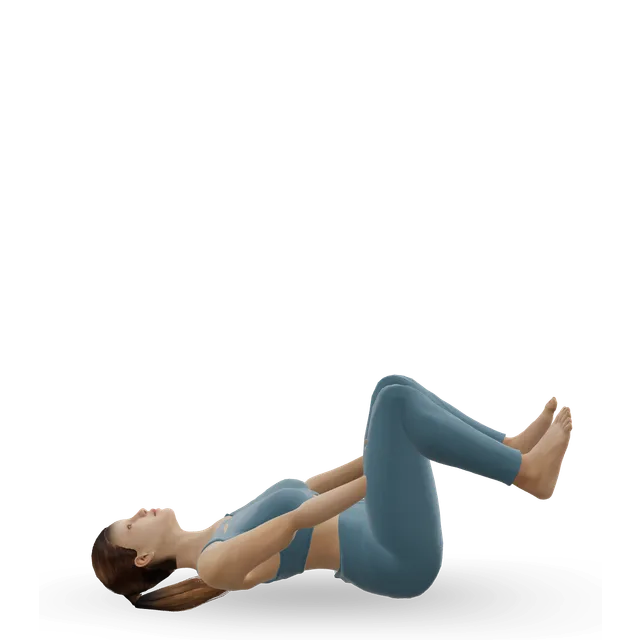
Double knee-to-chest stretch demonstrated on the 3D figure3D demoDouble knee-to-chest stretchBeginner · No equipment

Hold 20 to 30 s, 2 to 4 times · The move page's dose, an editorial starting point: a bending-forward rest for the stenosis pattern. With osteoporosis, avoid deep or repeated rounding, as the move page says

Easier: Single knee-to-chest stretch · Harder: Overhead lat stretch at a bench (elbows on the bench)

Pelvic tilt into bridge demonstrated on the 3D figure3D demoPelvic tilt into bridgeBeginner · No equipment

The tilt first, holding 2 s: 2 to 3 at a time, building to sets of 8 · NHS inform's pelvic tilt, with its pacing

Harder: Glute bridge

Cat-cow demonstrated on the 3D figure3D demoCat-cowBeginner · No equipment

8 waves, slower than feels natural · The move page's dose. NHS inform's back exercises include the same curl and uncurl on your hands and knees

Harder: Half lord of the fishes (Ardha Matsyendrasana)

Stationary cycling demonstrated on the 3D figure3D demoStationary cyclingBeginner · Cardio machine

10 to 15 minutes, easy · As in our spinal stenosis guide; an NHS spinal service names a progressive cycling programme among first-line exercise for stenosis

Easier: Recumbent exercise bike · Harder: Air bike intervals

Move on when: You can walk 15 to 20 minutes, or your walking intervals are getting longer, and your back is no worse the next morning (editorial).

Follow along: a timer, a cue and the next move, one step at a time.
Stage 2

Build: leg, hip and trunk strength, and longer walks

About weeks 2 to 8, strength 2 or 3 days a week: the leg and hip strength of the BOOST programme and the back hub's second stage, with walks built towards WalkBack's targets (borrowed, and editorial here) or, with the stenosis pattern, BOOST's walking circuit.

Sit to stand from a chair demonstrated on the 3D figure3D demoSit to stand from a chairBeginner · A bench or box

3 sets of 8 to 10 · As in our back pain guide. The BOOST programme included sit to stand, worked at an effort of 5 to 6 out of 10 (it feels hard)

Easier: Sit to stand, pushing on the thighs · Harder: Bodyweight squat

Seated knee extension (chair) demonstrated on the 3D figure3D demoSeated knee extension (chair)Beginner · A bench or box + Something with weight

3 sets of 10 to 15 each leg, 2 to 3 days a week · The move page's dose, an editorial starting point. BOOST included sitting knee extension

Easier: Quad set (static quads) · Harder: Leg extension

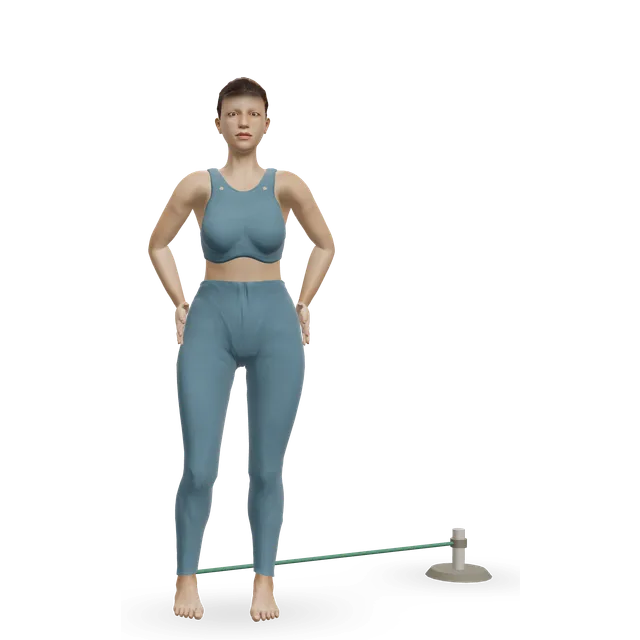
Standing band hip abduction demonstrated on the 3D figure3D demoStanding band hip abductionBeginner · A band + An anchor point

2 to 3 sets of 8 to 12 each side, at an effort of about 5 to 6 out of 10 · The catalog's standing band hip abduction. The effort is BOOST's, for its standing hip abduction; the sets are editorial

Easier: Hip abduction machine · Harder: Lateral band walk, band at the feet

Glute bridge demonstrated on the 3D figure3D demoGlute bridgeBeginner · No equipment

2 to 3 sets of 10 · As in our back pain guide. BOOST trained hip extension

Easier: Pelvic tilt into bridge · Harder: Single-leg glute bridge

Half-kneeling hip flexor stretch demonstrated on the 3D figure3D demoHalf-kneeling hip flexor stretchBeginner · No equipment

2 to 3 holds of 30 s each side; tuck the pelvis and don't arch the back · As in our spinal stenosis guide; BOOST included a hip flexor stretch. Pad the kneeling knee, as the move page says

Harder: Couch stretch

Treadmill walking demonstrated on the 3D figure3D demoTreadmill walkingBeginner · Cardio machine

Build towards 30 minutes on at least 5 days a week; with the stenosis pattern, a 20-minute walk with rests as needed, adding distance, then pace, then slopes or steps · Borrowed targets, editorial here: WalkBack's end-of-programme goal, as in our back pain guide, and BOOST's 20-minute walking circuit and its progressions

Harder: Treadmill jogging

Move on when: You can walk for 30 minutes (with pauses if you have the stenosis pattern), and your back is no worse the next morning (editorial).

Follow along: a timer, a cue and the next move, one step at a time.
Stage 3

Your usual walks: distance, pace and hills

From about week 6 to 8, strength 2 days a week and walking most days: the back hub's last stage, balance for paths and kerbs, and your usual walks back by the written steps below.

Step-up demonstrated on the 3D figure3D demoStep-upBeginner · A step

3 sets of 8 each side · As in our back pain guide. BOOST's walking circuit added steps

Easier: Low step-up · Harder: Dumbbell step-up

Dumbbell goblet squat demonstrated on the 3D figure3D demoDumbbell goblet squatIntermediate · A dumbbell

3 sets of 8 to 10 · As in our back pain guide

Easier: Bodyweight squat · Harder: Barbell front squat

Farmer's carry demonstrated on the 3D figure3D demoFarmer's carryIntermediate · A dumbbell + A kettlebell

3 walks of 20 to 30 m · As in our back pain guide: loaded walking, the easier two-handed carry

Harder: Suitcase carry

Side plank demonstrated on the 3D figure3D demoSide plankIntermediate · No equipment

3 holds of 20 to 30 s each side · As in our back pain guide

Easier: Knee side plank · Harder: Side plank with leg lift

Tandem stance and heel-to-toe walk demonstrated on the 3D figure3D demoTandem stance and heel-to-toe walkBeginner · A wall

3 holds of 20 to 30 s · As in our spinal stenosis guide; BOOST's balance work went with fewer falls. Walk beside a wall or rail if you feel unsteady, as the move page says

Easier: Semi-tandem stance · Harder: Single-leg stand

Treadmill walking demonstrated on the 3D figure3D demoTreadmill walkingBeginner · Cardio machine

30 minutes on at least 5 days a week, then faster, or with hills or stairs · WalkBack's target and progressions, borrowed and editorial here

Harder: Treadmill jogging

Move on when: Our suggestion: your usual walks, with pauses where you need them, leave your back no worse the next morning. Keep two strength days a week; if a long walk flares it, go back to the last walk that was fine, not to none.

Follow along: a timer, a cue and the next move, one step at a time.

What to change for now

How to walk for now (written steps)

Our 3D figure can't show these changes. They come from the NHS, NHS inform and an NHS spinal service; where a step is our suggestion or our reading, it says so. No trial has tested a walking pace, posture or route for back pain when walking.

  • 1. Keep walking, in spells you can manage; don't stay in bed or sit for long periods (the NHS and NHS inform).
  • 2. With ordinary back pain: walk at a pace where you can still talk, let your arms swing, and split long walks; change pace or route if the ache builds (our suggestion).
  • 3. With the stenosis pattern: it's safe to keep walking as long as symptoms remain manageable. Walk short distances regularly, and take regular breaks: sit down or lean against a wall (NHS inform). Bending forward, for example reaching towards your toes, can ease it (an NHS spinal service).
  • 4. Leaning forward helps the stenosis pattern, which is why a shopping trolley works. A rollator or walking poles let you lean slightly forward and keep going (our suggestion; in a small case series, a wheeled walker set that way helped most people). Ask a healthcare professional about a walking aid if walking is a struggle (NHS inform).
  • 5. Plan the route: benches or places to stop every few minutes at first, and flat routes before hills. With the stenosis pattern, many people find uphill easier than downhill, because you lean forward going up (our reading).
  • 6. Calf, thigh or buttock ache that comes on as you walk and goes after a few minutes standing still: see a GP before building up further.
  • 7. Shoes that are comfortable, give adequate support and don't cause blisters will do (the NHS).

Sources 1, 2, 4, 5, 25, 28

Your usual walks come back (written steps)

No trial has tested how to build walking back with back pain when walking. These steps are our suggestion, borrowing the WalkBack and BOOST programmes' progressions.

  • 1. Add a few minutes every 2 or 3 walks, or lengthen each spell between rests.
  • 2. WalkBack built from 3 walks a week to at least 30 minutes, 5 times a week, over 6 months, then added faster walking, hills or stairs; a pedometer and a diary helped people keep going.
  • 3. BOOST's walking circuit lasted 20 minutes and was made harder by walking further, then faster, then adding steps or walking outside.
  • 4. Mix in a bike if walking is limited: an NHS spinal service names a progressive cycling programme among first-line exercise for stenosis, and you sit bent forward on it.
  • 5. Your lower legs need time too: WalkBack's walkers had more problems affecting their legs and feet than the comparison group, so build gradually.
  • 6. If walking keeps getting harder, your balance changes or a leg gets weaker, see a GP, as the warning signs say.

Sources 20, 19, 24, 5

Positions to swap, and why

Habit or positionWhy it mattersInstead
Stopping walking, or resting in bedThe NHS says stay active and don't stay in bed for long, and NHS inform says it's safe to keep walking with stenosis while symptoms are manageable.Short walks, little and often.Try: Treadmill walking
Pushing on until your legs ache badly, with the stenosis patternNHS inform says take regular breaks, and an NHS spinal service says short pauses may be needed.Walk-and-rest intervals, stopping before the leg symptoms build, with a bending-forward rest.Try: Double knee-to-chest stretch
Prone press-ups and other arching exercises, with the stenosis patternThe move page says skip it with lumbar spinal stenosis, and a review says stenosis is provoked by arching back and relieved by bending forward.Bending-forward stretches, if they ease you.Try: Single knee-to-chest stretch
The sphinx pose, with the stenosis patternThe move page says skip it with spinal stenosis, where bending back narrows the space for the nerves.The knee hug.Try: Double knee-to-chest stretch
Forcing yourself to walk bolt upright, with the stenosis patternLeaning forward eases it, as NHS inform and an NHS spinal service say.Lean on a trolley, a rollator or walking poles.
Saving all your walking for one long weekend walkWalkBack spread walking across the week and built it up gradually.Shorter walks on most days, building a little at a time.Try: Treadmill walking
A back belt or corset for walkingNICE says don't offer belts or corsets for low back pain.Trunk and hip strength.Try: Side plank
Waiting for an injection to fix stenosisNICE says don't use epidural injections for neurogenic claudication with central canal stenosis, and a review found them not effective.The exercise programme first; a bike counts.Try: Stationary cycling
Shrugging off calf, thigh or buttock ache that goes when you stand stillIt can be narrowed leg arteries, which need a GP's assessment.Book a GP appointment.
Walking on through leg weakness, a foot that slaps down, or numbness around the genitalsThese are warning signs that need help the same day, or a 999 call.Get help now, as the warning signs say.

Routines to follow

More moves for this area

Questions people ask

Why does my lower back hurt when I walk?

Usually ordinary back pain that dislikes long walks: it aches as you go and eases with a short rest or a change of position. If your buttocks and legs ache, feel heavy or tingle as you walk and only sitting or leaning forward eases them, that's the pattern of spinal stenosis, usually from 50. Less often the hip, the sacroiliac joint or narrowed leg arteries are involved, and the map on this page routes each one.

Why does my back hurt when I walk but not when I sit?

With spinal stenosis, symptoms are usually worse with walking or standing and relieved by sitting or leaning forward, because bending forward widens the space for the nerves. In older adults with leg pain, having no pain when sitting was one of the strongest single clues to stenosis. Ordinary back pain can also ease with a sit down.

Is walking good for lower back pain?

Yes, for most people: the NHS lists walking among the things that may help, walking did as well as other exercise for chronic back pain in 5 trials, and a walking programme nearly doubled the time to the next bout of back pain in people who had recovered. Start with walks you can manage and build up gradually.

Can walking make back pain worse?

It can stir it up if you do much more than usual, but that isn't harm: NHS inform's exercise rule keeps pain at 5 out of 10 or less and no worse the next morning. In the WalkBack trial, walkers had more problems affecting their legs and feet than the comparison group, though about as many people had any problem at all, so build up gradually. If pain spreads further down a leg, shorten the walk, and see a GP if it keeps happening.

What is neurogenic claudication?

It's pain, aching, heaviness, tingling or weakness in the legs that comes on with walking or standing because the nerves in a narrowed lower spine are irritated, and eases when you sit or lean forward. It's the typical symptom of lumbar spinal stenosis, which an NHS spinal service says affects about 11% of people and is very uncommon under 50. Our spinal stenosis guide covers it in full.

How can I tell spinal stenosis from poor circulation?

Spinal leg pain is often brought on by standing as well as walking, eased only by sitting or bending forward, and felt above the knees; pain from narrowed arteries is usually in the calf and goes after a few minutes standing still. In a study of 53 people, combinations of these clues told the two apart well, but single clues didn't. A GP can check your pulses and compare the blood pressure at your ankle and arm.

Why does leaning on a shopping trolley help my back?

Leaning forward widens the space for the nerves and eases the leg symptoms of spinal stenosis, and the shopping trolley is the classic example. A rollator or walking poles can do the same job; in a small case series, a wheeled walker set to tilt the lower back forward improved walking for most people. Ask about a walking aid if walking is a struggle.

Why does my lower back hurt when I walk long distances?

A sore back often dislikes long, repetitive spells of anything, and people with persistent back pain tend to walk more slowly, with shorter strides and a stiffer trunk. Split long walks, build the distance gradually and add strength work; the WalkBack programme built up from 3 walks a week to at least 30 minutes, 5 times a week, over 6 months.

Should I keep walking with spinal stenosis?

Yes: NHS inform says it's safe to keep walking as long as symptoms remain manageable, with regular breaks, sitting down or leaning against a wall. In the BOOST trial, older adults with stenosis symptoms who did a group programme including a 20-minute walking circuit walked further and had fewer falls. Cycling is often easier and counts too.

Will I need surgery for back pain when walking?

Rarely at first: exercise and physiotherapy come first, and in a trial of people with stenosis who were candidates for surgery, physical therapy gave similar function to surgery at 2 years, though many in the therapy group went on to have it. Surgery is an option if severe symptoms don't improve.

When is back pain when walking serious?

Call 999 or go to A&E for numbness around the genitals or bottom, new problems controlling your bladder or bowels, or weakness or numbness in both legs. Get help the same day for leg weakness that is getting worse, and see a GP if your walking or balance is changing or the distance you can walk keeps shrinking.

Is walking uphill or downhill worse for lower back pain?

It depends on the cause. With the stenosis pattern, leaning forward eases the leg symptoms, so many people find uphill easier than downhill (our reading). With ordinary back pain, start on the flat and add hills once flat walks are comfortable.

Related exercise guides

Other pain guides

Sources

  1. NHS · Back pain
  2. NHS inform · Back problems
  3. Smith 2022 · Do people with low back pain walk differently? (meta-analysis of 97 studies, J Sport Health Sci)
  4. NHS inform · Spinal stenosis
  5. South Tees Hospitals NHS Foundation Trust · Ten lumbar spinal stenosis facts
  6. Katz 2022 · Diagnosis and management of lumbar spinal stenosis (review, JAMA)
  7. Nadeau 2013 · Telling spinal from vascular claudication by symptoms in 53 people (diagnostic study, Can J Surg)
  8. Suri 2010 · Does this older adult with leg pain have lumbar spinal stenosis? (systematic review of 4 studies, JAMA)
  9. Genevay 2018 · Criteria for neurogenic claudication from spinal stenosis, developed in 209 spine clinic patients (diagnostic study, Spine J)
  10. NHS · Peripheral arterial disease (PAD)
  11. Gloucestershire Hospitals NHS Foundation Trust · Intermittent claudication (patient leaflet)
  12. NHS · Peripheral arterial disease (PAD): diagnosis
  13. NICE CG147 · Peripheral arterial disease: diagnosis and management (2012, updated 2020)
  14. NHS · Sciatica
  15. Lesher 2008 · Where hip joint pain is felt: 51 people confirmed by injection (descriptive study, Pain Med)
  16. NICE NG59 · Low back pain and sciatica in over 16s: assessment and management (2016, updated 2026)
  17. Vanti 2019 · Walking vs other exercise for chronic low back pain (meta-analysis of 5 trials, Disabil Rehabil)
  18. O'Connor 2015 · Walking for chronic musculoskeletal pain (meta-analysis of 26 studies, Arch Phys Med Rehabil)
  19. Pocovi 2024 · WalkBack: a walking and education programme to prevent the next bout of low back pain in 701 adults (RCT, Lancet)
  20. Pocovi 2020 · The WalkBack trial protocol: the walking programme (BMJ Open)
  21. Delitto 2015 · Physical therapy vs decompression surgery for lumbar spinal stenosis in 169 people (RCT, Ann Intern Med)
  22. Schneider 2019 · Manual therapy with exercise vs medical care or group exercise for spinal stenosis in 259 people (RCT, JAMA Netw Open)
  23. Ammendolia 2022 · Non-surgical treatment for spinal stenosis with neurogenic claudication (systematic review, BMJ Open)
  24. Williamson 2022 · The BOOST trial: a physiotherapy group programme for 438 older adults with neurogenic claudication (RCT, J Gerontol A Biol Sci Med Sci)
  25. Goldman 2008 · A wheeled walker that tilts the lower back forward, in 52 people with spinal stenosis (case series, J Fam Pract)
  26. Smith 2017 · Should exercises be painful in chronic musculoskeletal pain? (systematic review and meta-analysis, Br J Sports Med)
  27. NHS inform · Exercises for back pain
  28. NHS · Walking for health (past its review date: reviewed December 2022, review due December 2025)
  29. Chartered Society of Physiotherapy · Managing your back pain

Exercise education, not a diagnosis or treatment plan. It is written from the guidelines and studies listed above; review by a clinician is pending. If your pain follows an injury, is severe, is getting worse, or comes with any warning sign listed on this page, get it assessed. Health disclaimer.