Common, and usually ordinary back painStrong evidence
No study has counted back pain in passengers after flights. What is known: NHS inform lists "staying in one position too long" and "lifting something awkwardly" among the things that bring back pain on. In a lab study of an aircraft seat, discomfort in the upper body became pronounced within about 30 minutes, and in 29 volunteers who sat for 3 hours in a mock-up cabin, the lower back, the buttocks, both shoulders and the back of the neck were the most uncomfortable areas. These were volunteers in a lab, not real flights.
Sitting itself doesn't harm your back. In 9 of 10 studies that measured sitting time directly, a long sit brought on a short-lived rise in back pain, and in 10 healthy men sitting for 2 hours, 4 developed a passing ache. But reviews of people who sit for work found that sitting on its own isn't a cause of back pain: "Sitting alone was not associated with the risk of developing LBP" (low back pain) in one, and another found strong, consistent evidence of no link. Research on seat comfort is small and inconsistent. In 684 airline pilots, who sit in cockpits for work, 55.7% reported low back pain over a year, linked with turbulence and lifting luggage, and it was less common in those who exercised vigorously.
Sources 1, 2, 3, 4, 5, 6, 7, 8, 9
Sleeping upright, slumpedEmerging evidence
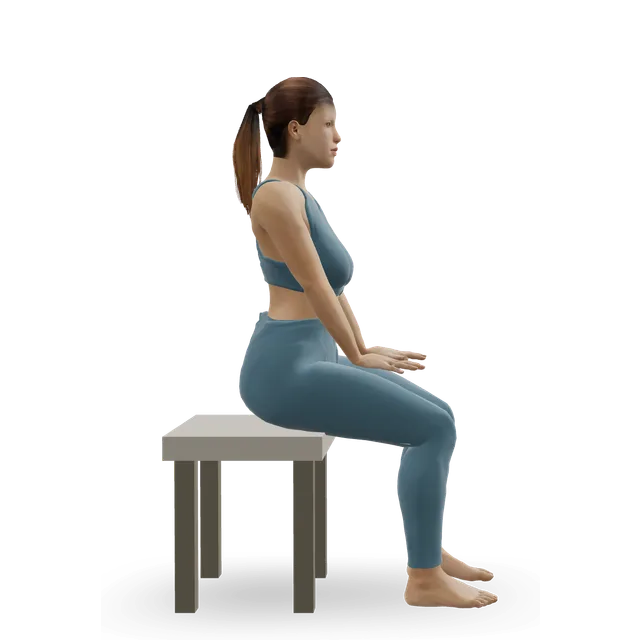
A slumped, unsupported sit bends the lower back forward for hours. In one man with a pressure sensor in a spinal disc, pressure was lower sitting relaxed than standing and highest bent fully forward. In 5 people with sensors in a spinal implant, leaning forward 15 degrees raised the load on the spine by 48%, while reclining the backrest, leaning back and resting the arms lowered it, and in 34 young adults a reclined, supported sit helped the discs recover height. So a little recline with the lower back supported is kinder to a sore back than slumping forward onto the tray table (our reading of these small studies).
Sources 10, 11, 12
Lifting casesEmerging evidence
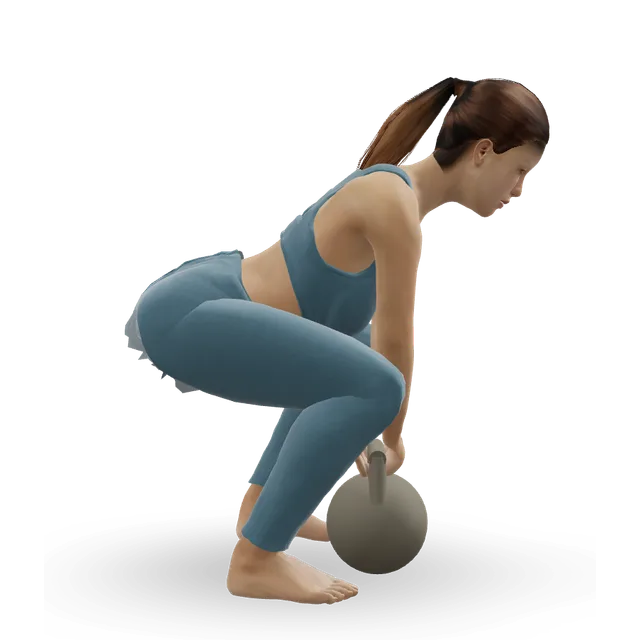
Cabin crew rated handling passengers' carry-on bags their most intense task, and the hardest on the shoulders, and 72% of Israeli flight attendants reported low back pain over a year, against 38% in the general population. In a lab, lifting cases of 5 to 14 kg onto shelves 1.2 to 1.8 metres high loaded the shoulders beyond UK manual handling guidance, and some people couldn't finish the lift.
Baggage handlers, who lift about 5,000 kg in a 9-hour shift, had more hospital-diagnosed back pain than other workers after many years of it, but no more slipped discs, and less once lifting aids came in. These are workers lifting every day; one trip's cases are a far smaller load, but an awkward, twisting lift to head height on a stiff back is a classic trigger (our reading).
Sources 13, 14, 15, 16, 1, 17
Blood clots after a long flight: how oftenStrong evidence
A long flight raises the risk of a blood clot in a leg (a deep vein thrombosis, DVT) or in the lungs (a pulmonary embolism), but the absolute risk is low. The World Health Organization's (WHO's) research project on the hazards of travel found the risk about doubles after a flight of more than 4 hours, rises with longer and repeated flights, and was 1 in 6,000 such flights in healthy people. In 8,755 employees of international organisations, it was one clot per 4,656 long-haul flights: 1 in 106,667 for flights under 4 hours and 1 in 1,264 for flights over 16 hours. The risk was highest in the first 2 weeks and back to normal by about 8.
A review of 14 studies found travel doubled the risk, with 26% more risk for every 2 hours in the air, and another review put it at two to four times, and in a Dutch study the risk from flying was similar to that from a long car, bus or train journey. A severe clot in the lungs on arrival is very rare: at a Paris airport, 1.5 per million passengers who flew over 5,000 km and 4.8 per million over 10,000 km; at Madrid, all 16 cases followed flights of over 6 hours, which the authors said "does not justify social alarm". In Western Australia, the average risk of dying from a flight-related clot was about 1 in 2 million arriving passengers. The UK travel health service says the risk for most travellers is low, and "The risk of pulmonary embolism is much lower." Some swelling of both lower legs is normal on a long flight: in 12 volunteers on simulated 12-hour flights, the lower legs swelled, but not to a harmful degree.
Sources 18, 19, 20, 21, 22, 23, 24, 25, 26, 27, 28
Who is at higher risk of a clotStrong evidence
The NHS lists a long journey (more than 4 hours) by plane, car or train among the times a DVT is more likely, along with being over 60, being overweight, smoking, a past clot, HRT or contraception that contains oestrogen, cancer or heart failure, varicose veins, a condition that makes the blood clot more easily, recent surgery or a hospital stay, pregnancy or the 6 weeks after a birth, and being dehydrated. The UK travel health service adds older age, a recent serious injury and some heart conditions, and the WHO project found obesity, being very tall or very short, the pill and inherited clotting conditions raised travellers' risk.
In one study, a window seat doubled the risk compared with an aisle seat. That was one small study, of 80 people with a clot and 108 without, with a wide margin of error, so treat it as a reason to get up more, not as a fixed fact. The idea of "economy class syndrome" is misleading, the travel health service says, because clots follow car and train journeys too, and in a New Zealand screening study, two of the nine people with a clot had flown only business class.
Sitting still is the main reason. In a study of 71 volunteers, clotting switched on in about 1 in 6 after an 8-hour flight, mostly in people with risk factors, against 3% after a film marathon, while in a chamber study of 73 healthy volunteers, low cabin pressure and oxygen on their own didn't change blood clotting.
Sources 29, 30, 27, 18, 22, 31, 32, 33, 34
Cabin pressure: untestedEmerging evidence
Some pages say lower cabin pressure makes discs swell and back pain worse. No study has tested whether cabin pressure causes back pain. The nearest evidence is about weather: in about 1,000 people with a new episode of back pain, changes in air pressure in the days before weren't linked with it. A cabin's pressure change is bigger than the weather's, so those studies can't settle the question. The long, still sit and the lifting are the better-supported explanations.
Sources 35, 36
Telling the causes apart, and when a scan mattersStrong evidence
Where it hurts and what eases it is the first clue (the map above). The National Institute for Health and Care Excellence (NICE) says don't routinely offer imaging for low back pain outside specialist care. A scan matters for the warning signs: an emergency magnetic resonance imaging (MRI) scan for suspected cauda equina syndrome, and an X-ray after a fall with a possible fracture. A suspected leg clot needs an ultrasound scan, which the NHS says should be arranged at a hospital within 24 hours.
A heart attack can cause pain that spreads to the arms, neck, jaw or back, the NHS heart attack and chest pain pages say, so back pain with chest pain or breathlessness is a 999 call, not a back problem.
Sources 37, 29, 38, 39
How it usually goesStrong evidence
In 33 groups of 11,166 people with new low back pain, average pain fell from 52 out of 100 to 23 within 6 weeks and to 6 at a year. NHS inform says you should see the biggest change in the first couple of weeks, and most problems should have improved within 6 weeks. Stiffness after a flight often eases within a day or two of moving about. No one can promise a date. Keep the clot signs in mind for a few weeks after a long flight, especially the first 2.
Sources 40, 1, 19