Back pain after a massage: normal soreness, deep pressure, massage guns and the signs to act on

Back pain after a massage is common, and it is usually short-lived: the muscles that were worked reacting to firm pressure, or the back pain you went in with having a bad day. It often starts within hours and has gone within a day or two. It isn't toxins leaving your muscles, and deeper pressure hasn't been shown to work better. Rarely, firm pressure can bruise someone on blood thinners or break a bone that osteoporosis has thinned, so this guide says who should ask for a lighter massage.

It starts with the signs that need help, from a 999 call or accident and emergency (A&E) for numbness around your genitals or bottom or new bladder or bowel trouble, to urgent help for tummy, side or back pain that is severe or getting worse after a massage, and a general practitioner (GP) for sudden back or rib pain if your bones are thin. It then covers what to do now and the National Health Service's (NHS's) advice, what to tell the therapist next time, massage chairs and massage guns, what the National Institute for Health and Care Excellence (NICE) says about massage alongside exercise, how much pain is fine, and a three-stage plan with a 3D demo of every move.

When to get help first

Exercise is for pain that has been checked or is clearly mild and settling.

Get urgent medical help if

  • Call 999 or go to A&E: loss of feeling or numbness around the genitals or bottom, new trouble peeing or controlling your bladder or bowels, changes in genital sensation during sex or problems with erections or orgasm, or pain, tingling, weakness or numbness in both legs. These are signs of cauda equina syndrome, which needs treating in hospital urgently. Don't drive yourself.
  • Call 999 or go to A&E: leg pain with numbness around the genitals or bottom, new trouble starting or controlling peeing, not knowing when you need to poo or losing control of it, sciatica in both legs, or weakness or numbness in both legs that is severe or getting worse. These can be signs of cauda equina syndrome, which needs treating in hospital as soon as possible.
  • Call 999 or go to A&E: back pain with chest pain, or back pain that started after a serious accident, such as a car crash.
  • Call 999: sudden, severe pain in the tummy or back, which can come with breathlessness, pale or grey skin, or collapse. It can be a burst abdominal aortic aneurysm, most common in men aged 65 or over and in people who smoke or used to smoke.
  • Call 999 or go to A&E if breathing suddenly becomes difficult, if pain in your chest or upper back comes on suddenly with breathlessness or a very fast heartbeat, or if someone passes out. Do not drive yourself. It can be a blood clot that has reached the lungs.
  • Same day (urgent GP appointment or NHS 111): throbbing pain in one leg (rarely both), usually the calf or thigh; swelling in one leg (rarely both); red, blue or darkened skin around the painful area, which may be harder to see on brown or black skin; or swollen veins. This can be a deep vein thrombosis (DVT). It is more likely after surgery, a hospital stay, 3 or more days in bed, a journey of over 4 hours, pregnancy or a recent birth, cancer, a previous clot, or oestrogen-containing contraception or HRT.
  • Call 999 or go to A&E: with a broken or bruised rib, shortness of breath or chest pain that is getting worse, or coughing up blood. A broken rib may have damaged your lung.
  • Call 999 or go to A&E: with a broken or bruised rib, pain in your tummy or shoulder. A broken rib can damage the liver or spleen.
  • Tummy, side or back pain that starts after a massage and is severe or getting worse: get urgent medical help the same day from NHS 111, or go to A&E if it is very bad. Very rarely, firm pressure has injured a kidney or the pancreas (our suggestion, from single case reports of organ injury after massage, as our sports massage page sets out).
  • You take blood thinners and, after a massage, a massage gun or a spinal manipulation, you have severe or spreading bruising, sudden severe back pain, blood in your pee or black poo: the NHS lists these among the signs of excessive bleeding on anticoagulants, and says to call 111 or go to A&E if you notice any severe or recurrent bleeding (our suggestion, built on the NHS anticoagulant side effects page).
  • Dark or tea-coloured pee with severe muscle pain or weakness after heavy use of a massage gun: get urgent medical help. It can be a breakdown of muscle that can harm the kidneys (our suggestion, from our massage guns page and a single case report).
  • Same day (GP or NHS 111): back pain and you feel hot, cold, shivery or generally unwell, or severe pain that starts suddenly or is getting worse quickly.
  • Same day: leg weakness that is getting worse; new leg pain with a history of cancer, HIV, TB or inflammatory arthritis; or leg pain with a fever, feeling unwell, loss of appetite, unexplained weight loss or night sweats.
  • Same day (urgent GP appointment or NHS 111): new difficulty lifting the front of your foot or toes (foot drop), or a foot that slaps down or catches as you walk, especially if it is getting worse. Weakness in both legs, or with numbness around the genitals or bottom or bladder or bowel changes, is the 999 emergency above.
  • Same day: you have or have had cancer, and new back pain that is severe and doesn't let up, is getting steadily worse, is worse at night and disturbs your sleep, is worse when you cough, sneeze or strain, or comes with tenderness over the spine. Contact your cancer team or GP urgently. With cancer, new weakness, difficulty walking, numbness or bladder or bowel problems are an emergency.
  • Same day: new numbness, pain or weakness in your legs after a spinal fracture. Very occasionally a piece of broken bone presses on the nerves, and an NHS trust says it needs to see you urgently if this happens. Contact your fracture team or GP, or call NHS 111.
  • Call 999: after a fall, you may have hurt your head, neck, back or hip, or you cannot get up.
  • Call 999 or go to A&E: severe hip pain after a fall or injury, or you cannot stand, walk or put weight on the leg. In an older adult this can be a broken hip; the leg may be at an odd angle or look shorter. Don't drive yourself.
  • Same day (urgent GP appointment or NHS 111): sudden, severe pain in one joint, with swelling, a change in skin colour or difficulty moving it, especially if you feel unwell, hot, cold or shivery or have a high temperature (although not everyone has one). It could be an infection in the joint, gout or calcium crystals (pseudogout), and only a sample of fluid from the joint can tell them apart.

See a doctor or physiotherapist if

  • Sudden back or rib pain that started during or soon after firm pressure, a massage chair, a massage gun or a manipulation, if you have osteoporosis, are 50 or over or past the menopause, or take long-term steroid tablets: see a GP and say what happened. It can be a broken spine bone or rib, which can happen with little force when bones are thin. Breathlessness or chest pain with it needs 999 (our suggestion, built on single case reports and a large record review, the NHS osteoporosis page and the site's spine fracture and rib lines).
  • Sudden new back pain after a minor fall, lift, cough or sneeze, from 50 or past the menopause, or if you take long-term steroid tablets; or height loss, a curved spine or a change in posture: see a GP. It can be a spinal fracture.
  • Unexplained back pain with muscle spasms, loss of height, or a curved spine or change in posture: a possible osteoporotic spinal fracture, more likely with older age or long-term steroid tablets.
  • You're 50 or over, or past the menopause, and have broken a bone in a fall from standing height or less, or you take steroid tablets long term: ask your GP about a fracture risk assessment. NICE recommends offering a bone density (DXA) scan after a broken hip or spine from thin bones, or another major fragility fracture, such as a broken wrist or shoulder, in the last 2 years.
  • A rib broke from a cough, a sneeze or a minor bump: ask your GP about your bone health.
  • Pain after a massage that is still worse 2 days later rather than easing, or a bruise from it that keeps spreading: see a GP. Soreness after a massage usually eases within a day or two (our suggestion, as our sports massage page advises, built on studies of how long soreness after a massage lasts).
  • Numbness, tingling or weakness that started with a massage and is still there after the session: see a GP. Very rarely, firm pressure has injured a nerve (our suggestion, from a single case report of a nerve injury in the forearm after massage, as our sports massage page sets out).
  • Pain, tingling or numbness spreading below the knee that isn't settling after a few weeks, is getting worse or stops your normal activities: see a GP.
  • Back pain that hasn't improved after a few weeks of looking after it at home, stops you doing day-to-day activities, worries you, or you're struggling to cope.
  • Pain that doesn't improve with rest or is worse at night, or pain that is worse when you sneeze, cough or poo.
  • Unexplained weight loss, or a lump, swelling or change in the shape of your back.
  • Pain at the top of the back, between the shoulders, rather than in the lower back.
  • Before your next massage: if you take blood thinners, have very weak bones, a bleeding disorder, a nerve condition such as peripheral neuropathy, cancer, or a leg that is swollen or painful, tell the therapist and ask your GP whether massage, and how firm, is right for you (our suggestion, built on the NHS's advice on complementary therapies, Cancer Research UK and the NHS DVT page).

Where does it hurt?

Location narrows the likely causes; it does not diagnose.

A dull, tender ache in the muscles that were worked, starting within hours and easing over a day or two

Soreness from firm pressure: the commonest after-effect of a massage. Gentle movement, heat and time help, and this guide covers it.

The low back pain you went in with, worse for a day or two

A flare of ordinary back pain. Keep gently moving and favour the direction that eases it.

Read: Back spasm and pulled back muscle →

Stiff and sore getting up after lying face down, worse when you arch back

Ordinary back pain irritated by the position (our reading; no study has measured it). Pillows or lying on your side help next time.

Read: Back pain bending backwards →

Pain, tingling or numbness down one leg below the knee

Sciatica, which can flare after any treatment. Weakness or numbness in both legs is a 999 call.

Read: Sciatica →

Sudden back pain during or after firm pressure, a massage chair or a massage gun, with thin bones, from 50 or on steroid tablets

A possible broken spine bone: see a GP, as the warning signs say. It is rare.

Read: Spinal compression fracture →

Sharp rib pain on breathing, coughing or twisting after pressure on the ribs

A possible bruised or broken rib: see a GP, and call 999 if you're short of breath.

Read: Rib injury →

Between the shoulder blades or the upper back

Usually the upper back muscles; the NHS asks for a GP check for pain between the shoulders.

Read: Upper back pain →

Tummy, side or back pain that is severe or getting worse after a massage

Rarely, an injury inside the tummy or to a kidney: get urgent medical help, as the warning signs say.

Throbbing pain and swelling in one calf or thigh

A possible blood clot (deep vein thrombosis, DVT), not the back: get a same-day check, and never have that leg massaged.

Read: Calf pain →

A sore neck or a headache after the massage

Our neck pain after a massage guide covers the face cradle, headaches and the neck's warning signs.

Read: Neck pain after a massage →

Back pain for more than 3 months that flares after treatments

Long-lasting (chronic) back pain, with its own plan.

Read: Chronic low back pain →

Understand it

Common, and usually gone within a day or twoEmerging evidence

Soreness in the area that was worked is the commonest after-effect of a massage. In 100 clients of a US massage clinic, phoned 2 to 7 days afterwards, 10% had some minor discomfort, and "The majority of negative symptoms started less than 12 hours after the massage and lasted for 36 hours or less". No one had a serious reaction.

In 25 trials of massage for back pain, more pain afterwards was the commonest side effect, in 1.5% to 25% of people, and no trial reported a serious adverse event. Across 67 trials of massage for pain, the side effects reported were soreness, pain, nausea, discomfort, sweating and low blood pressure, though only 24 of the 67 reported side effects at all. These are small numbers from one clinic and from trials that often didn't look for harms, but they point the same way.

Sources 1, 2, 3

Why firm pressure can leave you sore, and why it isn't toxinsEmerging evidence

No study has pinned down why. In two small Danish studies of people with tense, tender muscles, a muscle protein (myoglobin) leaked into the blood after massage, peaking about 3 hours after it started, and the rise shrank over repeated sessions as tension and pain eased. That points to minor stress in the muscle fibres. The studies are small and old, and neither had a comparison group, so treat this as one likely reason, not a proven one.

It isn't toxins leaving the muscles. In a lab study of 12 volunteers, massage after hard exercise slowed blood flow and the removal of lactate compared with resting, and in muscle samples from 11 young men, massage didn't change muscle lactate or glycogen. No study has measured any toxin released by massage.

Sources 4, 5, 6, 7

The back pain you went in with, and lying face downEmerging evidence

Many people book a massage because the back already hurts, and back pain has its own ups and downs. In a blinded trial of chiropractic care (another treatment, but the same question), a third of people given a sham treatment reported more pain or stiffness afterwards, so some soreness after any hands-on session would have happened anyway.

An hour face down on a massage table, with the lower back gently arched, can leave a sore back stiff, and people whose back pain is worse arching backwards often find lying flat on their front uncomfortable. No study has measured this: it is our reading, and pillows or lying on your side are the fix. Deeper work matters too: in 401 adults with chronic back pain, side effects possibly related to massage, mostly more pain, followed 9 of 131 courses of deep, structural massage and 5 of 134 courses of relaxation massage.

Sources 8, 9

Massage chairs and massage gunsEmerging evidence

No study has counted back pain after a massage chair. One case report describes a woman with no known risk factors who had sudden severe upper back pain while using an electric massage chair and a broken spine bone; osteoporosis was found afterwards. It shows this can happen, not how often.

Massage guns haven't been shown to ease muscle soreness: across 12 trials in healthy, active people there was no clear effect (very low certainty), and longer sessions, over 5 minutes per muscle, went with more soreness. In 65 active young adults, 5 minutes on one calf straight after hard exercise slightly increased soreness for 4 hours. In 38 young firefighters with chronic back pain, adding a massage gun to core exercise lowered pain by a further 0.63 points out of 10, a small difference, in a trial that reported no harms.

Sources 10, 11, 12, 13

Rare harms: bruises, broken bones in thin bones, and other case reportsEmerging evidence

Firm pressure can bruise, more easily if you take blood thinners: the NHS lists severe bruising and sudden severe back pain among the signs of excessive bleeding on anticoagulants. One man on two anticoagulants had a large bleed in his tummy wall after a handheld massager was used repeatedly on his injection site, and a person on warfarin bled into the wall of the bowel after a tummy massage.

With osteoporosis, the NHS says, "Sometimes a cough or sneeze can cause a broken rib or the partial collapse of one of the bones of the spine". A case report describes a man of 66 with osteoporosis who broke part of a lower spine bone after a back massage. Leg massage over an unrecognised clot was followed by a clot in the lungs in a pregnant woman, and the authors say massage of a leg with a deep vein thrombosis "should be contraindicated".

These are single cases. Reviews of case reports say "Massage is not entirely risk free. However, serious adverse events are probably true rarities", and found that most followed unusual techniques or massage by untrained people; in one review that counted spinal manipulation as massage, only 8 of 138 events involved massage therapists. The US National Center for Complementary and Integrative Health (NCCIH) says the risk of harm "appears to be low", with rare reports of a blood clot, nerve injury or bone fracture. Case reports can't show that a massage caused what followed, or how often it happens.

Sources 14, 15, 16, 17, 18, 19, 20, 21, 22

When it isn't the massage: the causes the warning signs cover

Back pain can have causes a massage didn't create and can't fix: cauda equina syndrome, a broken bone, infection, a burst aortic aneurysm and cancer are rare. The NHS asks for a 999 call for numbness around the genitals or bottom or new bladder or bowel changes, and a same-day check for back pain with a fever or feeling unwell. A swollen, throbbing calf can be a deep vein thrombosis, which needs a same-day check, and sudden breathlessness or chest pain can be a clot in the lungs. A broken rib with breathlessness or tummy pain needs 999, the NHS says.

From 50, past the menopause or on long-term steroid tablets, sudden back pain after little force can be a spinal fracture from thin bones: NICE's osteoporosis guideline covers finding these fractures, and an NHS trust says that very occasionally a piece of broken bone presses on the nerves, so new leg weakness needs to be seen urgently. The warning lines on these come from single case reports, as our sports massage page sets out: a kidney injury after a deep tissue massage for back pain from an unlicensed therapist, a pancreas injury after a tummy massage, and a nerve injury in the forearm after massage, so severe tummy, side or back pain after a massage, or numbness that lasts, needs checking. Dark pee with severe muscle pain after heavy massage gun use can be a breakdown of muscle, from a single case report.

Sources 23, 24, 25, 26, 27, 28, 29, 30, 31, 32, 33, 34, 35

When a scan helpsStrong evidence

Not for soreness after a massage. NICE says "Do not routinely offer imaging in a non-specialist setting" for low back pain, and in people with no back pain at all, disc wear on scans rose from 37% at 20 to 96% at 80, so a scan finding rarely explains new pain. Tests matter for the warning signs: an X-ray, and a bone density scan, for a suspected broken spine bone or rib in thin bones, an emergency magnetic resonance imaging (MRI) scan for suspected cauda equina syndrome, and an ultrasound scan for a suspected leg clot, which the NHS says you should be referred to hospital for within 24 hours.

Sources 36, 37, 25

How it usually goesStrong evidence

Most massage soreness starts within 12 hours and is gone within 36. If the massage flared back pain you already had, new back pain improves most in the first 6 weeks: in 33 groups of 11,166 people, average pain fell from 52 out of 100 to 23 by 6 weeks and 6 by a year, and NHS inform says most back problems should have improved within 6 weeks. No one can promise a date.

Sources 1, 38, 24

What helps, and how strong the evidence is

Deeper isn't more effectiveEmerging evidence

In the largest trial, of 401 adults with chronic back pain, a deep, structural massage helped no more than a relaxation massage over 10 weeks, and caused slightly more side effects (about 7% of courses against 4%). One research group's review suggests moderate pressure matters more than very light stroking, but moderate isn't painful, and it didn't test painful pressure. One small study of 26 older adults favoured deep tissue techniques, but it says nothing about pain during the massage. No trial has compared painful with comfortable pressure, so pressure you can relax into is the sensible choice.

Sources 9, 39, 40

Massage for back pain: a short-term extra, alongside exerciseStrong evidence

NICE says consider manual therapy, including massage, for low back pain "only as part of a treatment package that includes exercise". A Cochrane review of 25 trials found massage eased pain in the short term, not the long term, on low-quality evidence, and a US physiotherapy guideline says therapists "may use massage or soft tissue mobilization for short-term pain relief" in new back pain. If massage helps you, it is a reasonable extra, at a pressure that doesn't flare your back.

Sources 36, 2, 41

Exercise has the best evidence, and lowers the chance of another episodeStrong evidence

For back pain that lasts, exercise reduced pain by about 15 points out of 100 against no treatment, usual care or placebo in a review of 249 trials, on moderate-certainty evidence. To lower the chance of another episode, exercise with education gave a risk ratio of 0.55 (about half the risk) in 21 trials of 30,850 people, while education alone, back belts and shoe insoles didn't help. NICE says consider a group exercise programme.

Sources 42, 43, 36

Keep moving, use heat, and choose painkillers with careStrong evidence

The NHS says "stay active and try to continue with your daily activities" and don't stay in bed for long periods. It suggests a heat pack for stiffness or spasm, and anti-inflammatory medicine like ibuprofen if it suits you, and says paracetamol on its own isn't recommended for back pain. NICE says consider anti-inflammatory tablets at the lowest effective dose for the shortest time.

Sources 23, 36

Massage guns: no clear soreness benefitMixed evidence

Pooled trials in healthy, active people found no clear drop in soreness after hard exercise (very low certainty), longer sessions went with more soreness, and 5 minutes straight after hard exercise slightly increased soreness for a few hours in one study. A review of 11 studies lists the spine among the sensitive areas to avoid. Using one on a sore back isn't a proven fix, and pressing a spot that is already sore adds to it (our reading).

Sources 11, 12, 44

Who should ask first, or have a lighter massageStrong evidence

The NHS says chiropractic or osteopathy, which also use massage, "may not be safe" if "you're taking blood thinning medicines or are at increased risk of bleeding or stroke", "you have bones or joints that are very weak or seriously damaged" or "you have a condition affecting your nerves, like peripheral neuropathy"; we apply the same caution to firm massage. Never massage a calf or thigh that is swollen and throbbing.

With cancer, Cancer Research UK says "People with cancer should avoid very deep massage", and a 2026 review of 29 studies found no higher risk of harm with light to moderate massage, with pressure directly on a tumour discouraged. In more than a million older US adults, injury after spinal manipulation was more likely with osteoporosis, clotting problems and long-term anticoagulants, which is a reason to tell any hands-on practitioner about them.

Sources 45, 25, 46, 47, 48

How much pain is OK while you exercise?

The back pain rule, and judge a massage 2 days laterEmerging evidence

Some discomfort during exercise is fine, and it does not mean you are doing damage: the WHO counts "hurt does not necessarily mean harm" among the messages people with back pain need. Aim for pain you would call mild to moderate, no more than about 5 out of 10. It should settle within an hour or so, and your back should be no worse the next morning. If it is worse, do less next time (fewer reps, a smaller range, a lighter load), not nothing.

Leg symptoms are the exception: stop or shrink any movement that sends pain, pins and needles or numbness further down your leg. If leg symptoms move back towards your spine, that is a good sign, even if your back aches a little more for a while.

If pain climbs day after day, or you notice any warning sign, stop and get it checked. The 5 out of 10 figure matches this site's other pain guides and has not been tested in a back pain trial; in trials of long-lasting muscle and joint pain, exercise that allowed some pain did no harm.

For the days after a massage (our suggestion, built on the rules above, how long soreness after a massage usually lasts, and the NHS's advice to keep active): soreness up to about 5 out of 10 that started within hours and is easing by the second or third day is the usual pattern, so keep moving and do the stage 1 moves within it. If it is still climbing after 2 days, or comes with sharp pain on breathing, spreading bruising, numbness or weakness, it isn't a pain-rule question: see the warning signs. For the next massage, use the same scale for the pressure: ask the therapist to stay at about 5 out of 10 or less, and judge the session by how your back feels 2 days later, not on the table.

Sources 49, 1, 23

The exercise plan: 3 stages

Start at the first stage. Each move opens a full guide with a 3D demo.

Stage 1

Settle: keep moving, and find the direction that eases it

The first few days, and up to 2 weeks if the back pain itself flared, little and often. Walk several times a day, use heat if it helps, and keep whichever gentle movement eases your pain (the knee to chest if bending forward eases it, the press-up if arching back does; you don't need both), as our back pain after flying and moving house guides do. No massage on the sore area for now. With pain down a leg, our sciatica guide's first stage is the same. With any warning sign, get checked first.

Treadmill walking demonstrated on the 3D figure3D demoTreadmill walkingBeginner · Cardio machine

5 to 10 min, several times a day · As in our back pain after flying and moving house guides (editorial). Walking outdoors or round the house counts

Harder: Treadmill jogging

Cat-cow demonstrated on the 3D figure3D demoCat-cowBeginner · No equipment

8 waves, slower than feels natural · The move page's dose. Pad your knees, and keep both halves small while it's sore

Harder: Half lord of the fishes (Ardha Matsyendrasana)

Single knee-to-chest stretch demonstrated on the 3D figure3D demoSingle knee-to-chest stretchBeginner · No equipment

Hold 20 to 30 seconds, 2 to 4 times each side · From the move page's dose (an editorial starting point). Keep it only if bending forward eases your pain; leave it out if it sends pain down a leg, and with osteoporosis avoid deep or repeated rounding, as the move page says

Harder: 90/90 hip lift-off

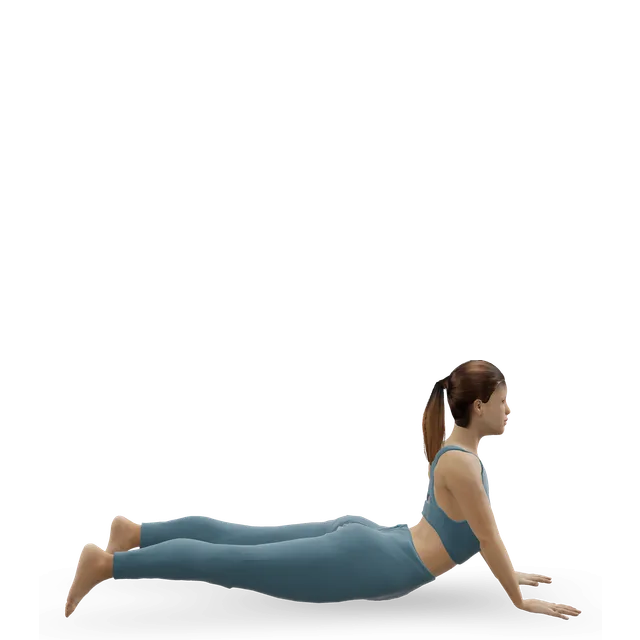
Prone press-up (McKenzie press-up) demonstrated on the 3D figure3D demoProne press-up (McKenzie press-up)Beginner · No equipment

10 slow repetitions, 3 to 5 times a day, while it helps · From the move page's dose (an editorial starting point). Keep it only if arching back eases your pain; skip it with spinal stenosis or if arching brings on leg symptoms, as the move page says

Easier: Sphinx pose (Salamba Bhujangasana)

Hip windshield wipers demonstrated on the 3D figure3D demoHip windshield wipersBeginner · No equipment

10 slow passes side to side, 2 rounds · From the move page's dose (an editorial starting point); like NHS inform's knee rolls, as our bending guide notes

Easier: Supine heel slide · Harder: 90/90 switch

Pelvic tilt into bridge demonstrated on the 3D figure3D demoPelvic tilt into bridgeBeginner · No equipment

8 to 10 slow reps · As in our back pain when bending and moving house guides (like NHS inform's pelvic tilt). With osteoporosis, peel up only part of the way, as the move page says

Harder: Glute bridge

Move on when: The soreness from the massage has gone, you can walk for 15 to 20 minutes, and your back is no worse the next morning (editorial, as in our back pain guide).

Follow along: a timer, a cue and the next move, one step at a time.
Stage 2

Build: trunk and hip strength

About weeks 1 to 6, 2 or 3 sessions a week, with walking on most days. The moves and sets are our back pain after flying guide's, which takes them from our back pain and driving guides.

Bird dog demonstrated on the 3D figure3D demoBird dogBeginner · No equipment

2 to 3 sets of 6 to 8 each side, 3 to 5 s holds · As in our back pain after flying guide (from our back pain guide). One limb at a time first if you need to

Easier: Bird dog, one limb at a time · Harder: Bear crawl

Dead bug demonstrated on the 3D figure3D demoDead bugBeginner · No equipment

2 sets of 6 to 8 each side · As in our back pain after flying guide. Heel taps first if you need to

Easier: Dead bug heel taps · Harder: Forearm plank

Knee side plank demonstrated on the 3D figure3D demoKnee side plankBeginner · No equipment

3 holds of 15 to 20 s each side · As in our back pain after flying guide

Harder: Side plank

Glute bridge demonstrated on the 3D figure3D demoGlute bridgeBeginner · No equipment

2 to 3 sets of 10 · As in our back pain after flying guide

Easier: Pelvic tilt into bridge · Harder: Single-leg glute bridge

Hip-hinge practice demonstrated on the 3D figure3D demoHip-hinge practiceBeginner · No equipment

2 to 3 sets of 10 · As in our back pain when bending and moving house guides. Bending from the hips with a long back

Harder: Kettlebell deadlift

Treadmill walking demonstrated on the 3D figure3D demoTreadmill walkingBeginner · Cardio machine

Build towards 30 min on at least 5 days a week · The end target in the WalkBack trial's programme, as our back pain after flying guide uses it

Harder: Treadmill jogging

Move on when: Every set feels controlled, and your back is no worse the next morning (editorial).

Follow along: a timer, a cue and the next move, one step at a time.
Stage 3

Strengthen, and massage comes back

From about week 6, two strength days a week, and ongoing: loaded lifting, carrying and resisting a twist, while massage, if you want it, comes back by the written steps below. No study has tested how massage comes back after a sore one, so the order is our suggestion. Keep the strength work going after the pain has gone: exercise with education is what lowered the chance of another episode in trials.

Kettlebell deadlift demonstrated on the 3D figure3D demoKettlebell deadliftBeginner · A kettlebell

3 sets of 8 to 10, light to start · As in our back pain after flying and moving house guides. The weight held close

Easier: Hip-hinge practice · Harder: Dumbbell Romanian deadlift

Dumbbell goblet squat demonstrated on the 3D figure3D demoDumbbell goblet squatIntermediate · A dumbbell

3 sets of 8 to 10 · As in our back pain after flying and moving house guides

Easier: Bodyweight squat · Harder: Barbell front squat

Suitcase carry demonstrated on the 3D figure3D demoSuitcase carryIntermediate · A dumbbell + A kettlebell

3 walks of 20 to 30 m each side · As in our back pain after flying and moving house guides. If you can't stay level, the weight is too heavy, as the move page says

Easier: Farmer's carry · Harder: Overhead carry (waiter's walk)

Side plank demonstrated on the 3D figure3D demoSide plankIntermediate · No equipment

3 holds of 20 to 30 s each side · As in our back pain after flying and moving house guides

Easier: Knee side plank · Harder: Side plank with leg lift

Half-kneeling Pallof press demonstrated on the 3D figure3D demoHalf-kneeling Pallof pressBeginner · A band + An anchor point

2 to 3 sets of 8 to 10 each side · As in our back pain after flying and moving house guides (from our back pain when twisting guide). Pad the knee

Harder: Pallof press

Hip hinge fold demonstrated on the 3D figure3D demoHip hinge foldBeginner · No equipment

5 slow folds, 3 breaths at the bottom · The move page's dose. Knees bent as much as you need; with osteoporosis, stop when the back starts to round, as the move page says

Harder: Seated forward fold (Paschimottanasana)

Move on when: Our suggestion: a massage at a pressure you agreed leaves your back no worse 2 days later. Keep two strength days a week. If it flares, go back to the stage 1 moves for a few days, not to bed, then build again.

Follow along: a timer, a cue and the next move, one step at a time.

What to change for now

What to do now (written steps)

Our 3D figure can't show these. They come from the NHS's advice for back pain and NICE; no trial has tested what to do after a sore massage, and where a step is our suggestion, it says so.

  • 1. Keep moving: short walks and the stage 1 moves. The NHS says don't stay in bed for long periods.
  • 2. Use a heat pack wrapped in a towel for stiffness or spasm, and ibuprofen if it suits you, as the NHS advises; paracetamol on its own isn't recommended for back pain.
  • 3. Leave the sore spot alone for a few days: no pressing, rolling or massage gun on it, and no deep massage there until it has settled (our suggestion).
  • 4. Check the warning signs: severe or worsening tummy, side or back pain, sudden pain with thin bones, rib pain on breathing, a swollen leg or dark pee aren't soreness.

Sources 23, 36, 11

Telling the therapist and setting up the table (written steps)

These are our suggestion unless a source is named. None has been tested as a way to prevent soreness.

  • 1. Before you start, say what you take (especially blood thinners), and any osteoporosis, cancer, clot or recent injury. The NHS says "You should tell your therapist if you have any medical conditions, are taking any medicines or receiving other treatments".
  • 2. Say where it hurt last time and for how long.
  • 3. Agree a pressure scale: about 5 out of 10 or less, and a word that means ease off. Deeper wasn't better in the largest back pain trial.
  • 4. Ask for a pillow under the hips and one under the ankles when face down, or to lie on your side with a pillow between the knees if your back dislikes arching.
  • 5. Ask for gentle pressure, or none, on the spot that flared last time, and none on the ribs or the bony middle of the spine if you have thin bones.
  • 6. Get up slowly: roll onto your side, push up with your arms, sit for a moment, then stand. Walk for a few minutes before you drive or sit for long.

Sources 45, 9, 39

Choosing a registered therapist, in the registers' own words

Massage therapists, sports therapists and physiotherapists are trained professionals; choosing a registered one is about accountability, not suspicion. Massage therapists don't have to be registered by law. The NHS says that before choosing a private therapist, "make sure they're registered with a professional organisation that's been accredited by the Professional Standards Authority (PSA)".

The Complementary and Natural Healthcare Council (CNHC), whose register is accredited by the PSA and includes massage therapy and sports massage, says that with its registrants "you can be confident that they are properly qualified and insured, and have chosen to make themselves accountable if a complaint is made against them to CNHC". For a private physiotherapist, the NHS says make sure they're "registered with the Health and Care Professions Council (HCPC)".

Sources 45, 50, 51

When not to have a massage, or to ask first

From the NHS, Cancer Research UK and our sports massage page:

  • A leg that could have a clot: never massage a swollen, throbbing calf or thigh; get a same-day check.
  • Blood thinners, a bleeding disorder, very weak bones or a nerve condition such as peripheral neuropathy: ask your GP first, and ask for lighter pressure.
  • Cancer: Cancer Research UK says avoid very deep massage; light to moderate massage carried no extra risk in a review, but no pressure directly on a tumour.
  • Feeling unwell, a fever, broken skin or a fresh injury: wait (our suggestion).

Sources 45, 25, 46, 47

Massage comes back (written steps)

No study has tested how massage should come back after a sore one. These steps are our suggestion.

  • 1. Stage 1: no massage on the sore area. Gentle movement and heat.
  • 2. Stage 2: a shorter session (30 minutes) with relaxation pressure, on your side if lying face down was the problem.
  • 3. Stage 3: your usual session at an agreed pressure. If your back is worse 2 days later, go back a step next time.
  • 4. A massage gun or chair: lower settings and shorter sessions, kept off the bony middle of the spine. Our massage guns page suggests 30 seconds to 2 minutes per muscle, keeping it moving, and a whole session under 10 to 15 minutes.

Positions to swap, and why

Habit or positionWhy it mattersInstead
Asking for the deepest pressure possible, or putting up with pressure that makes you hold your breathDeep, structural massage helped chronic back pain no more than relaxation massage and had slightly more side effects.Pressure you can relax into, about 5 out of 10 or less.
Lying face down for a whole hour with a back that dislikes archingArching can irritate some sore backs (our reading; untested).Pillows under the hips and ankles, or lying on your side.
Rolling or massage-gunning the sore spot the next dayMassage guns showed no clear soreness benefit, and longer sessions went with more soreness.Walking and gentle movement, such as cat-cow.Try: Cat-cow
Resting in bed until it stopsThe NHS says don't stay in bed for long periods.Short walks through the day.Try: Treadmill walking
A long session in a massage chair on its strongest setting, with thin bonesA case report describes a broken spine bone during a massage chair session.A low setting and short sessions, or ask your GP first.
A massage gun on the bony middle of the spine or the ribsOur massage guns page says keep it off bony points, and a review lists the spine among sensitive areas.The muscles beside the spine, briefly and lightly.
Firm massage of a swollen, painful calfLeg massage over an unrecognised clot was followed by a clot in the lungs in a case report.A same-day check for a possible clot.
Another deep massage to fix the sorenessSoreness isn't a knot to break up; it usually settles within a day or two.Wait until it has settled, then a lighter session.
Toe touches to stretch it out, if bending forward sends pain down a legThe move page says leave it out if bending forward sends pain down a leg.The direction that eases you: the prone press-up if arching back eases it.Try: Prone press-up (McKenzie press-up)
Asking for a scan to see what the massage didNICE advises against routine imaging, and disc changes are common in people without back pain.Get checked if a warning sign appears.

Routines to follow

More moves for this area

Questions people ask

Is it normal for my back to hurt after a massage?

Yes, often: in one massage clinic about 1 in 10 clients had some minor discomfort afterwards, and more pain is the commonest side effect in back pain trials. It usually starts within hours and has gone within a day or two. Pain that keeps getting worse, sharp pain on breathing, or numbness or weakness isn't normal soreness.

How long does back pain after a massage last?

Most soreness starts within 12 hours and has gone within about a day and a half. If the massage flared back pain you already had, it can take longer, though new back pain improves most in the first 6 weeks. See a GP if it is still worse 2 days later or keeps getting worse.

Why does my back hurt more after a massage?

Usually the worked muscles reacting to firm pressure, a long spell face down with a sore back, or the back pain you went in with having a bad day. In a back pain trial, deeper pressure caused slightly more side effects than relaxation massage and helped no more.

What should I do if my back hurts after a massage?

Keep moving, use a heat pack and, if it suits you, ibuprofen, as the NHS advises for back pain. Leave the sore spot alone for a few days and try the stage 1 moves. Check the warning signs if it's severe or getting worse.

Can a massage make back pain worse?

For a day or two, yes, and that's common. Serious harm is rare: reviews of case reports call serious events probably true rarities, and most followed unusual techniques or untrained practitioners.

Is a deep tissue massage supposed to hurt?

It can feel intense, but it shouldn't make you hold your breath, and deeper pressure wasn't more effective for chronic back pain in the largest trial. Agree a pressure of about 5 out of 10 or less and a word that means ease off.

Can a massage break a rib or a bone in my back?

Very rarely, in people with thin bones: case reports describe a broken spine bone after a back massage and during a massage chair session. If you have osteoporosis, say so and ask for lighter pressure, and see a GP for sudden back or rib pain afterwards.

Why does my back hurt after a massage chair?

Usually the same muscle soreness, from a strong setting or a long session. No study has counted it, but one case report describes a broken spine bone in a woman whose osteoporosis wasn't known. Use lower settings and shorter sessions, and see a GP for sudden severe pain.

Could it be the massage gun?

Massage guns haven't been shown to ease soreness, and in pooled trials longer sessions went with more soreness. Keep them off the bony middle of the spine and to under 2 minutes per muscle, as our massage guns page suggests. Dark pee with severe muscle pain after heavy use needs urgent medical help.

Should I drink water to flush out toxins?

Drinking water is fine, and feeling thirsty afterwards is common. But no study shows massage releases toxins: in a lab study, massage slowed, not sped, the removal of lactate from muscle.

Should I keep having massages for back pain?

If they help you, they are a reasonable extra: NICE says consider massage only alongside exercise, and the benefit in trials is short-term. Exercise has the stronger evidence, and with education it lowers the chance of another episode.

When should I worry?

Call 999 for numbness around your genitals or bottom, new bladder or bowel trouble, or breathlessness or chest pain. Get urgent help for tummy, side or back pain that is severe or getting worse after a massage, and a same-day check for a swollen, painful leg. See a GP if it's still worse 2 days later, a bruise spreads, or you have thin bones and sudden pain; in the US, call 911 where this page says 999.

Related exercise guides

Other pain guides

Sources

  1. Cambron 2007 · Side effects of massage in 100 clients of a US massage clinic (cross-sectional survey, J Altern Complement Med)
  2. Furlan 2015 · Massage for low back pain: 25 trials, 3,096 people (Cochrane systematic review)
  3. Crawford 2016 · Massage for function in people with pain: 67 trials (systematic review and meta-analysis, Pain Med)
  4. Danneskiold-Samsøe 1983 · A muscle protein (myoglobin) in the blood after massage in 13 women with tense, painful muscles (before and after study, Scand J Rehabil Med)
  5. Danneskiold-Samsøe 1986 · Myoglobin after repeated massage in 26 people with muscle pain (before and after study, Scand J Rheumatol)
  6. Wiltshire 2010 · Massage, muscle blood flow and lactate removal after exercise in 12 volunteers (lab study, Med Sci Sports Exerc)
  7. Crane 2012 · Massage and inflammation in muscle samples from 11 young men after damaging exercise (lab study, Sci Transl Med)
  8. Walker 2013 · Adverse events after usual chiropractic care or a sham in 183 adults: OUCH (blinded RCT, Spine)
  9. Cherkin 2011 · Structural massage, relaxation massage or usual care for chronic low back pain in 401 adults (RCT, Ann Intern Med)
  10. Jeon 2019 · A spine fracture during an electric massage chair session, with osteoporosis found afterwards (case report, Osteoporos Int)
  11. Zhu 2026 · Massage gun doses and recovery after muscle-damaging exercise: 12 trials (systematic review and meta-analysis, Chiropr Man Therap)
  12. Leabeater 2024 · A massage gun after hard exercise and soreness in 65 active adults (lab study, J Athl Train)
  13. Yang 2024 · A massage gun added to core exercise for back pain in 38 firefighters (RCT, BMC Complement Med Ther)
  14. NHS · Anticoagulant medicines: side effects
  15. Kwon 2024 · A bleed in the abdominal wall after a massage gun, in a man on blood thinners (case report, Biomedicine Hub)
  16. NHS · Osteoporosis (past its review date: reviewed October 2022, review due October 2025)
  17. Guo 2013 · A broken spine bone after a back massage in a man of 66 with osteoporosis (case report, Eur J Orthop Surg Traumatol)
  18. Ernst 2003 · The safety of massage therapy: 16 case reports and 4 case series (systematic review, Rheumatology)
  19. Yin 2014 · Adverse events after massage, including spinal manipulation, in 40 reports of 138 events (systematic review of case reports, Evid Based Complement Alternat Med)
  20. National Center for Complementary and Integrative Health (NCCIH, US) · Massage therapy: what you need to know (last updated May 2019)
  21. Sutham 2020 · A clot to the lungs after a leg massage in pregnancy (case report, BMC Pregnancy Childbirth)
  22. Chen 2013 · A bleed in the bowel wall after abdominal massage in a person on warfarin (case report, Am J Emerg Med)
  23. NHS · Back pain
  24. NHS inform · Back problems
  25. NHS · DVT (deep vein thrombosis)
  26. NHS · Pulmonary embolism
  27. NHS · Broken or bruised ribs
  28. NHS · Sciatica
  29. NHS · Septic arthritis
  30. NICE NG259 · Osteoporosis: risk assessment (2026)
  31. Essex Partnership University NHS Foundation Trust · Vertebral compression fracture (patient leaflet, 2025)
  32. Truong 2026 · Kidney injury after a massage by an unlicensed therapist (case report, Frontiers in Nephrology)
  33. Sun 2022 · Pancreas injury caused by abdominal massage (case report, World Journal of Clinical Cases)
  34. Suh 2022 · Median nerve injury in the forearm after massage therapy (case report, Frontiers in Neurology)
  35. Chen 2021 · Muscle breakdown (rhabdomyolysis) after a massage gun (case report, Physical Therapy)
  36. NICE · Low back pain and sciatica in over 16s: assessment and management (NG59, guideline)
  37. Brinjikji 2015 · Spine changes on scans in 3,110 people without back pain (systematic review, Am J Neuroradiol)
  38. da Costa 2012 · How acute and persistent low back pain usually goes: 33 cohorts of 11,166 people (meta-analysis, CMAJ)
  39. Field 2010 · Moderate against light pressure massage (review of one group's studies, Int J Neurosci)
  40. Romanowski 2012 · Deep tissue or classic massage for chronic low back pain in 26 older adults (comparative study, Stud Health Technol Inform)
  41. George 2021 · Interventions for acute and chronic low back pain: the US physiotherapy guideline (clinical practice guideline, J Orthop Sports Phys Ther)
  42. Hayden 2021 · Exercise therapy for chronic low back pain: 249 trials (Cochrane systematic review)
  43. Steffens 2016 · Preventing low back pain: 21 trials, 30,850 people (systematic review and meta-analysis, JAMA Intern Med)
  44. Ferreira 2023 · Massage guns and performance and recovery: 11 studies (systematic review, J Funct Morphol Kinesiol)
  45. NHS · Herbal medicines and complementary therapies (including chiropractic and osteopathy)
  46. Cancer Research UK · Massage therapy (past its review date: reviewed September 2022, review due September 2025)
  47. Kjerulf 2026 · Harms of massage in people with cancer: 63 studies (systematic review and meta-analysis, PLoS One)
  48. Whedon 2015 · Injury after chiropractic manipulation or a GP visit in older adults on Medicare (retrospective cohort study, Spine)
  49. Smith 2017 · Should exercise be painful in long-lasting muscle and joint pain? 7 trials (meta-analysis, Br J Sports Med)
  50. Complementary and Natural Healthcare Council (CNHC) · Choosing a complementary healthcare practitioner
  51. NHS · Physiotherapy

Exercise education, not a diagnosis or treatment plan. It is written from the guidelines and studies listed above; review by a clinician is pending. If your pain follows an injury, is severe, is getting worse, or comes with any warning sign listed on this page, get it assessed. Health disclaimer.