Back pain after a chiropractor: soreness after an adjustment, flare-ups, rare harms and what helps

Back pain after seeing a chiropractor is common: about half of patients have a reaction, usually soreness, stiffness or tiredness that starts within hours and is mostly gone within a day or two. Some of it is the back pain you went in with having a bad day. Serious harm is rare, and the UK regulator, the General Chiropractic Council (GCC), says mild aches generally pass within a few days. The crack isn't a bone going back into place, and no one can push a slipped disc back by hand.

It starts with the signs that need help, from a 999 call or accident and emergency (A&E) for numbness around your genitals or bottom, new bladder or bowel trouble or weakness in both legs, to a general practitioner (GP) for sudden back or rib pain if your bones are thin, or soreness that is worse after 2 or 3 days. It then covers what to do now and the National Health Service's (NHS's) advice, what to tell your chiropractor next time, who should ask first, what the National Institute for Health and Care Excellence (NICE) says about manipulation alongside exercise, how much pain is fine, and a three-stage plan with a 3D demo of every move.

When to get help first

Exercise is for pain that has been checked or is clearly mild and settling.

Get urgent medical help if

  • Call 999 or go to A&E: loss of feeling or numbness around the genitals or bottom, new trouble peeing or controlling your bladder or bowels, changes in genital sensation during sex or problems with erections or orgasm, or pain, tingling, weakness or numbness in both legs. These are signs of cauda equina syndrome, which needs treating in hospital urgently. Don't drive yourself.
  • Call 999 or go to A&E: leg pain with numbness around the genitals or bottom, new trouble starting or controlling peeing, not knowing when you need to poo or losing control of it, sciatica in both legs, or weakness or numbness in both legs that is severe or getting worse. These can be signs of cauda equina syndrome, which needs treating in hospital as soon as possible.
  • Call 999 or go to A&E: back pain with chest pain, or back pain that started after a serious accident, such as a car crash.
  • Call 999: sudden, severe pain in the tummy or back, which can come with breathlessness, pale or grey skin, or collapse. It can be a burst abdominal aortic aneurysm, most common in men aged 65 or over and in people who smoke or used to smoke.
  • Call 999 or go to A&E if breathing suddenly becomes difficult, if pain in your chest or upper back comes on suddenly with breathlessness or a very fast heartbeat, or if someone passes out. Do not drive yourself. It can be a blood clot that has reached the lungs.
  • Same day (urgent GP appointment or NHS 111): throbbing pain in one leg (rarely both), usually the calf or thigh; swelling in one leg (rarely both); red, blue or darkened skin around the painful area, which may be harder to see on brown or black skin; or swollen veins. This can be a deep vein thrombosis (DVT). It is more likely after surgery, a hospital stay, 3 or more days in bed, a journey of over 4 hours, pregnancy or a recent birth, cancer, a previous clot, or oestrogen-containing contraception or HRT.
  • Call 999 or go to A&E: with a broken or bruised rib, shortness of breath or chest pain that is getting worse, or coughing up blood. A broken rib may have damaged your lung.
  • Call 999 or go to A&E: with a broken or bruised rib, pain in your tummy or shoulder. A broken rib can damage the liver or spleen.
  • You take blood thinners and, after a massage, a massage gun or a spinal manipulation, you have severe or spreading bruising, sudden severe back pain, blood in your pee or black poo: the NHS lists these among the signs of excessive bleeding on anticoagulants, and says to call 111 or go to A&E if you notice any severe or recurrent bleeding (our suggestion, built on the NHS anticoagulant side effects page).
  • Same day (GP or NHS 111): back pain and you feel hot, cold, shivery or generally unwell, or severe pain that starts suddenly or is getting worse quickly.
  • Same day: leg weakness that is getting worse; new leg pain with a history of cancer, HIV, TB or inflammatory arthritis; or leg pain with a fever, feeling unwell, loss of appetite, unexplained weight loss or night sweats.
  • Same day (urgent GP appointment or NHS 111): new difficulty lifting the front of your foot or toes (foot drop), or a foot that slaps down or catches as you walk, especially if it is getting worse. Weakness in both legs, or with numbness around the genitals or bottom or bladder or bowel changes, is the 999 emergency above.
  • Same day: you have or have had cancer, and new back pain that is severe and doesn't let up, is getting steadily worse, is worse at night and disturbs your sleep, is worse when you cough, sneeze or strain, or comes with tenderness over the spine. Contact your cancer team or GP urgently. With cancer, new weakness, difficulty walking, numbness or bladder or bowel problems are an emergency.
  • Same day: new numbness, pain or weakness in your legs after a spinal fracture. Very occasionally a piece of broken bone presses on the nerves, and an NHS trust says it needs to see you urgently if this happens. Contact your fracture team or GP, or call NHS 111.
  • Call 999: after a fall, you may have hurt your head, neck, back or hip, or you cannot get up.
  • Call 999 or go to A&E: severe hip pain after a fall or injury, or you cannot stand, walk or put weight on the leg. In an older adult this can be a broken hip; the leg may be at an odd angle or look shorter. Don't drive yourself.
  • Same day (urgent GP appointment or NHS 111): sudden, severe pain in one joint, with swelling, a change in skin colour or difficulty moving it, especially if you feel unwell, hot, cold or shivery or have a high temperature (although not everyone has one). It could be an infection in the joint, gout or calcium crystals (pseudogout), and only a sample of fluid from the joint can tell them apart.
  • Call 999 or go to A&E: a headache that came on suddenly and is extremely painful; numbness or weakness in the face or body; a drooping face, or being unable to lift both arms and keep them up; difficulty speaking, swallowing, balancing, walking or remembering; double vision or loss of vision; drowsiness or confusion. A torn neck artery often starts with headache and neck pain, sometimes with dizziness or tingling, so head or neck pain unlike any you have had before needs checking.

See a doctor or physiotherapist if

  • Soreness after an adjustment that is worse 2 or 3 days later rather than easing, new pain or tingling down a leg, or a back that keeps getting worse after each visit: stop the treatment that flares it, tell your chiropractor, and see a GP or physiotherapist. The General Chiropractic Council says your chiropractor should discuss other options or refer you if you haven't improved within a few weeks (our suggestion, built on the regulator's words and studies of how long reactions last).
  • Sudden back or rib pain that started during or soon after firm pressure, a massage chair, a massage gun or a manipulation, if you have osteoporosis, are 50 or over or past the menopause, or take long-term steroid tablets: see a GP and say what happened. It can be a broken spine bone or rib, which can happen with little force when bones are thin. Breathlessness or chest pain with it needs 999 (our suggestion, built on single case reports and a large record review, the NHS osteoporosis page and the site's spine fracture and rib lines).
  • Sudden new back pain after a minor fall, lift, cough or sneeze, from 50 or past the menopause, or if you take long-term steroid tablets; or height loss, a curved spine or a change in posture: see a GP. It can be a spinal fracture.
  • Unexplained back pain with muscle spasms, loss of height, or a curved spine or change in posture: a possible osteoporotic spinal fracture, more likely with older age or long-term steroid tablets.
  • You're 50 or over, or past the menopause, and have broken a bone in a fall from standing height or less, or you take steroid tablets long term: ask your GP about a fracture risk assessment. NICE recommends offering a bone density (DXA) scan after a broken hip or spine from thin bones, or another major fragility fracture, such as a broken wrist or shoulder, in the last 2 years.
  • A rib broke from a cough, a sneeze or a minor bump: ask your GP about your bone health.
  • Pain, tingling or numbness spreading below the knee that isn't settling after a few weeks, is getting worse or stops your normal activities: see a GP.
  • Back pain that hasn't improved after a few weeks of looking after it at home, stops you doing day-to-day activities, worries you, or you're struggling to cope.
  • Pain that doesn't improve with rest or is worse at night, or pain that is worse when you sneeze, cough or poo.
  • Unexplained weight loss, or a lump, swelling or change in the shape of your back.
  • Pain at the top of the back, between the shoulders, rather than in the lower back.
  • Before your next visit: tell the chiropractor if you have osteoporosis or a past fragility fracture, take blood thinners, have a clotting problem, ankylosing spondylitis or another inflammatory spine disease, cancer, a nerve condition such as peripheral neuropathy, or a recent fall or injury, and ask whether manipulation, or a gentler technique, is right for you (our suggestion, built on the NHS's advice on chiropractic and osteopathy and a large study of injuries after manipulation in older adults).

Where does it hurt?

Location narrows the likely causes; it does not diagnose.

A dull ache or stiffness where you were treated, starting within hours and mostly gone within a day or two

A common reaction to manipulation. Gentle movement, heat and time help, and this guide covers it.

The low back pain you went in with, worse for a day or two after a visit

A flare of ordinary back pain. Keep moving and favour the direction that eases it.

Read: Back spasm and pulled back muscle →

Between the shoulder blades or around the ribs after the upper back was treated, sore to twist or breathe deeply

Usually sore muscles and rib joints, easing within a day or two. Sharp rib pain on breathing, especially with thin bones, needs a GP check.

Read: Middle back pain →

Sharp rib pain on breathing, coughing or twisting, especially with thin bones

A possible broken rib: see a GP, and call 999 if you're short of breath.

Read: Rib injury →

Sudden back pain after an adjustment, from 50, past the menopause, on steroid tablets or with osteoporosis

A possible broken spine bone from thin bones: see a GP, as the warning signs say. It is rare.

Read: Spinal compression fracture →

Pain, tingling or numbness down one leg below the knee, new or worse

Sciatica, which can flare after any back treatment. Weakness or numbness in both legs is a 999 call.

Read: Sciatica →

Numbness around the genitals or bottom, bladder or bowel changes, or weakness in both legs

Possible cauda equina syndrome: call 999, whatever caused it, as the warning signs say.

Neck pain with a sudden, severe headache, dizziness, double vision, slurred speech or trouble swallowing after the neck was treated

A possible torn neck artery: call 999, as the warning signs say. It is very rare.

A sore neck or a mild headache after the neck was treated

A common reaction that usually settles within a day or two. Our neck pain after a massage guide covers the neck's warning signs.

Read: Neck pain after a massage →

Back pain for more than 3 months, flaring after treatments

Long-lasting (chronic) back pain, with its own plan.

Read: Chronic low back pain →

Understand it

Soreness after manipulation is common, and usually briefStrong evidence

Studies in different countries agree. In 1,058 new patients of Norwegian chiropractors, 55% reported at least one reaction over up to six treatments, mostly local discomfort, a headache, tiredness or discomfort spreading elsewhere, nearly all mild or moderate, and "Sixty-four percent of reactions appeared within 4 hours of treatment, and 74% had disappeared within 24 hours". In 465 Belgian patients at a first visit to manipulative therapists, 60.9% had a reaction, and in Swedish chiropractic patients reactions were "usually gone the day after treatment". A review of manual therapy by regulated therapists found minor or moderate short-lived reactions in about 41% of patients in cohort studies and 22% in trials.

In recent North American practice, 21.3% of visits followed up 2 to 7 days later had a new or worse symptom, whether or not the treatment caused it, most rated mild or moderate by the patients themselves. The US National Center for Complementary and Integrative Health (NCCIH) says "Most of these side effects go away within 24 hours". For osteopathy, the General Osteopathic Council (GOsC) says "it is not unusual to sometimes feel sore in the first 24 to 48 hours after treatment".

Sources 1, 2, 3, 4, 5, 6, 7

Part of it is the back's own ups and downsEmerging evidence

In a blinded trial of 183 adults with spinal pain, 42% given usual chiropractic care and 33% given a sham treatment reported at least one adverse event, a difference that wasn't significant, and the authors concluded that "A substantial proportion of adverse events after chiropractic treatment may result from natural history variation and nonspecific effects".

Reactions are commoner at the start of a course and were reported more by women and by people with long-lasting problems. Feeling worse straight away is less common: after US osteopathic treatment, patients felt worse or much worse at 2.5% of visits before they left. UK osteopathy patients said that whether soreness felt worrying depended partly on whether they had been told to expect it. In older adults, soreness and stiffness were common and no catastrophic events were found in the studies reviewed.

Sources 8, 9, 10, 3, 2, 11

The mid back and ribs, and thin bonesEmerging evidence

Manipulation of the upper back can leave the ribs and the muscles between the shoulder blades sore for a day or two (our reading of the reaction studies). Rarely, a rib breaks: in 960,140 sessions at 30 clinics in Hong Kong, the 2 severe events found were broken ribs in women over 60 with osteoporosis, and a Canadian case series describes 3 rib fractures after manipulation in patients aged 57 to 77, two with thinning bones.

A case series describes four people found to have spine fractures after chiropractic adjustments, and its authors advise that people with osteoporosis who have had a fall or injury have an X-ray before treatment. In more than a million older US adults who saw a chiropractor, injury within a week was rarer than after a GP visit (40 against 153 per 100,000), but more likely with osteoporosis, a clotting problem, inflammatory spine disease or long-term anticoagulants.

Sources 12, 13, 14, 15

Discs and nerves: rare, and no more common than after other careEmerging evidence

Case reports describe a disc herniation getting worse, or cauda equina syndrome, after low back manipulation: a review found 77 published cases worldwide, and "The anecdotal nature of these cases does not allow for causal inferences between SMT and the events identified in this review" (SMT is spinal manipulation).

Large record studies point to the back problem rather than the treatment. In 67,220 matched pairs of adults with low back pain, cauda equina syndrome within 3 months affected 0.07% after chiropractic manipulation and 0.11% after a physiotherapy assessment, and the authors conclude that people with back pain "may have an elevated risk of CES independent of treatment" (CES is cauda equina syndrome); the same held in people with a disc problem or sciatica. People who needed early surgery for a slipped disc were as likely to have seen a GP as a chiropractor beforehand, which the authors explain as back pain from a developing disc problem sending people for care. A much-quoted estimate puts the risk of manipulation worsening a slipped disc or causing cauda equina syndrome at less than 1 in 3.7 million, but that figure was calculated from published reports, not measured. A Chinese surgical series describes 10 people with long-standing disc trouble whose leg pain got sharply worse within 24 hours of manipulation. Whatever the cause, new leg weakness or numbness, or bladder or bowel changes, need urgent care.

Sources 16, 17, 18, 19, 20, 21, 22

If your neck was treated tooMixed evidence

Mild neck soreness or a headache after neck treatment is common: in a US trial of chiropractic care for neck pain, a quarter of people had more neck pain or stiffness; in 529 Dutch patients with neck pain, 56% reported a reaction after one of their first three treatments, 13% severe in intensity but none serious; and a UK survey of 50,276 neck manipulations found no serious events.

A rare stroke from a torn neck artery has been linked with neck manipulation in case reports. In Ontario, people under 45 who had this stroke were about three times as likely to have seen a chiropractor beforehand, and also a GP; the authors explain this as people with a tear already under way seeking care for neck pain and headache, and found no excess risk with chiropractic care compared with GP care (a 2010 erratum to this study exists, which we couldn't read). The American Heart Association says it is unclear whether the link reflects tears already present or the treatment, and that patients should be told about it before neck manipulation (a correction to its statement exists, which we couldn't read).

Later studies agree: no excess risk of carotid stroke after chiropractic care, none in older adults on Medicare, and, in 431,492 matched pairs of adults with new neck pain or headache, 31 neck artery tears in the 30 days after chiropractic neck manipulation (0.007%) against 58 after an ibuprofen prescription (0.013%). A review from outside the profession found "no convincing evidence to support a causal link". Serious events reported after neck treatment are nearly all after manipulation rather than gentler mobilisation, and no screening test reliably picks out who is at risk.

Sources 23, 24, 25, 26, 27, 28, 29, 30, 31, 32

Serious harm overall: rareStrong evidence

A scoping review by the Royal College of Chiropractors found that "benign adverse events following manual treatments to the spine are common, while serious adverse events are rare", with estimates ranging from 1 per 2 million manipulations to 13 per 10,000 patients. The NCCIH says serious problems "are very rare, and there are no accurate estimates of how often they occur". The GCC says "Chiropractic treatment is safe when performed correctly by a trained and registered chiropractor", that "It is common to experience mild to moderate aches and pains, stiffness and tiredness", that these "are usually mild and generally pass within a few days", and that "More serious side effects are rare but have occasionally been reported following spine manipulation".

Sources 33, 6, 34

When it isn't the adjustment: the causes the warning signs cover

Back pain can have causes no treatment created: cauda equina syndrome, a broken bone, infection, a burst aortic aneurysm and cancer are rare. The NHS asks for a 999 call for numbness around the genitals or bottom or new bladder or bowel changes, and a same-day check for back pain with a fever or feeling unwell. A swollen, throbbing calf can be a deep vein thrombosis (DVT), and sudden breathlessness or chest pain can be a clot in the lungs; a broken rib with breathlessness or tummy pain needs 999, and on blood thinners, severe bruising or sudden severe back pain can be a sign of bleeding, the NHS says.

With osteoporosis, the NHS says, a cough or sneeze can sometimes break a rib or partly collapse one of the bones of the spine. From 50, past the menopause or on long-term steroid tablets, sudden back pain after little force can be a spinal fracture from thin bones: NICE's osteoporosis guideline covers finding these fractures, and an NHS trust says that very occasionally a piece of broken bone presses on the nerves, so new leg weakness needs to be seen urgently.

Sources 35, 36, 37, 38, 39, 40, 41, 42, 43, 44, 45

When a scan helps, and how it usually goesStrong evidence

Not for soreness after an adjustment. NICE says "Do not routinely offer imaging in a non-specialist setting" for low back pain, the GCC says "In most cases of non-traumatic musculoskeletal low back pain, an x-ray is not necessary", and disc wear on scans is common in people with no back pain (37% at 20, 96% at 80). Scans matter for the warning signs: an emergency MRI (magnetic resonance imaging) scan for suspected cauda equina syndrome, and an X-ray for a suspected broken spine bone or rib in thin bones. A scan can't show a misalignment that manipulation corrects.

Most reactions start within 4 hours and three quarters have gone within 24. If the back pain itself flared, new back pain improves most in the first 6 weeks: in 33 groups of 11,166 people, average pain fell from 52 out of 100 to 23 by 6 weeks. The GCC says that if you haven't improved within a few weeks of starting treatment, your chiropractor should discuss other options or refer you. No one can promise a date.

Sources 46, 34, 47, 1, 48
What helps, and how strong the evidence is

What manipulation does for back pain: modest benefits, about as good as other recommended careStrong evidence

For chronic back pain, across 47 trials of 9,211 people, "SMT produces similar effects to recommended therapies for chronic low back pain", and side effects were mostly short-lived and mild to moderate. The 2026 Cochrane update of 76 trials found manipulation "may result in little to no difference in pain and a small improvement in functional status" compared with other treatments, with side effects "limited to muscle soreness, stiffness, and/or transient increase in pain", and no serious complications in any trial. No serious adverse events were reported among 7,518 trial participants given manipulation in another review.

For new back pain, 15 trials found pain about 10 points better out of 100 (moderate quality), and minor short-lived harms such as more pain, stiffness and headache were reported 50% to 67% of the time in large case series; two errata to that review exist, which we couldn't read. NICE says consider manual therapy, including spinal manipulation, "only as part of a treatment package that includes exercise", and a US physiotherapy guideline recommends manipulation or gentler joint mobilisation for back pain. If it helps you, it is a reasonable part of a plan.

Sources 49, 50, 51, 52, 46, 53

Exercise has the best evidence, and lowers the chance of another episodeStrong evidence

For back pain that lasts, exercise reduced pain by about 15 points out of 100 in a review of 249 trials, on moderate-certainty evidence, and exercise with education lowered the risk of a new episode to about half (risk ratio 0.55) in 21 trials of 30,850 people, while education alone, belts and insoles didn't. Any manipulation works best alongside it.

Sources 54, 55, 46

A gentler technique is an optionEmerging evidence

The GCC says "some chiropractors treat using quick but firm manipulation while others have a lighter touch". For neck pain, manipulation and gentler mobilisation gave similar results in a Cochrane review, whose authors called for more research on mobilisation because rare serious events after manipulation are possible, and serious events reported after neck treatment are nearly all after manipulation. A US physiotherapy guideline recommends "thrust or nonthrust joint mobilization" for back pain. After a sore reaction, asking for the non-thrust option is reasonable (our suggestion).

Sources 34, 56, 53, 32

The crack isn't a bone going back into place, and discs aren't pushed backStrong evidence

In real-time MRI of a finger joint in one volunteer, the crack came with a gas-filled cavity forming in the joint fluid, not with a bone moving. Precise X-ray measurement in 10 people found manipulation didn't move the pelvic joint at all, and a review of 5 studies found "no evidence of improved pain outcomes associated with an audible pop".

No study shows a slipped disc being pushed back by hand. Slipped discs often shrink on their own: in a review of 31 studies, the most extreme kind (a free fragment) shrank in 96% of people, a disc extrusion in 70%, a protrusion in 41% and a bulge in 13%. Manipulation probably eases pain through the nervous system: "only transient biomechanical effects are supported by studies which quantify motion".

Sources 57, 58, 59, 60, 61, 62

Keep moving, use heat, and choose painkillers with careStrong evidence

The NHS says stay active, don't stay in bed for long periods, use a heat pack for stiffness or spasm, and take anti-inflammatory medicine like ibuprofen if it suits you; paracetamol on its own isn't recommended for back pain. The NHS lists manual therapy among the treatments if back pain isn't better after a few weeks.

Sources 35, 46

Who should ask firstStrong evidence

The NHS says chiropractic or osteopathy "may not be safe" if "you're taking blood thinning medicines or are at increased risk of bleeding or stroke", "you have bones or joints that are very weak or seriously damaged" or "you have a condition affecting your nerves, like peripheral neuropathy". Injury after manipulation in older adults was more likely with osteoporosis, clotting problems, inflammatory spine disease and long-term anticoagulants, so tell the chiropractor about any of them.

Sources 63, 15, 14

How much pain is OK while you exercise?

The back pain rule, and judge a visit 2 days laterEmerging evidence

Some discomfort during exercise is fine, and it does not mean you are doing damage: the WHO counts "hurt does not necessarily mean harm" among the messages people with back pain need. Aim for pain you would call mild to moderate, no more than about 5 out of 10. It should settle within an hour or so, and your back should be no worse the next morning. If it is worse, do less next time (fewer reps, a smaller range, a lighter load), not nothing.

Leg symptoms are the exception: stop or shrink any movement that sends pain, pins and needles or numbness further down your leg. If leg symptoms move back towards your spine, that is a good sign, even if your back aches a little more for a while.

If pain climbs day after day, or you notice any warning sign, stop and get it checked. The 5 out of 10 figure matches this site's other pain guides and has not been tested in a back pain trial; in trials of long-lasting muscle and joint pain, exercise that allowed some pain did no harm.

For the days after an adjustment (our suggestion, built on the rules above, studies of how long reactions to manipulation last, and the General Chiropractic Council's words): an ache or stiffness up to about 5 out of 10 that started within hours and is easing by the next day or two is the usual pattern, so keep moving and do the stage 1 moves within it. If it is still climbing after 2 or 3 days, spreads down a leg, or comes with numbness, weakness or sharp rib pain, it isn't a pain-rule question: see the warning signs. Judge a course of treatment the same way: each visit should leave you no worse 2 days later, and better over a few weeks.

Sources 64, 1, 34

The exercise plan: 3 stages

Start at the first stage. Each move opens a full guide with a 3D demo.

Stage 1

Settle: keep moving, find the direction that eases it, and turn gently

The first few days, and up to 2 weeks if the back pain itself flared, little and often. Walk several times a day, use heat if it helps, keep whichever gentle movement eases your pain (the knee to chest if bending forward eases it, the press-up if arching back does; you don't need both), and turn gently through the upper back if the mid back or ribs are sore. With pain down a leg, our sciatica guide's first stage is the same. With any warning sign, get checked first.

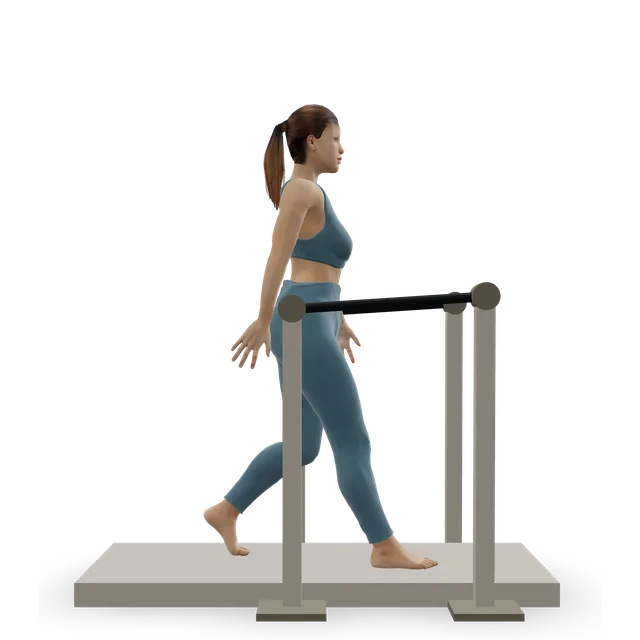
Treadmill walking demonstrated on the 3D figure3D demoTreadmill walkingBeginner · Cardio machine

5 to 10 min, several times a day · As in our back pain after flying and moving house guides (editorial)

Harder: Treadmill jogging

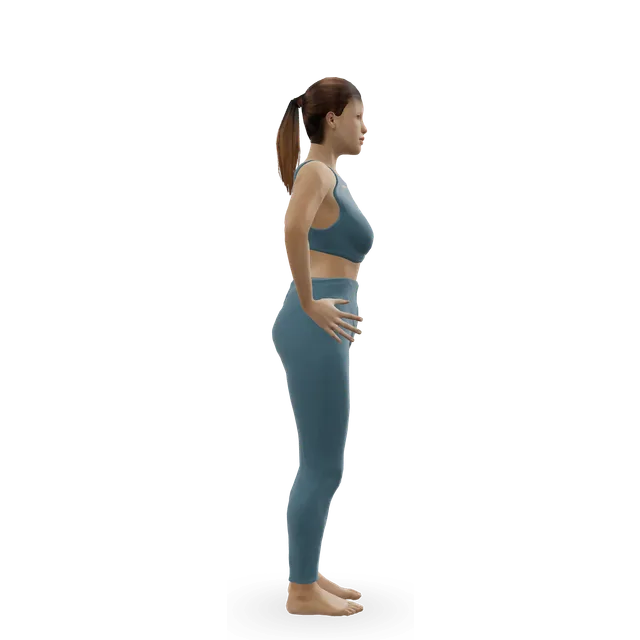
Standing pelvic tilt demonstrated on the 3D figure3D demoStanding pelvic tiltBeginner · No equipment

5 to 10 slow tilts, up to 3 times a day · From the move page's dose (a similar NHS standing pelvic tilt's). Skip the forward tilt, or keep it very small, if arching sends pain down a leg, as the move page says

Harder: Half lord of the fishes (Ardha Matsyendrasana)

Cat-cow demonstrated on the 3D figure3D demoCat-cowBeginner · No equipment

8 waves, slower than feels natural · The move page's dose. Keep both halves small while it's sore

Harder: Half lord of the fishes (Ardha Matsyendrasana)

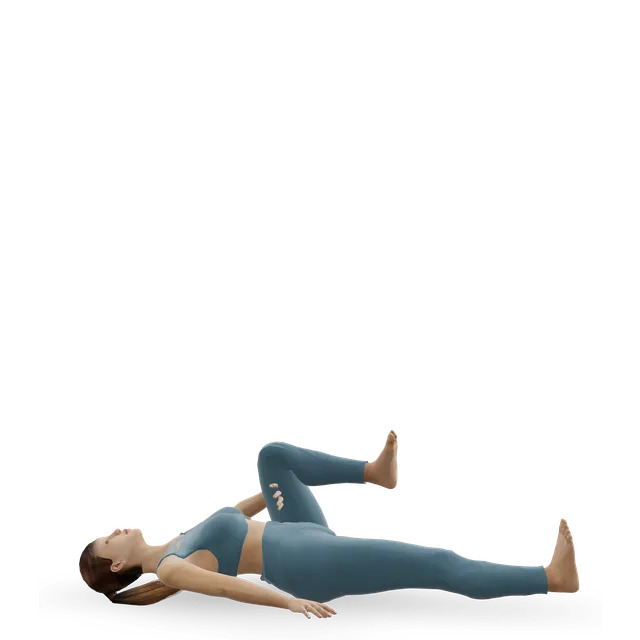
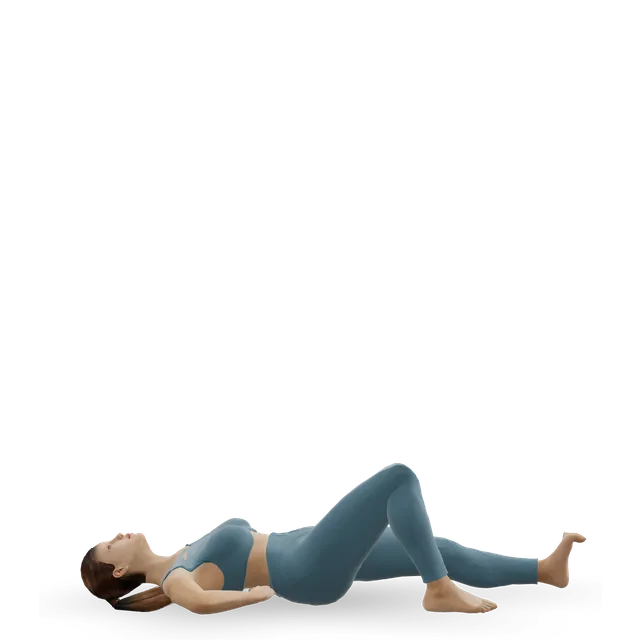
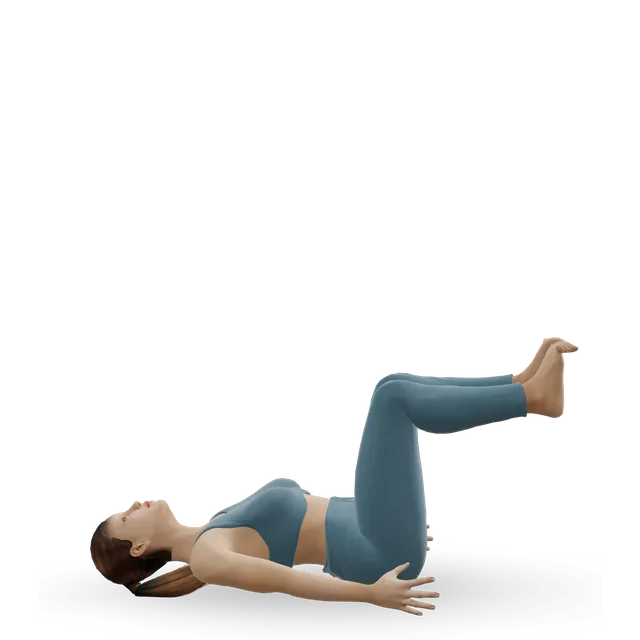
Single knee-to-chest stretch demonstrated on the 3D figure3D demoSingle knee-to-chest stretchBeginner · No equipment

Hold 20 to 30 seconds, 2 to 4 times each side · From the move page's dose (an editorial starting point). Keep it only if bending forward eases your pain; with osteoporosis avoid deep or repeated rounding, as the move page says

Harder: 90/90 hip lift-off

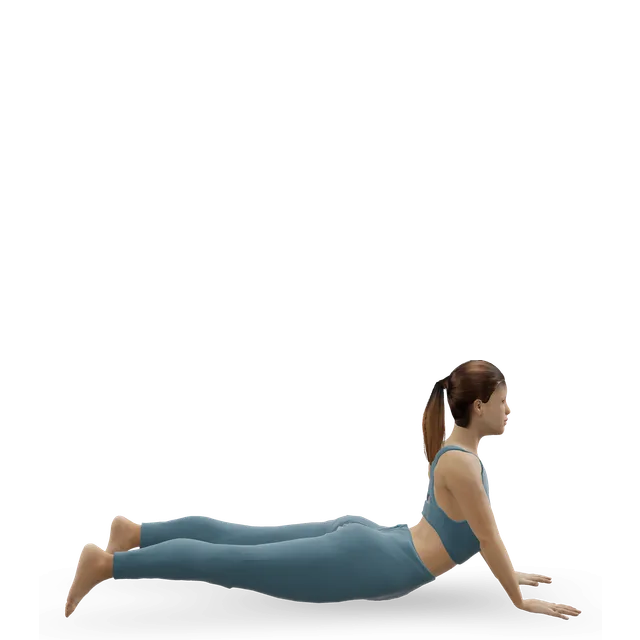
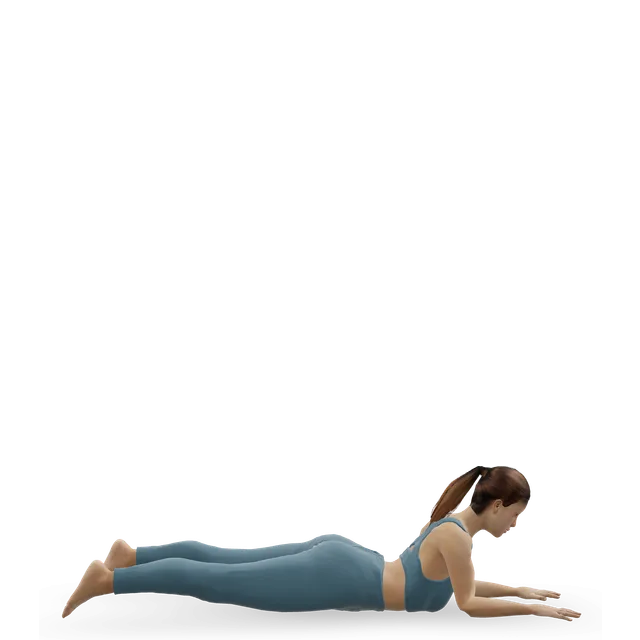
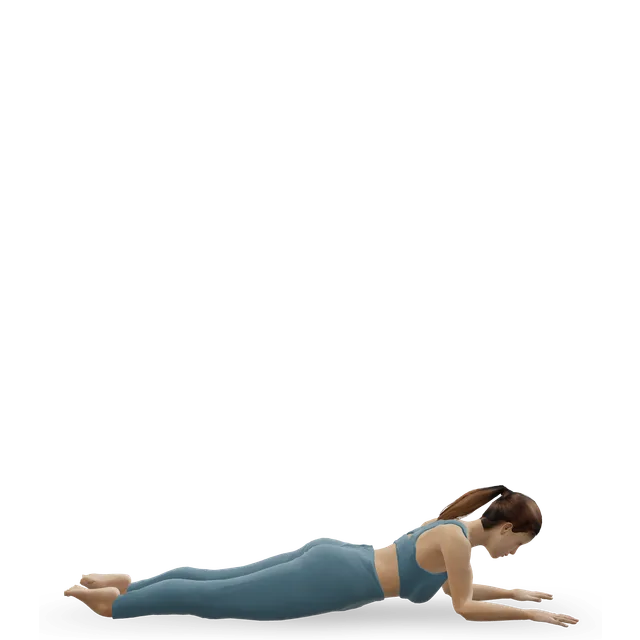
Prone press-up (McKenzie press-up) demonstrated on the 3D figure3D demoProne press-up (McKenzie press-up)Beginner · No equipment

10 slow repetitions, 3 to 5 times a day, while it helps · From the move page's dose (an editorial starting point). Keep it only if arching back eases your pain; skip it with spinal stenosis or if arching brings on leg symptoms, as the move page says

Easier: Sphinx pose (Salamba Bhujangasana)

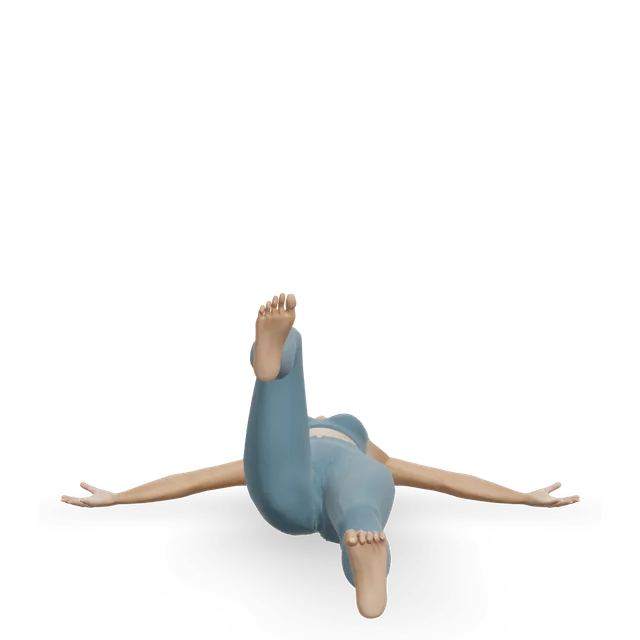
Thoracic rotation demonstrated on the 3D figure3D demoThoracic rotationBeginner · No equipment

6 rotations per side, moving with the breath · The move page's dose. For a sore mid back or ribs after the upper back was treated; gentle rotation is the usual swap, as our upper back pain pages say

Easier: Side-lying open book · Harder: World's greatest stretch

Move on when: The soreness from the visit has gone, you can walk for 15 to 20 minutes, and your back is no worse the next morning (editorial, as in our back pain guide).

Follow along: a timer, a cue and the next move, one step at a time.
Stage 2

Build: trunk and hip strength

About weeks 1 to 6, 2 or 3 sessions a week, with walking on most days, as our back pain after flying guide does.

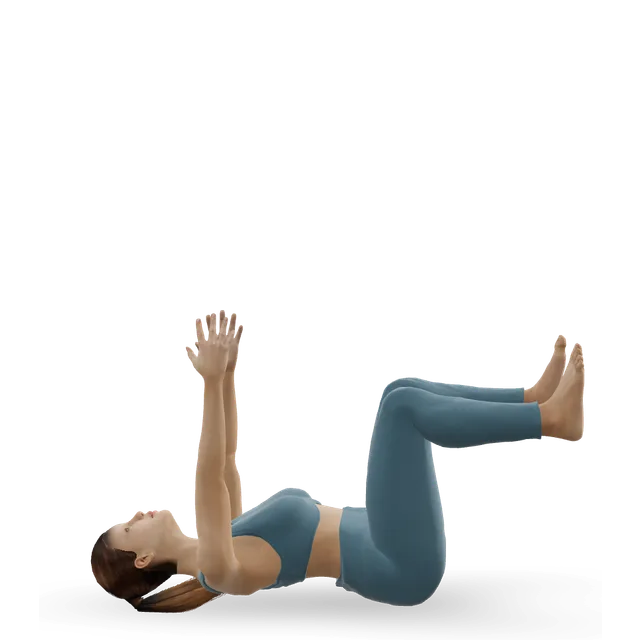
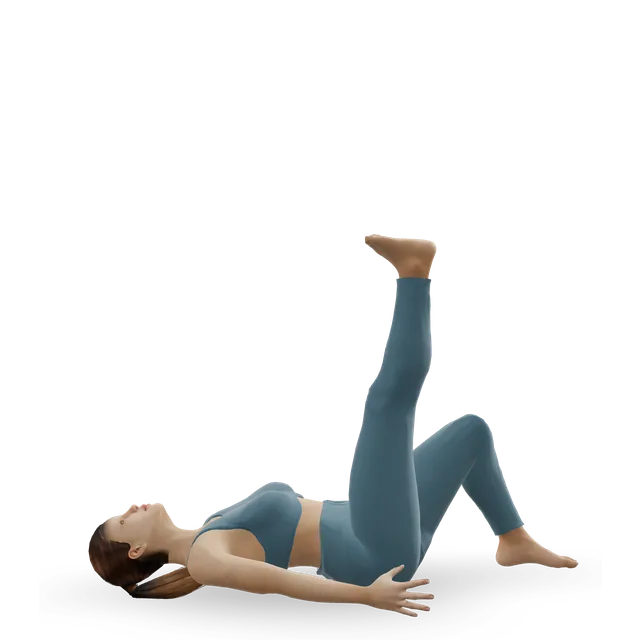
Dead bug demonstrated on the 3D figure3D demoDead bugBeginner · No equipment

2 sets of 6 to 8 each side · As in our back pain after flying guide. Heel taps first if you need to

Easier: Dead bug heel taps · Harder: Forearm plank

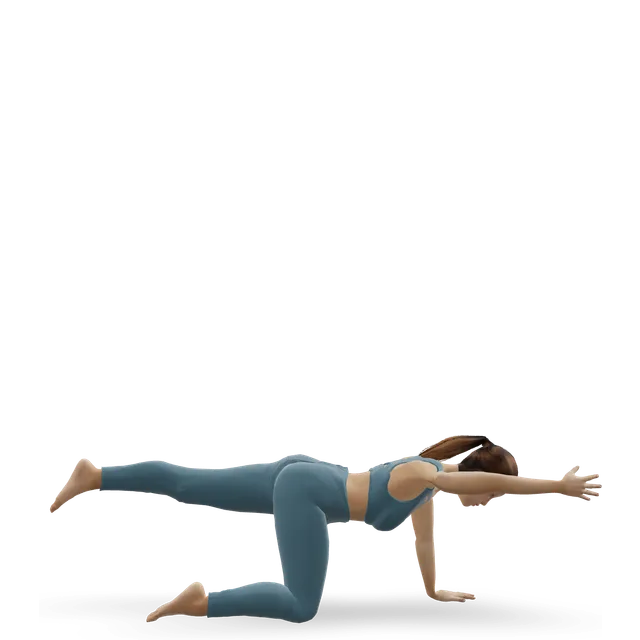
Bird dog demonstrated on the 3D figure3D demoBird dogBeginner · No equipment

2 to 3 sets of 6 to 8 each side, 3 to 5 s holds · As in our back pain after flying guide (from our back pain guide)

Easier: Bird dog, one limb at a time · Harder: Bear crawl

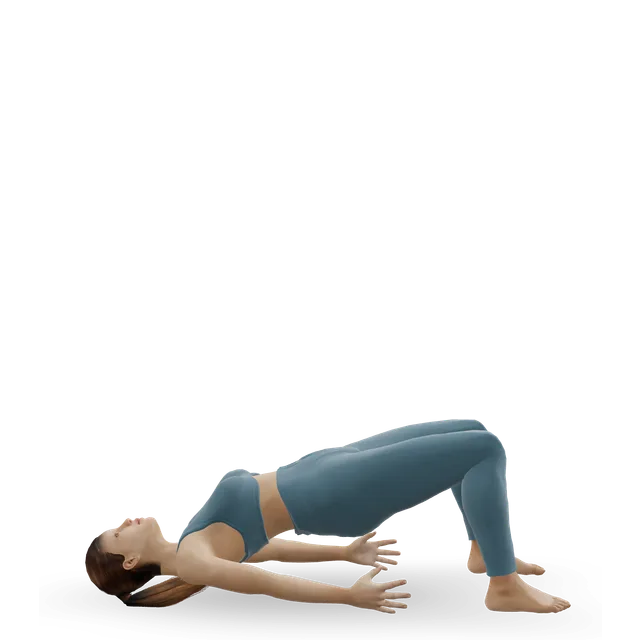
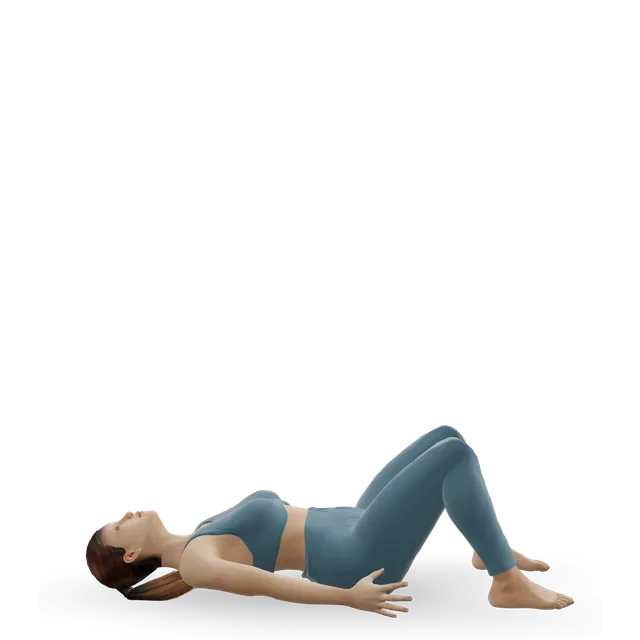
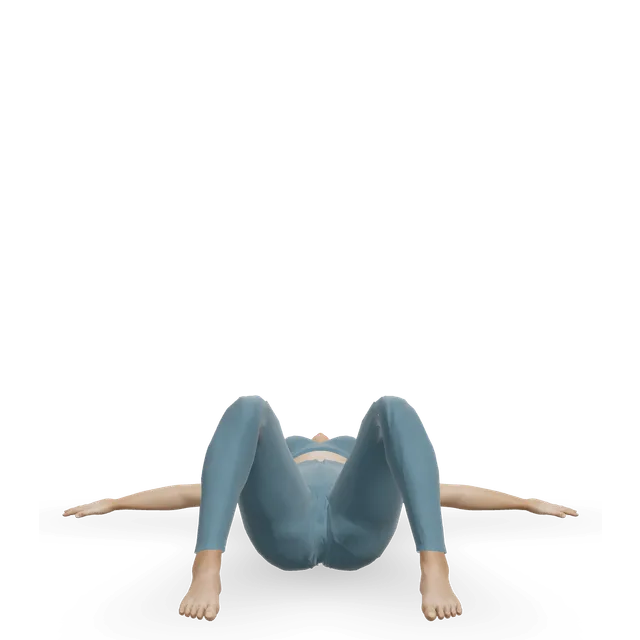
Glute bridge demonstrated on the 3D figure3D demoGlute bridgeBeginner · No equipment

2 to 3 sets of 10 · As in our back pain after flying guide

Easier: Pelvic tilt into bridge · Harder: Single-leg glute bridge

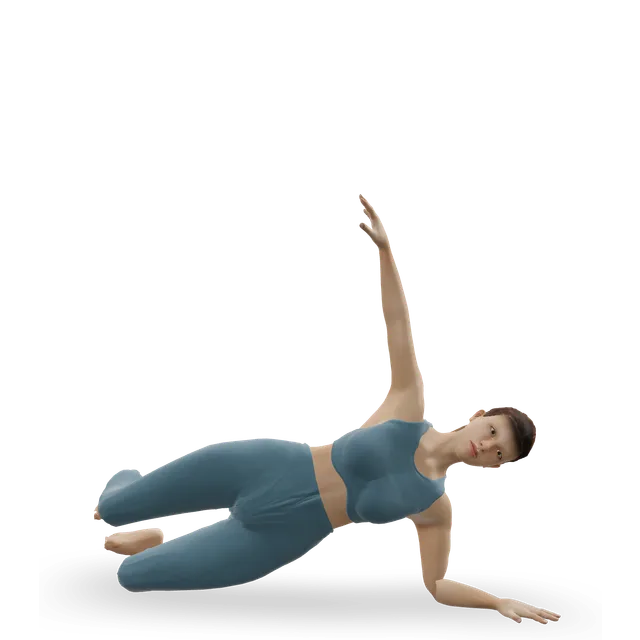
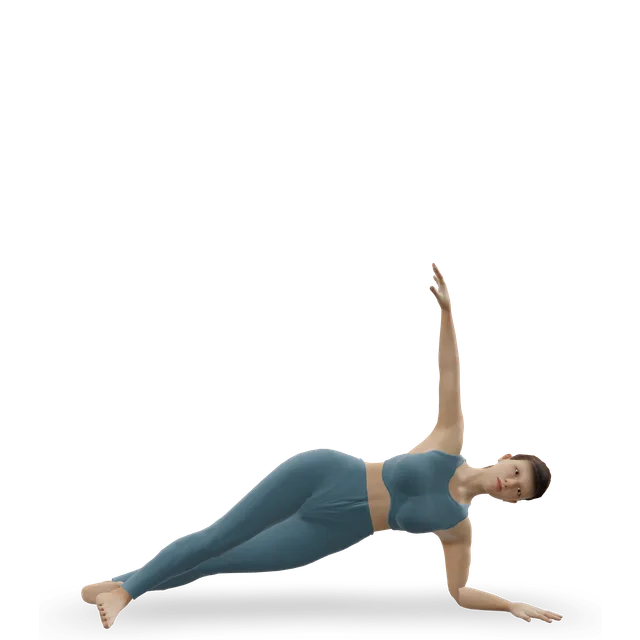
Knee side plank demonstrated on the 3D figure3D demoKnee side plankBeginner · No equipment

3 holds of 15 to 20 s each side · As in our back pain after flying guide

Harder: Side plank

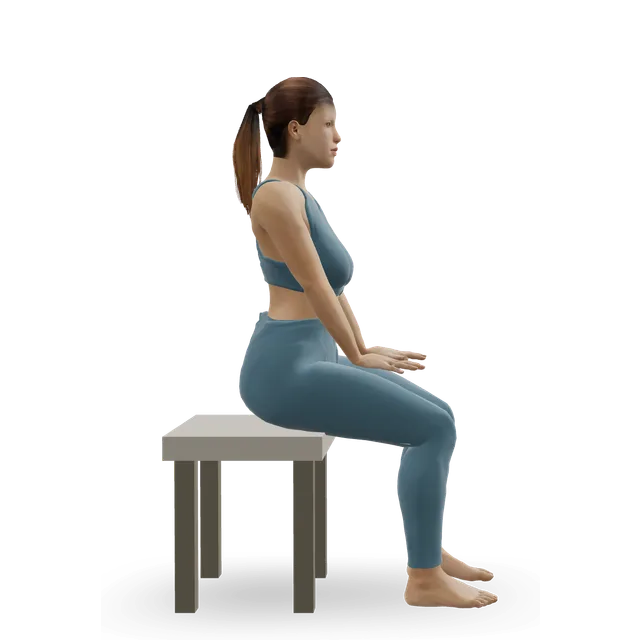
Sit to stand from a chair demonstrated on the 3D figure3D demoSit to stand from a chairBeginner · A bench or box

3 sets of 8 to 10 · As in our back pain after flying and moving house guides

Easier: Sit to stand, pushing on the thighs · Harder: Bodyweight squat

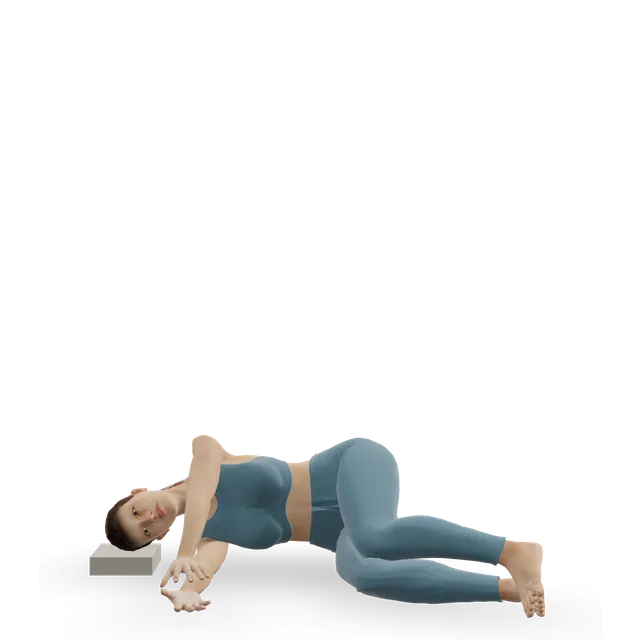
Side-lying open book demonstrated on the 3D figure3D demoSide-lying open bookBeginner · No equipment

8 to 10 slow openings each side, pausing 2 seconds at the end · From the move page's dose (an editorial starting point). The mid back's turn, with a cushion under the head, as the move page suggests

Harder: Thoracic rotation

Move on when: Every set feels controlled, and your back is no worse the next morning (editorial).

Follow along: a timer, a cue and the next move, one step at a time.
Stage 3

Strengthen, and keep going

From about week 6, two strength days a week, and ongoing: loaded lifting, carrying and resisting a twist, with walking towards 30 minutes on most days. Whether you keep seeing a chiropractor is your choice; NICE's advice is that any manual therapy sits alongside exercise, and this stage is the exercise. How lifting and treatment come back is our suggestion.

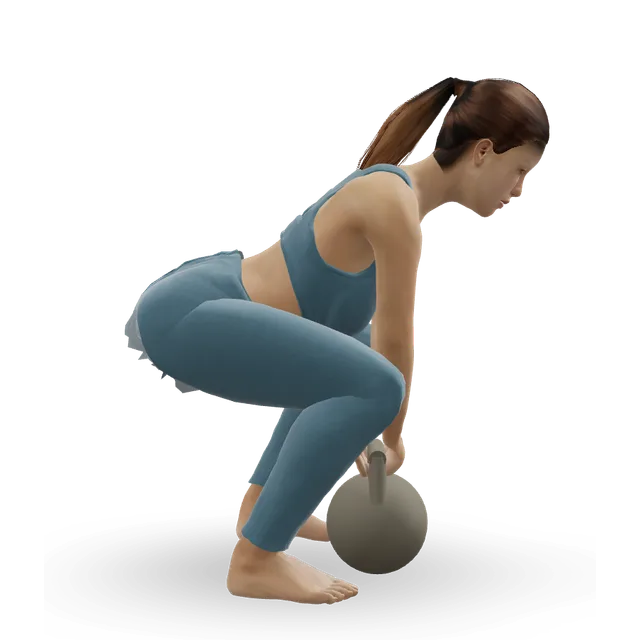
Kettlebell deadlift demonstrated on the 3D figure3D demoKettlebell deadliftBeginner · A kettlebell

3 sets of 8 to 10, light to start · As in our back pain after flying and moving house guides. The weight held close

Easier: Hip-hinge practice · Harder: Dumbbell Romanian deadlift

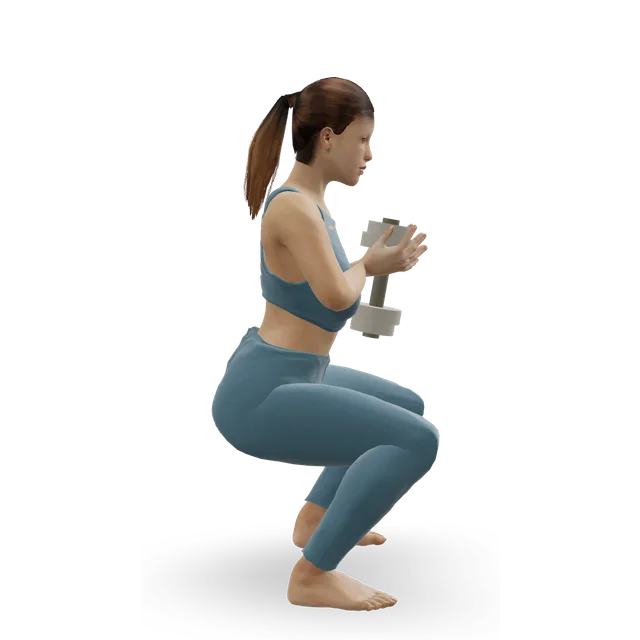
Dumbbell goblet squat demonstrated on the 3D figure3D demoDumbbell goblet squatIntermediate · A dumbbell

3 sets of 8 to 10 · As in our back pain after flying and moving house guides

Easier: Bodyweight squat · Harder: Barbell front squat

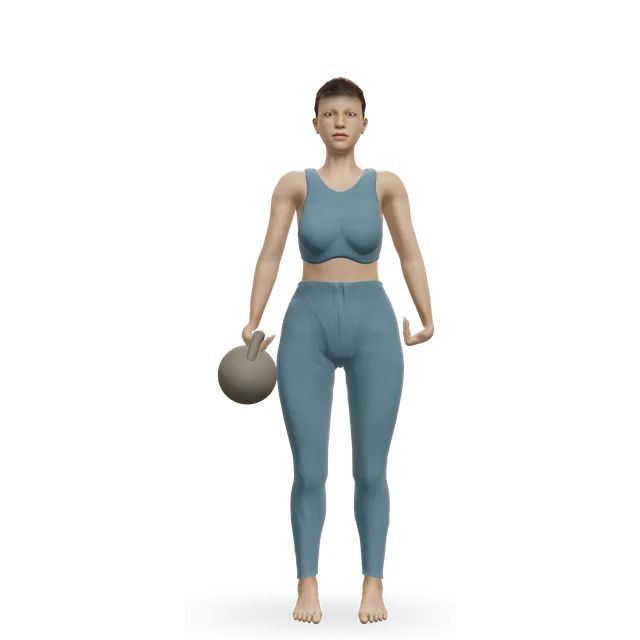
Suitcase carry demonstrated on the 3D figure3D demoSuitcase carryIntermediate · A dumbbell + A kettlebell

3 walks of 20 to 30 m each side · As in our back pain after flying and moving house guides. If you can't stay level, the weight is too heavy, as the move page says

Easier: Farmer's carry · Harder: Overhead carry (waiter's walk)

Side plank demonstrated on the 3D figure3D demoSide plankIntermediate · No equipment

3 holds of 20 to 30 s each side · As in our back pain after flying and moving house guides

Easier: Knee side plank · Harder: Side plank with leg lift

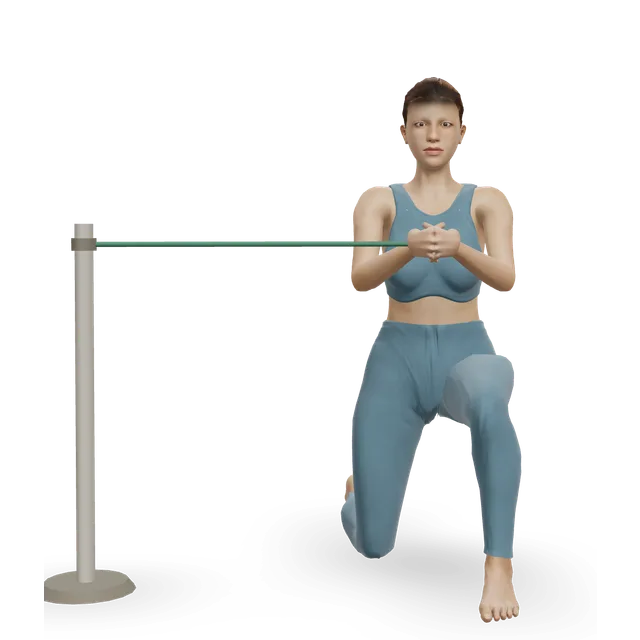
Half-kneeling Pallof press demonstrated on the 3D figure3D demoHalf-kneeling Pallof pressBeginner · A band + An anchor point

2 to 3 sets of 8 to 10 each side · As in our back pain after flying and moving house guides (from our back pain when twisting guide). Pad the knee

Harder: Pallof press

Treadmill walking demonstrated on the 3D figure3D demoTreadmill walkingBeginner · Cardio machine

Build towards 30 min on at least 5 days a week · The end target in the WalkBack trial's programme, as our back pain after flying guide uses it

Harder: Treadmill jogging

Move on when: Our suggestion: your usual week, including lifting and any treatment, leaves your back no worse the next morning. Keep two strength days a week; exercise with education is what lowered the chance of another episode in trials. If it flares, go back to the stage 1 moves for a few days, not to bed, then build again.

Follow along: a timer, a cue and the next move, one step at a time.

What to change for now

What to do now (written steps)

Our 3D figure can't show these. They come from the NHS and the GCC; no trial has tested what to do after a sore adjustment, and where a step is our suggestion, it says so.

  • 1. Keep moving: short walks and the stage 1 moves. The NHS says don't stay in bed for long periods.
  • 2. Use a heat pack wrapped in a towel for stiffness or spasm, and ibuprofen if it suits you, as the NHS advises.
  • 3. Tell your chiropractor how you felt, for how long and where. The GCC says "If you are uncomfortable with the techniques being used during your treatment, you should talk to your chiropractor".
  • 4. Don't go back for another adjustment the next day to fix the soreness; most reactions settle within a day or two on their own (our suggestion).
  • 5. Check the warning signs: numbness around your bottom, bladder or bowel changes, leg weakness, sharp rib pain on breathing or soreness that is worse after 2 or 3 days aren't ordinary reactions.

Sources 35, 34

At your next visit, in the regulator's words (written steps)

Chiropractors are trained, regulated healthcare professionals in the UK. These steps come from the GCC and the NHS, and are our suggestion where they say so.

  • 1. Tell them about osteoporosis or a past fragility fracture, blood thinners, a clotting problem, inflammatory spine disease, cancer, a recent fall or injury, or pain down a leg (our list, from the NHS and a study of injuries in older adults).
  • 2. Ask what they found, what they plan, and the benefits and risks: the GCC says the chiropractor "will explain their recommended course of care, how it will improve your condition as well as any risks and possible side effects".
  • 3. Consent is yours: the GCC says "Your chiropractor cannot start any course of care until you have provided consent", and "You can decide to stop treatment at any time you like".
  • 4. Ask for a gentler technique (mobilisation without a thrust) if the last one flared you, and for an exercise plan alongside, as NICE advises (our suggestion).
  • 5. If your neck is to be treated, ask about the risks first, as the American Heart Association advises; a gentler technique is an option.
  • 6. If you haven't improved within a few weeks, the GCC says your chiropractor should discuss other care options or refer you to another healthcare professional.

Sources 34, 63, 15, 27, 46

Checking registration

The GCC says "It is a criminal offence for anyone to describe themselves as a chiropractor without being registered with the General Chiropractic Council (GCC)", and the NHS says "Chiropractors and osteopaths need to be registered by law", with the GCC or the General Osteopathic Council. For a private physiotherapist, the NHS says make sure they're registered with the Health and Care Professions Council (HCPC).

Sources 34, 63, 65

Manipulation comes back (written steps)

No study has tested how treatment should come back after a sore reaction. These steps are our suggestion.

  • 1. Wait until the soreness has gone and the stage 1 moves are comfortable.
  • 2. Next visit: say how you reacted, and ask for a gentler technique or less on the area that flared.
  • 3. Judge each visit by how your back feels 2 days later, and the course by whether you are better over a few weeks.
  • 4. Keep the stage 2 and 3 strength work going whether or not you keep seeing a chiropractor.

Positions to swap, and why

Habit or positionWhy it mattersInstead
Going back for another adjustment the next day to fix the sorenessMost reactions settle within a day or two on their own.Wait it out with gentle movement, such as cat-cow.Try: Cat-cow
Cracking your own back to get the same releaseThere's no evidence either way for the mid or low back, and forcing it isn't a treatment.Gentle movement through the range, turning from the upper back.Try: Thoracic rotation
Resting in bed until it stopsThe NHS says don't stay in bed for long periods.Short walks through the day.Try: Treadmill walking
Signing up for months of regular adjustments to stay alignedManipulation doesn't change joint position, and the GCC says most patients won't need treatment after the initial plan.Exercise with education, which lowers the chance of another episode; the bird dog is a good start.Try: Bird dog
Not mentioning osteoporosis or blood thinnersInjury after manipulation was more likely with both.Tell the chiropractor first.
Hugging both knees hard to your chest, with thin bones, while the back is soreThe move page says avoid deep or repeated rounding of the spine with osteoporosis.Gentle pelvic tilts and rotation.Try: Standing pelvic tilt
Toe touches to stretch it out, if bending forward sends pain down a legThe move page says leave it out if bending forward sends pain down a leg.The direction that eases you: the prone press-up if arching back eases it.Try: Prone press-up (McKenzie press-up)
Asking for an X-ray to see what the adjustment movedNICE and the GCC say imaging isn't needed for ordinary low back pain, and a scan can't show a misalignment.Get checked if a warning sign appears.

Routines to follow

More moves for this area

Questions people ask

Is it normal to be sore after a chiropractor?

Yes: about half of chiropractic patients have a reaction, mostly local soreness, stiffness, a headache or tiredness. The GCC says these are usually mild and generally pass within a few days. Pain that keeps getting worse, or spreads down a leg with numbness or weakness, isn't normal.

How long does soreness last after an adjustment?

Most reactions start within 4 hours, and about three quarters have gone within 24 hours. The GOsC tells osteopathy patients they may feel sore for 24 to 48 hours. Tell your chiropractor, or see a GP, if it's worse 2 or 3 days later.

Why does my back hurt more after the chiropractor?

Usually a short-lived reaction to the manipulation, commonest after the first visits, or the back pain you went in with having a bad day; in a blinded trial a third of people given a sham treatment had reactions too. Keep moving and use heat; it usually settles within a day or two.

Can a chiropractor make your back worse?

For a day or two, yes, and that's common. Lasting harm is rare: no serious events were reported among thousands of trial participants, and in large record studies cauda equina syndrome and urgent disc surgery were no more common after chiropractic care than after physiotherapy or GP care.

Can a chiropractor break your back or a rib?

Very rarely, and mostly in people with thin bones: the 2 severe events in nearly a million Hong Kong sessions were broken ribs in women over 60 with osteoporosis. Tell the chiropractor if you have osteoporosis, and see a GP for sudden back or rib pain afterwards.

Why do my ribs hurt after an adjustment?

Usually the muscles and rib joints of the mid back are sore after upper back manipulation, and it eases within a day or two. Sharp pain on breathing, especially with thin bones, needs a GP check, and breathlessness or chest pain needs 999.

Can a chiropractor cause sciatica?

A flare of leg pain can follow any back treatment, and rarely a disc problem gets worse. In large record studies, though, serious nerve problems were no more common after chiropractic care than after other care. New leg weakness or numbness, or any bladder or bowel change, needs urgent care.

My neck hurts after the chiropractor too. Is that normal?

Mild neck soreness or a headache after neck treatment is common, and a UK survey of 50,276 neck manipulations found no serious events. A sudden, severe headache, or neck pain with dizziness, double vision, slurred speech, trouble swallowing or weakness, needs 999. Our neck pain after a massage guide covers the neck's warning signs.

Did the crack put something back in place?

No. The sound is gas forming in the joint fluid, and the pop makes no difference to pain relief. Manipulation didn't move the pelvic joint in any of 10 people measured precisely.

Should I go back?

If it helped and the soreness settled within a day or two, it's a reasonable option alongside exercise, as NICE advises. Tell the chiropractor how you reacted and ask about a gentler technique; if you're no better after a few weeks, the GCC says they should discuss other options or refer you.

Is it the same after an osteopath?

Much the same: the GOsC says it is not unusual to feel sore in the first 24 to 48 hours after treatment, and the same warning signs apply. Osteopaths must be registered with the GOsC by law.

When should I worry?

Call 999 for numbness around your genitals or bottom, new bladder or bowel trouble, weakness in both legs, or breathlessness or chest pain. Get a same-day appointment for leg weakness that is getting worse or severe pain that is getting worse quickly. See a GP for sudden back or rib pain if your bones are thin, or soreness that is worse after 2 or 3 days; in the US, call 911 where this page says 999.

Related exercise guides

Other pain guides

Sources

  1. Senstad 1997 · Side effects of spinal manipulation in 1,058 new patients of Norwegian chiropractors (prospective survey, Spine)
  2. Cagnie 2004 · Side effects after a first visit to 59 Belgian manipulative therapists, in 465 patients (prospective survey, Man Ther)
  3. Leboeuf-Yde 1997 · Side effects of chiropractic treatment in 625 Swedish patients (prospective survey, J Manipulative Physiol Ther)
  4. Carnes 2010 · Adverse events and manual therapy: 8 cohorts and 31 trials (systematic review, Man Ther)
  5. Pohlman 2024 · New or worse symptoms after 3,819 visits to chiropractors and physiotherapists (active surveillance study, PLoS One)
  6. National Center for Complementary and Integrative Health (NCCIH, US) · Spinal manipulation: what you need to know (last updated September 2022)
  7. General Osteopathic Council (GOsC, the UK regulator) · What to expect at your appointment
  8. Walker 2013 · Adverse events after usual chiropractic care or a sham in 183 adults: OUCH (blinded RCT, Spine)
  9. Degenhardt 2018 · Feeling worse straight after osteopathic treatment at 1,847 US visits (prospective study, J Am Osteopath Assoc)
  10. Rajendran 2012 · What UK osteopathy patients make of feeling sore after treatment (qualitative focus group study, Man Ther)
  11. Daniels 2026 · Adverse events in older adults after chiropractic care: 25 studies (systematic review, Chiropr Man Therap)
  12. Chu 2023 · Severe adverse events in 960,140 chiropractic sessions at 30 clinics in Hong Kong (retrospective record review, Sci Rep)
  13. To 2020 · Rib fractures after spinal manipulation (case series of 3 patients, J Can Chiropr Assoc)
  14. Haldeman 1992 · Compression fractures found after chiropractic adjustments (case series of 4, J Manipulative Physiol Ther)
  15. Whedon 2015 · Injury after chiropractic manipulation or a GP visit in older adults on Medicare (retrospective cohort study, Spine)
  16. Hebert 2015 · Serious adverse events after low back manipulation: 77 published cases (systematic review of case reports, J Manipulative Physiol Ther)
  17. Trager 2024 · Chiropractic manipulation and cauda equina syndrome in 67,220 matched pairs with low back pain (retrospective cohort study, PLoS One)
  18. Trager 2026 · Manipulation or physiotherapist-led exercise and cauda equina syndrome in disc and nerve problems (retrospective cohort study, PM R)
  19. Oliphant 2004 · Safety of manipulation for a lumbar disc herniation: a calculated risk estimate (systematic review, J Manipulative Physiol Ther)
  20. Hincapié 2018 · Chiropractic or GP visits and an acute slipped disc needing early surgery (self-controlled case series, Eur Spine J)
  21. Huang 2015 · Worse disc symptoms after spinal manipulation in 10 people (case series, Medicine)
  22. Haldeman 1992 · Cauda equina syndrome after lumbar manipulation (case series and literature review, Spine)
  23. Thiel 2007 · Safety of neck manipulation in 28,807 UK chiropractic consultations (prospective national survey, Spine)
  24. Hurwitz 2005 · Adverse reactions to chiropractic care for neck pain in 336 people (RCT, Spine)
  25. Rubinstein 2007 · Benefits and adverse events in 529 Dutch chiropractic patients with neck pain (prospective cohort study, J Manipulative Physiol Ther)
  26. Cassidy 2008 · Stroke after chiropractic and GP visits: 818 strokes (case-control and case-crossover study, Spine; an erratum was published in 2010 that we couldn't read)
  27. Biller 2014 · Torn neck arteries and neck manipulation: an American Heart Association statement (scientific statement, Stroke; a correction was published in 2016 that we couldn't read)
  28. Cassidy 2017 · Carotid stroke after chiropractic and GP visits: 15,523 strokes (case-crossover study, J Stroke Cerebrovasc Dis)
  29. Whedon 2022 · Torn neck arteries after neck manipulation in older adults on Medicare (case-control and case-crossover study, BMC Geriatr)
  30. Trager 2026 · Neck manipulation and torn neck arteries in 431,492 matched pairs (retrospective cohort study, Chiropr Man Therap)
  31. Church 2016 · Chiropractic care and torn neck arteries: 6 studies (systematic review and meta-analysis, Cureus)
  32. Kranenburg 2017 · Adverse events after neck manipulation or mobilisation: 227 cases (systematic review, Musculoskelet Sci Pract; a corrigendum was published that we couldn't read)
  33. Swait 2017 · What are the risks of manual treatment of the spine? 250 articles (scoping review by the Royal College of Chiropractors, Chiropr Man Therap)
  34. General Chiropractic Council (GCC, the UK regulator) · Patient portal: frequently asked questions
  35. NHS · Back pain
  36. NHS inform · Back problems
  37. NHS · DVT (deep vein thrombosis)
  38. NHS · Pulmonary embolism
  39. NHS · Broken or bruised ribs
  40. NHS · Sciatica
  41. NHS · Septic arthritis
  42. NHS · Anticoagulant medicines: side effects
  43. NHS · Osteoporosis (past its review date: reviewed October 2022, review due October 2025)
  44. NICE NG259 · Osteoporosis: risk assessment (2026)
  45. Essex Partnership University NHS Foundation Trust · Vertebral compression fracture (patient leaflet, 2025)
  46. NICE · Low back pain and sciatica in over 16s: assessment and management (NG59, guideline)
  47. Brinjikji 2015 · Spine changes on scans in 3,110 people without back pain (systematic review, Am J Neuroradiol)
  48. da Costa 2012 · How acute and persistent low back pain usually goes: 33 cohorts of 11,166 people (meta-analysis, CMAJ)
  49. Rubinstein 2019 · Spinal manipulation for chronic low back pain: 47 trials, 9,211 people (systematic review and meta-analysis, BMJ)
  50. de Zoete 2026 · Spinal manipulation for chronic low back pain: 76 trials, 11,866 people (Cochrane systematic review)
  51. Paige 2017 · Spinal manipulation for acute low back pain: benefits and harms (systematic review and meta-analysis, JAMA; two errata were published that we couldn't read)
  52. Gorrell 2023 · Adverse events in 154 trials of spinal manipulation (systematic review, BMJ Open; a correction changed some results, not the conclusions)
  53. George 2021 · Interventions for acute and chronic low back pain: the US physiotherapy guideline (clinical practice guideline, J Orthop Sports Phys Ther)
  54. Hayden 2021 · Exercise therapy for chronic low back pain: 249 trials (Cochrane systematic review)
  55. Steffens 2016 · Preventing low back pain: 21 trials, 30,850 people (systematic review and meta-analysis, JAMA Intern Med)
  56. Gross 2015 · Manipulation and mobilisation for neck pain (Cochrane systematic review)
  57. Kawchuk 2015 · Real-time MRI of a finger joint cracking, in one volunteer (imaging study, PLoS One)
  58. Tullberg 1998 · Manipulation and the position of the sacroiliac joint in 10 people (precise X-ray measurement study, Spine)
  59. Moorman 2022 · Does the pop during spinal manipulation matter for pain? 5 studies (systematic review, Chiropr Man Therap)
  60. Flynn 2003 · The pop during manipulation and outcomes in 71 people with low back pain (prospective cohort study, Arch Phys Med Rehabil)
  61. Chiu 2015 · How often a slipped disc in the lower back shrinks on its own: 31 studies (systematic review, Clin Rehabil)
  62. Bialosky 2009 · How manual therapy eases pain: a model (narrative review, Man Ther)
  63. NHS · Herbal medicines and complementary therapies (including chiropractic and osteopathy)
  64. Smith 2017 · Should exercise be painful in long-lasting muscle and joint pain? 7 trials (meta-analysis, Br J Sports Med)
  65. NHS · Physiotherapy

Exercise education, not a diagnosis or treatment plan. It is written from the guidelines and studies listed above; review by a clinician is pending. If your pain follows an injury, is severe, is getting worse, or comes with any warning sign listed on this page, get it assessed. Health disclaimer.