No yoga trial
Our searches found no trial of yoga after a hamstring strain or tear. Yoga can be part of getting back to normal, but the evidence is for early, graded loading and a return-to-sport plan, and yoga replaces neither.
Source 1
Yoga guide
No trial has tested yoga for a hamstring injury, but the rehabilitation trials point one way: start gentle loading within days, build strength and controlled lengthening before you stretch hard, and come back to sport on strength and pain-free sprinting, not on how far you can fold. Strains from slow, deep stretches, the shape of a forward fold or the splits, were the slowest to heal in dancers, so deep folds come back last.
This guide covers what a hamstring strain is, when to start, the moves for each stage, which poses to change and for how long, getting back to sport and staying there, what the evidence shows, and a free 25-minute class with a 3D demo of every move. If you felt a pop near your sitting bone, with a large bruise or trouble walking or sitting, go straight to the warning signs.
Our searches found no trial of yoga after a hamstring strain or tear. Yoga can be part of getting back to normal, but the evidence is for early, graded loading and a return-to-sport plan, and yoga replaces neither.
Source 1
Sprinting strains hurt at once but heal faster. Stretching strains happen in slow, deep hip bends with the knee straight, the shape of a deep forward fold or the splits; they feel milder, sit near the sitting bone, and took about a year to recover in professional dancers.
The NHS advises rest, ice, compression and raising the leg for the first 2 to 3 days, then keeping it moving once pain allows. Starting rehab 2 days after a thigh or calf strain rather than 9 got people back to sport about 3 weeks sooner, with a similar re-injury rate.
Lengthening exercises done under control got elite footballers back in 28 days rather than 51, and sprinters and jumpers in 49 rather than 86. Starting them on day 1 rather than later added nothing.
No trial compares stretching with not stretching after a strain; stretching 4 times a day rather than once saved under 2 days in the only dose trial. Stretch to a mild pull, and leave deep folds, pyramid, triangle and the splits until you can sprint without pain.
Pain-free sprinting, strength and field tests decide it, not flexibility. Re-injuries come early and in the same place, over half within 4 weeks of going back, so yoga sits beside the running and Nordic curl work, not instead of it.
A hamstring injury is a strain or tear in the muscles or tendons at the back of the thigh, usually while sprinting or stretching hard. The NHS lists sudden pain, sometimes a snapping or popping feeling, then tenderness, swelling and bruising, and trouble standing or walking. It says "Mild hamstring injuries usually get better in a few days" and "Severe hamstring injuries can take weeks or months to heal".
In men's professional football, hamstring injuries rose from 12% to 24% of all injuries over 21 seasons, with a median of 13 days out; across field sports they are about 10% of injuries (a review with a published correction we couldn't read). 18% of footballers' hamstring injuries were repeats, and a previous injury is the biggest risk factor for the next, with older age.
In elite sprinters, strains during sprinting took a median of 16 weeks to return to their old level. In professional dancers, strains came "during slow hip-flexion movements with extended knee", sat near the sitting bone, felt mild at first, and took a median of 50 weeks. Sprinters start with more loss of function but recover more quickly.
Specialists grade strains on magnetic resonance imaging (MRI) scans, often with the British Athletics system. In 255 hamstring injuries in professional football, grade 1 strains took about 18 days and grade 2 about 24 days. Strains that run into the tendon took longer, about 5 to 7 weeks in elite athletes, whatever the rehab. Healing on MRI was still under way when people went back.
In the most severe injuries, the tendon tears away from the bone near the sitting bone. This is often missed, and surgeons prefer to repair it early: in one review, repairs done within about 4 weeks returned people to sport sooner. It isn't only a young athlete's injury: the average age at repair was 44.7. In teenagers, the tendon can pull off a piece of bone.
Forward folds, pyramid, triangle, hand-to-big-toe poses, downward dog with straight legs and the splits stretch the hamstrings, most at the sitting bone end when the knee is straight and the hip deeply bent. Bridges, chair pose, locust and warrior III ask them to work, mostly without much lengthening. So a class can keep you moving while a hamstring heals, if the long-stretch poses are changed. No study has measured these poses after a strain; this is our reading.
The NHS advises rest, ice, compression and raising the leg (PRICE) for the first 2 to 3 days, and to avoid heat, massage and alcohol for the first 3 days. "When you can move your leg without pain stopping you, try to keep moving it so your hamstring does not become stiff."
Source 5
In 50 recreational athletes with a severe thigh or calf strain, starting rehab 2 days after the injury rather than 9 returned them to sport after 63 days rather than 83, with a similar re-injury rate at a year. That programme began with gentle stretching and holds; not every strain in it was a hamstring.
In 43 men, rehab that allowed pain up to a tolerable level returned players as fast as strictly pain-free rehab and kept more strength. Experts advise avoiding high strain early, and pain-free sprinting before going back. The pain rule is in the warning signs below.
Breathing, upper body and chair yoga from day 1. Gentle hamstring work (bridge holds, heel slides, pain-free range) from about day 2 or 3, once walking is comfortable. No hot yoga and no hamstring stretching in the first 3 days. Standing poses as walking gets easy. This is our suggestion, from the NHS advice and the early-start trial, and it follows the stages of our hamstring strain guide.
Early, graded loading, controlled lengthening under load and a return-to-sport plan carry the evidence. Yoga has no trial after a hamstring injury.
Our searches of PubMed and Europe PMC found no trial of yoga after a hamstring strain, tear or tendon injury.
Source 1
In two trials from one Swedish group, a programme built on three lengthening exercises (the Extender, the Diver and the Glider) returned elite footballers to training in 28 days rather than 51, and elite sprinters and jumpers in 49 days rather than 86, against conventional exercises. Pooled, the rate of getting back was about 3 times higher, with no difference in re-injury. Neither trial could be blinded.
The exercise details here come from a later trial's description of the programme (Vermeulen 2022), in which the exercises started from 5 days after the injury; we read only summaries of the original trials.
In 90 male athletes, starting the lengthening exercises on day 1 rather than once they could run at 70% of top speed didn't shorten the return to sport or change re-injury. Range was built up only until pain or discomfort began. Rushing them doesn't help.
Source 10
In 24 athletes, 1 of 13 who did agility and trunk control work was re-injured within a year, against 7 of 10 who did stretching and strengthening. A later trial of 31 people didn't repeat the difference. A 2023 review of 9 trials concluded the programme can prevent re-injury. Yoga's planks and balances overlap with this trunk work (our reading).
The only trial of stretching dose: in 80 athletes, stretching 4 times a day rather than once shortened the return from about 15 days to 13. A Cochrane review, searched to 2012, calls this limited evidence, and says most rehab methods haven't been tested in trials. No trial compares stretching with no stretching. Strains that come from slow, deep stretching were the slowest to heal, which is why our suggestion is a mild pull only, with deep folds back last.
Platelet-rich plasma (PRP) injections didn't speed the return to play or reduce re-injuries at a year in 80 athletes, and a review of 3 trials agrees.
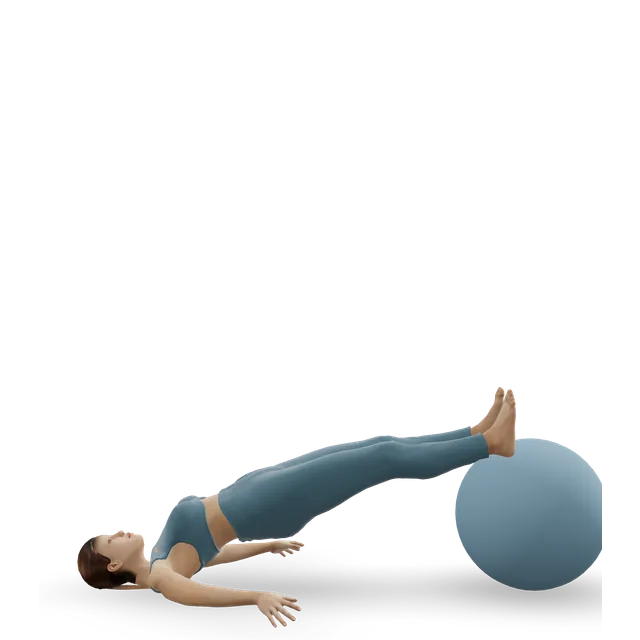
Our hamstring strain guide's first stage. Slow breathing: 2 minutes, in for about 4 and out for about 6 (our classes). Heel slide, from the move's page: "10 slow repetitions each side, once or twice a day. An editorial starting point: there are no trials of this movement on its own." Glute bridge: 5 holds of 20 to 30 seconds, both legs (the guide's suggested start). The 90/90 hamstring straightening, the closest move to Askling's Extender, from the move's page: "3 sets of 12 slow straightenings each leg, stopping just before pain: the Extender's dose in Askling's protocol, done twice a day there. Once a day is our editorial starting point for general flexibility." The guide does it twice a day, straightening slowly to just before pain. Cat-cow, from the move's page: "8 waves, slower than feels natural". Mountain pose: 5 slow breaths, weight even on both feet (our yoga for hip pain class).
 3D demoSlow breathing (6 breaths a minute)Beginner · No equipment
 3D demoSupine heel slideBeginner · No equipment
 3D demoGlute bridgeBeginner · No equipment
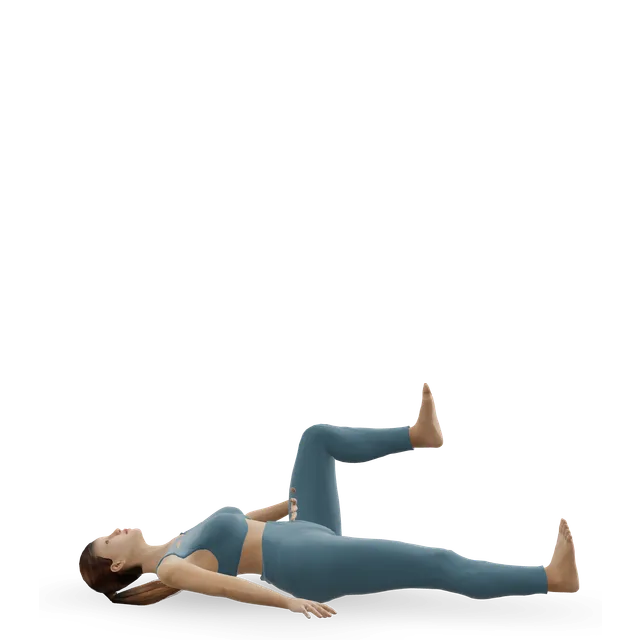 3D demo90/90 hamstring stretch (active knee extension)Beginner · No equipment
 3D demoCat-cowBeginner · No equipment
 3D demoMountain pose (Tadasana)Beginner · No equipment
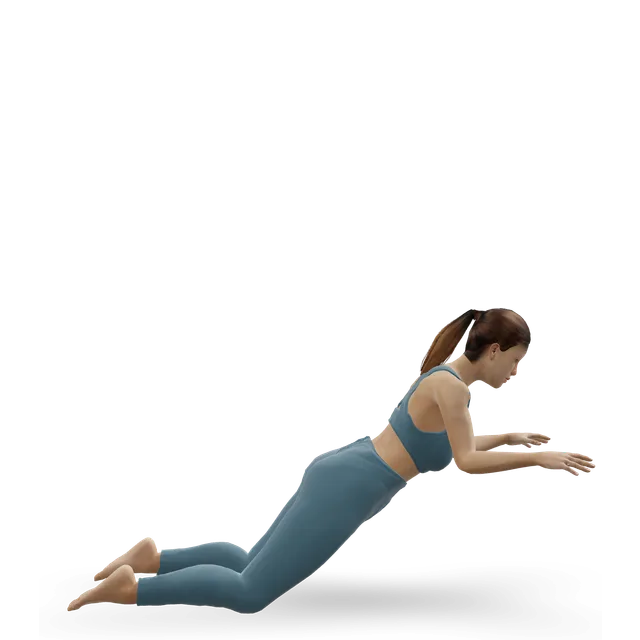
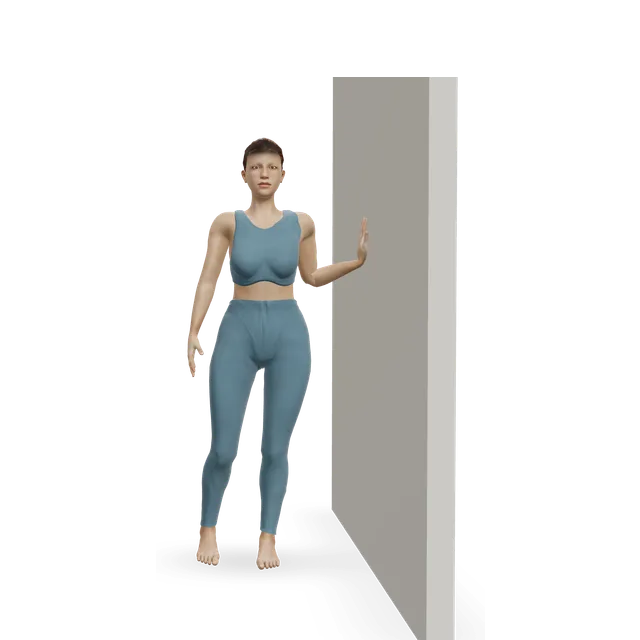
Our hamstring strain guide's second stage, once you can walk briskly without pain. Single-leg Romanian deadlift: 3 sets of 6 each leg, bodyweight, every other day, reaching the arms forward and stopping just before pain, like Askling's Diver; slider hamstring curl: 3 sets of 8 (the guide). Hip hinge fold, from the move's page: "5 slow folds, 3 breaths at the bottom", knees soft, to a mild pull. Single-leg bridge: 8 each side; chair pose: 2 holds of 30 seconds; side plank: 2 holds of 20 to 30 seconds each side, lower knee down to start; forearm plank: 2 holds of 20 to 30 seconds; single-leg stand: 2 holds of 30 seconds each leg; tree pose: 3 to 5 breaths each side (our yoga for footballers class). Warrior II: 3 to 5 breaths each side, short stance (our yoga for plantar fasciitis class). Warrior III, hands on a chair: 3 breaths each side, twice (our yoga for footballers class), only once the single-leg Romanian deadlift is pain-free, as its own page says to leave it while a hamstring is settling. Strap hamstring stretch: 30 seconds, 1 to 3 times, to a mild pull only (our suggestion).
 3D demoSingle-leg Romanian deadliftAdvanced · A dumbbell
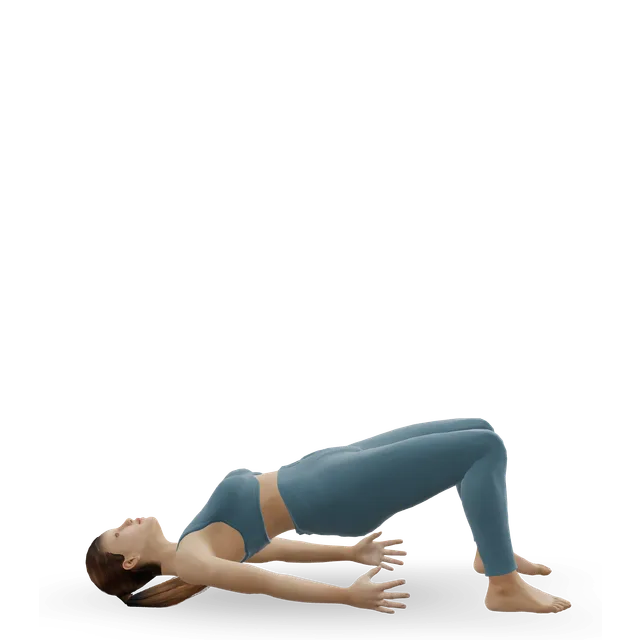 3D demoSlider hamstring curlIntermediate · No equipment
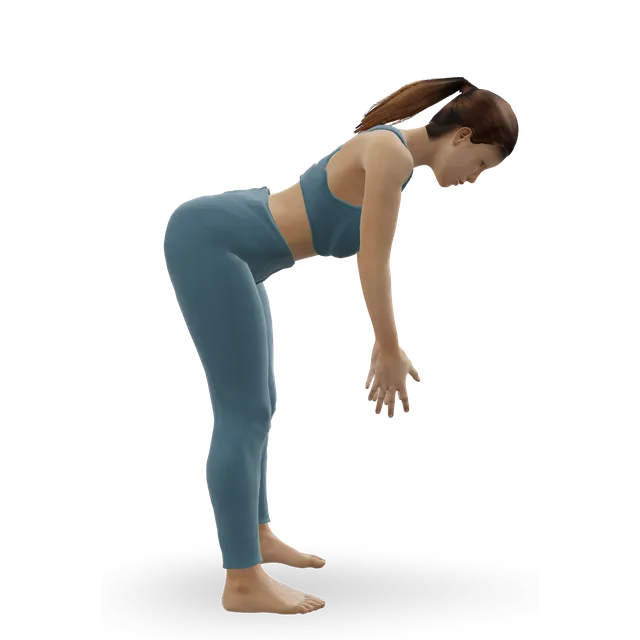 3D demoHip hinge foldBeginner · No equipment
 3D demoSingle-leg glute bridgeIntermediate · No equipment
 3D demoChair pose (Utkatasana)Beginner · No equipment
 3D demoWarrior II (Virabhadrasana II)Intermediate · No equipment
 3D demoSide plankIntermediate · No equipment
 3D demoForearm plankIntermediate · No equipment
 3D demoSingle-leg standBeginner · A wall
 3D demoTree pose (Vrksasana)Beginner · No equipment
 3D demoWarrior III (Virabhadrasana III)Advanced · No equipment
 3D demoSupine hamstring stretch with a strapBeginner · No equipment
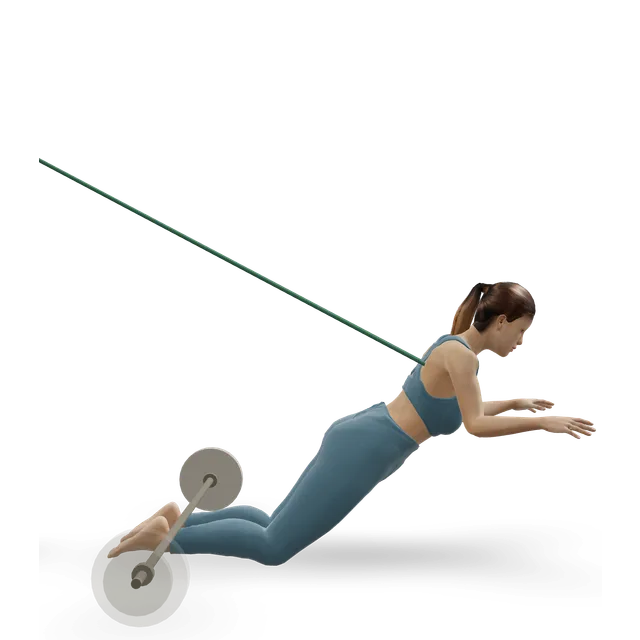
Our hamstring strain guide's last stage, alongside running and building up to sprinting. Nordic curl: 2 to 3 sets of 4 to 6 (the guide). Or the band-assisted Nordic curl, from the move's page: "2 sets of 3 to 6 slow lowers, twice a week, moving from a heavier band to a lighter one over several weeks (our editorial starting point). The heavy-to-light band progression follows one small trial in 31 young footballers." Single-leg bridge: 3 sets of 10 each side (the guide). Our hamstring strain guide has the running steps.
Bring these back once you can sprint without pain, gently at first, as their own pages say: pyramid pose is "A common spot for irritation of the hamstring tendon near the sitting bone"; standing splits: "Leave it while a hamstring is healing."; triangle: "Back off with a recent hamstring strain, which this pose easily aggravates."; standing hand-to-big-toe: "Back off with hamstring or groin strain"; contract-relax: "Not for a hamstring that is currently strained."; front splits: "Sharp pain right at the sitting bone means stop; high hamstring tendon injuries heal very slowly."; gate pose: "Ease off if there is an acute groin or hamstring strain on the straight-leg side." The forward folds and revolved triangle follow the same rule (our suggestion).
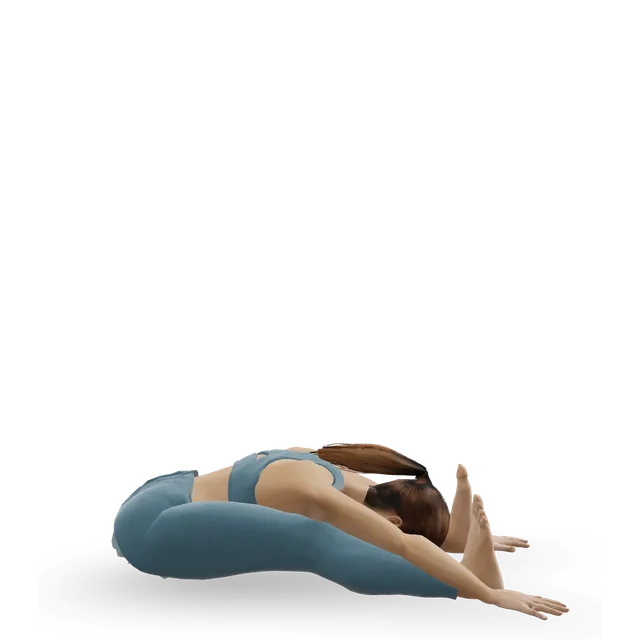 3D demoSeated forward fold (Paschimottanasana)Intermediate · No equipment
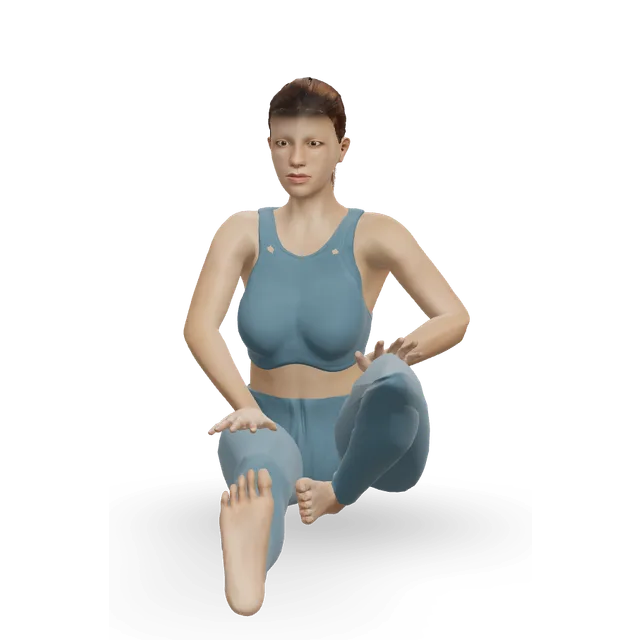 3D demoHead-to-knee pose (Janu Sirsasana)Beginner · No equipment
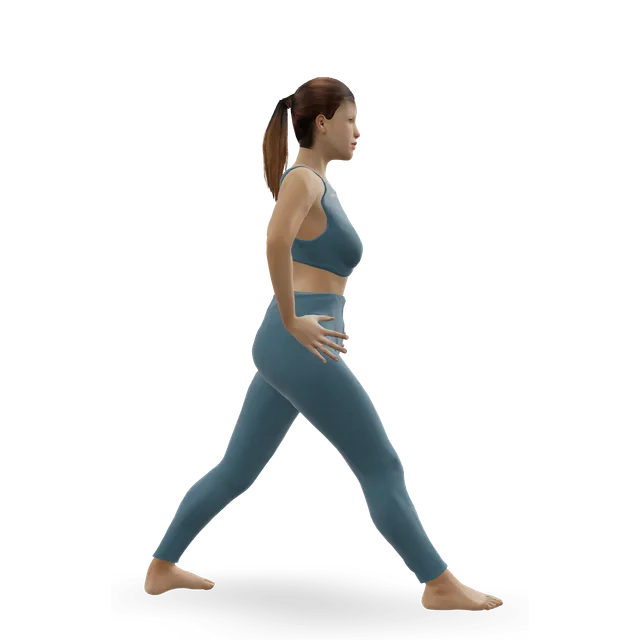 3D demoPyramid pose (Parsvottanasana)Intermediate · No equipment
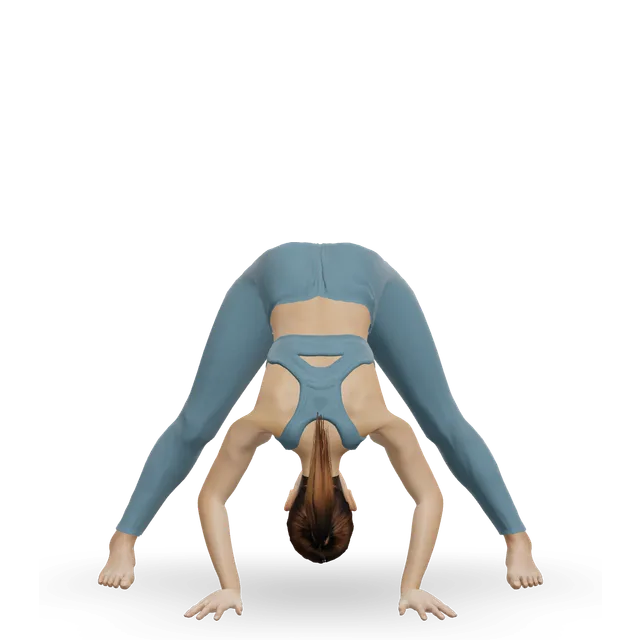 3D demoWide-legged standing forward fold (Prasarita Padottanasana)Beginner · No equipment
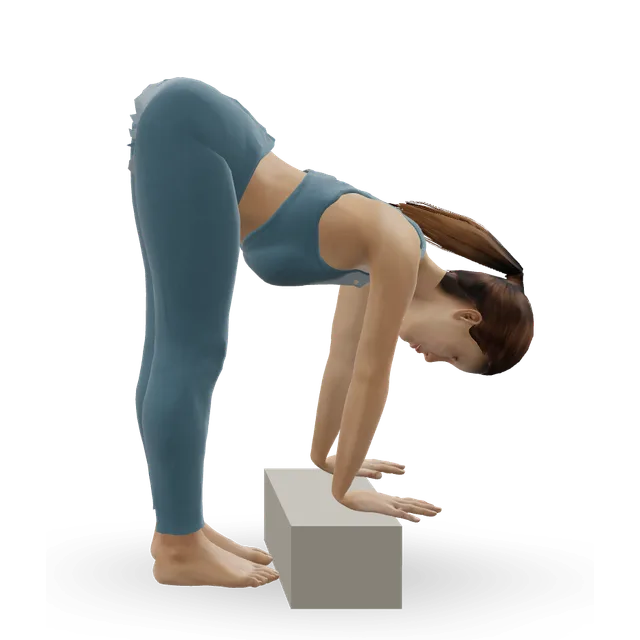 3D demoStanding splits (Urdhva Prasarita Eka Padasana)Advanced · No equipment
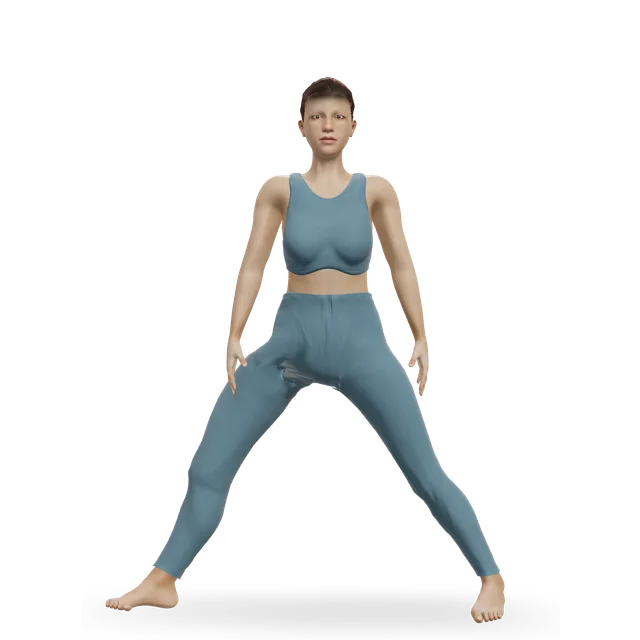 3D demoTriangle pose (Utthita Trikonasana)Intermediate · A step
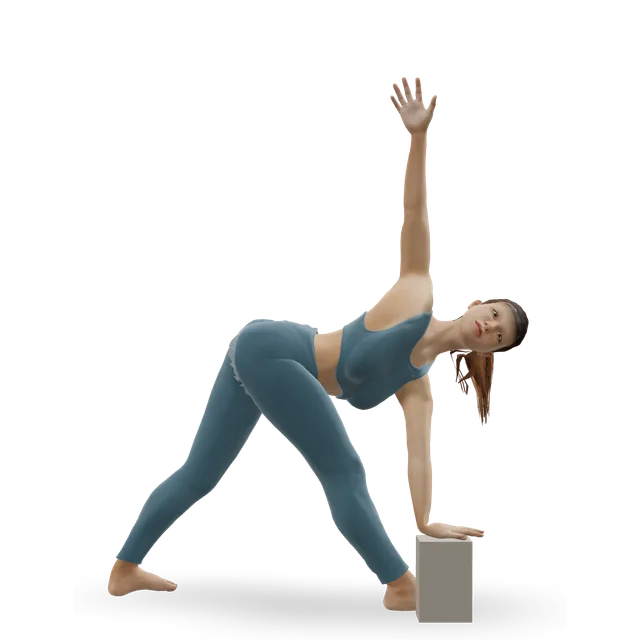 3D demoRevolved triangle pose (Parivrtta Trikonasana)Advanced · A step
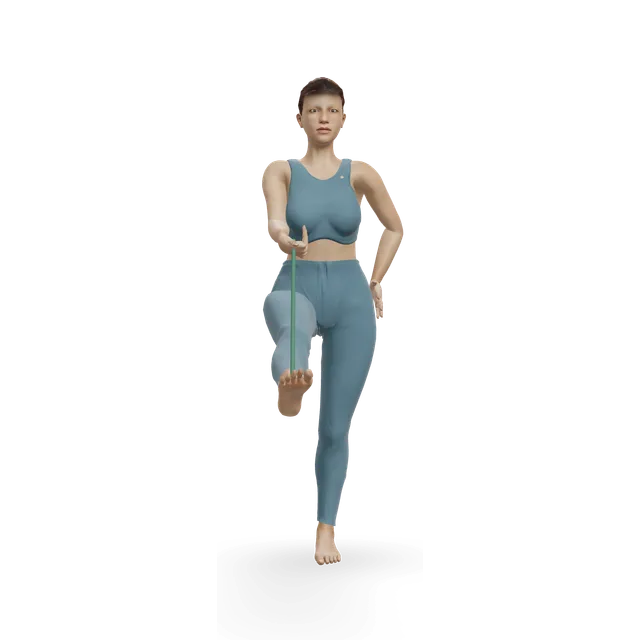 3D demoStanding hand-to-big-toe pose (Utthita Hasta Padangusthasana)Advanced · No equipment
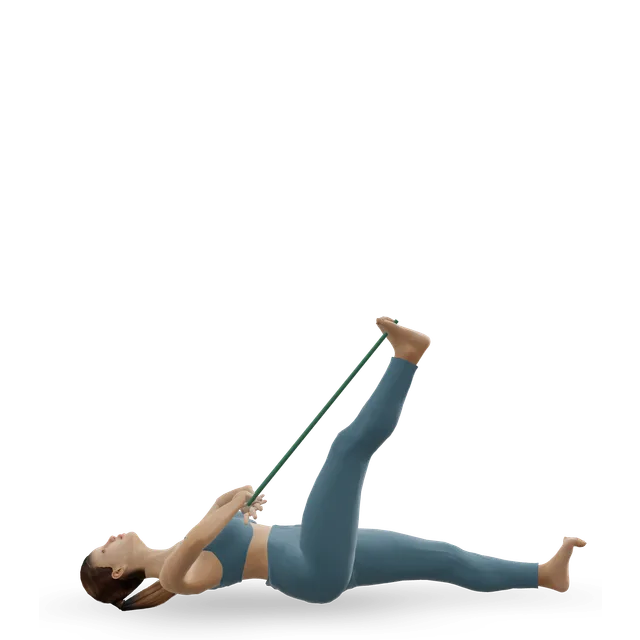 3D demoContract-relax hamstring stretch (PNF)Intermediate · No equipment
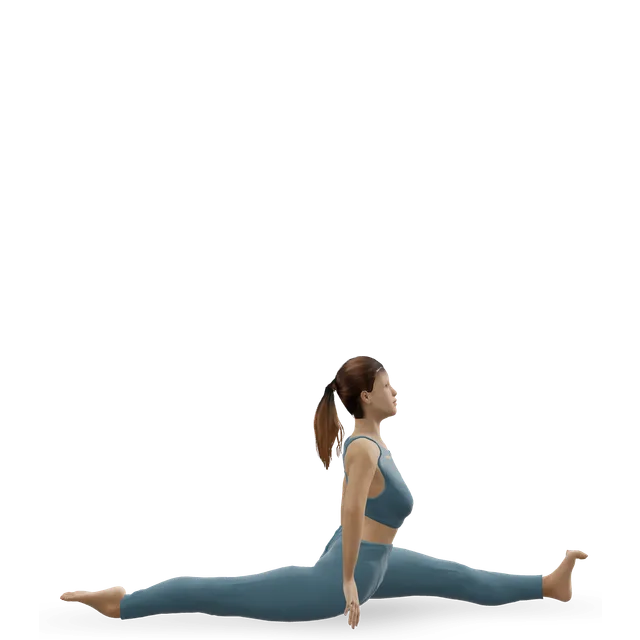 3D demoFront splits (Hanumanasana)Advanced · No equipment
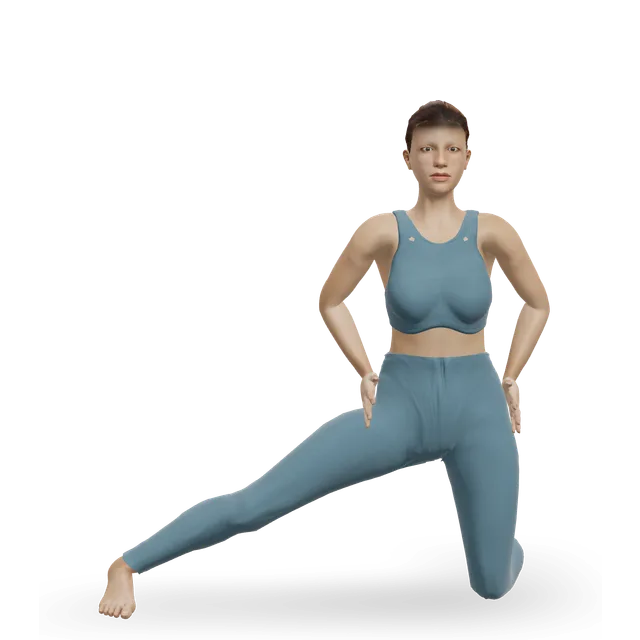 3D demoGate pose (Parighasana)Beginner · No equipment
Our suggestions, from the move pages' cautions and how this injury happens, unless a source is given.
Bend your knees well, and step forward and back rather than jumping, until sprinting is pain-free.
Head-to-knee pose's own page: "Sit on a folded blanket and keep a small bend in the straight knee if your pelvis tips backwards." Do the same in other seated folds.
Not in the first 3 days (our suggestion: the NHS advises avoiding heat, such as hot baths and heat packs, then).
Source 5
Say no to anyone pressing your back down in a fold. You can say no to any hands-on adjustment, and a teacher registered with Yoga Alliance must get your explicit consent each time.
That isn't a strain. Our yoga for hamstrings guide and our high hamstring tendinopathy guide cover it.
In a worldwide consensus of 58 experts, return to play needed medical clearance, no pain when the muscle is pressed, no pain in strength and flexibility tests or in or after functional tests, flexibility similar to the other side, field test performance and feeling ready. A later consensus made pain-free sprinting its one firm rule, and the experts couldn't agree on a flexibility benchmark.
In 19 re-injuries confirmed on MRI, 79% were in the same place and more than half came within 4 weeks of going back. In professional football, 69% of repeat injuries came within 2 months, and repeat rates in studies range from about 14% to 63%.
Programmes that include the Nordic curl were linked with about half as many hamstring injuries across 15 studies, and two large football trials found big falls. But when only properly randomised trials are pooled the effect is uncertain, and a 2026 network analysis of 11 trials in football found the FIFA 11+ warm-up reduced hamstring injuries while the Nordic curl on its own didn't clearly do so, at low to very low certainty. Worth doing as part of a plan, not a guarantee.
Flexibility training didn't reduce hamstring strains in elite football, and across 25 trials stretching didn't prevent sports injuries while strength training did. In larger studies, tight hamstrings were at most a weak risk factor.
Our 25-minute class follows the first two stages of our hamstring strain guide: hamstrings working rather than stretching, trunk and balance, short standing holds and the lengthening moves, with no deep folds. Its structure and timing are our editorial choice: start it about a week in, once walking is comfortable, 3 times a week, alongside the rehab plan. Chair yoga suits the first days. The Nordic and prevention routines belong to the last stage. The yoga for footballers class and the hamstring flexibility routine wait until you can sprint without pain: the routine includes contract-relax, pyramid and a seated fold.
A 25-minute yoga class for the weeks after a hamstring strain: hamstrings working, not stretching, trunk and balance, and two lengthening moves from the trials.
25 minBeginner16 movesA wall, A dumbbellA 15-minute chair yoga routine done entirely sitting: slow breathing, neck, shoulder and wrist stretches, seated twists and side bends, and a calm finish.
15 minBeginner16 movesA bench or boxA 20-minute hamstring session to do twice a week, climbing from ball curls and slider lowers to Nordic curls and the full Nordic, at home or in the gym.
20 minBeginner8 movesExercise ball, An anchor pointThe Nordic hamstring and Copenhagen adduction programmes from the football trials: a 10-week build, three adductor levels, then once a week in season.
15 minIntermediate6 movesA wall, An anchor pointFIFA's 11+ injury prevention warm-up as its manual sets it out: running drills, strength, balance and jumping at three levels, then faster running.
20 minBeginner20 movesCardio machine, A wallTwenty-five minutes of yoga for footballers: hip and groin range you control, hamstring holds, single-leg balance and side planks, then gentle stretches and rest.
25 minBeginner17 movesA wallA 12-minute routine to loosen tight hamstrings with strap stretches, PNF, folds and hinges.
12 minBeginner7 movesNo equipmentThese are the warning signs from our hamstring strain and back of thigh pain guides, word for word, apart from the lines marked as our suggestion. This is general information, not a diagnosis. A&E means accident and emergency; in the US, call 911 for 999.
Same day: a pop near the sitting bone, a large bruise high on the back of the thigh, or you cannot put weight on the leg. The tendon may have pulled away from the bone, which needs assessing before you start these exercises.
Same day (NHS 111 or your GP): you felt a pop or tearing high on the back of your thigh, near the sitting bone, and it's very painful, there's a lot of swelling or bruising (which can spread down the thigh over the next few days), it hurts to walk or stand, or sitting is painful. The tendon may have come away from the bone. Ask for a scan within days. That timing is our suggestion: no source gives a fixed deadline, but this injury is easily missed, and a specialist needs to see it while every option is still open.
A bunched-up lump of muscle, or a dent you can feel, high on the back of the thigh after a pop: get it checked the same day (our suggestion, from a US orthopaedic surgeons' patient page and an expert consensus on when to operate).
Same day, for an X-ray (our suggestion): a teenager with sudden pain at the sitting bone after a sprint, a kick or the splits, often with a pop, especially if walking or sitting hurts. While the bones are still growing, the tendon can pull off a piece of bone.
Call 999 or go to A&E: severe pain after a fall onto your hip or bottom, or you cannot walk or put weight on the leg.
A pop or sudden sharp pain low at the back of the thigh or at the back corner of the knee during a curl or a sprint, then bruising, a gap you can feel just above the bony bump on the outside of the knee, or weakness bending the knee: get it checked within a few days through your GP, a physiotherapist or NHS 111. Most hamstring problems near the knee settle without surgery, but a tendon pulled off the bone often needs repair (our suggestion).
Get help from NHS 111 if you think you've injured your hamstring and it's very painful, or the pain is getting worse; there's a large amount of swelling or bruising, or the swelling or bruising is getting worse; it hurts to walk or stand using the injured leg; your leg feels very stiff or is difficult to move; it's not feeling any better after treating it yourself; or you have a very high temperature or you feel very hot, but also cold and shivery, which could be signs of an infection.
Source 5
Same day (urgent GP appointment or NHS 111): after a bad hamstring tear, the leg becomes more swollen, throbbing or discoloured. A clot can feel like a pulled hamstring, and clots are more likely after a complete tear of the tendon.
Same day (urgent GP appointment or NHS 111): throbbing pain in one leg (rarely both), usually the calf or thigh; swelling in one leg (rarely both); red, blue or darkened skin around the painful area, which may be harder to see on brown or black skin; or swollen veins. This can be a deep vein thrombosis (DVT). It is more likely after surgery, a hospital stay, 3 or more days in bed, a journey of over 4 hours, pregnancy or a recent birth, cancer, a previous clot, or contraception or hormone replacement therapy (HRT) that contains oestrogen.
Call 999 or go to A&E if breathing suddenly becomes difficult, if pain in your chest or upper back comes on suddenly with breathlessness or a very fast heartbeat, or if someone passes out. Do not drive yourself. It can be a blood clot that has reached the lungs.
Source 43
Source 5
Mild to moderate discomfort that you find tolerable is fine during exercise; in a trial, working that way did no harm and recovered more strength. In the lengthening exercises (the Extender and the Diver), stop just before pain. Sharp pain, or a limp afterwards, means back off for a session or two.
In stretches, a mild pull only, never to the end of your range, until sprinting is pain-free (our suggestion).
If you're hypermobile, don't use mobility work to push further: the NHS says "do not overextend your joints just because you can". See a GP if you think you have joint hypermobility syndrome: for example, your joints keep dislocating, or you keep getting sprains, strains, pain or stiffness.
Source 44
Call 999 if:
Call 999 or go to A&E (accident and emergency) straight away for severe difficulty breathing (gasping, choking or not able to get words out), a chest that feels tight or heavy, pain that spreads to your arms, back, neck and jaw, lips or skin turning very pale, blue or grey, or sudden confusion. If you're more short of breath than usual, or your heart is racing, fluttering or skipping beats, contact NHS 111.
Source 47
A joint pain that is sharp, gets worse during a session, lingers into the next day or changes how you move is a reason to use an easier version, and to see a GP or physiotherapist if it keeps happening (the rule in our plans). Muscle soreness for a day or two after something new is normal. In a hot class, stop if you feel dizzy, sick or unwell; our hot yoga guide lists the signs of heat illness.
The NHS advises getting advice from a healthcare professional first if you have a health problem, an injury or symptoms, or have recently had a heart attack or an operation.
No trial compares stretching with not stretching, and more frequent stretching saved under 2 days in the only dose trial. Strains caused by deep stretching took the longest to heal. What shortened the return was an early start and controlled lengthening under load. Gentle range, yes; deep folds, later.
Starting rehab on day 2 rather than day 9 got people back about 3 weeks sooner with similar re-injury, and the NHS says keep moving once pain allows.
Flexibility training made no difference to hamstring strains in elite football, and across 25 trials stretching didn't prevent sports injuries, while strength training did.
One study found injured players had been less flexible, but larger ones found no link, or a difference of under 2 degrees with little clinical value. Age and a previous injury matter more, and the slowest strains happen at the end of a big range. With very flexible joints, the NHS says "do not overextend your joints just because you can".
Healing was still visible on MRI at return, re-injuries cluster in the first 4 weeks back, and experts want pain-free strength, flexibility and field tests, and pain-free sprinting, first.
Programmes with them were linked with half as many injuries in one review, but the randomised evidence is uncertain. Worth doing, not a guarantee.
Most strains do, but a tendon pulled off the bone is often missed and is usually repaired early, within weeks.
No trial has tested it. It can carry some of the strength, balance and gentle range work, beside a rehab plan.
Source 1
Yes, with changes. Breathing, chair yoga and poses that don't stretch the back of the thigh are fine from the first days, and gentle hamstring work can start within a few days, as early rehab got people back sooner in a trial. Leave deep forward folds, pyramid, triangle and the splits until you can sprint without pain.
It can help you keep moving and build strength and balance, but no trial has tested it. The exercises with trial evidence are controlled lengthening moves done under load, which got athletes back weeks sooner, and our class builds them in.
Gently, not hard and not early. No trial compares stretching with not stretching, and strains from slow, deep stretches took the longest to heal in dancers. Stretch to a mild pull only, and bring deep folds back last.
Breathing and upper body yoga straight away. The NHS suggests rest, ice, compression and raising the leg for 2 to 3 days, then keeping it moving once pain allows; gentle bridges and heel slides can start then, and standing poses as walking gets comfortable.
Deep forward folds, pyramid, triangle, standing splits, the splits, hand-to-big-toe poses and contract-relax stretches, until sprinting is pain-free; their own move pages say to leave or ease off them while a hamstring heals. Bend your knees in downward dog and step rather than jump.
Bridges, side planks, chair pose, warrior II and one-leg balances work the hamstrings and trunk without stretching them hard. Later, warrior III with your hands on a chair is close to one of the lengthening exercises from the trials.
Mild strains can settle in days, as the NHS says. In professional footballers, typical strains took about 2.5 to 3.5 weeks, strains into the tendon several weeks more, and strains from slow stretching much longer. Recreational athletes with severe strains took 2 to 3 months in a trial.
A little. Working up to a tolerable level of pain was as quick as pain-free rehab and kept more strength in a trial, but stop the lengthening moves just before pain, and sprinting should be pain-free before you go back.
No study has shown it, and stretching doesn't prevent sports injuries. The best-supported prevention is a warm-up programme with strength work, such as the FIFA 11+ with the Nordic curl, though even that evidence is less certain than it once looked.
A previous strain is the biggest risk factor, and most repeat strains happen in the first weeks after going back, in the same place. A physiotherapist can check your strength, your running and the return-to-sport tests experts use.
Most strains don't. A tendon pulled off the bone near the sitting bone usually does, and surgeons prefer to repair it early, within weeks. A pop high at the back of the thigh with a large bruise or trouble walking or sitting needs checking the same day.
A strain starts suddenly during a sprint or a stretch and is tender in the muscle. Pain that spreads below the knee, or comes with tingling or numbness, may come from the back: see a GP or physiotherapist, and read our sciatica guide.
Exercise education, not a personal prescription, and clinical review of these guides is pending. If you are pregnant, have a health condition such as glaucoma, high blood pressure or osteoporosis, or have had recent surgery, check with a doctor, midwife or physiotherapist before starting, and stop for sharp or increasing pain. Health disclaimer.