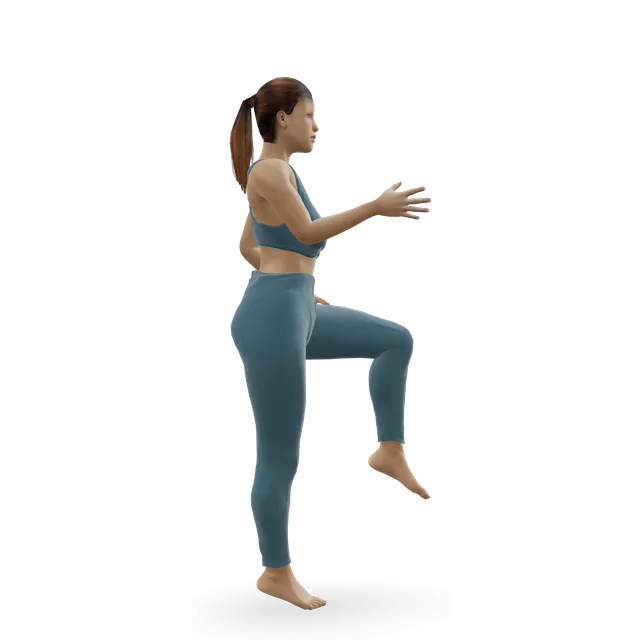
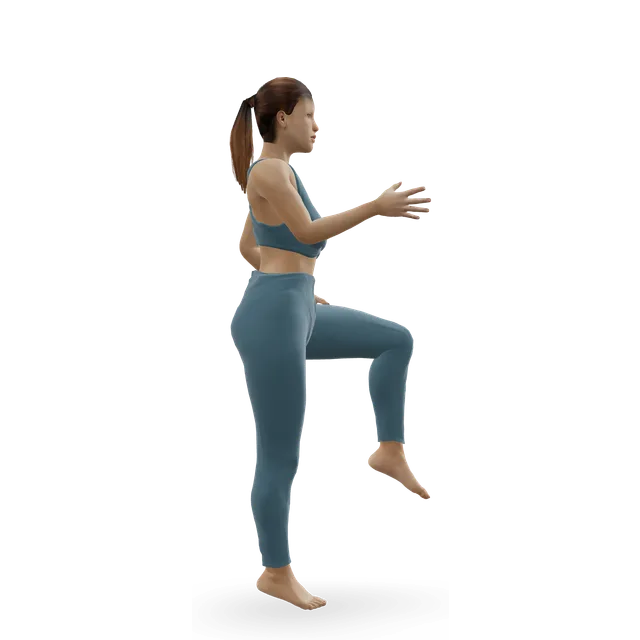
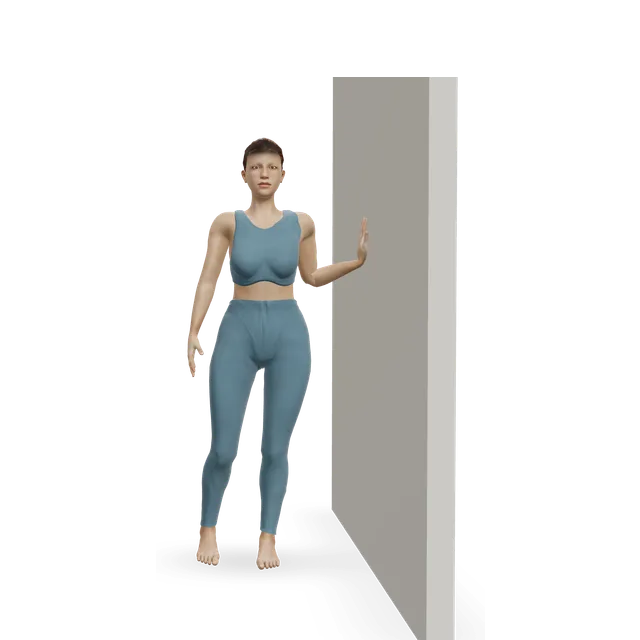
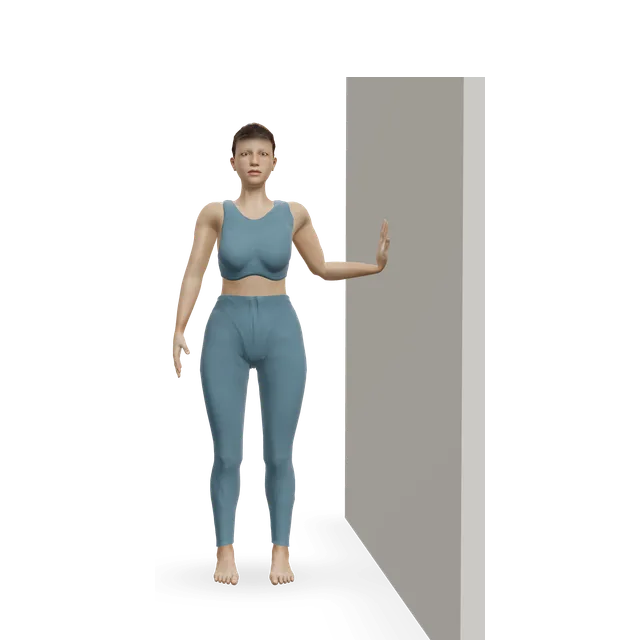
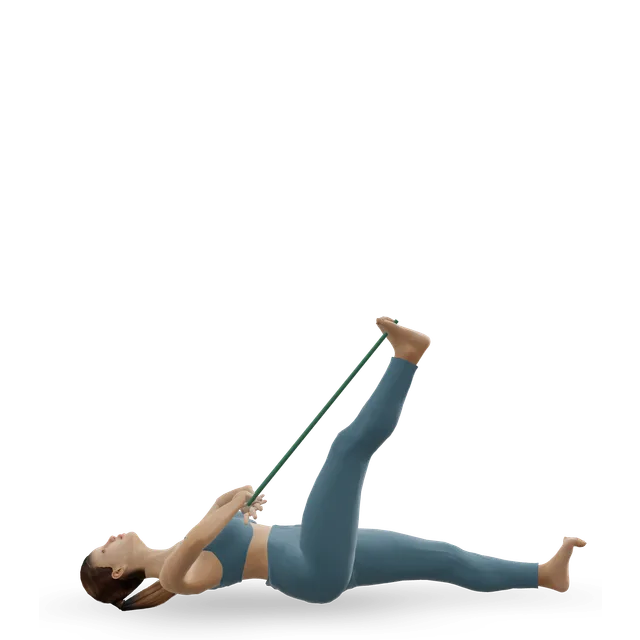
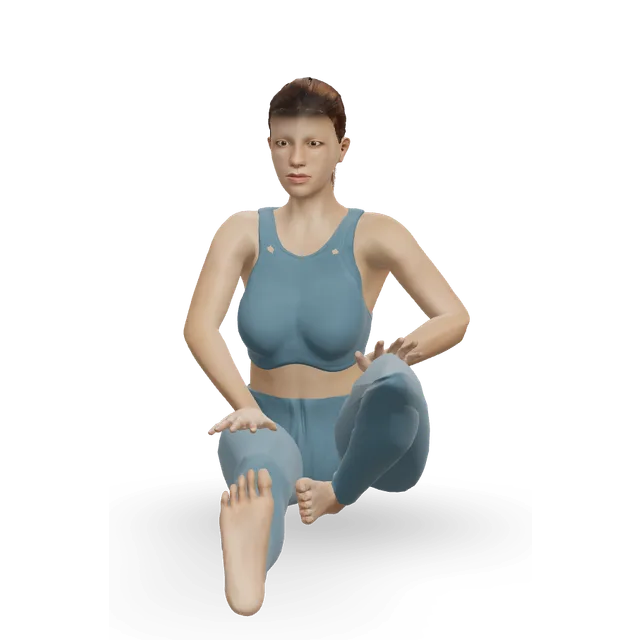
Train both jobs
A hinge (bridges, Romanian deadlifts) for the hip and a curl (seated leg curls, slider curls, Nordic curls) for the knee, every week. The long hamstrings cross both joints, and each kind of exercise favours different parts of them.
Training guide
Your hamstrings have two jobs: they straighten your hip and bend your knee. Strengthening them takes a hinge, such as the Romanian deadlift (RDL) or a bridge, and a curl, such as the seated leg curl or the Nordic curl, once or twice a week each. Squats don't do it: they barely grew the hamstrings in trials.
Slow Romanian deadlifts and Nordic curls each grew the hamstrings by about 10% in 6 weeks. Programmes that include the Nordic were linked with about half as many hamstring injuries, but trials of the Nordic alone are inconclusive, and the benefit showed only when players kept doing it.
This guide covers the hamstring muscles, the exercises with doses, how little Nordic work is enough, sprinting, training at home and after 60, and what to do when the back of your thigh hurts.
A hinge (bridges, Romanian deadlifts) for the hip and a curl (seated leg curls, slider curls, Nordic curls) for the knee, every week. The long hamstrings cross both joints, and each kind of exercise favours different parts of them.
Full and half squats didn't grow the hamstrings in a 10-week trial, and squats and hip thrusts barely did in another. Add a hinge and a curl.
Slow Romanian deadlifts and Nordic curls each grew the hamstrings by about 10% in 6 weeks, and seated leg curls grew them more than lying curls: 14% against 9% in 12 weeks.
Programmes that include the Nordic were linked with about half as many hamstring injuries. Trials of the Nordic alone point the same way but are inconclusive, and the benefit showed only with good adherence.
Low Nordic volumes built as much strength as high ones. Start with 1 or 2 sets of 3 to 5 slow lowers and build to 2 or 3 sets of 3 to 6 twice a week, as our Nordic curl guide suggests, with 2 or 3 sets of 8 to 12 hinges and curls inside strength work on 2 or more days a week.
Stretching hasn't been shown to prevent hamstring strains. A sudden pop, a big bruise, pain at the sitting bone or pain spreading below the knee isn't a strengthening job: see the warning signs below.
Three hamstrings run from your sitting bone down the back of your thigh: the biceps femoris on the outside, and the semitendinosus and semimembranosus on the inside. The biceps femoris also has a short head that starts on the thigh bone and crosses only the knee. The long muscles cross both the hip and the knee, so they straighten your hip and bend your knee. Our hamstrings and biceps femoris pages have the anatomy.
Source 1
Hinges and bridges train the hip job, and in muscle activity and MRI scan studies they favoured the biceps femoris long head and the semimembranosus. Curls and the Nordic train the knee job and favoured the semitendinosus. In a 9-week trial, stiff-leg deadlifts grew the semimembranosus most and Nordics the semitendinosus. That's why our Romanian deadlift and leg curl guides ask for one of each a week.
Sitting bends your hip and stretches the long hamstrings, which is the likely reason seated leg curls grew them more than lying curls in a trial. The short head, which doesn't cross the hip, grew about the same on both.
Source 1
Eccentric (lowering) strength is your hamstrings' strength while they lengthen under load, as when they brake the swinging leg in a sprint. In elite football, players with low lowering strength and short biceps femoris fibres had more strains. Nordic curls and slow lowering build it.
A previous strain and older age are the strongest risk factors for a hamstring strain: any previous strain went with 2.7 times the risk, and a recent one 4.8 times. How far you can hinge depends on your hamstrings, not your effort, so stop the Romanian deadlift where they stop you, usually around knee height to mid-shin, as our RDL guide says. The Nordic is harder the taller and heavier you are, because the lever is longer (our reading), so the band-assisted version is the way in.
Source 18
This guide is about strength for everyday life, running and sport. Our bigger legs guide covers size, and our hamstring strain guide covers recovering from an injury.
Most trials here are small, short and in young adults or footballers, mostly men.
In 20 untrained adults training one leg seated and one lying, 5 sets of 10 twice a week for 12 weeks, the whole hamstrings grew 14% with seated curls against 9% with lying curls. In 42 young men over 12 weeks, seated curls with the hip bent further and slow lowering grew the hamstrings 18%, against 11% for Nordic curls, and the biceps femoris long head 19% against 5%.
In 32 adults (15 of them women) training twice a week for 6 weeks with a 4 to 6 second lowering, slow Romanian deadlifts and Nordic curls each lengthened the long head's fibres by about 9% and grew the hamstrings by about 10%, with no difference between them. In 36 untrained adults over 9 weeks, Nordics grew the hamstrings 11.4% and stiff-leg deadlifts 7.0%, each favouring a different muscle.
In 17 men doing full or half squats twice a week for 10 weeks, the thigh muscles that straighten the knee grew about 5%, but the hamstrings didn't change. In 34 untrained adults, 9 weeks of squats or hip thrusts gave the hamstrings little to no growth, and the leg press grew them about 3% in 12 weeks in another trial.
In 19 elite youth footballers, one set raised lowering strength as much as four (11.3% against 11.4%). In 20 men, 8 Nordics a week kept building fibre length and strength as well as a higher volume. Across 42 studies, volume didn't predict strength gains, with typical effective doses of 29 to 64 reps a week. In one small trial, twice a week beat once a week for Nordic strength.
In 11 soccer studies, only higher volumes (about 2 to 3 sets of 8 to 12, 2 or 3 times a week) changed fibre length. In two trials, fibre gains went back within 2 weeks of stopping, while strength held for at least 4 weeks in one. So keep a weekly session.
Across 78 studies of 8,319 strains, older age and a previous hamstring strain were the strongest risk factors for a new one: a previous strain went with 2.7 times the risk, and a recent one 4.8 times.
Source 18
In 210 elite Australian footballers, low Nordic strength went with 2.7 to 4.3 times the risk of a strain, and in 152 elite soccer players, low strength and short long-head fibres each went with about 4 times the risk. Risk factors like these aren't proof that changing them prevents strains.
The World Health Organization (WHO) and the NHS ask adults for muscle-strengthening activity working all the major muscle groups, the legs and hips included, on 2 or more days a week. In the 2026 American College of Sports Medicine (ACSM) overview of 137 reviews, strength rose most with heavier loads, a full range, 2 to 3 sets and 2 or more sessions a week.
Train each job once or twice a week, inside strength work on 2 or more days a week. Do Nordics twice a week while you build up, then keep at least one session a week, as our Nordic curl guide suggests (editorial).
Source 11
Romanian deadlifts: 3 sets of 8 to 10, lowering for about 3 seconds, as our RDL guide and hamstring workout use. Seated leg curls: the move page's dose is 2 to 3 sets of 8 to 12, stopping with 2 or 3 reps in reserve (our editorial starting point); our hamstring workout uses 3 sets of 10 to 12. Nordic curls: 1 or 2 sets of 3 to 5 slow lowers for the first week or two, then 2 or 3 sets of 3 to 6 (our Nordic curl guide's editorial starting point).
Stop hinges 2 or 3 reps short of failure, which our guides call 2 or 3 RIR (reps in reserve: how many more reps you could have done). The last set of curls can go to 0 to 2, as our plans' notes say. In Nordics, lower as slowly as you can, as far as you can control, then catch yourself on your hands.
About 90 seconds to 2 minutes between Romanian deadlift sets, and 60 to 90 seconds for curls, as our plans' notes say.
Add reps until every set reaches the top of its range, then add the smallest weight step, as our plans' notes say. Nordics progress by lowering further and more slowly, then moving to the next step of the ladder.
Muscle and fibre changes showed within 6 to 12 weeks in trials, and the football programmes built up over 10 to 13 weeks, then carried on. Fibre-length gains faded within 2 weeks of stopping, so keep a weekly session going.
Your first Nordic sessions can leave your hamstrings very sore for a few days, and much less so a few weeks later, as our Nordic curl guide explains. Start with very few reps.
Mild to moderate discomfort that you find tolerable is fine during exercise; in a trial, working that way did no harm and recovered more strength. In the lengthening exercises (the Extender and the Diver), stop just before pain. Sharp pain, or a limp afterwards, means back off for a session or two.
High hamstring tendinopathy has its own rule, from its largest trial: up to 4 out of 10 during exercise, and no more than 2 points worse the next day. Its guide explains it.
Our editorial order, the shape of our hamstring workout, with doses from our Romanian deadlift, leg curl and Nordic curl guides and our plans' notes. Our Romanian deadlift and Nordic curl guides teach each move.
Loading the 3D figure…
The movement on the figure: Dumbbell Romanian deadlift
Hip hinge practice, 2 or 3 sets of 8; bridges, 3 sets of 10 to 15 with a pause; dumbbell Romanian deadlifts, 3 sets of 8 to 10, lowering for about 3 seconds; single-leg Romanian deadlifts, 2 sets of 8 each leg (our RDL guide, hips guide and hamstring workout). The barbell RDL starts with the empty bar, then 3 sets of 6 to 10.
 3D demoHip-hinge practiceBeginner · No equipment
 3D demoGlute bridgeBeginner · No equipment
 3D demoSingle-leg glute bridgeIntermediate · No equipment
 3D demoDumbbell Romanian deadliftIntermediate · A dumbbell
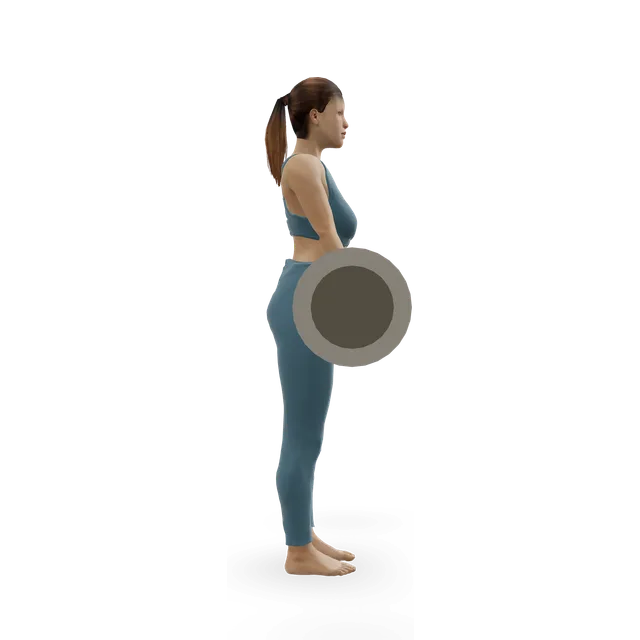 3D demoBarbell Romanian deadliftIntermediate · A barbell
 3D demoSingle-leg Romanian deadliftAdvanced · A dumbbell
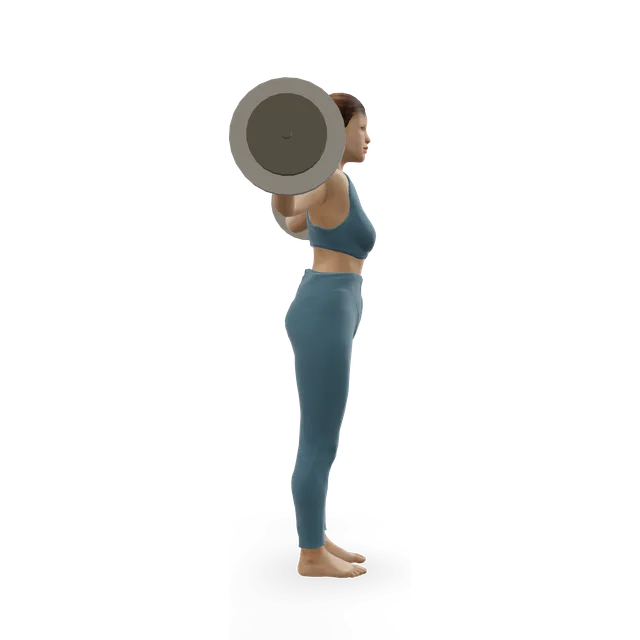 3D demoBarbell good morningIntermediate · A barbell
Seated leg curls: the move page's dose is 2 to 3 sets of 8 to 12, stopping with 2 or 3 reps in reserve (our editorial starting point). Slider curls, 3 sets of 6 to 10; slider lowers, 3 sets of 5; Nordic curls, 1 or 2 sets of 3 to 5 slow lowers at first, building to 2 or 3 sets of 3 to 6 twice a week (our Nordic curl guide). There's no 3D demo of the lying leg curl: the seated machine shows the same knee action.
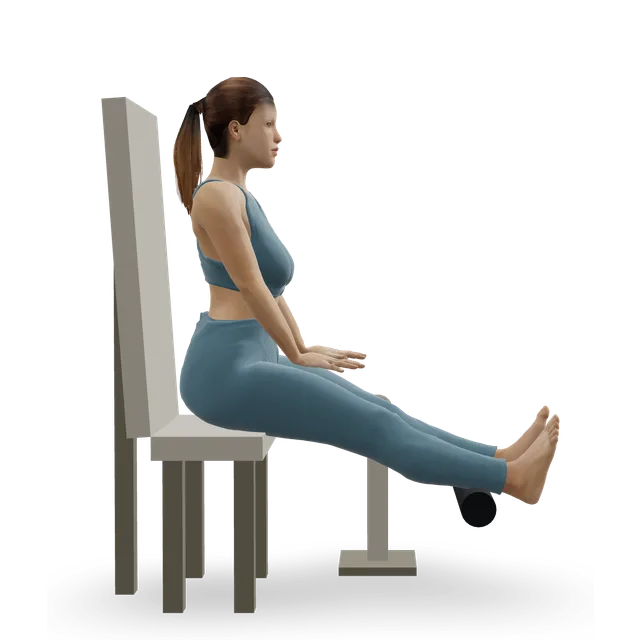 3D demoSeated leg curlBeginner · Strength machine
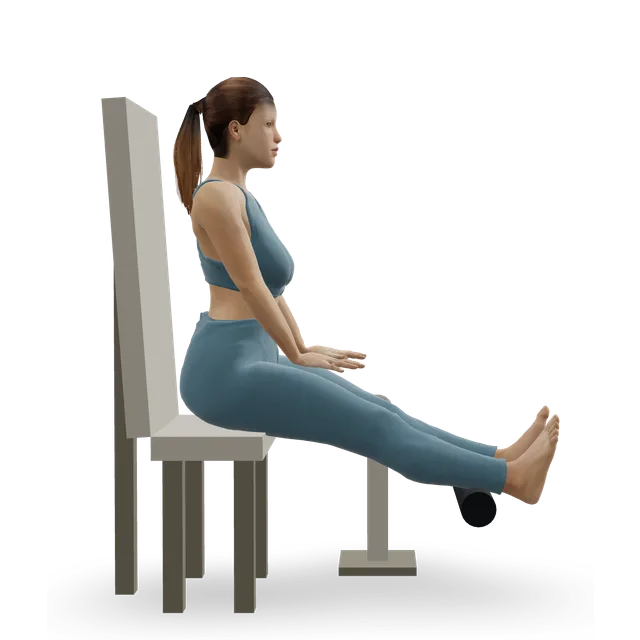 3D demoMachine leg curlBeginner · Strength machine
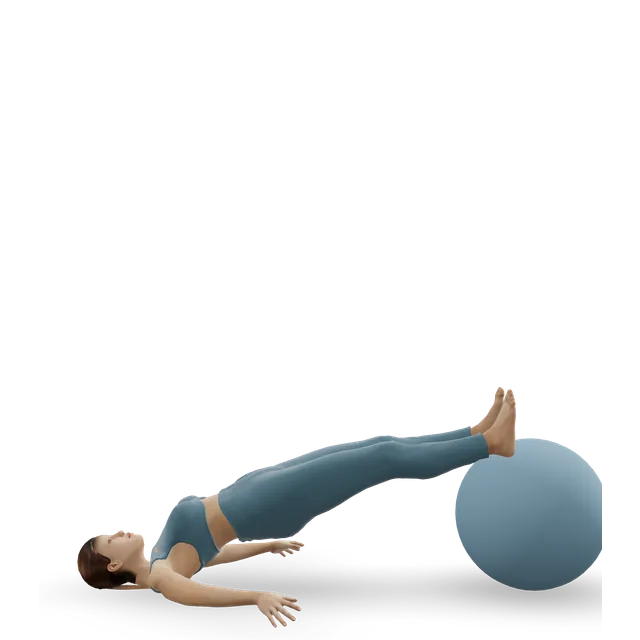 3D demoStability ball leg curlIntermediate · Exercise ball
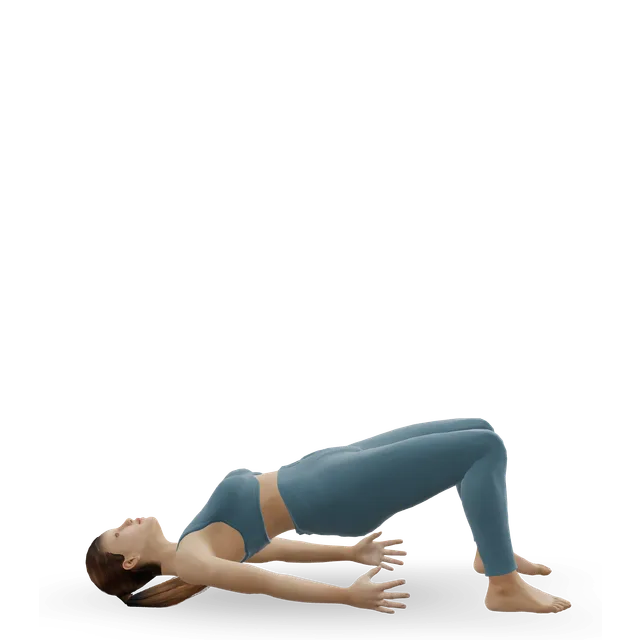 3D demoSlider hamstring curlIntermediate · No equipment
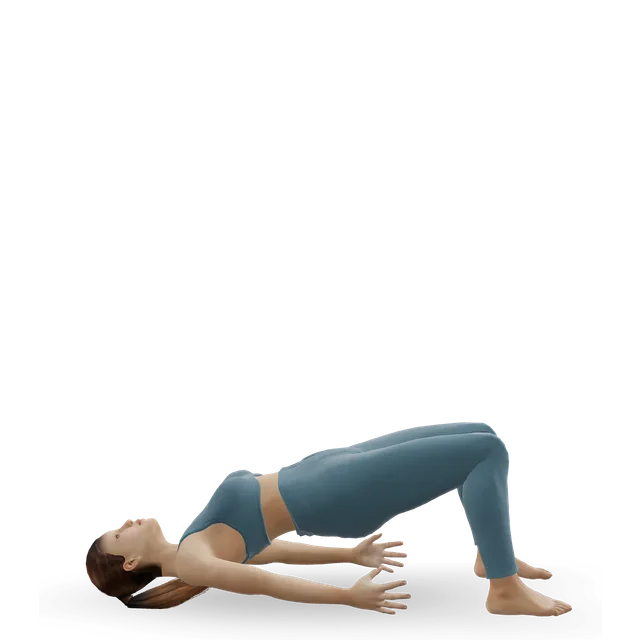 3D demoSlider hamstring curl, lowering onlyBeginner · No equipment
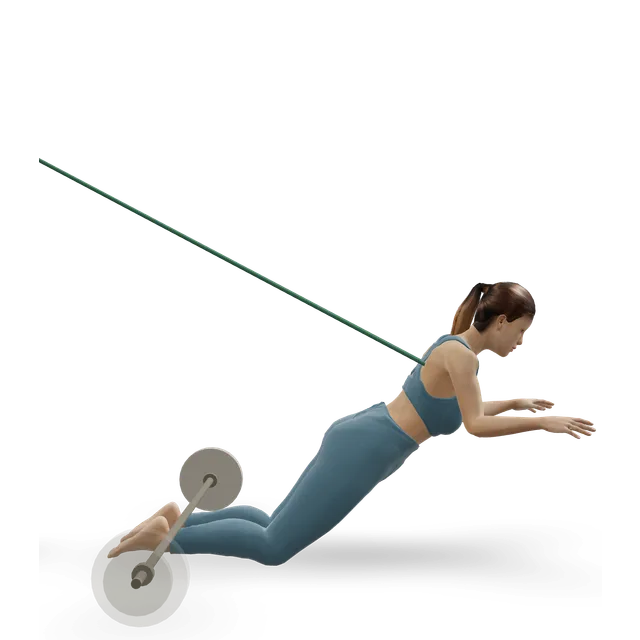 3D demoBand-assisted Nordic curlIntermediate · An anchor point + A band
 3D demoNordic curlAdvanced · An anchor point
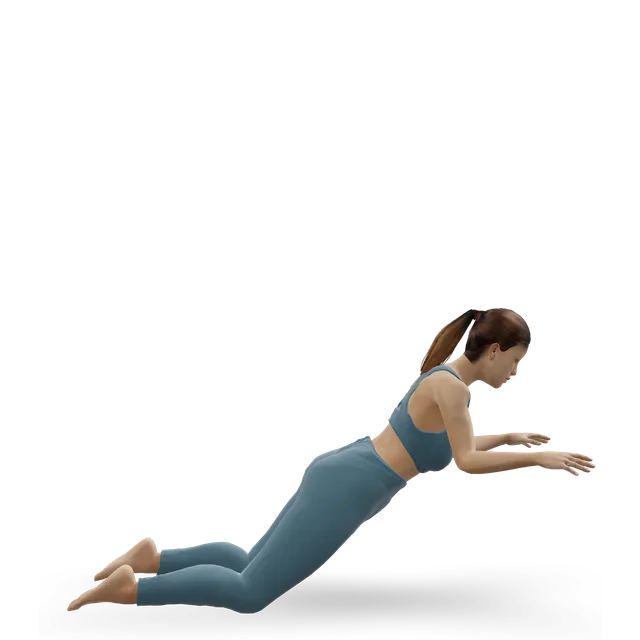 3D demoNatural glute-ham raiseAdvanced · Strength machine + A bench or box
Programmes that include the Nordic were linked with about half as many hamstring injuries: a risk ratio of 0.49 across 15 studies of 8,459 athletes (0.52 in the 8 randomised trials), and 0.49 across 5 soccer studies.
Trials of the Nordic alone point the same way but are inconclusive. A re-analysis of only the trials that tested the Nordic itself gave a risk ratio of 0.59, anywhere from 0.27 to 1.29, mostly from trials at high risk of bias. A 2026 network analysis of 11 football trials (9,282 players) gave 0.78 for the Nordic alone, at very low certainty, and 0.55 for the FIFA 11+ warm-up.
In 942 Danish male footballers, a 10-week build-up and then a weekly session in season gave 3.8 hamstring injuries per 100 player seasons against 13.1, and repeat injuries fell most. In 579 Dutch amateur players, 25 sessions over 13 weeks gave 0.25 injuries per 1,000 hours against 0.8.
Across 15 football trials (7,465 players), prevention programmes cut hamstring strains when players did 75% or more of the sessions (risk ratio 0.36), but showed no clear benefit below that (0.92), at low certainty. Earlier reviews found the same pattern.
Do Nordics for the lowering strength they build, alongside sprinting and the rest of your training, and keep them going through the season. Our Nordic curl guide has the full trial detail.
In men's professional football, hamstring injuries rose from 12% of all injuries in 2001 to 24% by 2022, mostly while running or sprinting, and 18% were repeat injuries.
In small trials, sprint training lengthened the biceps femoris long head's fibres as much as Nordics or more (16% against 7% in 6 weeks, in small groups of footballers), raised lowering strength in teenagers and made athletes faster. These are small studies of muscle fibre length and strength: no trial has measured whether sprint training prevents hamstring injuries.
In amateur footballers, Nordics made 10 m sprints 0.047 seconds faster in a trial: a small change, in the right direction.
Source 38
Lengthening-type exercises returned elite footballers in a mean of 28 days against 51. Rehab that allowed tolerable pain returned players no sooner than pain-free rehab (17 against 15 days, not a significant difference) but recovered 15% more strength. Our hamstring strain guide has the stages.
Keep sprinting in training, building from skips and 60 to 70% efforts over several sessions, as our hamstring strain guide's return stage does, alongside 2 short strength sessions a week (our suggestion). Our strength training plan for runners and our strength and hamstring workout for sprinters have the sessions, and our sprint faster guide covers speed.
Skipping, 3 sets of 20 m (our hamstring strain guide's return stage); sprint efforts at 60 to 70% to start, building speed over several sessions; the Copenhagen plank is the groin exercise paired with Nordics in football programmes, starting at 3 to 5 slow reps a side with the knee on the bench (our hips guide).
Bridges, single-leg bridges and slider curls with a towel on a smooth floor, then slider lowers, band-assisted Nordics and Nordics with your heels hooked under something heavy that can't move, or held by a partner. Single-leg Romanian deadlifts holding a backpack cover the hinge. Our Nordic curl progression puts these in order.
Romanian deadlifts with a barbell or dumbbells, the seated leg curl, and the glute-ham raise or a Nordic bench if there's one. Our leg curl guide covers the machines.
The same two jobs, made gentler: bridges, a supported hinge or a light Romanian deadlift, and seated or standing curls, 2 or 3 sets of 10 to 15 (our editorial starting point). Nordics are optional. Balance work matters more for falls, and our exercise for older adults and leg strengthening guides have it.
The hamstring workout (gym) and the Nordic curl progression (home) cover both jobs and the Nordic ladder. The injury prevention, sprinters' and sprint speed sessions suit sport; the posterior chain and hip hinge workouts build the hinge. The hamstring flexibility routine is for range, not strength.
A 35-minute gym hamstring workout: Romanian deadlifts for the hip, seated leg curls for the knee, single-leg Romanian deadlifts, then Nordic curls when ready.
35 minIntermediate7 movesA dumbbell, Strength machineA 20-minute hamstring session to do twice a week, climbing from ball curls and slider lowers to Nordic curls and the full Nordic, at home or in the gym.
20 minBeginner8 movesExercise ball, An anchor pointThe Nordic hamstring and Copenhagen adduction programmes from the football trials: a 10-week build, three adductor levels, then once a week in season.
15 minIntermediate6 movesA wall, An anchor pointA 50-minute sprint and hurdles session: athletics' injury prevention programme, from planks to Nordic curls, then squats, split squats and Romanian deadlifts.
50 minIntermediate18 movesCardio machine, A wallA 45-minute speed session: running drills, five short accelerations and three flying sprints with full rest, then Nordic curls and calf raises.
45 minIntermediate11 movesCardio machine, A wallA 45-minute gym session for the back of your body: light barbell good mornings, hip thrusts, 45 degree back extensions, cable pull-throughs and a carry.
45 minIntermediate8 movesCardio machine, A barbellLearn the hip hinge at home: the wall tap, the dowel drill and a held hinge, then single-leg hinges and bird dogs, with an optional kettlebell deadlift.
15 minBeginner9 movesA wall, A dumbbellA lower body workout at home: split squats, slider hamstring curls, single-leg bridges, step-ups, band walks and calf raises, with dumbbell options.
30 minIntermediate12 movesA wall, A stepFIFA's 11+ injury prevention warm-up as its manual sets it out: running drills, strength, balance and jumping at three levels, then faster running.
20 minBeginner20 movesCardio machine, A wallA 12-minute routine to loosen tight hamstrings with strap stretches, PNF, folds and hinges.
12 minBeginner7 movesNo equipmentEach has a hinge and a curl in its week; the bro split adds Romanian deadlifts to leg day because it otherwise has no hinge.
A 12-week strength plan for runners: two sessions a week of heavy lifts, single-leg work, calf raises and hops, fitted around your runs.
2 training days45 minBeginner4 days a weekA 4-day upper/lower split: two upper body and two lower body gym days, each muscle trained twice a week, with sets, reps and progression.
4 training days50 minIntermediate5 days a weekThe classic chest, back, legs, shoulders and arms week, built from our gym workouts, with what research says about training each muscle once.
5 training days45 minIntermediate2 days a weekTwo full-body strength sessions a week: the minimum that meets health guidelines, with every set, rep and rest, and an 8-week progression.
2 training days45 minBeginner3 days a weekThree full-body home workouts a week with dumbbells or no equipment at all, plus walks and an 8-week plan to keep progressing.
3 training days35 minBeginnerA sudden sharp pain at the back of the thigh while sprinting or stretching is often a strain. Our hamstring strain guide starts gentle loading within days and brings Nordics back late, in stages.
Deep pain low in the buttock with sitting and running that is not settling: possible high hamstring tendinopathy, which has its own guide.
Nordic curls and deep hinges wait, as our Nordic curl and Romanian deadlift guides say.
Pain in the back of the thigh with tingling, numbness, or pain spreading below the knee: it may come from the back (sciatica).
Our sciatica guide covers it.
Our knee pain on the leg curl guide covers it, with the changes to try.
Resisted hamstring curls wait until your rehab team allows them, as our leg curl guide says. Our ACL surgery guide covers the stages.
A past strain is the strongest risk factor for another, so Nordics and sprint work matter more for you. Finish the stages in our hamstring strain guide first.
While symptoms are irritable, reduce the load and range of heavy hinges, then rebuild, as our Romanian deadlift and herniated disc guides say. Stop for pain that travels down a leg.
With osteoporosis or a past spinal fracture, avoid repeated or loaded deep rounding of the back, and bend from the hips. The osteoporosis guide covers impact and lifting.
Use the seated or standing curl rather than lying face down on a curl bench, as our leg curl guide suggests, and swap bridges and slider curls on your back for standing or side-lying moves in later pregnancy (our suggestion, following the NHS advice our plans give).
Same day: a pop near the sitting bone, a large bruise high on the back of the thigh, or you cannot put weight on the leg. The tendon may have pulled away from the bone, which needs assessing before you start these exercises.
Get help from NHS 111 if you think you've injured your hamstring and it's very painful, or the pain is getting worse; there's a large amount of swelling or bruising, or the swelling or bruising is getting worse; it hurts to walk or stand using the injured leg; your leg feels very stiff or is difficult to move; it's not feeling any better after treating it yourself; or you have a very high temperature or you feel very hot, but also cold and shivery, which could be signs of an infection.
Source 41
Call 999 or go to A&E: loss of feeling or numbness around the genitals or bottom, new trouble peeing or controlling your bladder or bowels, changes in genital sensation during sex or problems with erections or orgasm, or pain, tingling, weakness or numbness in both legs. These are signs of cauda equina syndrome, which needs treating in hospital urgently. Don't drive yourself.
See a GP if pain spreading down a leg hasn't improved after a few weeks of home treatment, is getting worse or stops your normal activities. Sciatica on both sides, or weakness or numbness in both legs that's severe or getting worse, is a 999 call or a trip to A&E.
Same day (urgent GP appointment or NHS 111): new difficulty lifting the front of your foot or toes (foot drop), or a foot that slaps down or catches as you walk, especially if it is getting worse. Weakness in both legs, or with numbness around the genitals or bottom or bladder or bowel changes, is the 999 emergency above.
Same day (urgent GP appointment or NHS 111): throbbing pain in one leg (rarely both), usually the calf or thigh; swelling in one leg (rarely both); red, blue or darkened skin around the painful area, which may be harder to see on brown or black skin; or swollen veins. It could be a blood clot (deep vein thrombosis, DVT), which is more likely while you're moving about much less than usual or after a hospital stay.
Also call 999 for pain and swelling in one leg with breathlessness or chest pain: it can be a blood clot that has reached the lungs.
Source 42
Get advice from NHS 111 now: the knee locks, gives way or clicks painfully. Painless clicking is normal.
Call NHS 111 (in the US, your doctor or urgent care) for severe muscle pain and weakness with dark (cola-coloured) or reduced urine after unusually hard training. This can be rhabdomyolysis, which can harm the kidneys and needs prompt care.
If you get chest pain or pressure, feel faint or dizzy, are unusually breathless, or your heart races or beats irregularly during exercise, as our plans advise.
For chest pain that comes on suddenly and doesn't go away, feels tight or like squeezing, spreads to your arms, neck, jaw, stomach or back, or comes with sweating, feeling sick, light-headedness or breathlessness; severe difficulty breathing; someone who faints while exercising; palpitations that don't go away, or come with chest pain, shortness of breath or feeling faint; or a headache that starts suddenly and is extremely painful, especially while lifting or straining, or comes with numbness or weakness, difficulty speaking or loss of vision. The NHS says a bleed on the brain may be more likely when lifting something heavy. Don't drive yourself to A&E.
Ask for an urgent GP appointment or get help from NHS 111 for a headache that's triggered or made worse by coughing, sneezing, bending down or exercising. In the US, contact your doctor or urgent care.
Stop straight away if you feel any pain or become unwell, the NHS says, and contact 111 if your symptoms worry you or don't go away.
A dull ache in your muscles for a day or two after something new is normal. Joint pain that's sharp, gets worse during a set or lingers into the next day means switching to the easier option, and seeing a GP or physiotherapist if it carries on (our plans' rule). Our muscle soreness guide has more.
Speak to your GP first if you haven't exercised for some time or have medical conditions or concerns, as the NHS advises. Get advice before heavy lifting or hard straining work if your blood pressure is uncontrolled, or you have heart disease or chest pain when you're active, a pacemaker or defibrillator, diabetic eye disease, glaucoma, a hernia, recent eye or tummy surgery, or you're pregnant, as our breathing guide lists. After a recent shoulder dislocation or shoulder surgery, follow our shoulder dislocation guide or your surgical team first.
Speak to a GP first if you haven't exercised for some time, or if you have a medical condition or concerns. Get advice first, too, if you have a health problem, an injury or symptoms, have recently had a heart attack or an operation, or are pregnant or have recently given birth.
Source 24
See a GP if you think you have a hernia, a bulge or lump that may get bigger when you strain and smaller when you lie down. Get help from NHS 111 if you have a hernia and pain in or around it, a bloated tummy, you feel or are sick, you're vomiting blood or your vomit looks like coffee grounds, you're constipated, you have a high temperature or feel hot, cold or shivery, or you've suddenly become confused. Call 999 or go to A&E for a femoral hernia (a small lump at the top of your thigh, in your groin) with very bad tummy pain, sickness, being unable to fart or poo, a high temperature or sudden confusion.
No trial shows it. Stretching didn't lower sports injuries overall in 25 trials of 26,610 people, while strength training did; a flexibility programme didn't cut strains in elite soccer, while lowering work did; and reviews of hamstring stretching found only poor-quality studies. Stretch if you like how it feels; strengthen to protect.
Not the hamstrings: full and half squats didn't grow them in 10 weeks, squats and hip thrusts barely did in 9, and the leg press managed about 3% in 12. In a squat the hamstrings shorten at the hip as they lengthen at the knee, so they change length little (our reading). Add a hinge and a curl.
Programmes that include them were linked with about half as many hamstring injuries, but trials of the Nordic alone are inconclusive, and the benefit showed only with good adherence. Do them for the lowering strength they build, as part of a wider programme.
For strength, no: in two small trials, a single set, or 8 reps a week, built as much as far more. Fibre length may need more.
Each favours different hamstring muscles, and seated curls grew the long hamstrings more than lying ones. Ordinary curls didn't build lowering strength in 10 weeks while Nordics did, as our leg curl guide explains. Do one hinge and one curl.
We found no study showing that weak hamstrings cause back pain or posture problems. Tight hamstrings went with later back pain in one study of 296 teenage baseball players, but that's a link in one group, not proof of cause.
Source 47
Strength helps, but a previous injury and age matter most, and sprinting is where most strains happen. Keep sprinting in training if your sport has it (our reading).
Train both of their jobs every week: a hinge such as the Romanian deadlift for the hip, and a curl such as the seated leg curl or the Nordic curl for the knee. Each favours different parts of the muscle, and slow Romanian deadlifts and Nordics each grew the hamstrings by about 10% in 6 weeks in a trial.
Bridges, single-leg bridges and slider curls with a towel on a smooth floor, then slider lowers, band-assisted Nordics and Nordic curls with your heels hooked under something heavy. Single-leg Romanian deadlifts with a backpack cover the hinge. Our Nordic curl progression puts these in order.
Barely. Full and half squats didn't grow the hamstrings in a 10-week trial, and squats or hip thrusts gave little to no growth in another. Add a hinge and a curl.
Programmes that include them were linked with about half as many hamstring injuries, and the largest football trial cut injuries by about 70%. Trials of the Nordic alone point the same way but are inconclusive, and the benefit showed only where players did at least three quarters of their sessions.
Start with 1 or 2 sets of 3 to 5 slow lowers, once or twice a week, and build to 2 or 3 sets of 3 to 6 twice a week, as our Nordic curl guide suggests. Low volumes built as much strength as high ones in trials, so more isn't needed for strength.
Once or twice a week each way, a hinge and a curl, with Nordics twice a week while you build up and at least once a week after. Guidelines ask for strength work on 2 or more days a week.
No trial shows it does. Stretching didn't lower sports injuries overall in pooled trials, while strength training did. Stretch for comfort or range; strengthen to protect.
Two short strength sessions a week with a hinge, a curl and Nordics, plus sprinting itself. In small trials, sprint training lengthened the hamstring fibres as much as Nordics and made players faster, though no trial has tested it for injuries. Our strength training plan for runners and strength and hamstring workout for sprinters have the sessions.
Yes, in stages: our hamstring strain guide starts loading within days and brings Nordics back late. A pop near the sitting bone, a large bruise high on the thigh or not being able to take your weight needs checking the same day first.
Seated, if you have the choice: they grew the hamstrings 14% against 9% in a 12-week trial, likely because sitting stretches the hamstrings that cross the hip. Both work.
The same two jobs, made gentler: bridges, a supported hinge or a light Romanian deadlift, and seated or standing curls, 2 or 3 sets of 10 to 15. Nordics are optional, and our exercise for older adults guide has the balance work to go with it.
Lowering under heavy load causes the most delayed soreness, worst 2 to 3 days later, and it's much milder the next time, as our Nordic curl guide explains. Start with very few reps. Sharp pain at the back of the thigh is different: see the warning signs.
Exercise education, not a personal prescription, and clinical review of these guides is pending. Check with a GP before starting hard training if you have a heart condition, chest pain, dizziness or breathlessness when active, and stop for sharp or increasing pain. Health disclaimer.