Training guide

How to do glute-ham raises: on a machine or without one, your hamstrings and knees, and how many

A glute-ham raise is a hamstring exercise on a glute-ham developer (GHD): with your feet against a plate and your knees just behind a pad, you lower your straight body until it's level with the floor and pull yourself back up by bending your knees. Without a machine, the natural glute-ham raise does the same kneeling with your ankles held.

It's close to the Nordic curl but not the same, and only two small studies have measured it. The injury-prevention trials people quote were done with the Nordic, so nobody knows whether glute-ham raises prevent injuries.

This guide covers setting up the machine, the steps on the 3D figure, the version without a GHD, easier steps if you can't do one yet, your knees, how many and how often, and the warning signs.

The short version

Knees bend, hips stay straight

On a GHD, your feet press against a footplate with your ankles under rollers and your thighs on a curved pad, knees just behind it. From upright, you lower your straight body forward by straightening your knees until it's about level with the floor, then pull yourself back up by bending them. That's the set-up used in an ACE-sponsored study.

Source 1

A hard hamstring exercise, from two small studies

In 12 trained men lifting single heavy reps, hamstring activity was among the highest of four exercises, with the inner hamstring working harder than the outer. In 16 trained adults, the machine version drew less outer-hamstring activity than a lying leg curl. These measure muscle activity, not growth.

Sources 4, 1, 7

Not the same as a Nordic curl

In a Nordic you kneel on the floor and lower as far as you can before catching yourself; on a GHD you lower only as far as you can pull yourself back up, with the footplate helping. No study has compared them head to head, and hip and knee position change which hamstring works hardest.

Sources 1, 21

No study shows it prevents injuries

Programmes that include the Nordic were linked with about half as many hamstring injuries, though trials of the Nordic alone are inconclusive and the benefit appeared only when people kept doing it. The only injury data with a glute-ham raise bundled it with Nordics and stretching in one sprint team, so its own effect is unknown.

Sources 8, 9, 10, 11

You don't need a GHD

Hamstrings grew with seated leg curls, Nordics, Romanian or stiff-leg deadlifts and hip-flexed lowering curls in trials. A natural glute-ham raise, a Nordic or a seated curl, plus a hip hinge, covers the same job.

Sources 12, 13, 14, 15

How many

Start with 1 to 2 sets of 3 to 5 slow lowerings with help, building over several weeks to 2 to 3 sets of 5 to 8, once or twice a week, with about 2 minutes' rest: the natural glute-ham raise's move page dose, our editorial starting point. Expect sore hamstrings for 2 or 3 days after your first sessions.

Source 16

What a glute-ham raise is, and what a GHD is for

The exercise

A hamstring exercise in which your knees do the bending and your hips stay straight. On a GHD, also sold as a glute-ham bench, you lower your straight body from upright until it's about level with the floor and pull back up. The natural glute-ham raise does the same kneeling on a lat pulldown seat or preacher bench with your ankles under its pads, or on the floor with a partner holding your ankles.

Source 1

The name

Despite "glute", it's mainly a hamstring exercise: your glutes hold your hips straight. People also call the exercise a GHR and the machine a GHD, and the machine does other exercises too (below).

What it works

Your hamstrings, bending the knee under your body weight, with your glutes and the muscles along your spine holding you straight. Pushing your feet into the footplate probably lets your calf muscle (gastrocnemius), which also bends the knee, help: that's our reading of the set-up. One training study named its version the "glute-ham-gastroc raise" and added it to train the calf.

Sources 4, 1, 6

What else a GHD is for

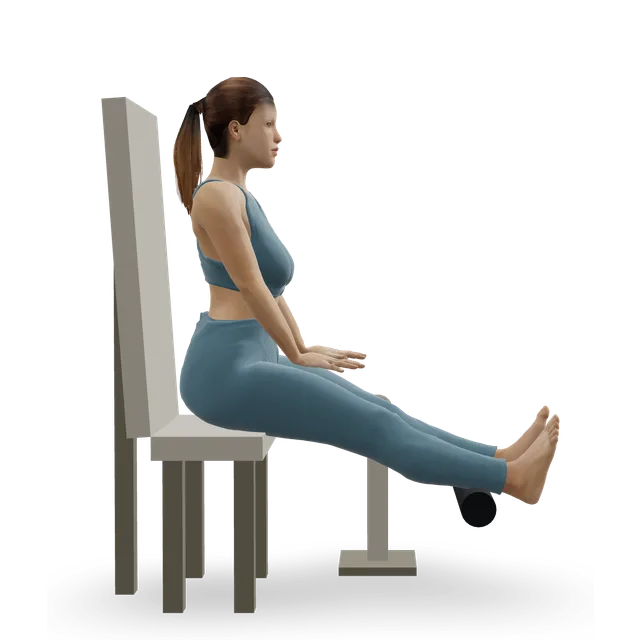
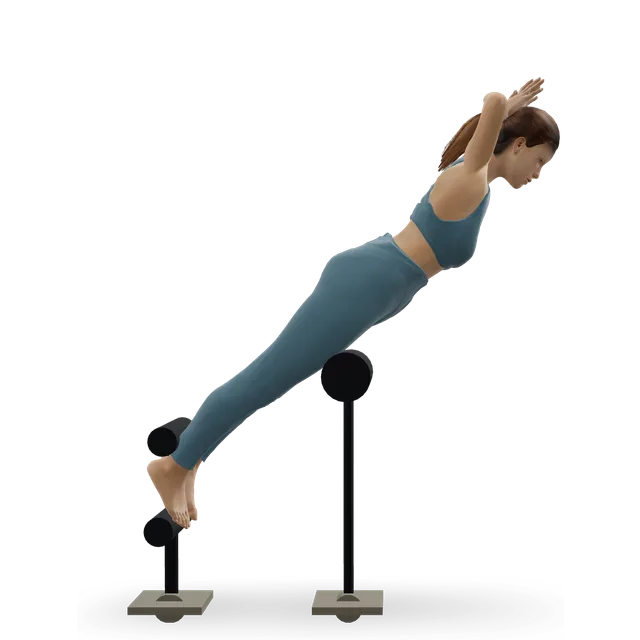
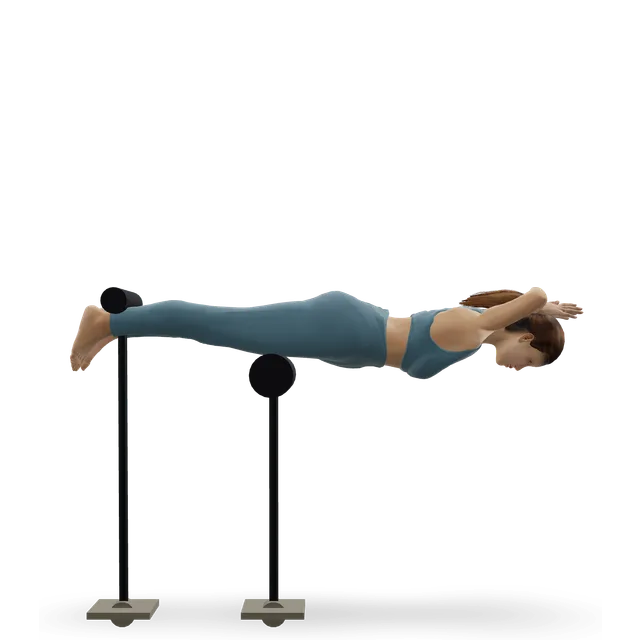
Back extensions, with your hips on the pad and the movement at your hips (our back extension guide); reverse hyperextensions on some machines (our reverse hyperextension guide); and GHD sit-ups, an advanced abdominal exercise with its own risks: big first sessions have been followed by serious muscle breakdown. Set the pad for each: knees just behind it for the glute-ham raise, hips on it for the others.

Source 54

What you need first

The move pages suggest controlled slider curls first for the machine version, and controlled slider or ball leg curls and comfortable kneeling for the natural one. Some coaches say beginners shouldn't do glute-ham raises at all; we found no evidence either way, and the assisted and lowering-only versions make it accessible (our view).

How people differ

Your upper body is the lever, so taller people with longer, heavier trunks find it harder (our reading). Machines differ in how the pad and footplate adjust. Most of the studies here are in young men or athletes; the ACE study included 8 women. We found no study in older adults, for whom leg curls and Romanian deadlifts are simpler ways to load the hamstrings.

How to do a glute-ham raise on a GHD, step by step

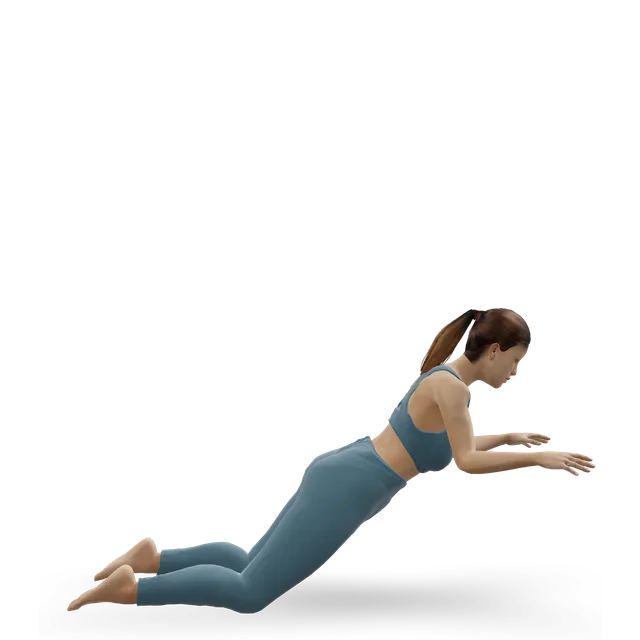
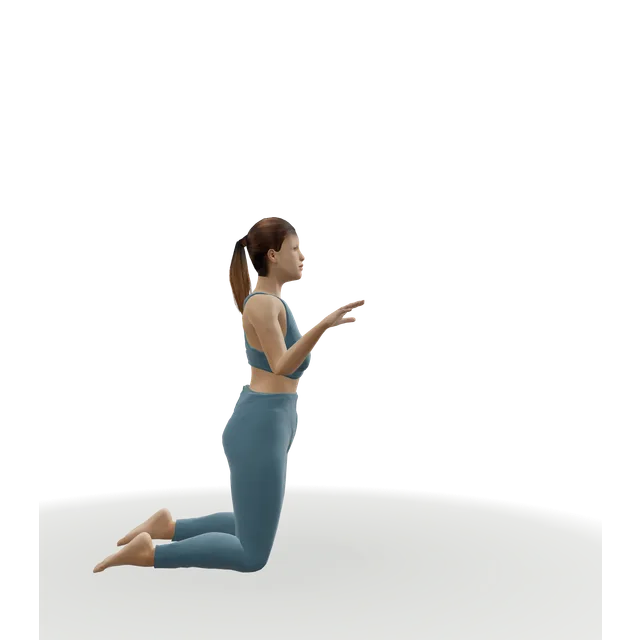
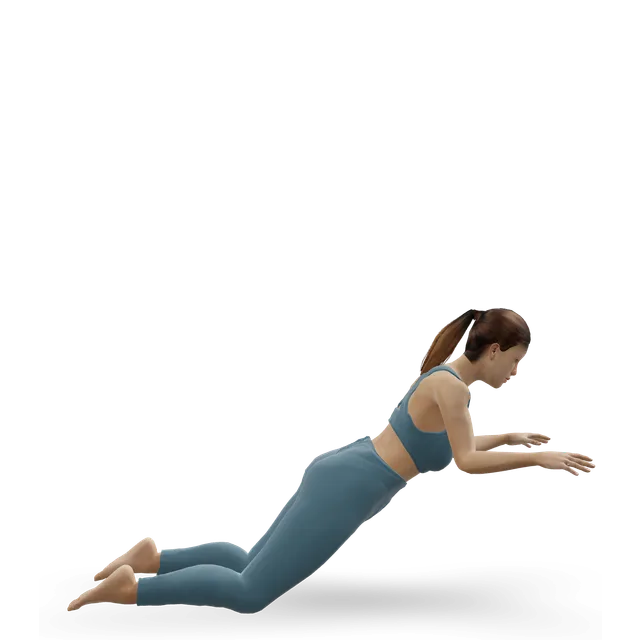
The figure shows the movement kneeling on the floor because the machine isn't drawn. The set-up and range follow the ACE-sponsored study; the knee and foot position follow coaching articles, and the help options and breathing are editorial. No study has measured knee loads in this exercise.

  1. Set the footplate so that, with your feet flat against it and your ankles between the rollers, your knees sit just behind the curved pad, not on top of it.
  2. Climb on with your thighs on the pad, cross your arms on your chest, and come up to upright with your knees bent, in a straight line from your knees to your head.
  3. Brace your stomach and squeeze your glutes so your hips stay straight.
  4. Breathing in, lower your body forward slowly by straightening your knees, keeping the straight line, until your body is about level with the floor.
  5. Press your feet into the footplate and pull yourself back up to upright by bending your knees, breathing out. Don't bend at the waist.
  6. If you can't get back up, push lightly off the floor or a box with your hands, or do only the lowering and climb back up, and try the next rep.

Loading the 3D figure…

Gets into position, then repeats the movement. Technical checks passed; qualified exercise review is pending.

The movement on the figure: Glute-ham raise

Without a GHD: the natural glute-ham raise

The move page's 4 steps. On the floor, kneel on a thick pad with a partner holding your ankles and lower only as far as you can still pull yourself back up; in the ACE study's partner-held version, people stopped with the trunk level.

  1. Kneel on the seat of a lat pulldown machine or a preacher bench, facing away from it, with your ankles hooked under its pads and your body upright.
  2. Keeping a straight line from your knees to your head, lower yourself forward under control until your knees are almost straight.
  3. Pull yourself back up to upright with your hamstrings, staying in control.
  4. When you can't make it back up, get help from a band round your chest, a partner, or a push off a box with your hands.

Loading the 3D figure…

Gets into position, then repeats the movement. Technical checks passed; qualified exercise review is pending.

The movement on the figure: Natural glute-ham raise

What the evidence says

Only two studies of the exercise

We found one muscle-activity study, an ACE-sponsored comparison and one jump-training study. No study has measured its effect on hamstring size, strength or fibre length, its knee loads, or injuries.

Sources 4, 1, 6

Hamstring activity among the highest of four exercisesEmerging evidence

In 12 weight-trained men lifting single reps at 85% of their maximum, hamstring activity was highest in the Romanian deadlift and the glute-ham raise, above the leg curl and good morning, and the inner hamstring (semitendinosus) was "substantially more active" than the outer (biceps femoris) in all four. We read the abstract only, and a 2020 review notes the study reported raw amplitudes rather than percentages of each muscle's maximum, so comparisons are rough.

Sources 4, 5

Machine and partner versions against the leg curlEmerging evidence

In 16 trained adults (8 women, 8 men), against the lying leg curl, the machine glute-ham raise drew significantly less outer-hamstring activity and similar inner-hamstring activity, and the partner-held floor version drew less outer-hamstring and significantly more inner-hamstring activity. It wasn't peer reviewed, and we used its written results, not its charts.

Source 1

The calf version and jumpingEmerging evidence

Adding a "glute-ham-gastroc raise" to squats and cleans for 8 weeks in female youth volleyball players raised jump height a little more (2.6 against 1.8 cm in the approach jump) and ankle bend. We read the abstract only.

Source 6

Hip position changes which hamstring worksEmerging evidence

Knee-bending lowering like the Nordic works the semitendinosus hardest (a large bias in 12 men), and hip-extension exercises shift work to the long head of the biceps femoris, the part most often strained, in muscle-activity and MRI studies. Bending the hips to 90 degrees in a Nordic raised knee torque but lowered muscle activity, and adding hip extension to a knee bend raised long-head activity. A loaded hip-extension hold on a glute-hamstring machine drew more biceps femoris activity than the Nordic in 36 handball players.

Sources 17, 18, 19, 20, 21, 22, 23

So it's its own exercise

A glute-ham raise holds the hips straight while the knee bends, which makes it neither a Nordic nor a hip extension (our reading; no study compares them). Pairing a knee-bending exercise with a hip hinge each week covers both.

Glute-ham raise vs Nordic curl, leg curl and back extension

The Nordic curl

In a Nordic you kneel on the floor with your ankles held and lower as far as you can before catching yourself on your hands. In a glute-ham raise, on a GHD or kneeling on a bench, you lower only as far as you can still pull yourself back up, keeping your hips straight. Both train the hamstrings' lowering strength; the injury trials are for the Nordic, so choose it if injury prevention for sport is your aim. Our Nordic curl guide covers it.

Sources 8, 1

Leg curlsEmerging evidence

A leg curl bends your knee with your body still. Seated curls grew the hamstrings more than lying curls (14.1% against 9.3% over 12 weeks in 20 adults), and Nordics raised lowering strength by 11% in footballers while ordinary curls didn't. Our leg curl guide covers the machines.

Sources 12, 24

Back extensionsEmerging evidence

In a back extension your knees stay straight and your hips bend, the opposite of a glute-ham raise. The 45-degree back extension worked the outer hamstring 71% harder than a Romanian deadlift in 15 trained women. Both fit on a GHD; our back extension guide covers the hip version.

Source 25

Romanian deadliftsEmerging evidence

Slow Romanian deadlifts grew the hamstrings about as much as Nordics in 32 adults over 6 weeks, and Nordics grew them more than stiff-leg deadlifts in 36 untrained adults (11.4% against 7.0%). A hinge and a knee-bending exercise each week is our hamstring workout's mix.

Sources 13, 14

The razor curlEmerging evidence

A knee-bending curl on a back extension machine, hips moving a little as you come up: it drew high hamstring activity, not different from a lying leg curl, in 8 female athletes. No 3D demo shows it yet.

Source 26

Do glute-ham raises prevent hamstring injuries?

No trial has tested themMixed evidence

The only injury data with a glute-ham raise come from 613 male collegiate sprinters across three eras of one coach's programme: hamstring injuries fell from 16 of 116 sprinters to 12 of 198 to 2 of 299. But the last era added Nordic lowers, bodyweight glute-ham raises and dynamic stretching at the same time, so no single exercise's effect can be separated, as the authors say.

Source 11

The Nordic: about half as many injuries in programmes that include itMixed evidence

Across 15 studies of 8,459 athletes, programmes that included the Nordic were linked with about half as many hamstring injuries (risk ratio 0.49). But the 5 trials that tested the Nordic itself pooled to an inconclusive 0.56 (0.20 to 1.52), and a 2026 analysis of 11 football trials put the Nordic alone at 0.78 (0.34 to 1.78), at low to very low certainty.

Sources 8, 9, 27

Two large football trialsEmerging evidence

In 942 Danish players, the Nordic teams had 15 hamstring injuries against 52; in 579 Dutch amateurs, 0.25 against 0.8 per 1,000 hours, with 91% of sessions done.

Sources 28, 29

Only if you keep doing itEmerging evidence

In 15 football trials of 7,465 players, prevention programmes cut hamstring injuries where players did at least 75% of their sessions (risk ratio 0.36), but not below that (0.92), at low certainty.

Source 10

Strength work in generalStrong evidence

Across 25 trials of 26,610 people, strength training cut sports injuries to under a third, while stretching made no difference. That's strength work in general, not the glute-ham raise.

Source 30

What to do

If you play a sprinting sport and want the trial-backed option, follow the Nordic programme in our Nordic curl guide. Glute-ham raises are a good hamstring exercise in their own right; that they protect like a Nordic is a guess from their lowering phase.

Easier and harder steps

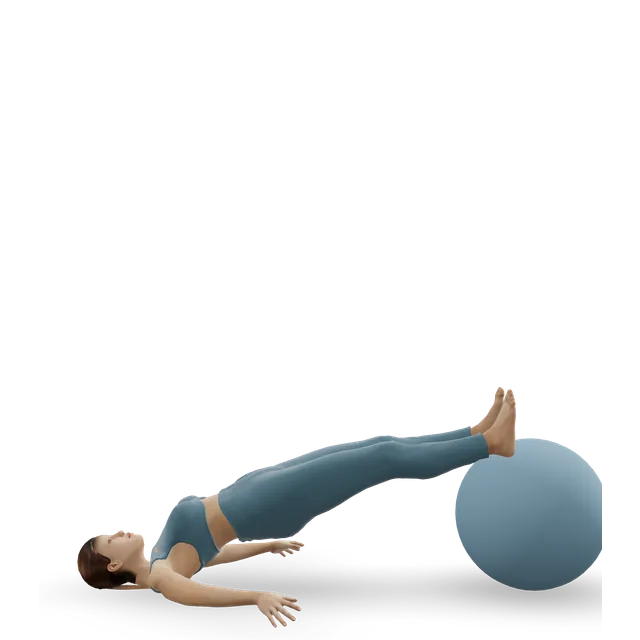
Ball leg curls, 2 to 3 sets of 8 to 12 (the move page's editorial starting point); slider curls, 3 sets of 6 to 10, and slider lowers, 3 sets of 5 slow lowers (our Nordic curl progression workout); the natural glute-ham raise, 1 to 2 sets of 3 to 5 slow lowerings with help, building to 2 to 3 sets of 5 to 8 over several weeks (its move page's editorial starting point); the glute-ham raise on a GHD, the same build (our editorial starting point; its move page gives no dose); the Nordic curl, 2 sets of 3 to 5 slow lowers, building to 2 or 3 sets of 3 to 6 twice a week (our hamstring workout and Nordic curl progression workout); and the full Nordic, 2 sets of 1 to 3 (our Nordic curl progression workout). Move up a step when the top of a step's dose feels controlled. Harder on the GHD: a slower lowering, a pause at level, then a plate held at your chest, once 2 to 3 sets of 8 are smooth (editorial).

Your knees, cramp and soreness

Knees just behind the pad

The ACE study set the knees just behind the pad, and coaching articles warn that with your knees too far onto the pad you risk bending them backwards at the bottom, and that knees set too high on the pad can hurt. We found no study of knee loads or knee pain in this exercise, so this is coaching practice.

Sources 1, 2, 3

Pad your knees on the floor version

Kneel on a thick pad or folded mat, and stop for pain in a kneecap or behind the knee, as our Nordic guide says, using an easier step instead.

Cramp

Cramp behind your knee or in your calf is a tight knot that eases with rest and gentle stretching: stop the set, stretch gently and use a shorter range next time. See a GP if cramps last longer than 10 minutes or come with numbness or swelling. A sharp pain or a pop is different (see the warning signs).

Source 52

SorenessEmerging evidence

Lowering work makes hamstrings sore. After a first session of 24 Nordics, 13 trained men were weaker for 3 days and sorest on days 2 and 3, and the same session 4 weeks later caused far less. Band-assisted Nordics built the same strength with less soreness in 31 young footballers. Start with very few reps.

Sources 16, 31

Common mistakes

Knees on top of the pad

Move the footplate so your knees sit just behind the pad (coaching practice).

Bending at the waist to get up

Squeeze your glutes. If you can't come up straight, use help or a shorter range, as the move pages say: "Keep the hips straight; don't bend at the waist."

Dropping down fast

Lower slowly; the lowering is the work.

Arching your lower back at the top

Brace and stop at upright, not past it (our view).

Rising onto your toes

Keep your feet flat against the plate. Coaches differ on this and no study compares foot positions; flat feet keep the set-up the same each rep (our view).

Too many reps in your first session

1 to 2 sets of 3 to 5, and expect soreness for a couple of days.

How many and how often

No study has tested doses for the glute-ham raise, and the machine version's move page gives none. These are our starting points, matching our Nordic guide and plans.

Your first sessions

1 to 2 sets of 3 to 5 slow lowerings with help: the natural glute-ham raise's move page dose (our editorial starting point), and the same start as our Nordic guide.

Building up

2 to 3 sets of 5 to 8 over several weeks, on the machine or without one (our editorial starting point; the natural version's move page gives the same).

Effort

Stop each set while every rep is still controlled, 1 to 3 reps short. Failure added a trivial amount of growth at most across 15 studies, and sloppy reps in a lowering exercise are where cramps and strains start (our view).

Source 32

Rest

About 2 minutes, because each rep is close to your maximum (our editorial starting point). Resting more than about a minute gave a small growth benefit in a review of 9 studies.

Source 33

How often

Once or twice a week, at least a day apart, and not in the 48 hours before a match, as our Nordic guide suggests. The NHS asks for strength work on at least 2 days a week.

Source 37

Weekly hamstring work

Pair it with a hip hinge such as the Romanian deadlift each week, aiming for about 10 or more hard hamstring sets across both, our plans' mark. More weekly sets built more muscle across 67 studies.

Source 34

Progressing

Lower further and more slowly, then add reps, then a pause at level, then a light plate held at your chest. Adding reps and adding load both worked in 43 trained people.

Source 35

Warm up first

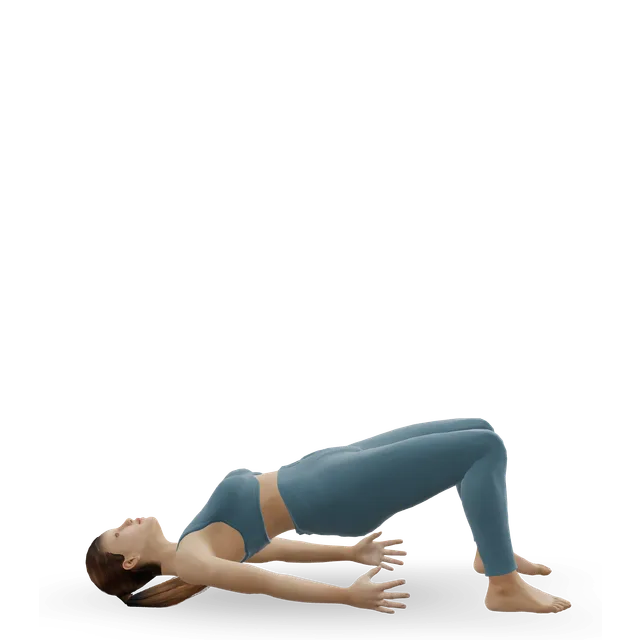
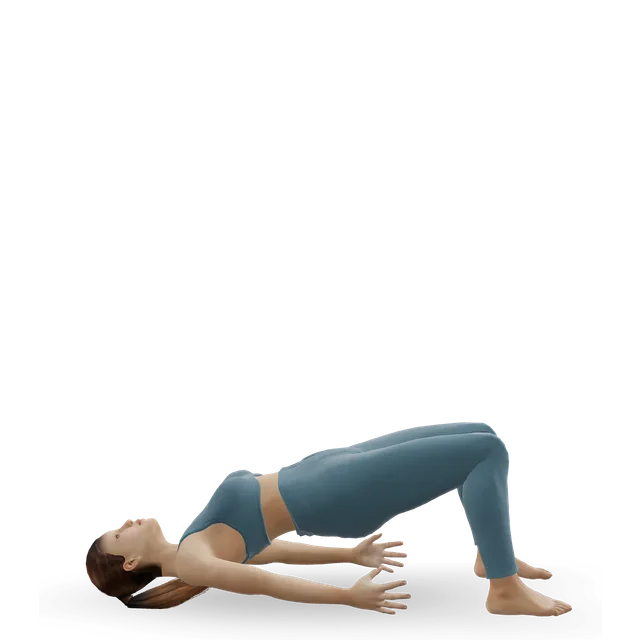
A few minutes of easy movement, glute bridges and hinge practice, then a couple of easy part-range reps, as our hamstring workout and the NHS suggest.

Source 36

Moves that go with it

Warm up with glute bridges, 12 reps, and hip-hinge practice, 2 sets of 8 (our hamstring workout). Pair it with a hinge: the dumbbell Romanian deadlift, 3 sets of 8 to 10, stopping 2 or 3 short, or the single-leg Romanian deadlift, 2 sets of 8 each leg (our hamstring workout). The seated leg curl, 2 to 3 sets of 8 to 12 (the move page's editorial starting point), trains the hamstrings at longer lengths. For hip extension, the back extension on a 45-degree bench, 2 sets of 10 to 15 (our pull day workout B), or the horizontal back extension on the same GHD, 2 to 3 sets of 8 to 12 (our back extension guide's editorial starting point). Football programmes pair Nordics with the Copenhagen plank for the groin (our hamstring and groin injury prevention workout). Cool down with the hamstring stretch with a strap, 30 seconds each leg (our hamstring workout), but skip it with pain at your sitting bone.

Workouts to follow

None of our workouts uses the glute-ham raise yet. The hamstring workout's seated curl is the place to swap one in if you have a GHD; the Nordic curl progression climbs the same ladder on the floor; the posterior chain workout covers the hinges; the hamstring and groin injury prevention workout follows the Nordic trials.

Who should change it

After a hamstring strain

Follow our hamstring strain guide, which brings lowering work back late. The NHS says to avoid strenuous exercise such as running for up to 8 weeks after a strain.

Source 56

High hamstring tendon pain

A deep ache at your sitting bone that's worse when you sit: leave lowering work out early on, as our Nordic guide says, and follow our high hamstring tendinopathy guide.

Knee pain

Check the pad position first, pad your knees on the floor version, and use a ball or slider curl if a kneecap or the back of your knee hurts.

Pregnancy

Lying face down over a pad with your trunk unsupported is likely to get uncomfortable as your bump grows, and a GHD is awkward to get on and off safely (our view). The NHS advises against starting new vigorous activity and activities with a risk of falling. Use standing hinges and seated curls instead.

Source 38

High blood pressure

Breathe out as you come up and don't hold your breath: heavy efforts with a held breath sent blood pressure to 320/250 mmHg on average in 5 bodybuilders. The American Heart Association calls low- to moderate-intensity strength training with proper breathing safe when blood pressure is controlled.

Sources 39, 40, 41

Muscular dystrophy

Leave out lowering-focused exercises like this one unless your neuromuscular team advises them, as our Nordic curl move page says.

Warning signs

Stop and get medical help

If you get chest pain or pressure, feel faint or dizzy, are unusually breathless, or your heart races or beats irregularly during exercise, as our plans advise. The American Heart Association says these need immediate medical evaluation.

Source 39

Call 999 (911 in the US)

For chest pain that comes on suddenly and doesn't go away, feels tight or like squeezing, spreads to your arms, neck, jaw, stomach or back, or comes with sweating, feeling sick, light-headedness or breathlessness; arm pain that comes on suddenly with pressure, heaviness or squeezing across your chest; severe difficulty breathing, or a chest that feels tight or heavy; someone who faints while exercising; palpitations that don't go away, or come with chest pain, shortness of breath or feeling faint; or a headache that starts suddenly and is extremely painful, especially while lifting or straining. The NHS says a bleed on the brain may be more likely when lifting something heavy. Don't drive yourself to A&E.

Sources 42, 43, 44, 45, 46, 47, 48, 49

Same day: the back of your thigh

A sharp pain at the back of the thigh, sometimes with a snapping feeling or a pop, can be a hamstring injury. A pop near your sitting bone, a large bruise high on the back of your thigh, or not being able to put weight on the leg needs assessing the same day, as our Nordic and hamstring strain guides say: the tendon can pull away from the bone.

Source 50

Get help from NHS 111

In the US, contact your doctor or urgent care. For a hamstring that's very painful or getting worse, very swollen or bruised, hurts to walk or stand on, or is very stiff. For a knee that's very painful, can't move or take your weight, is badly swollen or has changed shape, or locks, gives way or painfully clicks.

Sources 50, 51

Soreness or muscle breakdown?

Achy hamstrings for 2 or 3 days after your first sessions are normal. Muscle pain, swelling or weakness far worse than the session explains, with dark pee (red, brown, tea or cola coloured), sometimes starting hours or days later, needs a same-day check: call NHS 111, or go to A&E if you feel very unwell, as our rhabdomyolysis guide says. It has followed big first sessions of unaccustomed GHD sit-ups.

Sources 16, 53, 54

GHD sit-ups: a different exercise

Leave them out with osteoporosis, neck problems or current back pain, and keep your head still, as the move page says: in one case report, a tear in a neck artery and a stroke followed GHD sit-ups with the head whipping back and forth, though the cause wasn't confirmed.

Source 55

Back pain

Call 999 or go to A&E: loss of feeling or numbness around the genitals or bottom, new trouble peeing or controlling your bladder or bowels, changes in genital sensation during sex or problems with erections or orgasm, or pain, tingling, weakness or numbness in both legs. These are signs of cauda equina syndrome, which needs treating in hospital urgently. Don't drive yourself.

Pain you'd call mild to moderate, no more than about 5 out of 10, that settles within an hour or so, with your back no worse the next morning, is acceptable; if it is worse, do less next time (fewer reps, a smaller range, a lighter load), not nothing. Stop or shrink any movement that sends pain, pins and needles or numbness further down your leg. That's our back pain guides' rule.

Source 57

Pain down a leg

See a GP if pain spreading down a leg hasn't improved after a few weeks of home treatment, is getting worse or stops your normal activities. Sciatica on both sides, or weakness or numbness in both legs that's severe or getting worse, is a 999 call or a trip to A&E.

Source 58

Hernia

See a GP if you think you have a hernia, a bulge or lump that may get bigger when you strain and smaller when you lie down. Get help from NHS 111 if you have a hernia and pain in or around it, a bloated tummy, you feel or are sick, you're vomiting blood or your vomit looks like coffee grounds, you're constipated, you have a high temperature or feel hot, cold or shivery, or you've suddenly become confused. Call 999 or go to A&E for a femoral hernia (a small lump at the top of your thigh, in your groin) with very bad tummy pain, sickness, being unable to fart or poo, a high temperature or sudden confusion.

Sources 59, 60

Before you start

Speak to your GP first if you haven't exercised for some time or have medical conditions or concerns, as the NHS advises. Get advice before heavy lifting or hard straining work if your blood pressure is uncontrolled (140/90 or higher at a clinic, or 135/85 at home), or you have heart disease or chest pain when you're active, a pacemaker or defibrillator, diabetic eye disease, glaucoma, a hernia, recent eye or tummy surgery, or you're pregnant, as our breathing guide lists. After a recent shoulder dislocation or shoulder surgery, follow our shoulder dislocation guide or your surgical team first.

Sources 37, 41
Myths

"A glute-ham raise is the same as a Nordic curl"

Close, not the same. On a GHD your knees sit behind a pad and your feet push against a plate, and you stop at about level; in a Nordic you lower as far as you can on the floor and catch yourself. No study compares them, and the injury trials are for the Nordic.

Sources 1, 8

"You need a GHD to train your hamstrings properly"Strong evidence

Leg curls, Nordics and Romanian or stiff-leg deadlifts all grew or strengthened the hamstrings in trials.

Sources 12, 14, 13, 24

"Glute-ham raises prevent hamstring injuries"Mixed evidence

No trial has tested them. The only injury data bundle them with Nordics and stretching, and even for the Nordic the strictest analyses are inconclusive.

Sources 11, 9, 27

"The glute-ham raise is a glute exercise"

Mainly a hamstring exercise: your glutes hold your hips straight while your knees do the work.

"It's the best hamstring exercise"Mixed evidence

One small study read as an abstract ranked it near the top for hamstring activity, another found the machine version drew less outer-hamstring activity than a lying leg curl, and muscle activity isn't growth. It's one good option among several.

Sources 4, 1, 7

"Glute-ham raises are bad for your knees"

We found no study of knee loads or knee pain in this exercise. Set the pad so your knees sit behind it, pad your knees on the floor version, and stop for kneecap pain or cramp.

Questions people ask

How do you do a glute-ham raise?

On a GHD, set your knees just behind the pad with your feet against the plate. From upright, lower your straight body forward until it's level with the floor, then pull yourself back up by bending your knees.

What muscles do glute-ham raises work?

Mainly your hamstrings, with your glutes holding your hips straight; your calves probably help through the footplate. In one small study, hamstring activity was among the highest of four exercises.

Glute-ham raise or Nordic curl: what's the difference?

In a Nordic you kneel on the floor and lower as far as you can before catching yourself on your hands. In a glute-ham raise you lower only as far as you can still pull yourself back up, keeping your hips straight. The injury trials are for the Nordic, so it's the one to choose for injury prevention in sport.

How do I do a glute-ham raise without a machine?

Kneel on a lat pulldown seat or preacher bench facing away, with your ankles under the pads, or on a thick pad with a partner holding your ankles. Lower only as far as you can still pull yourself back up, with a band or a push off a box to help.

Why can't I do a glute-ham raise?

Most people can't at first: you're lifting your upper body with your hamstrings. Start with ball and slider curls, then lower slowly with help and climb back up, going a little further each week.

How many sets and reps of glute-ham raises should I do?

Start with 1 to 2 sets of 3 to 5 slow lowerings with help, building over several weeks to 2 to 3 sets of 5 to 8, once or twice a week, with about 2 minutes' rest. That's our starting point.

Do glute-ham raises prevent hamstring injuries?

No study has tested them. The evidence is for the Nordic, where programmes that include it were linked with about half as many injuries, though trials of the Nordic alone are inconclusive.

Where should my knees be on the glute-ham raise pad?

Just behind it, so your knees bend over its back edge. With your knees on top of the pad, coaching articles warn they can be pushed backwards at the bottom; no study has measured it.

Why do my knees or calves hurt on glute-ham raises?

Usually the pad position, kneeling on a hard surface or cramp. Move the footplate, pad your knees on the floor version, and stop for pain in a kneecap or behind the knee. A cramp eases with rest; a sharp pain or a pop doesn't.

Do I need a GHD to build my hamstrings?

No. Seated leg curls, Nordics and Romanian deadlifts all grew the hamstrings in trials. Pair a knee-bending exercise with a hip hinge each week.

Glute-ham raise or back extension?

Different jobs. In a glute-ham raise your hips stay straight and your knees bend; in a back extension your knees stay straight and your hips bend. Both fit on a GHD.

Is the GHD sit-up the same exercise?

No: it's an advanced abdominal exercise on the same machine. Big first sessions have been followed by serious muscle breakdown, so start with 3 sets of 5 partial reps, as its move page says.

Sources

  1. Schmitt 2018 · Nine hamstring exercises against the lying leg curl in 16 trained adults, including the glute-ham raise on a machine and with a partner (ACE-sponsored EMG study, not peer reviewed)
  2. Dewar 2024 · The glute-ham raise: set-up, knee position on the pad and variations (BarBend coaching article)
  3. Matthews 2024 · How to do the glute-ham raise: knee position and starting sets (Legion coaching article)
  4. McAllister 2014 · Hamstring activity in four exercises, including the glute-ham raise, in 12 trained men (EMG study, JSCR; abstract)
  5. Martín-Fuentes 2020 · Muscle activity in the deadlift and its variants (systematic review, PLoS One)
  6. Chiu 2017 · Adding the glute-ham-gastroc raise to training in female youth volleyball players (training study, JSCR; abstract)
  7. Vigotsky 2022 · Surface EMG amplitude in one session is not a validated predictor of muscle growth (review, Sports Med)
  8. van Dyk 2019 · Programmes including the Nordic hamstring exercise and hamstring injuries: 15 studies, 8,459 athletes (meta-analysis, BJSM)
  9. Impellizzeri 2021 · A reappraisal of the Nordic meta-analysis: inconclusive for the Nordic alone (methods reanalysis, J Clin Epidemiol)
  10. Gu 2026 · Content, dose and adherence in hamstring injury prevention in football: 15 trials, 7,465 players (meta-analysis, Ann Med)
  11. Sugiura 2017 · Hamstring injuries across three eras of one sprint team's programme, 613 sprinters (historical comparison, Orthop J Sports Med)
  12. Maeo 2021 · Seated against lying leg curls for 12 weeks in 20 adults (training study, MSSE)
  13. Crawford 2025 · Slow Romanian deadlifts against Nordics for 6 weeks in 32 adults (training study, MSSE)
  14. Morin 2025 · Nordic against stiff-leg deadlift training in 36 untrained adults (blinded randomised trial, JSCR)
  15. Maeo 2024 · Nordic against hip-flexed eccentric curls in 42 men (training study, MSSE)
  16. Coratella 2025 · Muscle damage and the repeated bout effect after a Nordic session in 13 trained men (lab study, Int J Sports Med)
  17. Bourne 2017 · Exercise choice and hamstring muscle activity (EMG and MRI study, BJSM)
  18. Messer 2018 · Hamstring use in women during hip extension and the Nordic (MRI study, JOSPT)
  19. Hegyi 2018 · Regional hamstring activity in the Nordic and the stiff-leg deadlift in 12 men (EMG study, Scand J Med Sci Sports)
  20. Hegyi 2019 · Hamstring activity across hamstring exercises (high-density EMG study, Scand J Med Sci Sports)
  21. Hegyi 2019 · Hip angle in the Nordic hamstring exercise: knee torque and muscle activity (lab study, JOSPT)
  22. Hegyi 2021 · Adding hip extension to knee bending raised biceps femoris activity in 21 men (EMG study, J Electromyogr Kinesiol)
  23. Yagiz 2026 · A loaded single-leg Roman chair hold against the Nordic in 36 handball players (EMG study, Medicina)
  24. Mjølsnes 2004 · Nordic against ordinary hamstring curls for 10 weeks in 21 footballers (randomised trial, Scand J Med Sci Sports)
  25. Andersen 2021 · Three hip extension exercises, including the 45-degree back extension, in 15 trained women (EMG study, J Sports Sci Med)
  26. Oliver 2009 · The razor curl: hamstring activity in 8 female athletes (EMG study, JSCR)
  27. Hong 2026 · Exercise programmes to prevent hamstring injuries in football: 11 trials (network meta-analysis, Sports Med Open)
  28. Petersen 2011 · Eccentric hamstring training and injuries in 942 Danish players (cluster-randomised trial, Am J Sports Med)
  29. van der Horst 2015 · The Nordic hamstring exercise in 579 Dutch amateur players (randomised trial, Am J Sports Med)
  30. Lauersen 2014 · Exercise to prevent sports injuries: 25 trials, 26,610 people (meta-analysis, BJSM)
  31. Ishøi 2025 · Band-assisted against unassisted Nordic training in 31 elite youth footballers (randomised trial, Phys Ther Sport)
  32. Refalo 2023 · Proximity to failure and muscle hypertrophy: 15 studies (meta-analysis, Sports Med)
  33. Singer 2024 · Rest between sets and muscle growth: 9 studies (Bayesian meta-analysis, Front Sports Act Living)
  34. Pelland 2026 · Weekly volume and frequency, muscle growth and strength: 67 studies, 2,058 people (meta-regressions, Sports Med)
  35. Plotkin 2022 · Progressing load or repetitions in 43 trained people (RCT, PeerJ)
  36. NHS · How to warm up before exercising
  37. NHS · Physical activity guidelines for adults aged 19 to 64
  38. NHS · Exercise in pregnancy
  39. Paluch 2024 · Resistance exercise training with and without cardiovascular disease: 2023 update (American Heart Association scientific statement, Circulation)
  40. MacDougall 1985 · Blood pressure during heavy lifting, measured in the artery, in 5 bodybuilders (lab study, J Appl Physiol)
  41. NHS · High blood pressure
  42. NHS · Chest pain (past its review date: reviewed August 2023, review due August 2026)
  43. NHS · Heart attack
  44. NHS · Elbow and arm pain
  45. NHS · Shortness of breath
  46. NHS · Fainting
  47. NHS · Heart palpitations
  48. NHS · Headaches
  49. NHS · Subarachnoid haemorrhage
  50. NHS · Hamstring injury
  51. NHS · Knee pain
  52. NHS · Leg cramps
  53. NHS · Blood in urine
  54. Tibana 2018 · Rhabdomyolysis after 60 unaccustomed GHD sit-ups in a competition (case report, Sports)
  55. Mao 2022 · A vertebral artery dissection and stroke after GHD sit-ups (case report, Cureus)
  56. NHS · Sprains and strains
  57. NHS · Back pain
  58. NHS · Sciatica
  59. NHS · Hernia
  60. NHS · Femoral hernia

Exercise education, not a personal prescription, and clinical review of these guides is pending. Check with a GP before starting hard training if you have a heart condition, chest pain, dizziness or breathlessness when active, and stop for sharp or increasing pain. Health disclaimer.