Training guide

How to do back extensions: 45-degree, horizontal and floor versions, glutes or lower back, and back pain

A back extension, also called a hyperextension, is done face down over a pad with your ankles held: you hinge forward at your hips, then lift your body until it's straight. It works your back muscles, glutes and hamstrings, and the 45-degree bench is the usual place to start.

In one study of 15 trained women, the 45-degree back extension worked the glutes about as hard as a Romanian deadlift and the outer hamstring harder, with similar lower-back activity. Small trials show back extensions build back-muscle endurance; whether they ease back pain more than other exercise is unsettled.

This guide covers the 45-degree bench, the horizontal Roman chair and versions you can do on the floor at home, step by step on the 3D figure, whether they work your glutes or your lower back, where to hold a weight, how many to do, and what the evidence says about back pain, sciatica, stenosis and osteoporosis.

The short version

Hinge, then rise to straight

Hinge forward at your hips over the pad with a long back, then lift until your body is straight, in line with your legs, not arched past it. Lower under control. Despite the other name, hyperextension, the aim is straight, not bent backwards.

Source 1

From the floor to the Roman chair

Floor versions and the 45-degree bench come first; the horizontal Roman chair is the hardest. In 10 adults, lower-back muscle activity rose by up to 104% from the easiest set-up to the hardest as the chair became more level and the arms reached further overhead.

Source 2

Glutes, hamstrings and lower back all work

In 15 trained women, the 45-degree back extension worked the glutes about as hard as a Romanian deadlift, more in the top half, and the outer hamstring 71% harder, with similar lower-back activity. That's one study of muscle activity, not growth.

Source 1

How many

2 to 3 sets of 10 to 15, resting 60 to 90 seconds (our editorial starting point, in line with our workouts), or 2 sets of 8 to 12 if you're new. In a trial, 1 set of 15 to 25 three times a week raised back-muscle endurance by 42% in 8 weeks.

Source 3

Back pain: helpful, not proven better

Strength training for the back of the body eased chronic low back pain a little more than general exercise in 8 small trials, but the result only just reached significance and the trials used varied exercises; a pilot trial found adding back-extension machines to core work gave no extra benefit. Our back pain guides cover treatment.

Sources 4, 5

Osteoporosis: back-strengthening is recommended

The UK consensus on exercise for osteoporosis recommends back-strengthening exercises at least twice a week. In 80 women with osteoporosis, a simple face-down back raise at home raised back strength and quality of life in 4 months.

Sources 6, 7

What a back extension is, and what it works

The lift

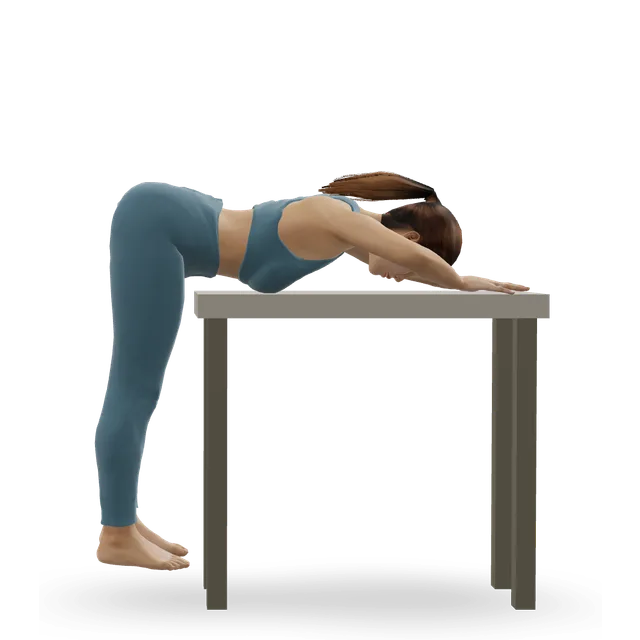
On a back-extension bench or Roman chair, your hips rest on a pad and your ankles are held. You bend forward at the hips, then lift your trunk until your body is straight. The 45-degree bench tilts you so your trunk is never level, so you lift less of its weight than on the horizontal chair.

Source 1

Back extension or hyperextension

The same exercise: hyperextension is another name for a back extension on a Roman chair. Some gyms also call the captain's chair a Roman chair; that's a different station, for knee raises.

What it works

The long back muscles beside your spine (the erector spinae) and the deep multifidus, your glutes and your hamstrings. How you hold your hips and lower back shifts the balance between them.

Sources 1, 8

The family

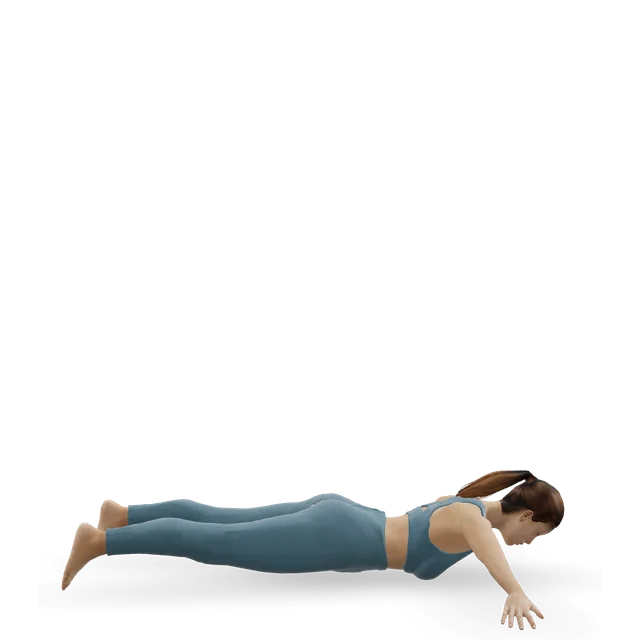
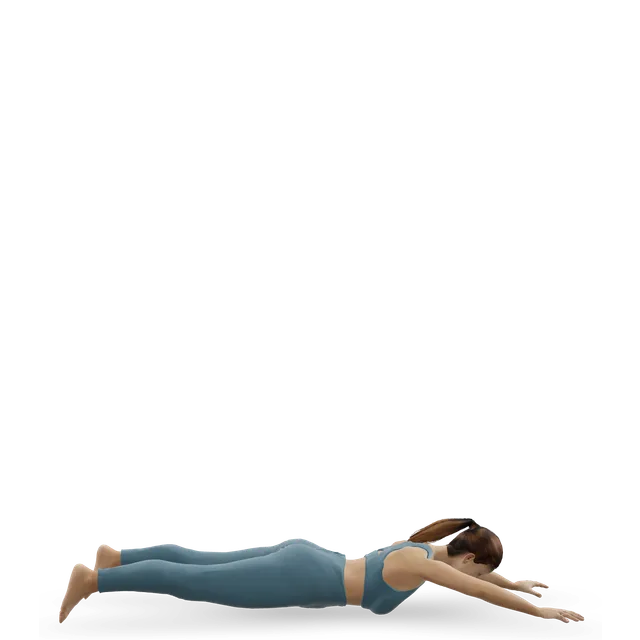
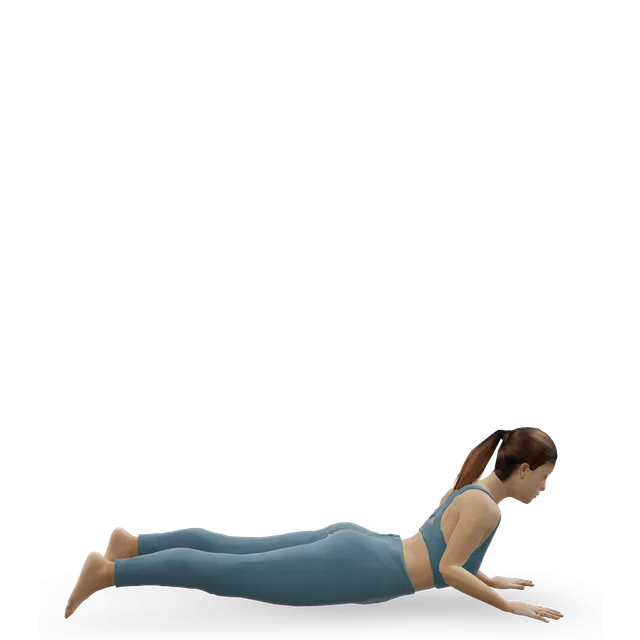
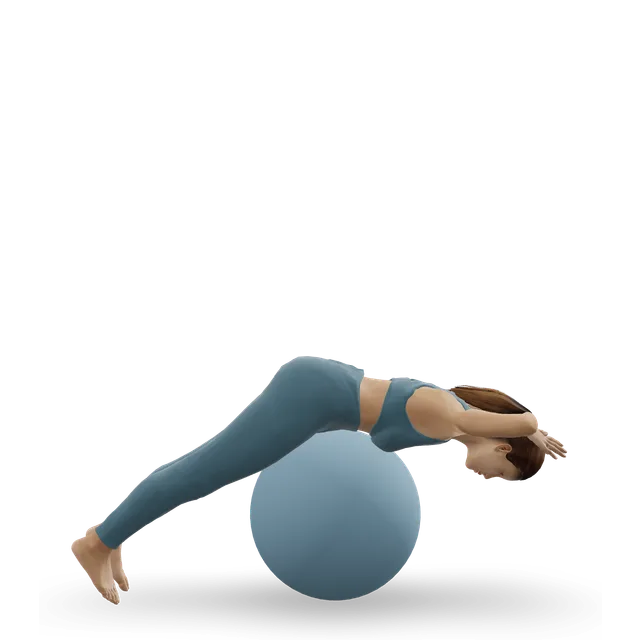
The 45-degree bench; the horizontal Roman chair; a flat bench with someone holding your legs; a gym ball; and floor versions lying face down: a back raise with your arms out, the superman with your arms overhead, the locust with your arms by your sides and the low cobra. In the reverse hyperextension, your trunk stays on the bench and your legs lift.

Sources 9, 10

Muscle activity isn't growth

Most back-extension studies use EMG (electromyography: electrodes measuring how hard a muscle works over a few reps). It isn't a validated predictor of which exercise grows a muscle more, so treat the comparisons below as clues, not verdicts.

Source 11

What the evidence says

The angle and your arms set the difficultyEmerging evidence

On a variable-angle Roman chair in 10 adults, lower-back muscle activity rose by up to 104% from the easiest to the hardest of 24 set-ups as the chair became more level and the hands moved further overhead. The angle mattered more than the hands.

Source 2

The 45-degree bench works the glutes and hamstrings hardEmerging evidence

In 15 resistance-trained women lifting a weight they could manage 6 times, the 45-degree back extension worked the glutes 140% harder than a seated back-extension machine (the Romanian deadlift 94% harder), no differently from the Romanian deadlift overall but 74% harder in the top half. It worked the outer hamstring 71% harder than the Romanian deadlift and 174% harder than the machine. Lower-back activity was similar in all three.

Source 1

Small changes shift the workEmerging evidence

In 12 adults, turning the hips in raised lower-back muscle activity by 18%, and keeping a stronger curve in the lower back raised it by 25%, with no change in the glutes or hamstrings. In 18 male athletes, bending the knees to a right angle raised lat, lower-back and glute activity, and hands behind the head raised the lower trapezius.

Sources 8, 12

No study of the rounded-back version

We found no study that compared a rounded-back back extension with a flat-back one, so the popular "glute-focused" version (feet turned out, upper back rounded, a shorter range) is untested.

Training builds endurance; lower-back strength is less clearEmerging evidence

In a trial of 36 adults, 1 set of 15 to 25 on a variable-angle Roman chair three times a week raised back-muscle endurance by 42% in 8 weeks, but not lower-back strength measured on a machine. One set of 8 to 20 once a week for 12 weeks didn't raise it either, in 15 adults. Supervised back and core exercise twice a week for 24 weeks raised back endurance by 12% in 96 firefighters.

Sources 3, 13, 14

Exercise raises back-muscle endurance in back painEmerging evidence

In 8 trials of 508 people with non-specific low back pain, exercise raised lower-back muscle endurance more than passive or active comparison treatments.

Source 15

Back and hip strength training for chronic back painMixed evidence

Across 8 small trials of 408 people, strength training for the back of the body eased chronic low back pain a little more than general exercise or walking (a standardised difference of 0.61, whose confidence interval reached zero) and eased disability a little (0.53), with no more side effects; 12 to 16 weeks did better than 6 to 8. The trials used varied exercises, and in a pilot trial of 30 men, adding machine back extensions or deadlifts to core work gave no extra benefit.

Sources 4, 5

Does a strong back prevent back pain?Mixed evidence

In 928 adults followed for a year, men with better back-muscle endurance had less first-time back trouble. But a review of 12 cohort studies of 5,459 people found back strength and endurance didn't predict who developed back pain.

Sources 16, 17

The spine is loaded, more in some versions than othersEmerging evidence

In 13 young men, exercises that actively lifted the trunk loaded the spine most of four back-extensor exercises, and extending one leg with the spine held still loaded it least. In 8 adults, back extensions on a gym ball loaded the spine less, with no more muscle activity than on a mat.

Sources 18, 19

The reverse hyperextension: two studies disagreeMixed evidence

In 20 adults, the reverse hyperextension moved the hips through more range (77 against 65 degrees) with less lower-back bending (20 against 31 degrees), but put a higher load on the lower back and drew less total glute and hamstring activity than the back extension, with equal back-muscle activity. In 10 adults, it drew 34 to 71% higher peak activity in all three muscles.

Sources 9, 10

Osteoporosis: back-strengthening is recommendedStrong evidence

The UK consensus on exercise for osteoporosis recommends exercises that strengthen the back, done 3 to 5 times and held 3 to 5 seconds, at least twice a week, and avoiding or modifying sustained, repeated or end-range bending forward. After a spinal fracture, it advises gentle back exercises daily.

Source 6

Trials in osteoporosis and a rounded upper backEmerging evidence

In 80 women with osteoporosis, a home exercise lifting the upper trunk face down to straight raised back strength by 26% against 11%, and quality of life by 7% against none, in 4 months. In 50 women, those who had done 2 years of progressive back-strengthening had fewer spinal fractures 10 years after starting (1.6% of vertebrae against 4.3%). In 99 adults aged 60 or over, spine-strengthening and posture training three times a week for 6 months reduced the curve of a rounded upper back by 3 degrees.

Sources 7, 20, 21
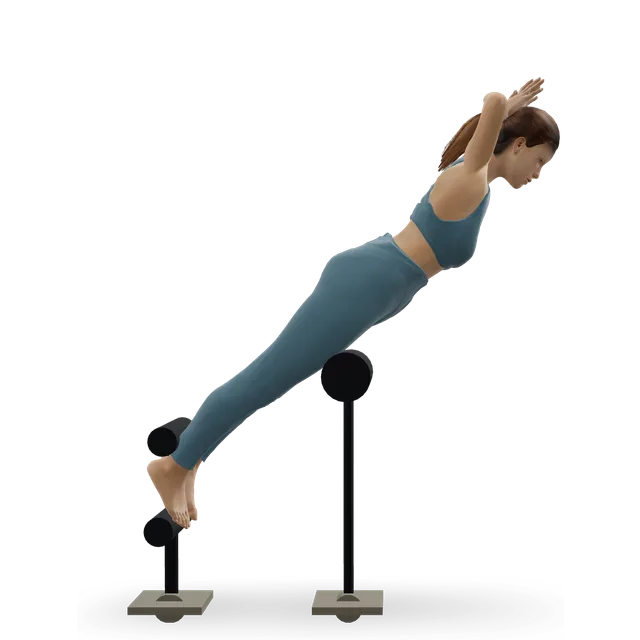
How to do a 45-degree back extension, step by step

From our move page and our posterior chain workout ("stop when your body is in line with your legs"). The study above used about a 90-degree range at the hip. The breathing cue is from our breathing guide.

  1. Set the pad just below your hip bones, so you can bend freely at the hips, and hook your ankles under the rollers.
  2. Start with your body in one straight line, arms crossed on your chest.
  3. Hinge forward at your hips with a long back until you feel your hamstrings lengthen.
  4. Breathing out, drive your hips into the pad and rise until your body is straight again, in line with your legs. Don't arch past straight or fling yourself into the top.
  5. Lower under control and start the next rep without bouncing at the bottom.

Loading the 3D figure…

Gets into position, then repeats the movement. Technical checks passed; qualified exercise review is pending.

The movement on the figure: Back extension on a 45-degree bench

On the floor at home

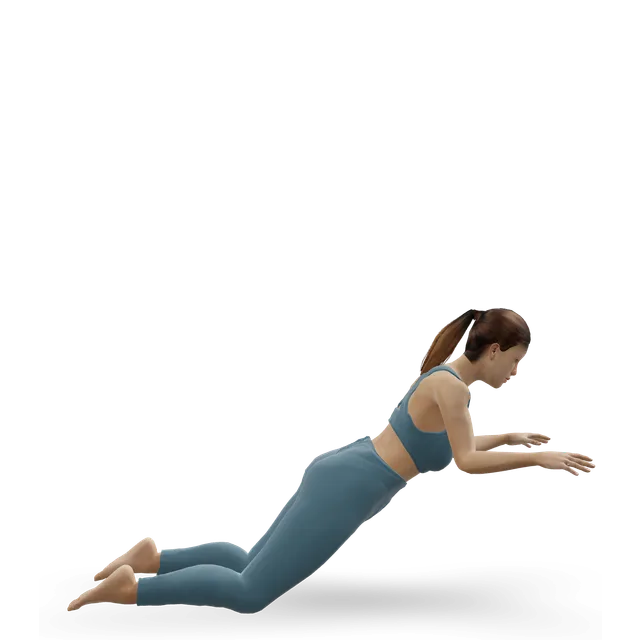
From our move page for the prone back raise, whose dose is 2 to 3 sets of 10 to 15 slow reps, stopping 2 or 3 reps short (its editorial starting point).

  1. Lie face down on a mat with your legs long and your arms out to the sides, palms down.
  2. Breathe out and lift your chest a few inches off the floor using your back muscles, letting your arms rise with you without pushing on the floor.
  3. Keep your legs down and your head in line, eyes on the floor just ahead; hold for a second.
  4. Lower slowly to the floor and repeat.

Loading the 3D figure…

Gets into position, then repeats the movement. Technical checks passed; qualified exercise review is pending.

The movement on the figure: Prone back raise, arms out to the sides

From the floor to the Roman chair

Our order; only the bench angles have been measured. Bird dogs, 6 each side with a 3-second hold, and glute bridges, 12 reps with a 2-second squeeze, 2 rounds, and locust holds, 3 of 10 to 15 seconds (our posterior pelvic tilt routine); the prone back raise, 2 to 3 sets of 10 to 15 slow reps (its move page); supermans, 2 sets of 8 to 10 with a 2-second hold (our strength and balance workout); after a spinal fracture, the low cobra, 3 to 5 holds of 3 to 5 seconds (our bone-strengthening workout); ball back extensions, 8 reps (our Pilates ball workout); the 45-degree bench at the doses below; then the flat-bench and horizontal versions, 2 to 3 sets of 8 to 12 (our editorial starting points), once 10 smooth reps on the 45-degree bench are easy.

Which version

The 45-degree bench

The usual starting point in a gym: your trunk is never level, and in the study above it worked the glutes and hamstrings hard.

Source 1

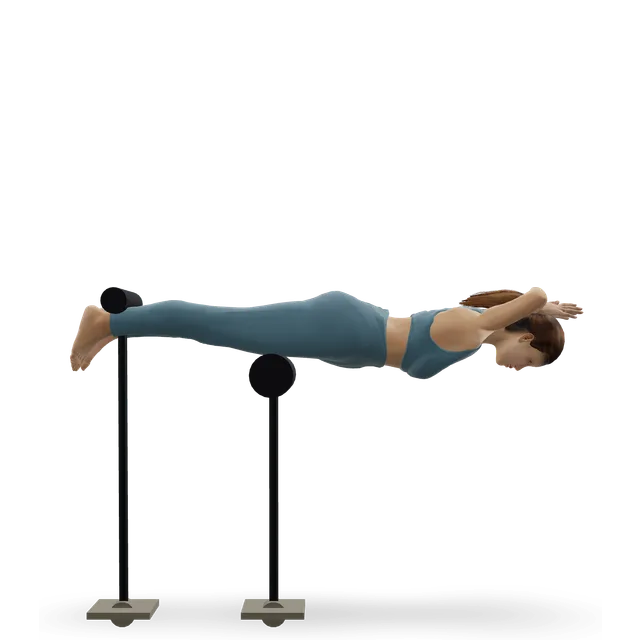
The horizontal Roman chair

Your trunk hangs straight down and rises to level against its full weight, which made the back muscles work hardest of the chair's angles. Wait until 10 smooth reps on the 45-degree bench are easy, as our move page says.

Source 2

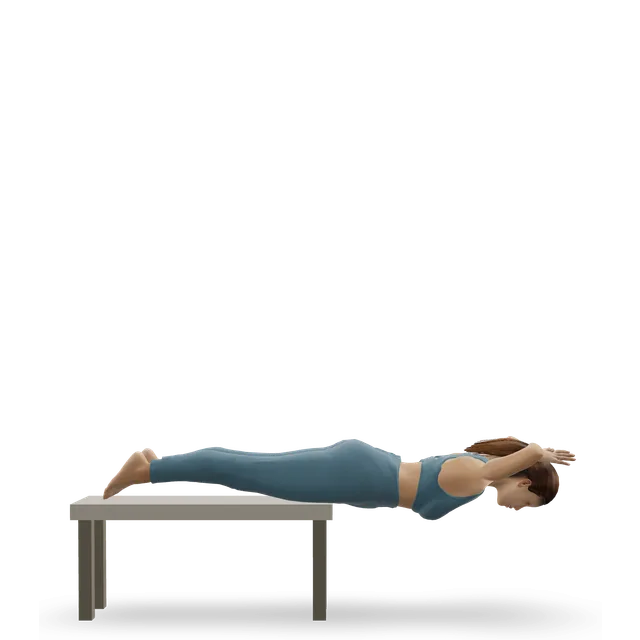
Off a flat bench

Lie along a flat bench with your hips off the end and someone holding your legs down, then bend down off the end and rise back to straight: the level version in a shorter range.

On a gym ball

Lie over the ball with your feet pressed into the floor and lift your trunk in line with your legs. It loaded the spine less with no loss of muscle activity, so it's a gentle start.

Source 19

On the floor

The prone back raise, superman, locust and low cobra need nothing but a mat. Lifting the trunk loads the spine more than lifting one leg with the spine held still, so the bird dog is the gentlest start.

Source 18

The seated back-extension machine

It worked the glutes and hamstrings least of the three exercises in the study above. We have no 3D demo of it.

Source 1

Glutes or lower back?

Both work

On the 45-degree bench the glutes and outer hamstring work hard, especially near the top, with lower-back activity similar to a Romanian deadlift.

Source 1

For more lower-back work

Keep the natural curve in your lower back and turn your hips slightly in: both raised lower-back activity without changing the glutes or hamstrings.

Source 8

Bent knees

Bending your knees to a right angle raised lower-back, glute and lat activity in 18 athletes, if your bench lets you.

Source 12

The rounded-back "glute" version

Feet turned out, upper back rounded and a shorter range is a coaching idea that no study has tested. A long back with its natural curve is our default; if your back is healthy and you like the rounded version, keep the load light.

Angle, arms and where to hold a weight

Make it harder in this order

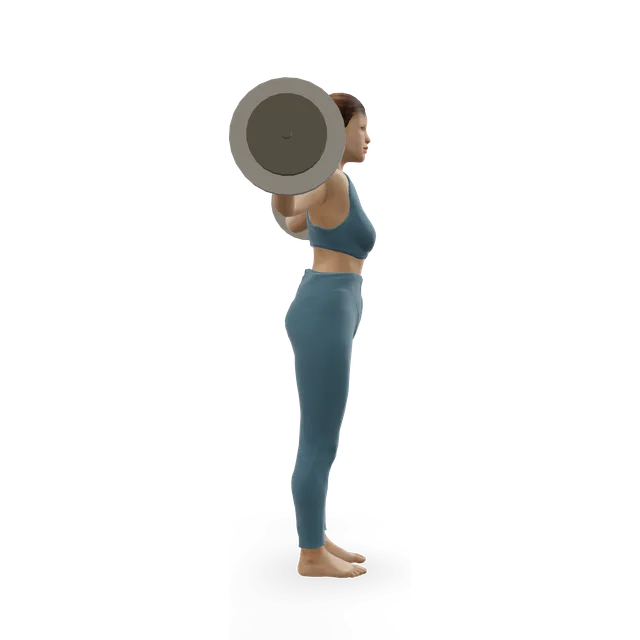
Arms by your sides or crossed on your chest; hands behind your head; a plate held at your chest; a heavier plate or the plate held further from your chest; then the horizontal chair. That order is ours, from the study of chair angles and arm positions.

Source 2

Close or far

The further the weight from your hips, the harder it is for the same plate. Holding it against your chest is the usual start.

Behind your head

Holding a plate behind your head pulls your neck forward, so keep it at your chest until your form is solid (coaching practice).

Sets, reps and how often

Sets and reps

2 to 3 sets of 10 to 15, stopping with 2 RIR (reps in reserve: how many more reps you could have done), resting 60 to 90 seconds. That's our editorial starting point, in line with our workouts: 2 sets of 10 to 12 in our posterior chain workout, 2 sets of 10 to 15 in pull day B and 2 sets of 12 in our back workout.

New to it, or with back pain or a rounded upper back

2 sets of 8 to 12, as our bone-strengthening workout and kyphosis guide use (the kyphosis guide only without spinal fractures); our back pain guides use 2 to 3 sets of 8 to 12.

Adding weight

Hold a plate at your chest once 15 smooth reps are easy (our editorial starting point; the women in the study above used plates and weighted vests).

Source 1

How often

Twice a week is enough, as part of strengthening all your major muscles on at least 2 days a week; trials used once to three times a week.

Sources 22, 6

How hard

There's no need to reach failure: it added a trivial amount of growth at most across 15 studies. People underestimate the reps they have left by about 1, so stop when the reps slow or you start to swing.

Sources 23, 24

What to expect

In two small trials, Roman chair training raised back-muscle endurance but not lower-back strength measured on a machine. Treat it as an endurance and hip exercise, not a strength test.

Sources 3, 13

Common mistakes and how to fix them

Arching past straight

Often from swinging up. Stop when your body is in line with your legs, as our move page and workouts say.

The pad too high

If the pad sits on your stomach, your hips can't hinge and your back does all the bending. Set it just below your hip bones.

Bouncing out of the bottom

Pause for a moment at the bottom and rise smoothly.

Craning your neck

Keep your head in line with your back, eyes on the floor ahead.

Holding your breath with a weight

Breathe out as you rise, as our breathing guide advises.

Back extensions and back pain

Part of the mix, not a cure

Exercise raised back-muscle endurance in people with back pain, and back-of-body strength training helped a little more than general exercise in small trials. The NHS advises staying active and doing exercises and stretches, but stopping if the pain gets worse. Our back pain and chronic back pain guides cover treatment.

Sources 15, 4, 25

The back pain rule

Discomfort up to about 5 out of 10 that settles within an hour and is no worse the next morning is acceptable, as our T-bar row and sit-up guides say; pain that spreads down a leg is not.

Spinal stenosis

Arching back tends to bring stenosis symptoms on. Skip back extensions and other arching moves if they bring on leg symptoms, as our spinal stenosis guide says.

A disc problem or sciatica

We found no study of Roman chair back extensions in people with a herniated disc or sciatica. Use them only if they leave your symptoms the same or better, and stop if pain spreads further down a leg; our herniated disc and sciatica guides set the order of exercises.

Source 26

Osteoporosis and a rounded upper back

Recommended, slowly and to straightStrong evidence

The UK consensus recommends back-strengthening exercise at least twice a week. Move slowly and stop at straight, as our move page advises with osteoporosis.

Source 6

After a spinal fracture

Start with gentle back exercises daily, held 3 to 5 seconds, up to 10 times, as our spinal compression fracture guide explains, and ask a physiotherapist before the 45-degree bench. Our kyphosis guide uses the bench only without spinal fractures.

Source 6

What the trials found

Back-strengthening raised back strength and quality of life in women with osteoporosis, went with fewer spinal fractures 10 years after starting, and reduced a rounded upper back a little in older adults. These are small trials, and the exercises varied.

Sources 7, 20, 21

Who should change it

Pregnancy

Lying face down gets uncomfortable as your bump grows: use the bird dog instead, as our superman and low cobra move pages advise. The NHS says strength training is fine if you already do it.

Source 27

High blood pressure, glaucoma or a hernia

Keep back extensions at body weight or light, breathe out on the way up rather than holding your breath, and get advice before heavy lifting, as our breathing guide says. With controlled blood pressure, the American Heart Association considers low- to moderate-intensity strength training with proper breathing safe.

Source 28

Back pain

Start on the floor or a gym ball, within the back pain rule above, and see our back pain guide.

Easing off afterwards

Optional: child's pose, held 1 to 3 minutes, and cat-cow, 8 waves, slower than feels natural (their move pages).

Workouts to follow

Our posterior chain workout puts back extensions after good mornings and hip thrusts; our back workout and pull day B finish with them; glute session B offers them on its hinge ladder; the bone-strengthening workout uses them with floor swaps; the posterior pelvic tilt routine and the strength and balance workout have the floor versions.

Posterior chain workout: good mornings, hip thrusts, back extensions and pull-throughs

A 45-minute gym session for the back of your body: light barbell good mornings, hip thrusts, 45 degree back extensions, cable pull-throughs and a carry.

45 minIntermediate8 movesCardio machine, A barbell

Back workout (gym)

A gym back workout: lat pulldowns, cable rows, dumbbell rows, face pulls, back extensions and shrugs.

45 minBeginner8 movesPull-up bar, A band

Pull day workout B

Pull day B: cable rows, lat pulldowns, one-arm dumbbell rows, reverse flyes, incline curls and back extensions, with sets, reps and rest.

50 minIntermediate10 movesPull-up bar, A cable machine

Glute session B: hinges, step-ups and standing band work

Session B of the 30-day glute challenge: a hinge ladder to Romanian deadlifts, step-ups and standing band work, at home or in the gym.

20 minBeginner12 movesA wall, A dumbbell

Bone-strengthening workout

Impact, strength and balance for stronger bones, following UK osteoporosis consensus advice, with options for every level.

40 minBeginner14 movesA kettlebell, Other / check instructions

Posterior pelvic tilt and flat back routine: back, hips and core

A 20-minute routine for a tucked pelvis or a flat lower back: pelvic tilts, hip hinges, back extensions, bridges and bird dogs, for control and strength.

20 minBeginner10 movesNo equipment

Strength and balance workout

Strength and balance in one session: squats, Romanian deadlifts, push-ups, rows, step-ups, back extensions, carries and single-leg balance.

45 minBeginner14 movesA wall, A dumbbell

Plans with back extensions in them

Each of these plans has a workout with back extensions or the floor versions.

Warning signs

Stop and get medical help

If you get chest pain or pressure, feel faint or dizzy, are unusually breathless, or your heart races or beats irregularly during exercise, as our plans advise. The American Heart Association says these need immediate medical evaluation.

Source 28

Call 999 or go to A&E: back pain with these signs

Loss of feeling or numbness around the genitals or bottom, new trouble peeing or controlling your bladder or bowels, changes in genital sensation during sex or problems with erections or orgasm, or pain, tingling, weakness or numbness in both legs. These are signs of cauda equina syndrome, which needs treating in hospital urgently. Don't drive yourself.

Source 25

Call 999 (911 in the US)

For chest pain that feels tight, heavy or squeezing, or spreads to your arms, neck, jaw or back; a headache that starts suddenly and is extremely painful, especially while lifting or straining; someone who faints while exercising; palpitations that don't go away, or come with chest pain, breathlessness or feeling faint; severe difficulty breathing; or angina pain that doesn't stop after rest and your medicine. Don't drive yourself to A&E.

Sources 29, 30, 31, 32, 33, 34, 35, 36

Check before lifting heavy

If you haven't exercised for some time or have a medical condition, speak to your GP first, as the NHS advises. Get advice before heavy lifting if your blood pressure is uncontrolled, or you have heart disease or chest pain when you're active, a pacemaker or defibrillator, diabetic eye disease, glaucoma, a hernia, recent eye or tummy surgery, or you're pregnant, as our breathing guide lists.

Sources 22, 28

After a faint, or dizziness that keeps coming back

See a GP after any faint, and for dizziness that won't go away or keeps coming back.

Sources 33, 37

Ask for an urgent GP appointment or call NHS 111

For back pain with a high temperature, or if you feel hot, cold, shivery or generally unwell, or the pain came on suddenly and is severe or getting worse quickly.

Source 25

Sciatica

Pain in your bottom and down the back of one leg: see a GP if it isn't better after a few weeks of home treatment, is getting worse or stops your normal activities. Sciatica on both sides, weakness or numbness in both legs that's severe or getting worse, or numbness around or under your genitals or around your bottom, is a 999 call or a trip to A&E.

Source 26

A pulled muscle

A sudden sharp pain in your back or the back of your thigh may be a strained muscle. Get help from NHS 111 or an urgent treatment centre if it's very painful or getting worse, there's a lot of swelling or bruising, it's very stiff, or it isn't getting better with self-care.

Source 38

See a GP

If back pain isn't improving after a few weeks, stops your daily activities, is worse at night, or comes with a lump or a change in your back's shape. With osteoporosis, a new back pain after a minor strain, or with nothing you can pinpoint, can be a spinal fracture, as our spinal compression fracture guide explains.

Source 25

Myths

"Back extensions are bad for your back"Mixed evidence

They load the spine, more than gentler extensor exercises do, but back-extension training raised back endurance in trials, back-of-body strength training eased chronic low back pain a little with no more side effects, and the UK consensus recommends back-strengthening for osteoporosis. Build up, stop at straight, and skip them if they bring on leg symptoms. The evidence that they help is small; harm hasn't been shown.

Sources 18, 3, 4, 6

"Go past straight to work your back harder"

No study supports arching past straight. Our move pages and workouts say stop when your body is in line with your legs.

"Back extensions only work your lower back"Emerging evidence

On a 45-degree bench the glutes worked about as hard as in a Romanian deadlift and the outer hamstring harder, in one study of 15 trained women.

Source 1

"A strong lower back prevents back pain"Mixed evidence

One cohort linked better back endurance with less first-time back trouble in men; a review of 12 cohorts found back strength and endurance didn't predict back pain.

Sources 16, 17

"Roman chair training builds lower-back strength fast"Emerging evidence

Two small trials found it built endurance (42% in 8 weeks) but not lower-back strength measured on a machine.

Sources 3, 13

Questions people ask

What muscles do back extensions work?

Your back muscles, glutes and hamstrings. On a 45-degree bench, one study of 15 trained women found the glutes worked about as hard as in a Romanian deadlift and the outer hamstring harder, with similar lower-back activity.

Are back extensions bad for your back?

Not when you build up and stop at straight. They do load the spine, but training trials raised back endurance, and back-of-body strength training eased chronic low back pain a little with no more side effects than general exercise. Stop if pain spreads down a leg.

What's the difference between a back extension and a hyperextension?

They're the same exercise: hyperextension is another name for a back extension on a Roman chair. The aim is to finish with your body straight, not bent backwards.

How do I target my glutes with back extensions?

The 45-degree back extension already works your glutes hard, especially near the top. Coaches suggest turning your feet out and rounding your upper back to bias the glutes, but no study has tested that, so keep your back long unless you're used to it.

Should I round my back on back extensions?

Keep it long, with its natural curve, as the default. Keeping that curve raised lower-back activity in one study, with no change in the glutes or hamstrings, and no study has compared a rounded with a flat back.

Where should I hold the weight on back extensions?

Start with your arms crossed, then put your hands behind your head, then hold a plate at your chest. The further your arms or the weight reach from your hips, the harder it gets.

How many sets and reps of back extensions should I do?

2 to 3 sets of 10 to 15, resting 60 to 90 seconds and stopping with 2 reps to spare, is our starting point; 2 sets of 8 to 12 if you're new to it. In one trial, a single set of 15 to 25 three times a week raised back endurance by 42% in 8 weeks.

How do I do back extensions at home without a machine?

Lie face down and lift your chest with your arms out to the sides (the prone back raise), by your sides (the locust) or overhead (the superman). You can also do them over a gym ball, or along a bench with someone holding your legs.

Are back extensions good for lower back pain?

They can be part of the mix: exercise raised back-muscle endurance in people with back pain, and back-of-body strength training helped a little more than general exercise in small trials. Discomfort up to about 5 out of 10 that settles within an hour and is no worse the next morning is fine; our back pain guides cover treatment.

Back extension or reverse hyperextension?

Both work the back muscles, glutes and hamstrings. The reverse version moved the hips through more range with less lower-back bending but put a higher load on the lower back, and two studies disagree on which works the glutes and hamstrings harder.

Are back extensions good with osteoporosis?

Back-strengthening exercises are recommended for osteoporosis, done 3 to 5 times and held 3 to 5 seconds, at least twice a week. Move slowly and stop at straight. After a spinal fracture, start with gentle floor holds and ask a physiotherapist before the bench.

Are back extensions bad with spinal stenosis, a herniated disc or sciatica?

With stenosis, arching back tends to bring symptoms on, so skip back extensions if they cause leg symptoms. With a disc problem or sciatica, use them only if they leave your symptoms the same or better, and stop if pain spreads further down a leg.

Sources

  1. Andersen 2021 · Romanian deadlift, 45 degree back extension and machine back extension in 15 women (muscle activity study, J Sports Sci Med)
  2. Mayer 1999 · Back-muscle activity on a variable-angle Roman chair at six angles and four arm positions in 10 adults (EMG study, Arch Phys Med Rehabil)
  3. Verna 2002 · Eight weeks of variable-angle Roman chair training in 36 adults (randomised trial, Spine)
  4. Tataryn 2021 · Back and hip strength training vs general exercise for chronic low back pain: 8 trials, 408 people (systematic review and meta-analysis, Sports Med Open)
  5. Park 2026 · Adding deadlifts or machine back extensions to core training in 30 men with chronic low back pain (pilot randomised trial, Healthcare)
  6. Brooke-Wavell 2022 · Strong, steady and straight: UK consensus on exercise for osteoporosis (consensus statement, Br J Sports Med)
  7. Hongo 2007 · A home back-strengthening exercise for 4 months in 80 women with osteoporosis (randomised trial, Osteoporos Int)
  8. Mayer 2002 · Hip rotation and the lower-back curve in Roman chair back extensions in 12 adults (EMG study, Arch Phys Med Rehabil)
  9. Lawrence 2019 · The reverse hyperextension machine against the back extension in 20 adults (lab study, J Strength Cond Res)
  10. Cuthbert 2021 · Muscle activity in the back extension and the reverse hyperextension in 10 adults (EMG study, J Strength Cond Res)
  11. Vigotsky 2022 · Muscle activity measured in one session isn't a validated predictor of muscle growth (review, Sports Med)
  12. Park 2014 · Hand and knee positions in Roman chair back extensions in 18 male athletes (EMG study, J Electromyogr Kinesiol)
  13. Mayer 2003 · Twelve weeks of once-weekly 45-degree Roman chair training in 15 adults (randomised trial, J Strength Cond Res)
  14. Mayer 2015 · Supervised back and core exercise for 24 weeks in 96 firefighters (cluster randomised trial, Am J Health Promot)
  15. Clael 2021 · Exercise and the lower-back muscles in non-specific low back pain: 8 trials, 508 people (systematic review and meta-analysis, Sci Rep)
  16. Biering-Sørensen 1984 · Physical measurements as risk indicators for low back trouble over a year (cohort study, Spine)
  17. Sadler 2017 · Physical measures that predict low back pain: 12 prospective cohorts, 5,459 people (systematic review, BMC Musculoskelet Disord)
  18. Callaghan 1998 · Spine load and muscle activity in four back-extensor exercises in 13 young men (lab study, Phys Ther)
  19. Drake 2006 · Back-extensor exercises on an exercise ball and on a mat in 8 adults (lab study, J Manipulative Physiol Ther)
  20. Sinaki 2002 · Back-strengthening exercise and spinal fractures 10 years after starting, in 50 women (follow-up of a randomised trial, Bone)
  21. Katzman 2017 · Spine strengthening and posture training for a rounded upper back in 99 older adults: the SHEAF trial (randomised trial, Osteoporos Int)
  22. NHS · Physical activity guidelines for adults aged 19 to 64
  23. Refalo 2023 · Training to failure against stopping short, for muscle growth: 15 studies (meta-analysis, Sports Med)
  24. Halperin 2022 · How accurately people predict the reps they have left: 12 studies (scoping review and meta-analysis, Sports Med)
  25. NHS · Back pain
  26. NHS · Sciatica
  27. NHS · Exercise in pregnancy
  28. Paluch 2024 · Resistance exercise training with and without cardiovascular disease: 2023 update (American Heart Association scientific statement, Circulation)
  29. NHS · Heart attack
  30. NHS · Chest pain (past its review date: reviewed August 2023, review due August 2026)
  31. NHS · Headaches
  32. NHS · Subarachnoid haemorrhage
  33. NHS · Fainting
  34. NHS · Heart palpitations
  35. NHS · Shortness of breath
  36. NHS · Angina
  37. NHS · Dizziness (past its review date: reviewed April 2023, review due April 2026)
  38. NHS · Sprains and strains

Exercise education, not a personal prescription, and clinical review of these guides is pending. Check with a GP before starting hard training if you have a heart condition, chest pain, dizziness or breathlessness when active, and stop for sharp or increasing pain. Health disclaimer.