Pain guide · Knee pain

Knee pain on the leg curl: the back of the knee, the hamstring tendons, cramp, the pad and swaps

Knee pain on the leg curl is usually felt at the back of the knee, and where it hurts is the best clue. A hard knot that grips the back of the thigh or the calf at the top of the curl and lets go when you straighten is cramp; an ache at the back inner or outer corner is usually a hamstring tendon; and a soft lump that feels tight at full bend is often a Baker's cyst. No study has counted knee pain on leg curls or tested where the pad should go, so this guide says where its advice comes from: a lighter load, the pad just above the heels, the knee in line with the machine's pivot, stopping short of the fully bent end for now, and swaps such as Romanian deadlifts and bridges usually help. Leg curls aren't bad for your knees: rehab uses them to strengthen sore hamstring tendons.

This guide starts with the signs that need checking, from a same-day check through the National Health Service's 111 line (NHS 111) or a general practitioner (GP) for a throbbing, swollen calf or a lump behind the knee that suddenly swells, to advice from NHS 111 for a knee that locks or gives way and a same-day check for a pop near the sitting bone with a big bruise. It then maps the causes by where it hurts, explains what the studies show about cramp, seated and lying machines, the posterior cruciate ligament (PCL) and Nordic curls, shows how to set up the machine today, and gives a three-stage plan with a 3D demo of every move, back to your usual leg curls.

When to get help first

Exercise is for pain that has been checked or is clearly mild and settling.

Get urgent medical help if

  • Go to A&E if you've injured your knee and it has changed shape, it becomes very swollen very quickly, you felt a pop or snap, you can see bone sticking out, or it's bleeding heavily. Don't drive yourself: ask someone to take you, or call 999 if the pain means you can't move your leg to get there.
  • Get advice from NHS 111 now: you cannot move the knee or put any weight on it, or it is very painful, badly swollen or has changed shape.
  • You hurt your knee and cannot take 4 steps, or you are 55 or over and have injured it: get it checked the same day for a broken bone.
  • Get advice from NHS 111 now: the knee locks, gives way or clicks painfully. Painless clicking is normal.
  • Get advice from NHS 111 now: after a twist, your knee won't go fully straight, or something blocks the last part of straightening, even if you can still walk on it. A torn piece of meniscus caught in the joint can do this, and it needs checking promptly.
  • Get advice from NHS 111 now: a hot, red or swollen knee with sudden severe pain, a very high temperature (although not everyone has one), or feeling hot, cold or shivery. This can be a joint infection.
  • Call 999 or go to A&E if your child gets sudden pain in their hip, knee or thigh (hip problems can sometimes be felt in the thigh or knee) or cannot put any weight on their leg. If your child is limping, ask for an urgent GP appointment or get help from NHS 111 the same day. This applies to teenagers too, and in some children knee pain is the only sign.
  • Same day (urgent GP appointment or NHS 111): throbbing pain in one leg (rarely both), usually the calf or thigh; swelling in one leg (rarely both); red, blue or darkened skin; or swollen veins; or sudden worse pain and swelling around a lump at the back of the knee (a possible clot or a burst Baker's cyst).
  • Pain or swelling in your leg that suddenly gets worse, swelling, bruising and warm skin, red or darkened skin, or swelling that gets harder or softer: ask for an urgent GP appointment or get help from NHS 111 the same day. These can be a burst cyst or a deep vein thrombosis (DVT), a blood clot in a deep vein of the leg, and they look alike.
  • Call 999 or go to A&E if breathing suddenly becomes difficult, if pain in your chest or upper back comes on suddenly with breathlessness or a very fast heartbeat, or if someone passes out. Do not drive yourself. It can be a blood clot that has reached the lungs.
  • Call 999 or go to A&E: a leg that is suddenly cold, pale, numb, weak or very painful. A sudden loss of blood supply to a leg is a vascular emergency.
  • After a burst cyst: calf pain far worse than expected, a tight, full-feeling calf, pain when the calf is stretched, and tingling or burning. Rarely, leaked fluid raises the pressure in the calf (compartment syndrome): go to A&E.
  • Same day: a pop near the sitting bone, a large bruise high on the back of the thigh, or you cannot put weight on the leg. The tendon may have pulled away from the bone, which needs assessing before you start these exercises.
  • Get help from NHS 111 if you think you've injured your hamstring and it's very painful, or the pain is getting worse; there's a large amount of swelling or bruising, or the swelling or bruising is getting worse; it hurts to walk or stand using the injured leg; your leg feels very stiff or is difficult to move; it's not feeling any better after treating it yourself; or you have a very high temperature or you feel very hot, but also cold and shivery, which could be signs of an infection.
  • Same day (call NHS 111, or go to A&E if you feel very unwell): after a big or unusual session, such as a first spin class, a workout of 100 back squats, or intervals of wall sits, squats, lunges and jumps, a challenge or a new class, muscle pain, swelling or weakness far worse than the session explains, and dark pee (red, brown, tea or cola coloured), sometimes starting hours or days later. Dark pee isn't always there, so muscles far sorer, more swollen or weaker than the session explains still need the same-day check. It can be rhabdomyolysis, a breakdown of muscle that can harm the kidneys.
  • Call 999 or go to A&E: back or leg symptoms with numbness around the genitals or bottom, new trouble controlling your bladder or bowels, or severe or worsening weakness or numbness in both legs.

See a doctor or physiotherapist if

  • Knee pain that has not improved within a few weeks of looking after it at home. Many areas offer NHS physiotherapy without a GP referral.
  • The knee gives way, the whole knee swells, or it catches or locks: that isn't typical of kneecap or tendon pain. Get it checked for a ligament or meniscus injury (our suggestion).
  • Catching, locking or swelling at the joint line that hasn't settled after about 3 months of exercise and other non-surgical care: ask your GP or physiotherapist about a specialist review. A magnetic resonance imaging (MRI) scan may be considered then.
  • After a fall onto a bent knee or a dashboard injury, a knee that still feels wobbly or gives way: get it assessed. A posterior cruciate ligament (PCL) injury is often missed at first.
  • A pop or sudden sharp pain low at the back of the thigh or at the back corner of the knee during a curl or a sprint, then bruising, a gap you can feel just above the bony bump on the outside of the knee, or weakness bending the knee: get it checked within a few days through your GP, a physiotherapist or NHS 111. Most hamstring problems near the knee settle without surgery, but a tendon pulled off the bone often needs repair (our suggestion).
  • A lump anywhere on your body and you don't know what it is, or a lump that is solid, painless, hard to move and keeps growing. Get it checked by a GP.
  • Cramps that disturb your sleep, last longer than 10 minutes, or come with numbness or swelling.
  • Calf pain or cramps during exercise with tingling in the foot, often in both legs, in a young athlete: ask about popliteal artery entrapment, a rare problem with the artery behind the knee.
  • Numbness, tingling or weakness that travels down the leg from the back. That points to a nerve (sciatica) rather than the knee.
  • Pain in the back of the thigh with tingling, numbness, or pain spreading below the knee: it may come from the back (sciatica).
  • Swelling in several joints, or morning stiffness that lasts more than 30 minutes: see a GP. It can be an inflammatory arthritis such as rheumatoid arthritis rather than osteoarthritis.
  • A child or teenager whose knee pain is there at rest or worse at night, or comes with a limp, swelling, a high temperature, unusual tiredness or weight loss: see a GP.

Where does it hurt?

Location narrows the likely causes; it does not diagnose.

The back of the thigh or the calf grips into a hard knot at the top of the curl, and lets go when you straighten and stretch

Cramp: common and harmless. Stretch it until it lets go, and start the next set lighter.

Read: Leg cramps →
The back inner corner of the knee, just below the joint, an ache with heavy or hard curls, sore to press

Often the semimembranosus, one of the hamstring tendons: uncommon and little studied. Our pain behind the knee guide's tendon lane loads it gradually.

Read: Pain behind the knee →
The back outer corner, along the tendon to the bony bump below the outer knee

Often the biceps femoris, the outer hamstring tendon. Our pain behind the knee guide covers it.

Read: Pain behind the knee →
The inner shin a few centimetres below the joint, worse curling and on stairs

Pes anserine pain, the commonest problem where the hamstring tendons attach low on the shin.

Read: Pes anserine pain →
A soft lump behind the knee, tight at full bend, worse after walking

Often a Baker's cyst, which in adults usually comes with arthritis or a meniscus tear.

Read: Baker's cyst →
Sudden worse pain and swelling in the calf below a lump behind the knee, or a throbbing, swollen calf

A burst cyst or a blood clot: they look alike and need the same same-day check, as the warning signs say.

Catching, locking or a pinch deep at the back or at the joint line at full bend

Possibly the back of the meniscus: get it assessed if it catches or locks.

Read: Meniscus tear →
A sudden sharp pain or pop in the back of the thigh during a heavy curl, then tenderness and bruising

A hamstring strain. A pop near the sitting bone with a large bruise needs a same-day check.

Read: Hamstring strain →
A pop low at the back of the thigh or behind the outer knee, then a gap you can feel or weakness bending the knee

Rarely, a hamstring tendon pulled off the bone: get it checked within a few days, as the warning signs say.

Deep in the knee at full bend, after a fall onto a bent knee or a dashboard injury, or a knee that feels wobbly

Possibly the posterior cruciate ligament (PCL), which the leg curl loads most at deep bend.

Read: PCL injury →
Deep at the back outer corner, sore taking weight with the knee slightly bent

Possibly the popliteus, a small muscle that unlocks the knee, often hurt with the back outer corner.

Read: LCL sprain →
The pad digging into the calf or the Achilles, or a bruised feeling where it sits

The set-up: move the pad to just above the heels and line the side of the knee up with the pivot, as the written steps below explain.

The kneecaps pressing into a lying leg curl bench

The knees resting on the pad: slide down until they are just off the end of the bench (our suggestion), or use a seated machine.

Achy hamstrings and calves a day or two after a new or heavy session

Muscle soreness, which fades within days.

Read: Knee pain after a workout →
A deep ache at the sitting bone, worse when you sit

High hamstring tendinopathy, which has its own, slower plan.

Read: High hamstring tendinopathy →
From the buttock down the back of the leg, with tingling or numbness

Sciatica, from a nerve in the back rather than the knee.

Read: Sciatica →
Calf or foot pain on exercise that eases with rest in a young athlete, sometimes in both legs

Rarely, the artery behind the knee is squeezed (popliteal artery entrapment): see a GP.

The front of the knee on the leg extension or the leg press

Usually the kneecap or a tendon: our leg extension and leg press guides cover it.

Read: Knee pain on the leg extension →
After an anterior cruciate ligament (ACL) reconstruction with a hamstring graft

Resisted curls usually wait about 12 weeks. Your surgical team's plan comes first.

Read: ACL surgery recovery →

Understand it

What the leg curl asks of the knee, and what no study has countedEmerging evidence

You bend your knee against a pad behind your lower leg. Three of the four hamstring muscles cross both the hip and the knee, and the big calf muscle (gastrocnemius) helps bend the knee too, which is why some people feel the curl in the calf. In the trial that compared machines, the hip was bent to about 90 degrees on the seated curl and to about 30 degrees on the lying curl, with the knee moving from straight to about 90 degrees.

The hamstrings also pull the shin backwards, which loads the posterior cruciate ligament (PCL), not the anterior cruciate ligament (ACL). In one model of 16 people bending the knee against a testing machine (a dynamometer, not a curl machine), the force on the PCL peaked around 90 degrees of bend and may exceed 4 times body weight, and a review says the PCL is less loaded from straight to about 50 degrees. That is one model, said plainly, but it is why a shorter range helps after a PCL injury. In holds, the hamstrings also worked less hard at 90 degrees of bend than at 30 or 60 degrees.

No study has counted knee pain caused by leg curls, tested where the ankle pad goes or lining the knee up with the machine's pivot, or followed people with knee pain on the curl. The lab studies are in healthy, mostly young adults, so this guide's map comes from them, from studies of cramp, tendons and cysts, and from NHS pages.

Sources 1, 2, 3, 4

Cramp at the top of the curlEmerging evidence

A graded review says exercise cramps mostly happen in muscles that cross two joints, such as the hamstrings and the calf, and that these muscles often contract in an already shortened position. In 10 volunteers, a maximal effort with the muscle shortened brought on a true cramp in 7, and none without shortening. Those lab studies used calf and foot muscles, so applying them to the hamstrings at the top of a curl, where the muscles are at their shortest, is our reading.

Exercise cramps are common: 12.8% of 71,420 race entrants (runners, not lifters) reported one at some point, and a past cramp was the strongest risk factor across 9 studies. The NHS says a cramp lasts from a few seconds to 10 minutes and the muscle can feel sore for up to 24 hours. A cramp is a tight knot that lets go; a sharp pain, a pop or bruising is not cramp.

Sources 5, 6, 7, 8, 9

The tendons at the back of the kneeEmerging evidence

Problems with the hamstring tendons near the knee are uncommon. The semimembranosus attaches at the back inner corner of the knee and can become painful with overuse, often in runners; it is diagnosed by examination, with an ultrasound or MRI (magnetic resonance imaging) scan to support it, and there is little research on treating it. One clinic diagnosed it in 115 people over 5 years as a cause of pain on the inner side of the knee. In 104 people with back-and-inner knee pain, the tendon was thicker than in 118 people without pain, and ultrasound showed small tears in about a third.

Pes anserine pain, on the inner shin just below the knee where three tendons attach, is the commonest of these problems, a review says, and it is brought on by bending the knee against resistance. No study counts any of them in people who lift weights.

A sudden hamstring strain is a different injury: of 516 in professional football, 83% were in the biceps femoris, the outer hamstring. Those are sprinters' and footballers' injuries; a curl is a slower, controlled load (our reading).

Sources 10, 11, 12, 13, 14

A Baker's cyst, and a clotStrong evidence

A Baker's cyst is a fluid-filled lump at the back of the knee. It may show more when you stand, feel tight when you bend, and be worse after walking. In adults it usually comes from another knee problem: on 1,001 knee MRI scans, cysts were seen in 4.7%, and 94% of them came with another problem, a meniscus tear in 83%.

A burst cyst and a blood clot in a deep leg vein (deep vein thrombosis, DVT) look alike. An NHS trust leaflet says about 1 to 2 in 20 cysts are thought to burst, a review says a burst cyst mimicking a clot is seen most with large or ruptured cysts, and the NHS asks for an ultrasound scan within 24 hours when a clot is suspected. A deep bend squeezes the back of the knee, so a full curl can bother a cyst (our reading).

Sources 15, 16, 17, 18, 19

When a scan or test mattersStrong evidence

Not at first for cramp, soreness or an ache at a tendon: the NHS treats knee pain at home first and asks you to see a GP if it hasn't improved within a few weeks.

A scan does matter for a lump behind the knee (an ultrasound or MRI scan), a swollen, painful calf (an ultrasound scan within 24 hours), a knee that locks or gives way, and a suspected tendon tear, where a review prefers MRI to ultrasound. Scan findings have to match the story: cysts showed on 4.7% of all knee MRI scans in one series, many of them in people seen for something else. Calf pain on exercise in a young athlete that eases with rest is rarely a squeezed artery behind the knee (popliteal artery entrapment), which a review calls a rare cause; it is checked with blood pressure and ultrasound tests.

Sources 20, 15, 19, 11, 16, 21

How it usually goesEmerging evidence

No study follows knee pain from the leg curl. Cramp passes within minutes. Mild hamstring injuries usually get better in a few days, and severe ones can take weeks or months. The NHS says you should start to feel better in a few days with home care for most knee pain, and that a Baker's cyst can take a few months to a few years to settle. A review of hamstring problems near the knee says most do well without surgery. No one can promise a date.

Sources 9, 22, 20, 15, 11
What helps, and how strong the evidence is

Seated or lying: both work, and seated grew moreEmerging evidence

In 20 untrained adults who trained one leg on each machine for 12 weeks, seated curls grew the hamstrings by 14% against 9% for lying curls. Pointing the toes or pulling them up made no difference to hamstring activity, growth or strength in two small studies, though pointed toes take some work off the calf. None of these studies included people with knee pain.

Sources 1, 23, 24

The pad, the pivot and the range: lab clues and coaching practiceEmerging evidence

No study has tested where the pad goes or lining the knee up with the pivot on a leg curl. Setting the pad just above the heels with the side of the knee level with the pivot is coaching practice. Stopping a few degrees short of the fully bent end while the hamstrings cramp or the back of the knee feels tight is our suggestion, from the cramp research and the hold study. After a PCL injury, staying between straight and about 50 degrees of bend loads the ligament less in models, and your team sets the range.

Sources 3, 2, 4, 5

Hinges keep the hamstrings workingEmerging evidence

In 12 trained men, hamstring activity was highest in the Romanian deadlift and the glute-ham raise, with the leg curl below them. In 24 men, knee-bending exercises favoured the semitendinosus and hip hinges the long head of the biceps femoris, though in 16 female athletes a curl done lying on the back favoured the biceps femoris, so using both kinds makes sense. In 42 men, slow, hip-bent lowering on a curl machine grew the hamstrings by 18% against 11% for Nordic curls. These are muscle studies in healthy people, not trials in pain.

Sources 25, 26, 27, 28

A sore tendon: graded loading, borrowed from other tendonsEmerging evidence

For a sore semimembranosus, a review recommends progressive tendon loading and hamstring strength, borrowed from other tendon problems because this one has little research of its own. A stubborn case with an inflamed bursa can be treated with an ultrasound-guided steroid injection, the same review says, and most hamstring problems near the knee do well without surgery, another review says. In long-lasting pain, exercise that allowed some pain did no worse than pain-free exercise across 7 trials, and an updated review of 16 trials found no difference either way, with low certainty.

Sources 10, 11, 29, 30

Nordic curls: injury prevention in athletes, with soreness at firstMixed evidence

Programmes that include Nordic curls about halved hamstring injuries across 15 studies of 8,459 athletes, and in 942 footballers a 10-week programme cut new injuries from 13.1 to 3.8 per 100 player-seasons. A 2026 analysis of 11 trials found a smaller effect for Nordics alone that wasn't statistically clear. A first session lowered strength and raised soreness for 2 to 3 days in 13 trained men, while band-assisted Nordics built the same strength with less soreness in 31 young footballers.

All of this is in athletes, mostly footballers, and none of it is in knee pain, so this plan brings Nordics back last, band-assisted first.

Sources 31, 32, 33, 34, 35

Cramp: stretch it; salt and water aren't the answerEmerging evidence

Gentle static stretching until a cramp lets go is the top-graded treatment, and the NHS says stretching, massage and standing on the leg can help. The same review says stretching before exercise doesn't reduce cramps, and the idea that exercise cramps come from dehydration or salt loss rests on anecdotes and small case series. Starting lighter and building volume gradually is our suggestion.

Sources 5, 9, 36

A Baker's cyst: treat the causeStrong evidence

The NHS says a cyst usually gets better when the problem causing it is treated, and lists painkillers, a painkilling injection into the knee, physiotherapy, draining the fluid and surgery to repair damage inside the knee; surgery to remove the cyst itself is rare. Draining or injecting eases a cyst, but it often comes back, an NHS trust leaflet says, and a review reports that 63% came back in one series when cysts were removed without treating the knee.

Sources 15, 18, 17

How much pain is OK while you exercise?

0 to 2 is safe, up to 5 is acceptable, back to usual by the next morning; about 3 for a tendonEmerging evidence

This guide uses the knee hub's rule, as our other knee guides do. Rate your knee pain from 0 to 10 during and after exercise. In the pain-monitoring model used in knee trials, 0 to 2 counts as safe, up to 5 as acceptable and above 5 as too much. Aim for 0 to 3 most of the time. By the next morning your knee should be back to its usual level. If it is not, drop back one step next time (fewer sets, a shallower range, a lower step), not to nothing.

For a sore tendon at the back of the knee, we borrow the stricter limit our tendon guides use: keep tendon pain during the exercise to about 3 out of 10, settling by the next morning. No trial has tested a rule for hamstring, calf or popliteus tendon pain at the knee; in trials of long-lasting muscle and joint pain, exercise that allowed some pain did no worse than pain-free exercise.

The pain-monitoring model comes from a kneecap pain trial in 40 young women, in which 85% were doing sport without pain at 12 months, and it was used with continued activity, without harm, in Achilles tendon pain. NHS inform's knee exercises use the same bands (0 to 3 minimal, 4 to 5 acceptable, 6 to 10 excessive) and want your pain no worse the morning after.

For the leg curl (our suggestion, built on the same rule): set the range, the load and the machine so the last reps of each set stay at 5 out of 10 or less (about 3 for a tendon at a back corner) and the knee is back to normal by the next morning. If it isn't, shorten the range first, stopping short of the fully bent end, then lighten the load. A cramp isn't a pain-rule question: stop, straighten and stretch until it lets go, then start lighter.

New calf pain, swelling, warmth or redness is not a pain-rule question: stop and get a same-day check. Nor are red, blue or darkened skin, a cold or pale foot, a lump that is growing, or calf pain on exercise in a young athlete.

Sources 37, 38, 39, 29

The exercise plan: 3 stages

Start at the first stage. Each move opens a full guide with a 3D demo.

Stage 1

Keep the hamstrings working, take out the end of the bend

About weeks 0 to 2, 2 or 3 sessions a week: light curls in a range that passes the pain rule, bridges and hinges that load the hamstrings without the pad, and gentle bending for a cyst or a stiff knee. With a diagnosed condition (a Baker's cyst, a meniscus tear, a PCL injury, a hamstring strain) or after surgery, that guide's plan or your team's comes first.

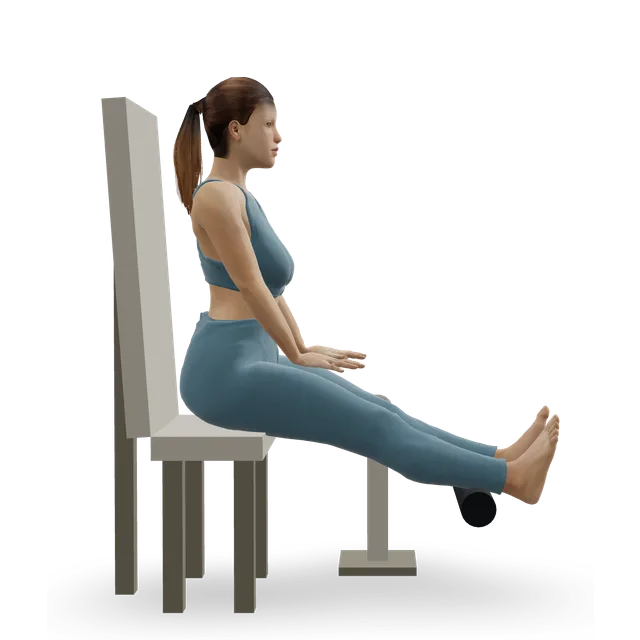
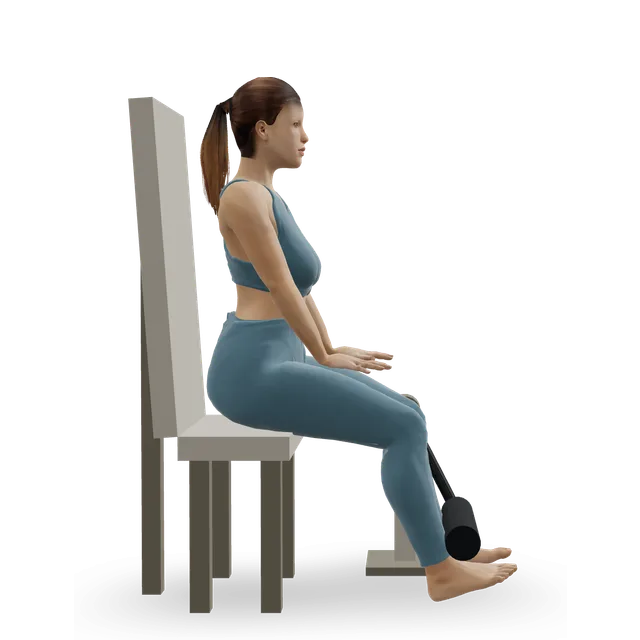
Seated leg curl demonstrated on the 3D figure3D demoSeated leg curlBeginner · Strength machine

2 to 3 sets of 8 to 12, stopping with 2 or 3 reps in reserve · The move page's dose, kept light. Stop a few degrees short of the fully bent end for now (our suggestion); the standing machine curl works the same way

Easier: Seated band hamstring curl · Harder: Stability ball leg curl

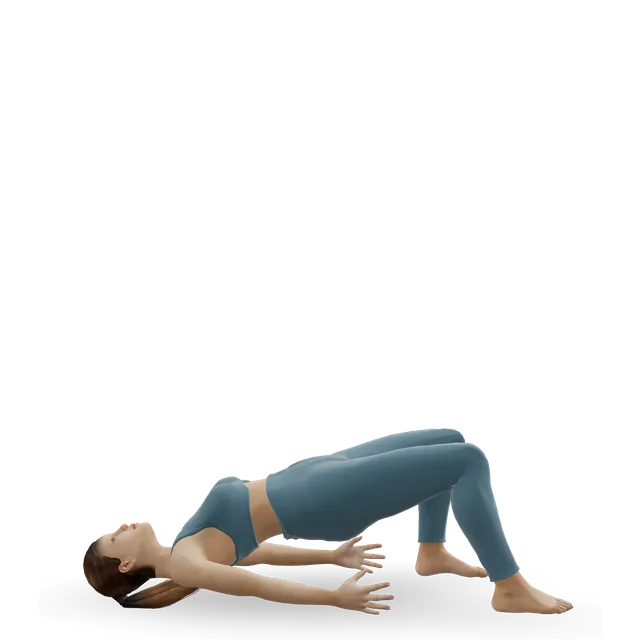
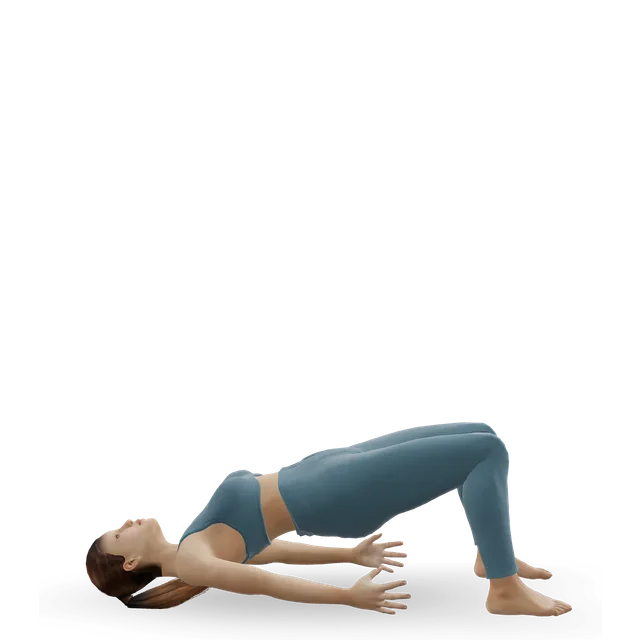
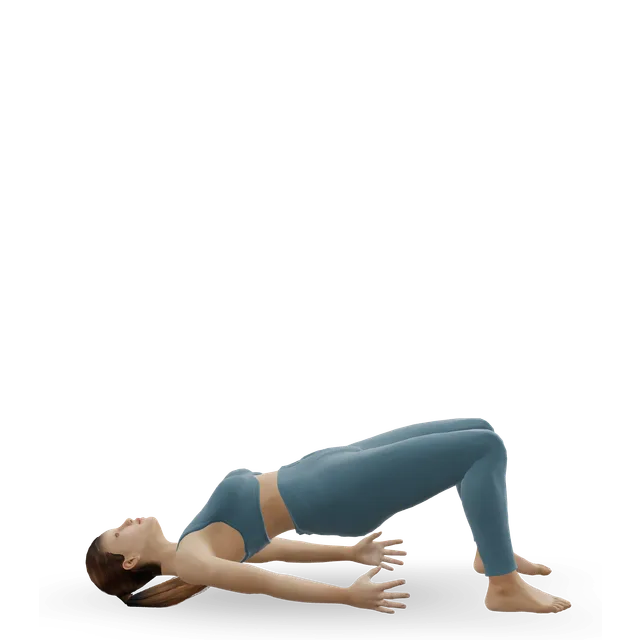
Glute bridge demonstrated on the 3D figure3D demoGlute bridgeBeginner · No equipment

2 sets of 10 · As in our pain behind the knee and Baker's cyst guides (editorial): a gentle hamstring load without a deep knee bend

Easier: Pelvic tilt into bridge · Harder: Single-leg glute bridge

Staggered-stance bridge (offset bridge) demonstrated on the 3D figure3D demoStaggered-stance bridge (offset bridge)Beginner · No equipment

5 slow repetitions each side once a day, building to 2 sets of 5 to 10 at a somewhat hard effort · The move page's dose, from the LEAP trial programme. Puts more of the work on the sore side

Easier: Pelvic tilt into bridge · Harder: Single-leg glute bridge

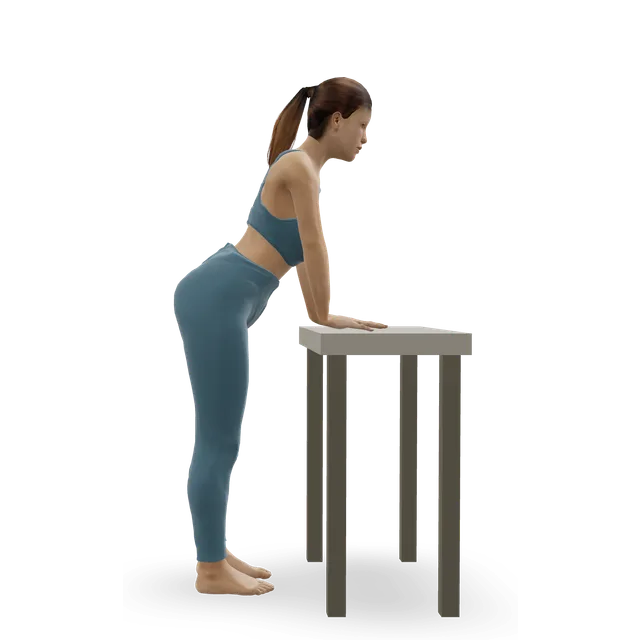
Hip-hinge practice demonstrated on the 3D figure3D demoHip-hinge practiceBeginner · No equipment

2 sets of 8 · Our hamstring workout's warm-up dose (editorial)

Harder: Kettlebell deadlift

Quad set (static quads) demonstrated on the 3D figure3D demoQuad set (static quads)Beginner · No equipment

Hold 10 s: 2 to 3 at a time, building to 8, 2 to 3 times a day · NHS inform's knee exercise with its pacing, as our pain behind the knee guide uses it, for a cyst, arthritis or the back of the meniscus

Harder: Straight-leg raise

Stationary cycling demonstrated on the 3D figure3D demoStationary cyclingBeginner · Cardio machine

10 minutes, easy, seat high so the knee never bends fully · As in our pain behind the knee and Baker's cyst guides (editorial)

Easier: Recumbent exercise bike · Harder: Air bike intervals

Move on when: Curls in your chosen range pass the pain rule, nothing cramps, and the back of the knee is no worse the next morning, for a week (editorial). For a tendon, about 3 out of 10 or less, our pain behind the knee guide's limit.

Follow along: a timer, a cue and the next move, one step at a time.
Stage 2

Build: the hinge, more of the curl and slow lowering

About weeks 2 to 6, 2 or 3 sessions a week: the hamstrings working at long lengths through a hinge, the curl back through most of its range, and the slow lowering that slider curls train.

Dumbbell Romanian deadlift demonstrated on the 3D figure3D demoDumbbell Romanian deadliftIntermediate · A dumbbell

3 sets of 8 to 10, 3 s down to where your hamstrings stop you, stopping 2 or 3 reps short of failure · Our hamstring workout's dose (editorial). Hamstring activity was highest in this hinge in a lab study

Easier: Hip-hinge practice · Harder: Single-leg Romanian deadlift

Seated leg curl demonstrated on the 3D figure3D demoSeated leg curlBeginner · Strength machine

3 sets of 10 to 12, lowering slowly, opening the range towards the fully bent end over the weeks · Our hamstring workout's sets and reps (editorial); the range steps are our suggestion, while the pain rule holds

Easier: Seated band hamstring curl · Harder: Stability ball leg curl

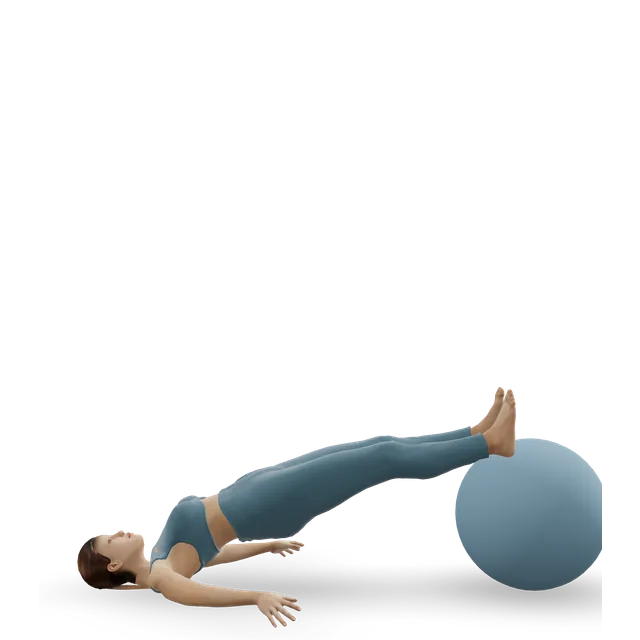
Stability ball leg curl demonstrated on the 3D figure3D demoStability ball leg curlIntermediate · Exercise ball

2 to 3 sets of 8 to 12, stopping with 2 or 3 reps in reserve · The move page's dose. If a hamstring cramps, lower the hips and rest before going on, as the move page says

Easier: Glute bridge · Harder: Nordic curl

Slider hamstring curl, lowering only demonstrated on the 3D figure3D demoSlider hamstring curl, lowering onlyBeginner · No equipment

3 sets of 5 slow lowers, about 5 s out · Our Nordic curl progression workout's dose (editorial)

Harder: Slider hamstring curl

Single-leg glute bridge demonstrated on the 3D figure3D demoSingle-leg glute bridgeIntermediate · No equipment

2 sets of 8 to 10 each side · Editorial: evens up the sides

Easier: Glute bridge · Harder: Barbell hip thrust

Slow calf raise demonstrated on the 3D figure3D demoSlow calf raiseBeginner · A wall

3 sets of 12, holding a support · As in our pain behind the knee and Baker's cyst guides (editorial): the calf bends the knee too

Easier: Seated bent-knee calf raise (soleus raise) · Harder: Standing dumbbell calf raise

Move on when: Romanian deadlifts and curls through most of the range pass the pain rule for 3 sets, with no cramp and the knee fine the next morning (editorial).

Follow along: a timer, a cue and the next move, one step at a time.
Stage 3

Back to your usual leg curls, then Nordics

From about week 6, often later for a tendon: your usual curl and load, one change at a time by the written steps below, single-leg hinges, and the lengthening work that sport needs, with Nordic curls last and band-assisted first. No trial has tested a return to the leg curl after knee pain, so the order is editorial.

Machine leg curl demonstrated on the 3D figure3D demoMachine leg curlBeginner · Strength machine

Your usual sets through the full range: start at about half your old working weight and add about 5% to 10% when every set has reps to spare and your knee is fine the next morning · Editorial, as in our leg extension guide. A lying curl comes back the same way, by the written steps below

Easier: Seated band hamstring curl · Harder: Slider hamstring curl

Standing machine leg curl demonstrated on the 3D figure3D demoStanding machine leg curlBeginner · Strength machine

2 to 3 sets of 8 to 12 each side, stopping with 2 or 3 reps in reserve · The move page's dose. Keeps the sides even

Harder: Stability ball leg curl

Single-leg Romanian deadlift demonstrated on the 3D figure3D demoSingle-leg Romanian deadliftAdvanced · A dumbbell

2 sets of 8 each leg, fingertips on a wall at first · Our hamstring workout's dose (editorial)

Easier: Dumbbell Romanian deadlift

Slider hamstring curl demonstrated on the 3D figure3D demoSlider hamstring curlIntermediate · No equipment

3 sets of 6 to 10 · Our Nordic curl progression workout's dose (editorial). Cramp? Do fewer reps over a shorter range, as that workout says

Easier: Machine leg curl · Harder: Full Nordic curl

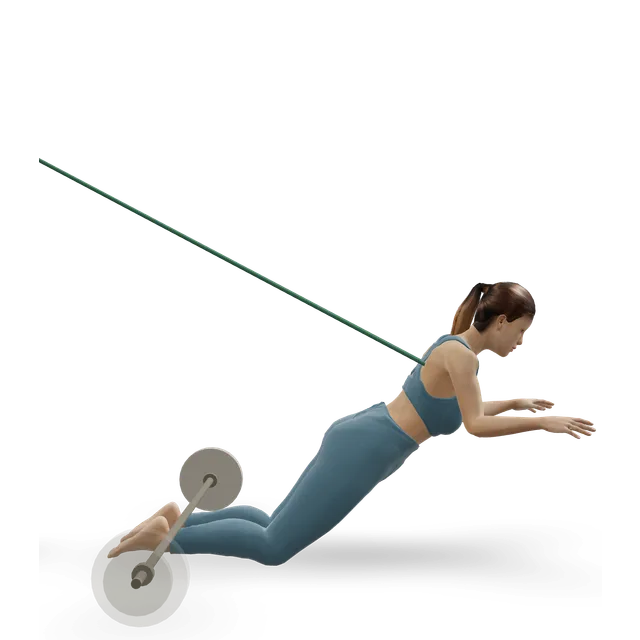
Band-assisted Nordic curl demonstrated on the 3D figure3D demoBand-assisted Nordic curlIntermediate · An anchor point + A band

2 sets of 3 to 6 slow lowers, twice a week, moving from a heavier band to a lighter one over several weeks · The move page's dose. Full Nordic curls can follow if you want them, at 2 or 3 sets of 3 to 6 (our Nordic curl progression workout, editorial)

Easier: Slider hamstring curl, lowering only · Harder: Nordic curl

Move on when: Your usual leg day passes the pain rule for 2 weeks. If a big session flares it, go back a stage for a few days, not to nothing (editorial).

Follow along: a timer, a cue and the next move, one step at a time.

What to change for now

Your leg curl for now (written steps)

Our 3D figure can't show the machine's settings or the lying curl, which has no demo yet. These steps come from coaching practice, lab studies and the NHS; where a step is our suggestion, it says so. No trial has tested a change to the leg curl for knee pain.

  • 1. Pivot and pad: line the side of your knee up with the machine's pivot and set the pad on the back of your lower legs just above the heels; on a seated machine, lock the thigh pad down above your knees (coaching practice, as our leg curl guide teaches). If the pad digs into your calf or Achilles, move it down.
  • 2. Range: stop a few degrees short of the fully bent end while the hamstrings cramp or the back of the knee feels tight, and add it back as it settles (our suggestion). After a PCL injury, your team sets the range; models load the ligament least from straight to about 50 degrees.
  • 3. Toes: pointing them takes some work off the calf without changing the hamstring result in two small studies, so point them if your calf cramps (our suggestion).
  • 4. Load and tempo: lighter, stopping 2 or 3 reps short of failure, about 2 seconds up and 2 to 3 seconds down, without letting the stack crash (our leg curl guide).
  • 5. The lying (prone) leg curl: lie face down with your knees just off the end of the bench and the side of your knee level with the pivot, the pad just above your heels. Hold the handles, keep your hips pressed down, curl your heels towards your bottom, then lower slowly (our leg curl guide). If your kneecaps press into the bench, slide down a little (our suggestion).
  • 6. One leg at a time on a standing machine if one side hurts (our suggestion).
  • 7. Seated if you have the choice: it grew the hamstrings more in a trial, and it takes your kneecaps off the bench.
  • 8. Cramp: stop, straighten the leg and stretch gently until it lets go, as the NHS advises; start the next set lighter and ease into the squeeze at the top (our leg curl guide).

Sources 1, 23, 24, 5, 3, 9

Back to your usual leg day and sport (written steps)

No trial has tested a return to the leg curl after knee pain, so these steps are our suggestion unless a source is named.

  • 1. One change at a time: range, then load, then sets, then Nordic curls.
  • 2. Add about 5% to 10% only after a session that passed the pain rule.
  • 3. Running and sprinting come back after curls and band-assisted Nordics pass the pain rule (editorial; our hamstring strain guide stages sprinting).
  • 4. With a Baker's cyst: rest the knee, put an ice pack wrapped in a tea towel on it for around 10 minutes every few hours, raise the leg, and take ibuprofen or paracetamol if they suit you (the NHS); go easy on deep squats, kneeling and full bends while it feels tight.
  • 5. After a mild hamstring injury, keep the leg moving once pain doesn't stop you, so the hamstring doesn't stiffen (the NHS).
  • 6. On journeys of 4 hours or more, get up and move around every hour or so (the NHS's advice to lower the chance of a clot).
  • 7. Keep two strength sessions a week with hinges and curls for the long term, and if a session flares it, go back a stage for a few days, not to nothing.

Sources 15, 19, 22

Positions to swap, and why

Habit or positionWhy it mattersInstead
Curling to the fully bent end while it cramps or the back of the knee is tightIn lab studies, cramp starts with a hard contraction in a shortened muscle, and a deep bend squeezes a cyst (our reading).Stop a few degrees short, then add the range back.Try: Seated leg curl
The pad on your calf or Achilles, or your knee out of line with the pivotCoaching practice puts the pad just above the heels and the knee at the pivot; no study has tested it.Re-set the machine before the first set.
Heavy sets to failure and letting the stack crashMore load than a sore tendon tolerates, and rushed, heavy reps are the commonest faults coaches list.Stop 2 or 3 reps short, with 2 to 3 seconds on the way down.
Nordic curls while a tendon at the back of the knee is soreA first Nordic session left strength down and soreness up for 2 to 3 days in a small study.Light seated curls now, band-assisted Nordics later.Try: Band-assisted Nordic curl
Hard hamstring stretches to fix the back of the kneeStretching eases a cramp, but a sore tendon needs graded loading.Bridges and light curls.Try: Glute bridge
Resisted curls in the first 12 weeks after a PCL injury or a hamstring graftBending the knee against resistance loads the PCL most near 90 degrees in a model, and protocols wait about 12 weeks.Your team's plan, with bridges when they allow.Try: Glute bridge
Lying on your kneecaps on a lying curl benchPressure on the kneecaps (our reading).Knees just off the end of the bench, or a seated machine.Try: Seated leg curl
Massaging or rolling a swollen, painful calfIt could be a clot or a burst cyst.Stop and get a same-day check.
Salt tablets or extra water as the cramp fixThe evidence that exercise cramps come from dehydration or salt loss is weak.Stretch the cramp, start lighter and build up gradually.
Resting the leg completelyThe NHS says keep a mildly injured hamstring moving once you can, so it doesn't stiffen.The stage 1 moves.Try: Glute bridge

Routines to follow

More moves for this area

Questions people ask

Why does the back of my knee hurt on leg curls?

Usually a hamstring tendon at the back inner or outer corner, a Baker's cyst that feels tight at full bend, or cramp at the top of the curl, and where it hurts is the best clue. Change the range and the load rather than stopping, and use the map on this page. A throbbing, swollen calf needs a same-day check.

Why do my hamstrings cramp on leg curls?

Cramps strike muscles that cross two joints when they contract hard, and the top of a curl is where the hamstrings are shortest; the lab studies behind this used the calf and foot, so it's our reading for the curl. Straighten and stretch until it lets go, start the next set lighter, and stop just short of the fully bent end for now.

Why does my calf cramp on leg curls?

The calf muscle also bends the knee, and it is short when your foot is pulled up at the top of the curl. Pointing your toes takes some work off the calf without changing the hamstring result, and stretching eases a cramp while it happens.

Are leg curls bad for your knees?

No study shows they harm healthy knees, and rehab programmes use them to strengthen sore hamstring tendons. They do load the PCL most at deep bend, so after a PCL injury your team will hold them back for a while.

Where should the pad go on a leg curl?

On the back of your lower legs just above the heels, with the side of your knee level with the machine's pivot. That is coaching practice rather than a tested rule. If the pad digs into your calf or Achilles, move it down and check the pivot again.

Seated or lying leg curl if my knee hurts?

Either can work, so choose the one that passes the pain rule. Seated curls grew the hamstrings more in a 12-week trial, and they keep your kneecaps off the bench; on a lying curl, keep your knees just off the end of the pad.

What can I do instead of leg curls?

Romanian deadlifts, which drew more hamstring activity than the leg curl in trained men, bridges, ball or slider curls and, later, Nordic curls. Our plan brings them in stages.

Are Nordic curls good for knee pain?

They are a prevention exercise for hamstring strains in athletes, not a treatment for knee pain, and the first sessions leave days of soreness. Bring them back last, with a band to help at first.

Could the lump behind my knee be a Baker's cyst?

A soft lump that shows more when you stand and feels tight when you bend often is, and in adults it usually comes with arthritis or a meniscus tear. See a GP about any lump you're unsure of, and get a same-day check if the calf suddenly swells.

Do I need a scan?

Usually not at first. An ultrasound scan helps for a lump behind the knee or a swollen calf, and an MRI scan for a knee that locks or a suspected tendon tear.

How long will it take to get better?

Cramp passes in minutes and mild hamstring injuries in a few days, while a sore tendon or a Baker's cyst can take months. No one can promise a date.

When should I see a doctor?

Get a same-day check for a throbbing, swollen calf, a lump behind the knee that suddenly swells, or a pop near the sitting bone with a big bruise, and advice from NHS 111 for a knee that locks or gives way. See a GP or physiotherapist if it isn't better within a few weeks. In the US, call 911 where this page says 999.

Related exercise guides

Other pain guides

Sources

  1. Maeo 2021 · Seated against lying leg curls for 12 weeks in 20 untrained adults (within-person trial, Med Sci Sports Exerc)
  2. Toutoungi 2000 · Cruciate ligament forces in knee rehabilitation exercises, 16 people (measurement and model study, Clin Biomech)
  3. Escamilla 2012 · Cruciate ligament loading in common knee rehabilitation exercises (review, Proc Inst Mech Eng H)
  4. Kawama 2021 · Hamstring activity in holds at 30, 60 and 90 degrees of knee bend in 16 men (EMG study, J Sport Rehabil)
  5. Miller 2022 · Exercise-associated muscle cramps: causes, treatment and prevention (evidence-based review, J Athl Train)
  6. Bertolasi 1993 · Muscle shortening and cramps in 10 volunteers (lab study, Ann Neurol)
  7. de Jager 2022 · Exercise cramps in 71,420 race entrants (cross-sectional study, Clin J Sport Med)
  8. Costa 2026 · Risk factors for exercise cramps: 9 studies (systematic review and meta-analysis, Muscle Nerve)
  9. NHS · Leg cramps
  10. Sederberg 2022 · Distal semimembranosus tendinopathy (narrative review, PM R)
  11. Koolmees 2025 · Distal hamstring injuries and disorders (review, J Am Acad Orthop Surg Glob Res Rev)
  12. Mohammed 2025 · Ultrasound of the inner hamstring tendons in 104 people with back-and-inner knee pain (imaging study, J Med Ultrasound)
  13. Ray 1988 · Semimembranosus tendinitis in 115 people (case series, Am J Sports Med)
  14. Ekstrand 2012 · 516 hamstring injuries in professional football (cohort study, Br J Sports Med)
  15. NHS · Baker's cyst
  16. Sansone 1995 · Popliteal cysts and other knee problems on 1,001 MRI scans (imaging study, Int Orthop)
  17. Frush 2015 · Baker's cyst: diagnosis and surgery (review, Sports Health)
  18. Royal Berkshire NHS Foundation Trust · Baker's cyst (patient leaflet, February 2025)
  19. NHS · DVT (deep vein thrombosis)
  20. NHS · Knee pain
  21. Cui 2026 · Popliteal artery entrapment: 21 studies, 716 patients (systematic review, J Endovasc Ther)
  22. NHS · Hamstring injury
  23. Cadeo 2023 · Ankle position in the lying leg curl: activity, strength and growth (within-person trial, Eur J Sport Sci)
  24. Marchetti 2021 · Knee and ankle position in the lying leg curl in 15 trained men (lab study, J Strength Cond Res)
  25. McAllister 2014 · Hamstring activity in the leg curl, good morning, glute-ham raise and Romanian deadlift in 12 men (EMG study, J Strength Cond Res)
  26. Bourne 2017 · Which exercises work which hamstring, in 24 men (EMG and MRI study, Br J Sports Med)
  27. Zebis 2013 · Kettlebell swing and lying-on-the-back leg curl favour different hamstrings, in 16 female athletes (EMG study, Br J Sports Med)
  28. Maeo 2024 · Nordic curls against slow hip-bent lowering on a curl machine in 42 men (trial, Med Sci Sports Exerc)
  29. Smith 2017 · Painful against pain-free exercise for long-lasting pain: 7 trials (systematic review and meta-analysis, Br J Sports Med)
  30. Tran 2025 · Painful against pain-free exercise for long-lasting pain: 16 trials (systematic review and meta-analysis, J Orthop Sports Phys Ther)
  31. van Dyk 2019 · Nordic hamstring exercise programmes and hamstring injuries: 15 studies, 8,459 athletes (systematic review and meta-analysis, Br J Sports Med)
  32. Petersen 2011 · Nordic hamstring training in 942 footballers (cluster randomised trial, Am J Sports Med)
  33. Hong 2026 · Exercise programmes to prevent hamstring injuries in footballers: 11 trials (network meta-analysis, Sports Med Open)
  34. Coratella 2025 · Muscle damage after a first Nordic hamstring session in 13 trained men (lab study, Int J Sports Med)
  35. Ishøi 2025 · Band-assisted against standard Nordic curls in 31 young footballers (randomised trial, Phys Ther Sport)
  36. Schwellnus 2009 · Exercise cramps: nerve control, dehydration or salt loss? (review, Br J Sports Med)
  37. Thomeé 1997 · Treating kneecap pain in 40 young women with a pain-monitoring model (trial, Phys Ther)
  38. Silbernagel 2007 · Continuing activity with a pain-monitoring model in Achilles tendon pain, 38 people (RCT, Am J Sports Med)
  39. NHS inform · Exercises for knee problems

Exercise education, not a diagnosis or treatment plan. It is written from the guidelines and studies listed above; review by a clinician is pending. If your pain follows an injury, is severe, is getting worse, or comes with any warning sign listed on this page, get it assessed. Health disclaimer.