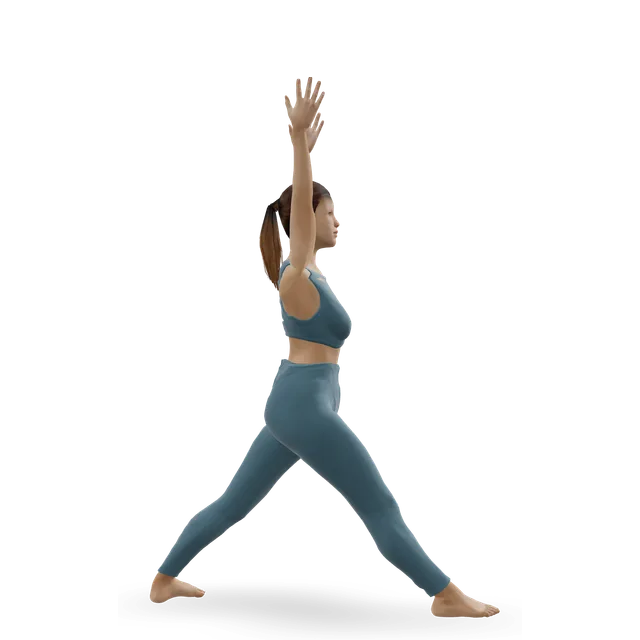
One movement per breath
In Ashtanga yoga, sun salutation A has 9 counted movements, each on a breath in or out, with 5 breaths in downward dog; B has 17, adding chair pose and warrior I on each side. Ashtanga practice opens with 5 rounds of each.
Yoga guide
A sun salutation (Surya Namaskar) is a sequence of about a dozen poses linked to the breath: you reach up, fold, step back, lower, lift your chest, press back into downward dog and return to standing. Ashtanga yoga has two versions, A and B, and other schools teach a 12-step version.
Done briskly it is moderate exercise, while slow rounds are lighter, and every step has an easier version: bend your knees, lower with your knees down, use cobra instead of upward dog, or do just the standing half.
This guide takes you through A and B pose by pose with the breath and 3D demos, explains how schools differ and how hard it is, and covers who should modify what.
In Ashtanga yoga, sun salutation A has 9 counted movements, each on a breath in or out, with 5 breaths in downward dog; B has 17, adding chair pose and warrior I on each side. Ashtanga practice opens with 5 rounds of each.
The 12-step versions taught by the Sivananda centres and the Bihar School of Yoga use a lunge, a knees-chest-chin lowering and cobra, leading with one leg and then the other.
Sun worship is ancient, but the flowing sequence was promoted in the 1920s and 1930s and entered yoga through the Mysore school.
Estimates run from 2.9 METs (metabolic equivalents: 1 MET is the energy you use sitting still) in a video-led practice to 3.5 METs in the Compendium of Physical Activities, and experienced practitioners reached about 80% of their predicted maximum heart rate. Brisk rounds can count toward your 150 minutes a week.
Bend your knees in the folds, lower with your knees down or knees-chest-chin, use cobra instead of upward dog, step rather than jump, and learn A before B.
Sore wrists, osteoporosis, glaucoma, uncontrolled high blood pressure and pregnancy all call for changes: the wrists bend back up to about 85 degrees, the folds round the spine, and the head drops below the heart.
Surya Namaskar means salutation to the sun. Sun worship with prostrations is old: a 132-verse "Surya namaskar" chapter of a Vedic text, the Taittiriya Aranyaka, is chanted with a salutation after each verse.
Source 4
The Wellcome Collection's history of modern yoga says the first systematic presentation of sun salutations appeared in Aundh, promoted by its Rajah in the 1920s and 1930s, whose book never describes surya namaskar as yoga, and that it entered the canon of yoga postures through the Mysore school. Its movements resemble wrestlers' dand exercises. A 2022 review says it "is considered neither an Asana nor a part of traditional Yoga".
It opens every Ashtanga practice, and many vinyasa classes, which link each movement to the breath, build on it (our description).
One movement per breath, as Ashtanga teachers count it:
Source 1
The demo steps back to a plank before lowering, as many classes do. In Ashtanga you step or jump straight to the low hover on one breath out. Either is fine.
Source 1
Ashtanga also sets a gaze point for each count: your thumbs as you reach up, your nose as you fold and lower, between your eyebrows as you lift, and your navel in downward dog. If looking up strains your neck, look straight ahead.
Source 1
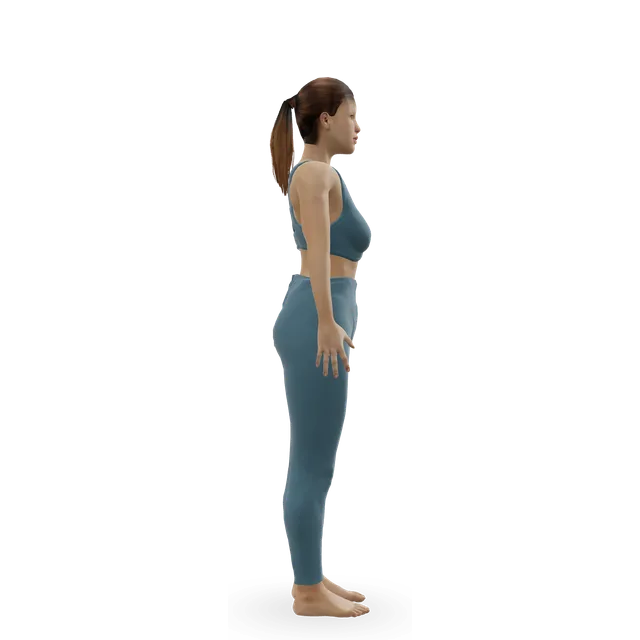
In order: mountain pose, the standing forward fold, the half lift (shown as the hip hinge fold), plank, chaturanga, upward dog and downward dog, then the whole sequence. Learn each on its own before you link them (our suggestion).
 3D demoMountain Pose (Tadasana)Beginner · No equipment
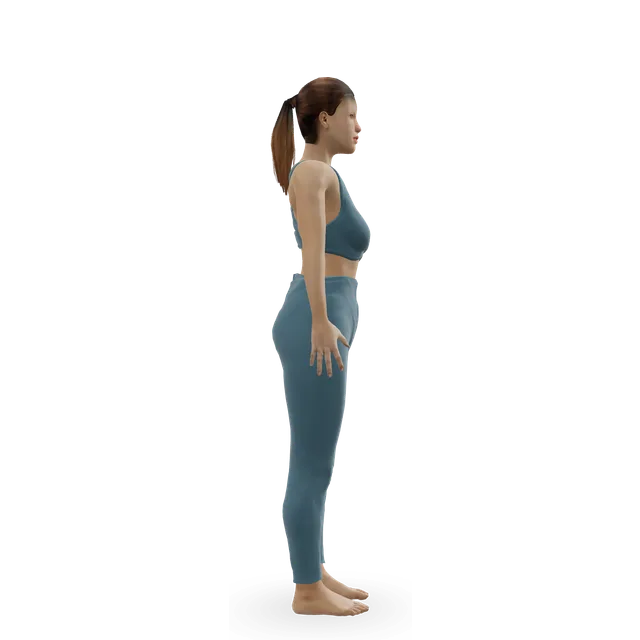 3D demoStanding toe touch (forward hang)Beginner · No equipment
 3D demoHip hinge foldBeginner · No equipment
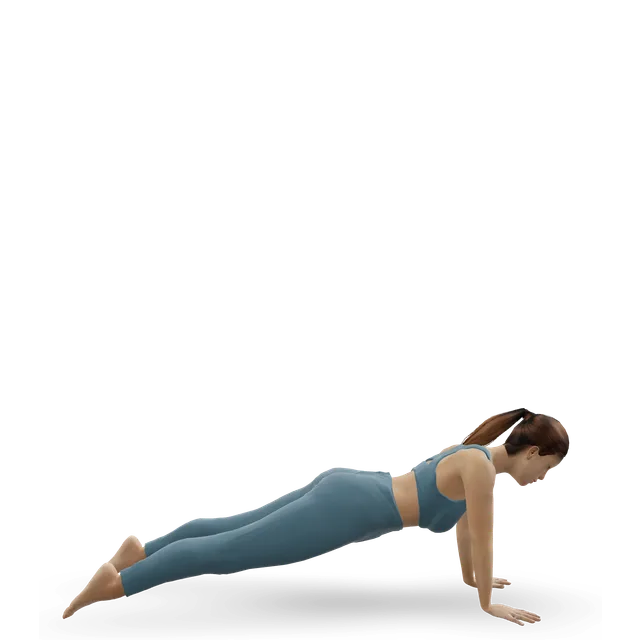 3D demoStraight-arm plank (high plank)Intermediate · No equipment
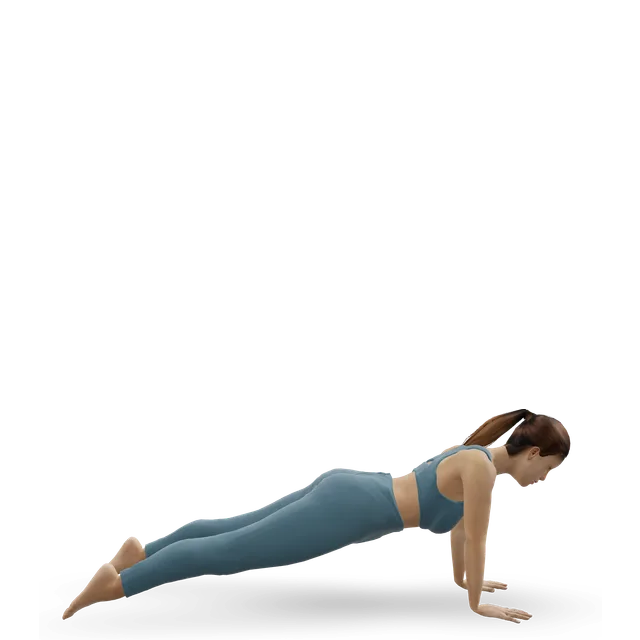 3D demoFour-limbed staff pose (Chaturanga Dandasana)Advanced · No equipment
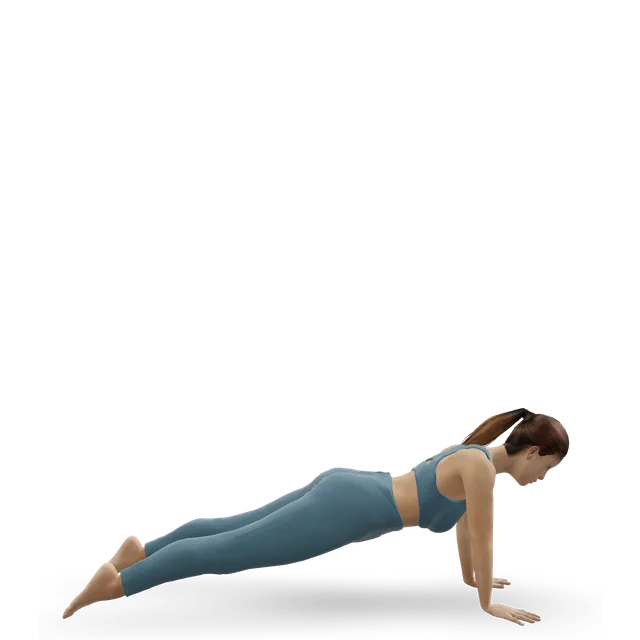 3D demoUpward-facing dog (Urdhva Mukha Svanasana)Intermediate · No equipment
 3D demoDownward-facing dog (Adho Mukha Svanasana)Beginner · No equipment
 3D demoSun salutation A (Surya Namaskar A)Intermediate · No equipment
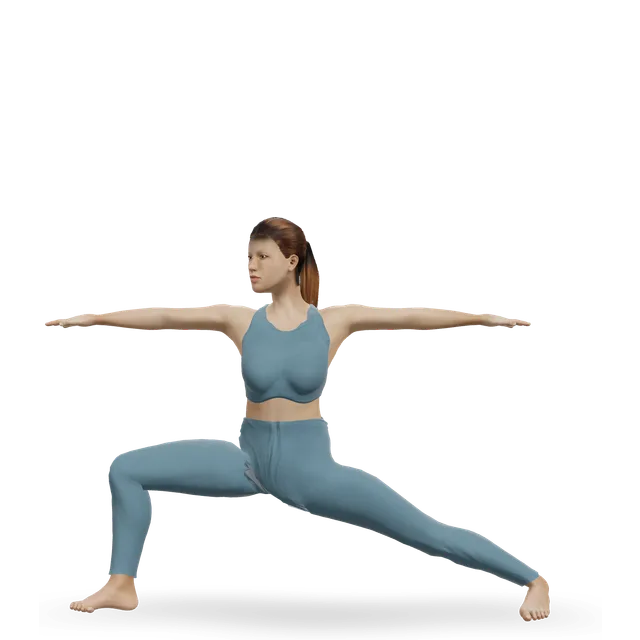
Ashtanga's sun salutation B, one movement per breath:
Source 2
B lowers you three times a round instead of once, and Yoga International describes it as an advanced practice. In Ashtanga, each practice starts with 5 rounds of A, then 5 of B.
Chair pose opens and closes each round, and warrior I comes once on each side; then the whole sequence.
Bend your knees in the folds. Lower with your knees down (as in the knee push-up), or bring your knees, chest and chin to the floor as the Sivananda version does. Use low cobra, cobra or the sphinx instead of upward dog, and the extended puppy or child's pose instead of a long downward dog. Step into a low or high lunge rather than jumping. A half sun salutation is just the standing part: arms up, fold, half lift, fold, rise.
 3D demoKnee push-upBeginner · No equipment
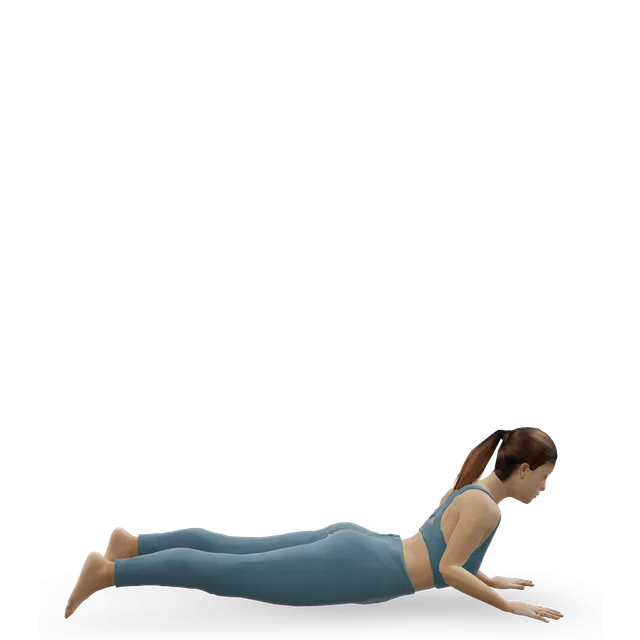 3D demoLow cobra (Bhujangasana)Beginner · No equipment
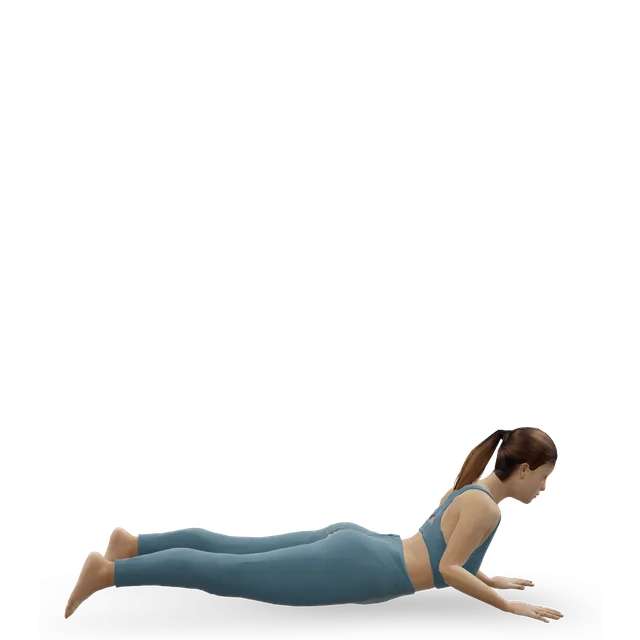 3D demoCobra pose (Bhujangasana)Intermediate · No equipment
 3D demoSphinx pose (Salamba Bhujangasana)Beginner · No equipment
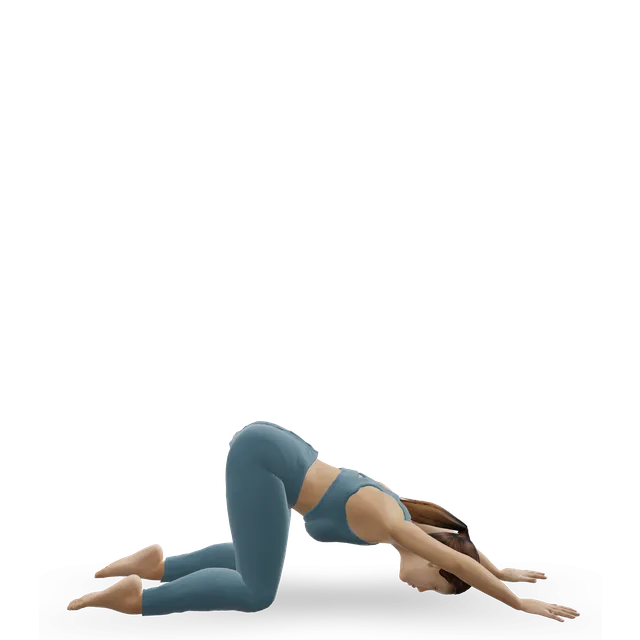 3D demoExtended puppy pose (Uttana Shishosana)Beginner · No equipment
 3D demoChild's Pose (Balasana)Beginner · No equipment
 3D demoLow lunge (Anjaneyasana)Beginner · No equipment
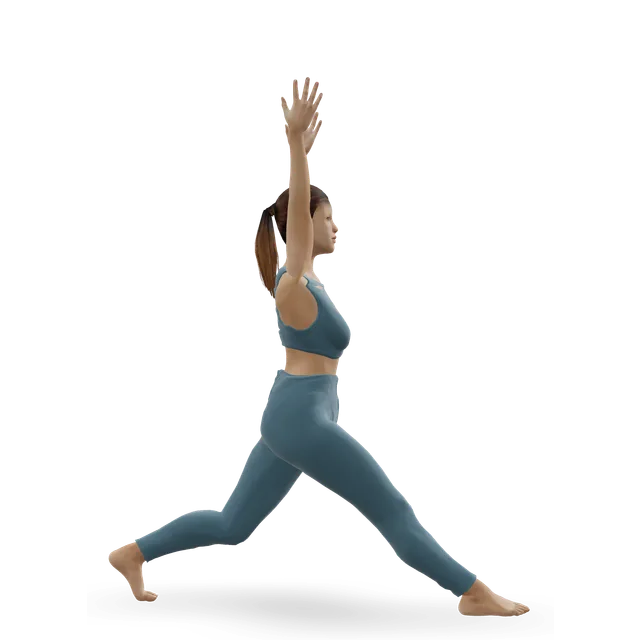 3D demoHigh lunge (crescent lunge, Ashta Chandrasana)Intermediate · No equipment
One round is two halves: the right leg leads first, then the left. The Sivananda centres suggest starting with four rounds and building gradually to twelve.
Source 3
Its version uses the inverted V (which it calls mountain pose, parvatasana) in place of a plank, holds the breath out in the eight-limbed salute, and chants a mantra or seed sound at each step.
Source 4
It has 13 steps, adding chair pose, a jump back to the low hover and a full lowering to the floor.
Source 4
Many studios add a plank before lowering, as our 3D demo does, and offer knees-chest-chin and low cobra as options (our description).
There's no shared definition: studios use the name for their own variations, often with a low lunge, knees-chest-chin and cobra. We found no school that defines it.
In some traditions each step has a mantra: the Bihar School chants one of the 12 names of the sun, and the Sivananda centres give each position its own. Many modern classes, especially exercise-based ones, don't chant.
The Compendium of Physical Activities lists sun salutations at 3.5 METs, in the moderate band of 3 to under 6, and a review of 17 energy-cost studies found sun salutations among the few yoga sequences that reach moderate to vigorous intensity.
Measured values cover a wide range. In a beginners' Ashtanga video, 24 minutes of sun salutations averaged 2.9 METs, about 55% of predicted maximum heart rate. Army volunteers trained for 3 months used 3.79 kcal (kilocalories, the calories on food labels) a minute, with a peak heart rate of 101. Six young practitioners with more than 2 years' experience averaged 80% of their predicted maximum heart rate over four rounds, in a session of about 30 minutes. Fast rounds used more oxygen and energy than slow ones.
A fast 12-step round took about 2 minutes in a lab study and a slow one about 6; another study timed a round at 3 minutes 40 seconds; and in the video, the poses changed every 3 to 8 seconds. Count minutes rather than rounds when you want to know how much you've done (our suggestion).
Calories are roughly METs × body weight in kg × hours, and include the energy you'd use sitting anyway. On that basis, 10 minutes of steady sun salutations at the Compendium's 3.5 METs uses about 35 kcal at 60 kg, 41 at 70 kg and 47 at 80 kg; at the gentler 2.9 METs measured in the video, about 29 to 39; and brisk walking about 48 to 64, for comparison.
So 20 minutes uses roughly 60 to 95 kcal for a 60 to 80 kg adult. These are our sums, not measurements, and experienced practitioners working hard in a lab used more.
Moderate activity of any length counts toward the 150 minutes a week in the World Health Organization and US guidelines, which dropped the old 10-minute rule. Continuous, brisk rounds count if you can talk but not sing; slow rounds with long holds are light activity.
Each claim is graded. The studies are small, and most come from India.
A 2026 review found 14 studies, mostly in India, lasting 4 to 24 weeks with 2 to 6 sessions a week. They suggest better flexibility, fitness and stress scores, but the certainty was low for fitness and very low for psychological and body composition outcomes. In 44 women with overweight or obesity, 8 weeks of sun salutations 3 times a week improved flexibility and perceived stress more than no exercise. In 79 medical students building to 24 rounds, 6 days a week for 24 weeks, strength and endurance improved, but there was no comparison group.
Most research used the traditional 12-step sequence, not the Ashtanga A or B forms, so treat the results as a guide to sun salutations in general.
In 34 premenopausal women, an 8-month Ashtanga-based programme that kept adding sun salutations didn't increase bone density, though a marker of bone formation held steady while it fell in the control group.
Source 28
No trial has isolated sun salutations for weight loss. In the 8-week trial, body mass index (BMI) fell within the sun salutation group, but not significantly more than in the control group. Our yoga for weight loss guide covers the rest.
Motion capture of 10 trained practitioners showed the wrists bending back up to about 85 degrees, the neck up to 76 degrees, and the spine moving from 58 degrees of forward bending to 44 degrees of backward bending. In 8 practitioners, the back muscles worked hardest in the forward fold and the glutes and thighs in the lunge, the abdominals stayed low, and moving between poses demanded more than holding them.
Ashtanga practice opens with 5 rounds each of A and B, and the Sivananda centres suggest starting with four rounds and building gradually to twelve. Our starting point: 3 to 5 rounds of A to warm up.
Our editorial starting point: 10 to 20 minutes of continuous rounds, 2 or 3 times a week, learning A before B. Trials used 2 to 6 sessions a week.
A popular challenge with no research behind it: trials used anything from a few rounds to about 24. If you try one, build up over weeks and use the easier versions.
Fine if your wrists, shoulders and back feel good. Vary the pace, and use the easier versions on tired days.
Source 11
Your wrists bend back up to about 85 degrees and take your weight in the plank, the lowering and both dogs. Do the standing half only, make fists or come down onto your forearms in the plank, and keep the dogs short.
Source 11
Repeated lowering loads the shoulders, especially when you're tired: lower with your knees down or skip the lowering, use cobra instead of upward dog, and rest in child's pose between rounds.
Source 10
If arching hurts, keep cobra low or skip it; if bending hurts, bend your knees in the folds and keep your back long. Stop if pain travels down a leg, and check the warning signs below (our suggestion, in line with each pose's page).
A UK consensus advises modifying or avoiding sustained, repeated or end-range forward bending of the spine. Keep every fold to a flat-back half way, with your hands on your thighs or on blocks.
Source 12
In 20 people with and without glaucoma, eye pressure rose within a minute in downward dog and the standing forward fold, and fell back within 2 minutes of coming out. With glaucoma, ask your eye doctor about yoga. With glaucoma or uncontrolled high blood pressure, keep the head-down parts brief or do the standing half only, keep breathing, and come up slowly.
Ask your midwife first. As your bump grows, skip the face-down poses and lower to all fours instead, keep your feet hip-width apart in the folds, step rather than jump, and in later pregnancy avoid lying flat on your back for more than a few minutes. In 25 healthy women at 35 to 37 weeks, 26 postures, including downward dog, were well tolerated.
If you have heart disease, check with your cardiac team before long or hard holds, and keep breathing; with heart failure, our plank page advises avoiding planks.
Come up slowly from the folds, and rest standing or in child's pose until it passes. If you take medicine that lowers your blood pressure, stand within reach of a wall, as our mountain pose page advises.
The sun salutation flow adds B and three warrior poses, and is the next step once A feels easy. The beginner yoga flow is a gentler start.
A 20-minute way into sun salutation A: learn the standing half, then the floor half with your knees down and cobra, then link them into 3 slow rounds.
20 minBeginner11 movesNo equipmentA 20-minute flow built on sun salutations A and B, with warrior poses and a short cool-down.
20 minIntermediate8 movesNo equipmentA 20-minute beginner yoga sequence: mountain, chair, warrior II, triangle, tree, down dog, cobra and child's pose.
20 minBeginner11 movesA stepStop straight away if you feel any pain or become unwell, as NHS exercise videos advise. Come out for sharp or increasing pain; pain, pins and needles or numbness travelling down an arm or leg; dizziness; or a sudden headache or change in your vision while your head is down.
Source 16
For chest pain that feels tight or like squeezing, or spreads to your arms, neck or jaw; severe difficulty breathing; or signs of a stroke, such as one side of the face drooping, arm weakness or speech problems.
Pain, tingling, weakness or numbness in both legs; loss of feeling around your genitals or anus; or changes in your bladder or bowels, such as difficulty peeing, or peeing or pooing yourself. Our yoga for back pain guide has the full list.
Source 34
Sun worship is ancient, but the sequence was systematised in the 1920s and 1930s and joined yoga through the Mysore school. One review says it is considered neither a posture (asana) nor part of traditional yoga.
Ashtanga has A (9 movements) and B (17); the Sivananda and Bihar School versions have 12 positions; Krishnamacharya's has 13.
Brisk rounds reach moderate intensity, but a video-led practice measured 2.9 METs, and slow rounds are lighter.
An 8-month programme that kept adding sun salutations didn't change bone density.
Source 28
No trial has isolated them for weight loss, and 10 minutes uses roughly 35 to 47 kcal for a 60 to 80 kg adult (our arithmetic). No exercise burns fat from one spot, as our weight loss guide explains.
Ashtanga's count cues a float back, but the Sivananda version brings one leg back and then the other, and our sun salutation flow says to step back while you learn.
There's no research on 108 rounds: trials used a few rounds up to about 24, 2 to 6 times a week.
Knees-chest-chin and cobra are standard in the Sivananda version, and our sun salutation A page says to substitute them freely.
Source 3
A sequence of poses linked to the breath and repeated as a flow: standing, folding, stepping back, lowering, a backbend, downward dog and back to standing. In Sanskrit it's Surya Namaskar, a salutation to the sun, and it opens many yoga classes as a warm-up.
Breathe in and raise your arms; out, fold forward; in, lift half way; out, step back and lower; in, upward dog or cobra; out, downward dog for 5 breaths. Then step forward, lift half way, fold, and rise with your arms up.
B starts and ends with chair pose and adds warrior I on each side, so you lower three times a round instead of once. It's harder, so learn A first. "Sun salutation C" has no standard definition.
One movement per breath: breathe in as you lift or open, and out as you fold or lower, with 5 slow breaths in downward dog. Some 12-step versions hold the breath briefly in one or two positions; keep breathing if holds make you uncomfortable.
Three to five rounds make a good warm-up. Ashtanga starts with 5 of each, and the Sivananda centres suggest starting with 4 rounds and building to 12. For a workout, our suggestion is 10 to 20 minutes of continuous rounds, 2 or 3 times a week.
Roughly 35 to 47 calories per 10 minutes for a 60 to 80 kg adult at a steady pace, by our arithmetic from the Compendium's 3.5 METs; less at a slow pace and more when brisk. One round can take from under a minute to several minutes, so count minutes, not rounds.
Done briskly, it's moderate intensity and can count toward your 150 minutes a week; slow rounds are lighter. Small trials found better flexibility, fitness and stress scores, but the evidence is low quality.
Lower with your knees down, or bring your knees, chest and chin to the floor as the Sivananda version does, then use cobra instead of upward dog. You can also bend your knees in the folds and step rather than jump.
Yes, if your wrists, shoulders and back feel fine. Vary the pace and use the easier versions on tired days; trials used 2 to 6 sessions a week.
Ask your midwife first. As your bump grows, skip the face-down poses and lower to all fours instead, keep your feet hip-width apart in the folds, step rather than jump, and avoid lying flat on your back for long. Our yoga in pregnancy guide has the detail.
The version taught by schools such as the Sivananda centres and the Bihar School of Yoga: prayer position, arms up, fold, lunge, plank or downward dog, knees-chest-chin, cobra, downward dog, then back through the lunge and fold to standing. You lead with one leg, then repeat with the other.
In some traditions, yes: the Bihar School chants one of the 12 names of the sun at each step, and the Sivananda centres give each position its own mantra. Many modern classes, especially exercise-based ones, don't chant.
Exercise education, not a personal prescription, and clinical review of these guides is pending. If you are pregnant, have a health condition such as glaucoma, high blood pressure or osteoporosis, or have had recent surgery, check with a doctor, midwife or physiotherapist before starting, and stop for sharp or increasing pain. Health disclaimer.