Pain guide · Leg pain

Exercises after a broken leg (tibia and fibula): the recovery stages and warning signs

A broken leg usually means a break in the shin bone (tibia), often with the thinner bone beside it (fibula). Many are fixed with a metal rod inside the bone, and many people can walk on the leg soon after that operation; others heal in a cast or brace. A fibula broken on its own, away from the ankle, is a smaller injury that is usually walked on in a boot.

The shin bone takes 4 to 6 months to heal completely, and recovery carries on for a year or more. This guide sets out the usual stages, the exercises NHS fracture clinics give with a 3D demo of each, the warning signs that need A&E, and the return to running and sport. Your fracture clinic's plan comes first.

When to get help first

Exercise is for pain that has been checked or is clearly mild and settling.

Get urgent medical help if

  • Call 999 or go to A&E after an injury if the leg is twisted or bent, a bone is sticking out, there's a bad cut or wound, or there are signs of shock: cold, sweaty skin, a fast or weak pulse, fast or shallow breathing, or blue, grey, pale or blotchy skin or lips. While you wait, don't move the leg or put weight on it, and don't eat or drink in case you need surgery.
  • Same day (NHS 111): after an injury, the leg is very painful or the pain is getting worse, there's a lot of swelling or bruising, it hurts to put weight on it, or it's very stiff or hard to move.
  • Go to A&E: in the days after the injury or an operation, pain far worse than the injury seems to explain, a tight, full-feeling calf, pain that gets worse when you move your toes or foot, and tingling or burning. These are signs of acute compartment syndrome, a medical emergency; a tight cast or bandage can cause it, so if you have a cast, contact the hospital straight away.
  • Same day (NHS 111), while you're recovering: the pain gets worse; a very high temperature, or feeling hot, cold or shivery; the leg, foot or toes feel numb or burning, or look swollen, blue or white; the cast rubs or feels too tight or too loose; or there's a bad smell or it feels wet under the cast.
  • Call 999: calf or leg pain or swelling with breathlessness or chest pain. It could be a clot that has reached the lungs. Do not drive yourself to A&E.
  • Same day (GP or NHS 111): throbbing pain and swelling in one leg, usually the calf or thigh, with red, blue or darkened skin or swollen veins. This can be a deep vein thrombosis (DVT). It is more likely after surgery, a hospital stay, 3 or more days in bed, or time with the leg in a cast.
  • After an operation, oozing or pus from the wound: ask for an urgent GP appointment or get help from NHS 111. If you feel unwell or feverish and the wound looks infected, go to A&E.

See a doctor or physiotherapist if

  • Pain at the break that keeps rising as you walk more, months after the injury, or a leg that isn't improving: contact your fracture clinic. Some fractures heal slowly and need more treatment.
  • Knee pain after a nail that stops you kneeling, climbing stairs or exercising: mention it at your follow-up.
  • An ankle or knee that stays stiff or swollen once the bone has healed: ask for physiotherapy.
  • A child in a cast whose pain isn't easing with pain relief, or who has new or worsening pain, swollen toes or foot, tingling, or a cast that looks or feels too tight: get advice. A young child who suddenly limps or won't stand needs checking the same day.

Understand it

What a broken leg is

The lower leg has two bones: the shin bone (tibia), which carries most of your weight and forms part of the knee and ankle joints, and the thinner fibula on the outside. A tibial shaft fracture is a break along the length of the shin bone, between the knee and the ankle, and the fibula often breaks too.

Breaks into the knee or the ankle joint are different injuries; our broken ankle guide covers the ankle. A fibula broken on its own, away from the ankle, is a minor injury that heals well.

Sources 1, 2, 3

Who breaks a leg, and how

The tibia is the most commonly broken long bone. Shaft fractures usually take a big force, such as a car or motorcycle crash, which can break the bone into several pieces; lower-energy sports injuries, such as a fall while skiing or a collision in football, usually twist it into a slanting or spiral break.

Breaks are stable (the ends still line up) or displaced, and closed or open: an open fracture has the bone through the skin or a wound down to it, carries more risk of infection and heals more slowly.

Source 1

How it's recognised

Pain, swelling and bruising, difficulty moving, a leg that's shorter, twisted or bent, and sometimes a grating noise; usually severe pain straight away and being unable to walk, and sometimes numbness in the foot. It can be hard to tell if a bone is broken, so you'll probably need an X-ray. A CT (computed tomography) scan helps when the X-rays are unclear or to plan surgery.

Sources 4, 1

How it's treated: your team's choice

Breaks with little shift can be treated in a splint while the swelling settles, then a cast, then a removable brace. Most displaced shin fractures are fixed with an intramedullary nail: a titanium rod passed down the centre of the bone from the front of the knee and fixed with screws at both ends. Plates are used near the joints, and an external frame for some open or badly swollen breaks. A fibula broken on its own is usually walked on as comfort allows, in a boot worn for comfort only.

Your plan will say how much weight you can take. UK standards describe it in only three ways: non-weight-bearing, limited (with a stated limit) or unrestricted, and any limit should come with a reason and a time to review it.

Sources 1, 2, 3, 5

How long it takes

The NHS says a broken leg usually takes 6 to 12 weeks to heal, sometimes longer, with physiotherapy for several months after the cast. Most tibial shaft fractures take 4 to 6 months to heal completely, longer if the break was open, in several pieces, or the person smokes; in one trial, healing on X-ray took about 22 weeks on average. A fibula on its own takes about 6 weeks, with pain and swelling for 3 to 6 months.

A fracture that heals slowly or not at all may need more surgery. In a US cohort of 433 nailed fractures, many of them open or from high-energy injuries and nearly half in smokers, 14% didn't heal (a non-union).

Sources 4, 1, 6, 3, 7

The longer view, and what an X-ray finding means

After a nail, function improved between 6 and 12 months and again between 1 and 5 years, but on average hadn't returned to where it was before the injury by 5 years in a Canadian cohort of 132. In a Danish cohort of 29, quality of life at 5 years was no different from the general population's.

At a median of 14 years after a nail (56 of 250 eligible people took part), function matched population norms, but 73% had at least moderate knee pain with activity, 42% had a stiffer ankle and a third had some swelling. A third had signs of arthritis on X-ray even though the bones had healed in line, and knee pain didn't depend on whether the nail was still in or how it looked on X-ray. An X-ray finding years later is not, on its own, a reason to expect a poor leg.

Sources 8, 9, 10

Children

Toddlers can break the shin with a minor fall or twist (a toddler's fracture): they limp or won't stand, and the first X-ray may look normal. It heals well, sometimes with a boot or cast for about 2 weeks and sometimes with pain relief and rest alone. In children, surgeons avoid nails that cross the growth plates.

Sources 11, 1

What helps, and how strong the evidence is

Walking early on a nailed leg is safeEmerging evidence

In a trial of 88 people with displaced shin fractures fixed with a nail, walking as tolerated straight away healed as well as 6 weeks without weight (about 22 weeks to healing in both groups), with no more complications and no loss of position; 68 people completed it. Pooled across 8 studies, weight-bearing before 6 weeks went with healing about 2.4 weeks sooner and fewer complications, with no difference in non-union or repeat operations, though the studies had a moderate risk of bias.

In a cohort of 433, each week's delay before walking as tolerated went with 7% higher odds of non-union, without more deformity; in a matched cohort of 150, partial weight-bearing within 4 weeks made no difference to implant failure, healing or walking. Plates, breaks into joints and some complex or open fractures may still need protecting, so your team decides.

Sources 6, 12, 7, 13

Ultrasound bone stimulators don't speed healingStrong evidence

In the TRUST trial, 501 people with a nailed shin fracture used a low-intensity pulsed ultrasound device every day, or a sham device. Healing on X-ray, function and return to work were no different.

Source 14

Knee pain after a nail is common, and usually mildEmerging evidence

Across 67 studies (3,499 people), 38% had pain at the front of the knee when the nail went in below the kneecap, and 10% when it went in above it. Average pain was low (0.2 out of 10 overall, 3.7 when kneeling), and knee function scores were good. Most of the studies were observational.

Source 15

Surgery and return to sportEmerging evidence

In a review of 16 studies (889 people, average age 28), 92% of those treated with surgery returned to sport, at 12 to 54 weeks, against 67% of those treated without, at 28 to 182 weeks. The studies were of low quality and not randomised, and the injuries treated each way differed. Surgery has its own risks, including infection.

Sources 16, 1

Exercise after a broken leg: practice-basedEmerging evidence

NHS physiotherapy leaflets start ankle, knee and thigh exercises from the first day, 3 to 5 times a day; the balance holds here come from the NHS balance exercises, and an NHS sports medicine service's walk-jog programme gives a gradual way back to running. We found no trials testing exercise programmes after a broken shin, so the stages here follow NHS practice, and the later milestones are editorial. The closest trial evidence is for broken ankles, in our broken ankle guide.

Sources 2, 3, 4, 17, 18

Compartment syndrome: know the signsStrong evidence

Acute compartment syndrome is a dangerous build-up of pressure inside the muscles after a fracture or an operation. UK standards say the key signs are pain out of proportion to the injury and pain when the muscles are stretched, for example by moving the toes; the first steps are loosening dressings and casts and checking again within 30 minutes, then an urgent operation if it's confirmed. In reported series it followed up to about 1 in 9 tibial shaft fractures, and it was commoner in men and in people under 35.

Sources 19, 20, 21

Clots and smokingStrong evidence

NICE (the National Institute for Health and Care Excellence) suggests considering blood-thinning injections for people whose lower leg is held still in a cast or brace, when the risk of a clot outweighs the risk of bleeding. Know the signs of a clot: a swollen, throbbing calf, or breathlessness or chest pain. Smoking slows fracture healing and in extreme cases can stop it altogether; stopping helps.

Sources 22, 23, 1, 3

How much pain is OK while you exercise?

An ache that settles, never sharp pain at the breakEmerging evidence

Fracture clinic leaflets say do the exercises without causing too much pain, and time them with your painkillers.

Once you're moving the ankle and knee, this site's foot and ankle rule applies, as in our broken ankle guide: mild to moderate pain, no more than about 5 out of 10, that settles within an hour, with no more swelling or stiffness the next morning. If it's worse the next day, do a little less, not nothing. The 5 out of 10 figure is an editorial starting point, not a tested rule.

Sharp pain at the break, or pain there that keeps rising week on week, means stop that activity and contact your fracture clinic. For hopping and running, the old break should stay pain-free during, after and the next morning, and the running programme steps back a level if it hurts. Your weight-bearing instruction overrides any pain rule.

Sources 2, 3, 5, 18

The exercise plan: 4 stages

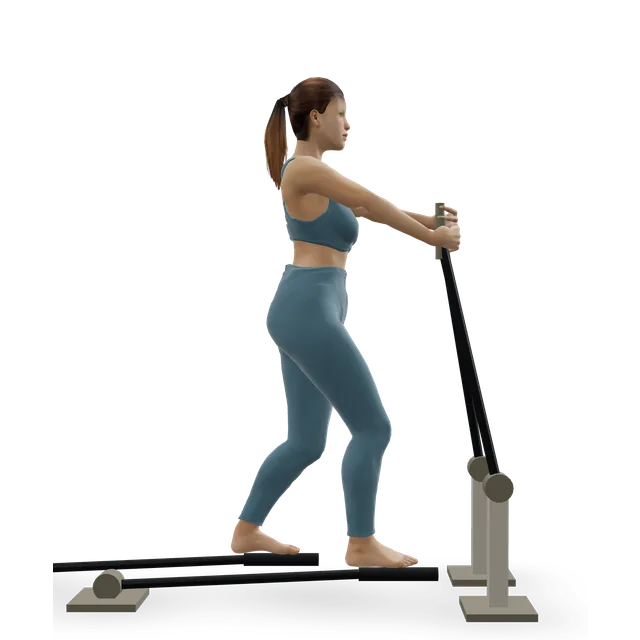
Start at the first stage. Each move opens a full guide with a 3D demo.

Stage 1

Protect it: in the cast, boot or brace, or after the nail (about weeks 0 to 6, as your team allows)

As your team allows. Take weight exactly as your plan says. After a nail, many teams let you walk as tolerated straight away; a fibula broken on its own is usually walked on as comfort allows in a boot. Rest with the leg raised, the ankle higher than the hip and the knee straight, and move your toes if you're in a cast. Ice for 10 to 15 minutes at a time if there's no cast. Do the exercises 3 to 5 times a day, 10 of each, timed with your painkillers (one NHS trust's doses).

Ankle circles demonstrated on the 3D figure3D demoAnkle circlesBeginner · No equipment

Ankle pumps, 10 every hour, then circles · If your ankle is free; in a cast, wiggle your toes instead. An NHS trust's dose

Harder: Ankle CARs

Quad set (static quads) demonstrated on the 3D figure3D demoQuad set (static quads)Beginner · No equipment

Hold 5 to 10 s, 10 times · An NHS trust's dose; another holds 10 s, 7 to 10 times

Harder: Straight-leg raise

Straight-leg raise demonstrated on the 3D figure3D demoStraight-leg raiseBeginner · No equipment

Lock the knee, lift the leg about 10 cm and hold 5 s, 10 times · An NHS trust's dose

Easier: Quad set (static quads) · Harder: Leg extension

Supine heel slide demonstrated on the 3D figure3D demoSupine heel slideBeginner · No equipment

Slide the heel towards you to bend the knee, then straighten, 10 times · Skip it in a long leg cast until your team allows knee bending. An NHS trust's dose

Harder: Hip Windshield Wipers

Seated knee extension (chair) demonstrated on the 3D figure3D demoSeated knee extension (chair)Beginner · A bench or box + Something with weight

Straighten the knee and lower it slowly, 10 times, no added weight · An NHS trust's dose

Easier: Quad set (static quads) · Harder: Leg extension

Side-lying leg raise demonstrated on the 3D figure3D demoSide-lying leg raiseBeginner · No equipment

2 sets of 10 each side · The leg supported if it's in a cast. Editorial dose

Easier: Lateral band walk · Harder: Lateral band walk, band at the feet

Move on when: Your fracture clinic says the bone is healing well enough to wean out of the cast, boot or brace: often from about 6 weeks for a fibula on its own, and after an X-ray review for the shin bone.

Follow along: a timer, a cue and the next move, one step at a time.
Stage 2

Walking again: movement and calf strength (about weeks 6 to 12, as your team allows)

As your team allows. Wean out of the boot and off the crutches, around the house first, walking without a limp. Get the ankle bending again and the calf working; physiotherapy may carry on for several months. Leave out hops and jumps for now. Doses are editorial unless named.

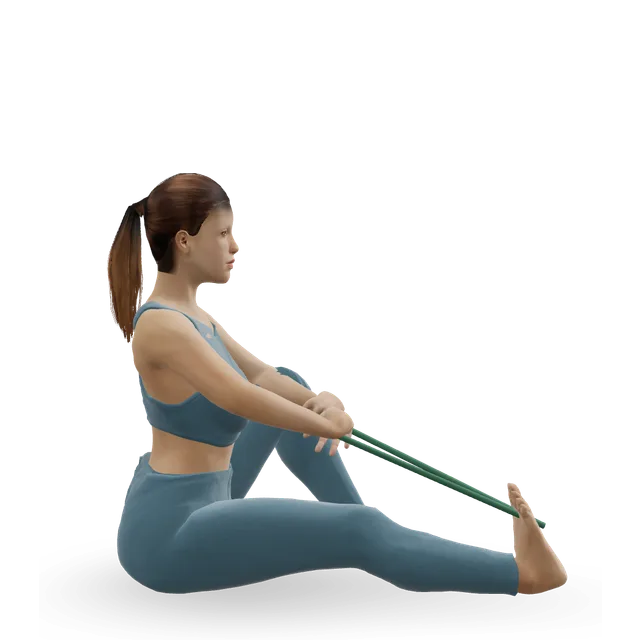
Seated calf stretch with a towel demonstrated on the 3D figure3D demoSeated calf stretch with a towelBeginner · Other / check instructions

A towel round the foot, knee straight: hold 30 s, 3 times · The 30 s hold is an NHS trust's

Harder: Wall calf stretch (gastrocnemius)

Knee-to-wall ankle rock demonstrated on the 3D figure3D demoKnee-to-wall ankle rockBeginner · A wall

10 slow rocks each side · This move's dose, once your team agrees

Seated bent-knee calf raise (soleus raise) demonstrated on the 3D figure3D demoSeated bent-knee calf raise (soleus raise)Beginner · A bench or box

2 to 3 sets of 10 to 15 · Then slow calf raises on both feet

Harder: Slow calf raise

Single-leg stand demonstrated on the 3D figure3D demoSingle-leg standBeginner · A wall

Fingertips on a wall: hold 5 to 10 s, 3 times; build to 30 s · The first dose is the NHS balance exercises'

Easier: Tandem stance and heel-to-toe walk · Harder: Single Leg Reach Matrix

Move on when: You walk without crutches or a limp, heel raises on both feet are comfortable, and you can stand on the injured leg for 30 s (editorial, as in our broken ankle guide).

Follow along: a timer, a cue and the next move, one step at a time.
Stage 3

Strength (about months 3 to 6, as your team allows)

As your team allows. Build single-leg strength 2 to 3 times a week while the shin bone finishes healing, which takes 4 to 6 months; function keeps improving for a year and more. Pad the front of the knee if the nail's entry point is sore when kneeling. These doses are editorial.

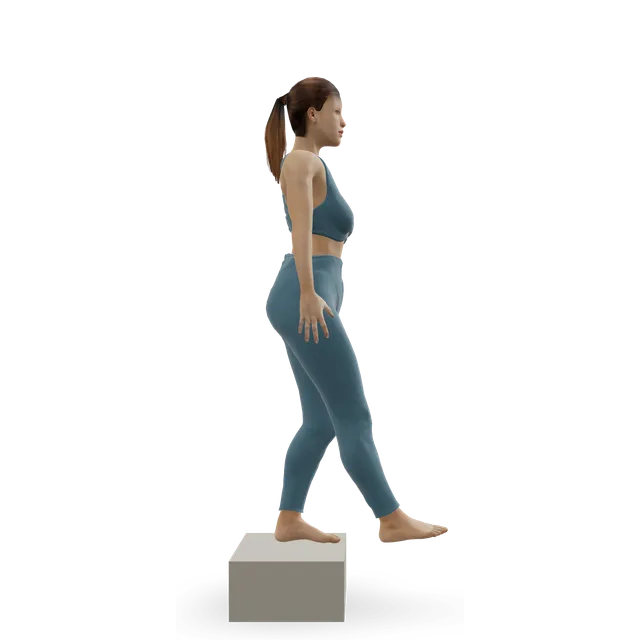
Step-up demonstrated on the 3D figure3D demoStep-upBeginner · A step

3 sets of 8 to 10 each leg

Easier: Low step-up · Harder: Dumbbell step-up

Split squat demonstrated on the 3D figure3D demoSplit squatIntermediate · No equipment

3 sets of 8 each leg · Pad the back knee if the front of it is sore

Easier: Bodyweight squat · Harder: Reverse lunge

Single-leg calf raise from a step demonstrated on the 3D figure3D demoSingle-leg calf raise from a stepIntermediate · A step + A wall

Build towards 20 slow raises each leg · On the floor first

Easier: Slow calf raise · Harder: Single-leg pogo hops

Elliptical trainer demonstrated on the 3D figure3D demoElliptical trainerBeginner · Cardio machine

10 to 20 minutes at a moderate effort · This move's starting dose

Harder: Stair-stepper machine

Move on when: Your team confirms the fracture has healed, you can walk briskly for 30 minutes without pain, and you can do 20 slow single-leg heel raises on the injured side (editorial).

Follow along: a timer, a cue and the next move, one step at a time.
Stage 4

Back to running and sport (often from about 4 to 6 months, once your team clears you)

Only once your team clears you. Bring impact back in small steps, every other day, distance before speed. In pooled studies, people who had surgery returned to sport 12 to 54 weeks after it. Ask your team before contact sport. The hop doses are editorial; the running programme is an NHS sports medicine service's, written for any injury and used here as a guide.

Ankle bounces (mini pogo) demonstrated on the 3D figure3D demoAnkle bounces (mini pogo)Beginner · No equipment

2 to 3 sets of 20, every other day · Bone pain should be gone before you hop

Harder: Pogo hops

Pogo hops demonstrated on the 3D figure3D demoPogo hopsIntermediate · No equipment

3 sets of 20, once ankle bounces are easy

Easier: Ankle bounces (mini pogo) · Harder: Single-leg pogo hops

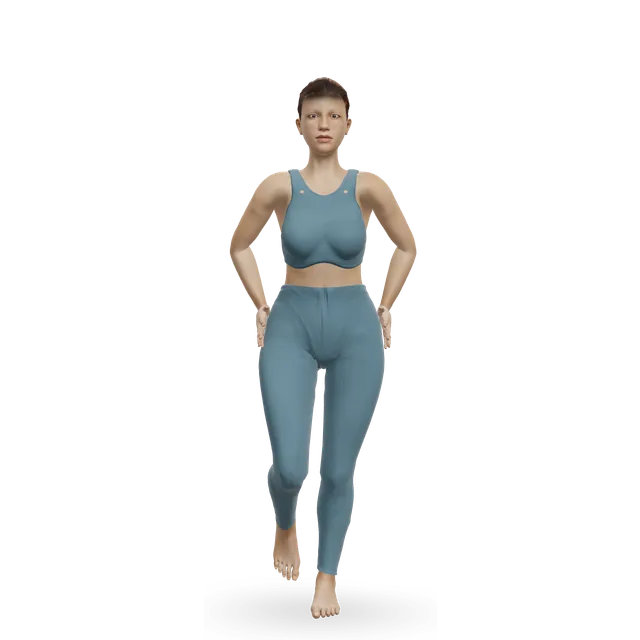
Treadmill jogging demonstrated on the 3D figure3D demoTreadmill joggingIntermediate · Cardio machine

Every other day for 30 minutes: week 1, jog 1 minute and walk 1; week 2, jog 2 and walk 1; week 3, jog 4 and walk 1; week 4, jog 9 and walk 1; week 5, jog 15 and walk 1; week 6, jog 30 minutes · Start once 30 minutes of brisk walking is pain-free. Move up after a pain-free week, step back if it hurts, then add no more than 10% a week. Outdoors on the flat counts

Easier: Treadmill walking · Harder: Sprint intervals

Move on when: You can train fully with no pain at the old break and no extra swelling the next day. Then sport, with your team's agreement for contact sport.

Follow along: a timer, a cue and the next move, one step at a time.

What to change for now

Typical timings, which your team may change

These come from NHS leaflets and professional advice. Your own team's plan comes first.

  • Exercises: from the first day after an operation, 3 to 5 times a day.
  • A fibula on its own: walking in a boot for comfort, a repeat X-ray and review at about 2 weeks, and out of the boot from about 6 weeks.
  • The shin bone: healing over 4 to 6 months, checked with X-rays at clinic visits.
  • Physiotherapy: may carry on for several months after the cast comes off.
  • Driving: not in a cast or walking boot, which may invalidate your insurance. Check with your team and your insurer.
  • Contact sport: ask your team first.

Sources 2, 3, 1, 4, 24

Looking after the cast

Keep a plaster cast dry, don't scratch under it or push anything inside, and don't carry heavy things. Move your toes often and rest with the leg raised, the ankle above the hip. If you use ice where there's no cast, wrap it in a damp cloth and check the skin.

Sources 4, 2

Kneeling after a nail

Pain at the front of the knee is common after a nail, and kneeling is usually the worst position. A cushion or kneeling pad helps, or kneel on the other knee; mention it at follow-up if it limits you. This practical advice is editorial.

Source 15

Positions to swap, and why

Habit or positionWhy it mattersInstead
Ignoring your weight-bearing instructionToo much weight too early, or keeping weight off longer than needed, both have costs; your team decides.Follow your written plan, with crutches as advised.
Resting with a pillow under the kneeThe knee can stiffen bent; NHS advice is the ankle above the hip and the knee straight.Pillows along the calf and heel, knee straight, and thigh tightening.Try: Quad set (static quads)
Letting the ankle, toes and knee stiffenNHS advice is to move your toes in a cast and do ankle pumps every hour.Ankle pumps every hour, and knee bends several times a day.Try: Ankle circles
Getting the cast wet or scratching under itNHS advice for looking after a cast.A cast cover, and tell the clinic if it rubs.
Driving in a cast or walking bootIt may invalidate your insurance.Wait until your team and your insurer agree.
Kneeling straight onto a sore nail entry pointKneeling is the most painful position after a nail.A kneeling pad, or kneel on the other knee.
Buying an ultrasound bone stimulatorIn a trial of 501 people it didn't speed healing or recovery.Put the effort into walking and the exercises.Try: Treadmill walking
Pogo hops, skipping or running before you're clearedImpact needs building up, and the old break should be pain-free first.The walk-jog programme, every other day, once your team agrees.Try: Treadmill jogging
SmokingIt slows fracture healing and in extreme cases can stop it.NHS stop-smoking support.

Routines to follow

More moves for this area

Questions people ask

How long does a broken leg take to heal?

The NHS says 6 to 12 weeks, sometimes longer. A break along the shin bone usually takes 4 to 6 months to heal completely, and longer if it was open, in several pieces, or you smoke. A fibula broken on its own takes about 6 weeks.

Can I walk on a broken leg?

Only as your fracture clinic says, which will be written as non-weight-bearing, limited or unrestricted. After a rod in the shin bone, many people are allowed to walk on it as tolerated straight away: in a trial, this healed as well as 6 weeks without weight.

What exercises can I do in a cast or after surgery?

Move your toes in a cast. After a nail, NHS physiotherapists give ankle pumps every hour, thigh tightening, straight-leg raises and knee bends, 3 to 5 times a day. Rest with the leg raised and the knee straight.

What is a rod in the leg?

An intramedullary nail is a titanium rod passed down the centre of the shin bone and fixed with screws at both ends, the commonest operation for a broken shin. It holds the bone in line while it heals and usually lets you start moving early.

Why does my knee hurt after a tibial nail?

Pain at the front of the knee is common, in about 10% to 38% of people depending on where the nail went in, but it's usually mild and worst when kneeling. Mention it at follow-up if it limits you.

Is a broken fibula serious?

A break of the fibula alone, away from the ankle, usually heals in about 6 weeks and is walked on as comfort allows in a boot. A fibula broken with the shin bone, or at the ankle, is a different injury; our broken ankle guide covers the ankle.

What is compartment syndrome?

A dangerous build-up of pressure in the leg muscles after a fracture or operation: pain far worse than expected, a tight calf, pain when you move your foot or toes, and tingling. It is an emergency: go to A&E, or contact the hospital at once if you have a cast.

When can I run again?

Once your team confirms the bone has healed and you can walk briskly for 30 minutes without pain, start a walk-jog programme every other day. After that, build up by no more than about 10% a week.

When can I play sport again?

In pooled studies, 92% of people who had surgery returned to sport, at 12 to 54 weeks, though the studies were of low quality. Ask your team before contact sport.

Will my leg ever feel normal?

Function keeps improving for 1 to 5 years, and many people end up functioning as well as others their age. Some knee pain, ankle stiffness or swelling can last for years.

Do bone stimulators help?

Ultrasound stimulators didn't speed healing or recovery in a trial of 501 people. Stopping smoking does help healing, and the walking and exercise plan rebuilds the strength the bone can't.

My toddler won't walk on one leg: could it be a fracture?

It could be: a toddler's fracture of the shin often follows a minor fall or twist, and may not show on the first X-ray. It heals well, sometimes with a boot or cast for about 2 weeks. Get it checked the same day.

Other pain guides

Sources

  1. AAOS OrthoInfo · Tibial (shinbone) shaft fractures
  2. King's College Hospital NHS · Intramedullary nail surgery for tibia (shin bone) fractures (physiotherapy leaflet, 2024)
  3. East Sussex Healthcare NHS · Midshaft fibula fracture (fracture care team shared care plan, 2025)
  4. NHS · Broken leg
  5. British Orthopaedic Association · BOAST: mobilisation and weight-bearing after orthopaedic surgery or musculoskeletal injury (standard, 2024)
  6. Gross 2016 · Walking straight away or after 6 weeks once a shin fracture is nailed (RCT of 88, J Orthop Trauma)
  7. Moon 2026 · Time to weight-bearing and healing after nailing of a shin fracture (cohort of 433, Injury)
  8. Ko 2017 · Recovery over 5 years after nailing of a shin fracture (cohort of 132, J Orthop Trauma)
  9. Larsen 2021 · Function and quality of life 5 years after nailing of a shin fracture (cohort, Arch Orthop Trauma Surg)
  10. Lefaivre 2008 · Long-term follow-up of shin fractures treated with a nail (cohort, J Orthop Trauma)
  11. NHS Fife · Toddler's fracture: children and young people (patient advice, 2022)
  12. Bhanushali 2022 · Early or delayed weight-bearing after nailing of a shin fracture (meta-analysis of 8 studies, Eur J Trauma Emerg Surg)
  13. Uemi 2021 · Early or delayed weight-bearing after nailing of a shin fracture (matched cohort of 150, Injury)
  14. TRUST Investigators 2016 · Low-intensity pulsed ultrasound for nailed shin fractures (RCT of 501, BMJ)
  15. Leliveld 2021 · Knee pain and function after tibial nailing, by technique (systematic review of 67 studies, Eur J Trauma Emerg Surg)
  16. Robertson 2016 · Return to sport after shin fractures (systematic review of 16 studies, Sports Health)
  17. NHS · Balance exercises
  18. Oxford University Hospitals NHS · Return to Running Programme (OxSport patient leaflet, 2024)
  19. British Orthopaedic Association · BOAST: diagnosis and management of compartment syndrome of the limbs (standard, updated 2025)
  20. AAOS OrthoInfo · Compartment syndrome
  21. Morello 2023 · Risk factors for acute compartment syndrome in shin fractures (systematic review, EFORT Open Rev)
  22. NICE NG89 · Venous thromboembolism in over 16s: reducing the risk of hospital-acquired deep vein thrombosis or pulmonary embolism (2018, updated 2019)
  23. NHS · DVT (deep vein thrombosis)
  24. Cambridge University Hospitals NHS · Metatarsal fractures and stress fractures (fracture clinic leaflet, 2024)

Exercise education, not a diagnosis or treatment plan. It is written from the guidelines and studies listed above; review by a clinician is pending. If your pain follows an injury, is severe, is getting worse, or comes with any warning sign listed on this page, get it assessed. Health disclaimer.