Pilates
Short-block Pilates for ADHD: a 20-minute class with active bursts, coordination, balance and a calm finish
A 20-minute class for teenagers and adults with ADHD, in seven short blocks that run in the same order every time. It starts and breaks up with low-impact cardio bursts, because steady aerobic exercise has the most evidence for ADHD symptoms, then mixes Pilates control, moves that use opposite arms and legs, and balance, and ends calmly. The one Pilates trial in ADHD, in adult women, used 45-minute sessions 3 times a week; this class is shorter, and its structure is ours. It sits beside your ADHD treatment, never in place of it. Unlike our yoga for ADHD practice for children, it's Pilates-based and has active bursts.
1. Move
- Standing march1 minBeginner · Hip flexors, Abs, Glutes · 3D demoSwing your arms; get your heart goingEasier: Seated marchHarder: Standing band hip flexion
- Step jack (low-impact jumping jack)2 × 30 s, marching 15 s betweenBeginner · Hip abductors, Shoulders, Calves · 3D demoStep one foot out and back in as your arms go up and downEasier: Seated marchHarder: Jumping jack


2. Breathe and count
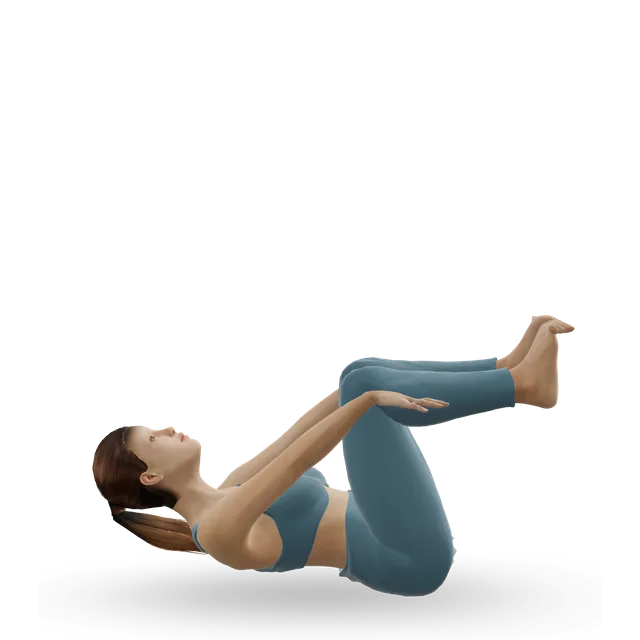
- Hundred (Pilates)50 beatsIntermediate · Abs, Hip flexors, Shoulders · 3D demoHead down if your neck tires; count the beats out loudEasier: Wall hundred (wall Pilates)Harder: Boomerang (Pilates)


3. Coordinate
- Dead bug6 each sideBeginner · Abs, Hip flexors · 3D demoOpposite arm and leg reach away; lower back stays downEasier: Dead bug heel tapsHarder: Forearm plank
- Single-leg stretch (Pilates one leg stretch)6 each sideIntermediate · Abs, Hip flexors, Neck · 3D demoSwitch legs to a steady count; head down if your neck tiresEasier: Chest lift (Pilates curl-up)Harder: Single straight-leg stretch (Pilates scissors)
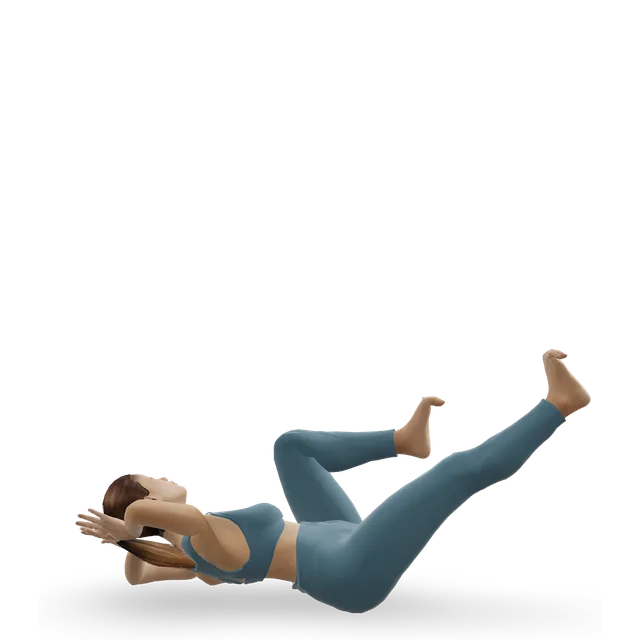
- Criss-cross (Pilates)6 each side, slowlyIntermediate · Abs, Hip flexors, Neck · 3D demoTurn from your ribs, elbows wideEasier: Single-leg stretch (Pilates one leg stretch)Harder: Corkscrew (Pilates)


4. Move again
- Beginner · Hip abductors, Shoulders, Calves · 3D demoFaster if you like; keep it low-impactEasier: Seated marchHarder: Jumping jack
5. Back and sides
- Bird dog6 each sideBeginner · Back, Abs, Glutes · 3D demoOn hands and knees, reach the opposite arm and leg long; hips levelEasier: Bird dog, one limb at a timeHarder: Bear crawl
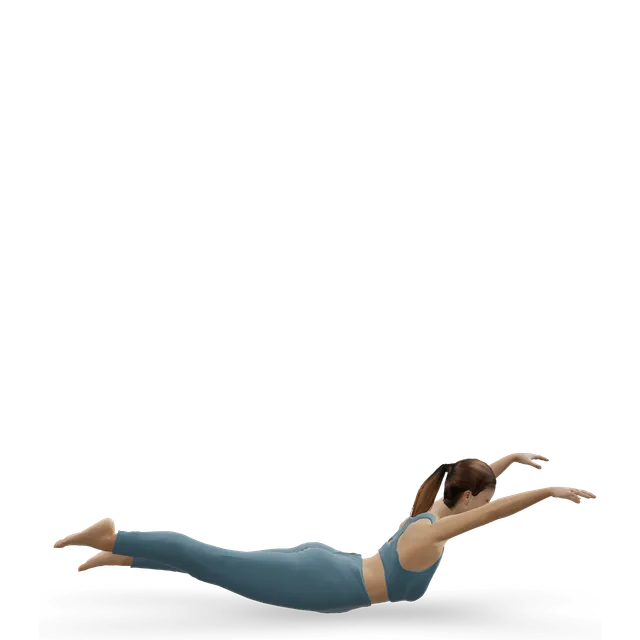
- Swimming (Pilates)2 sets of 20 sIntermediate · Back, Glutes, Shoulders · 3D demoLying face down, small quick flutters of opposite arms and legsEasier: Mermaid (Pilates seated side bend)Harder: Leg pull back (Pilates leg pull up)
- Side kick (Pilates side kick series)8 each sideBeginner · Hip flexors, Glutes, Hip abductors · 3D demoHead on your arm; swing the top leg forward and back, pelvis stillHarder: Side-lying leg circles (Pilates side kick series)


6. Balance
- Single-leg stand2 × 20 to 30 s each legBeginner · Hip abductors, Calves, Glutes · 3D demoA hand near the wall; eyes on one spotEasier: Tandem stance and heel-to-toe walkHarder: Single-leg reach matrix
- Tree pose (Vrksasana)20 s each sideBeginner · Glutes, Hip abductors, Calves · 3D demoFoot on your calf or thigh, not your kneeEasier: Mountain pose (Tadasana)Harder: Standing hand-to-big-toe pose (Utthita Hasta Padangusthasana)


7. Calm
- Beginner · 3D demoBreathe in for about 4, out for about 6Easier: Breath reachHarder: Crocodile breathing (prone diaphragmatic breathing)

Tips
- Three times a week, plus aerobic activity such as walking, cycling, swimming or sport on most days (our suggestion). To build towards the trial's 45-minute sessions, do blocks 3 to 6 twice through.
- Use a timer or music for each block, and keep the order the same so you always know what's next.
- For children, an adult joins in; our Pilates for kids class and yoga for ADHD practice are written for younger children.
- On stimulant medicine, eat beforehand, keep water to hand and use a normal-temperature room. Keep taking any ADHD medicine as prescribed, and call 999 if someone faints or has chest pain during exercise.
- If coordination is hard, start the bird dog one limb at a time, and keep a hand on the wall for balance.
The doses are suggested starting points, not a prescription. Choose a range you can control and stop for sharp or increasing pain, numbness or tingling. Get individual advice after an injury or surgery, or if you are pregnant or managing a health condition.
Guides that recommend it
Find more moves like these
More pilates



Beginner Pilates workout
A 20-minute mat Pilates workout for complete beginners. It covers breathing, spine position and the foundation moves, each with an easier option.
20 minBeginner13 movesNo equipment
10-minute Pilates abs
Ten minutes of the classic Pilates abdominal series: the hundred, the roll-up and the series of five, with a plank to finish.
10 minIntermediate11 movesNo equipment
Full-body mat Pilates workout
A 30-minute intermediate mat Pilates class that follows the classical order, from the hundred to the push-up, with prep versions of the hardest moves.
30 minIntermediate22 movesNo equipmentQuestions people ask
How long does the short-block pilates for adhd: a 20-minute class with active bursts, coordination, balance and a calm finish take?
About 20 minutes, including any warm-up and cool-down listed. Shorten it by doing fewer rounds; lengthen it by adding one.
What equipment do I need?
You need: A wall. Each move links to its guide, where you can find an alternative if you are missing something.
Is it suitable for beginners?
It is written for beginners. 11 of its 13 moves have an easier option listed beside them if you need one.
How do I make it easier or harder?
Use the easier or harder option listed under each move, change the number of rounds, or adjust the rest. Progress one change at a time.