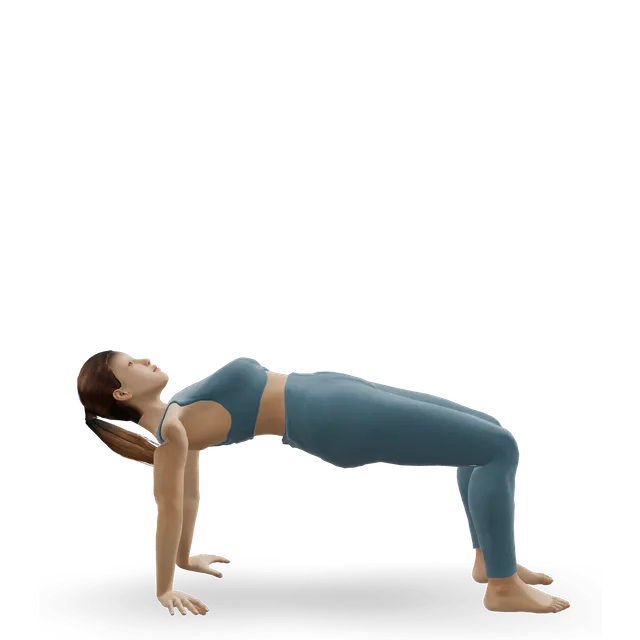
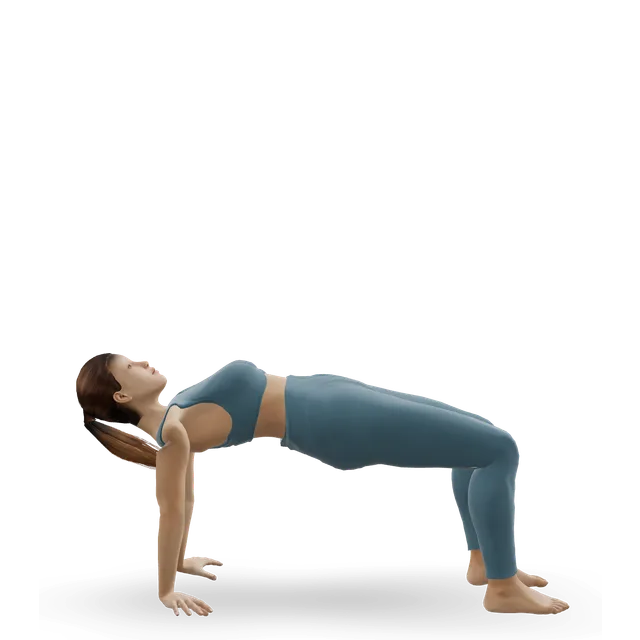
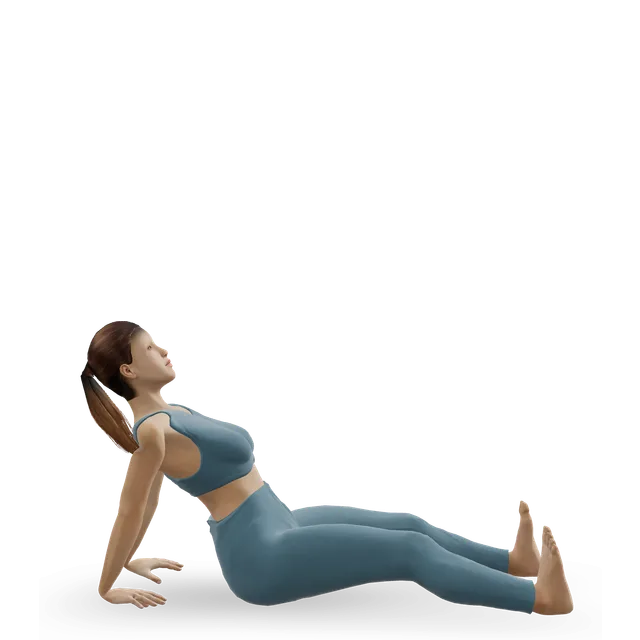
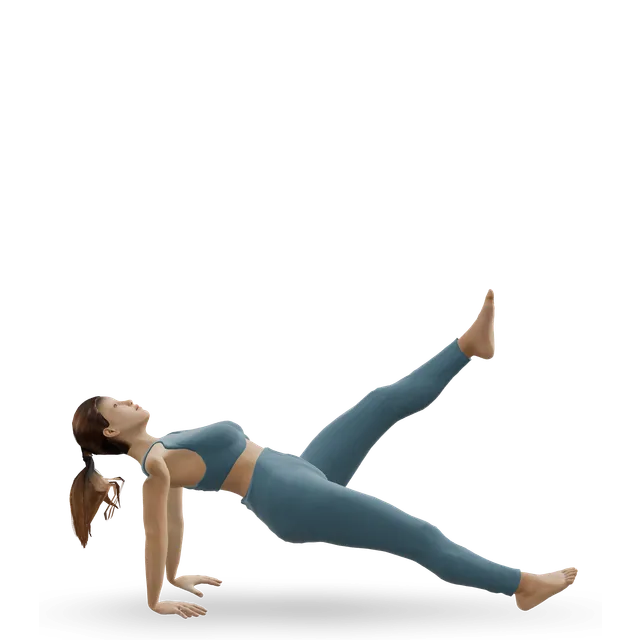
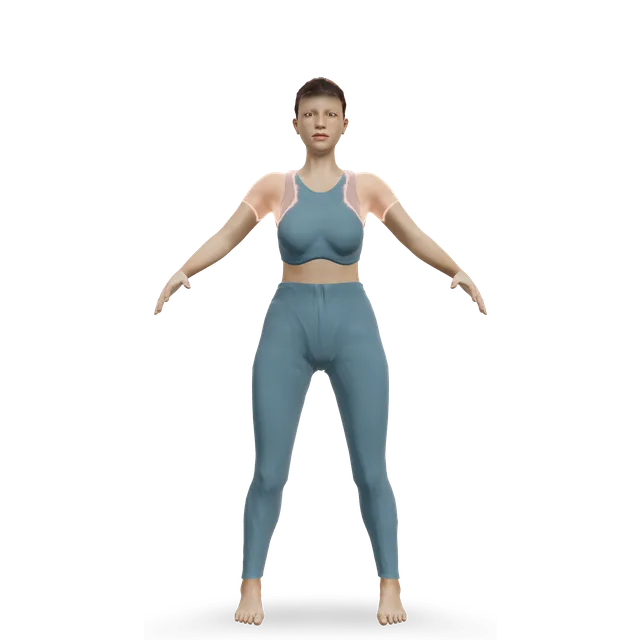
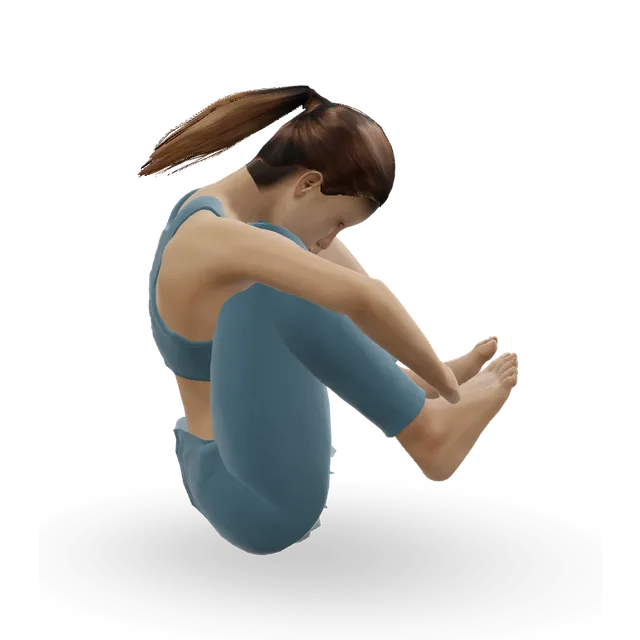
This page: hands and feet, face up
Sit on the floor, put your hands behind you, lift your hips and walk on your hands and feet with your tummy facing the ceiling. It's the crab walk of PE lessons and army drill books.
Training guide
To do a crab walk, sit with your knees bent and your hands flat on the floor behind you, lift your hips, then walk on your hands and feet, moving one hand and the opposite foot together. Build a 10-second hold first, then do 4 crawls of 6 to 8 metres with 45 seconds' rest. (Looking for the banded side step people also call a crab walk? That's in our lateral band walk guide.)
Crab walks work your arms, the backs of your shoulders and your hips, though no study has measured the crab walk itself, so this guide says where it borrows evidence from similar moves. They're not just for kids: armies, police and physiotherapists use them with adults.
This guide shows the crab walk on the 3D figure, how to build up from a reverse tabletop, what to do about wrists and shoulders, how far to go, and a crawling workout to follow.
Sit on the floor, put your hands behind you, lift your hips and walk on your hands and feet with your tummy facing the ceiling. It's the crab walk of PE lessons and army drill books.
Many trials, rehab plans and exercise libraries use "crab walk" for stepping sideways in a half squat with a band around your legs. That's a hip exercise for standing work, and it's in our lateral band walk guide.
The Pilates "Crab" is a rolling mat exercise, not a walk. It has its own move page in our Pilates guides.
Knees bent, feet flat about hip-width apart, hands flat behind you close to your body, fingers towards your heels or turned out. Press your hips up, set your shoulders down away from your ears, then step one hand and the opposite foot together, keeping your hips up and level.
We found no study of the crab walk itself. In the nearest studies, a straight-leg reverse plank worked the back muscles at about 50% of their maximum, a held reverse tabletop asked little of the shoulder blade muscles, and pooled hands-and-feet crawling moves worked the shoulders, the large back muscles and the hamstrings harder than a push-up or squat. Expect your triceps, the backs of your shoulders, your glutes and your hamstrings to work (our reading).
Hold a reverse tabletop for about 10 seconds with your hips up and shoulders set before you start travelling, as a coaching source and our move page ask.
Source 6
Wrists often complain at first, because they bend back under part of your weight: turn your fingers out, raise the heels of your hands, use handles or go onto your forearms. The crab also takes your arms behind you, so with a shoulder that has dislocated or feels loose, shorten the range or leave it out.
A 1946 US Army manual, a US Marine Corps warm-up and a police warm-up all use crab walks with adults. Eight weeks of crawling classes improved a movement screen and hip and shoulder range in 42 young adults, though not upper-body strength or balance.
4 crawls of 6 to 8 metres, resting 45 seconds between (the move page's editorial starting point), 2 or 3 times a week: within the distances an old army manual and a youth coach use. For children, 2 crawls of about 5 metres each is plenty (our yoga for kids page, editorial).
Sitting with your knees bent and feet flat, hands on the floor behind you, you lift your hips into a table and walk on your hands and feet: feet first (forwards), hands first (backwards) or sideways. Our move page moves the opposite hand and foot together, with the hips up throughout.
Held still with your knees bent, it's a reverse tabletop. With your legs straight, it's a reverse plank (yoga's upward plank pose). Both have forearm versions that keep weight off the wrists.
No study has measured the crab walk itself, so this is our reading of the position and of related studies. Your triceps keep your elbows straight; the backs of your shoulders, the large back muscles (the lats) and the muscles between your shoulder blades hold your arms behind you; your glutes and hamstrings hold your hips up; and your back muscles hold your trunk (about 50% of their maximum in a reverse plank). A held tabletop asks little of the muscles that steady the shoulder blades.
Your shoulders are taken behind your body (extension) and turned slightly in when your fingers point forward, your wrists are bent back under part of your weight, and your hips straighten against gravity.
A reverse tabletop held for about 10 seconds with your hips up and shoulders set, which is our move page's prerequisite, and wrists that are happy taking weight with the hand flat, or one of the wrist-friendly hand positions below.
Source 6
If your shoulders don't like going behind you, keep your hands closer to your hips and your hips a little lower; a coaching source calls reaching the hands too far back the most common mistake. Wrists vary a lot: chronic wrist pain was common in adults who train handstands, a far heavier load, so start short if yours already ache. Heavier bodies put more load through the wrists and shoulders, so start with holds and short walks (editorial).
In pregnancy, we found no study. Skip it if your bump or the front of your belly feels strained, and stop if you feel uncomfortable, as the NHS advises for any exercise. We found no study of crab walks bringing on labour.
From our move page, GMB's crab walk guide, the Prehab Guys' exercise library, the US Marine Corps warm-up and Ireland's primary PE cards, in our editorial wording.
Loading the 3D figure…
The movement on the figure: Crab walk
We searched for studies of muscle activity, joint load or training effects in the crab walk and found none. The notes below borrow from similar positions, and we say which.
In 9 trained men holding a reverse plank on their hands, the back extensor muscles worked at about 50% of their maximum, against under 10% in a face-down plank, and the side abdominals at about 5%. In 20 students, face-up planks worked the low back at 11 to 20% depending on the version. A crab walk with bent knees is probably lighter, but nobody has measured it.
In 20 women with yoga experience, a static reverse tabletop gave "low activity (less than or equal to 15.7% MVIC) of the scapular stabilizers" (MVIC: the muscle's maximum voluntary contraction). We read only the abstract.
Source 10
In 20 adults, eight hands-and-feet moves from a commercial crawling programme, pooled and not named, worked the middle shoulder at about 67% of its maximum, the lats at about 63% and the hamstrings at about 42%, against about 18% in a squat; a push-up worked the triceps and chest harder. We don't know whether a crab walk was one of the eight.
Source 11
In 18 students, shoulder muscle activity rose almost in step with the share of body weight on the arms (correlation 0.97) across weight-bearing positions. So shifting your weight back onto your feet makes a crab easier on the shoulders (our reading).
Source 23
Muscle activity measured over a few seconds shows effort, not what a muscle will build over weeks. Treat all the numbers above as a rough guide to which muscles are working.
Source 24
In a trial of 42 young adults, 60-minute crawling classes twice a week for 8 weeks improved a movement screen score (by 1.62 points, against 0.33 without the classes) and hip and shoulder range. They didn't improve balance, upper-body strength or push-up endurance. The classes used many crawls, not crab walks alone.
Source 15
In 30 adults, a beginner crawling class that included a 60-second crab hold, crab leg lifts and crab reaches was moderate-intensity activity, about 5.4 METs (MET, the metabolic equivalent: how many times your resting energy use), and 4.0 METs during the hold.
Source 25
In 22 students, 4 weeks of crawling training improved a test of mental flexibility and the sense of where the shoulder is, at one angle only.
Source 26
In 40 students with forward shoulders, one session of reverse planks (5 holds of 30 seconds) changed shoulder blade muscle thickness and the shoulder's angle for a short time. There was no comparison exercise and no follow-up, so nothing shows crab work changes posture.
Source 27
Glute bridge, 10 slow reps (our beginner workouts, editorial). Reverse tabletop hold with bent knees: no separate 3D demo; it's the crab walk's start position, or the upward plank pose done with bent knees, which that page says to build up in first. Build to 10 seconds, then 2 or 3 holds of 10 to 30 seconds (editorial). Crab walk, 4 crawls of 6 to 8 metres resting 45 seconds (the move page's editorial starting point); backwards and sideways crab walks use the same demo. Crab reach, 5 reaches each side, alternating, 2 rounds; upward plank pose, 5 to 10 slow breaths, 2 or 3 times; leg pull back, 3 each side (the move pages' doses).
No study has measured the wrist in a crab, but push-up studies have. In 8 donated wrists, a push-up with the wrist bent back raised peak pressure on the thumb side of the wrist joint; a ligament between two wrist bones carried 45 N bent back against 25 N straight; load through the thumb side rose from 52% to 62%; and in 14 people the forces spread further towards the back and little-finger side of a bent-back wrist.
"The shoulder is exposed to more load when the push-up is performed on a neutral wrist", one study found, and with an existing wrist ligament tear the bent-back position "may be less detrimental". So there's no single best hand position: use the one your wrist and shoulder tolerate.
Turn your fingers out to the sides; put a wedge or a rolled towel under the heels of your hands; hold handles (or kettlebell handles); or do the forearm reverse plank, which takes your wrists out of it. These come from coaching and exercise libraries, not trials (editorial).
Some discomfort during these exercises is fine and doesn't mean you are doing damage. Keep it to about 5 out of 10 or less. It should settle within half an hour or so, and your hand should be no worse the next morning. If it is, do fewer, smaller or lighter next time, not nothing. That's our wrist pain guides' rule.
In 25 people with persistent pain on the back of the wrist when leaning on it with the wrist bent back, 21 (84%) had a finding on MRI, most often a small hidden cyst (ganglion). Pain that keeps coming back deserves a check rather than more crab walks.
Source 33
Bending the wrist back raises pressure in the carpal tunnel: in 37 healthy people, a quarter reached a raised pressure by about 33 degrees. If hands-flat moves bring on tingling in your fingers, use fists, handles or your forearms.
Stop if your fingers tingle or go numb: that's a nerve, not a tired muscle, as our grip strength guide says.
Source 34
The deepest version of this position, the bench dip, took the shoulder to 101% of its own range in 13 experienced men, and the authors say it "may increase the risk of injury to the anterior shoulder capsule". Taking the arm behind you with it turned in is held back by the ligament at the front of the shoulder, and unstable shoulders go further. In a survey of 1,387 gym-goers, dips were among the moves most often linked to pain. The crab sits higher than a dip, so it probably takes the shoulder less far (our reading; not measured).
With a shoulder that has dislocated or feels loose, shorten the range or leave crab walks out, as our move page says. After a dislocation, follow your physiotherapist's plan for loading the arm again.
Source 37
Keep shoulder pain to about 5 out of 10 or less during the exercise, back to its usual level by your next session, as our shoulder guides advise. A sharp pinch means lower, lighter or stop.
Build to about 10 seconds or more with your hips up and shoulders set before travelling, as a coaching source advises. Then 2 or 3 holds of 10 to 30 seconds (our editorial starting point; a youth coach uses 10 seconds on, 10 off, then 30-second holds, and an adult class used one 60-second hold).
4 crawls of 6 to 8 metres, resting 45 seconds between (the move page's editorial starting point). That sits within the 1946 US Army manual's 20 to 30 seconds per exercise and 40-foot (about 12 metre) relay, and a youth coach's 5 to 10 yards (about 4.5 to 9 metres).
Across the room and back once or twice, as our martial arts and parkour warm-ups use it. A police warm-up used 1 to 2 minutes of activation moves, the crab walk among them.
Source 14
2 crawls of about 5 metres each is plenty (our yoga for kids page, editorial), or "across the room and back", as our animal moves workout puts it.
2 or 3 times a week as part of a warm-up or a conditioning session (our editorial starting point; the crawling class trial met twice a week).
Source 15
Longer distances, sideways crab walks, lifting one foot for a few steps, then the crab reach (the move page: 5 reaches each side, 2 rounds), the straight-leg reverse plank and the leg pull back (editorial order).
The 1946 US Army manual: "CRAB WALK, FORWARD ... walk in direction of feet", and backwards, each exercise done "for a period of 20 to 30 seconds", plus a crab walk relay, because "a 'crab walk' is hard to perform incorrectly". A 2017 US Marine Corps warm-up video ("push the hips towards the sky"); a Marine combat conditioning programme with bear crawls and crab walks; a police students' warm-up; and the rehab of a 17-year-old cheerleader's elbow ligament, with crab walks from week 5. This is practice and one case report, not trials of the crab walk.
Crab walk stations (3 rounds of 35 seconds) in an 8-week preschool programme of 51 children; 2 rounds of 30 seconds in a warm-up for children aged 10 to 11; one of seven core exercises in a trial of 52 children with cerebral palsy; and an animal-movement programme that improved motor ability in 511 children aged 4 to 6. No trial picks out the crab walk's own effect. Ireland's primary PE cards ask pupils to "crab walk very slowly" and keep "hips as high as possible".
"The most common mistake I see is reaching the hands too far behind you", says a coaching source. Keep your hands and feet close to your body.
Source 6
The Marine Corps warm-up lists "Dropping the hips to the deck" as a common mistake. Squeeze your glutes and keep the table.
Source 8
"Pull your shoulders down and away from your ears."
Source 6
"Keep your hips level and stable. Do not let them rock excessively." Small steps help.
Source 7
Keep your chin gently tucked and your neck long, as our upward plank pose page cues it (editorial).
Slow and controlled beats fast and sloppy: Ireland's PE cards say "very slowly".
Source 2
Wrist and forearm flow, 60 seconds (our push-up challenge workout), and quadruped wrist rocks, 10 rocks (our parkour warm-up and handstand progression), before hands-down work. The kneeling wrist flexor stretch, fingers back, held 15 to 30 seconds 2 to 4 times, and shoulder CARs, 3 slow circles each way with each arm (the move pages' doses). The bear crawl, its face-down partner, 4 crawls of 8 to 10 metres (the move page's dose). Bent-knee bench dips, 3 sets of 8 to 12, to a right angle at the elbow at most (our dip progression). Single-leg glute bridges, 2 to 3 sets of 8 to 12 each side (our glute challenge workout A). The forearm plank, 2 holds of 20 to 30 seconds (our push-up challenge workout), as a wrist-free trunk hold.
 3D demoWrist & forearm flowBeginner · No equipment
 3D demoQuadruped wrist rocksBeginner · No equipment
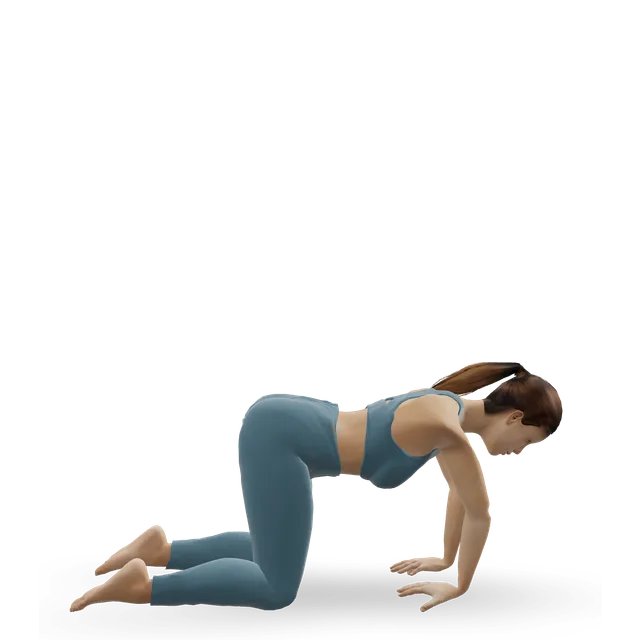 3D demoKneeling wrist flexor stretch, fingers backBeginner · No equipment
 3D demoShoulder CARs (controlled articular rotations)Beginner · No equipment
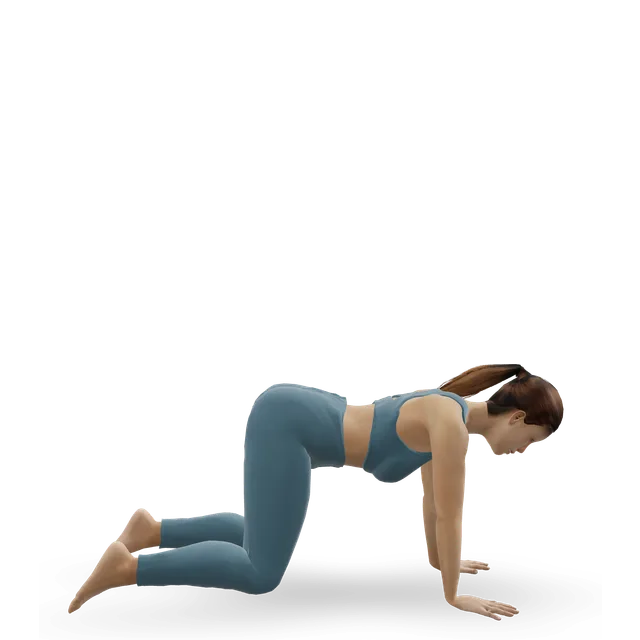 3D demoBear crawlIntermediate · No equipment
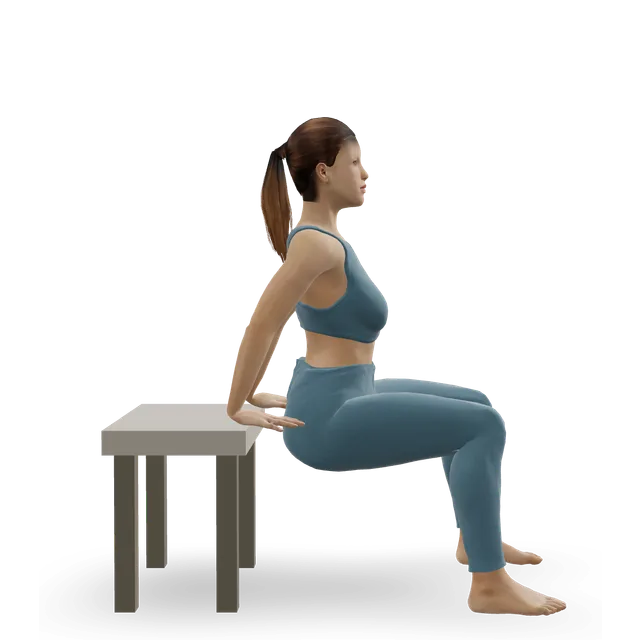 3D demoBent-knee bench dipBeginner · A bench or box
 3D demoSingle-leg glute bridgeIntermediate · No equipment
 3D demoForearm plankIntermediate · No equipment
The crawling workout is an 18-minute adult session of bear crawls, crab walks and inchworms, with wrist preparation first and holds before travelling. Its order and doses are editorial; no trial has tested it. The others use crab walks across the room and back, as a warm-up or for children.
A 20-minute crawling workout for adults: wrist and shoulder prep, bear and crab holds, then bear crawls, crab walks and inchworms. No equipment needed.
20 minBeginner12 movesA wallA 15-minute martial arts warm-up: easy running, forward rolls and breakfall practice, leg swings, balance and hops, crawls, squats, side planks and bridges.
15 minBeginner17 movesCardio machine, A wallA 15-minute warm-up for parkour: a jog and skips, ankle and hip mobility, wrist work, bear and crab crawls, bounces, landings, rolls and stuck broad jumps.
15 minBeginner15 movesCardio machine, A wallFifteen minutes of animal moves, jumps and balance games for children, building the muscle- and bone-strengthening activity they need, with nothing to buy.
15 minBeginner16 movesA wallA 20-minute Pilates class for children: star jumps, the hundred, swimming, animal crawls and balance games, finishing with slow, calm breathing.
20 minBeginner14 movesNo equipmentTwenty minutes of animal poses, star jumps, crawls, balloon breaths and a short relaxation for children, with no headstands or shoulder stands.
20 minBeginner17 movesNo equipmentUse fists, handles, a wedge or the forearm reverse plank, keep bouts short, and stay within the wrist rule above.
"With shoulder instability, wrist arthritis or a history of dislocation, shorten the range or skip it", as our move page says. With pain at the front of the shoulder, keep your hands close to your hips or leave it out.
After a recent shoulder dislocation, or shoulder or elbow surgery, follow your surgical team's limits first.
Follow your team's limits on taking weight through your arms and chest before you try crab walks.
We found no study. Skip it if your bump feels strained, and check with your midwife before trying new exercises late in pregnancy.
Source 21
Clear the space, use a soft floor and stay with younger children, as our animal moves workout says.
If you get chest pain or pressure, feel faint or dizzy, are unusually breathless, or your heart races or beats irregularly during exercise, as our plans advise. The American Heart Association says these need immediate medical evaluation.
Source 44
For chest pain that comes on suddenly and doesn't go away, feels tight or like squeezing, spreads to your arms, neck, jaw, stomach or back, or comes with sweating, feeling sick, light-headedness or breathlessness; arm pain that comes on suddenly with pressure, heaviness or squeezing across your chest; severe difficulty breathing, or a chest that feels tight or heavy; someone who faints while exercising; palpitations that don't go away, or come with chest pain, shortness of breath or feeling faint; or a headache that starts suddenly and is extremely painful, especially while lifting or straining. The NHS says a bleed on the brain may be more likely when lifting something heavy. Don't drive yourself to A&E.
Ask for an urgent GP appointment or get help from NHS 111 for a headache that's triggered or made worse by coughing, sneezing, bending down or exercising.
Source 51
Call 999 or go to A&E: after a fall or injury, your shoulder looks out of place or has changed shape, you cannot move your arm, or your shoulder is painful, bruised or swollen. Do not drive yourself, and do not try to put it back in yourself.
Source 37
Call 999 or go to A&E if you heard a crack, the joint or limb has changed shape or points at an odd angle, it's numb or tingling, or the skin looks blue or grey or feels cold. Get help from NHS 111 (in the US, urgent care) if it's very painful, very swollen or bruised, very stiff, or you can't put weight on it or walk more than a few steps.
Source 53
For severe wrist pain; feeling faint, dizzy or sick from the pain; a snap, grinding or popping noise at the time of the injury; being unable to move your wrist or hold things; a wrist that has changed shape or colour; a very painful, hot or red lump; or lost feeling in your hand. In the US, use urgent care.
Source 54
If wrist pain is no better after 2 weeks of home treatment, or comes with tingling, diabetes, or a hot, swollen, stiff wrist.
Source 54
Ask for an urgent GP appointment or get help from NHS 111 for sudden or very bad shoulder pain, an arm you can't move, a shoulder that has changed shape or is badly swollen, pins and needles that don't go away, no feeling in your arm or shoulder, an arm or shoulder that's hot or cold to touch, pain after an injury or a fall, severe pain in both shoulders, or feeling feverish or unwell. Go to A&E if, after an injury, you can't move your arm or your shoulder looks out of place or has changed shape. See a GP if shoulder pain is getting worse or hasn't improved after 2 weeks.
Source 55
Muscle soreness for a day or two after a new or harder session is common and fades. Sharp pain, or pain that builds during a set or lingers into the next day, isn't: swap to an easier version, and see a clinician if it persists, as our plans advise. The NHS says to stop exercising straight away if you feel any pain or become unwell, and to get help from 111 if symptoms worry you or don't go away.
Source 56
Speak to your GP first if you haven't exercised for some time or have medical conditions or concerns, as the NHS advises. Get advice before hard or straining work if your blood pressure is uncontrolled (140/90 or higher at a clinic, or 135/85 at home), or you have heart disease or chest pain when you're active, a pacemaker or defibrillator, diabetic eye disease, glaucoma, a hernia, recent eye or tummy surgery, or you're pregnant, as our breathing guide lists.
With controlled high blood pressure, the American Heart Association considers low- to moderate-intensity strength training with proper breathing safe. Breathe out as you lift, as our breathing guide advises.
With a pacemaker or defibrillator, the American Heart Association asks you to check with your doctor before upper-body strength training, because repeated arm movements can damage or dislodge the leads.
The US Army used them with adults in 1946, the Marine Corps and police use them in warm-ups, and physiotherapists use them to rebuild weight-bearing through the arms. Children love them too; that doesn't make them easy.
Nobody has measured the wrist in a crab. A bent-back wrist under load does concentrate pressure in part of the joint, but a straight wrist moves load to the shoulder, and coaches expect wrists to complain at first and then settle. Short bouts, the wrist options and the wrist rule work for most people (editorial); pain on the back of the wrist that keeps coming back deserves a check.
One session of reverse planks changed shoulder angle and muscle thickness for a short time, with no comparison group. Nothing shows a lasting change in posture.
Source 27
A beginner crawling class with crab holds was moderate-intensity activity. Useful as part of a session, but not a replacement for cardio.
Source 25
Both are called that, even in the same exercise library. This page is the hands-and-feet crab walk; the banded side step is in our lateral band walk guide.
We found no study of this. Check with your midwife before trying new exercises late in pregnancy.
A face-up crawl: you sit, put your hands on the floor behind you, lift your hips and walk on your hands and feet. It's different from the banded side step some people also call a crab walk, which is in our lateral band walk guide.
Sit with your knees bent and feet flat, hands flat behind you close to your body, fingers towards your heels or turned out. Lift your hips, keep your shoulders down, and step one hand and the opposite foot together, keeping your hips up and level.
Nobody has measured the crab walk itself. Judging by similar positions, your triceps, the backs of your shoulders, your glutes, hamstrings and back muscles hold you up; that's our reading, not a measurement.
Yes: armies, police and physiotherapists use them with adults, and crawling classes improved movement and hip and shoulder range in young adults. They're a warm-up or conditioning move rather than a main strength exercise.
Start with 4 crawls of 6 to 8 metres, resting 45 seconds between, 2 or 3 times a week; that's our move page's starting point, not a rule. If travelling is hard, build a 10-second reverse tabletop hold first.
Your wrists bend back under part of your weight, which concentrates pressure in part of the wrist joint. Turn your fingers out, put a rolled towel under the heels of your hands, use handles, or swap to the forearm reverse plank. If pain on the back of your wrist keeps coming back, get it checked.
They take your arms behind you, which a loose or recently dislocated shoulder may not like. Keep your hands close to your body and your hips up, and skip them if your shoulder is unstable, as our move page says.
The bear crawl faces down with your knees hovering and loads the front of your shoulders and your trunk; the crab faces up and loads the backs of your shoulders, your triceps and your hips. Our bear crawl guide covers that one, and our crawling workout uses both.
Yes, as play: they're a PE staple, and an animal-movement programme improved motor skills in young children. Two crawls of about 5 metres each is plenty, on a soft floor.
We found no evidence that they do. One session of reverse planks changed shoulder measures for a short time, with no comparison group and no follow-up.
We found no study, including of the idea that crab walks bring on labour. Ask your midwife before trying new exercises late in pregnancy, and stop if it feels uncomfortable.
Exercise education, not a personal prescription, and clinical review of these guides is pending. Check with a GP before starting hard training if you have a heart condition, chest pain, dizziness or breathlessness when active, and stop for sharp or increasing pain. Health disclaimer.