Training guide

How to do wall walks: walking up the wall into a handstand, easier versions and how many

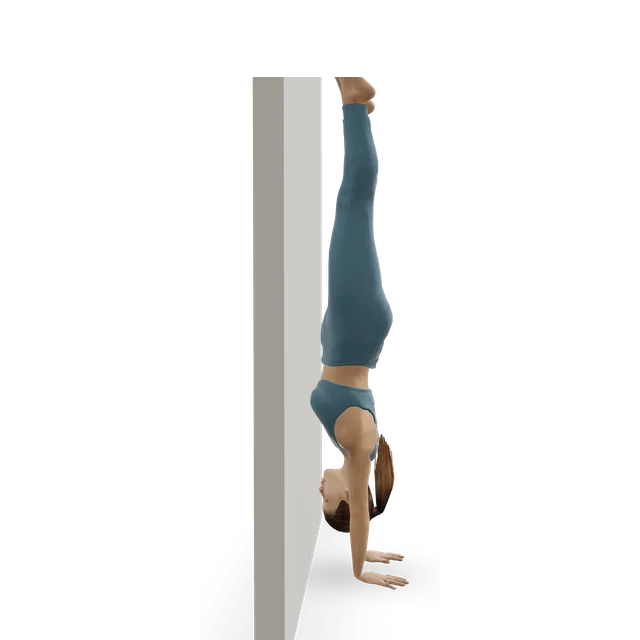
In a wall walk, you start at the top of a push-up, or lying face down, with your feet against a wall. You walk your feet up the wall and your hands in towards it until you're nearly upright with your chest close to the wall, then walk back down the same way. It's the way into a wall handstand, done as an exercise of its own. It isn't the shoulder rehabilitation "wall walk", where your fingers walk up a wall; that one belongs to our frozen shoulder guide.

We found no study of the wall walk itself, so this guide uses handstand research and coaching practice, and says so; the doses are our editorial starting points.

It covers the technique step by step, the easier steps from an L at the wall, how many and how often, your wrists and shoulders, the competition standard, and who should skip going upside down: people with glaucoma (unless their eye specialist agrees), high blood pressure that isn't controlled or some eye conditions, and anyone learning it for the first time in pregnancy.

The short version

Walk up, then walk down

From a push-up position with your heels at the wall, walk your feet up and your hands in, one at a time, until your chest is close to the wall, then walk back down as carefully as you went up. Competitions start and finish each rep lying flat on the floor.

Sources 1, 2

It works your shoulders and wrists

No study has measured the wall walk. In gymnasts' handstands, the wrist flexors worked hardest, and the upper trapezius, the front of the shoulder and the triceps carried much of the effort.

Sources 3, 4

Start at an L

Stop with your feet at hip height and your hips over your shoulders (the half handstand at the wall), and go higher over the weeks. Yoga teachers use walking the feet up the wall to test whether your arms are ready to hold a handstand.

Sources 1, 5

Come down before your arms shake

Fatigue made handstand balance less steady in 14 gymnasts. Start with 3 to 5 walk-ups to a height you can control, resting 60 to 90 seconds, two or three times a week: our editorial starting point.

Source 6

Look after your wrists

57% of 321 adult handstand practitioners reported chronic wrist pain, and warm-ups, braces and grip devices weren't linked to less pain. Build up your time on your hands over weeks.

Source 7

Who should skip it

Going upside down raises eye pressure within a minute and raises blood pressure. Skip wall walks with glaucoma unless your eye specialist agrees, and while high blood pressure isn't controlled, and don't start learning them in pregnancy, when the NHS advises avoiding activities with a risk of falling.

Sources 8, 9, 10, 11

What a wall walk is, and what it works

The move

Your feet start at the base of the wall and your hands on the floor. You walk your feet up the wall one at a time while your hands walk in towards it, keeping your body long, until your chest is close to the wall or you reach a height you can control, then walk your hands out and your feet down the same way. It's a lower-risk way into the wall handstand than kicking up, and facing the wall makes it harder to sag into an arched back.

Source 1

Not the shoulder rehab "wall walk"

Walking your fingers up a wall to raise a stiff arm is a different exercise, the wall climb, used after breast surgery and with a frozen shoulder. Our frozen shoulder guide covers it.

What it works: our reading

No study has measured the wall walk, so this comes from handstands. In gymnasts, the wrist flexors showed the highest activity for their size, and the upper trapezius and wrist flexors contributed most to holding the handstand, then the front of the shoulder and the triceps. Walking adds moments on one hand and one foot, and your trunk holds the straight line.

Sources 3, 4

What it asks of your joints

Wrists bent back under most of your body weight, straight elbows, shoulders at full overhead reach with the shoulder blades turned up, and a straight trunk with your ribs down. Time upside down raises eye pressure and blood pressure.

Sources 8, 10

Before you start

A steady half handstand at the wall and a solid plank, as the move page asks. Our handstand guide's ladder runs downward dog, dolphin, pike push-ups, crow, the half handstand at the wall, the wall walk, then the chest-to-wall handstand.

How people differ

Overhead reach decides how close to the wall you can get with a straight body. Shoulder tests didn't predict handstand quality in 111 novice athletes, so practice matters more than passing a test. Taller people start further from the wall: the competition standard sets the start line 5 inches further out for men than for women.

Sources 12, 2

How to do a wall walk, step by step

From our wall walk move page and its demo, our handstand guide (the hand position and where to look) and yoga teaching. Stopping at an L first is our suggestion, after the half handstand step.

  1. Clear the space, use a mat, and choose a wall with nothing fragile nearby. Warm up your wrists first.
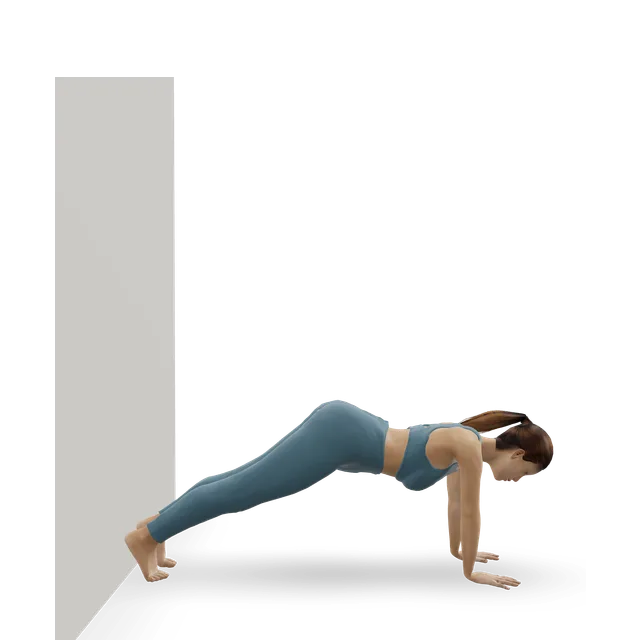
  2. Start at the top of a push-up with your heels against the base of the wall, hands shoulder-width apart and fingers spread, or lie face down with your feet at the wall, as competitions do.
  3. Brace into a plank, ribs down, and press the floor away.
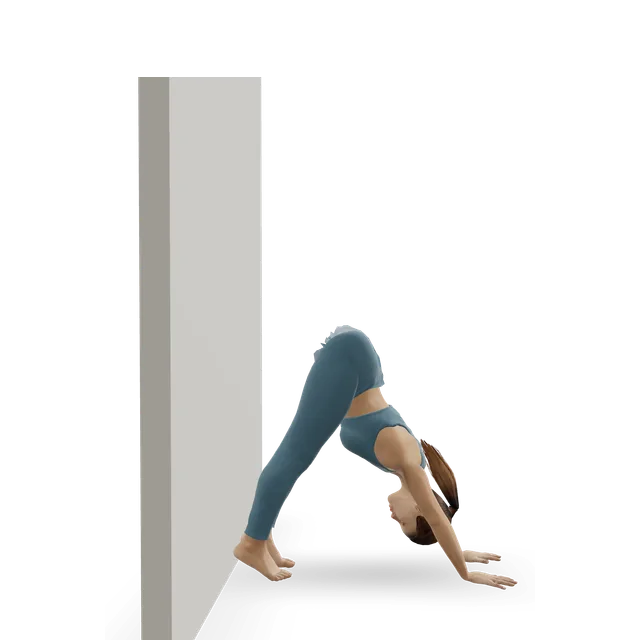
  4. Walk one foot up the wall, then the other, while your hands walk in towards the wall, one small step at a time, arms straight.
  5. In your first sessions, stop at an L shape: feet at hip height, hips over your shoulders. Go higher only when the L is steady.
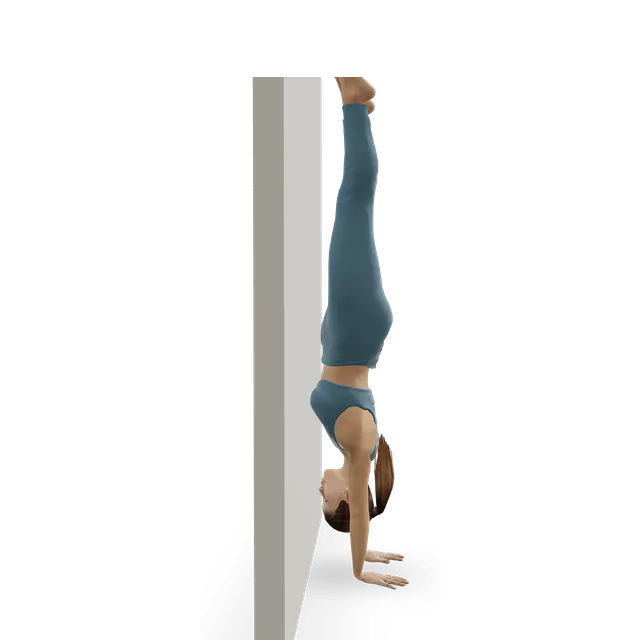
  6. At the top, your chest is close to the wall and your hands are about a hand's width from it, as in a chest-to-wall handstand, or as close as you can control. Keep your body in one line, ribs and tailbone drawn in rather than arching, and look at the floor between your hands.
  7. Pause for a breath, then walk your hands out and your feet down the same way, as deliberately as you went up. Come down before your arms start to shake.

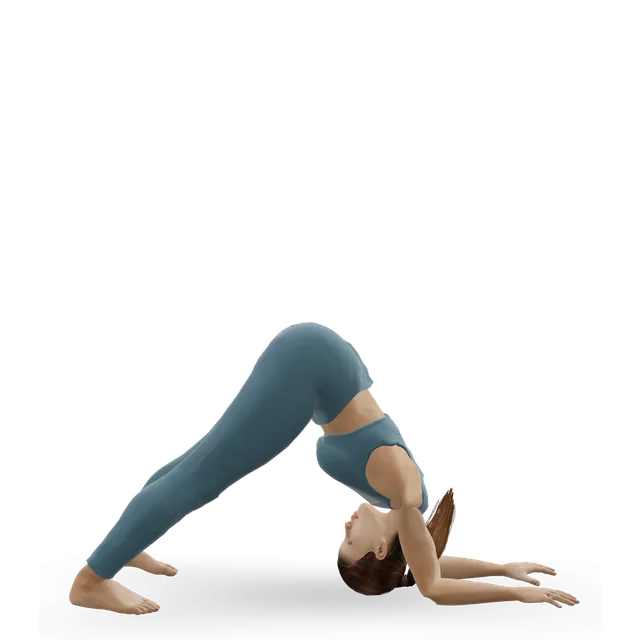
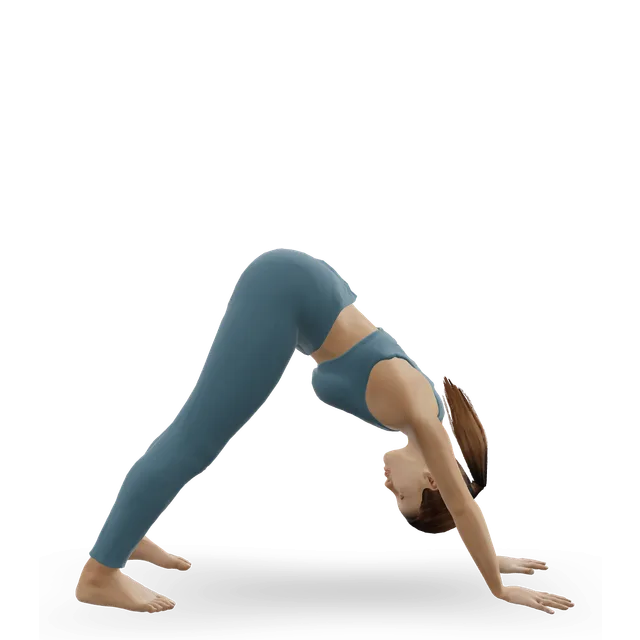
Loading the 3D figure…

Gets into position, then repeats the movement. Technical checks passed; qualified exercise review is pending.

The movement on the figure: Wall walk

Easier and harder: the ladder

As our handstand progression doses them: wrist prep, 60 seconds and 10 rocks; dolphin pose, 3 holds of 5 breaths; pike push-ups, 3 sets of 6 to 8; the half handstand at the wall (the L), 3 holds of 20 to 30 seconds; then wall walks, 3 to 5 walk-ups to the height you control (our editorial starting point); then the chest-to-wall handstand, 3 holds of 20 to 30 seconds. Downward dog with your heels at the wall is a gentler first step. The wall handstand push-up comes much later.

Common mistakes and how to fix them

Stopping far from the wall

Your body bends to reach the wall and your lower back arches. Walk your hands closer, or stop lower until you can, as our handstand guide advises.

A banana back

Draw your ribs and tailbone in. Facing the wall makes it harder to collapse into an arch.

Source 1

Bent arms

Lock your elbows and push tall, as our handstand guide cues.

Tucking your chin to look at your feet

Look at the floor between your hands. Bending the neck forward made handstand balance worse in gymnasts.

Source 13

Big hand steps

Small steps, one hand or foot at a time, keep you in control, as the move page cues.

Rushing up or dropping down

Walk down at the same speed you walked up, as the move page warns.

Going too high too soon

Stop at a height you can walk down from, and add height only as your pressing strength allows.

Holding your breath

Keep breathing. Our handstand guide notes a rare bleed at the back of the eye reported after a short handstand.

What the evidence says

No study of the wall walk

We found no study of the wall walk's muscle activity, joint loads, injuries or training effects. Everything below comes from handstands and from going upside down.

Wrists and shoulders hold a handstandEmerging evidence

In a 10-second handstand, gymnasts' wrist flexors showed the highest activity for their size (a mean of 60% of a maximal effort), and the upper trapezius and wrist flexors contributed most, then the front of the shoulder and the triceps. Experienced gymnasts used about 18 to 19% less front-shoulder and triceps activity than young ones.

Sources 3, 4

Balance comes from the wristsEmerging evidence

Across 21 small studies, gymnasts kept their handstand steady mainly with their wrists. Closing the eyes and bending the neck forward made balance worse, and stronger gymnasts balanced better.

Source 13

Fatigue makes it wobblierEmerging evidence

In 14 male acrobatic gymnasts, fatigue made handstand balance more variable.

Source 6

Shoulder tests don't predict itEmerging evidence

In 111 novice college athletes, shoulder stability and mobility tests didn't predict how well they did a handstand.

Source 12

Wrist pain is commonEmerging evidence

In an online survey of 321 adult handstand practitioners, 56.7% reported chronic wrist pain; younger people reported more, and weekly hours, warm-ups, braces and grip devices weren't linked to it. Across 9 studies of adolescent artistic gymnasts, 53% had wrist pain, on low to very low certainty evidence.

Sources 7, 14

Upside down, eye pressure rises fastEmerging evidence

In 10 people with glaucoma and 10 without, head-down yoga poses raised eye pressure within a minute, most in downward dog (from about 17 to 28 or 29 mmHg), back to normal within 2 minutes. Headstand doubled it in 75 yoga practitioners, and hanging upside down raised it from about 16 to 34 mmHg in 26 young adults.

Sources 8, 15, 10

Blood pressure and the heartEmerging evidence

Hanging upside down took blood pressure from 110/77 to 130/90 mmHg. In 20 healthy men, inversion raised heart rate, blood pressure and the heart's workload and lowered its output; heart rate, blood pressure and eye pressure also rose in inversion in 20 adults.

Sources 10, 16, 17

Injuries in a surveyEmerging evidence

Among 308 CrossFit members, handstand work (handstand push-ups 4, handstand walks 2 and one "wall climb") was behind 7 of 146 movements that caused injuries, against 21 for box jumps. The survey looked back and didn't count how often people did each move.

Source 18

Shoulder pain in handstand walkersEmerging evidence

In 10 handstand walkers, those with shoulder pain moved more slowly and held a more bent arm. An exploratory study that can't show cause and effect.

Source 19

How many, and how often

Learning

3 to 5 walk-ups to the height you control, resting 60 to 90 seconds: our editorial starting point, as no study has tested a dose. If the walk isn't there yet, do 3 holds of 20 to 30 seconds at the L, as our handstand progression does.

Building

2 or 3 sets of 2 or 3 walk-ups, adding height first, then a pause of 10 to 20 seconds at the top (our editorial starting point).

How often

Two or three times a week at the start of a session, while you're fresh (our editorial starting point). Our handstand guide suggests short, frequent practice, 3 to 5 times a week, for handstands; wall walks are harder on the shoulders.

In conditioning

Once 5 controlled walk-ups are easy: 2 or 3 at the start of every minute for 8 to 10 minutes, stopping while every rep is still controlled, as our EMOM (every minute on the minute) workout suggests for a skill you're learning.

Progressing

Height first, then pauses at the top, then the chest-to-wall hold, as our handstand guide's ladder runs.

Wrists and shoulders

Wrists

Your wrists carry most of your weight bent back. Chronic wrist pain is common in handstand practitioners and young gymnasts, and warm-ups and braces weren't linked to less of it, so build up your time on your hands gradually, as our handstand guide says, and use the wrist pain rule in our wrist pain guides.

Sources 7, 14

Shoulders

In one survey, shoulder injuries came mostly from handstands, overhead pressing and bar work. Push tall through straight arms, come down before your shoulders shake, and leave wall walks while a shoulder injury is healing, including after a recent dislocation.

Sources 18, 19

The competition standard

The 2022 Open standard

Each rep started and finished lying flat, with your chest, thighs and feet on the floor and both hands touching a line 55 inches (women) or 60 inches (men) from the wall. At the top, both hands had to touch a line about 10 inches from the wall. In the scaled version, you walked up until both hands were past a line 55 inches from the wall.

Source 2

Check the current standard

Standards change from year to year, so check the current workout's movement standards before you compete.

Moves that go with it

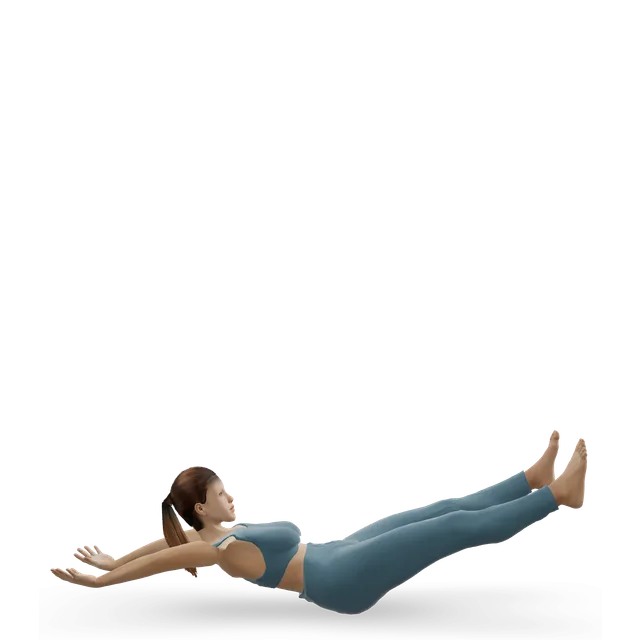
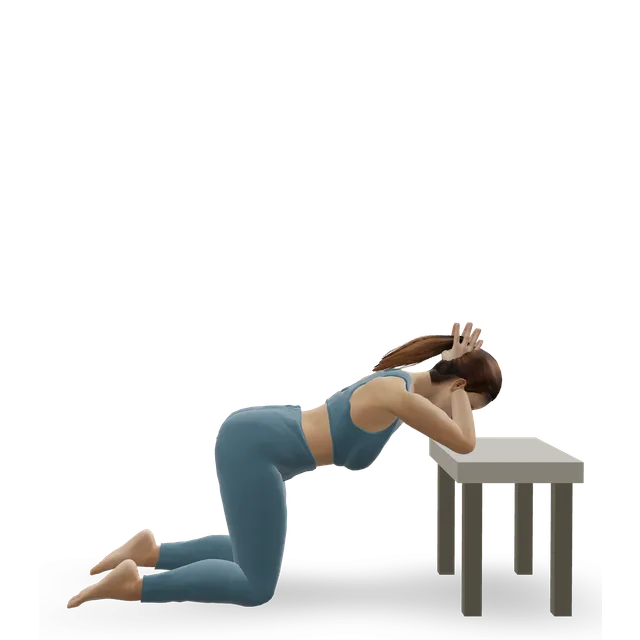
The high plank, 3 holds of 15 to 30 seconds (its move page's dose); the hollow body hold, 3 holds of 20 seconds (as our gymnastics conditioning workout uses it); scapular push-ups, 10 reps; the overhead lat stretch at a bench, 2 holds of 30 to 45 seconds; and wall angels, 8 reps, for overhead reach.

Workouts to follow

The handstand progression is the follow-along: pick your step on its ladder, wall walks included. The gymnastics conditioning workout uses the chest-to-wall handstand.

Who should skip it

Glaucoma

Skip it unless your eye specialist agrees. Head-down positions raised eye pressure within a minute in people with and without glaucoma, and an ophthalmologist answering for the American Academy of Ophthalmology advises against inversions with glaucoma.

Sources 8, 9

High blood pressure that isn't controlled

Wait until it's controlled: going upside down raises blood pressure and the heart's workload. Our high blood pressure guide gives the readings at which to hold off.

Sources 10, 16

Diabetic eye disease or recent eye treatment

With proliferative or severe non-proliferative diabetic retinopathy, or after recent eye laser treatment or surgery, leave out head-down positions until your eye team says they're safe, as the move page advises.

Pregnancy

Don't start learning wall walks in pregnancy: the NHS advises avoiding activities with a risk of falling. If you already practise them, ask your midwife (our suggestion).

Source 11

Heart disease

Ask your heart team first: inversion raised the heart's workload even in healthy men.

Source 16

A wrist, elbow or shoulder injury

Leave wall walks until loading these joints is comfortable, including after a recent shoulder dislocation, as our handstand guide advises.

Warning signs

Stop and get medical help

For chest pain or pressure, unusual breathlessness, dizziness or fainting, or a racing or irregular heartbeat during exercise, as our plans advise. The American Heart Association says these need immediate medical evaluation.

Source 20

Call 999 (911 in the US)

For sudden chest pain or discomfort that doesn't go away, or chest pain with sweating, feeling sick, light-headedness or breathlessness; someone who faints while exercising; palpitations that don't go away, or come with chest pain, breathlessness or feeling faint; a headache that starts suddenly and is extremely painful; or the signs of a stroke, such as a face that has dropped on one side, an arm you can't lift or slurred speech, even if they've stopped. Don't drive yourself to A&E.

Sources 21, 22, 23, 24, 25, 26

Sudden eye symptoms

Call 999 or go to A&E for intense eye pain, a red eye, tenderness around the eyes, rainbow-coloured circles around lights, blurred vision, feeling or being sick, or a headache: these can be glaucoma that has come on suddenly. Sudden loss or blurring of vision after a handstand needs checking the same day, as our handstand guide says.

Source 27

A fall onto your head

Call 999 if someone has been knocked out and hasn't woken up, can't stay awake, has a fit, has problems with their vision or hearing, has clear fluid coming from their ears or nose, has new numbness or weakness, or has problems with walking, balance, understanding, speaking or writing. Get help from NHS 111 after a head injury if they're being sick, feel dizzy, or take medicine that thins the blood. Don't drive yourself to A&E after hitting your head.

Source 28

A fall onto your hand

Contact NHS 111 for severe wrist pain, a snap, grinding or popping noise when it happened, a wrist you can't move or hold things with, one that has changed shape or colour, or lost feeling in your hand. Pain at the base of the thumb after a fall onto an outstretched hand needs checking the same day, even if the wrist moves well, as our wrist pain guide says. A teenager whose wrist still hurts the day after handstands, or is swollen, should stop putting weight through their hands and see a GP or sports doctor.

Source 29

A shoulder that slips

Call 999 or go to A&E if, after a fall, your shoulder looks out of place or has changed shape, or you can't move your arm; don't try to put it back in yourself. See a GP or physiotherapist if your shoulder has partly or fully come out of joint, or you worry it might, or if shoulder pain is getting worse or hasn't improved after 2 weeks of looking after it yourself.

Sources 30, 31

Muscle breakdown after a big session

Same day (call NHS 111, or go to A&E if you feel very unwell): after a big or unusual session, such as many wall walks or handstand push-ups, muscle pain, swelling or weakness far worse than the session explains, and dark pee (red, brown, tea or cola coloured), sometimes starting hours or days later. Dark pee isn't always there, so muscles far sorer, more swollen or weaker than the session explains still need the same-day check. It can be rhabdomyolysis, a breakdown of muscle that can harm the kidneys.

Sources 32, 33, 34

Check before you start

If you haven't exercised for some time or have a medical condition, speak to your GP first, as the NHS advises.

Source 35
Myths

"Wall walks are too dangerous for beginners"Mixed evidence

No study has measured wall walk injuries. In a survey of 308 CrossFit members, handstand work was behind 7 of 146 injury-causing movements, against 21 for box jumps. The risk is the fall, so beginners start with the L at the wall and partial walks, in a clear space, walking down as carefully as they walked up.

Sources 18, 1

"Go up fast so you don't fall"

Speed is how people overshoot the wall and collapse. Walk up and down one hand or foot at a time, stopping at a height you can control, as the move page advises.

"Wall walks are good shoulder rehab"

The rehabilitation "wall walk" is a different exercise: walking your fingers up a wall. The handstand wall walk loads your shoulder at full overhead reach with most of your body weight, so with a painful or recently dislocated shoulder, follow our shoulder pain guides first.

"Warming up your wrists or wearing braces prevents handstand wrist pain"Emerging evidence

In 321 adult handstand practitioners, warm-ups, braces and grip devices weren't linked to less chronic wrist pain. Build up your time on your hands gradually instead, as our handstand guide says.

Source 7

"A conditioning workout only works if it leaves you exhausted"Emerging evidence

Mostly easy functional training improved strength and a benchmark workout as much as mostly hard training, and paced work kept effort well below all-out efforts. For a skill like the wall walk, stop while every rep is still controlled.

Sources 36, 37

Questions people ask

What is a wall walk?

From the top of a push-up, or lying face down, with your feet at a wall, you walk your feet up the wall and your hands in towards it until you're nearly upright with your chest close to the wall, then walk back down. It's the way into a wall handstand, done as an exercise of its own.

What muscles do wall walks work?

No study has measured the wall walk itself. In handstands, the wrist flexors worked hardest, and the upper trapezius, the front of the shoulder and the triceps carried much of the effort, with your trunk holding the straight line.

How do I make wall walks easier?

Stop at an L shape with your feet at hip height, or walk only partway up, and add height over the weeks. Pike push-ups and the half handstand at the wall build the strength first.

How many wall walks should I do?

No study has tested a dose. Our starting point is 3 to 5 walk-ups to a height you control, resting 60 to 90 seconds, two or three times a week while you're fresh.

Are wall walks safe for beginners?

They're safe to build up to, not to start with. Handstand work was a small share of reported injuries in one survey; the real risk is falling, so start with the L, clear the space, use a mat and walk down as carefully as you walked up.

What is the CrossFit wall walk standard?

In the 2022 Open, each rep started and finished lying flat with both hands touching a line 55 inches (women) or 60 inches (men) from the wall, and at the top both hands had to touch a line about 10 inches from the wall. Standards change, so check the current workout's.

Wall walks or handstand push-ups?

The wall walk comes first: it builds strength and confidence upside down. Wall handstand push-ups are much harder, and a failed rep can drop you on your head, so leave them until a 30-second chest-to-wall handstand is easy.

Why do my wrists hurt doing wall walks?

Your wrists carry most of your weight bent back. Chronic wrist pain is common in handstand practitioners, and warm-ups and braces weren't linked to less of it, so build up your time on your hands slowly and see a GP if the pain hasn't improved after 2 weeks.

Can I do wall walks with glaucoma or high blood pressure?

With glaucoma, skip them unless your eye specialist agrees, because head-down positions raised eye pressure within a minute. Skip them while high blood pressure isn't controlled, because going upside down raises it.

Can I do wall walks when pregnant?

Don't start learning them in pregnancy: the NHS advises avoiding activities with a risk of falling. If you already do them, ask your midwife.

Is this the same as the wall walk for a frozen shoulder?

No. That exercise walks your fingers up a wall to raise a stiff arm, and our frozen shoulder guide covers it. The handstand wall walk puts your body weight through your shoulders.

What should I do if my shoulders start shaking?

Walk down straight away, as carefully as you went up. Fatigue made handstand balance less steady in gymnasts, so end the set while every rep is controlled.

Sources

  1. Heagberg 2015 · How to move handstand away from the wall: the L shape and walking up the wall (teaching article, Yoga International)
  2. CrossFit Games · Open workout 22.1: scorecard and movement standards for the wall walk (competition standard, 2022)
  3. Kochanowicz 2018 · Muscle activity and balance in a handstand, in young and adult gymnasts (EMG study, Hum Mov Sci)
  4. Kochanowicz 2019 · Muscle activity in handstands on the floor, rings and parallel bars, in 25 gymnasts (EMG study, J Strength Cond Res)
  5. Yoga Journal · Handstand building blocks: walking the feet up the wall from downward dog (teaching article)
  6. Sabido 2024 · Fatigue and handstand balance, in 14 acrobatic gymnasts (lab study, J Neuroeng Rehabil)
  7. Martonovich 2025 · Chronic wrist pain in 321 adult handstand practitioners (online survey, J Funct Morphol Kinesiol)
  8. Jasien 2015 · Eye pressure in people with and without glaucoma during four head-down yoga poses, in 20 people (lab study, PLoS One)
  9. American Academy of Ophthalmology 2015 · Is it alright to do inverted yoga positions if you have glaucoma? (Ask an Ophthalmologist)
  10. LeMarr 1984 · Eye pressure and blood pressure hanging upside down, in 26 young adults (lab study, Am J Optom Physiol Opt)
  11. NHS · Exercise in pregnancy
  12. Malíř 2024 · Shoulder tests and handstand quality in 111 novice college athletes (cross-sectional study, PLoS One)
  13. MacDonald 2025 · The biomechanics of the handstand: 21 studies (systematic review, Front Sports Act Living)
  14. DiLeo 2026 · Wrist pain and injury in adolescent artistic gymnasts: 25 studies (systematic review and meta-analysis, Orthop J Sports Med)
  15. Baskaran 2006 · Eye pressure in headstand, in 75 yoga practitioners (observational study, Ophthalmology)
  16. Heng 1992 · Heart function during inversion, in 20 healthy men (lab study, Int J Sports Med)
  17. Souza 1987 · Heart rate, blood pressure and eye pressure during inversion, in 20 adults (lab study, Phys Ther)
  18. Lenz 2024 · Training injuries and the movements behind them in 308 CrossFit members (survey, Open Access J Sports Med)
  19. Angioi 2026 · Handstand walking and shoulder pain, in 10 handstand walkers (exploratory lab study, Sci Rep)
  20. Paluch 2024 · Resistance exercise training with and without cardiovascular disease: 2023 update (American Heart Association scientific statement, Circulation)
  21. NHS · Chest pain (past its review date: reviewed August 2023, review due August 2026)
  22. NHS · Heart attack
  23. NHS · Fainting
  24. NHS · Heart palpitations
  25. NHS · Headaches
  26. NHS · Symptoms of a stroke
  27. NHS · Glaucoma
  28. NHS · Head injury and concussion
  29. NHS · Wrist pain
  30. NHS · Dislocated shoulder
  31. NHS · Shoulder pain (past its review date: reviewed May 2023, review due May 2026)
  32. NHS · Blood in urine
  33. NHS · Acute kidney injury (AKI)
  34. Hopkins 2019 · Rhabdomyolysis in 11 of 523 people treated for CrossFit injuries at one hospital (case series, J Sci Med Sport)
  35. NHS · Physical activity guidelines for adults aged 19 to 64
  36. Held 2024 · Mostly easy against traditional functional interval training for 6 weeks, in 30 trained athletes (randomised trial, Front Physiol)
  37. Smith 2024 · The same functional training work done for time or every minute on the minute, in 12 trained adults (crossover study, Front Physiol)

Exercise education, not a personal prescription, and clinical review of these guides is pending. Check with a GP before starting hard training if you have a heart condition, chest pain, dizziness or breathlessness when active, and stop for sharp or increasing pain. Health disclaimer.