How to do a bear crawl: knees just off the floor, forwards, backwards and sideways, and how long
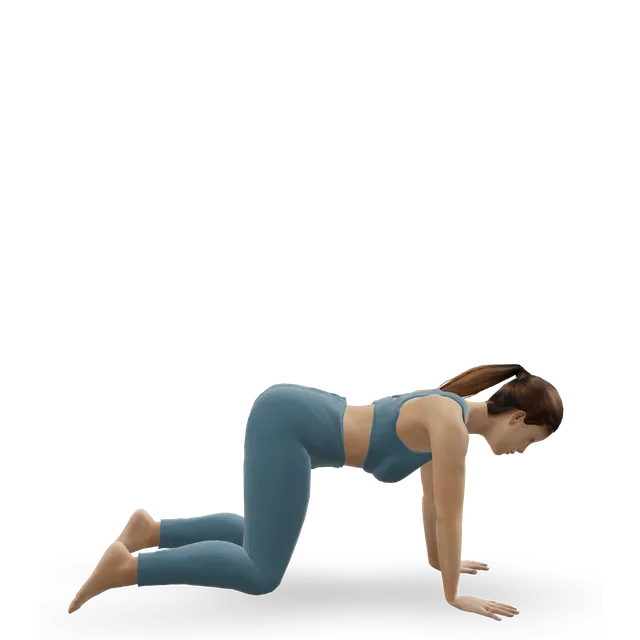
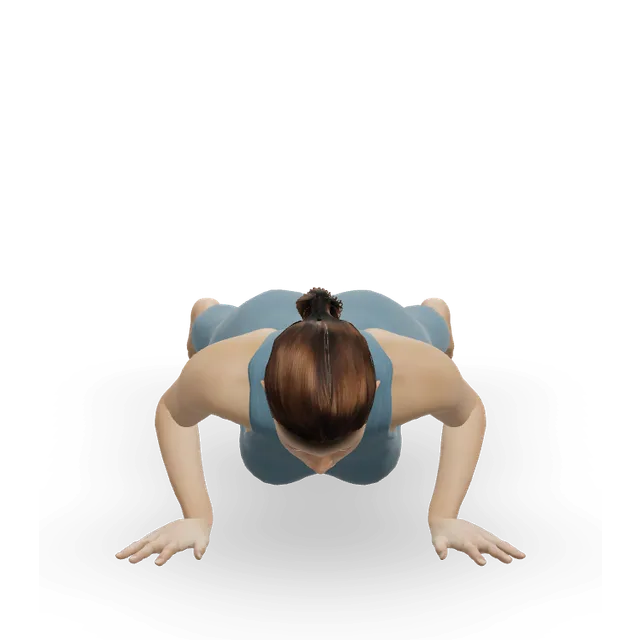
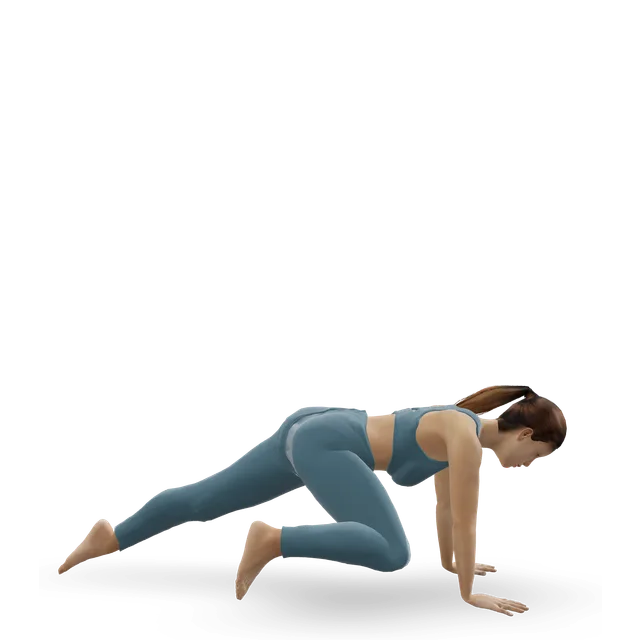
A bear crawl is a crawl on your hands and toes with your knees bent and hovering a few centimetres off the floor. You step one hand and the opposite foot forward together, then the other pair, keeping your back flat and your hips level with your shoulders. It looks like play, but it's real exercise for adults, and it works your shoulders and arms as well as your trunk.
No study has tested the bear crawl on its own. The nearest muscle-activity study pooled eight crawling moves without naming them, so we can't be sure it included a bear crawl, and we say so wherever we lean on it. The rest of the evidence comes from training studies of crawling classes, studies of wrist and shoulder load, and studies of how people crawl.
This guide covers the bear plank (the hold), crawling forwards, backwards and sideways, what it works, how long and how often, sore wrists, children, and pregnancy and the weeks after a birth.
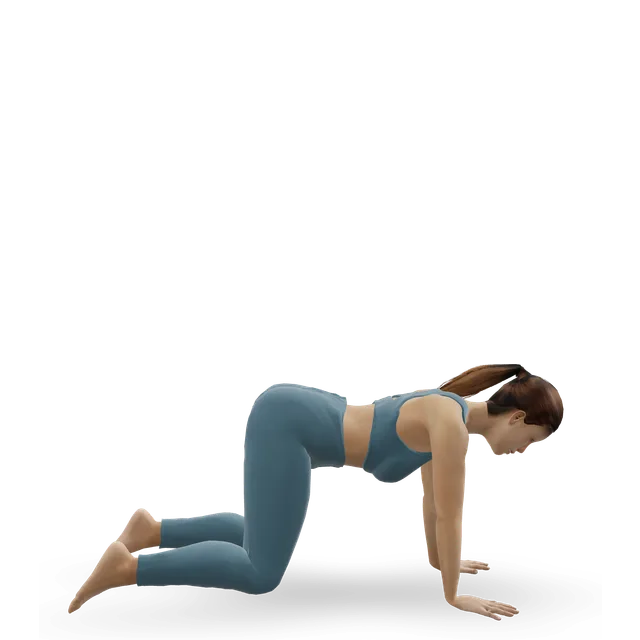
On your hands and toes with your knees bent and hovering, step one hand and the opposite foot forward a short way together, then the other pair. Keep your back flat and your hips level with your shoulders. The American Council on Exercise (ACE) rates it intermediate.
In 20 adults, eight crawling moves, pooled and not named, worked the shoulder, lats and biceps harder than a push-up, and the six-pack about as hard as a push-up or plank. We can't be sure a bear crawl was one of the eight, so treat this as a pointer, not proof.
In 42 young adults, 8 weeks of hour-long crawling classes twice a week improved a movement-screen score and hip and shoulder range, but not balance, grip or push-up endurance.
A beginner class of crawling moves averaged 5.4 METs (metabolic equivalents: multiples of your resting energy use), moderate activity, in 30 adults. That's an average for a whole class of different moves, not for bear crawls alone. Done fast, in intervals, crawling is hard work.
The bear plank, with your knees hovering and still, comes first: 3 holds of 15 to 30 seconds. Then 4 crawls of 8 to 10 m, forwards and back, resting as needed. Both are the move pages' editorial starting points.
Look after your wrists
A bent-back wrist under load raised pressure in part of the wrist joint in a lab study. Use fists, push-up handles or your hands on a bench, or leave crawling out with wrist pain or carpal tunnel symptoms.
Wrist rocks, 10 rocks (as our handstand progression uses them); the bird dog, 5 or 6 each side, holding each for 3 breaths (as our beginner core and Pilates for back pain workouts use it); then the bear plank, shown as the knee hover, 3 holds of 15 to 30 seconds (its move page's editorial starting point). Harder holds: lift one hand to tap the opposite shoulder, or lift one foot, without your hips shifting (no demo; our suggestion).
The same diagonal pairs, with your feet leading. Use shorter distances at first, and look behind you before you start (our suggestion).
Sideways
Step one hand and the same-side foot out to the side, then bring the other hand and foot in, staying low. Go both ways (our suggestion).
Harder
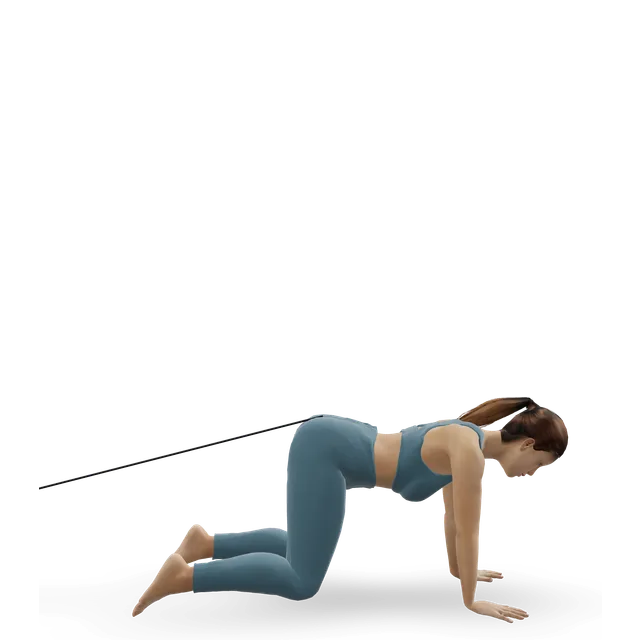
Slower, longer, uphill, or dragging a light sled clipped to a belt (our bear crawl sled drag demo); or faster, as intervals of 40 seconds on and 20 off, as in our high-intensity interval training (HIIT) workout at home.
Easier
The bear plank on its own, the bird dog, or crawling on your hands and knees with your knees down.
Common mistakes and how to fix them
Hips too high
It turns into a walk in a downward dog. Lower your hips to the height of your shoulders, as the move page cues.
Knees too high or legs straightening
Keep your knees bent and a few centimetres off the floor.
Your shoulders and arms carry part of your weight and move you; your trunk stops your hips swaying and twisting; your hips, thighs and calves drive. That's our description of the move, because no study has measured the bear crawl on its own.
The nearest measurement
Eight crawling moves from a commercial quadrupedal programme, pooled, worked the shoulder (67% of a maximal effort), lats (63%) and biceps (48%) harder than a push-up (46%, 29% and 23%), and the hamstrings harder than a squat. The push-up worked the triceps and chest harder, and the six-pack worked about as hard in all of them. The study didn't name the eight moves, so we can't be sure a bear crawl was one.
In 18 students, shoulder muscle activity rose step by step as more body weight went onto the arms, and was low (2 to 10% of a maximal effort) on hands and knees. By our reading, lifting your knees makes the bear crawl a step up from crawling on all fours.
Adults crawl in a range of patterns, and in one lab study, crawling on hands and feet largely stopped the diagonal pairing adults used on their hands and knees. So the bear crawl's opposite hand and foot may not come naturally: go slowly with small steps until it does.
Muscle activity in pooled crawling movesEmerging evidence
In 20 adults, eight crawling moves, pooled, drew more shoulder, lat and biceps activity than a push-up and similar six-pack activity. One study, of moves it didn't name, measured in one session: muscle activity shows effort, not what a muscle will build.
In a trial of 42 young adults, two 60-minute classes a week for 8 weeks improved a movement-screen score (by 1.62 points against 0.33 in controls), hip flexion, hip outward rotation and shoulder extension. Dynamic balance, grip strength and push-up endurance didn't change.
In 30 adults, a 60-minute beginner class averaged 6.7 calories a minute, 5.4 METs and 63% of predicted maximum heart rate: moderate activity. Its continuous flowing part reached 7.0 METs and 153 beats a minute. These are averages for a class of different crawling moves, not for bear crawls alone.
In 22 students, 4 weeks of progressive crawling training improved a test of mental flexibility and shoulder joint position sense at one angle. One small study.
In 16 adults with fatty liver disease, a bodyweight circuit including bear crawls, three times a week for 8 weeks, improved measures of heart pumping and liver fat against no exercise. A tiny study of a whole circuit.
3 holds of 15 to 30 seconds in the bear plank: the knee hover move page's editorial starting point.
Crawls
4 crawls of 8 to 10 m, forwards and back, resting as needed: the bear crawl move page's editorial starting point.
By time
3 to 5 crawls of 20 to 40 seconds, resting 30 to 60 seconds (our editorial starting point); in intervals, 40 seconds on and 20 off, as our HIIT workout at home uses them.
How often
Two or three times a week, in a warm-up, a circuit or as a finisher, as our obstacle race and martial arts workouts use it (our editorial starting point).
Progressing
Longer, then slower, backwards and sideways, then a light sled or intervals (our suggestion).
Harder and related crawls
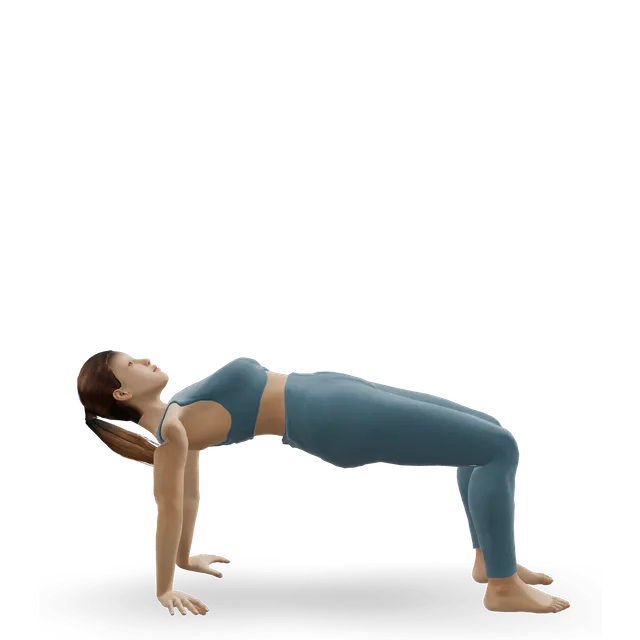
The bear crawl sled drag, 4 to 6 crawls of 10 to 20 m with a light sled, resting 1 to 2 minutes; the crab walk, face up, 4 crawls of 6 to 8 m, resting 45 seconds; the spider crawl, a low push-up with the knee driving out to the elbow, 2 to 3 sets of 4 to 6 each side (each its move page's editorial starting point); inchworm walkouts and mountain climbers, as our HIIT workout at home uses them.
The high plank, 3 holds of 15 to 30 seconds (its move page's dose), and the forearm plank, which keeps weight off your wrists; scapular push-ups, 10 reps; and the wrist and forearm flow, 60 seconds, with the wrist flexor stretch, 30 seconds each side, before and after.
In 8 donated wrists, a push-up position with the wrist bent back raised peak pressure in part of the wrist joint, compared with a straight-wrist position on the knuckles. Crawl on fists or push-up handles, or put your hands on a bench, and build up time on your hands gradually.
More weight on your hands means more work for your shoulders. With a painful shoulder, try crawling with your hands raised, or stay with the bird dog until it settles.
Children crawl easily, and in one trial, crawling games at home improved young children's behaviour scores. Our animal moves workout for kids uses the bear crawl across the room and back.
The HIIT workout at home uses bear crawls as intervals; the obstacle race strength workout and martial arts and parkour warm-ups use them as crawls of 8 to 10 m; the animal moves workout is for children; and our sled workout ends with an optional bear crawl sled drag.
Crawl on fists or with your hands raised, or leave it out, as the move page advises. Our wrist pain from push-ups guide has more.
A painful shoulder
Try it with your hands raised, or leave it out for now, as the move page advises.
Hypermobility
Keep your elbows soft rather than locked, as the knee hover's move page advises, and push the floor away rather than sinking into your shoulders.
Pregnancy
No study has looked at bear crawls in pregnancy. The NHS advises against starting a new vigorous activity in pregnancy. If you already crawl and it's comfortable, keep it slow and short, and ease off if the middle of your tummy bulges into a ridge, as our pregnancy guide advises; hands-and-knees moves such as the bird dog suit later pregnancy (our suggestion for crawling).
The bear plank and bear crawl are plank positions, and the NHS advises avoiding planks to start with. Build up from gentle tummy exercises, and if the middle of your tummy domes or it hurts, make the move easier and get it checked, as our postpartum guide says.
If getting down and up is hard, our older adults guide's floor practice comes first; the bird dog and the knee hover use the same shapes (our suggestion).
Warning signs
Stop and get medical help
For chest pain or pressure, unusual breathlessness, dizziness or fainting, or a racing or irregular heartbeat during exercise, as our plans advise. The American Heart Association says these need immediate medical evaluation.
For sudden chest pain or discomfort that doesn't go away, pain that spreads to your arms, neck, jaw, stomach or back, or chest pain with sweating, feeling sick, light-headedness or breathlessness; someone who faints while exercising; palpitations that don't go away, or come with chest pain, breathlessness or feeling faint; a headache that starts suddenly and is extremely painful; or the signs of a stroke, even if they've stopped. Don't drive yourself to A&E.
Same day (call NHS 111, or go to A&E if you feel very unwell): after a big or unusual session, such as a long crawling challenge, muscle pain, swelling or weakness far worse than the session explains, and dark pee (red, brown, tea or cola coloured), sometimes starting hours or days later. Dark pee isn't always there, so muscles far sorer, more swollen or weaker than the session explains still need the same-day check. It can be rhabdomyolysis, a breakdown of muscle that can harm the kidneys.
Contact NHS 111 for severe wrist pain, a snap, grinding or popping noise when it happened, a wrist you can't move or hold things with, one that has changed shape or colour, or lost feeling in your hand. See a GP if wrist pain hasn't improved after 2 weeks of looking after it at home, is getting worse, keeps coming back or stops your normal activities. Tingling or numbness that doesn't fade quickly, or a weaker grip, means stop and get advice, as our wrist pain guides say.
See a GP or physiotherapist if shoulder pain is getting worse or hasn't improved after 2 weeks of looking after it yourself, or it's very hard to move your arm. Call 999 or go to A&E for back pain with pain, tingling, weakness or numbness in both legs, loss of feeling around your genitals or bottom, or new trouble peeing or controlling your bladder or bowels.
See a GP if you think you have a hernia, and get help from NHS 111 for pain in or around it. Call 999 or go to A&E for a femoral hernia (a lump at the top of the thigh) with very bad tummy pain, being sick, being unable to fart or poo, a high temperature or sudden confusion.
"Bear crawls are just a warm-up for kids"Emerging evidence
In adults, crawling moves worked the shoulders, lats and biceps harder than a push-up, 8 weeks of crawling classes improved movement-screen scores and hip and shoulder range, a beginner class was moderate activity, and a trial in adults with fatty liver used bear crawls in its circuit. They're also good play for children.
In the one muscle-activity study of crawling moves, the six-pack worked about as hard as in a push-up or plank, while the shoulders, lats and biceps worked harder than in a push-up. By our reading, it's a shoulder, arm and trunk exercise with leg drive.
"Bear crawls improve your balance"Emerging evidence
The 8-week crawling trial usually quoted for this found no difference from controls in dynamic balance, grip or push-up endurance. It did improve movement-screen scores and hip and shoulder range.
One small study in 22 students found better scores on a test of mental flexibility after 4 weeks of crawling training. That's interesting, not proof of a reset.
"A conditioning workout only works if it leaves you exhausted"Emerging evidence
Mostly easy functional training improved strength and a benchmark workout as much as mostly hard training, and paced work kept effort well below all-out efforts for the same work. Across 137 reviews, training to momentary fatigue didn't consistently change results.
On your hands and toes with your knees bent and hovering a few centimetres off the floor, back flat, step one hand and the opposite foot forward a short way together, then the other pair. Keep your hips level with your shoulders and your steps small.
What muscles do bear crawls work?
Your shoulders, arms and trunk, with your legs driving. In the one muscle-activity study of crawling moves, the shoulders, lats and biceps worked harder than in a push-up and the six-pack about as hard as in a plank, though the study didn't name its moves, so we can't be sure it included a bear crawl.
Are bear crawls good cardio?
Done briskly, yes. A beginner class of crawling moves averaged moderate activity in 30 adults, though that's an average for a whole class of moves, not bear crawls alone; as intervals of 40 seconds on and 20 off, they're hard work.
How long should I bear crawl?
Start with 3 holds of 15 to 30 seconds in the bear plank, then 4 crawls of 8 to 10 m, forwards and back. Two or three times a week is plenty.
Bear crawl or plank: which is better?
The bear plank is a plank on your hands and toes with your knees bent; the crawl adds movement, so your trunk has to stop your hips swaying and twisting, and your shoulders and legs work harder. Many people do both.
Why do my wrists hurt during bear crawls?
Your wrists bend back under part of your weight, which raised pressure in part of the wrist joint in a lab study. Try fists, push-up handles or your hands on a bench, and build up the time gradually.
Are bear crawls good for kids?
Yes, as play: our animal moves workout uses them. In one trial, 10 weeks of crawling games at home improved young children's behaviour scores more than rhythmic exercise.
Can I do bear crawls when pregnant?
No study has looked at them in pregnancy. If you already do them and they're comfortable, keep them slow and short, and ease off if the middle of your tummy bulges into a ridge; don't start new vigorous exercise in pregnancy.
Can I do bear crawls after giving birth?
Not straight away: the NHS advises avoiding planks to start with. Build up from gentle tummy exercises, and if the middle of your tummy domes or it hurts, make the move easier and get it checked.
What's the difference between a bear crawl, a crab walk and a spider crawl?
The bear crawl faces down with your knees just off the floor; the crab walk faces up; the spider crawl drives each knee out towards your elbow from a low push-up. Each has its own move page and demo.
Do bear crawls improve balance and coordination?
The trial usually quoted found no change in dynamic balance. Moving the opposite hand and foot together is a coordination skill, though, and adults crawl in a range of patterns, so go slowly until it feels natural.
Exercise education, not a personal prescription, and clinical review of these guides is pending. Check with a GP before starting hard training if you have a heart condition, chest pain, dizziness or breathlessness when active, and stop for sharp or increasing pain. Health disclaimer.