Pain guide · Elbow pain

Child's broken elbow (supracondylar fracture): emergency signs and getting back to play

A supracondylar fracture is a break of the upper arm bone just above the elbow. It's the commonest elbow break in children, usually from a fall onto an outstretched hand, often from play equipment. Go to A&E or call 999 if the arm looks out of shape, a bone is showing, or the hand is cold, pale or numb or the fingers won't move. Most children recover well: a break that hasn't moved is treated in a cast or collar and cuff for about 3 weeks, and one that has moved usually has an operation to hold it with thin wires.

This guide is for parents. Your child's fracture clinic decides on the treatment and when each stage starts. It covers the warning signs to watch for in the cast, why the elbow stays stiff for months, why most children don't need physiotherapy, when physical education (PE), climbing and sport come back, and gentle play-based exercises with 3D demos.

When to get help first

Exercise is for pain that has been checked or is clearly mild and settling.

Get urgent medical help if

  • Go to A&E or call 999 if you've injured your arm and it is numb, tingling or has pins and needles; a bone is sticking out or a bad cut is bleeding heavily; or the arm or elbow has changed colour or shape, or is at an odd angle. Don't drive yourself.
  • Go to A&E: the hand is cold, white or purple, or the fingers are numb or won't move. The artery or nerves at the elbow may be injured. While you're recovering, if the feeling in your fingers gets much worse, or you lose feeling or can't move your fingers, contact your fracture clinic straight away, or go to A&E out of hours.
  • Same day: a child who has fallen and won't or can't move their arm, or has a painful, swollen elbow, needs an X-ray. Take them to A&E or an urgent treatment centre, even if they can wiggle their fingers.
  • In the cast or backslab: severe pain or swelling, fingers that are white or blue, numbness or pins and needles, or fingers your child can't move or that hurt when you move them. Raise the arm, with the hand above the elbow and the elbow above the heart, for 30 minutes. If it's no better, take your child straight to the emergency department.
  • Pain that keeps getting worse, isn't eased by the right dose of painkillers, or needs more and more pain relief: take your child to the emergency department straight away. In children, a rising need for painkillers was the earliest sign of compartment syndrome, a build-up of pressure in the muscles that needs urgent treatment.
  • The cast is cracked, soft, too loose or too tight, has rough edges that hurt, something has been pushed inside it, or there's a bad smell or oozing from it: take your child back to the hospital.
  • A fever, an arm that is red, hot or more swollen, or a wound or wire site that oozes or smells: contact the hospital or your GP the same day.

See a doctor or physiotherapist if

  • After a break treated without wires: ongoing pain, or movement that isn't coming back once the collar and cuff or cast is off, or pain or stiffness still there 12 weeks after the injury: contact the fracture clinic. Some NHS services let parents book an extra appointment.
  • After a break that needed wires, stiffness for months is expected. Tell the fracture clinic if the movement stops improving, or your child isn't using the arm for everyday things.
  • Numbness, tingling or weakness in the hand or fingers after the injury or the operation: make sure the fracture clinic knows and is checking it. Most of these nerve injuries recover within 2 to 6 months.
  • Once discharged, the arm looks a different shape from the other one (for example, the forearm angles inwards when the arm is held straight), or you're worried about how your child is using it: contact your child's doctor.
  • After an elbow injury with a fat pad on the X-ray but no break seen: new or increasing pain, swelling or tingling, or an elbow that stays stiff. Contact the fracture clinic: a hidden break turns up on later scans in many of these children.

Understand it

What a supracondylar fracture is

A break of the upper arm bone (humerus) just above the elbow. US orthopaedic surgeons (the American Academy of Orthopaedic Surgeons) call it the commonest elbow fracture in children, usually under 8, and one of the more serious, because it can injure nerves and affect the blood supply. Most come from a fall onto an outstretched hand or straight onto the elbow.

Doctors grade the break by how far it has moved: type I hasn't moved, type II has partly moved, and type III has moved completely (the Gartland types). Most breaks bend the arm backwards; a less common type, from a fall onto the bent elbow, more often affects the ulnar nerve. Other children's elbow breaks are different injuries: a break of the outer knob of the elbow, of the inner bump (usually at ages 9 to 14), of the top of the radius, and the Monteggia injury.

Sources 1, 2, 3, 4

Who gets itEmerging evidence

In a Danish county, elbow fractures affected 308 in every 100,000 children under 15 each year, and 58% were supracondylar. In US emergency departments, there were 60 to 72 visits for supracondylar fractures for every 100,000 children a year; the average age was 5.5, 54% were aged 3 to 6, and they were about 60% commoner from April to September. In 159 children at a UK hospital, the median age was 6; 46% of breaks were type I, 28% type II and 26% type III; 41% of the children had an operation; falls from play equipment caused 37% of the breaks with a known cause; and nearly twice as many happened each week in the school holidays as in term time.

Typical causes are falls from monkey bars and other playground equipment, sports such as gymnastics and football, skateboarding and cycling, and, for toddlers, falls from lower heights. In Okinawa, these breaks were commonest in boys aged 4 to 7.

Sources 5, 6, 4, 7, 1

How it's recognised

Sudden, intense pain in the elbow and forearm, swelling, and not being able to straighten the arm. A child who complains of elbow pain after a fall and won't or can't move the arm needs a doctor straight away. US orthopaedic surgeons add a snap at the time, loss of elbow movement, a cool and pale hand, numbness or tingling in the fingers, and not being able to move all the fingers.

X-rays confirm it, and doctors sometimes X-ray both elbows, because a child's growing bones can look confusing. Being able to straighten the elbow fully after an injury makes a break less likely, but in a large UK study about 4 in 100 children who could do it still had a break, so a child who isn't using the arm normally still needs an X-ray.

Sources 1, 8, 9

Two things on the X-ray that can confuse

A fat pad sign without a visible break: swelling inside the joint lifts a pad of fat that shows on the X-ray. In 10 studies (250 children) with later scans, 44.6% turned out to have a hidden fracture, most often supracondylar. One NHS service treats a fat pad injury with a sling for about 7 days, says most children improve within the first week, and says physiotherapy isn't needed.

The angles on the X-ray after treatment: in 213 children followed for 2 to 10 years after surgery, the X-ray measures surgeons use to judge the position didn't predict how well the arm worked. A slightly different-looking elbow on the X-ray doesn't by itself mean a worse arm, but a visibly crooked elbow is different: tell the clinic.

Sources 10, 11, 12

Why it's taken seriously

UK orthopaedic standards list nerve injury, a poor blood supply, healing out of line and compartment syndrome as the serious complications.

Nerves: in 40 studies (6,850 children), 11.3% had a nerve injury, most often the median nerve or its branch to the thumb and index finger (60%), then the radial (25%) and ulnar (15%) nerves. Nerve injuries caused by treatment, mostly of the ulnar nerve, happened in 3.7% of operations. Most recovered within 2 to 6 months.

Blood supply: most problems settle once the bones are lined up, and an arm with no signs of a poor blood supply doesn't need the artery explored, whether or not the wrist pulse can be felt. With a pink hand but no wrist pulse, the pulse came back within 24 hours after pinning alone in 61% in pooled studies, and in 94% after the artery was explored.

Compartment syndrome, a dangerous build-up of pressure in the forearm muscles: 21 of 4,308 children admitted (0.49%) needed an operation for it, more often with a nerve injury or a broken forearm on the same side, and it can develop without any risk factors and after treatment. In children, needing more and more painkillers was the earliest sign, and with early treatment over 90% regained full function.

Healing out of line: a break that heals tilted inwards leaves a permanently crooked elbow, with the forearm angled in rather than slightly out (cubitus varus).

Sources 13, 3, 14, 15, 16, 1

Treatment in outline: the fracture clinic decides

A break that hasn't moved (type I) is kept still in a cast or splint. It rarely moves, and about 3 weeks is usually enough. NHS services use a collar and cuff or a cast that parents can take off at home after 2 weeks, or a soft cast or backslab cut off at home at about 3 weeks.

A displaced break is usually lined up under anaesthetic and held with at least two thin wires (Kirschner wires, or K-wires), on the day of the injury, and urgently if the wrist pulse is missing, the hand looks poorly supplied with blood, there's an open wound or the skin is under threat. Teenagers near the end of growing may be treated like adults. A break that has partly moved (type II) may be treated either way.

Afterwards come a backslab or cast, a fracture clinic visit at about 1 week, and the wires out in clinic at about 3 to 4 weeks. Routine long-term follow-up isn't usually needed.

Sources 17, 18, 19, 20, 13, 21, 22

How it usually goesEmerging evidence

A simple break heals well in a cast within 3 to 4 weeks. One NHS service expects about 10 to 12 weeks for the elbow injury as a whole, and many months to get full movement back.

After an operation, without physiotherapy, children had 72% of the other elbow's movement at 6 weeks, 86% at 12 weeks, 94% at 26 weeks and 98% at a year (63 children). In 373 children, the biggest gains came in the first month after the cast came off, with improvement for up to 48 weeks; children over 5 and those who had surgery recovered more slowly. One NHS leaflet warns of marked elbow stiffness for months, with full movement taking up to a year.

In the long run, most children's elbow movement returns to normal or has only a mild limitation. About 4 years after surgery, 30 children had a median arm disability score of 0 out of 100 and near-normal quality of life.

Sources 20, 23, 22, 24, 21, 1, 25

What helps, and how strong the evidence is

Breaks that haven't moved: a splint or soft cast for about 3 weeksEmerging evidence

A 2025 review of small trials and observational studies found these breaks rarely move whatever is used. An above-elbow splint or backslab eased pain, the need for painkillers and broken sleep better than a collar and cuff alone, and got children back to activity sooner; soft or removable casts did as well as rigid ones. About 3 weeks is usually enough.

The US guideline gives a moderate recommendation for keeping these breaks still. NHS services let parents remove the collar and cuff or cast at home at 2 to 3 weeks.

Sources 18, 17, 19, 20

Breaks that have partly moved: a cast or wires, both reasonableMixed evidence

In 7 comparative studies (1,446 children), function and satisfaction were similar with or without surgery, but treatment without surgery left more tilt on the X-ray (14% against none) and failed in 9% to 21%, who then had an operation. In 11 studies (1,947 children), casting had fewer complications, notably infections, and the small gains in alignment and bending with surgery weren't large enough to matter. Your fracture clinic decides, often by the exact angle.

Sources 26, 27

Breaks that have moved: wires on the day of the injuryStrong evidence

The US guideline gives a moderate recommendation for lining displaced breaks up and holding them with wires, with two or three wires from the outer side where possible to protect the ulnar nerve, and an emergency operation for a hand with a poor blood supply. UK standards ask for surgery on the day of the injury (not at night unless it's urgent), with at least two wires and checks of the pulse, blood supply and nerves before and after.

When the bones couldn't be lined up without opening the elbow, long-term function was still near-normal in a small German study.

Sources 17, 13, 25

Physiotherapy: usually not neededEmerging evidence

Two small randomised trials and a prospective study have compared physiotherapy with none. In 43 children after an operation, weekly physiotherapy gave more elbow movement at 12 and 18 weeks, but no difference at a year. In 61 children aged 5 to 12, six physiotherapy sessions gave no benefit to function or movement at any point, children without physiotherapy scored better on everyday activities at 9 and 15 weeks, and return to sport was the same. In 53 children with displaced breaks, physiotherapy gave more movement in the first months, but movement was nearly equal at 12 months, which the authors said is how long a full range takes.

The US guideline couldn't recommend for or against routine physiotherapy. NHS leaflets say physiotherapy isn't recommended or usually needed, and to let your child use the arm normally. Ask for physiotherapy if the movement isn't improving.

Sources 28, 29, 30, 17, 21, 20, 11

Back to play and sport: as your fracture clinic allowsEmerging evidence

Follow your fracture clinic: hospitals give different times, and the US guideline found no evidence for any exact time. NHS leaflets say no sport or heavy arm use such as climbing for 1 month after the sling or cast comes off (NHS Lothian; West Suffolk); no contact sport, playground activities or PE for 6 weeks after the cast (Southampton); no sport or rough play for at least 6 weeks after the injury (Bath); and a gentle return to sport and PE from about 8 to 12 weeks after the injury (NHS Lothian's physiotherapy page).

A Kingston and Richmond NHS leaflet, which covers all children's limb fractures rather than elbows alone, says contact sport such as rugby is typically 8 weeks after the cast comes off, or as the clinic advises. After a fat pad injury with no break seen, sport returns once the elbow is less painful and fully straightens, which can take up to 3 months.

Sources 17, 19, 21, 20, 31, 23, 32, 11

Painkillers, and taking the wires outStrong evidence

NICE (the National Institute for Health and Care Excellence) recommends ibuprofen, paracetamol or both for children's fractures, and NHS leaflets suggest giving them regularly for the first few days. Taking the wires out in clinic is quick and not usually too uncomfortable, an NHS leaflet says: give paracetamol or ibuprofen 30 minutes before, bring a favourite toy or book, and a play specialist and gas and air may be available.

Sources 33, 19, 20, 34

How much pain is OK while you exercise?

It shouldn't hurt: a little discomfort that goes quickly is fine, and never force the elbowEmerging evidence

NHS Lothian's physiotherapists say be guided by the elbow: a little bit of pain that goes away quickly is normally nothing to worry about, and the harder exercises should feel comfortable and not increase the pain at all. A St Helens and Knowsley NHS leaflet says bend and straighten the elbow to a mild to moderate stretch, and don't push if it causes pain.

Another NHS Lothian leaflet says the exercises may feel difficult at first but shouldn't be painful: if one hurts, stop and try again later.

Never push the elbow straight for your child, or let anyone force it. Doing the movements in warm water or after a bath can make them easier. Give painkillers regularly in the first days. Pain that keeps rising isn't a pain-rule question: see the warning signs.

Sources 23, 35, 36, 19, 20

The exercise plan: 3 stages

Start at the first stage. Each move opens a full guide with a 3D demo.

Stage 1

In the cast or collar and cuff: rest, raise and wiggle (about the first 3 to 4 weeks, as your fracture clinic allows)

As your fracture clinic allows. Keep the swelling down, check the fingers, and keep the hand and shoulder moving while the bone heals. For the first few days, rest the arm on pillows with the hand higher than the elbow and the elbow higher than the heart, give paracetamol and ibuprofen regularly, and do the finger checks below. The sling and cast go under the clothes, not through a sleeve. Your child can go back to school once comfortable. After a break that hasn't moved and is in a sling only, some services start gentle elbow bending from the first days: follow your clinic.

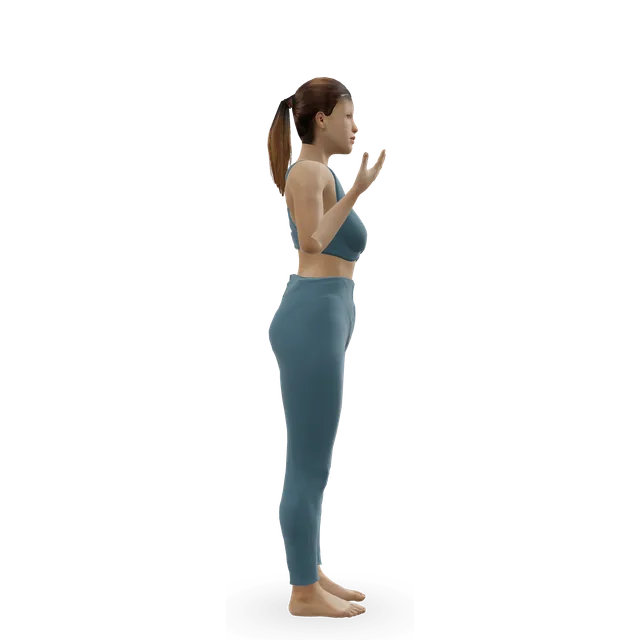
Tendon glides (hand tendon gliding exercises) demonstrated on the 3D figure3D demoTendon glides (hand tendon gliding exercises)Beginner · No equipment

Open and close the hand, 10 times, every hour or so while awake in the first days · A St Helens and Knowsley NHS leaflet's dose. Jazz hands, then a fist

Harder: Ball squeeze

Ball squeeze demonstrated on the 3D figure3D demoBall squeezeBeginner · Other / check instructions

After a few days: squeeze a soft ball or rolled-up socks as hard as is comfortable, hold 5 s, 10 times · A St Helens and Knowsley NHS leaflet's dose

Easier: Tendon glides (hand tendon gliding exercises) · Harder: Band finger extension

Shoulder rolls demonstrated on the 3D figure3D demoShoulder rollsBeginner · No equipment

Gentle shoulder rolls, 10 each way, a few times a day · Editorial dose. NHS Lothian says keep the shoulder and fingers moving while in the cast

Harder: Shoulder CARs (controlled articular rotations)

Move on when: The cast, backslab or collar and cuff comes off, at about 2 to 4 weeks, and any wires are out.

Follow along: a timer, a cue and the next move, one step at a time.
Stage 2

Cast off: let your child use the arm (about 3 to 8 weeks after the injury, as your fracture clinic allows)

As your fracture clinic allows. Everyday use, with the movement coming back gradually and never forced. Most children don't need physiotherapy. Make it play (ideas below), let your child swim once the cast is off and any wound has healed, and use warm water and an unperfumed moisturiser for dry skin. No sport, PE, climbing or playground equipment yet.

Elbow bend and straighten (elbow range of motion) demonstrated on the 3D figure3D demoElbow bend and straighten (elbow range of motion)Beginner · No equipment

Bend and straighten 10 times, 3 sets, with a minute's rest between sets · A Kingston and Richmond NHS leaflet's dose. To a mild to moderate stretch, never pushed if it hurts

Harder: Dumbbell biceps curl

Wrist & forearm flow demonstrated on the 3D figure3D demoWrist & forearm flowBeginner · No equipment

Palms up and palms down with the elbows tucked in: 10 times, 3 sets · A Kingston and Richmond NHS leaflet's dose. NHS Lothian's version: hands clasped, forearms on a table, turning the backs of the hands down in turn, 3 sets of 10

Easier: Wrist circles · Harder: Wrist flexor stretch

Table slide (seated forward reach) demonstrated on the 3D figure3D demoTable slide (seated forward reach)Beginner · A bench or box

Hands on a cloth on a table, good hand on top: circles as big as is comfortable, 3 sets of 10, twice a day · NHS Lothian's dose

Easier: Pendulum exercise (Codman's pendulum) · Harder: Overhead lat stretch at a bench (elbows on the bench)

Breath reach demonstrated on the 3D figure3D demoBreath reachBeginner · No equipment

Reach for the stars: 10 times, 3 sets · A Kingston and Richmond NHS leaflet's dose

Harder: Slow breathing (6 breaths a minute)

Wall push-up demonstrated on the 3D figure3D demoWall push-upBeginner · A wall

2 sets of 5 to 10, once the elbow straightens comfortably · Editorial dose. NHS Lothian includes wall push-ups without a dose

Harder: Push-up

Move on when: The pain has settled and the elbow moves a little more each week. NHS services keep sport, PE, climbing and playground equipment off for about 4 to 6 weeks after the cast, depending on the hospital.

Follow along: a timer, a cue and the next move, one step at a time.
Stage 3

Back to play, PE and sport (often from about 6 to 12 weeks after the injury, as your fracture clinic allows)

As your fracture clinic allows. Strength and confidence for climbing, PE and sport. Throwing and catching (below) is a good start. NHS Lothian brings sport and PE back gently from about 8 to 12 weeks after the injury; other hospitals give other times, so follow your own clinic.

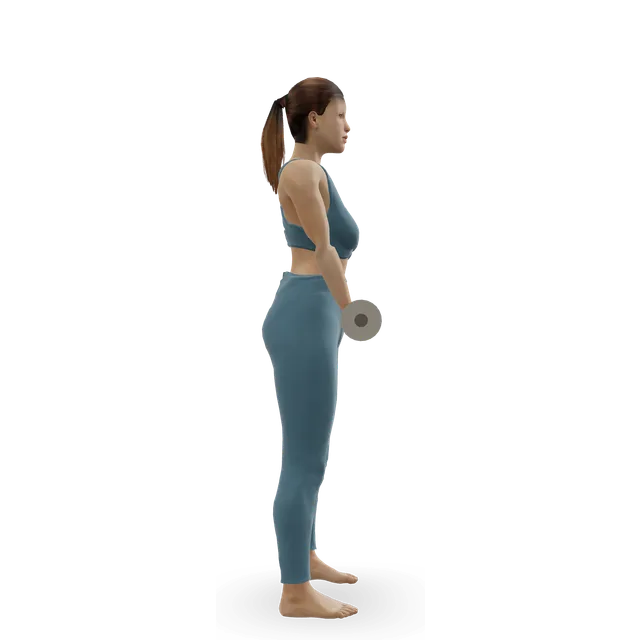
Dumbbell biceps curl demonstrated on the 3D figure3D demoDumbbell biceps curlBeginner · A dumbbell

A small, light weight: 3 sets of 10 a day, pain-free · NHS Lothian's dose

Easier: Seated dumbbell curl · Harder: Incline inner biceps curl

Straight-arm plank (high plank) demonstrated on the 3D figure3D demoStraight-arm plank (high plank)Intermediate · No equipment

Shoulder taps: in a high plank, or on the knees for younger children, shift onto one hand and tap the other hand or shoulder, 3 sets of 10 a day · NHS Lothian's dose

Easier: Knee hover (Pilates tabletop hover) · Harder: Leg pull front (Pilates leg pull down)

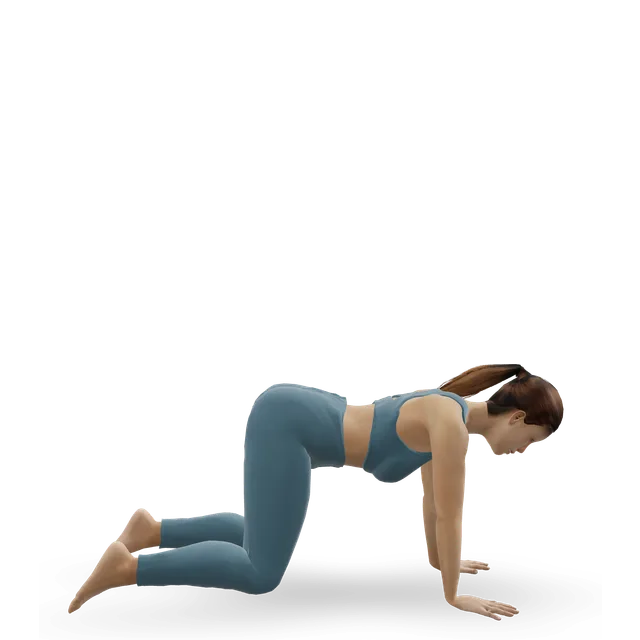
Bird dog demonstrated on the 3D figure3D demoBird dogBeginner · No equipment

Superman: lift one arm and the opposite leg and hold steady, 5 to 10 each side · Editorial dose. NHS Lothian gives no dose

Easier: Bird dog, one limb at a time · Harder: Bear crawl

Knee push-up demonstrated on the 3D figure3D demoKnee push-upBeginner · No equipment

Seal push-ups: 5 to 8 · The animal moves workout's amounts

Easier: Incline push-up · Harder: Push-up

Bear crawl demonstrated on the 3D figure3D demoBear crawlIntermediate · No equipment

Across the room and back, twice · The animal moves workout's amounts. Once a 30-second plank is steady, as the move page says

Easier: Knee hover (Pilates tabletop hover) · Harder: Spider crawl (low push-up knee drive)

Move on when: Movement is full or nearly full, nothing hurts during or after play, and the clinic is happy: then sport and PE, building up.

Follow along: a timer, a cue and the next move, one step at a time.

What to change for now

Checking the fingers and the 30-minute raise (written steps)

From NHS Lothian's and West Suffolk's leaflets for parents.

  • 1. For the first few days, rest the arm on pillows with the hand higher than the elbow and the elbow higher than the heart.
  • 2. Several times a day, check the fingers: are they pink and warm, can your child feel you touch each one, and can they wiggle them?
  • 3. If the fingers are very swollen, white or blue, numb or tingling, your child can't move them or it hurts when you move them, or the pain is severe: raise the arm for 30 minutes.
  • 4. If it isn't better after 30 minutes, take your child straight to the emergency department.
  • 5. Never push anything down the cast, and keep it dry: seal it in a waterproof bag to wash.

Sources 19, 21

In the cast: comfort, washing and school

Give paracetamol and ibuprofen regularly for the first few days. Keep the cast clean and dry, seal it in a waterproof bag for washing, never push anything inside it or try to cut it, and don't let your child scratch inside it. Keep the fracture clinic appointment: the X-ray checks the position. Your child can go back to school as soon as their pain allows.

Sources 19, 2, 21, 31, 20

Taking the wires out

The wires are removed in clinic, usually at about 3 weeks in one NHS leaflet, or 3 to 6 weeks in another, once the cast comes off. It's quick and may feel strange but isn't usually too uncomfortable. Give paracetamol or ibuprofen 30 minutes before and bring a favourite toy or book; a play specialist and gas and air may be available. Small dressings go on the wire sites and can be removed at home.

Sources 34, 21

Play that gets the arm moving

NHS leaflets suggest games instead of exercises if your child finds them a struggle: throwing and catching, clapping games, rock, paper, scissors, head, shoulders, knees and toes, colouring, Play-Doh, baking, popping bubbles, arts and crafts, bat and ball games, building block towers, push-and-pull toys and swimming.

Sources 32, 36

Throwing and catching (written steps)

From NHS Lothian's physiotherapy page, once the movement has come back.

  • 1. Start once the movement has come back and the pain is settling.
  • 2. Throw and catch a ball with the injured arm, against a wall or with a partner.
  • 3. Try different heights and speeds, overarm and underarm.
  • 4. Count how many catches in a row your child can make without a drop.

Source 23

Positions to swap, and why

Habit or positionWhy it mattersInstead
Putting the arm in its sling through a sleeveNHS leaflets say the sling and cast go under clothing, not through a sleeve.Loose clothing over the top.
Pushing things down the cast, scratching inside it, or getting it wetIt can damage the skin, and the cast must stay clean and dry.Nothing inside, and a waterproof bag for washing.
Waiting at home with a tight-feeling castSevere pain, colour change, numbness or fingers that won't move can mean the cast is too tight.The 30-minute raise, then the emergency department if it isn't better.
Forcing the elbow straight, or letting anyone stretch itThe exercises shouldn't hurt, and children get their movement back through use.Play, everyday use and gentle bending and straightening within comfort.Try: Elbow bend and straighten (elbow range of motion)
Climbing frames, monkey bars, trampolines or PE straight after the castNHS services keep these off for about 4 to 6 weeks after the cast.Swimming, walking, bat and ball games and crafts.
Bear crawls and push-ups before the elbow moves freelyThey put weight through the arms; NHS Lothian brings them in once the movement has come back and the pain is settling.Wall push-ups first.Try: Wall push-up
Booking physiotherapy just to be safeSmall trials found no long-term benefit, and NHS leaflets say most children don't need it.Use the arm normally, and ask the clinic if the movement isn't improving.
Missing the fracture clinic visitThe X-ray checks the position of the break.Keep every appointment.

Routines to follow

More moves for this area

Questions people ask

How can I tell if my child's elbow is broken?

Sudden pain, swelling, not wanting to move or straighten the arm, and sometimes a snap at the time. Numbness, or a cool, pale hand, needs urgent care. A child who has fallen and won't or can't move the arm needs an X-ray, even if they can wiggle their fingers.

Is a supracondylar fracture serious?

It's the commonest elbow break in children, and most heal well. It's taken seriously because it can bruise nerves, affect the blood supply, heal crooked or cause compartment syndrome, which is why the hospital checks the pulse, colour and feeling in the hand.

Will my child need an operation?

It depends on how far the bone has moved. A break still in line is treated in a cast, backslab or collar and cuff; a displaced break usually has an operation on the day of the injury to line it up and hold it with thin wires. In one UK hospital, 41% of children with this break had an operation.

How long will my child be in a cast?

About 2 to 3 weeks for a break still in line, sometimes taken off at home; about 3 to 4 weeks after wires, which come out in clinic. A simple break heals well within 3 to 4 weeks.

Does taking the wires out hurt?

It's quick and not usually too uncomfortable. Paracetamol or ibuprofen 30 minutes before and a favourite toy or book help, a play specialist may be there, and gas and air can be used if needed.

Why is my child's elbow still stiff?

That's normal: after an operation, children had about 72% of their movement at 6 weeks, 86% at 12 weeks and 98% at a year. One NHS leaflet warns of marked stiffness for months, with full movement taking up to a year.

Does my child need physiotherapy?

Usually not. In two small trials and a prospective study, physiotherapy made no difference to the elbow a year later, and NHS leaflets say let your child use the arm normally. Ask the fracture clinic if the movement isn't improving.

When can my child go back to school?

As soon as they're comfortable. PE, playground climbing and sport wait until your fracture clinic allows, usually some weeks after the cast comes off.

When can my child do PE, climb or go on a trampoline?

When your fracture clinic allows. NHS leaflets range from about 4 to 6 weeks after the cast comes off to 8 to 12 weeks after the injury, and no study has tested the best time.

Can my child swim?

Not in the cast, which must stay dry. Once the cast is off and any wound has healed, swimming is a good way to get the arm moving.

Will my child's arm be straight and grow normally?

Most children get normal or nearly normal movement back, and about 4 years after surgery, function and quality of life were near-normal in one study. If the break heals out of line, the elbow can look crooked, so tell the clinic if the arm looks different. Routine long-term follow-up isn't usually needed.

What does a fat pad on the X-ray mean?

It means swelling inside the joint. In about 45% of children with a fat pad sign but no visible break, a hidden break turned up on later scans, most often a supracondylar fracture, and one NHS service treats it with a sling for about a week.

Related exercise guides

Other pain guides

Sources

  1. AAOS OrthoInfo · Elbow fractures in children
  2. Cambridge University Hospitals NHS · Supracondylar fractures (patient information, 2023)
  3. Jose Jerome 2026 · Nerve injuries with children's supracondylar fractures (meta-analysis of 40 studies, J Pediatr Soc North Am)
  4. Barr 2014 · Children's supracondylar fractures and the school holidays (series of 159, J Child Orthop)
  5. Houshian 2001 · Elbow fractures in children: 355 fractures (population study, J Orthop Sci)
  6. Holt 2018 · Children's supracondylar fractures in US emergency departments (national database study, J Pediatr Orthop)
  7. Okubo 2019 · Children's elbow fractures: 488 fractures (multicentre series, J Child Orthop)
  8. AAOS · Pediatric supracondylar humerus fractures (plain language summary, 2024)
  9. Appelboam 2008 · The elbow extension test to rule out an elbow fracture (diagnostic study in adults and children, BMJ)
  10. Kappelhof 2022 · Hidden fractures behind an elbow fat pad sign in children (meta-analysis of 10 studies, JBJS Rev)
  11. Northern Lincolnshire and Goole NHS · Fat positive elbow injury in children (leaflet, 2025)
  12. Eguia 2020 · X-ray measures and mid-term function after children's supracondylar fractures (cohort of 213, Medicine)
  13. British Orthopaedic Association · BOAST: supracondylar fractures of the humerus in children (standard, 2020)
  14. Itte 2026 · A pink hand without a pulse after a child's supracondylar fracture (meta-analysis of 25 studies, Injury)
  15. Armstrong 2021 · Compartment syndrome in children with a supracondylar fracture (trauma database study of 4,308, J Orthop Trauma)
  16. Bae 2001 · Acute compartment syndrome in children (case series of 33, J Pediatr Orthop)
  17. AAOS · The treatment of pediatric supracondylar humerus fractures (evidence-based clinical practice guideline, 2011)
  18. Bitsios 2025 · Immobilisation for undisplaced supracondylar fractures in children (systematic review, Cureus)
  19. NHS Lothian · Supracondylar/elbow fracture (leaflet for parents and carers, 2024)
  20. University Hospital Southampton NHS · Simple (undisplaced) supracondylar humerus fractures in children (factsheet, 2026)
  21. West Suffolk NHS · Supracondylar elbow fractures (with displacement) (leaflet, 2021, now past its review date)
  22. Zionts 2009 · When elbow movement returns after pinning of children's supracondylar fractures (cohort of 63, Clin Orthop Relat Res)
  23. NHS Lothian, Royal Hospital for Children and Young People · Elbow fracture (broken elbow) (physiotherapy page, 2024)
  24. Spencer 2010 · Elbow movement after children's supracondylar fractures (prospective cohort of 373, J Bone Joint Surg Am)
  25. Feige 2026 · Long-term function after open or closed setting of children's supracondylar fractures (cohort, Z Orthop Unfall)
  26. Baumann 2025 · Surgery or not for partly displaced supracondylar fractures in children (systematic review of 7 studies, J Pediatr Orthop)
  27. Boutros 2026 · Surgery or not for partly displaced supracondylar fractures in children (meta-analysis of 11 studies, Eur J Orthop Surg Traumatol)
  28. Keppler 2005 · Physiotherapy after surgery for children's supracondylar fractures (RCT of 43, J Pediatr Orthop)
  29. Schmale 2014 · Physical therapy after children's supracondylar fractures (RCT of 61, J Bone Joint Surg Am)
  30. Ducic 2015 · Physiotherapy after displaced supracondylar fractures in children (prospective study of 53, Acta Orthop Belg)
  31. Royal United Hospitals Bath NHS · Advice after an elbow injury (children) (fracture clinic leaflet, 2019)
  32. Kingston and Richmond NHS · Limb fracture: recovery after cast removal (children's leaflet, 2026)
  33. NICE NG38 · Fractures (non-complex): assessment and management (2016)
  34. University Hospitals Sussex NHS · Outpatient K-wire removal (parent and carer advice, 2022, now past its review date)
  35. St Helens and Knowsley Teaching Hospitals NHS · Supracondylar elbow fracture (children) (leaflet, now past its review date)
  36. NHS Lothian · Physiotherapy for upper limb fracture (leaflet for patients, parents and carers, 2021, now past its review date)
  37. NHS · Broken arm or wrist
  38. NHS · Elbow and arm pain
  39. NHS · Compartment syndrome
  40. NHS · DVT (deep vein thrombosis)

Exercise education, not a diagnosis or treatment plan. It is written from the guidelines and studies listed above; review by a clinician is pending. If your pain follows an injury, is severe, is getting worse, or comes with any warning sign listed on this page, get it assessed. Health disclaimer.