Pain guide · Foot pain

In-toeing (pigeon toes) in children: what's normal at each age, and when to see a GP

In-toeing (intoeing, or pigeon toes) is when a child's feet point inwards as they walk or run. It's very common, usually in both feet, and in most children a normal stage of growing up, from a curved foot in babies, a twisted shin bone in toddlers or a twisted thigh bone in school-age children. Children's orthopaedic surgeons say it corrects itself in the vast majority of children under 10, without casts, braces, special shoes or surgery.

This guide is for parents. It explains the three causes and what's normal at each age, why shoes, insoles, braces and exercises don't change it, what the evidence says about W-sitting, the signs that mean a GP should take a look, and play ideas with 3D demos to keep your child active.

When to get help first

Exercise is for pain that has been checked or is clearly mild and settling.

Get urgent medical help if

  • Call 999 or go to A&E if your child gets sudden pain in their hip, knee or thigh (hip problems can sometimes be felt in the thigh or knee), can't put any weight on their leg, their leg has changed shape or is pointing at an odd angle, they feel generally unwell and have a high temperature, or feel hot, cold or shivery, they also have severe pain in the lower part of their tummy, or their symptoms get worse.
  • A limp that starts suddenly, or a child who won't put weight on the leg: get them seen the same day at an urgent treatment centre or A&E. In-toeing that is part of normal development doesn't cause a limp or pain.
  • Pain, swelling, redness and warmth over a bone, or a very high temperature with feeling generally unwell: ask for an urgent GP appointment or contact NHS 111. It could be a bone infection. Take your child to a GP if they don't want to use a leg and seem irritable: young children don't always get a high temperature with a bone infection.
  • Ask for an urgent GP appointment or get help from NHS 111 for severe pain in 1 joint that started suddenly, swelling around a joint, skin over a joint that has changed colour, or difficulty moving a joint, especially with a high temperature or feeling hot, cold or shivery: it could be a joint infection.

See a doctor or physiotherapist if

  • See a GP if the in-toeing affects only one leg, is severe or getting worse, or isn't improving over the years; your child's feet are stiff; your school-age child trips so much it stops them joining in; or one leg looks shorter or smaller than the other.
  • In-toeing that starts suddenly, or comes with pain or swelling: see a GP, who may refer your child to a physiotherapist or a specialist. In-toeing that is part of normal development comes on gradually and doesn't hurt.
  • See a GP if your child has a limp and you're not sure what's causing it: a limp with no obvious cause should always be checked by a GP.
  • See a GP or health visitor if your child also has stiff or tight legs, was late to sit or walk (not walking by 18 months), is losing skills they had, or you have other worries about their development. In-toeing on one side with stiff muscles can be a sign of a nerve or muscle condition such as cerebral palsy.
  • A baby's curved foot that is stiff, can't be gently straightened, also points down, or isn't straightening by about 6 to 12 months: see your health visitor or GP. Casts or special shoes work best started in the first year.
  • A teenager with weeks of groin, thigh or knee pain that comes and goes with activity, or who walks or runs with the foot turned out, even without a limp: ask the GP to examine the hip and arrange a hip X-ray, and say you're worried about a slipped growth plate. With a limp as well, ask for an urgent GP appointment or get help from NHS 111 the same day.

Understand it

What in-toeing is

In-toeing (intoeing, pigeon toes, or being pigeon-toed) means a child's feet point inwards when they walk or run. The Association of Paediatric Chartered Physiotherapists (APCP) calls it one of the most common normal variants in children. It's usually in both feet but can be in one, and it looks more obvious when a child is tired or has very flexible joints.

The British Society for Children's Orthopaedic Surgery (BSCOS) says it can be present at birth or develop in young children, and parents often first notice it when a baby starts walking.

Sources 1, 2, 3

The three causes, by ageStrong evidence

Babies: metatarsus adductus. The front half of the foot curves inwards, so the outer edge looks like a half-moon, while the heel looks normal. It's thought to come from the baby's position in the womb.

Toddlers: internal tibial torsion. The shin bone is twisted inwards, so the feet turn in while the kneecaps point forwards. It's the usual cause in a child's second year.

School-age children, about 3 to 10: femoral anteversion. The thigh bone is twisted inwards at the hip, so the knees and the feet both point in. These children can turn their hips inwards a long way, and often find sitting in a W comfortable.

A child can have more than one, and all three can run in families. The APCP leaflet adds that tight hamstrings, or slightly weaker muscles on the outside of the hip that turn the leg out, can add to it. Clubfoot is different: a stiffer foot shape present at birth, treated from birth by a specialist team.

Sources 4, 5, 3, 1, 6, 7

How common it isMixed evidence

Figures depend on age and on how in-toeing is defined. In a survey of 1,134 children aged 3 to 6 in 26 nursery schools, 5.9% in-toed: 76% of them in both feet, with 2.4 girls to every boy, and 75% from the thigh bone and 25% from the shin. An NHS referral guide quotes up to 30% of children under 6.

For curved baby feet, one review gives 1 to 2 in every 1,000 births, and a later paper about 1 in 100 babies.

Sources 8, 9, 10, 11

How it's checked

A doctor or physiotherapist watches your child walk. Then, with your child lying on their front, they check how far each hip turns in and out, the angle of the foot against the thigh, and the shape of the foot: together, the rotational profile.

In a study of 1,000 normal legs, the inward twists of toddlers' shins and young children's thighs were the extremes of a normal developmental pattern, and in the vast majority needed no treatment. X-rays are rarely needed; one children's health site says doctors sometimes order them if they notice a problem.

Sources 4, 12, 13

What's normal at each ageEmerging evidence

Sources give different ages, so these are ranges, with who says what.

Curved baby feet: most straighten within the first year. The American Academy of Orthopaedic Surgeons (AAOS) says usually over the first 4 to 6 months, the American Academy of Pediatrics (AAP) before the first birthday, and an NHS referral guide by about 1; NHS leaflets say most improve by about 2 or 3. In 130 untreated curved feet followed for about 7 years, 86% were normal or only mildly curved and fully flexible, 10% were moderately curved but painless, and 4% stayed curved and stiff. The stiff ones couldn't be picked out before about 3.

A twisted shin bone: NHS leaflets and guides give different ages for when it usually corrects: by about 4 to 5 (the APCP leaflet), by 5 (an NHS referral guide), by 6 (Lincolnshire's leaflet) or by about 8 (the West Suffolk and East Sussex leaflets). AAOS says it almost always improves without treatment, usually before school age.

A twisted thigh bone: most noticeable at about 4 to 7 in the referral guide, at 5 or 6 for AAOS, and at 2 to 4 in the APCP leaflet. It usually corrects by about 8 (in 80% of children, the referral guide says), 10 (the APCP, West Suffolk and East Sussex leaflets) or 12 (Lincolnshire's). In a study that followed 30 in-toeing children to at least 15, the thigh bone's inward twist fell from an average of 42° to 28°, about 1.5° a year with a wide range, and the in-toeing went in all but 5.

BSCOS sums it up: in the vast majority of children younger than 10, in-toeing will almost always correct itself without casts, braces, special shoes, surgery or any special treatment, and where it doesn't, it very rarely causes symptoms. In-toeing can last into adult life, but rarely seems to cause major problems, a children's hospital says.

Sources 3, 5, 9, 14, 6, 15, 16, 1, 17, 2, 4

What in-toeing does and doesn't doEmerging evidence

In-toeing by itself doesn't cause pain, doesn't stop a child learning to walk, run and play, and doesn't lead to arthritis, AAOS and BSCOS say. In a small study using computed tomography (CT) scans, the thigh bone's twist was no different in 16 people with hip arthritis and 18 without. The APCP leaflet says children who in-toe are no more likely than anyone else to have back or hip problems or arthritis.

Children who in-toe may trip a little more at first, and this lessens as they grow. NHS Lothian's GP guidance says the tripping comes from the toes catching and is nothing to worry about, and the APCP leaflet says falling is part of learning to walk, not caused by in-toeing. In one blinded study of 100 school students, sprinters had more inward-turned shins on average than other students, and more of them in-toed when sprinting.

Sources 3, 2, 18, 1, 19, 20

When it isn't the usual kind, and look-alikes

In-toeing on one side, in-toeing with stiff or tight legs, late milestones, or in-toeing that appears suddenly needs checking for a nerve or muscle cause such as cerebral palsy: these are the signs NHS and children's hospital referral guides list. The NHS lists walking on tiptoes, stiff or floppy muscles and late sitting or walking among the possible signs of cerebral palsy.

Out-toeing (feet turning out) is also usually normal: new walkers often turn their feet out for balance, and an NHS children's hospital leaflet says both patterns are in most cases completely normal. But new out-toeing in an older child, especially with hip, thigh or knee pain, can be a slipped growth plate at the hip (a slipped upper femoral epiphysis), which has its own guide. Bow legs and knock knees have their own page, and flat feet that don't hurt have their own guide.

Sources 9, 4, 21, 22, 23

What helps, and how strong the evidence is

Time, and ordinary active playStrong evidence

UK and US children's orthopaedic bodies, NHS guidance and a children's hospital agree that in-toeing in young children needs no treatment beyond time. Children don't need their activities restricted, the APCP leaflet says.

The NHS asks children under 5 to be active for at least 3 hours a day, including an hour of energetic play for 3 and 4 year olds, and 5 to 18 year olds for an average of at least 60 minutes a day, with activities that strengthen muscles and bones across the week. Ordinary active play is the backbone of the plan below. It keeps children fit and confident, and it doesn't need to target the in-toeing.

Sources 2, 3, 5, 19, 4, 1, 24, 25

Shoes, insoles, braces, twister cables and night splints don't change itStrong evidence

There is no evidence that splints or special shoes help, and good quality, well-fitting shoes are all that's recommended, the APCP leaflet says. BSCOS says in-toeing corrects itself in the vast majority under 10 without casts, braces, special shoes, surgery or any special treatment.

The AAP says a night brace (shoes joined by a bar) hasn't proven effective, and that corrective shoes, twister cables, daytime braces, shoe inserts and back manipulation don't resolve in-toeing and may be harmful, because they interfere with normal play or walking; a child in a brace may also face unnecessary emotional strain from other children. KidsHealth says doctors found special shoes and braces didn't make in-toeing clear up any faster.

The trial evidence is old and thin. In 1976, wedges in children's shoes had no clinically useful effect on the walking angle, and the best device corrected only about a quarter of the in-toeing while it was worn. No modern trial exists.

Sources 1, 2, 5, 13, 26

Exercises and stretches can't untwist the bonesStrong evidence

NHS Lothian's GP guidance says insoles and exercises won't correct in-toeing, and neither will stretches. AAOS says splints, special shoes and exercise programmes don't help a twisted shin, and that studies have found special shoes, braces and exercises don't help a twisted thigh bone. The AAP lists exercises among the unprescribed treatments to avoid, and the West Suffolk and East Sussex leaflets say no specific exercises, braces or special shoes can correct a twisted shin or thigh bone.

Sources 19, 3, 5, 6, 15

What a physiotherapist may suggest for an older child who trips a lotEmerging evidence

The APCP leaflet, used by several NHS trusts, says tight hamstrings or slightly weaker hip muscles that turn the leg out can add to in-toeing; that a programme of stretches may help tight hamstrings; and that strengthening the hip muscles can help in some cases. It suggests out-toed activities (ballet, horse riding, martial arts, breaststroke swimming) and, as children get older, out-toed walking ('penguin walking') and walking along a straight line. One NHS trust's referral guide sends a child to physiotherapy for tripping and falling several times a day, weakness (for example, not being able to hold a bridge), in-toeing that starts suddenly or is on one side, or late milestones.

None of this has been tested in a trial, and none of it changes the bones: it's about how confidently a child moves. The doses in stage 2 are editorial.

Sources 1, 15, 27, 9

W-sitting: no harm shownEmerging evidence

Children with a twisted thigh bone often find sitting in a W comfortable, because their hips turn inwards easily. A 2024 systematic review found 7 studies, all of low level: two surveys that couldn't show cause and effect, a muscle study in adults, a narrative review, and one cohort that found no link with hip dysplasia. It concluded there is no scientific evidence to advise against W-sitting in children. That cohort, of 104 children having hip X-rays, found hip dysplasia in 9% of W-sitters and 10% of other children. A nursery-school survey found W-sitting more common in in-toeing children, but couldn't say which caused which.

BSCOS says W-sitting will cause no harm. Some NHS physiotherapy leaflets still suggest encouraging cross-legged sitting instead, if it's comfortable, one NHS referral guide advises avoiding the W, and one leaflet says there's no evidence it's harmful but it might be wise to avoid it. The evidence is thin, but none of it shows harm, so this guide says: let your child sit however is comfortable. Cross-legged sitting is one option among many, and it never needs to be a battle.

Sources 28, 29, 8, 3, 2, 1, 6, 9

Curved baby feet (metatarsus adductus)Emerging evidence

Flexible curved feet: a systematic review found strong evidence for no treatment. In a randomised trial of 94 newborn feet, parents' stretching did no better than watching and waiting, and tended to do worse in moderate to severe feet; the authors recommend watching to 4 to 6 months and casting curves that persist. Some NHS leaflets still say gentle stretches or exercise may help: harmless if gentle, but not needed.

Stiff or persistent curved feet: the AAP describes a series of casts over 3 to 6 weeks if the curve persists after 6 months or is rigid, aiming to correct it before walking. AAOS says babies of 6 to 9 months with severe or very rigid feet may be treated with casts or special shoes with a high rate of success, and that surgery is rarely needed. A review of 11 studies found casts, braces and special shoes can all correct the curve, with fewer complications from some braces and shoes; in one series, an orthosis worn 23 hours a day improved 98 of 114 moderately to severely curved feet in babies aged 4 to 11 months. One NHS trust refers a foot that can't be gently corrected to straight, or isn't corrected by 12 months, to orthopaedics.

Sources 10, 30, 14, 6, 5, 3, 31, 11, 9

Surgery: very rarelyStrong evidence

Surgery is considered only for severe in-toeing still causing tripping and walking problems in an older child: at least 8 to 10 for a twisted shin and over 9 or 10 for a twisted thigh bone, AAOS says, and the AAP mentions it if in-toeing remains at 9 or 10. BSCOS calls it an enormous operation that is virtually never required. The operation cuts the bone and turns it.

The complication figures come from older series. Of 95 children who had a thigh-bone operation, all the bones healed and the twist was corrected, but 13 had serious complications, and the authors advised a much more conservative attitude; in the 52 followed for 9 years, the operation did remove the in-toeing. Of 52 shin-bone operations, 13% of those done high on the shin had serious complications, against none of those done near the ankle.

Sources 2, 3, 5, 32, 33, 34

How much pain is OK while you exercise?

In-toeing doesn't hurt, so pain is a reason to check (editorial)

In-toeing by itself doesn't cause pain, AAOS and BSCOS say. So there is no acceptable level of pain for in-toeing: pain, swelling or a limp is a reason to see a GP, not something to play through.

For the play and hip games, the rule is the editorial one our Köhler's disease and irritable hip guides use for young children: comfort leads. Young children can't rate pain reliably on a 0 to 10 scale, so watch what they do. If a game makes them limp, rub their legs, sit out or stop playing, stop and go back to easier play for a day or two. In-toeing can look more obvious when a child is tired, the APCP leaflet says, so a little more tripping late in the day isn't a warning sign on its own.

Never force a sitting position, a stretch or a turned-out foot (our suggestion; the AAP warns that unproven treatments can interfere with play and cause emotional strain).

Sources 3, 2, 1, 5

The exercise plan: 3 stages

Start at the first stage. Each move opens a full guide with a 3D demo.

Stage 1

Everyday active play (this is the whole plan for most children)

No treatment is needed for in-toeing. Keep your child active, in ordinary, well-fitting shoes, and let them sit however is comfortable, W-sitting included. These play moves are for fun and fitness, not to straighten the legs; the amounts are the animal moves workout's, which are themselves editorial.

Standing march demonstrated on the 3D figure3D demoStanding marchBeginner · No equipment

1 min, marching like soldiers, arms swinging · The animal moves workout's amount

Easier: Seated march · Harder: Standing band hip flexion

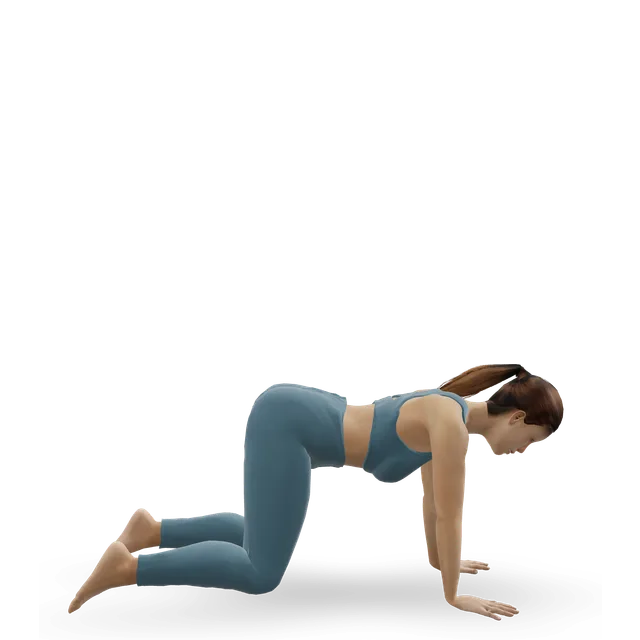
Bear crawl demonstrated on the 3D figure3D demoBear crawlIntermediate · No equipment

Across the room and back · The animal moves workout's amount (one round)

Easier: Knee hover (Pilates tabletop hover) · Harder: Spider crawl (low push-up knee drive)

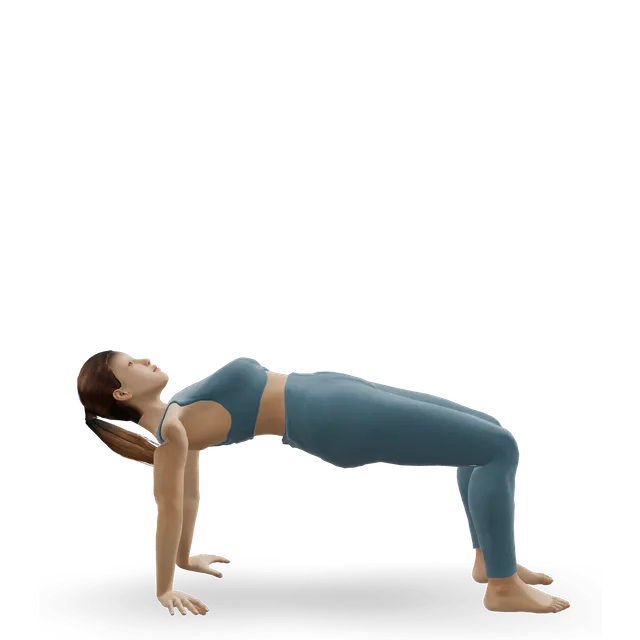
Crab walk demonstrated on the 3D figure3D demoCrab walkIntermediate · No equipment

Across the room and back · The animal moves workout's amount (one round)

Easier: Elastic wall bounce · Harder: Alternate-leg bounding

Single-leg stand demonstrated on the 3D figure3D demoSingle-leg standBeginner · A wall

The flamingo: 20 s on each leg, near a support · The animal moves workout's amount

Easier: Tandem stance and heel-to-toe walk · Harder: Single-leg reach matrix

Ankle bounces (mini pogo) demonstrated on the 3D figure3D demoAnkle bounces (mini pogo)Beginner · No equipment

15 bunny hops, small and quiet · The animal moves workout's amount

Harder: Pogo hops

Standing broad jump with stuck landing demonstrated on the 3D figure3D demoStanding broad jump with stuck landingIntermediate · No equipment

4 frog leaps, freezing like a statue on landing · The animal moves workout's amount

Easier: Snapdown to athletic landing · Harder: Single-leg hop and stick

Move on when: Most children never need stage 2. Use it only if a school-age child trips so often it stops them joining in, or a physiotherapist suggests hip and balance games.

Follow along: a timer, a cue and the next move, one step at a time.
Stage 2

Hip and balance games for older children who trip a lot (if a physiotherapist suggests them)

The APCP leaflet suggests walking along a straight line, out-toed walking and strengthening the hip muscles that turn the leg out, as children get older. They may help how confidently a child moves; they don't change the bones. Two or three short sessions a week, as games (editorial).

Tandem stance and heel-to-toe walk demonstrated on the 3D figure3D demoTandem stance and heel-to-toe walkBeginner · A wall

Tightrope walking along a line: 3 walks of 10 steps · Editorial dose, as in our Köhler's guide; the APCP leaflet suggests walking along a straight line

Easier: Semi-tandem stance · Harder: Single-leg stand

Clamshell demonstrated on the 3D figure3D demoClamshellBeginner · No equipment

2 sets of 10 slow lifts on each side · Editorial dose. It works the muscles on the outside of the hip that turn the leg out

Easier: Supine isometric hip abduction (belt press) · Harder: Lateral band walk

Glute bridge demonstrated on the 3D figure3D demoGlute bridgeBeginner · No equipment

10 bridges, high enough for a toy car to drive under · The animal moves workout's amount

Easier: Pelvic tilt into bridge · Harder: Single-leg glute bridge

Single-leg stand demonstrated on the 3D figure3D demoSingle-leg standBeginner · A wall

3 holds of 20 to 30 s on each leg, then with eyes closed beside a wall · Editorial dose

Easier: Tandem stance and heel-to-toe walk · Harder: Single-leg reach matrix

Move on when: Tripping no longer stops your child joining in. Keep up whatever they enjoy. If tripping is getting worse, or there's pain or a limp, see a GP.

Follow along: a timer, a cue and the next move, one step at a time.
Stage 3

Sport and out-toed activities

No activity needs restricting. Ballet, horse riding, martial arts and breaststroke swimming may help an in-toeing walk, the APCP leaflet says, and PE (physical education), clubs and playground games carry on as usual.

Jumping jack demonstrated on the 3D figure3D demoJumping jackBeginner · No equipment

Star jumps, 20 s · The animal moves workout's amount

Easier: Step jack (low-impact jumping jack) · Harder: Mountain climbers

Skipping demonstrated on the 3D figure3D demoSkippingBeginner · No equipment

3 runs of 10 to 20 m · Editorial dose

Easier: Ankle bounces (mini pogo) · Harder: Alternate-leg bounding

Standing broad jump with stuck landing demonstrated on the 3D figure3D demoStanding broad jump with stuck landingIntermediate · No equipment

4 frog leaps, freezing on landing · The animal moves workout's amount

Easier: Snapdown to athletic landing · Harder: Single-leg hop and stick

Single-leg hop and stick demonstrated on the 3D figure3D demoSingle-leg hop and stickIntermediate · No equipment

3 sets of 5 small hops on each leg, freezing on landing · Editorial dose, for older children who land two-footed jumps steadily and can stand on one leg for 30 s

Easier: Standing broad jump with stuck landing · Harder: Alternate-leg bounding

Move on when: This is ordinary activity for life. Pain, a limp, stiff feet, or in-toeing that is getting worse or on one side: see the warning signs.

Follow along: a timer, a cue and the next move, one step at a time.

What to change for now

Checking a baby's curved foot (written steps)

From the AAP, AAOS, the NHS clubfoot page, an NHS referral guide and a trial, with our suggestion marked.

  • 1. Look at the sole. In metatarsus adductus the front half of the foot turns in and the outer edge curves like a half-moon, while the heel looks normal.
  • 2. Gently hold the heel and see whether the front of the foot straightens. A foot that straightens easily is flexible, and most of these straighten by themselves, usually within the first year.
  • 3. A foot that is stiff, can't be straightened, also points down, or feels tight when you gently move it: show your health visitor or GP. Clubfoot, a different and stiffer foot shape, is treated from birth by a specialist team.
  • 4. If the curve is still there at about 6 months, or the foot is stiff, a specialist may use a series of casts over 3 to 6 weeks, or special shoes, ideally before your baby walks. One NHS referral guide refers a curved foot that isn't corrected by 12 months.
  • 5. Stretches: in a randomised trial of 94 newborn feet, parents' stretches did no better than watching and waiting. If your health visitor or physiotherapist shows you one, keep it gentle and stop if your baby is unsettled (our suggestion).

Sources 5, 3, 7, 9, 30

Watching it change (written steps)

KidsHealth suggests a short video once or twice a year, because change is slow and hard to notice. The details are our suggestions.

  • 1. Once or twice a year, film your child walking towards you and away from you on a flat floor. Shorts and 10 to 20 steps make it easier to see (our suggestion).
  • 2. Compare each video with the last one rather than watching day to day: change is slow and hard to notice.
  • 3. Take the videos to your GP if the in-toeing seems to be getting worse or is on one side only (our suggestion).

Source 13

Sitting, shoes and play (written steps)

From BSCOS, the APCP leaflet and the AAP, with our suggestions marked.

  • 1. Let your child sit however is comfortable, including in a W: the British Society for Children's Orthopaedic Surgery says it will cause no harm. If you'd like to offer other positions, the physiotherapists' leaflet suggests cross-legged sitting if it's comfortable; long-sitting and side-sitting are fine too (our suggestion).
  • 2. Ordinary, good quality, well-fitting shoes. No special shoes, inserts, wedges, twister cables or night braces.
  • 3. No activity needs restricting. Ballet, horse riding, martial arts and breaststroke swimming are good fun, and the physiotherapists' leaflet says they may help an in-toeing walk.
  • 4. Try not to keep correcting how your child walks. The American Academy of Pediatrics warns that braces and other unproven treatments can get in the way of play and cause unnecessary emotional strain (our suggestion, from its advice).

Sources 2, 1, 5

Positions to swap, and why

Habit or positionWhy it mattersInstead
Buying special shoes, insoles, wedges, twister cables or night braces to straighten the legsThey don't change in-toeing, and the AAP warns they can get in the way of play and cause unnecessary emotional strain.Ordinary, good quality, well-fitting shoes.
Stopping your child sitting in a WNo harm has been shown, and BSCOS says it will cause no harm.Let them sit however is comfortable; cross-legged sitting is one option.Try: Easy pose (Sukhasana)
Exercises or stretches to untwist the legsNo exercise or stretch changes the twist in the bones.Ordinary active play, such as the animal moves.Try: Bear crawl
Holding a child back from sport, ballet or PENo activity needs restricting.Ballet, martial arts, horse riding and breaststroke may even help how they walk.
Waiting it out with in-toeing on one side, pain, a limp, stiff feet or lost skillsThese are reasons to see a GP.A GP check.
Checking how your child walks every dayChange is slow and hard to notice day to day.A short video once or twice a year.

Routines to follow

More moves for this area

Questions people ask

Is in-toeing normal?

Yes, for most children. In-toeing (pigeon toes) is one of the most common normal variations in how children walk, and the vast majority grow out of it without any treatment.

What causes in-toeing?

A curved foot from birth in babies, an inward twist of the shin bone in toddlers, or an inward twist of the thigh bone in school-age children. Some children have more than one, and they can run in families.

When will my child grow out of it?

Curved baby feet usually straighten in the first year, and NHS leaflets say most improve by about 2 or 3. A twisted shin usually corrects by about 4 to 8, and a twisted thigh bone by about 8 to 12; leaflets differ by a few years. Children's orthopaedic surgeons say it corrects itself in the vast majority of children under 10.

Does in-toeing hurt, or cause arthritis later?

In-toeing on its own doesn't hurt and doesn't lead to arthritis. Pain, swelling or a limp is a reason to see a GP.

Will special shoes, insoles or braces help?

No. Children's orthopaedic bodies say they don't change in-toeing, a 1976 study found shoe wedges made no useful difference, and the American Academy of Pediatrics warns they can get in the way of play. Good quality, well-fitting everyday shoes are all your child needs.

Are there exercises that fix in-toeing?

No exercise or stretch untwists the bones. A physiotherapist may suggest hip and balance games for an older child who trips a lot, which may help them move more confidently.

Is W-sitting bad for my child?

There's no evidence that it causes harm, and in one study it wasn't linked with hip dysplasia. Children's orthopaedic surgeons say it will cause no harm. Some physiotherapists suggest offering cross-legged sitting too, if your child finds it comfortable, but it doesn't need to be a battle.

Why does my child trip so much?

Children who in-toe may trip a little more at first, when the toes catch, and it lessens as they grow. See a GP if tripping stops a school-age child joining in, or is getting worse.

When should I see a GP about in-toeing?

If it affects one leg, is severe or getting worse, the feet are stiff, there's pain, swelling or a limp, one leg is shorter or smaller, or you have other worries about your child's development. A baby's foot that is stiff and can't be gently straightened needs checking too.

What about my baby's curved foot?

Most are flexible and straighten by themselves within the first year, and a trial found stretches didn't speed this up. A stiff or persistent curve may need a few weeks of casts or special shoes, which work well.

Will my child need an operation?

Very rarely: only for severe in-toeing still causing problems in an older child, from about 8 to 10. The British Society for Children's Orthopaedic Surgery calls it an enormous operation that is virtually never required.

What about feet that turn out?

Out-toeing is also usually normal, especially in new walkers. New out-toeing in an older child, especially with hip, thigh or knee pain, needs a GP check for a slipped growth plate at the hip, the same day if they're also limping.

Related exercise guides

Other pain guides

Sources

  1. Association of Paediatric Chartered Physiotherapists · Intoeing gait: information for parents and carers (2019, now past its review date)
  2. British Society for Children's Orthopaedic Surgery · Intoeing (patient information leaflet, 2024)
  3. American Academy of Orthopaedic Surgeons (OrthoInfo) · Intoeing
  4. The Royal Children's Hospital Melbourne · In-toeing (referral guideline)
  5. American Academy of Pediatrics (HealthyChildren.org) · Pigeon toes (intoeing)
  6. West Suffolk NHS · Intoeing in children (orthopaedic leaflet, 2021, now past its review date)
  7. NHS · Clubfoot
  8. Altinel 2007 · Hip rotation, in-toeing and sitting habits in 1,134 nursery school children (cross-sectional survey, Acta Orthop Traumatol Turc)
  9. East Lancashire Hospitals NHS · Paediatric physiotherapy referral guidance for in-toeing (2025)
  10. Williams 2013 · Metatarsus adductus: a non-surgical treatment pathway (systematic review, J Paediatr Child Health)
  11. Panski 2021 · A foot orthosis for babies' curved feet in 73 infants (case series, Eur J Pediatr)
  12. Staheli 1985 · Normal values for leg rotation in 1,000 limbs, to guide management (cross-sectional study, J Bone Joint Surg Am)
  13. Nemours KidsHealth · Intoeing
  14. United Lincolnshire Teaching Hospitals NHS · Intoeing in children (orthopaedic leaflet, 2026)
  15. East Sussex Healthcare NHS · Intoeing gait in children (leaflet, 2022, now past its review date)
  16. Rushforth 1978 · The natural history of hooked forefoot: 130 feet followed about 7 years (prospective series, J Bone Joint Surg Br)
  17. Svenningsen 1989 · How the thigh bone's twist changes in 30 in-toeing children followed to at least 15 (prospective study, Acta Orthop Scand)
  18. Kitaoka 1989 · The thigh bone's twist and hip arthritis in 34 people (CT study, J Pediatr Orthop)
  19. NHS Lothian · In-toeing (GP referral guidance, 2024)
  20. Fuchs 1996 · Sprinting and intoeing in 100 high school students (blinded controlled study, J Pediatr Orthop)
  21. NHS · Symptoms of cerebral palsy (reviewed 2023, now past its review date)
  22. NHS Lothian · Normal lower limb variants in childhood (Royal Hospital for Children and Young People leaflet, 2023)
  23. NHS Lothian · Out-toeing (GP referral guidance, 2024)
  24. NHS · Physical activity guidelines for children under 5 years
  25. NHS · Physical activity guidelines for children and young people
  26. Knittel 1976 · The effectiveness of shoe modifications for intoeing (study, Orthop Clin North Am)
  27. University Hospitals Plymouth NHS · Intoeing gait (leaflet, 2022, now past its review date)
  28. Nordon 2024 · W-sitting in childhood: 7 studies (systematic review, Acta Ortop Bras)
  29. Rethlefsen 2020 · Hip dysplasia is not more common in W-sitters: 104 children (prospective cohort, Clin Pediatr)
  30. Eamsobhana 2017 · Parents' stretching for newborns' curved feet: 94 feet (randomised trial, J Orthop Surg)
  31. Karimi 2022 · Non-surgical treatment for metatarsus adductus: 11 studies (systematic review, J Foot Ankle Surg)
  32. Svenningsen 1989 · Thigh-bone operations for in-toeing: complications in 95 children (case series, Acta Orthop Scand)
  33. Svenningsen 1990 · Thigh-bone operations for in-toeing: 52 children followed 9 years (prospective study, Acta Orthop Scand)
  34. Krengel 1992 · Shin-bone operations for twist: 52 operations compared by level (case series, Clin Orthop Relat Res)
  35. NHS · Limping in children
  36. NHS · Osteomyelitis
  37. NHS · Septic arthritis

Exercise education, not a diagnosis or treatment plan. It is written from the guidelines and studies listed above; review by a clinician is pending. If your pain follows an injury, is severe, is getting worse, or comes with any warning sign listed on this page, get it assessed. Health disclaimer.