Cardio & conditioning
Cardio machines for beginners: treadmill, cross-trainer, rower and bike
Your first look round the cardio area: a few minutes on each machine, set up the way its page shows, at a pace where you can talk but not sing. It isn't a hard session; it's a tour, so you can find the machines you like. Our first gym workout is your first strength session on the weight machines, with only a bike and a cross-trainer for cardio, and our easy cardio and interval workouts assume you already know your way round the machines. Every minute here counts towards the 150 a week the guidelines ask for.
Warm-up: exercise bike
- Stationary cycling5 min easyBeginner · Quads, Glutes, Hamstrings · 3D demoSet the saddle so your knee stays slightly bent at the bottom of each stroke, and start with a light resistanceEasier: Recumbent exercise bikeHarder: Air bike intervals

Treadmill
Rest 1 min to move to the next machine
- Treadmill walking6 minBeginner · Quads, Calves, Glutes · 3D demoClip the safety key to your clothes, start the belt slowly and step on, holding the rails only to get going. Build to a brisk walk you can keep while talking. Slow right down before you step offHarder: Treadmill jogging

Cross-trainer
Rest 1 min to move to the next machine
- Elliptical trainer6 minBeginner · Quads, Glutes, Hamstrings · 3D demoHold the handles to step on and off, and start slowly against a low resistance. Stand tall with your heels down and push and pull the handles. If a knee or hip aches more as you go, lower the resistance or switch to the bike. Its page's own starting dose is 10 to 20 minutes; this is a shorter first goHarder: Stair-stepper machine

Rowing machine
2 rounds · Rest 1 min of easy rowing between the two rounds
- Beginner · Quads, Glutes, Back · 3D demoStrap your feet in and set the damper between 3 and 5. In the first round, do 10 strokes with your arms only, 10 with your arms and body, 10 at half slide, then full strokes: legs, then body, then arms, and back in reverse. Hinge from your hips and keep your back long. Its page's own dose is 3 rounds of 4 to 5 minutes; this is a shorter first goHarder: Stair climbing

Recumbent bike
Rest 1 min to move to the next machine
- Beginner · Quads, Glutes, Hamstrings · 3D demoSlide the seat so your knee stays slightly bent when the pedal is furthest away, sit back against the backrest and raise the resistance to a moderate effort. Or use the upright bike againHarder: Stationary cycling

Stair-stepper (optional)
- Stair-stepper machine3 to 5 minIntermediate · Quads, Glutes, Calves · 3D demoHold the rails lightly, start at a slow setting, and let the pedals stop before you step off. Skip it if your knees or hips complainEasier: Elliptical trainerHarder: Hill sprints
Cool-down
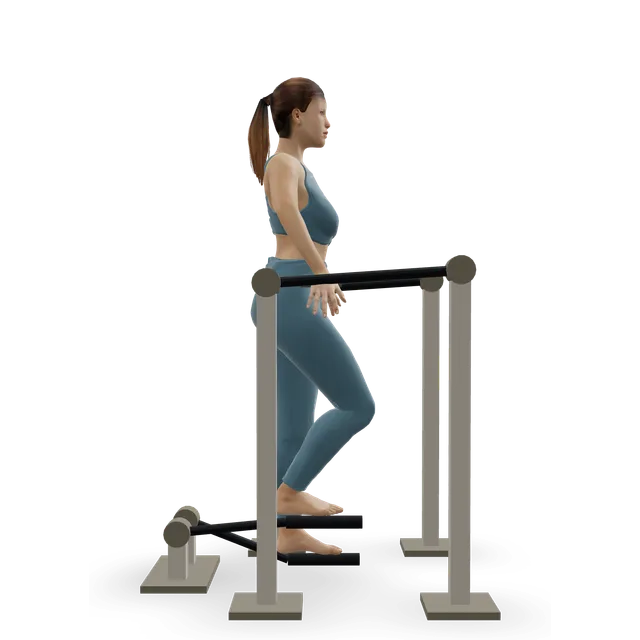
- Treadmill walking3 min easyBeginner · Quads, Calves, Glutes · 3D demoUntil your breathing settlesHarder: Treadmill jogging
- Wall calf stretch (gastrocnemius)30 s each sideBeginner · Calves · 3D demoOptional, for comfortEasier: Seated calf stretch with a towelHarder: Heel-on-step calf and hamstring stretch

Tips
- Ask a member of staff to show you each machine the first time, or book an induction; most gyms offer one. Note the settings that felt right: seat height, resistance and speed.
- Keep every machine at a talk-but-not-sing effort. These minutes count towards your 150 a week of moderate activity.
- Pick the machine you liked most for your plan's cardio. They all count; the one you'll keep using is the best one for you.
- Sore knees or hips: the bike or recumbent bike usually suits better than the cross-trainer or the stairs.
- With epilepsy, always clip on the treadmill's safety key.
- Wipe each machine down after you use it.
- In the gym workout plan for beginners, this is the optional Saturday session in weeks 1 to 4; after that, use your favourite machine for 30 to 45 minutes.
- Stop for chest pain or pressure, unusual breathlessness, dizziness or a pounding or fluttering heartbeat. Call 999 (911 in the US) for chest pain that feels tight or spreads to your arms, neck or jaw, or if someone faints while exercising.
The doses are suggested starting points, not a prescription. Choose a range you can control and stop for sharp or increasing pain, numbness or tingling. Get individual advice after an injury or surgery, or if you are pregnant or managing a health condition.
Part of these weekly plans
Follow the whole week: which session on which day, and how to progress.
Guides that recommend it
Find more moves like these
More cardio & conditioning



HIIT workout at home
A 20-minute no-equipment HIIT workout: jumping jacks, jump squats, mountain climbers, burpees, skips and bear crawls.
20 minIntermediate10 movesNo equipment


Plyometric workout
An advanced jump training session: pogo hops, box jumps, split squat jumps, broad jumps and depth jumps.
30 minAdvanced8 movesA bench or box, A step
Easy cardio workout
A steady 30 to 45 minute cardio session at talk-but-not-sing pace: walk, cycle, row or cross-train, counting toward weekly activity guidelines.
40 minBeginner3 movesCardio machine, A wallQuestions people ask
How long does the cardio machines for beginners: treadmill, cross-trainer, rower and bike take?
About 40 minutes, including any warm-up and cool-down listed. Shorten it by doing fewer rounds; lengthen it by adding one.
What equipment do I need?
You need: Cardio machine, A wall. Each move links to its guide, where you can find an alternative if you are missing something.
Is it suitable for beginners?
It is written for beginners. 3 of its 7 moves have an easier option listed beside them if you need one.
How do I make it easier or harder?
Use the easier or harder option listed under each move, change the number of rounds, or adjust the rest. Progress one change at a time.