Training guide

How to use a stair climber: the StairMaster and stepper, posture and the handrails, speed and time, calories, your knees, and a first workout

A stair climber is a gym machine for climbing without the walk down. Most gyms have a revolving staircase, often called a StairMaster or step mill, whose steps turn under you like a down escalator; some have a stepper, with two pedals you push down in turn. To use one, hold the rails, step on, start at the slowest speed and climb with your whole foot on each step, standing tall with your hands resting lightly on the rails. Start with 10 to 20 minutes at a pace where you can talk but not sing, and let the stairs stop before you step off.

Stair climbing is vigorous for most people: the NHS counts walking up stairs as vigorous activity, and short stair sessions raised fitness by about 7 to 17% in 6 to 8 weeks in small trials. Leaning on the rails makes it easier than the display says, the calories on the screen are an estimate, and no study has shown that a stair machine grows your glutes.

This guide covers both machines step by step on the 3D figure, the handrails and posture, speed and time, calories, what it works, your knees, real stairs as an option, and a stair climber workout to follow.

The short version

Two machines share the name

The revolving staircase (a step mill, what most people now call "the StairMaster") makes you climb real steps that turn under you; the stepper has two pedals you push down in turn. Both are climbing without the walk down, and both are vigorous for most people: the NHS lists walking up the stairs as vigorous activity, and the Compendium of Physical Activities rates a stair machine at 9.3 METs (multiples of the energy you use at rest).

Sources 1, 2, 3

Get on and off safely, and rest your hands on the rails

Hold the rails, step on and start at the slowest speed. Put your whole foot on each step and stand tall. At the end, slow right down, let the stairs stop completely, and step off one foot at a time, still holding the rails, as the maker's manual says.

In between, rest your hands lightly rather than leaning: supporting yourself on the rails lowered oxygen use and heart rate in two small studies, so the workout becomes easier than the display says. If you need to lean to keep up, slow down.

Sources 4, 5, 6

Start with 10 to 20 minutes

At a pace where you can talk but not sing, building towards 30 minutes over a few weeks (our editorial starting point, as on our move pages). Most people climbing steadily are working vigorously, and 75 vigorous minutes a week give similar benefits to 150 moderate ones.

Source 1

The calories on the screen are an estimate

For a 70 kg person, 30 minutes at 9.3 METs is about 325 calories (our arithmetic from the Compendium's single value for a stair machine). Machine displays have been wrong by about 20% or more in either direction. At the same felt effort, a treadmill used a little more energy than a stair machine in two lab studies, but stair machines push your heart rate higher.

Sources 2, 5, 7, 8, 9, 10

Good for fitness and your heart; it isn't strength training

In small trials of inactive adults, short stair climbs raised aerobic fitness by about 7 to 17% in 6 to 8 weeks, and people who climb more stairs have lower rates of heart disease, a link rather than proof. Climbing works your thighs, glutes and calves, but we found no study showing a stair machine grows your glutes.

Sources 11, 12, 13, 14, 15, 16, 17, 18, 19

Your knees

Going up stairs put about 316% of body weight through the knee in people with instrumented knee implants, against 346% going down and 261% walking, and a stair machine has no walk down. With pain around the kneecap, slow down and keep sessions short.

Sources 20, 21

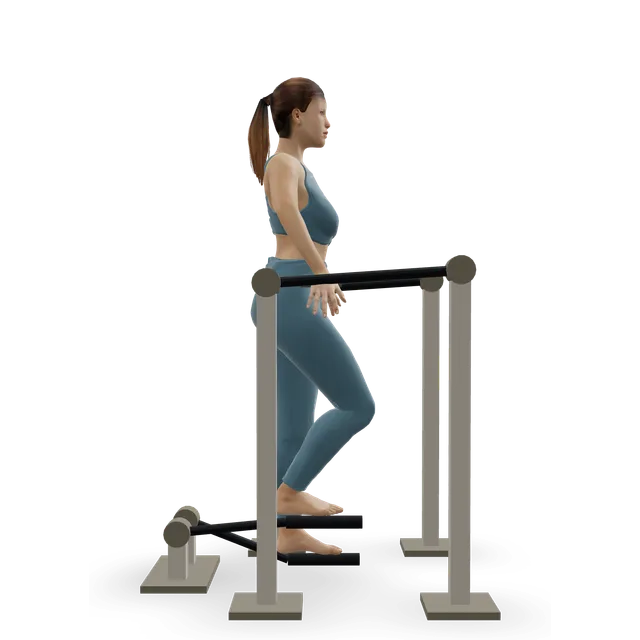
How to use a stair climber (step mill), step by step

From our step mill move page and the getting-on-and-off guidelines in one maker's manual. Machines from several makers work the same way; the buttons differ, so read the label on yours. The 3 to 5 minutes at each end and the gradual speed changes are editorial.

  1. Check the console first: find the stop button, and if it asks for your weight, type it in so the calorie estimate is closer. Choose the manual setting at the lowest speed.
  2. Holding both rails, step onto a stair with your whole foot, then the other foot, and stand tall. The stairs start to turn slowly.
  3. Climb with your whole foot on each step, pushing up through the middle of your foot and heel, the other foot following onto the next stair.
  4. Stand tall with a slight lean forward from your hips, eyes ahead, hands resting lightly on the rails.
  5. After 3 to 5 easy minutes, raise the speed a step at a time until you can talk but not sing.
  6. Keep your knees in line with your toes, and don't snap them straight at the top of each step.
  7. For the last 3 to 5 minutes, slow down to the lowest speed.
  8. Let the stairs stop completely, then step off one foot at a time, holding the rails.

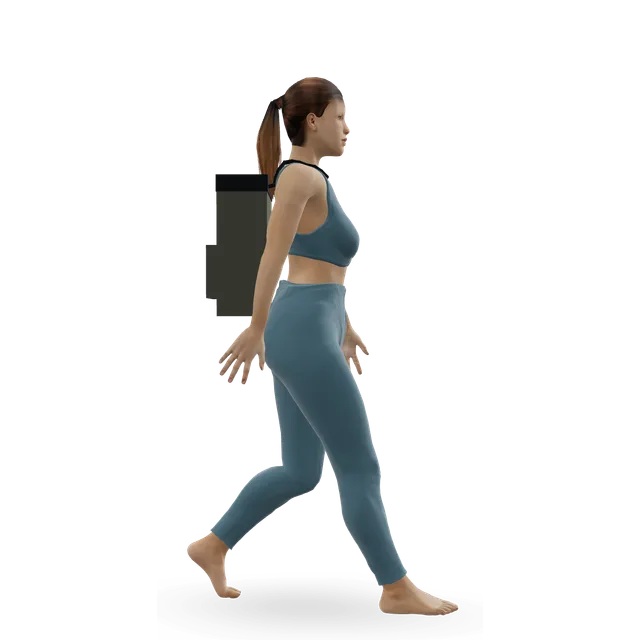
Loading the 3D figure…

Gets into position, then repeats the movement. Technical checks passed; qualified exercise review is pending.

The movement on the figure: Step mill (revolving stair machine)

Using a stepper (the pedal machine)

Our stepper move page's steps and cues. On a stepper at a fixed setting, a faster or slower step rate didn't change oxygen use or heart rate in one study, so go for deep, steady steps.

  1. Hold the rails, step onto the pedals and start at a slow setting.
  2. Stand tall with your weight over your feet and your hands resting lightly on the rails.
  3. Push each pedal down in turn in a steady rhythm, most of the way but short of the floor: deep steps rather than tiny pumps.
  4. Raise the level gradually to a moderate effort, and slow down for the last few minutes.
  5. Let the pedals stop before you step off.

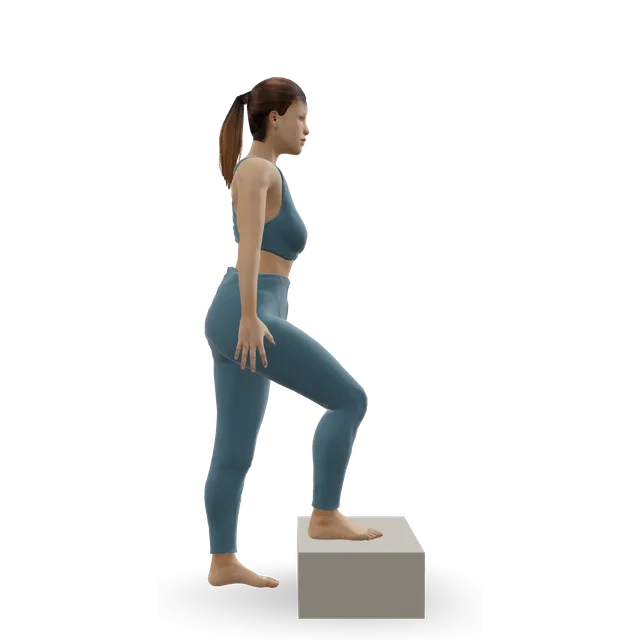
Loading the 3D figure…

Gets into position, then repeats the movement. Technical checks passed; qualified exercise review is pending.

The movement on the figure: Stair-stepper machine

What a stair climber is, and what it works

The revolving staircase

A short flight of real steps on a loop that turns downwards, so you climb at the machine's pace. Each step is a full climb: on one model the steps are 8 inches (about 20 cm) high. Many makers sell them; gyms often call them StairMasters, step mills or stair climbers.

Source 8

The stepper

Two pedals you push down in turn, your feet never leaving them, with the resistance set on the console. Much of the older research on "the StairMaster" used this kind of machine: the StairMaster 4000 in the 1990s was a pedal stepper, by our reading of the model name, as the studies don't always say.

Source 5

Real stairs

The same climbing, with a walk back down. The descent is where knees complain and falls happen, as our stair climbing move page says, so take it unhurried and use the rail.

How hard it is

The 2024 Compendium of Physical Activities rates the stair machine at 9.3 METs, and stair climbing at 4.5 at a slow pace, 6.8 in general, 7.5 two steps at a time and 9.3 at a fast pace one step at a time; going down stairs is 3.5. It has no separate entry for a pedal stepper. In 20 people climbing an escalator at 70 steps a minute, the measured cost was 8.6 METs. These are averages; leaning on the rails lowers them.

Sources 2, 3, 22, 23

What it works

Climbing lifts your body weight with the front of your thighs (quadriceps), your buttocks (gluteus maximus, the main hip muscle going up stairs) and your calves. A faster cadence raised glute, thigh and calf activity in 33 adults, and the authors wrote that stair stepping "would not be recommended for strengthening of the hamstrings musculature". In trained runners, leg muscle activity on a stepper was up to 60% lower than in treadmill running, except for the thighs. It's mostly cardio: the load is your body weight, many times a minute.

Sources 17, 18, 19, 24

How people differ

You lift your whole weight with every step, so heavier people use more energy at the same setting and find it harder. Machines have a maximum user weight (136 kg, or 300 lb, on one maker's step mill), so check the label. A fixed step height is a bigger climb for shorter legs: take whole steps at a slower rate. The same setting is moderate for one person and very hard for another, so go by your breathing.

Source 4

The handrails and your posture

Leaning on the rails makes it easierEmerging evidence

On a StairMaster stepper, supporting yourself with your arms lowered heart rate and oxygen use at a high setting (6 people). On a step treadmill, in 15 healthy women, "mean oxygen uptake was significantly reduced during continuous light and continuous very light handrail support". On a treadmill, gripping the rails cut oxygen use by 15 to 21% in 10 adults, the figure our incline walking guide uses. The maker says the same: "Supporting your weight (on handrails) while exercising decreases the exercise intensity."

Sources 5, 6, 25, 4

What to do

Rest your fingertips or palms lightly on the rails for balance; don't hang on them or lock your arms. If you need to lean to keep up, lower the speed. Hold firmly to get on and off. If your balance is poor, hold on and accept an easier workout (our suggestion, as in our incline walking guide).

Short steps without your hands feel harderEmerging evidence

On a stepper, short steps with no hands reached a "somewhat hard" rating 105 seconds sooner, at levels 2.7 lower, than full steps with arm support, and 83% of people found them harder; it was a small exploratory study that changed two things at once. Over 22 minutes on a stair machine, people's hands drifted lower on the rails and their glute and thigh activity fell.

Sources 26, 27

Stand tall, with a slight lean from your hipsEmerging evidence

On stairs, leaning the trunk forward raised the work at the hip in 20 women, and leaning forward lowered the stress behind the kneecap in another 20, while an upright trunk raised it. On a pedal climber, letting the trunk sway raised the load on the knee in 12 people. So stand tall with a slight forward lean from your hips, not a slump over the console, and keep your knees in line with your toes (our reading).

Sources 28, 29, 30

On real stairs, the rail is for safetyEmerging evidence

A handrail didn't add stability for healthy older adults on stairs, but helped those afraid of falling. Use it whenever you want, especially coming down.

Source 31

Speed, time and how often

The weekly target

Adults need at least 150 minutes of moderate activity or 75 minutes of vigorous activity a week, plus strength work on 2 days, and stair machine minutes count. Moderate means you can talk but not sing; vigorous means you can't say more than a few words without pausing for breath.

Source 1

Your first sessions

10 to 20 minutes, building towards 30 (the editorial starting point on our step mill and stepper pages), or 3 rounds of 3 to 5 minutes with 1 slow minute between, as level 1 of our stair climber workout does (editorial). Add about 5 minutes a session or two, changing one thing at a time: time first, then speed, as our incline walking guide advises.

Speed: steps a minute (our arithmetic)

A revolving step mill shows its speed as steps a minute; one maker's machine runs from 24 ("very easy") to 162, and suggests about 24 for a first session. Using the stepmill equation a 2022 validation study used (oxygen cost in ml per kg per minute = steps a minute × step height in metres × 2 + 3.5), with 20 cm steps and no leaning on the rails, the cost is roughly:

  • 24 steps a minute: about 3.8 METs (light to moderate).
  • 40 steps a minute: about 5.6 METs (moderate).
  • 50 steps a minute: about 6.8 METs (vigorous; the Compendium's stair climbing, general).
  • 60 steps a minute: about 8.0 METs.
  • 70 steps a minute: about 9.1 METs (close to the Compendium's fast stair climbing).

Sources 8, 4, 2

Levels aren't the same between machines

Level 7 on one machine isn't level 7 on another, and step heights differ, so the list above is a rough guide only. Go by your breathing, and write down the setting that worked.

Sources 5, 8

Adding intervals

Once 20 minutes of steady climbing is comfortable, try 1 minute brisk and 2 minutes easy, 4 to 8 rounds, as our cardio intervals workout does. The stair trials used three short, hard climbs (20 seconds all-out, or three vigorous climbs of 60 steps spread through the day). Keep hard sessions to once or twice a week, with easier days between (our suggestion).

Sources 12, 32

"25-7-2" and other viral routines

25-7-2 means level 7 for 25 minutes, twice a week. No study has tested it; it's a 25-minute vigorous session, and level 7 differs between machines. It's a fine goal once 20 minutes of steady climbing is comfortable.

Source 8

How often

2 or 3 stair sessions a week alongside your other cardio is a sensible start (our suggestion; the trials trained 3 to 5 days a week). An easy session after a leg day is fine; if leg strength is your priority, keep hard intervals away from heavy leg days, as our plans advise.

Calories, and how it compares with other machines

Calories in 30 minutes (our arithmetic)Strong evidence

The Compendium gives a single value for a stair machine, 9.3 METs; multiply by your weight in kg and the time in hours. At a steady, vigorous pace without leaning on the rails, 30 minutes is roughly:

  • 60 kg: about 280 calories.
  • 70 kg: about 325 calories.
  • 80 kg: about 370 calories.
  • 100 kg: about 465 calories.

Sources 2, 3

The display is an estimateEmerging evidence

On a StairMaster stepper, "The measured MET values were about 20% lower than those specified by machine settings" in 6 people. On the same kind of machine, 28 adults used more than the maker's estimate at most step rates. On a revolving step mill, the display under-read at every stage (for example 4.0 METs shown against 5.3 measured) in 16 students. In cardiac rehabilitation, displays on mixed machines were close (247 against 230 calories). Go by your breathing, and compare yourself only on the same machine.

Sources 5, 7, 8, 33

Against the treadmill, bike and cross-trainerEmerging evidence

At the same felt effort, the treadmill used more energy than all the other machines in 13 adults, and the stair stepper more than an exercise bike; jogging was highest in 10 men. In 30 fit men working hard, the stair climber used 13.35 calories a minute, against 15.18 on the treadmill and 12.82 on the cross-trainer. At the same oxygen use, heart rate ran 7 to 11 beats a minute higher on a stepper than on a treadmill. So a stair machine isn't a calorie shortcut: what matters is how hard and how long you go.

Sources 9, 34, 35, 10, 5, 36

Fitness tests on a stepperMixed evidence

In 18 trained runners, peak oxygen uptake on a stepper (46.7 ml per kg per minute) was close to the treadmill (49.3), but in 30 young adults treadmill peaks were higher. Fitness you build on one machine carries over, but not perfectly.

Sources 37, 38

Weight lossStrong evidence

A stair machine helps through the energy it uses, like any vigorous cardio. Exercise alone takes weight off slowly: about 2.8 kg at 150 minutes a week of aerobic exercise across 116 trials, and the trials of stair snacks found no change in body composition. It doesn't take fat off your stomach or thighs in particular.

Sources 39, 40, 41

What the evidence says about stair climbing and your health

Short bouts of stairs raise fitnessStrong evidence

In 15 young women, building from 1 to 5 climbs a day of 199 steps over 8 weeks raised aerobic fitness 17.1% and lowered LDL cholesterol 7.7%. In 45 office workers, 3 climbs a day of 145 steps raised predicted fitness 9.4%. In sedentary women, three 20-second all-out climbs 3 days a week for 6 weeks raised it 12%. In 42 inactive adults, three 30-second climbs a few times a week raised it 7%, while 40 minutes of moderate cycling didn't change it significantly. Across 11 trials of exercise snacks, mostly stair climbing in people under 65, fitness improved with moderate certainty. The trials are small and short.

Sources 11, 42, 43, 12, 32, 13, 41, 44

Stair machines raise fitness tooEmerging evidence

In 23 active college women, 9 weeks on a StairMaster Gauntlet (a revolving stair machine, by our reading of the model name), 4 days a week for 30 to 45 minutes, raised fitness 12% against 16% with running. In 24 women aged 50 to 65, 12 weeks raised it 11.1%. In 22 women, a stair climber, treadmill and cross-trainer gave similar gains.

Sources 14, 45, 46

Blood pressure, cholesterol and body fat: inconsistentMixed evidence

One stair trial lowered LDL cholesterol; another found no change in blood pressure, cholesterol or body composition; the snacks meta-analysis found no effect on these. In one uncontrolled study, women with mild high blood pressure saw resting systolic pressure fall from 142 to 133 mmHg.

Sources 11, 43, 41, 47

Climbing stairs in daily life goes with better heart healthEmerging evidence

In 458,860 UK Biobank adults followed for 12.5 years, 6 to 10 flights a day went with a 16% lower risk of heart disease and stroke than none. Across 9 studies of 480,479 people, stair climbing went with lower cardiovascular and all-cause death. But two cohorts found no link with cardiovascular death, and in a Japanese cohort the link weakened after allowing for lifestyle. These are observational studies: they show a link, not proof.

Sources 15, 16, 48, 49, 50, 51, 52

People with heart diseaseEmerging evidence

In 20 people with coronary artery disease, supervised stair-climbing intervals (three bouts of six flights) raised fitness as much as standard cardiac rehabilitation in about a fifth of the supervised time. That was supervised rehab; with heart disease, follow your team's advice.

Source 53

Blood sugar after mealsEmerging evidence

Short bouts of stair climbing after meals lowered blood sugar in people with prediabetes or type 2 diabetes in 8 of 9 studies, but not in people with normal blood sugar.

Source 54

A few minutes push your heart rate and blood pressure up fastEmerging evidence

In 17 healthy men aged about 64, 12 flights on a stair machine (about 3 minutes) gave the highest heart rate (151) and systolic blood pressure (271 mmHg) of all the tasks tested, higher than a one-arm press at 70% of maximum. That's why a warm-up and a gradual build-up matter, and why people with heart conditions should check first.

Source 55

Your glutes, thighs and calves

It works your glutes, but we found no study showing it grows themEmerging evidence

The lower part of the gluteus maximus is the main hip extensor going up stairs, a faster cadence raised its activity, and walking up a steep slope raised it by 345% against level walking. But muscle activity isn't growth, and we found no study measuring glute growth on a stair machine. In 15 older adults, adding stair climbing to 17 weeks of walking didn't add thigh muscle: "an added stair-climbing exercise may not provide additional training effects". For bigger glutes, our glute guide uses strength training such as hip thrusts and squats.

Sources 17, 19, 56, 57

Leg power in older adultsEmerging evidence

In 46 adults aged about 71, 12 weeks of stair climbing raised leg power by 13.7%, against 19.5% with machine weights, not a significant difference. In 39 healthy seniors, 8 weeks of stair climbing didn't raise maximal strength but improved fitness and balance.

Sources 58, 59

Two steps at a timeEmerging evidence

Skipping a step used about 70 to 90 more calories an hour and more ankle and knee work in 12 people. On a public stairway, it cost more per minute (9.2 against 8.5 calories) but less per flight, because it was quicker. On a moving step mill, try it only once you're steady, at a slow speed, with your hands near the rails (our suggestion).

Sources 60, 61

Backwards

Stepping backwards on a stepper raised heart rate a little, but the authors called the differences "not practically meaningful". Don't climb backwards on a moving step mill (our suggestion).

Source 62

Your knees and hips

Going up loads the knee about 3 times your body weightStrong evidence

In 5 people with instrumented knee implants, the peak force through the knee was 316% of body weight going up stairs, 346% going down and 261% walking on the flat; cycling at an easy 60 watts was about 119%. Behind the kneecap, the force averaged 3.2 body weights going up, 2.8 coming down and 0.9 walking, across studies. A stair machine takes away the walk down, but the kneecap still works hard on the way up; a bike is gentler.

Sources 20, 63, 21, 64

Slowing down helps a sore kneecapEmerging evidence

People with pain around the kneecap kept the stress behind it at normal levels by climbing more slowly (10 people with pain, 10 without), and a slight forward lean lowered it in healthy women. With kneecap pain, keep the speed low, sessions short and pain to about 5 out of 10, settled by the next morning, as our knee pain on stairs guide says.

Sources 65, 29

Do stairs wear out your knees?Mixed evidence

In 398,939 UK Biobank adults, climbing more than 150 steps a day went with a 13% higher rate of knee osteoarthritis diagnoses, an observational link from self-reports. A review of work that loads the knee couldn't work out a dose-response for climbing. In people with or at risk of knee osteoarthritis, climbing 7 or more flights a week went with lower mortality. NICE recommends exercise, including strengthening and aerobic fitness, for osteoarthritis. Stairs haven't been shown to harm healthy knees.

Sources 66, 67, 68, 69, 70

Hips

In 4 people with instrumented hip implants, the force through the hip was 251% of body weight going up stairs and 260% going down, against 238% walking: a little more than walking, as at the knee. With hip pain on stairs, see our hip pain on stairs guide, and use the bike or cross-trainer while it settles (our suggestion).

Source 71

Real stairs instead of a machine

Stairs at home, work or a stadium

Climb briskly and walk down slowly, holding the rail: 6 to 8 climbs of 30 to 60 seconds make a session (our hill and stair conditioning workout), or a few short climbs spread through the day, as the stair trials did. Walking up the stairs counts as vigorous activity.

Sources 1, 11

The walk down

Going down is the riskier half: it loads the knee most and it's where falls happen, as our stair climbing move page says. Take it unhurried, with the rail. If going down already hurts your knees, get it checked rather than pushing through daily repeats.

Stair sprints

For the fit: three 20-second all-out climbs, 3 days a week, raised fitness 12% in 6 weeks in sedentary women. Our HIIT guide covers intervals.

Source 12

Does the stair climber count as steps?

Your watch or phone may count step-mill steps, but devices differ, and pedal steppers often aren't counted well (our observation). The minutes count towards your weekly activity either way; our steps guide covers step counts.

Common mistakes and how to fix them

Hanging on the rails

It makes the climb easier than the display says. Slow down and rest your hands lightly.

Sources 5, 6

Slumping over the console

Stand tall with a slight lean from your hips.

Source 29

Tiptoe steps with your heels hanging off

Place your whole foot on each step, as our move pages say.

Tiny, fast pumps on the stepper

Take deep, steady steps; step rate didn't change the work at a fixed setting.

Source 5

Locking your knees

Keep them soft at the top of each step.

Watching your feet the whole time

Look ahead; glance down only when you need to.

Starting too fast

Begin at the slowest speed: the first minutes are your warm-up.

Stepping off while the stairs are moving

Wait for them to stop, then step down one foot at a time, holding the rails.

Source 4

Chasing the calorie number

The display can be wrong either way. Go by your breathing.

Source 8

The machines and the stairs

The step mill and the stepper at their move pages' dose, 10 to 20 minutes to start, building towards 30 (editorial there); real stairs at 6 to 8 climbs of 30 to 60 seconds, walking down slowly (our hill and stair conditioning workout).

Building up to it

Brisk walking for 30 minutes on the flat, then incline walking at 3 to 5% for 10 to 15 minutes (our incline walking guide), then a flight or two of real stairs, 2 to 4 climbs, before the machines (editorial order, from the move pages' prerequisite: walking up two or three flights without stopping).

Strength and stretches that go with it

On 2 days a week: step-ups, 3 sets of 8 to 12 each leg (our step-up workout); goblet squats, 3 sets of 8 to 12 (our full-body gym workout); hip thrusts, 3 sets of 6 to 10, for glute growth (our glute workout); single-leg calf raises from a step, 2 sets of 10 to 15 each leg (our step-up workout). After climbing, the calf, quad and hip flexor stretches for 30 seconds each side, for comfort.

Workouts to follow

The stair climber workout builds from short rounds to 30 minutes and intervals on the step mill or stepper; the cardio machines tour tries the stepper beside the other machines; the hill and stair session uses real stairs.

Plans with a cardio day that fits

Use the stair machine for these plans' cardio or interval days, at the same effort.

Who should change it

Heart conditions and high blood pressure

Stair climbing is vigorous. As our incline walking guide says, check with your GP first if you have a heart, kidney or metabolic condition, or get chest pain, dizziness or breathlessness when active. If your blood pressure is high and not yet controlled, keep to moderate effort until it is. On a beta blocker, go by the talk test rather than your heart rate.

Sources 72, 73, 74, 75

Kneecap pain or knee arthritis

Keep the speed low and sessions short, keep to the pain rule, and swap to a bike if it flares. Exercise is part of the treatment for knee osteoarthritis.

Sources 65, 69

Balance problems, falls or epilepsy

A missed step on a moving staircase can trip you, as our step mill page says. Hold the rails, keep the speed where your feet stay sure, and know where the stop button is. If your balance is poor or your seizures aren't controlled, a stepper, a bike or real stairs with a rail may suit you better (our suggestion).

Pregnancy

If you already use a stair machine, you can usually carry on at a comfortable effort; the NHS says it's not recommended to start a new vigorous activity in pregnancy. As your bump grows, your balance changes, so hold the rails lightly and step carefully (our suggestion).

Source 76

Older adults

Stair training built leg power in older adults. Start at the slowest speed, hold the rails to get on and off, and build up gradually.

Source 58

Warning signs

Stop and get medical help

If you get chest pain or pressure, feel faint or dizzy, are unusually breathless, or your heart races or beats irregularly during exercise, as our plans advise. The American Heart Association says these need immediate medical evaluation.

Source 72

Call 999 (911 in the US)

For chest pain that feels tight, heavy or squeezing, or spreads to your arms, neck, jaw or back; a sudden, extremely painful headache, especially while straining; someone who faints while exercising; or palpitations that don't go away, or come with chest pain, breathlessness or feeling faint. Don't drive yourself to A&E.

Also call 999 for pain and swelling in one leg with breathlessness or chest pain: it can be a blood clot that has reached the lungs.

Sources 77, 78, 79, 80, 81, 82, 83

A headache with effort

Ask for an urgent GP appointment or get help from NHS 111 for a headache that's triggered or made worse by coughing, sneezing, bending down or exercising.

Source 79

Light-headed after you step off

Slow down for the last few minutes and hold the rails to step off. See a GP after any faint, and if you keep feeling light-headed after slowing gradually, or dizziness keeps coming back.

Sources 81, 84

Your knee

Get advice from NHS 111 now: you cannot move the knee or put any weight on it, or it is very painful, badly swollen or has changed shape; or the knee locks, gives way or clicks painfully. Painless clicking is normal.

See a GP or physiotherapist if knee pain hasn't improved within a few weeks, or if your knee gives way on the stairs, as our knee pain on stairs guide says.

Source 85

Your calf or heel

Same day (NHS 111): throbbing pain and swelling in one calf or thigh, with warm, red or darker skin around it, which can be a blood clot in a leg vein; or a snap or pop at the back of the heel, then trouble walking or standing on tiptoe.

Source 83

Your lower back

Call 999 or go to A&E: loss of feeling or numbness around the genitals or bottom, new trouble peeing or controlling your bladder or bowels, changes in genital sensation during sex or problems with erections or orgasm, or pain, tingling, weakness or numbness in both legs. These are signs of cauda equina syndrome, which needs treating in hospital urgently. Don't drive yourself.

Call 999 or go to A&E: back pain with chest pain, or back pain that started after a serious accident, such as a car crash.

See a GP if pain spreading down a leg hasn't improved after a few weeks of home treatment, is getting worse or stops your normal activities. Sciatica on both sides, or weakness or numbness in both legs that's severe or getting worse, is a 999 call or a trip to A&E.

Aim for discomfort you'd call mild to moderate, no more than about 5 out of 10. It should settle within an hour or so, and your back should be no worse the next morning, as our back pain guides say. Pain, pins and needles or numbness spreading down a leg are the exception: stop, and see our sciatica guide.

Sources 86, 87

A hernia

See a GP if you think you have a hernia, a bulge or lump that may get bigger when you strain and smaller when you lie down. Get help from NHS 111 if you have a hernia and pain in or around it, a bloated tummy, you feel or are sick, you're vomiting blood or your vomit looks like coffee grounds, you're constipated, you have a high temperature or feel hot, cold or shivery, or you've suddenly become confused. Call 999 or go to A&E for a femoral hernia (a small lump at the top of your thigh, in your groin) with very bad tummy pain, sickness, being unable to fart or poo, a high temperature or sudden confusion.

Sources 88, 89

Before you start

Speak to your GP first if you haven't exercised for some time or have medical conditions or concerns, as the NHS advises. Get advice before hard or straining work if your blood pressure is uncontrolled (140/90 or higher at a clinic, or 135/85 at home), or you have heart disease or chest pain when you're active, a pacemaker or defibrillator, diabetic eye disease, glaucoma, a hernia, recent eye or tummy surgery, or you're pregnant, as our breathing guide lists.

Sources 1, 75, 72

Sore, or hurt?

Muscle soreness for a day or two after a new or harder session is common and fades. Sharp pain, or pain that builds during a set or lingers into the next day, isn't: swap to an easier version, and see a clinician if it persists, as our plans advise. The NHS says to stop exercising straight away if you feel any pain or become unwell, and to get help from 111 if symptoms worry you or don't go away.

Source 90
Myths

"The StairMaster builds a bigger bum on its own"Emerging evidence

Climbing works your glutes, more with a faster pace or a slight forward lean, but we found no study showing a stair machine grows them, and adding stairs to walking didn't add thigh muscle in older adults. Glutes grow with hard, progressive strength sets.

Sources 19, 28, 57

"Stairs are bad for your knees"Mixed evidence

Going up stairs loads the knee about 3 times your body weight, an ordinary daily load, and a stair machine removes the walk down. One large observational study linked very frequent stair climbing with slightly more knee osteoarthritis, while in people with knee osteoarthritis more stair climbing went with lower mortality, and NICE recommends exercise for it.

Sources 20, 21, 66, 68, 69

"The StairMaster burns more calories than the treadmill"Emerging evidence

At the same felt effort, the treadmill used more energy in two lab studies, though the stair machine pushed heart rate higher. Over a session, the one you work harder at and keep doing burns more.

Sources 9, 10, 5

"Holding the rails doesn't change anything"Emerging evidence

Supporting yourself lowered oxygen use and heart rate, even with a light, continuous touch, and the maker's manual says so too.

Sources 5, 6, 4

"The display tells you exactly how many calories you burned"Emerging evidence

Displays were about 20% too high on one stepper, too low on another and too low on a step mill.

Sources 5, 7, 8

"The stair climber burns belly fat"Strong evidence

No exercise takes fat off one place, and exercise alone takes weight off slowly. Stair climbing helps through the energy it uses, like any cardio.

Sources 39, 41

Questions people ask

How do you use a stair climber (StairMaster)?

Hold the rails, step onto the stairs and start at the slowest speed. Climb with your whole foot on each step, standing tall with your hands resting lightly on the rails, and raise the speed until you can talk but not sing. Slow down for the last few minutes and let the stairs stop before you step off, one foot at a time.

What's the difference between a StairMaster, a stair climber and a stepper?

StairMaster is a brand name that most people now use for the revolving staircase, or step mill, where you climb real steps that turn under you. A stepper has two pedals you push down in turn. Both are climbing without the walk down; on the step mill each step is a full climb.

How long should I go on the stair climber?

Start with 10 to 20 minutes, or 3 rounds of 3 to 5 minutes with a slow minute between, and build towards 30 minutes over a few weeks. Most people climbing steadily are working vigorously, and 75 vigorous minutes a week give similar benefits to 150 moderate ones.

What speed or level should a beginner use on the StairMaster?

The slowest setting to start; one maker suggests 24 steps a minute for a first session. Go up a step at a time until you can still talk in sentences. Levels differ between machines, so go by your breathing and write down what works.

Should I hold the handrails on the stair climber?

Lightly, for balance. Supporting yourself on the rails lowered oxygen use and heart rate in studies, even with a light, steady touch, so you'd be doing an easier workout than the display says. If you need to lean to keep up, slow down, and hold firmly to get on and off.

How many calories does the stair climber burn?

For a 70 kg person, about 325 calories in 30 minutes at a steady, vigorous pace, and more for heavier people. That's our arithmetic from a single average value; the machine's display is also an estimate and has been wrong by about 20% either way.

Is the StairMaster better than the treadmill?

Not better, different. At the same felt effort, the treadmill used a little more energy in lab studies, while stair machines push your heart rate higher and work your thighs and glutes in a climbing pattern. Pick the one you'll keep doing.

Does the StairMaster build your glutes?

It works them, especially if you take whole steps and lean slightly forward from your hips, but we found no study showing a stair machine grows them. For bigger glutes, strength training such as hip thrusts and squats is what the trials used.

Is the StairMaster bad for your knees?

Not for most people. Going up stairs puts about 3 times your body weight through the knee, and a stair machine removes the walk down, which loads it most. With pain around the kneecap, slow down, shorten the session and keep pain to about 5 out of 10, settled by the next morning; a bike is gentler.

Is the stair climber good for weight loss?

It uses a lot of energy for the time, like any vigorous cardio, but exercise alone takes weight off slowly: about 2.8 kg at 150 minutes a week on average in trials. It won't take fat off your stomach or thighs in particular.

Can I use the stair climber every day?

Easy sessions most days are usually fine once you've built up and your knees and calves feel good; that's our suggestion rather than a tested rule. Keep hard intervals to once or twice a week with easier days between.

Is stair climbing good for your heart?

Short bouts raised aerobic fitness by about 7 to 17% in 6 to 8 weeks in small trials of inactive adults, and people who climb more stairs have lower rates of heart disease, a link rather than proof. With a heart condition, check with your GP before vigorous climbing.

Sources

  1. NHS · Physical activity guidelines for adults aged 19 to 64
  2. Herrmann 2024 · 2024 Adult Compendium of Physical Activities: a third update of the energy costs of activities (compendium, J Sport Health Sci)
  3. Compendium of Physical Activities 2024 · Conditioning exercise: the stair treadmill ergometer, general, 9.3 METs (reference table)
  4. StairMaster · StepMill SM916 owner's manual: getting on and off, step rates and handrails (maker's manual)
  5. Howley 1992 · Step rate, handrail support and the accuracy of an electronic stepping machine (lab study, Med Sci Sports Exerc)
  6. Christman 2000 · Light handrail support, oxygen use and heart rate on a step treadmill in 15 women (randomised crossover trial, Res Nurs Health)
  7. Butts 1993 · Step rate and the energy cost of StairMaster exercise in 28 adults (lab study, Med Sci Sports Exerc)
  8. von Schaumburg 2022 · How accurate a revolving step mill's display and fitness test are, in 16 students (validation study, J Hum Kinet)
  9. Zeni 1996 · Energy use on six indoor exercise machines at the same perceived effort in 13 adults (lab study, JAMA)
  10. Prieto-González 2024 · Energy use, oxygen and heart rate on seven indoor cardio machines in 30 men (lab study, Front Sports Act Living)
  11. Boreham 2005 · Short bouts of stair climbing, fitness and cholesterol in 15 sedentary young women (randomised trial, BJSM)
  12. Allison 2017 · Brief intense stair climbing and fitness in sedentary women (trial, Med Sci Sports Exerc)
  13. Yin 2024 · Stair climbing snacks against 40 minutes of moderate cycling in 42 inactive adults (randomised trial, Appl Physiol Nutr Metab)
  14. Loy 1993 · Nine weeks of training on a StairMaster Gauntlet against running in 23 active women (randomised trial, Med Sci Sports Exerc)
  15. Song 2023 · Daily stair climbing and heart disease and stroke in 458,860 UK Biobank adults (cohort study, Atherosclerosis)
  16. Paddock 2026 · Stair climbing and cardiovascular risk: 9 studies, 480,479 people (systematic review and meta-analysis, Am J Cardiovasc Drugs)
  17. Lyons 1983 · Hip muscle activity on the level and on stairs in 11 adults (EMG study, Phys Ther)
  18. McFadyen 1988 · How the legs climb and descend stairs (biomechanics study, J Biomech)
  19. Zimmermann 1994 · Stepping direction and cadence on a step machine and leg muscle activity in 33 adults (EMG study, J Orthop Sports Phys Ther)
  20. Kutzner 2010 · Knee forces in daily activities measured with instrumented implants in 5 people (lab study, J Biomech)
  21. Hart 2022 · Forces behind the kneecap in everyday activities and exercises (systematic review and meta-analysis, BJSM)
  22. Compendium of Physical Activities 2024 · Walking: stair climbing slow, general, fast and two steps at a time, and descending stairs (reference table)
  23. Bassett 1997 · The energy cost of climbing and descending stairs in 20 adults (lab study, Med Sci Sports Exerc)
  24. Eken 2022 · Leg muscle activity on the treadmill, stepper and elliptical trainer in 17 trained runners (EMG study, J Strength Cond Res)
  25. Berling 2006 · Holding the handrails and oxygen use on a treadmill in 10 adults (lab study, J Cardiopulm Rehabil)
  26. Marin 2008 · Short steps without the arms against full steps with arm support on a stepper (exploratory crossover study, J Rehabil Res Dev)
  27. Asplund 1995 · Movement and muscle activity over 22 minutes on a stair-climbing machine (lab study, J Orthop Sports Phys Ther)
  28. Atkins 2022 · Leaning forward while climbing stairs and hip movement in 20 women (lab study, Gait Posture)
  29. Atkins 2019 · Trunk posture and the stress behind the kneecap while climbing stairs in 20 women (lab study, Gait Posture)
  30. Tsai 2011 · Keeping the trunk still or letting it sway on a pedal climber in 12 people (lab study, Int J Sports Med)
  31. Reid 2011 · Does a handrail steady healthy young and older adults on stairs? (lab study, Gait Posture)
  32. Jenkins 2019 · Stair climbing exercise snacks and fitness in 24 sedentary young adults (randomised trial, Appl Physiol Nutr Metab)
  33. Schairer 1998 · Calories on exercise machine displays against measured energy use in cardiac rehabilitation (study, J Cardiopulm Rehabil)
  34. Thomas 1995 · Six modes of exercise at the same perceived effort in 10 men (lab study, Res Q Exerc Sport)
  35. Moyna 2001 · Energy use on six exercise machines at preferred efforts in 19 adults (lab study, Med Sci Sports Exerc)
  36. Holland 1990 · A treadmill against a revolving step treadmill in 18 students (lab study, Phys Sportsmed)
  37. Bosch 2021 · Treadmill, elliptical trainer and stepper compared in 18 trained runners (lab study, Int J Sport Nutr Exerc Metab)
  38. Schuler 1998 · Peak fitness and lactate on a StairMaster and a treadmill in 30 young adults (lab study, J Sports Med Phys Fitness)
  39. Jayedi 2024 · Aerobic exercise and weight loss in adults: 116 trials (dose-response meta-analysis, JAMA Netw Open)
  40. Thomas 2012 · Why people do not lose more weight from a set dose of exercise (energy balance analysis, Obes Rev)
  41. Rodríguez 2026 · Exercise snacks, fitness and cardiometabolic health: 11 trials, 414 people (systematic review and meta-analysis, BJSM)
  42. Boreham 2000 · Seven weeks of stair climbing in 22 young women (randomised trial, Prev Med)
  43. Kennedy 2007 · A low-volume stair climbing programme in 45 office workers (randomised trial, J Sports Sci Med)
  44. British Heart Foundation 2025 · Can exercise snacking every day help you get fitter? (Heart Matters, behind the headlines)
  45. Loy 1994 · Twelve weeks of stair-machine training in 24 women aged 50 to 65 (randomised trial, Med Sci Sports Exerc)
  46. Egaña 2004 · Elliptical, treadmill or stair-climbing training in 22 women (randomised trial, J Sports Med Phys Fitness)
  47. Fish 1997 · Step treadmill training and blood pressure in women with mild hypertension (uncontrolled study, Prog Cardiovasc Nurs)
  48. Raisi 2024 · Daily stair climbing and nine health outcomes in 442,027 UK Biobank adults (cohort study, Am J Prev Med)
  49. Rey-Lopez 2019 · Floors climbed a week and mortality in 8,874 Harvard alumni (cohort study, Prev Med Rep)
  50. Sanchez-Lastra 2021 · Stair climbing at home and mortality in 280,423 UK Biobank adults (cohort study, J Cachexia Sarcopenia Muscle)
  51. Arafa 2023 · Stair climbing and heart disease and stroke in 7,282 Japanese adults (cohort study, Environ Health Prev Med)
  52. Paffenbarger 1978 · Physical activity, including stairs climbed, and heart attacks in 16,936 Harvard alumni (cohort study, Am J Epidemiol)
  53. Dunford 2021 · Stair climbing intervals against standard cardiac rehabilitation in 20 people with coronary artery disease (randomised trial, Front Sports Act Living)
  54. Hong 2024 · Stair climbing and blood sugar after meals: 25 studies (systematic review, J Sports Sci)
  55. Benn 1996 · Blood pressure during weight lifting, walking and stair climbing in 17 older men (lab study, J Am Geriatr Soc)
  56. Franz 2012 · How slope and speed change leg muscle activity in walking (lab study, Gait Posture)
  57. Ozaki 2019 · Adding stair climbing to a walking programme in 15 older adults: thigh muscle and strength over 17 weeks (randomised trial, J Sports Sci Med)
  58. Van Roie 2025 · Stair climbing against machine weights for leg power in 46 older adults (randomised trial, J Strength Cond Res)
  59. Donath 2014 · Eight weeks of stair climbing in 39 healthy seniors (randomised trial, Scand J Med Sci Sports)
  60. Gottschall 2010 · Climbing every step or every other step: energy cost and muscle activity in 12 young adults (lab study, J Strength Cond Res)
  61. Halsey 2012 · One step against two steps at a time: the energy cost of stair climbing in 14 adults (field study, PLoS One)
  62. Ryan 1994 · Forward and backward stepping on a stair machine in 20 men (lab study, Arch Phys Med Rehabil)
  63. Kutzner 2012 · Knee forces during exercise-bike cycling measured with instrumented implants in 9 people (lab study, J Orthop Sports Phys Ther)
  64. Costigan 2002 · Knee and hip forces in stair climbing in 35 young adults (lab study, Gait Posture)
  65. Brechter 2002 · Stress behind the kneecap on stairs in 10 people with and 10 without kneecap pain (lab study, Gait Posture)
  66. Wei 2024 · Stair climbing and hip and knee osteoarthritis in 398,939 UK Biobank adults (cohort study, J Gerontol A Biol Sci Med Sci)
  67. Verbeek 2017 · Work that loads the knee and the risk of knee osteoarthritis (systematic review, Saf Health Work)
  68. Jakiela 2024 · Stair climbing and mortality in adults with or at risk of knee osteoarthritis (cohort study, J Rheumatol)
  69. NICE 2022 · Osteoarthritis in over 16s: diagnosis and management (NG226 guideline)
  70. Versus Arthritis · Knee pain (patient information)
  71. Bergmann 2001 · Hip forces in everyday activities measured with instrumented implants in 4 people (lab study, J Biomech)
  72. Paluch 2024 · Resistance training with and without heart disease: 2023 update (American Heart Association scientific statement, Circulation)
  73. Bull 2020 · World Health Organization 2020 guidelines on physical activity and sedentary behaviour (guideline, BJSM)
  74. Riebe 2015 · Updating ACSM's recommendations for exercise preparticipation health screening (position statement, Med Sci Sports Exerc)
  75. NHS · High blood pressure
  76. NHS · Exercise in pregnancy
  77. NHS · Chest pain (past its review date: reviewed August 2023, review due August 2026)
  78. NHS · Heart attack
  79. NHS · Headaches
  80. NHS · Subarachnoid haemorrhage
  81. NHS · Fainting
  82. NHS · Heart palpitations
  83. NHS · Deep vein thrombosis (DVT)
  84. NHS · Dizziness (past its review date: reviewed April 2023, review due April 2026)
  85. NHS · Knee pain
  86. NHS · Back pain
  87. NHS · Sciatica
  88. NHS · Hernia
  89. NHS · Femoral hernia repair
  90. NHS · How to warm up before exercising

Exercise education, not a personal prescription, and clinical review of these guides is pending. Check with a GP before starting hard training if you have a heart condition, chest pain, dizziness or breathlessness when active, and stop for sharp or increasing pain. Health disclaimer.