Pain guide · Shoulder pain

Shoulder pain on the rowing machine: the front of the shoulder, shoulder blade, grip and the damper

Shoulder pain on the rowing machine is usually the rotator cuff or the muscles around the shoulder blade meeting more or harder rowing than they are used to, often with a tight grip, an early pull with the arms or hunched shoulders late in a piece. Where it hurts is the best clue: the front or outside of the shoulder is usually rotator cuff related pain, a tender spot at the front can be the biceps tendon, the top of the shoulder at the end of the collarbone is the AC joint, and an ache under the shoulder blade is usually the muscles there or, sometimes, a nerve in the neck. In masters rowers, few injuries happened on the machine, and rows are part of the treatment for rotator cuff pain. A loose grip, legs first, the handle drawn to the lower ribs, a low damper and shorter, easier pieces usually help.

This guide starts with the signs that need help, from a 999 call for chest pain or tightness, or chest pain that spreads to your arm, neck or jaw, on the machine, to a same-day check through the National Health Service's 111 line (NHS 111) or a general practitioner (GP) for sudden weakness after a pop, a hot, swollen shoulder or worsening numbness down the arm. It then maps the causes by where it hurts, explains what the studies of the stroke, the damper and stroke rate show, and don't, shows how to change your rowing today, and gives a three-stage plan with a 3D demo of every move, back to your usual sessions.

When to get help first

Exercise is for pain that has been checked or is clearly mild and settling.

Get urgent medical help if

  • Call 999 or go to A&E: after a fall or injury, your shoulder looks out of place or has changed shape, you cannot move your arm, or your shoulder is painful, bruised or swollen. Do not drive yourself, and do not try to put it back in yourself.
  • Call 999: chest pain that started suddenly, or spreads to your arm, neck or jaw, or your chest feels tight. This could be a heart attack. Do not drive yourself to A&E.
  • Call 999: shoulder or arm pain with chest pain that feels tight or squeezing, or chest pain that spreads to your arms, neck or jaw, especially with shortness of breath, sweating or feeling sick. It could be a heart attack.
  • Get help from NHS 111: pain or tightness in your chest, neck, shoulders, jaw or arms that comes and goes, often brought on by exercise, stress, emotion or cold and easing after a few minutes' rest. It can be angina, a sign of a heart problem. If you've been diagnosed with angina, get help from NHS 111 too if it feels worse than before, is happening more often, lasts longer or happens when you're resting.
  • Get help from NHS 111: you're suddenly more short of breath than usual; you have chest pain and you feel sick or are being sick; or you have chest pain and you feel like your heart is racing, going too slowly, skipping a beat or fluttering.
  • Someone who faints while exercising, or who has fainted and can't be woken within a minute, has chest pain or a pounding, fluttering or irregular heartbeat, or hasn't fully recovered.
  • Call 999 or go to A&E if breathing suddenly becomes difficult, if pain in your chest or upper back comes on suddenly with breathlessness or a very fast heartbeat, or if someone passes out. Do not drive yourself. It can be a blood clot that has reached the lungs.
  • Call 999: you suddenly can't fully lift both arms and keep them there, because of weakness or numbness in one arm, especially if one side of your face droops or you slur your words or sound confused. It could be a stroke. Call even if the signs have stopped.
  • Same day (GP or NHS 111): sudden weakness lifting the arm after an injury or fall. A rotator cuff tear caused by an injury needs urgent referral to a shoulder specialist. After a dislocation in anyone over 40, the rotator cuff should be checked: about 40% have a tear.
  • Same day (GP or NHS 111): sudden or very bad shoulder pain; you cannot move your arm; the arm or shoulder is badly swollen or has changed shape; pins and needles that do not go away; no feeling in the arm; the arm is hot or cold to the touch; pain that started after an injury such as a fall; or severe pain in both shoulders.
  • Same day (GP or NHS 111): the shoulder or arm is hot, swollen or red, or you have a high temperature (although not everyone has one) or feel unwell. A joint infection needs same-day care.
  • Same day (GP or NHS 111): a sudden pop or snap with pain at the shoulder or upper arm during a lift, with or without a bulge low in the upper arm. It's usually a torn long head of the biceps. Most need no operation, but the rotator cuff can tear at the same time.
  • Call 999 or go to A&E: new problems walking, loss of bladder or bowel control, or a sudden loss of coordination, such as difficulty doing up buttons. These can be signs of pressure on the spinal cord.
  • Same day (urgent GP appointment or NHS 111): severe neck pain that starts suddenly or gets worse quickly; heaviness or weakness in the arms or legs; pins and needles in an arm along with neck or arm pain; or pain between the shoulder blades.
  • Same day: clumsiness in your hands, or numbness, pins and needles or weakness in one or both arms, that is getting worse; problems with balance or walking since the neck pain started; or neck pain with a severe headache.
  • Arm weakness or numbness that keeps getting worse, severe pain that painkillers and rest do not touch, or an unexplained fever.
  • Same day (urgent GP appointment or NHS 111): throbbing or cramping pain, swelling, redness and warmth in one arm. These can be signs of a blood clot caused by thoracic outlet syndrome, which can be life-threatening if not treated quickly.
  • Same day (call NHS 111, or go to A&E if you feel very unwell): after a big or unusual session, such as hundreds of squats, sit-ups, back extensions or burpees, a challenge or a new class, muscle pain, swelling or weakness far worse than the session explains, and dark pee (red, brown, tea or cola coloured), sometimes starting hours or days later. Dark pee isn't always there, so muscles far sorer, more swollen or weaker than the session explains still need the same-day check. It can be rhabdomyolysis, a breakdown of muscle that can harm the kidneys.

See a doctor or physiotherapist if

  • Pain that is getting worse or has not improved after 2 weeks of looking after it yourself, or it is very hard to move your arm. In many areas you can refer yourself to physiotherapy.
  • Pins and needles or a cold arm alongside neck pain, or a new loss of strength or feeling in the arm that you cannot explain (a possible nerve problem).
  • No improvement after 6 weeks of exercise, or arm symptoms still there beyond 6 to 12 weeks.
  • Your shoulder has partly or fully come out of joint, or you worry it might.
  • Not improving after a good 3 months of exercise, or the arm is clearly weak: ask for a specialist opinion.
  • Painful clicking or snapping at the front of the shoulder, or a feeling of something slipping there. The tendon can slip out of its groove, usually alongside a rotator cuff tear, so ask for an assessment.
  • Pain on top of the shoulder with no injury that hasn't eased after 6 to 12 weeks of changing your training: ask a GP or physiotherapist for an assessment.
  • A shoulder blade that suddenly sticks out, or new weakness lifting, pushing or carrying: see a GP. Nerve tests may be needed to find which nerve is affected and how badly.
  • A sudden pain or pop at the back of the armpit or below the shoulder blade during a hard pull, then bruising there or new weakness pulling your arm down and in: get it checked within days by a GP or sports medicine doctor, because a torn lat or teres major is rare, often missed at first, and bigger tears in athletes are sometimes repaired (our suggestion).
  • Rib pain with no injury that builds up with rowing, golf or other training: see a GP. It may be a rib stress fracture.
  • Pain at the top of the back, between the shoulders, rather than in the lower back.
  • A past history of cancer, an unexplained lump or swelling, weight loss, or pain that is constant and does not ease when you change position.
  • You smoke or used to, and have shoulder pain with a cough that will not go away, breathlessness or weight loss. See a GP if you've had a cough for longer than 3 weeks; if you've coughed up blood, ask for an urgent GP appointment or get help from NHS 111.
  • See a GP if you have pain and stiffness for more than a week, especially if you're over 50, it's in both shoulders (often the neck and hips too) and the stiffness lasts longer than 45 minutes in the morning. It can be polymyalgia rheumatica.
  • If something on the rowing machine makes you feel unwell, stop (our suggestion, from British Rowing's safety alert and its RowSafe guide, which says stop if the exercise becomes painful). Chest, jaw or arm pain or tightness is in the urgent list above.

Where does it hurt?

Location narrows the likely causes; it does not diagnose.

The front or outside of the shoulder and upper arm, worse at the finish as the handle comes in, or reaching forward at the catch

Usually rotator cuff related pain (often called impingement), the commonest shoulder pain, which mostly settles within three months with exercise. A loose grip, the handle to the lower ribs and a low damper usually help.

Read: Shoulder impingement (rotator cuff pain) →
A tender spot at the front of the shoulder at the top of the arm, worse at the end of the pull, sometimes with a snap

Possibly the long head of the biceps tendon, which often travels with rotator cuff problems.

Read: Biceps tendinitis (shoulder) →
On top of the shoulder, one finger on the end of the collarbone

The AC joint. Changes there are common on scans of shoulders without pain, so a scan report needs to match the story.

Read: AC joint injury and pain →
Along the inner edge of, or under, the shoulder blade, or between the shoulder blades, building through long pieces

Usually the shoulder blade and upper back muscles tiring. Shoulder blade pain can also come from a nerve in the neck, sometimes weeks before any arm pain.

Read: Pain under the shoulder blade →
The top of the shoulder into the side of the neck, shrugging as you pull

Usually the upper trapezius and neck muscles, which the rowing machine works hard. Shoulders down and an easier pace usually help. Our neck pain in rows guide covers the neck.

Read: Neck pain in rows →
From the neck down the arm, with pins and needles, burning or numbness, changing as you move your neck

A nerve in the neck, even if your neck doesn't hurt.

Read: Pinched nerve in the neck →
The side of the chest around the middle ribs, building over weeks, sharp on breathing in, coughing or rolling over

Possibly a rib stress injury, mostly seen in elite rowers: stop rowing and see a GP.

Read: Rib injury →
Sudden weakness lifting the arm after a jerk, a slip off the seat or a fall

Possibly a rotator cuff tear, which needs prompt assessment, as the warning signs say.

Read: Rotator cuff tear →
A painful, stiff shoulder in every direction, worse at night, for months

Possibly frozen shoulder: the stiffness, not the rowing, is the clue.

Read: Frozen shoulder →
An even ache across the upper back, shoulders and arms a day or two after a new or hard session

Muscle soreness, which fades within days.

Read: Shoulder pain after a workout →
Shoulder pain in gym rows, or the lower back, hips or knees on the rowing machine

Our shoulder pain in rows guide covers the seated cable, dumbbell and bent-over rows, and our rowing machine back, hip and knee guides cover those.

Read: Shoulder pain in rows →
Chest, jaw or arm pain or tightness on the machine, or with breathlessness, sweating or feeling sick

Possibly the heart, not the shoulder: see the warning signs.

Understand it

What nobody has countedEmerging evidence

No study counts shoulder pain from the rowing machine in gym-goers or class users. In rowers, the lower back leads. In 743 masters rowers, the low back took 32.6% of injuries, the knee 14.2%, and the shoulder and upper arm 10.6%; more than 85% used the rowing machine, but only 5 of 359 sudden injuries happened on it. In 207 young rowers, the shoulder was 11.9% of pain reports. In elite juniors and seniors the shoulder isn't among the three commonest sites, and in Australia's national team the lower back and the chest wall led.

In high-intensity class formats, the shoulder ties with the back as the commonest injury site (26% of injuries each, across 28 studies), but those injuries aren't tied to the rowing machine. At the 2023 World Rowing Indoor Championships, 44% of 180 competitors reported an injury in the month before, mostly from overuse, but the summary gives no body regions. These figures come from masters, elite and young rowers and class users, not gym-goers on the rowing machine, so this page's map is built from lab studies of the stroke, rowing injury surveys, British Rowing's guidance, trials of rotator cuff pain and NHS pages, and it says so.

Sources 1, 2, 3, 4, 5, 6, 7

What the rowing machine asks of the shoulderEmerging evidence

The stroke starts at the catch, arms long and shoulders reaching forward; then the legs drive, the body swings back, and the arms finish by drawing the handle to the lower ribs, as British Rowing teaches. A review by shoulder surgeons explains that the force from the legs and back passes to the handle through the shoulders, steadied by the large back muscle (latissimus dorsi) and the muscle that holds the shoulder blade to the ribs (serratus anterior). Pulling harder turns up almost every muscle without changing their order: activity rose with power in 22 of 23 muscles in 15 people. In 58 elite rowers, the shoulders and trunk moved through a bigger range at higher stroke rates. No study has recorded the rotator cuff during rowing.

Sources 8, 9, 10, 11, 12

Tiredness, hard pieces and more sessionsEmerging evidence

In 10 men rowing 2,000 metres all out, the upper back rounded as they tired, and the large back muscle, the upper trapezius and the back of the shoulder showed signs of fatigue. In 9 people rowing to exhaustion, a shoulder blade muscle (the middle trapezius) worked harder as fatigue built. In 9 international rowers, the upper trapezius, the large back muscle and the biceps worked harder over 1,000 metres on the machine than on water. In 20 elite rowers, rowing machine training load was the training factor most linked with injury, and in 160 UK club rowers, more training went with more injuries. Our reading: hard pieces, a jump in sessions and tired technique late in a piece are what a sore shoulder notices.

Sources 13, 14, 15, 16, 17

Grip, handle, damper and stroke rateEmerging evidence

British Rowing teaches a loose overhand grip, shoulders relaxed, back and down, no movement in the back or shoulders until the legs are nearly straight, and straight wrists as the handle comes in, drawn in a straight line to the breastbone or bottom rib, not the stomach or shoulders. A coaching article in its magazine says gripping too tightly makes blisters and calluses worse. A higher damper means more force on every pull, and British Rowing keeps the setting low. Stroke rate is less simple: at the same pace, a higher stroke rate means less load on each pull, so a lower rate eases the shoulder only if the pace or power drops with it. British Rowing recommends lower rates of 18 to 24 strokes a minute from time to time, for practising technique.

None of this has been tested against shoulder pain. No source we found tells indoor rowers how wide to keep their elbows; on water, the finish is described with the elbows bent into the body at waist height.

Sources 8, 9, 18, 19, 10

How the causes are told apartEmerging evidence

The front or outside of the shoulder and upper arm, worse at the finish or reaching forward, sometimes at night, is usually rotator cuff related shoulder pain, often called impingement; the UK shoulder surgeons' pathway says it is usually self-limiting and most symptoms respond within three months. A tender spot at the front at the top of the arm can be the long head of the biceps tendon, which often travels with rotator cuff problems. Pain on top at the end of the collarbone is the AC joint; AC joint changes showed on 70% of MRI scans of shoulders without pain, so a scan report has to match the story.

An ache along or under the shoulder blade, or between the shoulder blades, through long pieces is usually the shoulder blade and upper back muscles tiring, but shoulder blade pain can come from a trapped nerve in the neck, sometimes weeks before arm pain, and NHS inform says neck problems can cause pain in the shoulders, arms and upper back. Shrugging into the top of the shoulder and neck is the upper trapezius; British Rowing's coaches want the body weight to hang through the handle, not in the shoulders. Pins and needles, burning or numbness down the arm is a nerve in the neck (cervical radiculopathy).

Side-of-chest pain around the middle ribs, building over weeks and sharp on breathing in, in someone rowing a lot, can be a rib stress injury: mostly at the side of the chest around the sixth rib, in 8.1% to 16.4% of elite rowers, 2% of university rowers and 1% of junior elite rowers. Sudden weakness lifting the arm after a jerk or a fall can be a rotator cuff tear, which an NHS policy sends straight to hospital care. A shoulder painful and stiff in every direction for months is frozen shoulder, and a hot, swollen, red shoulder with a temperature can be a joint infection, which needs checking straight away. Pain or tightness in the chest, neck, shoulders, jaw or arms that comes on with the effort and eases with rest can be angina; British Rowing issued a safety alert after three heart rhythm problems on rowing machines in five months.

Sources 20, 21, 22, 23, 24, 25, 26, 27, 28, 29, 30, 31, 32, 33, 34

When a scan helps, and how it usually goesStrong evidence

Not usually at first. The UK pathway keeps imaging for pain that won't settle, with an X-ray after an injury, and puts ultrasound as a good first scan in experienced hands. Rotator cuff changes rise from 9.7% at 20 and under to 62% at 80 and over, with or without pain, which the authors called a common part of normal ageing. Tests matter after an injury with sudden weakness (an X-ray and urgent ultrasound), for a hot, swollen shoulder, for arm symptoms from the neck, and for side-of-chest pain that builds with rowing.

In 349 people with new shoulder pain in general practice, 23% had fully recovered at a month and 59% at a year, quicker after overuse or a slight injury and when seen early. The UK pathway expects most rotator cuff related pain to respond within three months, and the NHS says shoulder pain can take 6 months or longer to recover and asks for medical help if it isn't starting to feel better after 2 weeks. Rib stress injuries cost elite rowers a median of 57 to 69 days of full training; older reports give 4 to 6 weeks. No one can promise a date.

Sources 20, 35, 30, 36, 21, 28, 37

What helps, and how strong the evidence is

Changing how you row: sensible, but untested against shoulder painEmerging evidence

No trial has tested grip, handle height, elbow path, the damper, stroke rate or session length against shoulder pain on the rowing machine. The written steps below come from British Rowing's technique guidance, lab studies of the stroke and our rows guides. They lighten each pull with an easier pace and a low damper, because a higher damper means more force on every pull, and not by rowing at fewer strokes a minute, because at the same pace fewer strokes mean more force on each one. They treat elbow width as a comfort choice, because no source sets it for indoor rowers. British Rowing's safety guide says indoor rowing is low risk but it is still possible to injure joints, and to stop if it hurts.

Sources 8, 9, 13, 19, 10, 38

Exercise is the treatment for rotator cuff related painStrong evidence

In 102 people with long-standing shoulder pain on a waiting list for surgery, specific rotator cuff and shoulder blade exercises (each done 15 times in three sets twice a day for 8 weeks, with pain allowed up to 5 out of 10) cut the share who chose surgery from 63% to 20%, against general exercise. In 708 adults with a new rotator cuff problem, one session of advice with a home programme did as well over a year as up to six sessions of progressive exercise, and a steroid injection gave no long-term benefit. One self-managed loaded exercise did about as well as usual physiotherapy in 86 people.

The UK pathway puts exercise first: it reduces pain in the short term (8 weeks to 6 months) and improves function. An NHS physiotherapy leaflet gives 3 sets of 10 for band outward rotation and rows, and says exercises to help control the shoulder blade are needed for a good recovery.

Sources 39, 40, 41, 20, 42

How much exercise helps, and the best dose, are uncertainEmerging evidence

Across 7 trials, progressive resisted exercise beat placebo or no treatment by about 15 points out of 100, a benefit of uncertain importance on low-certainty evidence, while exercise that wasn't progressed didn't help. A Cochrane review of 60 trials found manual therapy and exercise may work about as well as an injection or surgery, on low-quality evidence, with mild short-term pain afterwards the main side effect. Trial programmes vary widely, from 1 to 3 sets of 4 to 30 repetitions, 2 to 7 times a week, for 4 to 16 weeks, with no single best dose.

Sources 43, 44, 45

The rowing machine itself: a light, gradual returnEmerging evidence

No trial has tested rowing on a machine for shoulder pain, and no study has tested a return to rowing after shoulder pain. After rib stress fractures, a review suggests a short break and then a slow return to rowing at a low intensity with pain-free training, and shoulder surgeons describe returning on the machine with minimal resistance. Using that order for the shoulder (light resistance and short pieces, then longer, then harder) is our suggestion.

Sources 29, 10

Injections and surgeryStrong evidence

The UK pathway allows one steroid injection if it isn't improving at 6 to 8 weeks, for short-term relief; in the trial of 708 adults, injection gave no long-term benefit. In 313 people, decompression surgery (shaving bone from the top of the shoulder) did no better than a placebo operation. Our shoulder impingement and rotator cuff tear guides cover them.

Sources 20, 40, 46

Where popular advice overstates itEmerging evidence

Squeezing your shoulder blades together hard at the finish isn't what British Rowing teaches: it wants the shoulders relaxed, back and down, and in 12 healthy adults the elbow-bent rowing position wasn't the best one for training the middle trapezius anyway. Pulling with your arms to go faster runs against the stroke, which is driven by the legs and body with the arms last. Fewer strokes a minute ease the shoulder only if the effort on each stroke drops too. Posture drills have no trial for shoulder pain on the rowing machine; strength work for the rotator cuff and shoulder blade has the trial evidence.

Sources 8, 47, 9, 10, 19, 39

How much pain is OK while you exercise?

Up to about 5 out of 10, back to usual by your next session, never down the armEmerging evidence

This guide uses the shoulder hub's rule, as our other shoulder movement guides do. During shoulder strengthening, pain up to about 5 out of 10 is acceptable, and a little is expected. By your next session it should be back to where it was before. If it isn't, use a lighter band or weight or a smaller range next time, not nothing.

This is how the Holmgren trial set each person's load: pain was not allowed above 5 out of 10 during the exercises, and any increase had to settle back to the starting level before the next session; otherwise the load came down. If pain climbs week on week, or a warning sign appears, stop and get it checked.

With arm symptoms, our pinched nerve in the neck guide's rule applies: Use your arm, not your neck, as the main guide. An exercise is fine if it does not send pain, tingling or numbness further down your arm, and any increase settles within an hour. A hospital leaflet on nerve glides allows some increase in symptoms but not one lasting over an hour; applying that to every exercise is this site's suggestion.

Stop and get checked if the arm feels weaker or numbness spreads.

Chest discomfort that comes on with effort, such as brisk walking or stairs, and eases within a few minutes of rest, or feels tight, squeezing or heavy, or comes with breathlessness, sweating or feeling sick, is not a pain-rule question: that is how angina and heart attacks behave. Stop, and follow the warning signs.

On the rowing machine (our suggestion, built on the same rule): judge each piece by its last few minutes and by your next session. Use the damper, the pace, the stroke rate and the piece length where your shoulder stays at 5 out of 10 or less and is back to its usual level by your next session, aiming for 0 to 3; if not, go back one step (shorter, easier, a lower damper), not to nothing. There is no agreed pain limit for shoulder exercise: 67% of 86 recent rotator cuff trials set none, and among those that set a number, 3 and 4 out of 10 were the commonest, then 5. In 7 trials of long-lasting pain, exercise that allowed some pain did no worse than pain-free exercise. British Rowing's own rule for training is stricter, stop if it hurts: on the machine, a sharp pinch at the front or top of the shoulder, or pain that builds stroke by stroke, means end the piece. A burn in the upper back and shoulder blade muscles from hard work is fine. Pins and needles or numbness down the arm, side-of-chest pain that is sharp on breathing, a pop or sudden weakness, and chest, jaw or arm pain or tightness on the machine are never pain-rule questions: see the warning signs.

Sources 39, 48, 49, 38

The exercise plan: 3 stages

Start at the first stage. Each move opens a full guide with a 3D demo.

Stage 1

Settle: a break from hard rowing, and the rotator cuff and shoulder blade work

About weeks 0 to 2: the shoulder exercises most days, other cardio 3 times a week. Keep fit without the rowing machine, or with very short, easy pieces only if they pass the pain rule, and start the rotator cuff and shoulder blade work the trials and NHS leaflets use. With a diagnosed condition (a rotator cuff tear, frozen shoulder, a dislocation or a loose shoulder, a rib stress injury, a trapped nerve in the neck), that guide's plan, or your team's, comes first; after surgery, your surgical team's plan does.

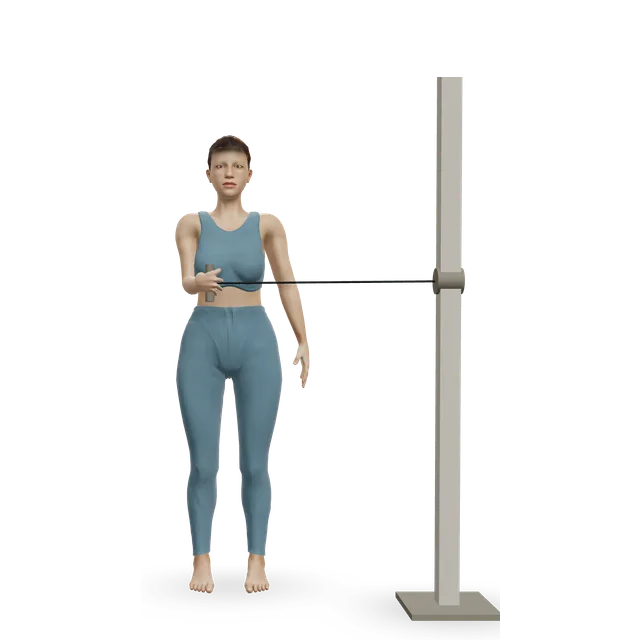
Standing band external rotation demonstrated on the 3D figure3D demoStanding band external rotationBeginner · A band + An anchor point

2 to 3 sets of 15, light band, slow return, elbow at your side · As in our shoulder impingement guide; 3 sets of 15 is the Holmgren trial's dose, and the NHS Fife leaflet starts at 3 sets of 10. The move page gives no dose

Easier: Stick-assisted external rotation (lying) · Harder: Side-lying external rotation

Band row demonstrated on the 3D figure3D demoBand rowBeginner · A band + An anchor point

3 sets of 10, elbows bent, a light band, the handles to your lower ribs · The NHS Fife physiotherapy leaflet's dose for its band row; the move page's own dose suits gym sessions

Harder: Supported single-arm dumbbell row

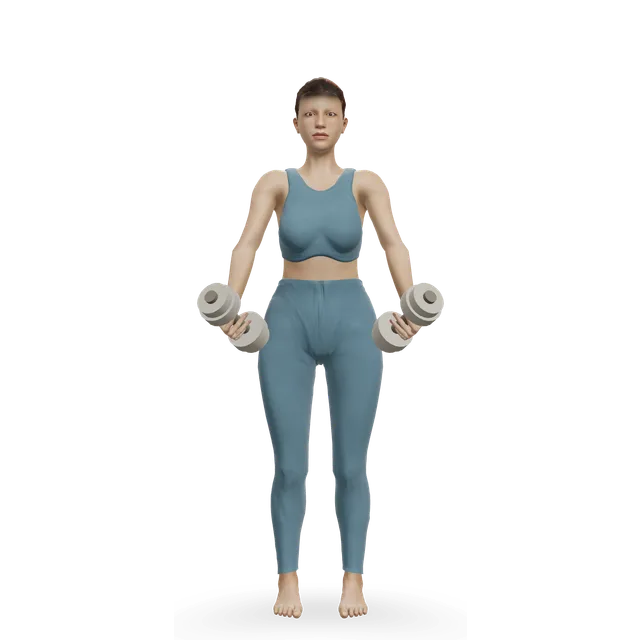
Scaption raise demonstrated on the 3D figure3D demoScaption raiseBeginner · A dumbbell

3 sets of 15, thumbs up, to shoulder height, lowering slowly · The Holmgren trial's sets and repetitions, as in our shoulder pain in rows guide. The move page gives no dose

Easier: Band lateral raise · Harder: Smith machine upright row

Thoracic rotation demonstrated on the 3D figure3D demoThoracic rotationBeginner · No equipment

6 rotations per side, moving with the breath · The move page's dose. For the upper back that rounds as you tire on the machine (our suggestion)

Easier: Side-lying open book · Harder: World's greatest stretch

Recumbent exercise bike demonstrated on the 3D figure3D demoRecumbent exercise bikeBeginner · Cardio machine

10 to 20 minutes at a moderate effort to start, building towards 30 · The move page's dose (an editorial starting point). The cardio swap while the rowing machine hurts (our suggestion); moderate means you can talk but not sing, as the move page says

Harder: Stationary cycling

Move on when: Daily life and the stage 1 moves pass the pain rule for a week, and reaching forward and drawing your hands to your lower ribs, as in a stroke, is comfortable (editorial).

Follow along: a timer, a cue and the next move, one step at a time.
Stage 2

Build: short, easy pieces on the machine, and stronger rotator cuff and shoulder blade muscles

About weeks 2 to 6: rowing 2 or 3 times a week, strength 2 or 3 days a week. The rowing machine back in short, easy pieces with the written steps below (a loose grip, the handle to the lower ribs, legs first, a low damper), with the rotator cuff, shoulder blade and pulling strength the trials and our rows guides use.

Indoor rowing (rowing machine) demonstrated on the 3D figure3D demoIndoor rowing (rowing machine)Beginner · Cardio machine

3 rounds of 4 to 5 minutes at a pace you could hold a conversation at, resting a minute between · The move page's dose (an editorial starting point), with the damper between 3 and 5 as the move page's steps say. The light-resistance return is our suggestion, after the rib stress fracture return in a review

Harder: Stair climbing

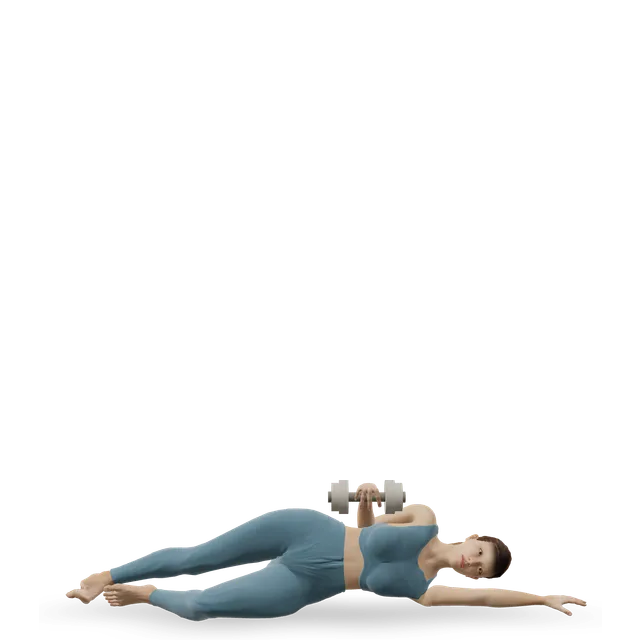
Side-lying external rotation demonstrated on the 3D figure3D demoSide-lying external rotationBeginner · A dumbbell

3 sets of 15, once a day, lowering over 3 seconds · As in our shoulder impingement guide: the Holmgren trial's dose (twice a day in the trial). The move page gives no dose

Easier: Standing band external rotation · Harder: Cuban rotation

Prone Y-T-W raises demonstrated on the 3D figure3D demoProne Y-T-W raisesBeginner · No equipment

2 to 3 rounds of 8 · As in our shoulder impingement guide (editorial), modelled on the Holmgren trial's trapezius work

Easier: Wall angel · Harder: Bent-over reverse fly

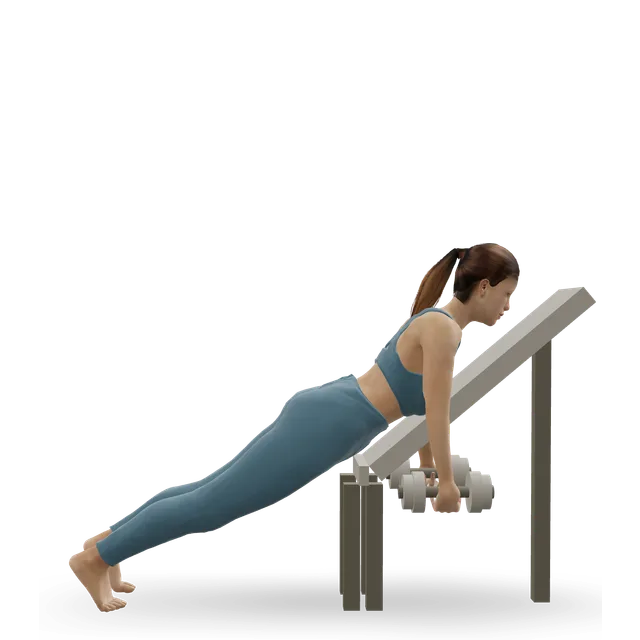
Scapular push-up (push-up plus) demonstrated on the 3D figure3D demoScapular push-up (push-up plus)Beginner · No equipment

3 sets of 10 to 15, on a wall or bench first · As in our shoulder impingement guide (editorial): the serratus anterior, which steadies the shoulder blade in the stroke

Easier: Dumbbell shoulder-blade punch · Harder: Push-up

Seated cable row demonstrated on the 3D figure3D demoSeated cable rowBeginner · A cable machine

3 sets of 8 to 12, stopping 2 or 3 reps short of failure, a narrow palms-facing handle, to the lower ribs · As in our shoulder pain in rows guide (our seated cable row guide's dose, editorial). The move page gives no dose

Harder: Supported single-arm dumbbell row

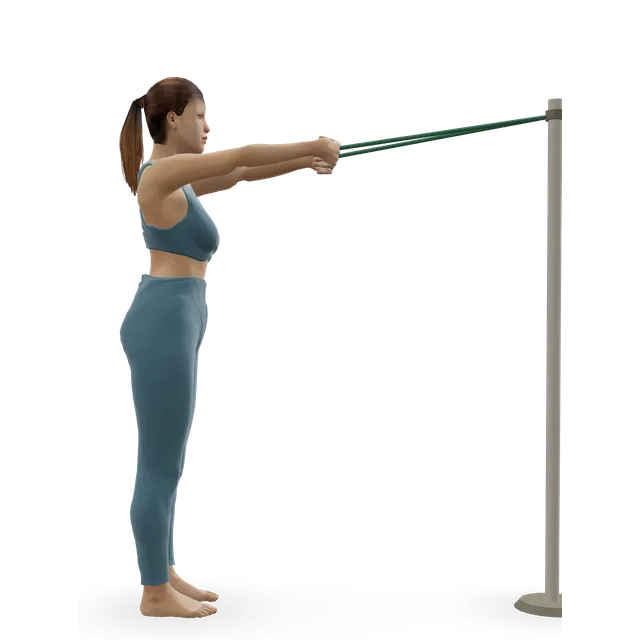
Face pull demonstrated on the 3D figure3D demoFace pullIntermediate · A band

3 sets of 12 to 15, light · As in our shoulder pain in rows guide (editorial)

Easier: Prone Y-T-W raises · Harder: Tuck back lever

Move on when: 20 minutes of easy rowing in pieces passes the pain rule and your shoulder is back to usual by the next session, and 3 sets of the rotator cuff and row exercises are controlled (editorial).

Follow along: a timer, a cue and the next move, one step at a time.
Stage 3

Back to your usual sessions

From about week 6, often later, strength twice a week, kept going: longer pieces, then harder pieces and intervals, one change at a time by the written steps below, with the rotator cuff and shoulder blade work kept going. No study has tested a return to the rowing machine after shoulder pain, so the order is editorial, as in our rowing machine back, hip and knee guides.

Indoor rowing (rowing machine) demonstrated on the 3D figure3D demoIndoor rowing (rowing machine)Beginner · Cardio machine

Your usual sessions: longer steady pieces first, then a harder pace, then intervals, the damper still 3 to 5 · Editorial, by the written steps below and our rowing machine workouts

Harder: Stair climbing

Cable external rotation demonstrated on the 3D figure3D demoCable external rotationBeginner · A cable machine

2 to 3 sets of 10 to 15, twice a week, kept going · As in our shoulder pain in rows guide (editorial). The move page gives no dose

Harder: Side-lying external rotation

Chest-supported dumbbell row demonstrated on the 3D figure3D demoChest-supported dumbbell rowBeginner · A dumbbell + A bench or box

3 sets of 8 to 12 · As in our shoulder impingement guide (editorial). The move page gives no dose

Harder: Supported single-arm dumbbell row

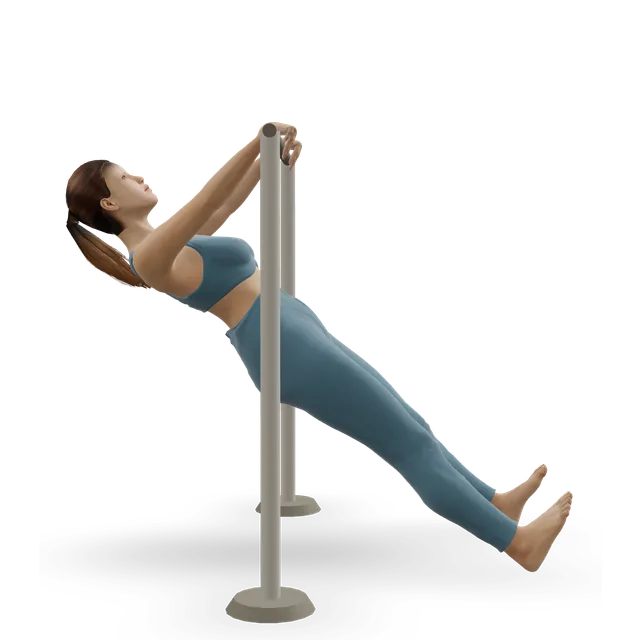
Inverted row demonstrated on the 3D figure3D demoInverted rowIntermediate · Pull-up bar

3 sets of 6 to 12, 2 or 3 reps short of failure · As in our shoulder pain in rows guide (our inverted row guide's dose, editorial)

Easier: Incline ring row · Harder: Bent-over barbell row

Band pull-apart demonstrated on the 3D figure3D demoBand pull-apartIntermediate · A band

2 to 3 sets of 15 · As in our shoulder pain when swimming guide (editorial)

Easier: Prone Y-T-W raises · Harder: Tuck back lever

Move on when: Your usual sessions pass the pain rule for 2 weeks. Keep the rotator cuff and shoulder blade work twice a week, and if a session flares it, go back to the last session that was fine for a few days, not to nothing (editorial).

Follow along: a timer, a cue and the next move, one step at a time.

What to change for now

Your stroke for now (written steps)

Our 3D figure shows the stroke, but not grip pressure, the damper, the monitor or your plan. These steps come from British Rowing's technique guidance, lab studies of the stroke and our rowing machine guides; where a step is our suggestion or our reading, it says so. None has been tested against shoulder pain on the rowing machine.

  • 1. Grip: a loose overhand grip, fingers hooked round the handle, thumbs underneath, not squeezing, as British Rowing teaches.
  • 2. The order: legs first, then the body swings back, then the arms, with no movement in the back or shoulders until the legs are nearly straight. Pulling with the arms early loads the shoulder for no gain (our reading).
  • 3. Handle path: draw the handle in a straight line to the lower ribs or the bottom of the breastbone, not your stomach or shoulders, keeping the wrists straight. If the front of the shoulder hurts at the finish, stop the handle just short of your body for now (our suggestion).
  • 4. Elbows: let them come back past your sides at about the height of the handle, relaxed, without flaring up towards shoulder height. No source tells indoor rowers how wide to keep them, so use what is comfortable (our suggestion).
  • 5. Shoulders: relaxed, back and down, not shrugged up at the finish or hunched forward at the catch; at the catch, reach with long arms but don't let the shoulders roll forward (our suggestion).
  • 6. The damper: low, between 3 and 5, as our rowing machine guide says; British Rowing's indoor site suggests four or below on the commonest machine. A higher setting means more force on every pull.
  • 7. Effort: easy, conversational pieces for now. To lighten each pull, ease the pace and keep the damper low rather than only lowering the stroke rate, because at the same pace a lower rate means more force per stroke (our reading of a review). Lower rates, 18 to 24 a minute, are good for practising technique, as British Rowing says.
  • 8. Session length: short pieces with rests, building gradually; leave all-out pieces until it settles, since the upper back rounds and the shoulder muscles tire as you go. Avoid big jumps in sessions, which went with more injuries in rowers.
  • 9. Recovery: take about twice as long coming forward as driving back, as British Rowing teaches; a rushed recovery with a tight grip keeps the shoulders working (our reading).
  • 10. Classes: in a class or circuit, keep to your own pace and damper, and swap the rowing intervals for the bike if your shoulder hurts (our suggestion).
  • 11. The rest of the day: keep using the arm. The NHS says don't stop using your shoulder completely, and don't make up your own strenuous exercises or use heavy gym equipment while it hurts. Leave overhead pressing and heavy gym rows until stage 3 (our suggestion).
  • 12. Rowing on water: the same order, grip and finish apply, though the machine asks more of the upper trapezius, the large back muscle and the biceps than the boat. Side-of-chest pain in someone who rows a lot needs checking for a rib stress injury.

Sources 8, 9, 18, 19, 10, 13, 17, 16, 21, 15, 28

How the rowing machine comes back (written steps)

No study has tested how the rowing machine comes back after shoulder pain, so these steps are our suggestion, following the light-resistance return used after rib stress fractures.

  • 1. Short, easy pieces at a low damper.
  • 2. Longer steady pieces, time first.
  • 3. A slightly harder pace.
  • 4. Intervals, starting with short, moderate ones, as in our rowing machine interval workout.
  • 5. Racing pace and time trials last. If a session flares it, go back a step, not to nothing.

Positions to swap, and why

Habit or positionWhy it mattersInstead
Gripping the handle hardBritish Rowing teaches a loose grip; a hard grip wastes energy and keeps the arms working.Fingers hooked round the handle, thumbs underneath, wrists straight.
Pulling with the arms before the legs have drivenThe legs and body should do the work first.Legs, then body, then arms.
Yanking the handle high, to the chest or chinBritish Rowing draws it to the lower ribs, not the shoulders.A straight line to the lower ribs.
The damper on 10A higher setting means more force on each pull.The damper between 3 and 5.
All-out pieces and time trials while it hurtsThe upper back rounds and the shoulder muscles tire as you go.Short, easy pieces, with the recumbent bike for hard efforts.Try: Recumbent exercise bike
Shrugging at the finishIt loads the upper trapezius and neck, which the machine already works hard.Shoulders down, with face pulls in your strength sessions.Try: Face pull
A sudden jump in sessions or a new daily classRowing machine load and training volume went with injury in rowers.Add one session or a few minutes at a time.
Resting the arm completelyThe NHS says this can stop it getting better.The stage 1 moves.Try: Standing band external rotation
Rowing on through side-of-chest pain that is sharp on breathingIt can be a rib stress injury.Stop rowing and see a GP.
Pushing on through chest, jaw or arm pain or tightnessThat is a heart warning sign, not the shoulder.Stop, and act on the warning signs at the top of this page.

Routines to follow

Rowing machine workout for beginners: set-up, technique and steady rounds

A 25-minute beginner rowing machine workout: set the damper, learn the stroke one part at a time, row three easy rounds of 4 to 5 minutes, then stretch.

25 minBeginner4 movesCardio machine

Rowing machine interval workout: power strokes and 20-second pushes

A 25-minute first interval session on the rowing machine: a warm-up with two accelerations, then 20 seconds hard and 1 minute 40 easy, 6 rounds building to 8.

25 minBeginner3 movesCardio machine

Shoulder mobility and rotator cuff routine (with a band)

A 25-minute band routine for healthy shoulders: move the shoulder and upper back through their range, then strengthen the rotator cuff and shoulder blades.

25 minBeginner12 movesA wall, A band

Upper back mobility routine

A 12-minute routine for a stiff upper back and rounded shoulders: chin tucks, wall angels, Y-T-W raises and open books.

12 minBeginner8 movesA foam roller, A wall

Neck and shoulder stretches

Eight gentle neck and shoulder stretches for desk stiffness, done standing or seated in ten minutes.

10 minBeginner8 movesA wall

Step-by-step Pilates for a sore shoulder: a 20-minute class

A 20-minute Pilates class for a sore shoulder: gentle range first, then shoulder-blade and rotator cuff strength, then light weight on the arms, in steps.

20 minBeginner15 movesA bench or box, Other / check instructions

Yoga for shoulder pain: a 20-minute sequence that builds up weight on the arms

A 20-minute yoga sequence for shoulder pain: gentle movement, standing poses with the arms low, shoulder strength, and weight on the arms built up from the wall.

20 minBeginner16 movesA bench or box, A wall

More moves for this area

Questions people ask

Why does my shoulder hurt on the rowing machine?

Usually the rotator cuff, the shoulder blade muscles or the upper back meeting more or harder rowing than they are used to, often with a tight grip, an early arm pull or hunched shoulders late in a piece. A loose grip, legs first, the handle to the lower ribs, a low damper and shorter pieces usually help. Chest, jaw or arm pain or tightness on the machine needs help straight away.

Why does the front of my shoulder hurt when rowing?

Usually rotator cuff related pain or, with a tender spot at the top of the arm, the biceps tendon, often worse at the finish as the handle comes in. Draw the handle to your lower ribs, keep your shoulders down and stop just short of your body for now. The rotator cuff and shoulder blade exercises in the plan are the treatment.

Why do I get shoulder blade pain from the rowing machine?

Usually the muscles around the shoulder blade tiring, which happens more in long or hard pieces. Shorter pieces, relaxed shoulders and the plan's shoulder blade work usually help. Pain around the shoulder blade with tingling or numbness down the arm can come from a nerve in the neck, so get that checked.

Is the rowing machine bad for your shoulders?

No study shows that: in masters rowers, few injuries happened on the machine, and rows are part of rotator cuff rehab. A sore shoulder usually needs shorter, easier pieces and better technique for a while, not to give up rowing.

Can I use the rowing machine with shoulder impingement or a rotator cuff problem?

Often yes, in short, easy pieces with a low damper, if it passes the pain rule; British Rowing says stop if it hurts. Build the rotator cuff and shoulder blade strength alongside, as in the plan, and use the bike for hard efforts until it settles.

What damper setting should I use with shoulder pain?

Low, between 3 and 5, because a higher setting means more force on every pull; British Rowing also keeps it low. The monitor still measures your work at any setting.

Should I lower my stroke rate?

Not on its own. Lower rates of 18 to 24 a minute are good for practising technique, but at the same pace a lower rate means more force on each stroke. To lighten each pull, ease the pace and keep the damper low.

How should I hold the handle and where should it finish?

A loose overhand grip with straight wrists, drawn in a straight line to your lower ribs or the bottom of your breastbone, not your stomach or shoulders. Keep your elbows relaxed at about handle height; no study has tested how wide they should be.

Why do my neck and shoulders hurt after the rowing machine?

Often the upper trapezius, which the machine works hard, especially if you shrug at the finish. Keep your shoulders down and relaxed, and see our neck pain in rows guide. Pins and needles or weakness down the arm needs checking.

I have pain at the side of my ribs from rowing. Is that my shoulder?

Probably not: side-of-chest pain that builds over weeks and is sharp on breathing in can be a rib stress injury, mainly in people who row a lot. Stop rowing and see a GP; our rib injury guide covers it.

Do I need a scan?

Usually not at first: rotator cuff changes are common in shoulders without pain, and the UK pathway keeps scans for injuries, warning signs or pain that doesn't settle with exercise. Sudden weakness after an injury is different and needs prompt assessment.

When should I see a doctor?

Call 999 for chest pain or tightness, or chest pain spreading to your arm, neck or jaw, on the machine, and go to A&E for a shoulder that looks out of place after a fall. Get help the same day for sudden weakness after a pop or jerk, a hot, swollen shoulder or a fever, or worsening numbness or weakness in the arm, and see a GP if it isn't starting to improve after 2 weeks. In the US, call 911 where this page says 999.

Related exercise guides

Other pain guides

Sources

  1. Smoljanović 2018 · Injuries in 743 international masters rowers (survey, Croat Med J)
  2. Ma 2026 · Pain in 207 young rowers (retrospective survey, J Pain Res)
  3. Smoljanovic 2009 · Injuries in international elite junior rowers (survey, AJSM)
  4. Smoljanović 2015 · Injuries among 634 senior international rowers (survey, Int Orthop)
  5. Trease 2020 · Injury and illness in 153 Australian international rowers over eight seasons (cohort, Br J Sports Med)
  6. Knapik 2022 · Injuries in high-intensity functional training (systematic review and meta-analysis, J Spec Oper Med)
  7. Schulz 2026 · Injuries and illnesses at the World Rowing Indoor Championships, 180 competitors (survey, J Sci Med Sport)
  8. British Rowing 2020 · British Rowing technique: how to indoor row (Go Row Indoor)
  9. British Rowing 2023 · How to indoor row (Inside Indoor)
  10. Hosea 2012 · Rowing injuries (narrative review, Sports Health)
  11. Turpin 2011 · Rowing power and muscle coordination in 15 people (lab study, Eur J Appl Physiol)
  12. Li 2023 · Trunk and shoulder movement in 58 Olympic rowers (motion study, Sports Biomech)
  13. Willwacher 2021 · Back muscle fatigue and upper back rounding in 10 men rowing 2,000 m all out (lab study, Eur J Sport Sci)
  14. Turpin 2011 · How muscle coordination changes with fatigue on a rowing machine in 9 people (lab study, J Exp Biol)
  15. Bazzucchi 2013 · Muscle activity on the rowing machine and on water in 9 elite rowers (lab study, Eur J Appl Physiol)
  16. Wilson 2010 · Injuries over 12 months in 20 international rowers (cohort, Br J Sports Med)
  17. Finlay 2020 · Injuries in 160 UK amateur club rowers (survey, Phys Ther Sport)
  18. Williams 2011 · Get a grip (coaching article, Rowing & Regatta, British Rowing's magazine)
  19. Kane 2013 · Low vs high drag factor and rowing economy in 12 club rowers (lab study, Int J Sports Med)
  20. Pandey 2025 · BESS patient care pathway: subacromial pain (guideline, Shoulder Elbow)
  21. NHS · Shoulder pain (past its review date: reviewed May 2023, review due May 2026)
  22. Raney 2017 · Pain and the causes of biceps tendinopathy (narrative review, Am J Transl Res)
  23. Rossano 2022 · AC joint arthritis in people not seeking care: 10 studies (systematic review, J Orthop)
  24. Carmichael 2025 · Pain around the shoulder blade in cervical radiculopathy (scoping review, N Am Spine Soc J)
  25. NHS inform · Neck problems
  26. British Rowing · Technique: the perfect stroke (magazine article written with GB coaches; copy hosted by a rowing club)
  27. NHS · Cervical spondylosis (past its review date: reviewed August 2023, review due August 2026)
  28. Harris 2020 · Rib stress injuries in 151 Australian Rowing Team athletes (cohort, Br J Sports Med)
  29. McDonnell 2011 · Rib stress fractures among rowers (review, Sports Med)
  30. NHS Bath and North East Somerset, Swindon and Wiltshire Integrated Care Board · Shoulder pain management policy (commissioning policy, past its review date of July 2025)
  31. NHS · Frozen shoulder
  32. NHS · Septic arthritis
  33. NHS · Angina
  34. British Rowing 2020 · Safety alert: care when indoor rowing
  35. Teunis 2014 · Rotator cuff changes with age in 6,112 shoulders (systematic review, J Shoulder Elbow Surg)
  36. van der Windt 1996 · How new shoulder pain goes in general practice: 349 people (cohort study, Br J Gen Pract)
  37. D'Ailly 2016 · Rib stress fractures in rowers: return to sport, risk factors and prevention (systematic review, J Sports Med Phys Fitness)
  38. British Rowing · RowSafe (February 2026 version)
  39. Holmgren 2012 · Specific exercise and the need for surgery in shoulder impingement (RCT, BMJ)
  40. Hopewell 2021 · Progressive exercise or one session of advice for rotator cuff problems in 708 adults: GRASP (RCT, Lancet)
  41. Littlewood 2016 · One self-managed exercise against usual physiotherapy in 86 people (trial, Clin Rehabil)
  42. NHS Fife · Subacromial pain syndrome (physiotherapy leaflet, 2016, past its review date of October 2022)
  43. Naunton 2020 · Progressive resisted exercise for rotator cuff pain: 7 trials (systematic review, Clin Rehabil)
  44. Page 2016 · Manual therapy and exercise for rotator cuff disease (Cochrane review)
  45. Dubé 2024 · Exercise programmes for rotator cuff related shoulder pain in 22 trials (scoping review, J Orthop Sports Phys Ther)
  46. Beard 2018 · Decompression surgery vs placebo surgery for subacromial shoulder pain: CSAW (RCT of 313, Lancet)
  47. Fennell 2016 · Shoulder blade exercises and middle trapezius and rhomboid activity in 12 adults (lab study, Physiother Can)
  48. Raulline Ullern 2025 · Pain allowances in exercise studies for rotator cuff pain: 86 studies (scoping review, BMC Musculoskelet Disord)
  49. Smith 2017 · Should exercises be painful in chronic musculoskeletal pain? (meta-analysis, BJSM)
  50. NHS · Heart attack
  51. NHS · Neck pain (past its review date: reviewed April 2023, review due April 2026)

Exercise education, not a diagnosis or treatment plan. It is written from the guidelines and studies listed above; review by a clinician is pending. If your pain follows an injury, is severe, is getting worse, or comes with any warning sign listed on this page, get it assessed. Health disclaimer.