Pain guide · Shoulder pain

Shoulder pain when doing rows: the front of the shoulder, upright rows, grip, elbows and what helps

Shoulder pain when you do rows usually comes from one of a few places, and where it hurts is the best clue. An ache at the front or outside of the shoulder, worst at the top of an upright row, usually comes from the rotator cuff; a tender spot at the front at the end of a pull, from the biceps tendon; one spot on top at the end of the collarbone, from the AC joint (where the collarbone meets the shoulder blade); and an ache along or under the shoulder blade, from the muscles there or, sometimes, the neck. Ordinary rows keep the arm low and are part of the treatment for rotator cuff pain. Upright rows are different: they lift the arm out while it's turned in, so leave them out while it hurts. No study has counted shoulder injuries from rows, so this guide says where its advice comes from.

This guide starts with the signs that need help, from accident and emergency (A&E) for a shoulder that looks out of place and a 999 call for chest pain that feels tight or spreads to your arm, to a same-day check through the National Health Service's 111 line (NHS 111) or a general practitioner (GP) for sudden weakness, a pop at the shoulder or the front of the elbow, or a hot, swollen shoulder. It then maps the causes by where it hurts, explains what the studies show, and don't, about upright rows, grip, elbows and the end of the pull, shows how to change your rows today, and gives a three-stage plan with a 3D demo of every move, from band rows back to your usual back day.

When to get help first

Exercise is for pain that has been checked or is clearly mild and settling.

Get urgent medical help if

  • Call 999 or go to A&E: after a fall or injury, your shoulder looks out of place or has changed shape, you cannot move your arm, or your shoulder is painful, bruised or swollen. Do not drive yourself, and do not try to put it back in yourself.
  • Call 999: shoulder or arm pain with chest pain that feels tight or squeezing, or chest pain that spreads to your arms, neck or jaw, especially with shortness of breath, sweating or feeling sick. It could be a heart attack.
  • Get help from NHS 111: pain or tightness in your chest, neck, shoulders, jaw or arms that comes and goes, often brought on by exercise, stress, emotion or cold and easing after a few minutes' rest. It can be angina, a sign of a heart problem. If you've been diagnosed with angina, get help from NHS 111 too if it feels worse than before, is happening more often, lasts longer or happens when you're resting.
  • Call 999: you suddenly can't fully lift both arms and keep them there, because of weakness or numbness in one arm, especially if one side of your face droops or you slur your words or sound confused. It could be a stroke. Call even if the signs have stopped.
  • Same day (GP or NHS 111): sudden weakness lifting the arm after an injury or fall. A rotator cuff tear caused by an injury needs urgent referral to a shoulder specialist. After a dislocation in anyone over 40, the rotator cuff should be checked: about 40% have a tear.
  • Same day (GP or NHS 111): a sudden pop or snap with pain at the shoulder or upper arm during a lift, with or without a bulge low in the upper arm. It's usually a torn long head of the biceps. Most need no operation, but the rotator cuff can tear at the same time.
  • Urgent treatment centre or A&E: a pop or snap and sudden pain during an effort, which could be a torn tendon. At the front of the elbow, with bruising and a bulge in the upper arm, don't wait for it to settle: a torn biceps tendon is best repaired within the first 2 to 3 weeks. If it happened weeks ago, still get it checked: repair is often still possible, though it may need a tendon graft.
  • Same day (GP or NHS 111): sudden or very bad shoulder pain; you cannot move your arm; the arm or shoulder is badly swollen or has changed shape; pins and needles that do not go away; no feeling in the arm; the arm is hot or cold to the touch; pain that started after an injury such as a fall; or severe pain in both shoulders.
  • Same day: clumsiness in your hands, or numbness, pins and needles or weakness in one or both arms, that is getting worse; problems with balance or walking since the neck pain started; or neck pain with a severe headache.
  • Same day (GP or NHS 111): the shoulder or arm is hot, swollen or red, or you have a high temperature (although not everyone has one) or feel unwell. A joint infection needs same-day care.
  • Same day (call NHS 111, or go to A&E if you feel very unwell): after a big or unusual session, such as hundreds of pull-ups, push-ups, dips or curls, a challenge or a new class, muscle pain, swelling or weakness far worse than the session explains, and dark pee (red, brown, tea or cola coloured), sometimes starting hours or days later. Dark pee isn't always there, so muscles far sorer, more swollen or weaker than the session explains still need the same-day check. It can be rhabdomyolysis, a breakdown of muscle that can harm the kidneys.

See a doctor or physiotherapist if

  • Pain that is getting worse or has not improved after 2 weeks of looking after it yourself, or it is very hard to move your arm. In many areas you can refer yourself to physiotherapy.
  • Your shoulder has partly or fully come out of joint, or you worry it might.
  • Pins and needles or a cold arm alongside neck pain, or a new loss of strength or feeling in the arm that you cannot explain (a possible nerve problem).
  • Painful clicking or snapping at the front of the shoulder, or a feeling of something slipping there. The tendon can slip out of its groove, usually alongside a rotator cuff tear, so ask for an assessment.
  • Not improving after a good 3 months of exercise, or the arm is clearly weak: ask for a specialist opinion.
  • A shoulder blade that suddenly sticks out, or new weakness lifting, pushing or carrying: see a GP. Nerve tests may be needed to find which nerve is affected and how badly.
  • Pain on top of the shoulder with no injury that hasn't eased after 6 to 12 weeks of changing your training: ask a GP or physiotherapist for an assessment.
  • A sudden pain or pop at the back of the armpit or below the shoulder blade during a hard pull, then bruising there or new weakness pulling your arm down and in: get it checked within days by a GP or sports medicine doctor, because a torn lat or teres major is rare, often missed at first, and bigger tears in athletes are sometimes repaired (our suggestion).
  • A past history of cancer, an unexplained lump or swelling, weight loss, or pain that is constant and does not ease when you change position.
  • See a GP if you have pain and stiffness for more than a week, especially if you're over 50, it's in both shoulders (often the neck and hips too) and the stiffness lasts longer than 45 minutes in the morning. It can be polymyalgia rheumatica.

Where does it hurt?

Location narrows the likely causes; it does not diagnose.

The front or outside of the shoulder and upper arm, at the top of an upright row as the elbows rise past shoulder height, or lifting the arm out

Usually rotator cuff related pain, often called impingement: the commonest cause of shoulder pain. Stopping lower, a wider grip and rows to the waist usually help.

Read: Shoulder impingement (rotator cuff pain) →
A tender spot at the front of the shoulder at the end of a row, with the elbow driven far behind you, or with palms-up rows

Often the long head of the biceps tendon or the front of the rotator cuff (our reading; no study has looked at rows). Stop the pull as the elbow reaches your side and use a palms-facing handle.

Read: Biceps tendinitis (shoulder) →
On top of the shoulder, one finger on the end of the collarbone, with heavy upright rows or pressing

The AC joint, including weightlifter's shoulder, which pressing brings on more than pulling.

Read: AC joint injury and pain →
Along the inner edge of, or under, the shoulder blade, an ache or burn during or after rows

Usually the shoulder blade muscles working hard; sometimes the neck, since shoulder blade pain is a common sign of a trapped nerve in the neck and can come weeks before arm pain.

Read: Pain under the shoulder blade →
The top of the shoulder into the side of the neck, shrugging through heavy or upright rows

Usually the upper trapezius and neck muscles. Shoulders down and a lighter weight usually help.

Read: Neck and shoulder pain →
From the neck down the arm, with pins and needles, burning or numbness, changing as you move your neck

A nerve in the neck, even if your neck doesn't hurt.

Read: Pinched nerve in the neck →
Sudden weakness lifting the arm after a jerk, a dropped weight or a fall

Possibly a rotator cuff tear. Get a same-day check, as the warning signs say.

Read: Rotator cuff tear →
A pop at the front of the elbow while lowering a heavy row, then bruising and weakness turning the palm up

A possible torn biceps tendon at the elbow: rare, mostly in men over 30. Don't wait for it to settle, as the warning signs say.

Read: Front of the elbow (biceps tendon) →
The back of the armpit or below the shoulder blade after a sudden pop during a hard pull, then bruising there

Rarely a torn lat or teres major, which is often missed at first. Get it checked within days.

Read: Back of shoulder pain →
A clunk, a dead arm or a feeling that the shoulder will slip

Possibly a loose shoulder. In weight trainers this is linked with arm-up-and-back lifts more than rows; stop that position and get it checked.

Read: Shoulder dislocation and instability →
A shoulder blade that sticks out, with weakness pushing or lifting

Rarely a nerve injury, sometimes after heavy lifting: see a GP.

Read: Winged scapula →
The inside or outside of the elbow or forearm, worse gripping on heavy rows

Usually golfer's or tennis elbow. Straps and a neutral grip often help.

Read: Elbow pain in pull-ups →
The lower back during bent-over rows

The back, not the shoulder: a chest-supported or machine row loads the lower back less.

Read: Back pain after a workout →
An even ache across the upper back and arms a day or two after a big session, not during the pull

Muscle soreness. Muscles far sorer, more swollen or weaker than the session explains, especially with dark pee, need a same-day check.

Read: Shoulder pain after a workout →
The side of the chest in someone who rows on water or a rowing machine, building over weeks

Possibly a rib stress fracture, mostly seen in elite rowers: get it checked.

Read: Rib pain →
Shoulder or arm pain with chest pain, breathlessness, sweating or feeling sick, or discomfort that comes with effort and eases with rest

Possibly the heart: see the warning signs.

Understand it

What a row asks of the shoulder, and what no study has countedEmerging evidence

In every row except the upright row, your arm pulls back from in front of you towards your side, below shoulder height, with the lats, the muscles between the shoulder blades (the rhomboids and middle and lower trapezius), the back of the shoulder and the biceps. Reviews list rowing among the exercises that work the rotator cuff and shoulder blade muscles hard, and physiotherapists use rows early in shoulder rehab because the arm stays low; in models built from scans, the rotator cuff was squeezed least with the arm low.

The upright row is different: it lifts the arm out to the side while the arm is turned in, the position linked with impingement signs in weight trainers.

No study counts shoulder pain from any row, and none compares grips or row types against pain: a 2026 review of 23 studies of pulling exercises notes "the near-total absence of longitudinal training and injury-outcome data". So the map on this page comes from condition studies, lab studies of muscle activity and shoulder position, studies of weight trainers' shoulders, trials of rotator cuff related pain and NHS pages.

Sources 1, 2, 3, 4, 5, 6, 7

Where it hurts, and who gets itEmerging evidence

No study gives the share of each cause in rows. In general, rotator cuff problems are the commonest cause of shoulder pain: the NHS lists tendonitis, bursitis and impingement for pain that is often worse while using the arm, and the UK shoulder surgeons' pathway calls this pain mostly self-limiting. Pain on top at the end of the collarbone is the AC joint, which in lifters pressing brings on more than pulling. An ache under the shoulder blade is usually the muscles there, but shoulder blade pain was reported in 72% of studies of a trapped nerve in the neck, sometimes weeks before arm pain, and NHS inform says neck problems can cause pain in the shoulders, arms and upper back.

The people it usually bothers, in our reading: people who add load, volume or a new row quickly; people with a shoulder already sore from pressing, raises or overhead work; and people who pull the bar high or yank the last reps. Lifters as a group train their pressing muscles more than the outward rotators and lower trapezius (90 men), and lifters with impingement signs had weaker outward rotators and lower trapezius (55 men, 24 with signs). These are snapshots, so they show a link, not a cause.

Sources 8, 9, 10, 11, 12, 13, 14

Upright rows: what the evidence does and doesn't sayMixed evidence

In 77 men, 46 of them weight trainers, signs of impingement went with upright rows and lateral raises taken above 90 degrees, and less often with training the muscles that turn the arm out; a snapshot like this can't show cause. In 13 young adults without shoulder problems, holding the arm at shoulder height and turned fully in squeezed the structures under the shoulder's roof at 21.3 N, against 3 N or less turned neutral or out; in 12 volunteers, the narrowest point of the space then sat over the most vulnerable part of a rotator cuff tendon. These were still, unloaded arms.

An expert column in the National Strength and Conditioning Association's (NSCA's) journal advises pulling to just below shoulder height and, with impingement pain, to a height that doesn't bring on symptoms or not at all; a hospital handout says hands at least 12 inches (about 30 cm) apart and elbows no higher than the shoulders. On the other side: no study has counted injuries from upright rows, reviews say how high the arm goes matters more than how it is turned, a 2026 review argues the narrowing follows rotator cuff problems rather than causing them, and upright rows were one of five exercises in a programme for women with neck muscle pain. A wider grip worked the deltoids and trapezius harder and the biceps less in 16 men, a muscle activity finding that says nothing about safety.

So "upright rows always cause impingement" overstates it, and "leave them out while your shoulder hurts, and bring them back wide and to shoulder height" fits the evidence.

Sources 5, 6, 15, 16, 17, 18, 19, 20, 21

The front of the shoulder at the end of the pullEmerging evidence

We found no lab, modelling or clinical study of the shoulder when the elbow is pulled far behind the body in a row. The nearest is a study of women with very loose shoulders, in whom pulling the arm back moved the ball of the joint upward. Coaches disagree: some say the elbow shouldn't pass the side of the trunk in a row, others say pull the shoulders back hard. Stopping the pull as the elbow reaches your side while the front of the shoulder hurts is our suggestion, untested.

Source 22

What a scan shows, and when it mattersStrong evidence

Not at first for an ache at the front or outside of the shoulder: the British Elbow and Shoulder Society's (BESS's) pathway says the diagnosis is clinical and "Additional imaging is not essential to confirm the diagnosis or start treatment", with X-rays after an injury, with warning signs, for severe pain or stiffness, for suspected AC joint arthritis or for pain lasting more than four weeks. Rotator cuff changes rise from 9.7% of people aged 20 and under to 62% at 80 and over, whether or not they hurt, and in a village of 664 people two in three full-thickness tears caused no symptoms.

A test matters after a dislocation (hospital treatment), for sudden weakness after a jerk (a possible tear), for a pop at the front of the elbow (an examination the same day), for a suspected lat or teres major tear, for a shoulder blade that suddenly sticks out (nerve tests), and for pain that hasn't improved by 12 weeks, which the pathway says should lead to a specialist referral.

Sources 9, 23, 24, 25, 26, 27, 28, 29

How it usually goesStrong evidence

No study follows shoulder pain from rows. The UK pathway says rotator cuff related pain is usually self-limiting and "most symptoms respond within three months". The NHS says you usually need to look after it for 2 weeks before it starts to ease, and that shoulder pain can take 6 months or longer to recover. In a UK trial of 708 adults, pain and function improved over time whatever the treatment. NHS inform expects neck problems to begin to settle within 8 weeks. No one can promise a date.

Sources 9, 8, 30, 12

What helps, and how strong the evidence is

Rows are part of the treatment for rotator cuff painStrong evidence

In 102 people with long-standing rotator cuff related pain on a waiting list for surgery, a 12-week programme whose first exercise was a standing band row (3 sets of 15, twice a day for 8 weeks, then once a day) cut the share who chose surgery from 63% to 20%, against general exercise. The row was one of six exercises, so its own effect can't be separated.

An NHS trust's shoulder strengthening leaflet uses a band row (3 sets of 10 with a 3-second hold) and a one-arm dumbbell row (3 sets of 6 to 8 with a 2-second hold, elbow tucked). Reviews of muscle activity list rowing among the exercises that work the rotator cuff and shoulder blade muscles hard, and an exercise that pulls the arm back lying face down was among the best for balancing the trapezius in 45 healthy people. None of these studies was about lifters.

Sources 31, 32, 1, 3, 33

Grip, handle and elbows change the muscles, not the painEmerging evidence

In 14 trained men, a close palms-facing handle on the seated row let them lift about a fifth more than a wide bar (50.2 against 41.4 kg for 8 reps) and worked the lats more, while the wide bar worked the trapezius and the side of the shoulder more. In 21 trained adults, rows with the elbows close to the sides produced more force and lat activity, and elbows flared out to 60 to 90 degrees worked the upper back and the back of the shoulder more; palms-up and palms-facing grips used more biceps.

Squeezing the shoulder blades together on purpose didn't add middle trapezius work in 12 men, and holding them back or letting them move gave similar activity in 14 men. None of these studies measured pain, so the handle and elbow path that don't hurt are the right ones.

Sources 34, 35, 7, 2, 36

Exercise first, then injections; surgery rarelyStrong evidence

In 708 UK adults with a new rotator cuff problem, one physiotherapy session of advice with a home programme did as well over a year as up to six sessions of progressive exercise, and a steroid injection helped a little at 8 weeks only. Progressive, resisted exercise beat placebo or no treatment by about 15 points out of 100 while exercise that wasn't progressed didn't (7 trials, low certainty); 16 reviews support exercise as the first treatment, and home exercise did as well as supervised exercise in 11 trials.

The UK pathway allows one steroid injection if it isn't improving at 6 to 8 weeks, for a benefit that lasts under 12 weeks. Decompression surgery did no better than a placebo operation at 6 months in 313 people, or over 10 years in a Finnish trial. These were middle-aged patients, not lifters.

Sources 30, 37, 38, 39, 9, 40, 41

Weight trainers' shoulders and the outward rotatorsEmerging evidence

Reviews put up to 36% of documented weight-training injuries at the shoulder, mostly from surveys looking back. In studies of recreational weight trainers, those with impingement signs had weaker outward rotators and lower trapezius, those who trained their outward rotators less often had impingement signs, and front-of-shoulder looseness went with arm-up-and-back lifts (behind-the-neck pulldowns and presses) rather than rows. These are snapshots that show associations, which is why the plan keeps rotator cuff and lower trapezius work going.

Sources 42, 13, 14, 5, 43

How much pain is OK while you exercise?

Up to about 5 out of 10, back to where it was by your next sessionEmerging evidence

This guide uses the shoulder hub's rule, as our other shoulder movement guides do. During shoulder strengthening, pain up to about 5 out of 10 is acceptable, and a little is expected. By your next session it should be back to where it was before. If it isn't, use a lighter band or weight or a smaller range next time, not nothing. It comes from the trial of 102 people above, whose patients were not allowed to go above 5 out of 10 but were encouraged to feel some pain, with any rise settled before the next session or the load came down. NHS inform's shoulder exercises call 4 to 5 out of 10 acceptable pain and want it no worse the morning after. Across 28 recent trials that set a pain limit, 3, 4 and 5 out of 10 were the commonest and none has been tested against another, and in long-lasting pain, exercise into some pain did no worse than pain-free exercise (7 trials, 385 people). A hospital handout for lifters is stricter: don't work through pain in the shoulder joint.

For rows (our suggestion, built on the same rule): judge each set by its last reps, and use the step of the plan (band and chest-supported rows, cable and one-arm rows, then bent-over, T-bar and inverted rows, then upright rows), the handle, how far your elbows travel back and the load where those reps stay at 5 out of 10 or less and the shoulder is back to its usual level by your next session. If not, go back one step, not to nothing.

A burn between the shoulder blades is fine. A sharp pinch at the front or top of the shoulder, a catch or a feeling of slipping means stop that position. A pop, sudden weakness, chest pain or pins and needles that don't go away aren't pain-rule questions: see the warning signs.

Sources 31, 44, 45, 46, 17

The exercise plan: 3 stages

Start at the first stage. Each move opens a full guide with a 3D demo.

Stage 1

Keep rowing: light, elbows low, to the waist

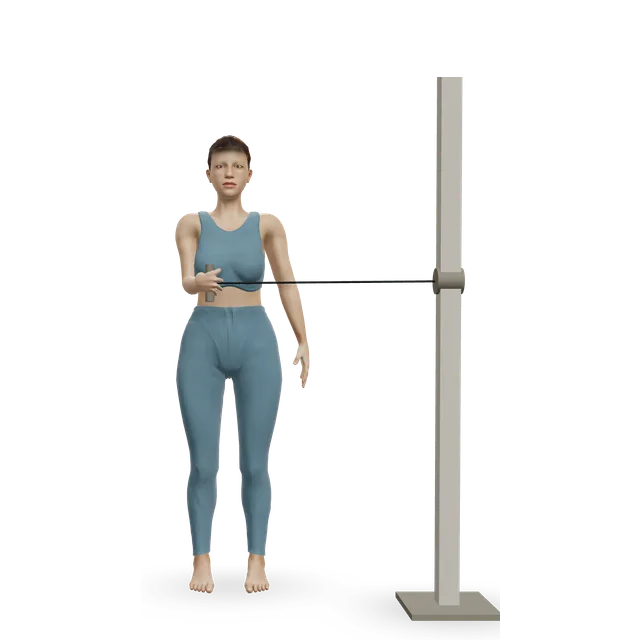
About the first 2 weeks, rotator cuff work most days and rowing 2 or 3 times a week: keep the upper back and lats working with a short, comfortable pull that stops with the elbows beside your trunk, no upright rows, and start the rotator cuff and shoulder blade work the trials used. With a diagnosed condition (a rotator cuff tear, a dislocation or a loose shoulder, biceps tendon pain, AC joint pain, a torn biceps tendon at the elbow, a trapped nerve in the neck), that guide's plan comes first; after surgery, your surgical team's plan does.

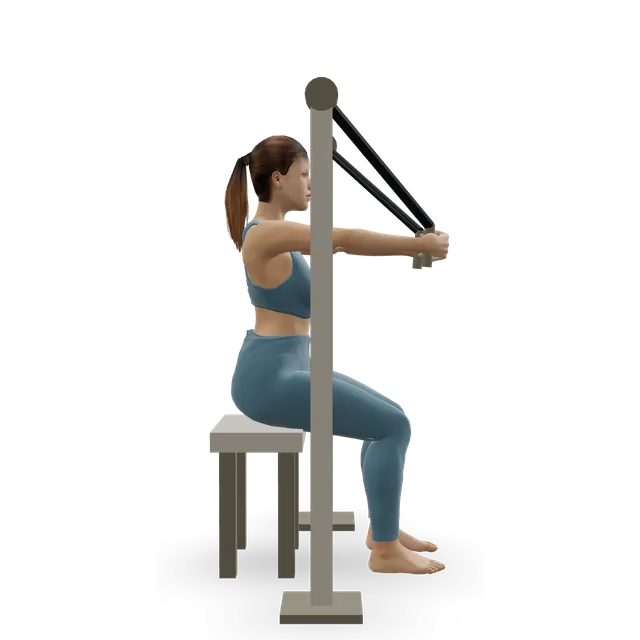
Band row demonstrated on the 3D figure3D demoBand rowBeginner · A band + An anchor point

3 sets of 15, twice a day, a light band, elbows close, stopping as the elbows reach your sides · The Holmgren trial's first exercise was this standing band row, at these sets, repetitions and frequency. The move page's own dose (3 sets of 10 to 15, 2 to 3 reps short of failure) suits gym sessions

Harder: Supported single-arm dumbbell row

Standing band external rotation demonstrated on the 3D figure3D demoStanding band external rotationBeginner · A band + An anchor point

3 sets of 15, light band, elbow at your side, within the pain rule · The Holmgren trial's sets and repetitions. If 15 hurts, start with NHS inform's 2 to 3 at a time

Easier: Stick-assisted external rotation (lying) · Harder: Side-lying external rotation

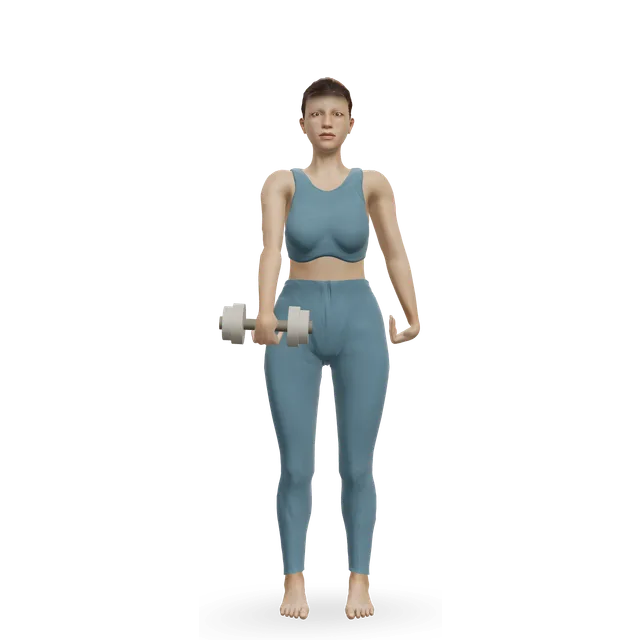
Chest-supported dumbbell row demonstrated on the 3D figure3D demoChest-supported dumbbell rowBeginner · A dumbbell + A bench or box

3 sets of 6 to 8, holding 2 s at the top, palms facing in · An NHS trust leaflet's dumbbell row dose (North Cheshire and Mersey), as our pull-up and pulldown guides use it

Harder: Supported single-arm dumbbell row

Scaption raise demonstrated on the 3D figure3D demoScaption raiseBeginner · A dumbbell

3 sets of 15, thumbs up, to shoulder height, lowering slowly · The Holmgren trial's sets and repetitions, as in our pull-up and pulldown guides

Easier: Band lateral raise · Harder: Smith machine upright row

Prone Y-T-W raises demonstrated on the 3D figure3D demoProne Y-T-W raisesBeginner · No equipment

2 rounds of 8 of each shape, light · As in our pull-up guide (editorial)

Easier: Wall angel · Harder: Bent-over reverse fly

Move on when: Daily life and the stage 1 moves pass the pain rule for a week (editorial).

Follow along: a timer, a cue and the next move, one step at a time.
Stage 2

Cable and dumbbell rows, to the waist, a little further each week

About weeks 2 to 6, 2 or 3 pulling sessions a week: your usual rows back on a machine or bench that holds your trunk still, with the handle and elbow path that don't hurt, and stronger outward rotators and lower trapezius.

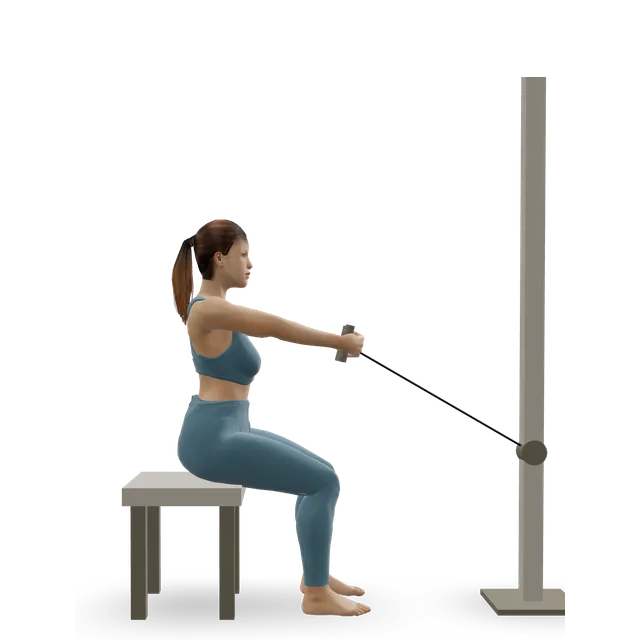
Seated cable row demonstrated on the 3D figure3D demoSeated cable rowBeginner · A cable machine

3 sets of 8 to 12, stopping 2 or 3 reps short of failure, a narrow palms-facing handle, elbows close, to the lower ribs · Our seated cable row guide's dose, from full-body gym workout B (editorial)

Harder: Supported single-arm dumbbell row

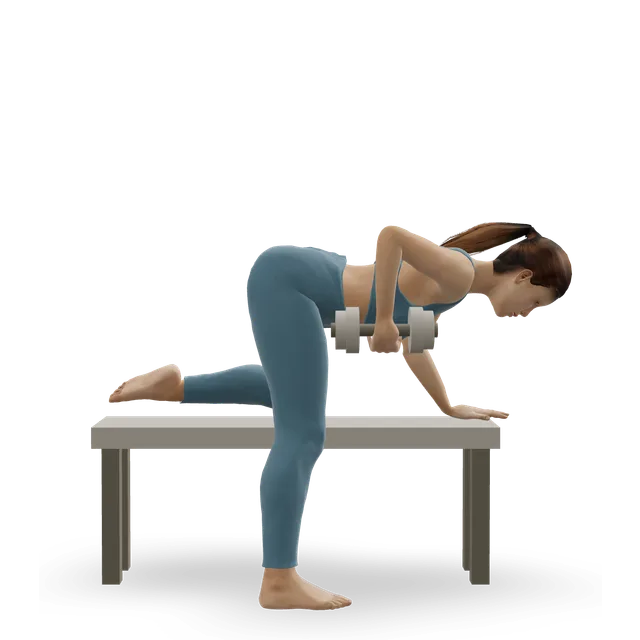
One-arm dumbbell row on a bench demonstrated on the 3D figure3D demoOne-arm dumbbell row on a benchIntermediate · A dumbbell + A bench or box

2 to 3 sets of 8 to 12 each side, stopping with 2 or 3 reps in reserve · The move page's dose (an editorial starting point)

Easier: Kneeling rope high row · Harder: Barbell row standing on a bench

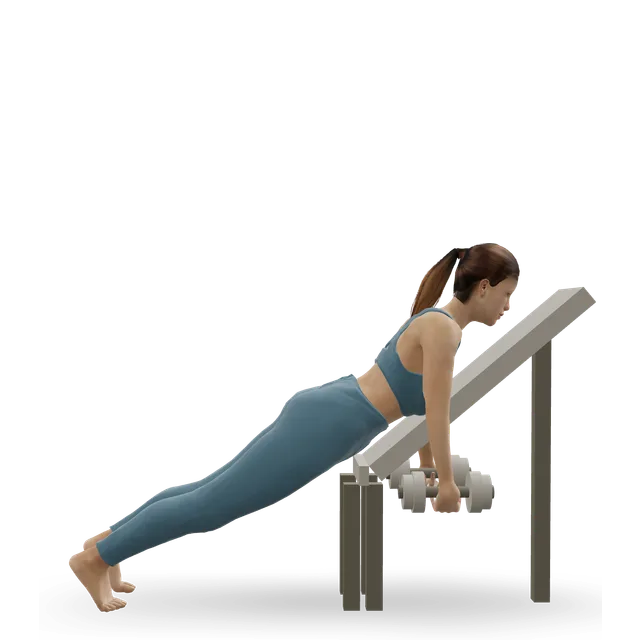
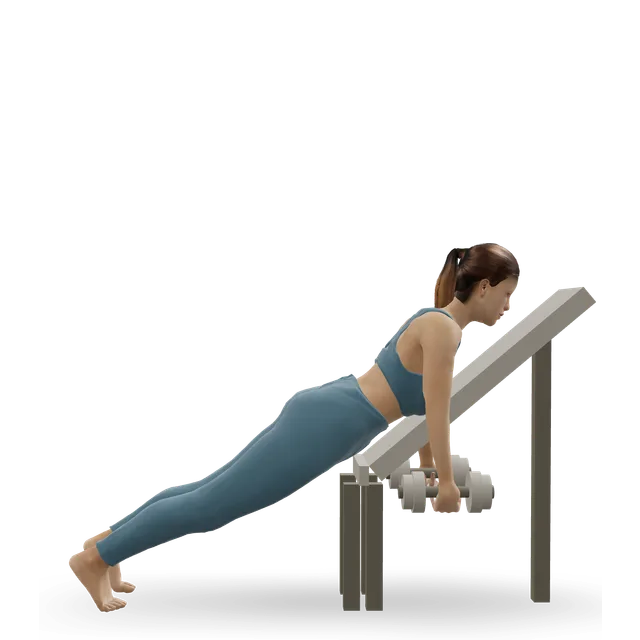
Neutral-grip incline dumbbell row demonstrated on the 3D figure3D demoNeutral-grip incline dumbbell rowBeginner · A dumbbell + A bench or box

2 to 3 sets of 8 to 12, palms facing in, stopping with 2 or 3 reps in reserve · The move page's dose (an editorial starting point)

Harder: Bent-over dumbbell row, palms in

Face pull demonstrated on the 3D figure3D demoFace pullIntermediate · A band

3 sets of 12 to 15, light · As in our bench press, dips and pulldown guides (editorial)

Easier: Prone Y-T-W raises · Harder: Tuck back lever

Standing band external rotation demonstrated on the 3D figure3D demoStanding band external rotationBeginner · A band + An anchor point

3 sets of 15, once a day · The Holmgren trial moved to once a day from week 8; doing it sooner here is our suggestion

Easier: Stick-assisted external rotation (lying) · Harder: Side-lying external rotation

Move on when: 3 sets of 10 to 12 cable and one-arm rows at a moderate weight pass the pain rule for a week (editorial).

Follow along: a timer, a cue and the next move, one step at a time.
Stage 3

Your usual rows, then upright rows last if you use them

From about week 6, often later: bent-over, T-bar and inverted rows at your normal load, one change at a time by the written steps below. Upright rows come back only if you want them, last, with a wide grip and the elbows no higher than the shoulders. No study has tested a return to rowing after shoulder pain, so the order is editorial.

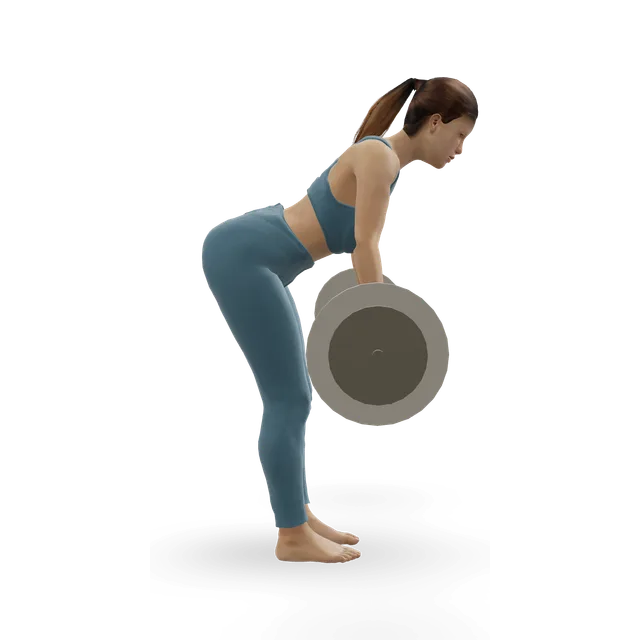
Bent-over barbell row demonstrated on the 3D figure3D demoBent-over barbell rowAdvanced · A barbell

3 sets of 8, later 3 to 4 sets of 6 to 10, about 2 reps in reserve, overhand, about shoulder width, to the lower ribs · Our bent-over row guide's dose, from our beginner strength programme, then editorial

Easier: Supported single-arm dumbbell row · Harder: Barbell row standing on a bench

Chest-supported T-bar row demonstrated on the 3D figure3D demoChest-supported T-bar rowIntermediate · Strength machine

2 to 3 sets of 8 to 12, stopping with 2 or 3 reps in reserve · The move page's dose (an editorial starting point)

Easier: Chest-supported dumbbell row · Harder: Barbell row standing on a bench

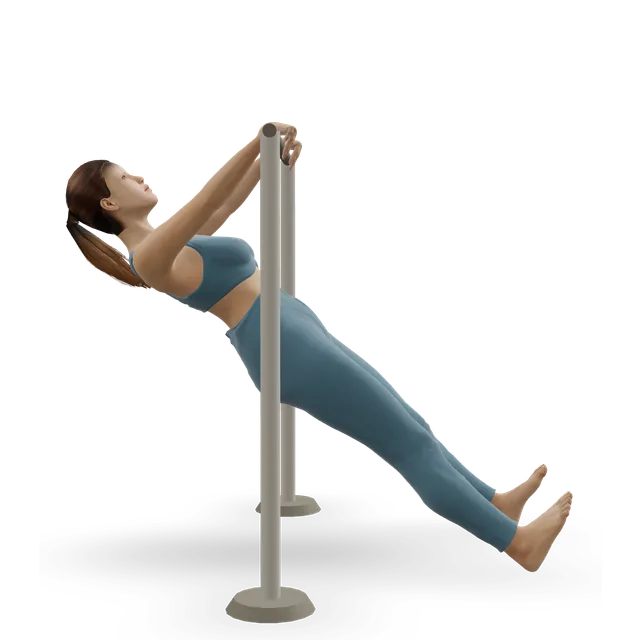
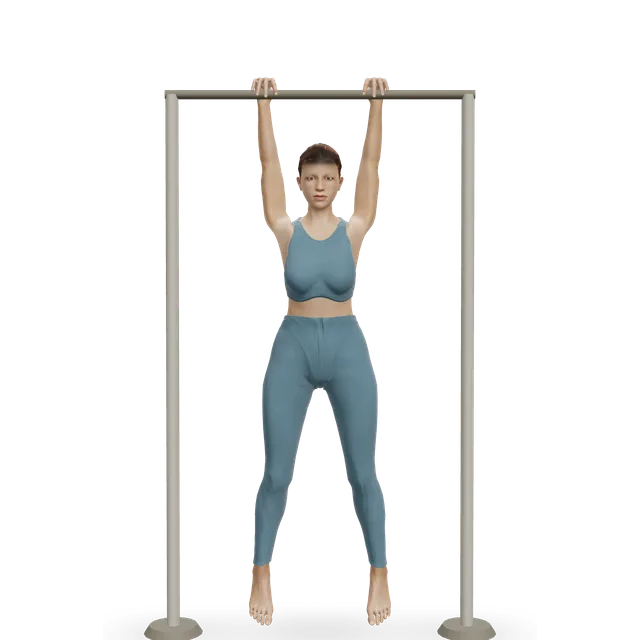
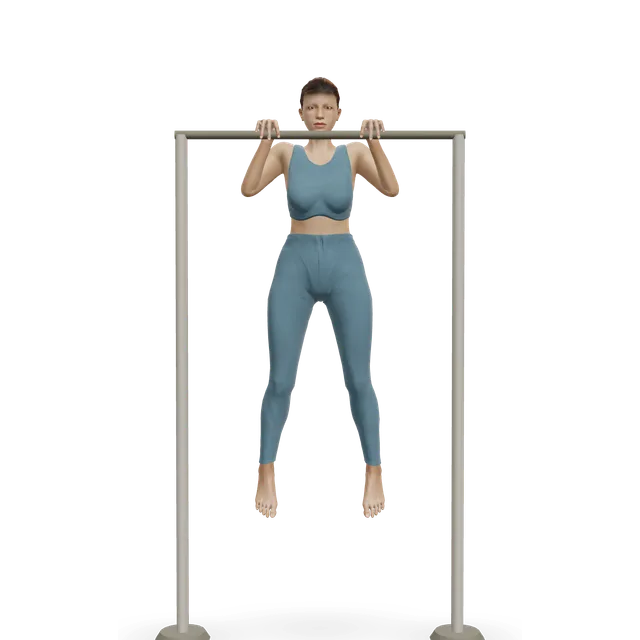
Inverted row demonstrated on the 3D figure3D demoInverted rowIntermediate · Pull-up bar

3 sets of 6 to 12, 2 or 3 reps short of failure · Our inverted row guide's dose (editorial)

Easier: Incline ring row · Harder: Bent-over barbell row

Cable external rotation demonstrated on the 3D figure3D demoCable external rotationBeginner · A cable machine

2 to 3 sets of 10 to 15, twice a week, kept going · Editorial, as in our pulldown guide. Outward rotator training went with fewer shoulder signs in weight trainers (an association)

Harder: Side-lying external rotation

One-arm dumbbell upright row demonstrated on the 3D figure3D demoOne-arm dumbbell upright rowIntermediate · A dumbbell

Optional and last: 2 to 3 sets of 8 to 12 each side, stopping with 2 or 3 reps in reserve, the elbow no higher than the shoulder · The move page's dose (an editorial starting point). The move page says leave it out with shoulder pain, so only once raises to shoulder height are pain-free

Easier: Anti-gravity press · Harder: Barbell rear-delt row

Move on when: Your usual pulling sessions pass the pain rule for 2 weeks. Keeping the rotator cuff work twice a week is our suggestion, and if a session flares it, go back a stage for a few days, not to nothing (editorial).

Follow along: a timer, a cue and the next move, one step at a time.

What to change for now

Your row for now (written steps)

Our 3D figure can't show all of these. They come from lab studies, an expert column, a hospital handout, an NHS trust leaflet and coaching practice; where a step is our suggestion, it says so. No trial has tested a change to the row for shoulder pain.

  • 1. A seated cable, machine, chest-supported or band row rather than a bent-over barbell row: these hold your trunk still, and the bent-over row loads the lower back most.
  • 2. A close, palms-facing handle; leave wide bars and palms-up rows for later if they hurt. The close handle let men lift more for the same effort in a lab study.
  • 3. Elbows close to your sides, pulling to the waist or lower ribs. While the front of the shoulder hurts, stop as your elbows reach your trunk (our suggestion; coaches disagree about how far back to pull, and no study has tested it).
  • 4. Let your shoulder blades move forward at the start and back at the end; you don't need to pin them back.
  • 5. A short squeeze at the end and a slow return, as the NHS trust leaflet's rows do (a 2 to 3 second hold).
  • 6. Lighter, stopping 2 or 3 reps short of failure, adding about 5% to 10% only after a session that passed the pain rule, as a hospital handout advises; it also says don't train to failure.
  • 7. No upright rows for now. When they come back: hands at least 30 cm (12 inches) apart, the bar close to your body, pull through the elbows, and stop with the elbows just below shoulder height, lower if it pinches.
  • 8. Straps on heavy rows if your grip or elbow gives out first (our suggestion, as in our elbow guides).

Sources 47, 48, 31, 34, 35, 2, 36, 32, 17, 16

Keep using the arm

The NHS says "do not completely stop using your shoulder", because this can stop it getting better, and "do not make up your own strenuous exercises or use heavy gym equipment" while it hurts; the changed rows in this plan are a structured programme, not a made-up one. Carry shopping close to your body with your elbows by your sides, reach up to shelves slowly while it's sore, and sleep on the other side with a pillow under the sore arm (editorial).

The rowing machine and rowing on water come back after stage 2, with short, easy pieces first (editorial). Side-of-chest pain that builds in someone who rows can be a rib stress fracture, which is mostly seen in elite rowers and needs a break from rowing. Shoulder or arm pain with chest pain that feels tight or squeezing, or chest pain that spreads to your arms, neck or jaw, can be a heart attack: call 999.

Sources 8, 49, 50

Back to your usual training (written steps)

No study has tested how rows come back after shoulder pain, so these steps are our suggestion unless a source is named.

  • 1. One change at a time: load, then the bent-over or T-bar row, then a wider or palms-up grip, then upright rows if you use them.
  • 2. Upright rows: wide (hands at least 30 cm apart), light, the bar close, elbows just below shoulder height, as the expert column and hospital handout advise. Leave them out for good if they bring the pain back: a chest-supported incline row with the elbows out worked the side of the shoulder at 84% of its maximum, against 73% for the upright row, in a study of 16 men for the American Council on Exercise (ACE).
  • 3. Clean pulls and high pulls: the upper arm should stay under about 60 degrees in a properly performed clean, and beginners should practise slowly with light weights, the column says.
  • 4. Keep rotator cuff and lower trapezius work twice a week: lifters with impingement signs had weaker outward rotators and lower trapezius.
  • 5. If a session flares it, go back a stage for a few days, not to nothing.

Sources 16, 17, 51, 14

Positions to swap, and why

Habit or positionWhy it mattersInstead
Upright rows while it's soreImpingement signs went with upright rows above shoulder height, and the biggest squeeze is with the arm up and turned in.Rows to the waist on a cable.Try: Seated cable row
A narrow upright row pulled up to the chinExpert advice is hands at least 30 cm apart and the elbows no higher than the shoulders.A one-arm upright row to just below shoulder height, later.Try: One-arm dumbbell upright row
Driving the elbow far behind your body with a sore front of the shoulderNo study has tested it; stopping as the elbow reaches your side is our suggestion, and coaches disagree.A chest-supported row, stopping at your side.Try: Chest-supported dumbbell row
Wide-bar or palms-up rows with pain at the front of the shoulderPalms-up grips use more biceps, and a wide bar lifts less for the same effort.A close, palms-facing handle on the cable row.Try: Seated cable row
Heaving or jerking the last repsSudden weakness after a jerky heavy lift can be a rotator cuff tear, and the upright row column warns against heavy, fast pulls.Stop 2 or 3 reps short on a chest-supported T-bar row.Try: Chest-supported T-bar row
Shrugging through heavy rowsIt loads the upper trapezius and neck (our reading).Shoulders down, lighter, and face pulls for the back of the shoulder.Try: Face pull
Bent-over rows when your lower back limits every setThe bent-over row loaded the lower back most of three rows in a lab study.A chest-supported row.Try: Chest-supported dumbbell row
Training to failure and heavy singlesA hospital handout advises against training to failure.Stop 2 or 3 reps short.
Resting the arm completelyThe NHS says this can stop it getting better.The stage 1 moves.Try: Band row
Rowing through a pop at the front of the elbowIt may be a torn biceps tendon, which is best repaired within 2 to 3 weeks.Stop and get it checked the same day.
Pulling through a clunk, a dead arm or a feeling of slippingIt can mean the shoulder is loose.Stop that position and get it checked.

Routines to follow

More moves for this area

Questions people ask

Why does my shoulder hurt when I do rows?

Ordinary rows keep the arm low and are used to treat shoulder pain, so a sore shoulder usually complains at one point: the top of an upright row, the end of a pull with the elbow far behind you, or a heavy, jerky last rep. Where it hurts is the best clue: the front or outside points to the rotator cuff, one spot on top to the AC joint, and under the shoulder blade to the muscles there or the neck.

Are rows bad for your rotator cuff?

No: band and dumbbell rows are part of rotator cuff rehab, including a programme that cut the share choosing surgery from 63% to 20%. Upright rows are the exception while it hurts.

Why does the front of my shoulder hurt at the end of a row?

Often the biceps tendon or the front of the rotator cuff, though no study has looked at rows. Stop the pull as your elbow reaches your side, use a palms-facing handle and go lighter for now. That is our suggestion, and coaches disagree about how far back to pull.

Are upright rows bad for your shoulders?

Not for everyone: impingement signs went with upright rows above shoulder height in weight trainers, but no study has counted injuries. Leave them out while it hurts. Later, keep your hands at least 30 cm apart and your elbows just below shoulder height.

What is the best row for a sore shoulder?

One that keeps the arm low and your trunk supported: a seated cable, machine or chest-supported row with a close, palms-facing handle, pulled to the waist. The best one is the one that stays within the pain rule.

Why do I get pain under my shoulder blade after rows?

Usually the shoulder blade muscles working hard, which settles in a day or two. If it comes with neck stiffness or later pins and needles down the arm, it can be a nerve in the neck, which often shows up as shoulder blade pain first.

Why does my neck hurt when I do rows?

Often from shrugging through heavy reps or craning your head forward, which loads the upper trapezius (our reading). Shoulders down, your head in line and a lighter weight usually help. Pins and needles down the arm need checking.

Should I squeeze my shoulder blades together when I row?

You don't need to force it: squeezing them back on purpose didn't add middle trapezius work, and letting them move gave similar activity overall. Let them move forward at the start and back at the end.

Elbows in or flared?

In for the lats and more weight; flared for the upper back and the back of the shoulder. Neither has been tested for pain, so use whichever doesn't hurt.

Do I need a scan?

Not at first: the UK pathway says scans aren't needed to diagnose or start treating it, and rotator cuff changes are common in shoulders that don't hurt. A scan matters after a dislocation, for sudden weakness, a pop or pain that hasn't improved by 12 weeks.

How long will it take?

No one can promise a date. Most rotator cuff related pain responds within about 3 months, though the NHS says shoulder pain can take 6 months or longer. Many people keep doing changed rows throughout.

When should I see a doctor?

Go to A&E for a shoulder that looks out of place, call 999 for chest pain that feels tight or spreads to your arm, neck or jaw, and get a same-day check for sudden weakness, a pop at the shoulder or the front of the elbow, pins and needles that don't go away or a hot, swollen shoulder. See a GP or physiotherapist if it's no better after 2 weeks. In the US, call 911 where this page says 999.

Related exercise guides

Other pain guides

Sources

  1. Escamilla 2009 · Review of shoulder muscle activity in common rehab exercises (narrative review, Sports Med)
  2. Lehman 2004 · Seated row with shoulder blades squeezed vs relaxed, and pulldown grips (lab muscle activity study, Dyn Med)
  3. Youdas 2020 · Inverted row and scapular muscle balance (lab muscle activity study, Physiother Theory Pract)
  4. Lawrence 2018 · Plane of arm elevation and modelled cuff compression (MRI-based modelling, J Biomech)
  5. Kolber 2014 · Impingement signs in recreational weight trainers and which exercises go with them (case-control, J Strength Cond Res)
  6. Yanai 2006 · Measured squeeze under the coracoacromial ligament in five arm positions (in vivo ultrasound lab study, Clin Biomech)
  7. Di Fonza 2026 · Latissimus dorsi muscle activity across pulling exercises (narrative review of 23 studies, J Funct Morphol Kinesiol)
  8. NHS · Shoulder pain (past its review date: reviewed May 2023, review due May 2026)
  9. Pandey 2025 · BESS patient care pathway: subacromial pain (UK GRADE guideline, Shoulder Elbow)
  10. DeFroda 2017 · Distal clavicle osteolysis ("weightlifter's shoulder") (narrative review, Orthopedics)
  11. Carmichael 2025 · Pain around the shoulder blade in cervical radiculopathy (scoping review, N Am Spine Soc J)
  12. NHS inform · Neck problems
  13. Kolber 2009 · Shoulder range and strength in recreational weight trainers vs non-lifters (cross-sectional, J Strength Cond Res)
  14. Kolber 2017 · Weight trainers with impingement signs: weaker external rotators and lower trapezius (case-control, J Strength Cond Res)
  15. Graichen 1999 · Space under the acromion with the arm raised and turned in or out (MRI lab study, Surg Radiol Anat)
  16. Schoenfeld 2011 · The upright row and impingement: height limit and doses (expert column, Strength Cond J)
  17. Mass General Brigham Sports Medicine · Strength training for the shoulder (patient handout)
  18. Lawrence 2020 · Review: how shoulder movement changes the space under the acromion (narrative review, Braz J Phys Ther)
  19. Sonnati 2026 · "Overcoming subacromial impingement" as a term and concept (narrative review, J Clin Med)
  20. Andersen 2008 · Neck and shoulder muscle activity in strength exercises in women with trapezius myalgia (lab muscle activity within a trial, Phys Ther)
  21. McAllister 2013 · Grip width and muscle activity in the upright row (lab muscle activity study, J Strength Cond Res)
  22. Spanhove 2020 · Ultrasound of humeral head position during five isometric exercises, including shoulder extension (observational lab study, Physiotherapy)
  23. Teunis 2014 · Rotator cuff abnormalities by age, with and without symptoms (systematic review and pooled analysis, J Shoulder Elbow Surg)
  24. Minagawa 2013 · Full-thickness cuff tears in a whole village screened by ultrasound (population study, J Orthop)
  25. NHS · Dislocated shoulder
  26. AAOS OrthoInfo · Rotator cuff tears
  27. AAOS OrthoInfo · Biceps tendon tear at the elbow
  28. Marghalani 2025 · Complete teres major tear in a gym-goer (case report, Radiol Case Rep)
  29. Ceylan 2025 · Causes of winged scapula in a nerve clinic: sport and weightlifting (retrospective case series, Res Sports Med)
  30. Hopewell 2021 · GRASP: progressive exercise vs one advice session, with or without steroid injection (factorial RCT, Lancet)
  31. Holmgren 2012 · Specific exercise vs unspecific exercise before planned decompression surgery (RCT, BMJ)
  32. North Cheshire and Mersey NHS Foundation Trust · Shoulder strengthening exercises (physiotherapy leaflet)
  33. Cools 2007 · Which scapular exercises give good trapezius ratios (lab muscle activity study, Am J Sports Med)
  34. Padovan 2026 · Narrow against wide grip seated row in 14 trained men (muscle activity study, J Hum Kinet)
  35. Vasconcelos 2023 · Seated cable row: grip and how far the elbows flare out (lab muscle activity and force study, Int J Strength Cond)
  36. Padovan 2025 · Seated row with the shoulder blades held back or free to move, in 14 trained men (muscle activity study, J Funct Morphol Kinesiol)
  37. Naunton 2020 · Progressive resisted vs non-progressive exercise vs placebo or no treatment (systematic review and meta-analysis, Clin Rehabil)
  38. Pieters 2020 · Umbrella review of conservative physiotherapy for subacromial shoulder pain (umbrella review, J Orthop Sports Phys Ther)
  39. Kuhn 2009 · Exercise for rotator cuff impingement: systematic review and synthesised protocol (systematic review, J Shoulder Elbow Surg)
  40. Beard 2018 · CSAW: decompression surgery vs placebo arthroscopy vs no treatment (placebo-controlled RCT, Lancet)
  41. Kanto 2025 · FIMPACT 10-year follow-up: decompression vs placebo surgery vs exercise (placebo-controlled RCT, BMJ)
  42. Kolber 2010 · Shoulder injuries attributed to resistance training (narrative review, J Strength Cond Res)
  43. Kolber 2013 · Front-of-shoulder looseness and instability signs in weight trainers (case-control, J Strength Cond Res)
  44. NHS inform · Exercises for shoulder muscle and joint problems
  45. Raulline Ullern 2025 · Pain limits used in exercise trials for rotator cuff related shoulder pain (scoping review, BMC Musculoskelet Disord)
  46. Smith 2017 · Painful vs pain-free exercise for chronic musculoskeletal pain (systematic review and meta-analysis, Br J Sports Med)
  47. Fenwick 2009 · Inverted row vs bent-over row vs one-arm cable row: trunk muscles and low back load (lab study, J Strength Cond Res)
  48. Saeterbakken 2015 · One-arm vs two-arm rows: core muscle activity (lab muscle activity study, Int J Sports Med)
  49. NHS · Heart attack
  50. McDonnell 2011 · Rib stress fractures in rowers (narrative review, Sports Med)
  51. Sweeney 2014 · Deltoid activity in 10 shoulder exercises in 16 men (ACE-sponsored muscle activity study, ACE ProSource)

Exercise education, not a diagnosis or treatment plan. It is written from the guidelines and studies listed above; review by a clinician is pending. If your pain follows an injury, is severe, is getting worse, or comes with any warning sign listed on this page, get it assessed. Health disclaimer.