What no study has counted, and what a pulldown asks of the shoulderEmerging evidence
No study counts what causes shoulder pain on the lat pulldown, and none has tested grip, range, lean or behind-the-neck pulling against pain. Even a large survey of 1,387 gym users that asked about 49 exercises had no pulldown item. So the map on this page comes from lab studies of muscle activity and shoulder position, studies of weight trainers' shoulders, trials of rotator cuff related pain and NHS pages. Reviews put up to 36% of documented resistance training injuries at the shoulder, mostly from surveys looking back.
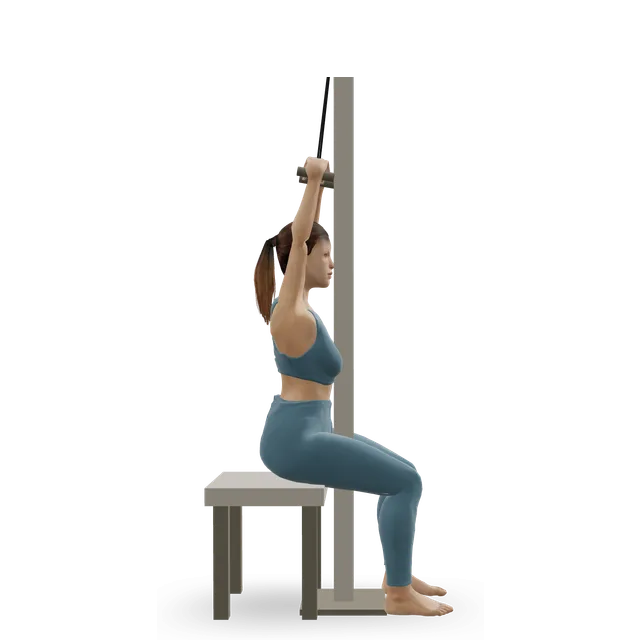
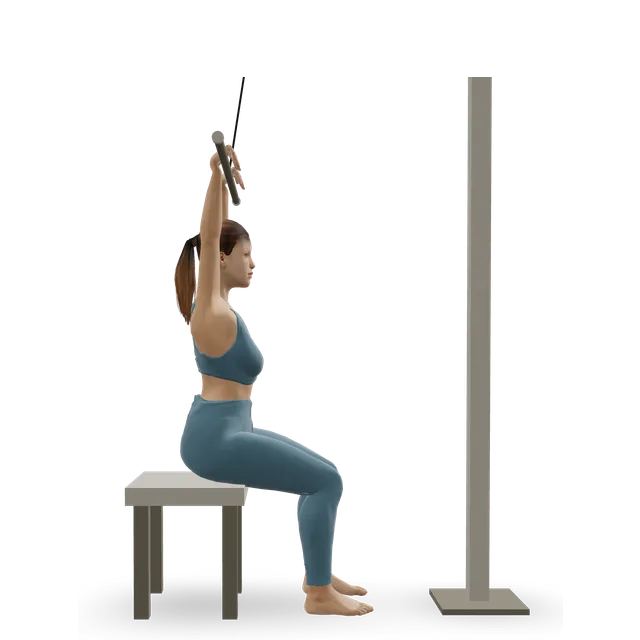
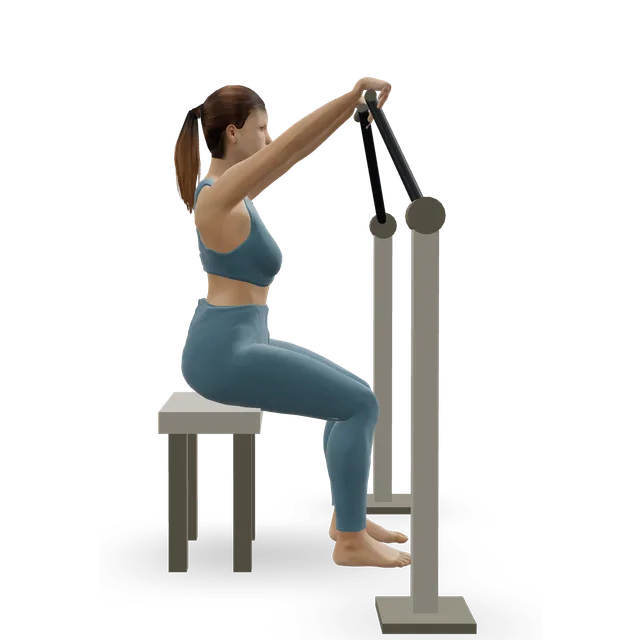
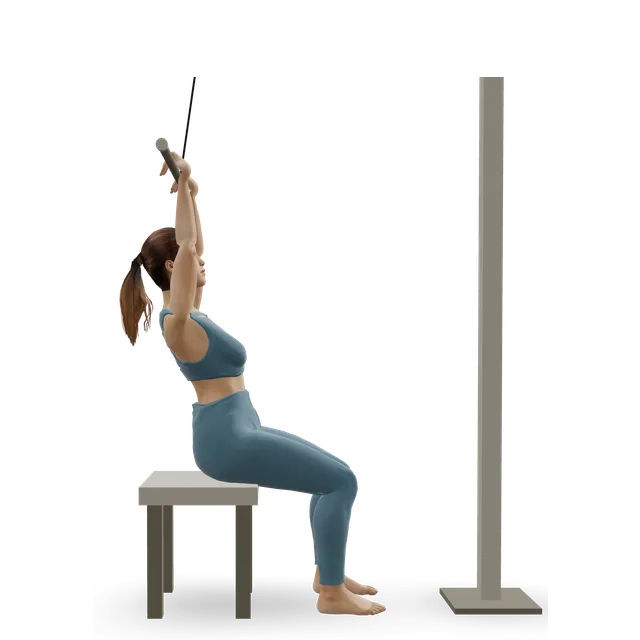
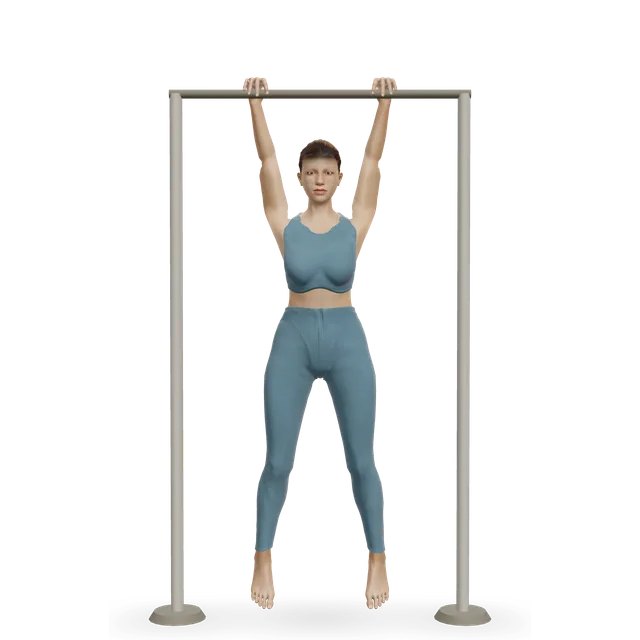
Sitting with your thighs under the pads, you pull a bar from overhead to your upper chest with the lats (the broad muscles down the sides of your back), the teres major, the shoulder blade muscles and the biceps, then let it rise until your arms are straight. Compared with a chin-up, it moved the shoulder and the base of the neck less in a lab study. At the top your arms are fully overhead, the position that brings on rotator cuff related pain: NHS inform describes pain in the upper arm with activities that involve lifting the arm above shoulder level. The gap under the acromion (the bony roof of the shoulder) is narrowest with the arm high: in 12 volunteers it shrank from about 7.0 mm with the arm 30 degrees out to 3.9 mm at 120 degrees, measured without a weight.
Pulling behind the neck adds a "high-five" position, with the upper arm out to the side and turned back, and people with less shoulder range have to bend the neck forward to let the bar pass.
Sources 1, 2, 3, 4, 5, 6, 7, 8
Where it hurts sorts the causesEmerging evidence
NHS inform calls subacromial (rotator cuff related) pain the most common reason for shoulder pain; it hurts in the upper arm with lifting the arm above shoulder level and reaching behind the back. The American Academy of Orthopaedic Surgeons (AAOS) says biceps tendon pain is felt at the front of the shoulder and worsens with overhead lifting; palms-back grips work the biceps harder in chin-ups, so a sore biceps tendon often complains with underhand pulldowns (our reading).
In 20 weightlifters with a hidden looseness at the front of the shoulder, the pain came with the arm out to the side and turned back, the position of a behind-the-neck pulldown; 13 of 23 shoulders settled with rehabilitation and a change of technique, and all 20 went back to lifting. A deep pinch at the back of the joint (internal impingement) is linked with subtle looseness and is treated without surgery first. Pain on top, at the end of the collarbone, is the AC joint; weightlifter's shoulder there typically hurts with bench presses and chest flies. Labral tears at the top of the socket are linked with overhead sport and are treated first with physiotherapy.
Tears of the lat or teres major are rare, mostly in overhead athletes, but have been reported in weightlifters and CrossFit athletes: sudden pain, sometimes a pop, then bruising or swelling in the back of the armpit and weakness pulling the arm down and in. One 55-year-old bodybuilder tore his lat tendon during a pull-up; no reported case names the pulldown machine. Shoulder blade pain was reported in 72% of studies of a trapped nerve in the neck, sometimes weeks before arm pain.
Sources 5, 9, 10, 11, 12, 13, 14, 15, 16, 17, 18, 19, 20
Behind the neck: what the evidence does and doesn't sayEmerging evidence
Three small lab studies agree that it adds nothing for the lats. A wide grip to the front drew the most lat activity of four hand positions in 10 men; lat activity was the same with front, behind-the-neck and V-bar pulldowns in 24 trained men, whose authors concluded that the behind-the-neck version "is not a good lat pull-down technique and should be avoided"; and in 14 trained men the front version drew more activity in the main muscles, and they lifted about 15% less behind the neck (59.3 kg against 70.0 kg for 8 reps). Those are muscle activity reasons, not injury data.
The only study linking it to the shoulder found more signs of a loose front of the shoulder in 123 weight trainers than in 36 men who didn't lift, associated with behind-the-neck pulldowns and military presses, and fewer in those who trained their outward rotators. It was a snapshot of healthy men, so it can't show cause, and its authors called for trials. A 2026 review says the case against behind-the-neck pulldowns rests on reasoning about joint position, not measured injuries, and one lab group would build up to it in people with enough range. So "never safe" overstates it; "no reason to do it while your shoulder hurts" fits the evidence.
Sources 21, 22, 7, 14, 23, 8
The top of the pull, and why stopping a little short may helpEmerging evidence
At the top, with the arms fully overhead, the gap under the acromion is smallest, and the rotator cuff tendon normally touches the rim of the socket: at about 123 degrees of arm elevation in 20 shoulder models built from scans, and in all 37 people without symptoms filmed with a moving X-ray. That contact appears normal; no one has measured it under load on a pulldown.
Stopping a little short of a full overhead stretch while the shoulder is sore is our inference from these studies, not a tested treatment. It costs the lats little: in a held pull-down, lat activity fell as the arm rose from 60 to 120 degrees, and pulling down with the arm at shoulder height widened the space under the acromion in 20 healthy volunteers (enough to matter only in the men). At the bottom, the American Council on Exercise (ACE) stops the pull when the elbows stop moving down and start moving back, because pulling further "places additional stresses into the shoulder joint".
Sources 6, 24, 25, 26, 27, 3
What a scan shows, and when it mattersStrong evidence
Not at first, for an ache at the front or outside of the shoulder. In 96 people without shoulder pain, magnetic resonance imaging (MRI) showed rotator cuff tears in 34% (54% of those over 60), and across 30 studies (6,112 shoulders) cuff changes rose from 9.7% of people aged 20 and under to 62% at 80 and over, whether or not they hurt. An NHS trust leaflet says scans are not needed in most cases, and that what they find often doesn't explain the pain.
A scan matters after a dislocation, which needs hospital treatment; for sudden weakness after an injury, a possible cuff tear; for a suspected lat or teres major tear, where MRI grades the tear (in one series, bigger tears treated without surgery often failed); and for pain that isn't settling after about 3 months of good rehabilitation.
Sources 28, 29, 30, 31, 9, 17
How it usually goesStrong evidence
In 349 people with new shoulder pain in Dutch general practice, 23% had recovered at 1 month and 59% at a year, faster after overuse or a slight injury and slower with neck pain or severe pain during the day. Across 16 cohort studies, only about half of new episodes fully recovered within 6 months. These are general shoulder pain figures, not lifters'.
The NHS says shoulder pain can take 6 months or longer to recover, and NHS inform expects new pain to begin to settle within 6 weeks. An NHS trust leaflet says it may take up to 12 weeks before exercise makes a big change. All 20 weightlifters with hidden looseness went back to lifting. No one can promise a date.
Sources 32, 33, 9, 34, 30, 12