Pain guide · Shoulder pain

Shoulder pain when doing overhead presses: the rotator cuff, the AC joint, grip and what helps

Shoulder pain when you overhead press, whether a barbell military press, a dumbbell shoulder press or a machine, usually comes from one of a few places, and where it hurts is the best clue. An ache on the outside or front of the shoulder, worst partway up or with the arm overhead, usually comes from the rotator cuff (often called impingement); pain you can cover with one finger on top, at the end of the collarbone, often at lockout, from the AC joint (where the collarbone meets the shoulder blade), including weightlifter's shoulder; and a tender groove at the front from the biceps tendon. No study counts how often each is the cause. The bar path and grip matter: pressing in front of your head, with a grip just outside your shoulders or on a landmine or dumbbells, is kinder to a sore shoulder than a behind-the-neck press. Overhead pressing isn't bad for shoulders: an NHS rehab booklet uses it for rotator cuff pain, built up step by step.

This guide starts with the signs that need help, from accident and emergency (A&E) for a shoulder that looks out of place after a failed rep, and a 999 call for chest pain that feels tight or spreads to your arm, to a same-day check through the National Health Service's 111 line (NHS 111) or a general practitioner (GP) for a pop with a bulge in your upper arm, sudden weakness, or a hot, swollen shoulder. It then maps the causes by where and when in the press it hurts, explains what the lab studies show, and don't, about grip, range and behind-the-neck pressing and why a scan rarely helps at first, shows how to change your press today, and gives a three-stage plan with a 3D demo of every move, from band and landmine presses back to the bar.

When to get help first

Exercise is for pain that has been checked or is clearly mild and settling.

Get urgent medical help if

  • Call 999 or go to A&E: after a fall or injury, your shoulder looks out of place or has changed shape, you cannot move your arm, or your shoulder is painful, bruised or swollen. Do not drive yourself, and do not try to put it back in yourself.
  • Call 999: shoulder or arm pain with chest pain that feels tight or squeezing, or chest pain that spreads to your arms, neck or jaw, especially with shortness of breath, sweating or feeling sick. It could be a heart attack.
  • Get help from NHS 111: pain or tightness in your chest, neck, shoulders, jaw or arms that comes and goes, often brought on by exercise, stress, emotion or cold and easing after a few minutes' rest. It can be angina, a sign of a heart problem. If you've been diagnosed with angina, get help from NHS 111 too if it feels worse than before, is happening more often, lasts longer or happens when you're resting.
  • Call 999: you suddenly can't fully lift both arms and keep them there, because of weakness or numbness in one arm, especially if one side of your face droops or you slur your words or sound confused. It could be a stroke. Call even if the signs have stopped.
  • Call 999: a sudden headache that is extremely painful and doesn't go away, during or after a heavy lift or at any other time, or weakness or numbness in one arm or down one side of the body. A bleed on the brain may be more likely when lifting something heavy.
  • Same day (GP or NHS 111): a sudden pop or snap with pain at the shoulder or upper arm during a lift, with or without a bulge low in the upper arm. It's usually a torn long head of the biceps. Most need no operation, but the rotator cuff can tear at the same time.
  • Same day (GP or NHS 111): sudden weakness lifting the arm after an injury or fall. A rotator cuff tear caused by an injury needs urgent referral to a shoulder specialist. After a dislocation in anyone over 40, the rotator cuff should be checked: about 40% have a tear.
  • Same day (GP or NHS 111): sudden or very bad shoulder pain; you cannot move your arm; the arm or shoulder is badly swollen or has changed shape; pins and needles that do not go away; no feeling in the arm; the arm is hot or cold to the touch; pain that started after an injury such as a fall; or severe pain in both shoulders.
  • Same day (GP or NHS 111): the shoulder or arm is hot, swollen or red, or you have a high temperature (although not everyone has one) or feel unwell. A joint infection needs same-day care.

See a doctor or physiotherapist if

  • Pain that is getting worse or has not improved after 2 weeks of looking after it yourself, or it is very hard to move your arm. In many areas you can refer yourself to physiotherapy.
  • Your shoulder has partly or fully come out of joint, or you worry it might.
  • Pain on top of the shoulder at the end of the collarbone that isn't settling after a few weeks of changed pressing: ask about weightlifter's shoulder (distal clavicle osteolysis), which often needs an MRI (magnetic resonance imaging) scan to confirm.
  • Pain on top of the shoulder with no injury that hasn't eased after 6 to 12 weeks of changing your training: ask a GP or physiotherapist for an assessment.
  • Painful clicking or snapping at the front of the shoulder, or a feeling of something slipping there. The tendon can slip out of its groove, usually alongside a rotator cuff tear, so ask for an assessment.
  • Locking, catching or a dead arm that keeps stopping you playing despite rehab, or no improvement after about 3 months of rehab: ask for a specialist opinion.
  • Not improving after a good 3 months of exercise, or the arm is clearly weak: ask for a specialist opinion.
  • Pins and needles or a cold arm alongside neck pain, or a new loss of strength or feeling in the arm that you cannot explain (a possible nerve problem).
  • A shoulder blade that suddenly sticks out, or new weakness lifting, pushing or carrying: see a GP. Nerve tests may be needed to find which nerve is affected and how badly.
  • A past history of cancer, an unexplained lump or swelling, weight loss, or pain that is constant and does not ease when you change position.
  • See a GP if you have pain and stiffness for more than a week, especially if you're over 50, it's in both shoulders (often the neck and hips too) and the stiffness lasts longer than 45 minutes in the morning. It can be polymyalgia rheumatica.

Where does it hurt?

Location narrows the likely causes; it does not diagnose.

The outside or front of the shoulder and upper arm, worst partway up and with the arm overhead, often when lying on it at night

Usually rotator cuff pain, often called impingement: the commonest cause of shoulder pain.

Read: Shoulder impingement (rotator cuff pain) →
On top of the shoulder, where you can put one finger on the end of the collarbone, worse at lockout, on the bench, with dips and reaching across your body

The AC joint, including weightlifter's shoulder, which the studies link mainly with bench pressing and heavy, frequent weight training.

Read: AC joint injury and pain →
A tender spot in the groove at the front of the shoulder, worse with the bar at the bottom and with curls

Often the long head of the biceps tendon, usually alongside the rotator cuff.

Read: Biceps tendinitis (shoulder) →
A sudden pop or snap at the front of the shoulder during a rep, then bruising or a bulge low in the upper arm

Possibly a torn long head of the biceps: get it checked the same day, as the warning signs say.

Read: Biceps tendinitis (shoulder) →
Sudden weakness lifting the arm after a heavy rep, a missed lift or a fall

Possibly a rotator cuff tear: get it checked the same day, as the warning signs say.

Read: Rotator cuff tear →
Deep pain with clicking, catching or locking

Possibly the labrum (a SLAP tear, a tear at the top of the socket's rim), though labral changes are common on scans of shoulders that don't hurt.

Read: SLAP tear →
A clunk, a dead arm or a feeling of slipping with the arm up and turned back, as at the bottom of a behind-the-neck press

Possibly a loose shoulder (instability): stop that position and get it checked soon.

Read: Shoulder dislocation and instability →
The front of the shoulder in general, not just when pressing

Our front of the shoulder guide maps the spot.

Read: Front of shoulder pain →
The neck and the top of the shoulder blade after pressing

Usually the neck and shoulder-blade muscles.

Read: Neck pain after a workout →
From the neck down the arm, with pins and needles, numbness or burning

A nerve in the neck.

Read: Pinched nerve in the neck →
An ache in the shoulders and arms the day after a new or harder session, easing day by day

Muscle soreness.

Read: Shoulder pain after a workout →
Pain mainly on the bench press, the chest press or dips

Our bench press guide covers it.

Read: Shoulder pain when benching →
Pain lifting the arm in daily life, not just when pressing

Our lifting your arm guide sorts the causes.

Read: Shoulder pain lifting your arm →
Stiff in every direction, or a deep ache with grinding from about 60

Possibly frozen shoulder or arthritis.

Read: Frozen shoulder →
The wrist rather than the shoulder

Our wrist pain when lifting guide covers it.

Read: Wrist pain when lifting weights →
The lower back as you press

Usually leaning back to finish the rep. Our back pain after a workout guide covers it.

Read: Back pain after a workout →
Chest pain that feels tight or spreads to an arm, the neck or jaw, or arm or chest discomfort that comes on with effort and eases with rest

Possibly the heart: see the warning signs.

Understand it

What the press asks of the shoulder, and what no study has countedEmerging evidence

In an overhead press the arm goes from the front of the shoulder to straight overhead under load, and the shoulder blade has to turn upward and tip back so the socket follows the arm; in a motion study of 16 men, the press did this more than a plain arm raise. The arm finishes in the position the NHS says brings on rotator cuff pain, "especially when you lift it above your head", and a UK pathway from the British Elbow and Shoulder Society (BESS) describes "mid-arc pain with overhead activities".

No study counts shoulder pain caused by the strict overhead press. In an online survey of 187 CrossFit athletes, "overhead press (any variation)", which included push presses and jerks, was named for 13 of 46 shoulder injuries, and people could name more than one cause. In 386 CrossFit athletes, at most 2 of 21 shoulder injuries came from the whole squat, deadlift, press and bench press group; in 110 elite weightlifters and powerlifters, no shoulder injury was linked to any one exercise; and in elite weightlifters most shoulder injuries were strains, with 90.5% of all injuries costing a day or less. Across weight training the shoulder is among the commonest injury sites, from 7% to 46% of injuries in 11 lifting studies.

So the map on this page is built from what each condition is known to do, pressing lab studies and health-service pages. Pain usually comes when the load, or a jump in it (more pressing days, heavier sets, a new variation, behind-the-neck pressing), gets ahead of what the shoulder is used to; that is our reading, not a counted fact.

Sources 1, 2, 3, 4, 5, 6, 7, 8, 9

The outside and front: the rotator cuff and the biceps tendonEmerging evidence

Rotator cuff pain is the commonest cause of shoulder pain, about 70% of cases according to the authors of a large UK trial. The NHS describes pain "at the top and the outside of your shoulder", worse lifting the arm, especially above your head, and the BESS pathway says it is "made worse by shoulder level or overhead activities". A painful arc partway up that eases at the top is typical.

The long head of the biceps runs in a groove at the front of the shoulder. The American Academy of Orthopaedic Surgeons (AAOS) describes front-of-shoulder pain "which worsens with overhead lifting", and says biceps tendon pain usually comes alongside other problems such as the rotator cuff.

Sources 10, 2, 3, 11

On top of the shoulder: the AC joint and weightlifter's shoulderEmerging evidence

Pain you can cover with one finger on top, at the end of the collarbone, points to the AC joint. An NHS leaflet names "Repeated heavy or high arm work e.g. weight lifters" and reaching across the body among the causes of AC joint pain.

Weightlifter's shoulder (distal clavicle osteolysis) is an overuse injury of the end of the collarbone. In a review of 8 studies (483 people), the activity was bench pressing in 49.1% and general weight training in 24.4%; pressing more than 1.5 times body weight (56% against 6%) and training 3 or more times a week were linked with it. In 25 weightlifters, 28% had X-ray signs of it against none of 25 men who didn't lift. These studies count bench pressing and weight training in general, not the overhead press, so for the press this is borrowed evidence.

Sources 12, 13, 14, 15

Deep in the joint, a shoulder that slips, and torn tendonsEmerging evidence

The labrum is the rim of the socket. The AAOS names weightlifters among the people who tear its top (a SLAP tear), with locking, catching and "Pain with lifting objects, especially overhead", and says that over 30 to 40, fraying is "a normal process of aging": scans read tears in 55% and 72% of 53 pain-free 45 to 60 year olds.

A shoulder that clunks, gives a dead arm or feels as if it will slip is more likely with the arm up and turned back. In 123 weight trainers and 36 people who didn't lift, those who did behind-the-neck presses and pulldowns had more signs of a loose shoulder (a cross-sectional study, so it can't show cause), and those who strengthened the muscles that turn the arm out had fewer. In 20 lifters with a hidden loose shoulder, the arm-out, turned-back position brought on the pain, and one weightlifter dislocated both shoulders in a seated behind-the-neck press.

A torn long head of the biceps brings a sudden sharp pain, sometimes a pop, bruising and a "Popeye" bulge low in the upper arm; the AAOS names heavy overhead lifting and too much weight among the risks, and says these tears "rarely need surgery" unless something such as the rotator cuff is damaged too.

Sources 16, 17, 18, 19, 20, 21

When in the press it hurtsEmerging evidence

Partway up, then easing at the top: typical of rotator cuff pain. Changing the path (a landmine press, which rises up and forward rather than straight up, or dumbbells with the palms facing in) and stopping short of the painful point are the usual first changes; no study has tested either in people with pain.

At the top, at lockout: one spot on top at the end of the collarbone points to the AC joint, and a deep ache on the outside to the rotator cuff. One review's figure advises raising the arms "slightly in front of the head without extending completely", and popular pages disagree about lockout. No study has measured it, so stopping short of the painful point for now is our suggestion.

At the bottom, with the bar at your shoulders: the biceps groove or the front of the joint, and with a behind-the-neck press, the arm-out, turned-back position that goes with signs of a loose shoulder (our reading; no study has measured the bottom of the press). On the bench but not overhead, or the other way round: weightlifter's shoulder was linked mainly with bench pressing, and rotator cuff pain with overhead work, so the lift that hurts is a clue, not a diagnosis.

Sources 3, 22, 11, 18, 12

Rare but serious: the heart, a dislocation and infectionEmerging evidence

The heart can show up as shoulder or arm pain, often the left. The NHS sends chest pain that feels tight or squeezing, or chest pain that spreads to the arms, neck or jaw, to 999, and heavy pressing is hard exercise, so arm or chest discomfort that comes on with effort and eases with rest is in the warning signs too. A shoulder that looks out of place after a missed rep or a fall goes to A&E, and a hot, swollen or red shoulder, especially if you feel unwell, can be a joint infection, which needs same-day care.

Sources 23, 24, 25, 26

What a scan shows, and what it doesn'tStrong evidence

The BESS pathway says rotator cuff pain "is a clinical diagnosis. Additional imaging is not essential to confirm the diagnosis or start treatment." An X-ray matters after a missed lift or a fall, with warning signs, severe pain or stiffness, or pain lasting beyond about 4 weeks; a suspected dislocation is X-rayed in hospital. An ultrasound or MRI scan is for ongoing symptoms, and weightlifter's shoulder usually needs an MRI to confirm (marrow swelling showed in 72.2% of cases).

Read reports with care. In 96 people without shoulder pain, MRI showed rotator cuff tears in 34% (54% of those over 60); AC joint arthritis showed in 70% of 210 MRI scans of pain-free shoulders, and across studies AC joint changes showed in 13% to 95% of shoulders without symptoms, often as often as in painful ones; radiologists read superior labral tears in 55% and 72% of 53 pain-free 45 to 60 year olds; and ultrasound showed rotator cuff tendon changes in 14 of 15 young weight trainers against 41% of non-lifters.

Sources 3, 24, 12, 27, 28, 29, 17, 30

How it usually goesEmerging evidence

No study follows shoulder pain from overhead pressing. In 349 people with new shoulder pain in Dutch general practice, 23% had recovered at 1 month and 59% at a year, quicker after overuse or a slight injury and slower with neck pain or severe pain in the day. The BESS pathway calls this kind of pain "usually a self-limiting condition" with most symptoms responding within three months, and refers people not improving by 12 weeks. The NHS says shoulder pain usually takes 2 weeks of looking after it to start easing and "can take 6 months or longer to recover"; an NHS booklet says about half settles in about 6 months.

Weightlifter's shoulder mostly improved without surgery, often after cutting back or changing training. In a CrossFit survey, 64.1% of people with a shoulder injury cut their training for a month or less. No one can promise a date.

Sources 31, 3, 26, 32, 12, 4

What helps, and how strong the evidence is

Exercise is the treatment for rotator cuff pain, and the press can be part of itStrong evidence

In 102 people with long-lasting rotator cuff pain who were waiting for surgery, specific rotator cuff and shoulder-blade exercises gave a successful result in 69% against 24% with general exercise, and fewer chose surgery (20% against 63%). In a UK trial of 708 adults with new rotator cuff pain, one physiotherapy session of advice with home exercises did as well over a year as up to six sessions of progressive exercise. Neither programme included overhead pressing.

An NHS rotator cuff booklet does use it: its last levels are a standing one-arm press "to the sky", a step-up press and a squat-to-press, at 3 sets building from 5 to 15 repetitions, 3 to 5 sessions a week, with pain kept at 4 out of 10 or less. A US hospital's sports medicine handout keeps the military press, in front of the head. So the press is a late step in rehab, not something to ban.

Sources 33, 10, 32, 34

Presses compared: small lab studies in healthy, trained menEmerging evidence

In 15 men, standing dumbbell presses drew the most shoulder-muscle activity but lifted about 7% less than a standing barbell press and 10% less than seated dumbbells, and seated presses drew about a quarter less activity in the back of the shoulder. In 30 trained people, unstable loads and surfaces mainly lowered the weight lifted. In 8 bodybuilders, front presses favoured the front of the shoulder and the chest and behind-the-neck presses the back of the shoulder, with less weight lifted behind the neck (76 against 82 kg); in a second study of 14 trained men, the behind-the-neck press drew more rear-shoulder activity only while lowering, and no difference at the side.

None of these studies measured pain or gave shoulder angles at the bottom and top of a standing press, so they show where the work goes, not which press is safer for a sore shoulder.

Sources 35, 36, 37, 38, 1

Behind-the-neck pressing: a qualified "leave it out" for a sore shoulderMixed evidence

Against it: weight trainers who pressed and pulled behind the neck had more signs of a loose shoulder (cross-sectional), lifters with a hidden loose shoulder had pain in that arm-out, turned-back position, and one man dislocated both shoulders doing it. A hospital handout and a review of gym injuries advise pressing in front, and the handout says you should always be able to see your hands when you look straight ahead.

For it: in 33 people pressing seated, shoulder movement stayed within its passive range (how far it goes when moved for you) except for turning out in men pressing behind the head, and the researchers called both versions safe for people with a stable trunk and full shoulder range; the bodybuilder studies suggest starting very light. No study counts injuries from either. For a sore or loose shoulder, the front press trains the same muscles, so there is no need for the behind-the-neck version.

Sources 18, 19, 20, 34, 22, 39, 37, 38

Range and the "room" under the acromionEmerging evidence

In 12 volunteers, the gap under the acromion (the bony roof of the shoulder) shrank from 7.0 mm with the arm 30 degrees out to 3.9 mm at 120 degrees, but at 120 degrees its narrowest point lay beside the supraspinatus tendon rather than over it. Shaving bone to "make room" did no better than a placebo operation in 313 people, and specialists increasingly call this rotator cuff related shoulder pain because no single structure can be shown to be the source. The NHS still describes the tendon rubbing.

Sources 40, 41, 42, 2

Grip, path and range: what one or two small studies showEmerging evidence

In 11 trained men pressing seated, a narrower grip lowered the turning force at the shoulder and a wider grip lowered it at the elbow (the abstract doesn't define the widths). The usual coaching standard is hands about shoulder-width apart, just outside the shoulders, with the forearms vertical. No study links any press grip width to pain or injury.

In 6 lifters, a shorter range still worked the middle of the shoulder with heavy loads. Kettlebell and dumbbell presses at the same load worked the muscles much alike in 20 people, and a bottoms-up kettlebell press drew more of the muscle that holds the shoulder blade to the ribs in 28 baseball players. No study has measured the landmine, neutral-grip or half-kneeling press, or any press in people with pain, so the ladder on this page (band, landmine, dumbbells, bar) is editorial. Separately, in weight trainers, signs of impingement went with lateral raises and upright rows above shoulder height.

Sources 43, 44, 45, 46, 47, 48

Weightlifter's shoulder and AC joint arthritis: what helpsEmerging evidence

Most people with weightlifter's shoulder improved without surgery, by easing off and changing pressing; 16% had surgery, usually after about 3 months of failed care, and in 10 lifters training resumed an average of 9.1 days after keyhole removal of the end of the collarbone (no comparison group). For AC joint arthritis, an injection roughly halved pain at a mean of 7.5 months in mostly uncontrolled studies, no exercise trial exists, and most people need no surgery.

Sources 12, 49, 50, 51, 15, 29

Posture and upper back mobilityMixed evidence

Across 10 studies, rounded upper backs were no more common in people with shoulder pain, but sitting or standing tall gave more arm range in the moment: in 34 people, slouching cut how high the arm could go by 23.6 degrees. So upper back mobility work is optional, for people whose back arches to get the arms overhead.

Sources 52, 53

Injections and surgeryStrong evidence

A steroid injection helped a little at 8 weeks but not over 12 months in the large UK trial, and the BESS pathway says one injection can be considered if the pain isn't improving by 6 to 8 weeks. Decompression surgery did no better than a placebo operation, and the pathway doesn't recommend it first. A torn long head of the biceps rarely needs surgery.

Sources 10, 3, 41, 21

How much pain is OK while you exercise?

Up to about 5 out of 10, back to where it was by your next sessionEmerging evidence

This guide uses the shoulder hub's rule, as our bench press, push-up and pull-up guides do. During shoulder strengthening, pain up to about 5 out of 10 is acceptable, and a little is expected. By your next session it should be back to where it was before. If it isn't, use a lighter band or weight or a smaller range next time, not nothing. It comes from the trial of 102 people above, whose patients were not allowed to go above 5 out of 10 but were encouraged to feel some pain, with any rise settled before the next session or the load came down. NHS inform's shoulder exercises use the same band (0 to 3 minimal, 4 to 5 acceptable, 6 to 10 excessive) and add that pain should be no worse the morning after.

Some NHS booklets are stricter: the rotator cuff booklet that uses overhead presses says don't let pain go above 4 out of 10, settling within a few hours and not disturbing sleep. In long-lasting pain, exercise that allowed some pain did no worse than pain-free exercise (7 trials, 385 people), and the BESS pathway says the best threshold is unclear.

For pressing (our suggestion, built on the same rule): use the variation (band, landmine, dumbbells, barbell), range and load where the last reps stay at 5 out of 10 or less and the shoulder is back to its usual level by the next session. If it isn't, go back one step, not to nothing. A feeling of slipping or a dead arm, pins and needles or numbness down the arm, and a pop, sudden weakness, a bulge in the arm or chest pain aren't pain-rule questions: stop and get them checked.

Sources 33, 54, 32, 55, 3

The exercise plan: 3 stages

Start at the first stage. Each move opens a full guide with a 3D demo.

Stage 1

Keep pressing, below the painful range

About the first 2 weeks: pressing strength with the arms below shoulder height, rotator cuff and shoulder-blade work from day one, and pulling. No behind-the-neck, push or heavy barbell presses and no sets to failure for now. With a diagnosed condition (a rotator cuff tear, weightlifter's shoulder, a SLAP tear, a dislocation or a loose shoulder, biceps tendon pain), that guide's plan comes first; after surgery, the surgical team's plan does.

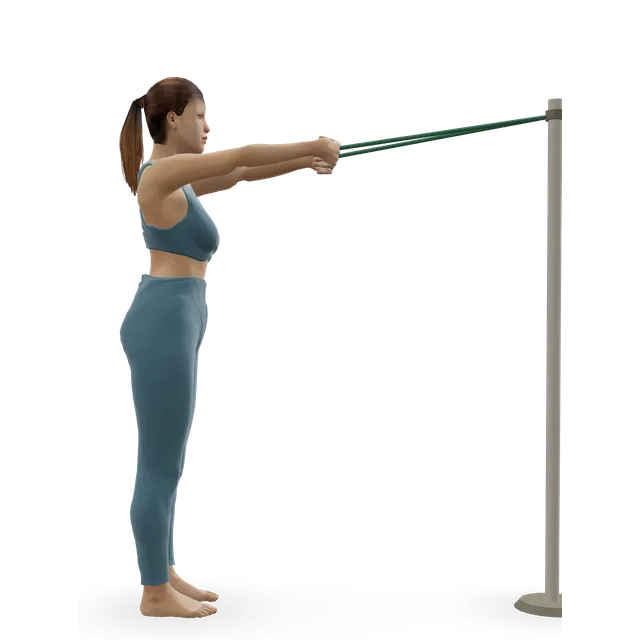
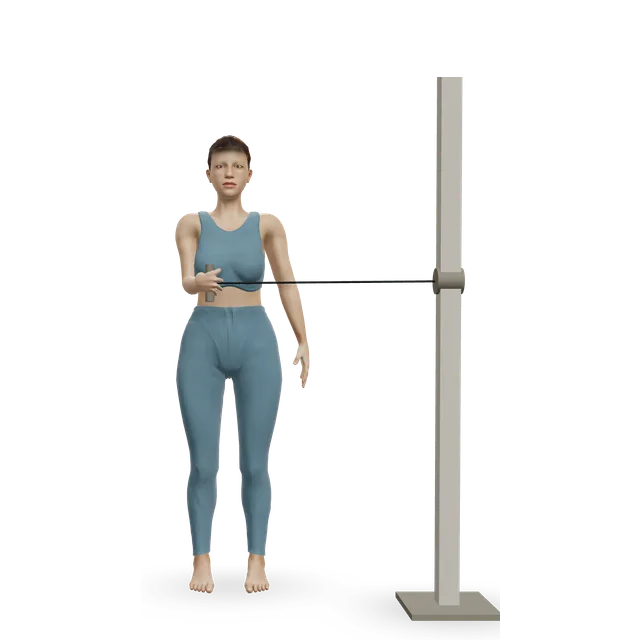
Standing band external rotation demonstrated on the 3D figure3D demoStanding band external rotationBeginner · A band + An anchor point

3 sets of 15, light band, elbow at your side, twice a day, within the pain rule · The sets, repetitions and frequency the trial of 102 people used for its rotator cuff exercises (with weights and bands, made harder every other week). If 15 hurts, start with NHS inform's 2 to 3 repetitions at a time

Easier: Stick-assisted external rotation (lying) · Harder: Side-lying external rotation

Band row demonstrated on the 3D figure3D demoBand rowBeginner · A band + An anchor point

3 sets of 10 to 15, stopping 2 to 3 reps short of failure · The move page's dose, an editorial starting point

Harder: Supported single-arm dumbbell row

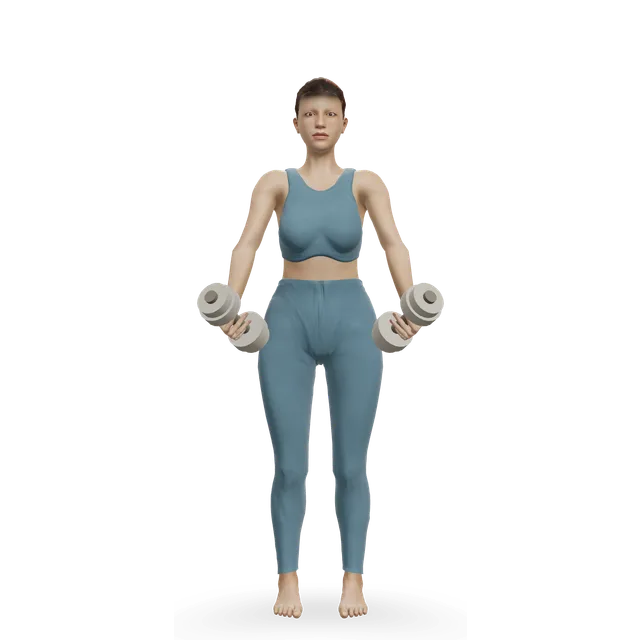
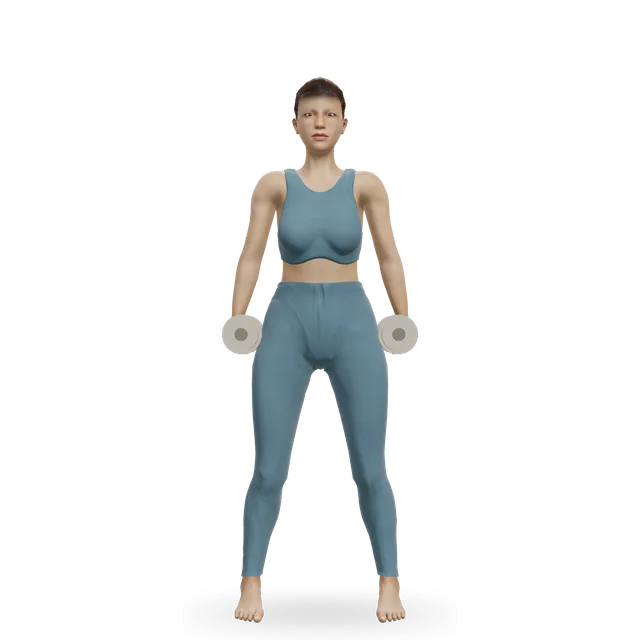
Scaption raise demonstrated on the 3D figure3D demoScaption raiseBeginner · A dumbbell

3 sets of 15, thumbs up, to shoulder height, lowering slowly · The sets and repetitions the trial of 102 people used; the exercise is our choice for the supraspinatus, the rotator cuff muscle on top

Easier: Band lateral raise · Harder: Smith machine upright row

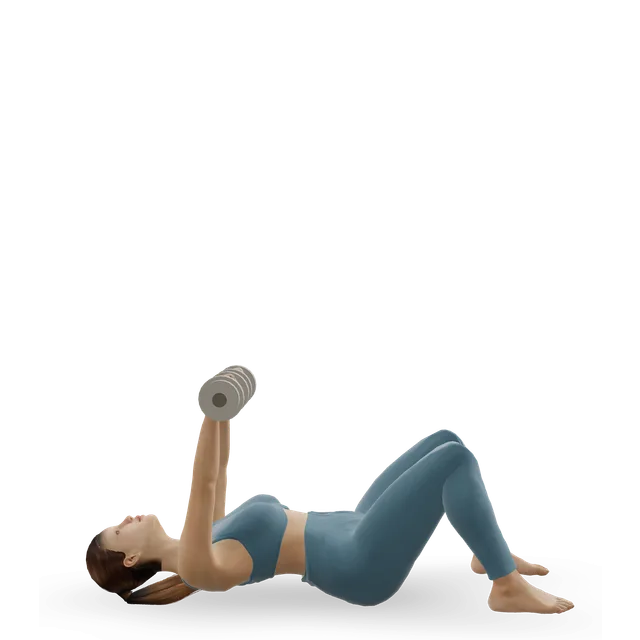
Dumbbell floor press demonstrated on the 3D figure3D demoDumbbell floor pressIntermediate · A dumbbell

2 to 3 sets of 8 to 12, stopping with 2 or 3 reps in reserve · The move page's dose. Pressing that keeps the arms below shoulder height (our choice); palms facing each other

Easier: Chest press machine · Harder: Bench press with chains

Scapular push-up (push-up plus) demonstrated on the 3D figure3D demoScapular push-up (push-up plus)Beginner · No equipment

2 to 3 sets of 10, on a wall or bench first · As in our bench press guide (editorial)

Easier: Dumbbell shoulder-blade punch · Harder: Push-up

Move on when: Daily life and the stage 1 moves pass the pain rule for a week, and reaching overhead without a weight is comfortable or within the pain rule (editorial).

Follow along: a timer, a cue and the next move, one step at a time.
Stage 2

Build the cuff and shoulder blade, and press at an angle

About weeks 2 to 6, 3 to 5 days a week: stronger outward rotators and shoulder-blade muscles, and pressing back above shoulder height on a path that suits the shoulder: a band press, then a landmine press.

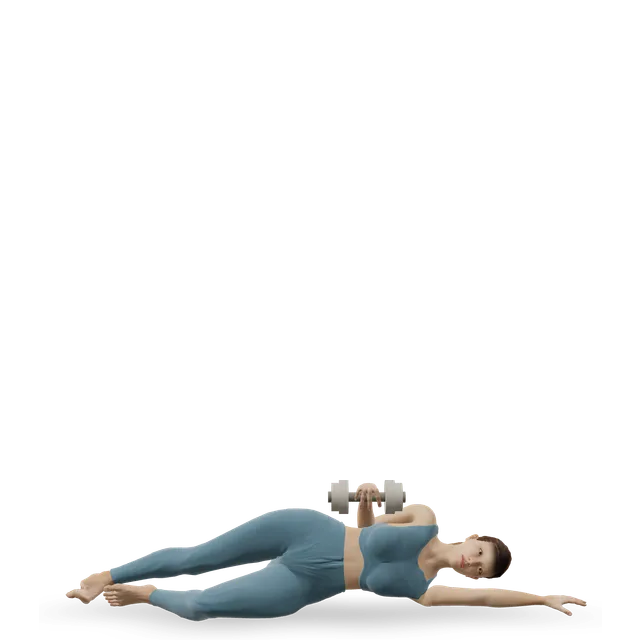
Side-lying external rotation demonstrated on the 3D figure3D demoSide-lying external rotationBeginner · A dumbbell

3 sets of 15, once a day, lowering over about 3 s · The trial's sets and repetitions; it moved to once a day from week 8. As in our impingement guide

Easier: Standing band external rotation · Harder: Cuban rotation

Face pull demonstrated on the 3D figure3D demoFace pullIntermediate · A band

3 sets of 12 to 15 · As in our impingement guide (editorial)

Easier: Prone Y-T-W raises · Harder: Tuck back lever

Prone Y-T-W raises demonstrated on the 3D figure3D demoProne Y-T-W raisesBeginner · No equipment

2 to 3 rounds of 8 · As in our impingement guide (editorial). Keep your neck long, as the move page says

Easier: Wall angel · Harder: Bent-over reverse fly

Shoulder press with a band demonstrated on the 3D figure3D demoShoulder press with a bandBeginner · A band

3 sets of 8 to 12, as high as is comfortable · As in our impingement guide (editorial)

Harder: Push press

One-arm landmine jammer demonstrated on the 3D figure3D demoOne-arm landmine jammerIntermediate · A barbell

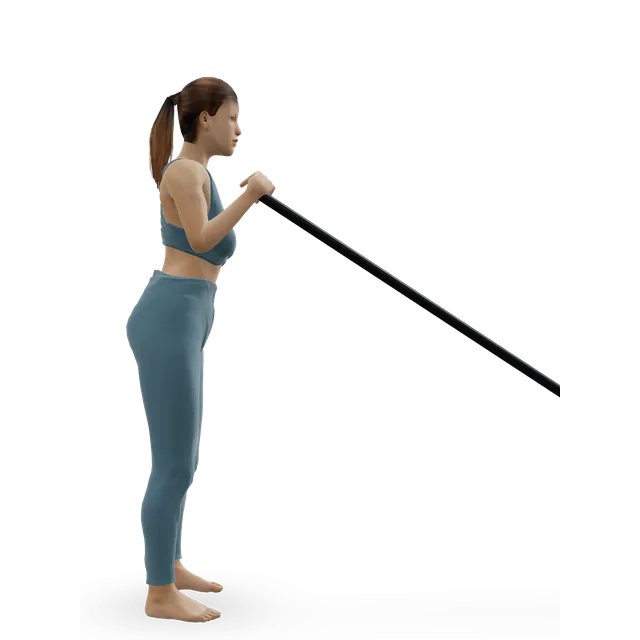
Pressed half-kneeling without the dip, as a landmine press: 3 sets of 8 to 12 each arm · As in our impingement guide and our landmine press page (editorial). The move page's own dose is for the jammer with the dip, which comes back last; no study has tested the landmine press in shoulder pain

Easier: Alternating front raise · Harder: Barbell clean and press

Foam roller thoracic extension demonstrated on the 3D figure3D demoFoam roller thoracic extensionBeginner · A foam roller

5 to 8 slow breaths at each of 3 or 4 spots along the upper back · The move page's dose, an editorial starting point. Optional, if your back arches to get the arms overhead

Harder: Fish pose (Matsyasana)

Move on when: 3 sets of 8 to 12 landmine presses pass the pain rule, with the shoulder back to its usual level by the next session, for a week (editorial).

Follow along: a timer, a cue and the next move, one step at a time.
Stage 3

Back overhead, then load

From about week 6, often later, 2 or 3 pressing sessions a week: pressing straight overhead again, from one arm and dumbbells to the barbell, then your usual load, one change at a time, by the written steps below. No study has tested a return to pressing after shoulder pain, so the order is editorial, apart from the NHS booklet's one-arm press.

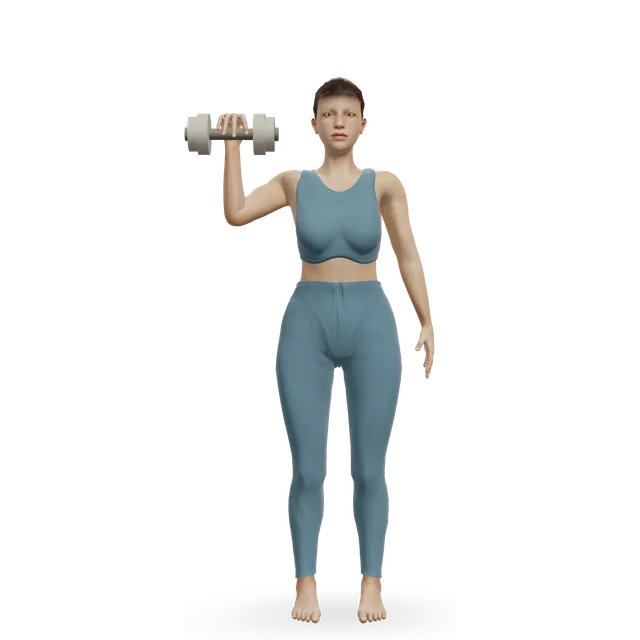
One-arm dumbbell shoulder press demonstrated on the 3D figure3D demoOne-arm dumbbell shoulder pressIntermediate · A dumbbell

3 sets, starting at 5 reps and building to 15, with 2 or 3 reps in reserve, 3 to 5 sessions a week, pain no higher than 4 out of 10 · An NHS rotator cuff booklet, whose last level is a standing press "to the sky" at this dose

Easier: Machine shoulder press · Harder: Push press

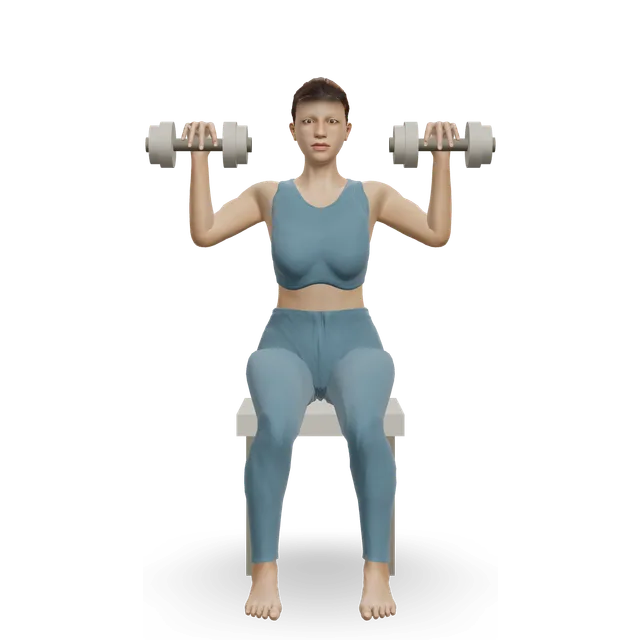
Seated dumbbell shoulder press demonstrated on the 3D figure3D demoSeated dumbbell shoulder pressIntermediate · A dumbbell + A bench or box

3 sets of 8 to 12, stopping 2 or 3 reps short, palms facing in at first · As in our overhead press page (editorial). Back supported if you tend to lean back

Easier: Machine shoulder press · Harder: Push press

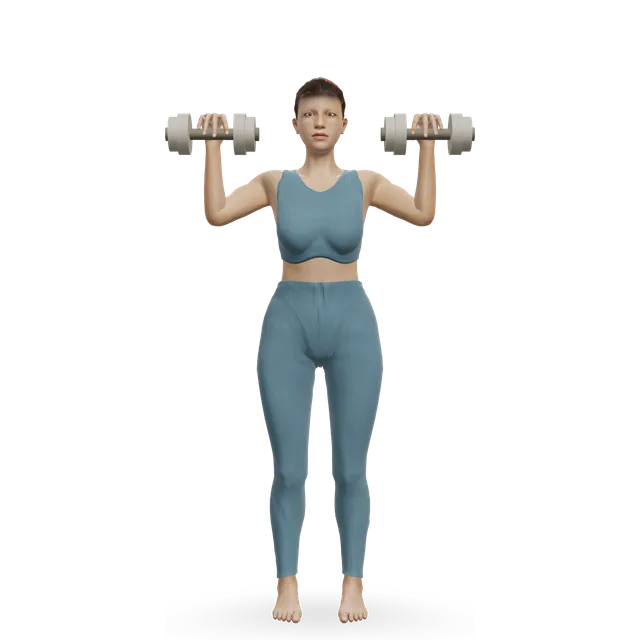
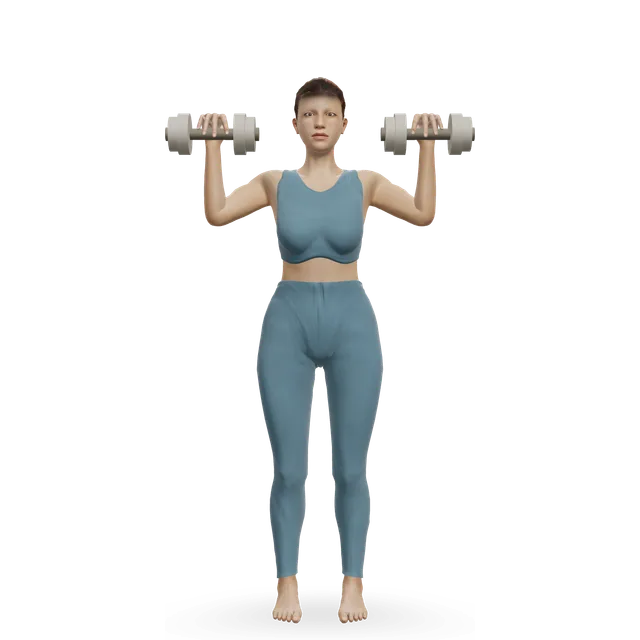
Standing dumbbell shoulder press demonstrated on the 3D figure3D demoStanding dumbbell shoulder pressIntermediate · A dumbbell

2 to 3 sets of 8 to 12, stopping with 2 or 3 reps in reserve · The move page's dose, an editorial starting point

Easier: Machine shoulder press · Harder: Behind-the-neck press

Standing overhead press demonstrated on the 3D figure3D demoStanding overhead pressIntermediate · A barbell + A dumbbell

The empty bar for 3 sets of 5, then add 1 to 1.25 kg a session while every rep is clean and within the pain rule · As in our overhead press page (editorial), or start at about half your old working weight (our suggestion). Grip just outside the shoulders, bar in front of the face

Easier: Anti-gravity press · Harder: Push press

Cable external rotation demonstrated on the 3D figure3D demoCable external rotationBeginner · A cable machine

3 sets of 10 to 12, heavier than in stage 2 · As in our impingement guide (editorial)

Harder: Side-lying external rotation

Move on when: Strict barbell presses at a light weight pass the pain rule for 2 weeks: then add one change at a time by the written steps below. If it flares after a big session, go back a stage for a few days, not to nothing (editorial).

Follow along: a timer, a cue and the next move, one step at a time.

What to change for now

Your press for now (written steps)

Our 3D figure can't show all of these. They come from lab studies, the NHS, a hospital handout and our press and shoulder pages; the pressing ladder and stopping short of lockout are our suggestions, not tested treatments. No trial has tested a change to the overhead press for shoulder pain.

  • 1. Lighter and fewer: a weight you can press for 8 to 12 reps with 2 or 3 to spare, and no sets to failure, as the hospital handout advises. The NHS says "do not make up your own strenuous exercises or use heavy gym equipment" while your shoulder hurts.
  • 2. In front of your head, never behind it: you should always be able to see your hands if you look straight ahead (the handout). Weight trainers who pressed behind the neck had more signs of a loose shoulder.
  • 3. Change the path: a band press, then a landmine press (which rises up and forward), then dumbbells with the palms facing in, then the barbell (our ladder; no study has tested it in people with pain).
  • 4. Range: stop short of the painful point, or press from a higher start, and bring full lockout back as it settles (our suggestion; no study has measured lockout and shoulder pain).
  • 5. Grip: about shoulder-width, just outside your shoulders, forearms vertical; a little narrower if the shoulder complains, since a narrower grip lowered the load at the shoulder joint in one study. No study links a grip width to pain.
  • 6. Don't lean back to finish: press seated with your back supported, or one arm at a time, until you can reach overhead without arching (our press page).
  • 7. No push presses, jerks, handstand or pike push-ups for now (our suggestion).
  • 8. Keep using your arm for everyday jobs. The NHS says "do not completely stop using your shoulder - this can stop it getting better", but don't carry on with activities that involve repeatedly lifting your arm above your head while it hurts.

Sources 34, 43, 44, 18, 26, 2

On top of the shoulder: easing the AC joint

If the pain is on top, at the end of the collarbone, the studies point at heavy, frequent bench pressing more than the overhead press: cut back heavy bench, dips and frequent heavy pressing days, stop the press short of lockout for now, and avoid reaching across your body. An NHS leaflet for AC joint pain names reaching across the body and repeated heavy arm work among the things that aggravate it. Our AC joint guide has the full plan.

Sources 12, 15

After a dislocation or surgery

After a dislocation, the NHS says your doctor or physiotherapist will advise when you can return to sport. An NHS leaflet on surgery to stabilise the shoulder says it "may be 6 to 8 weeks after your operation before you can use your arm above shoulder height", with heavier tasks from 8 to 12 weeks; after a rotator cuff repair, another says no lifting for 8 to 12 weeks and no heavier lifting for 4 to 6 months. Neither names a week for gym pressing: follow your surgical team. A US hospital handout asks for full, pain-free range and normal rotator cuff strength before weights, and says high-level lifting after surgery "will take over six months".

Sources 24, 56, 57, 34

Back to your usual training (written steps)

No study has tested how pressing comes back after shoulder pain, so these steps are our suggestion unless a source is named.

  • 1. Add one thing at a time: more reps, then the barbell, then load, then the push press and jerks if your sport needs them.
  • 2. Add load in small steps after a session that passed the pain rule: the hospital handout uses increments of 5% to 10% every 10 to 14 days.
  • 3. The push press, jerks, handstand and pike push-ups last, once strict presses pass the pain rule.
  • 4. Behind-the-neck presses: leave them out while it's sore, and for good if they bring the pain back; the front press trains the same muscles.
  • 5. With pain on top of the shoulder, fewer heavy pressing days, since heavy, frequent pressing (mostly bench pressing) was linked with weightlifter's shoulder.
  • 6. Keep the rotator cuff and row work twice a week (an NHS shoulder sheet uses a band raised overhead, 10 reps x 4 sets). Strengthening the muscles that turn the arm out went with fewer signs of a loose shoulder in weight trainers. If it flares after a big session, go back a stage for a few days, not to nothing.

Sources 34, 12, 18, 58

Positions to swap, and why

Habit or positionWhy it mattersInstead
Behind-the-neck pressesLinked with signs of a loose shoulder in weight trainers (a cross-sectional study), and a hospital handout says to keep your hands in sight.The press in front of your head, later.Try: Standing overhead press
Heavy barbell presses through painThe NHS says don't carry on with activities that involve repeatedly lifting your arm above your head while it hurts.A band press, then a landmine press.Try: Shoulder press with a band
Push presses and jerks while it's soreHeavier loads overhead, and in one CrossFit survey overhead press variations, including jerks, were named for a share of shoulder injuries.A landmine press without the dip.Try: One-arm landmine jammer
Leaning back to finish a repIt arches the lower back and turns the press into an incline press (our press page).Seated, with your back supported.Try: Seated dumbbell shoulder press
A very wide grip on the barA narrower grip lowered the load at the shoulder joint in one study of 11 men.Just outside the shoulders, or dumbbells with the palms facing in.Try: Standing palms-in dumbbell press
Grinding through the painful part of the range every repPain partway up or at lockout is typical of rotator cuff and AC joint pain.Stop short of it for now, on a landmine.Try: One-arm landmine jammer
Upright rows and lateral raises above shoulder heightSigns of impingement went with these above shoulder height in weight trainers.Scaption raises to shoulder height.Try: Scaption raise
Pike and handstand push-upsYour body weight overhead (our suggestion).A band press.Try: Shoulder press with a band
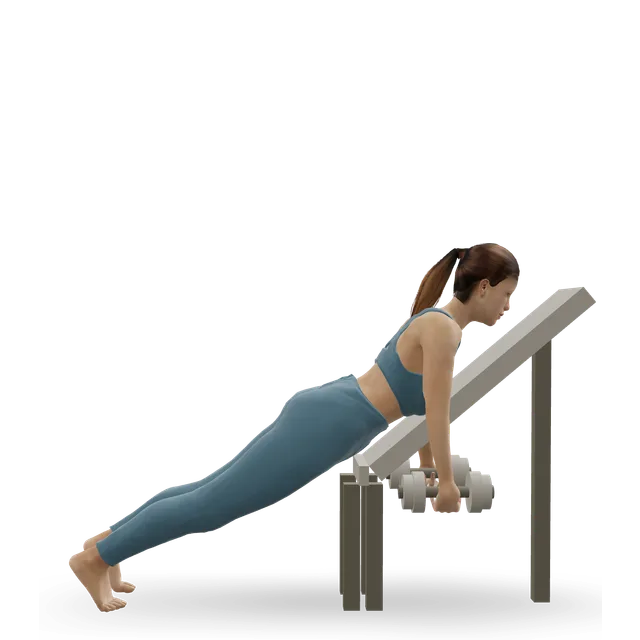
Deep dips and wide-grip bench with pain on top of the shoulderHeavy pressing, mostly bench pressing, was linked with weightlifter's shoulder, and our AC joint guide leaves dips out early.Push-ups within a comfortable range.Try: Incline push-up
The cross-body stretch with pain on top of the shoulderIt squeezes the AC joint (our AC joint guide).Turning the arm out with a stick.Try: Stick-assisted external rotation (lying)
Sets to failure and frequent heavy singlesThe hospital handout doesn't recommend training to failure, and heavy, frequent pressing went with weightlifter's shoulder.Stop 2 or 3 reps short.Try: Standing dumbbell shoulder press
Resting the arm completelyThe NHS says this can stop the shoulder getting better.The stage 1 moves.Try: Band row
Pressing through a clunk, a dead arm or a feeling of slippingIt can mean the shoulder is loose.Stop that position and get it checked soon.

Routines to follow

More moves for this area

Questions people ask

Why does my shoulder hurt when I overhead press?

The press takes your arm overhead under load, the position that brings out rotator cuff pain, and the shoulder blade has to turn and tip as you press. Where it hurts is the best clue: the outside or front points to the rotator cuff, one spot on top to the AC joint, and a groove at the front to the biceps tendon.

Why does the front of my shoulder hurt when I press?

Usually the rotator cuff or the long head of the biceps, often both. Press on a landmine or with dumbbells palms in, stop short of the painful point, and build back over weeks. A pop with a bulge in the upper arm needs a same-day check.

Why does the top of my shoulder hurt at the top of the press?

Pain you can cover with one finger at the end of the collarbone points to the AC joint, including weightlifter's shoulder, which the studies link mainly with heavy, frequent bench pressing rather than the overhead press. Stop short of lockout for now and ease off heavy bench and dips. See a GP or physiotherapist if it isn't settling after a few weeks of changed pressing.

Is the overhead press bad for your shoulders?

No study shows that, and an NHS rehab booklet uses overhead presses for rotator cuff pain. Too much too soon, behind-the-neck pressing and grinding through a painful range are the usual problems (our reading).

Can I overhead press with shoulder impingement?

Usually yes, changed: lighter, on a landmine or with dumbbells, stopping short of the painful point, with pain at 5 out of 10 or less that settles by your next session. The NHS says don't keep doing what caused the pain, but don't stop moving your shoulder.

Is the behind-the-neck press bad?

For a sore or loose shoulder, leave it out: it went with signs of instability in weight trainers. In healthy lifters with full shoulder range, researchers call it safe if started very light. You don't need it, because the front press trains the same muscles.

Which is easier on a sore shoulder: dumbbells, a barbell or a landmine?

No study has compared them in people with pain. A landmine press rises up and forward rather than straight up, and dumbbells let the arms find their own path, so our guides start with a band, then a landmine, then dumbbells, then the bar. That order is our suggestion.

How wide should my grip be?

About shoulder-width, just outside your shoulders with your forearms vertical, is the usual standard. In one lab study a narrower grip lowered the load on the shoulder joint, but no study links any grip width to pain, so narrow it a little if your shoulder complains.

Should I lock out at the top?

No study has measured lockout and shoulder pain, and popular advice says both. While it's sore, stop short of the painful point, then bring lockout back as it settles.

My shoulder clicks when I press. Is that a problem?

Painless clicking is common. Clicking with pain, catching or locking, a clunk, a dead arm or a feeling of slipping needs checking.

Do I need a scan?

Not at first: a UK pathway says rotator cuff pain is diagnosed by examination, and scans of pain-free shoulders often show tears and AC joint wear. A scan matters after an injury, for a shoulder that slips, for weightlifter's shoulder that isn't settling, or for pain that isn't settling after about 12 weeks.

How long until I can press heavy again, and when should I see a doctor?

No one can promise a date: a UK pathway says most rotator cuff pain responds within three months, and the NHS says shoulder pain can take 6 months or longer. Go to A&E for a shoulder that looks out of place, call 999 for chest pain that feels tight or spreads to your arm, neck or jaw, and get a same-day check for a pop with a bulge in the arm, sudden weakness or a hot, swollen shoulder. See a GP or physiotherapist if it's no better after 2 weeks; in the US, call 911 where this page says 999.

Related exercise guides

Other pain guides

Sources

  1. Ichihashi 2014 · Shoulder blade and collarbone movement in the military press in 16 men (motion study, J Shoulder Elbow Surg)
  2. NHS · Shoulder impingement
  3. Pandey 2025 · BESS patient care pathway: subacromial pain (UK pathway, Shoulder Elbow)
  4. Summitt 2016 · Shoulder injuries in 187 CrossFit athletes (survey, Sports Health)
  5. Weisenthal 2014 · Injury rates and patterns in 386 CrossFit athletes (survey, Orthop J Sports Med)
  6. Raske 2002 · Injuries in 110 elite weightlifters and powerlifters (survey, Am J Sports Med)
  7. Calhoon 1999 · Injury rates in elite US weightlifters over 6 years (injury records, J Athl Train)
  8. Kolber 2010 · Shoulder injuries blamed on resistance training (review, J Strength Cond Res)
  9. Daher 2025 · Shoulder injuries in weightlifting and powerlifting: 11 studies (scoping review, Shoulder Elbow)
  10. Hopewell 2021 · Progressive exercise or best-practice advice, with or without a steroid injection, for rotator cuff pain: GRASP, 708 adults (randomised trial, Lancet)
  11. AAOS OrthoInfo · Biceps tendinitis
  12. Wilkinson 2026 · Weightlifter's shoulder (distal clavicle osteolysis): 8 studies, 483 people (scoping review, Shoulder Elbow)
  13. Cahill 1982 · Osteolysis of the end of the collarbone in 46 male athletes (case series, J Bone Joint Surg Am)
  14. Scavenius 1992 · Collarbone osteolysis in 25 weightlifters and 25 non-lifters (cross-sectional study, Am J Sports Med)
  15. NHS Lothian Physiotherapy · Acromioclavicular (AC) joint osteoarthritis (patient leaflet, past its review date: approved April 2022, review due April 2025)
  16. AAOS OrthoInfo · SLAP tears
  17. Schwartzberg 2016 · Superior labral tears on MRI in 53 pain-free adults aged 45 to 60 (cross-sectional study, Orthop J Sports Med)
  18. Kolber 2013 · Signs of a loose shoulder in 159 men who do or don't lift weights (cross-sectional study, J Strength Cond Res)
  19. Gross 1993 · Hidden shoulder instability in 20 weightlifters (case series, Am J Sports Med)
  20. Esenkaya 2000 · Both shoulders dislocated during a seated behind-the-neck press (case report, Phys Sportsmed)
  21. AAOS OrthoInfo · Biceps tendon tear at the shoulder
  22. Bonilla 2022 · Exercise selection and common gym injuries: 39 articles (integrative review, Int J Environ Res Public Health)
  23. NHS · Heart attack
  24. NHS · Dislocated shoulder
  25. NHS · Septic arthritis
  26. NHS · Shoulder pain (past its review date: reviewed May 2023, review due May 2026)
  27. Sher 1995 · MRI of 96 shoulders without symptoms (cross-sectional study, J Bone Joint Surg Am)
  28. Rossano 2022 · AC joint arthritis in people not seeking care: 10 studies (systematic review, J Orthop)
  29. Ibounig 2025 · AC joint and subacromial scan findings in shoulders without symptoms: 31 studies (systematic review, J Orthop Surg Res)
  30. Montoya-Miñano 2026 · Shoulder ultrasound in 15 young adults who lift weights and 51 who don't (cross-sectional study, J Funct Morphol Kinesiol)
  31. van der Windt 1996 · How new shoulder pain goes in general practice: 349 people (cohort study, Br J Gen Pract)
  32. Royal United Hospitals Bath NHS Foundation Trust · Rotator cuff shoulder related pain (physiotherapy booklet, 2021)
  33. Holmgren 2012 · Specific exercise and the need for surgery in 102 people with shoulder impingement (randomised trial, BMJ)
  34. Mass General Sports Medicine · Strength training for the shoulder (patient handout)
  35. Saeterbakken 2013 · Seated and standing, barbell and dumbbell shoulder presses in 15 men (EMG study, J Strength Cond Res)
  36. Kohler 2010 · Shoulder presses with stable and unstable loads and surfaces in 30 trained people (EMG study, J Strength Cond Res)
  37. Coratella 2022 · Front and behind-the-neck presses with a barbell and a machine in 8 bodybuilders (EMG study, Front Physiol)
  38. Padovan 2026 · Front and behind-the-neck overhead presses in 14 trained men (EMG study, J Hum Kinet)
  39. McKean 2015 · Pressing in front of or behind the head: shoulder and spine movement in 33 people (motion study, J Sport Health Sci)
  40. Graichen 1999 · The space under the acromion with the arm raised and turned, in 12 volunteers (MRI study, Surg Radiol Anat)
  41. Beard 2018 · Decompression surgery against a placebo operation for subacromial pain: CSAW, 313 people (randomised trial, Lancet)
  42. Lewis 2025 · The case for the term rotator cuff-related shoulder pain (editorial, J Orthop Sports Phys Ther)
  43. Gundersen 2026 · Grip width in the seated barbell shoulder press in 11 trained men (lab study, Sports Biomech)
  44. American Council on Exercise · Standing shoulder press (exercise library)
  45. Paoli 2010 · Range of movement in the seated military press in 6 lifters (EMG study, J Strength Cond Res)
  46. Busch 2024 · Dumbbell, kettlebell and bottoms-up kettlebell overhead presses in 28 baseball players (EMG study, J Bodyw Mov Ther)
  47. Błażkiewicz 2022 · Kettlebell and dumbbell overhead presses in 20 people (preliminary EMG study, Sensors)
  48. Kolber 2014 · Signs of shoulder impingement in 77 men who do or don't lift weights (cross-sectional study, J Strength Cond Res)
  49. Auge 1998 · Keyhole removal of the end of the collarbone in 10 weightlifters (case series, Am J Sports Med)
  50. Welch 2024 · Treatments for AC joint arthritis: 48 studies (systematic review, Shoulder Elbow)
  51. Farrell 2019 · Non-drug care and surgery for AC joint arthritis (systematic review, Shoulder Elbow)
  52. Barrett 2016 · Upper back posture and shoulder pain, range and function: 10 studies (systematic review, Man Ther)
  53. Kebaetse 1999 · Slouched against upright sitting and arm range in 34 adults (lab study, Arch Phys Med Rehabil)
  54. NHS inform · Exercises for shoulder problems
  55. Smith 2017 · Should exercise be painful in long-lasting muscle and joint pain? 7 trials, 385 people (systematic review and meta-analysis, Br J Sports Med)
  56. Oxford University Hospitals NHS Foundation Trust · Anterior shoulder stabilisation (patient leaflet, past its review date: published October 2023, review due October 2026)
  57. Royal Berkshire NHS Foundation Trust · Rotator cuff repair (patient leaflet, 2025)
  58. North Cheshire and Mersey NHS musculoskeletal physiotherapy (OCATS) · Shoulder strengthening exercises (patient advice sheet)

Exercise education, not a diagnosis or treatment plan. It is written from the guidelines and studies listed above; review by a clinician is pending. If your pain follows an injury, is severe, is getting worse, or comes with any warning sign listed on this page, get it assessed. Health disclaimer.