Training guide

How to do straight-arm pulldowns: cable, rope or band, your lats and triceps, the arm path, and how many

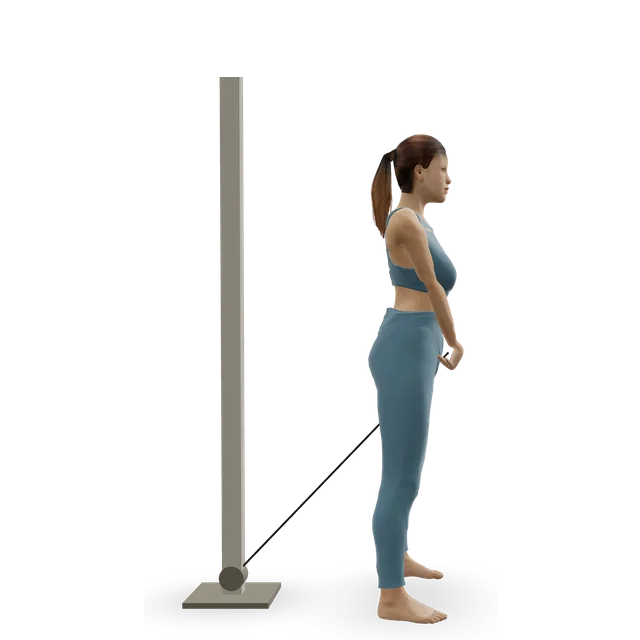
A straight-arm pulldown is a lat exercise with your elbows kept straight: facing a high cable, you sweep a bar or rope down in an arc from in front of your head to your thighs. Because your elbows don't bend, your biceps can't help, which is why people use it to feel their lats working. It's also called the straight-arm lat pulldown, lat prayer or standing cable pullover.

Muscle-activity studies show it works your lats about as hard as the long head of your triceps, and works the lats more than a lying pullover does. No study has tested it for muscle growth or strength, so it belongs beside pulldowns, pull-ups and rows, not instead of them.

This guide covers the steps on the 3D figure, the rope, bar and band versions, why you feel your triceps, how it compares with pulldowns and pullovers, how many, and the warning signs.

The short version

Long arms, sweep down to your thighs

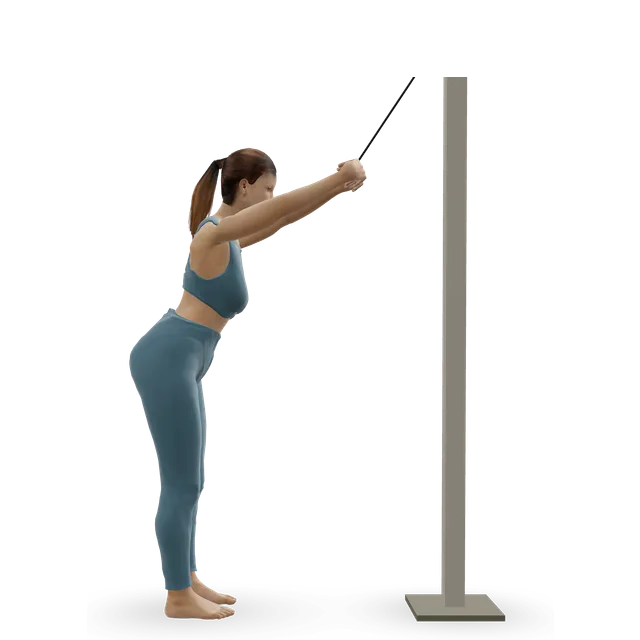
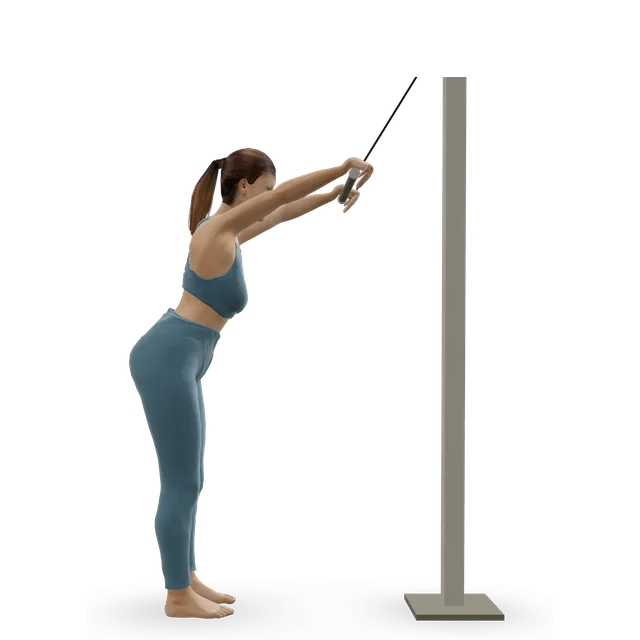
Face a high cable a step back, hinge forward a little with soft knees, and hold a bar with your arms long out in front and up. Sweep it down in an arc to your thighs, keeping your arms straight, and let it rise back under control. ACE uses it as one of four moves towards a first pull-up.

Source 1

It trains the muscles that pull your arm down

Your lats, the teres major, which has the biggest leverage for this movement, the long head of your triceps and the backs of your shoulders, with your trunk holding still. Your elbows don't bend, so your biceps can't help.

Sources 2, 3

Why you feel your triceps

The long head of the triceps crosses your shoulder and helps pull a raised arm down, and it holds your elbow straight. In 20 trained adults it was about as active as the lats (about 19% and 18% of maximum at a light load).

Sources 3, 4

More lats than a pullover, as far as we know

It drew more lat activity than a barbell pullover, which drew more chest and abdominal activity, and lat activity was highest with the arms low and fell steeply overhead. A 2026 review calls it a possibly more targeted exercise for the back than the pullover. These are muscle-activity studies, not growth studies.

Sources 4, 5, 6, 7

Beside pulldowns and rows, not instead

No study has trained straight-arm pulldowns for lat size or strength. Lat pulldowns have training trials behind them, as our lat pulldown guide sets out. Use the straight-arm pulldown as an extra lat exercise after your main pull and row, or as an easier pulling step, as the NSCA does with the band version.

Sources 8, 9

How many

2 to 3 sets of 10 to 15, stopping 2 or 3 reps short, with 60 to 90 seconds' rest (our editorial starting point, as in our pullover guide; the move page gives no dose). On the way to a pull-up, ACE uses 2 to 4 sets of 8 to 12. Count it in your 10 or so hard back sets a week.

Sources 1, 19

What a straight-arm pulldown is, and what it works

The exercise

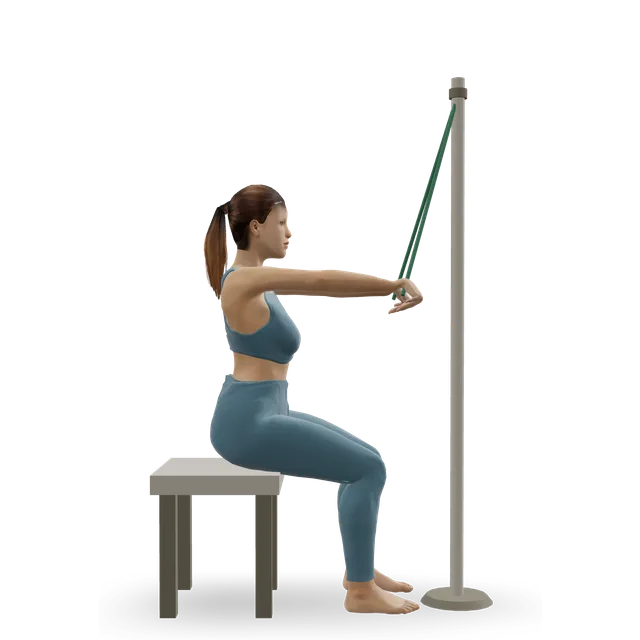
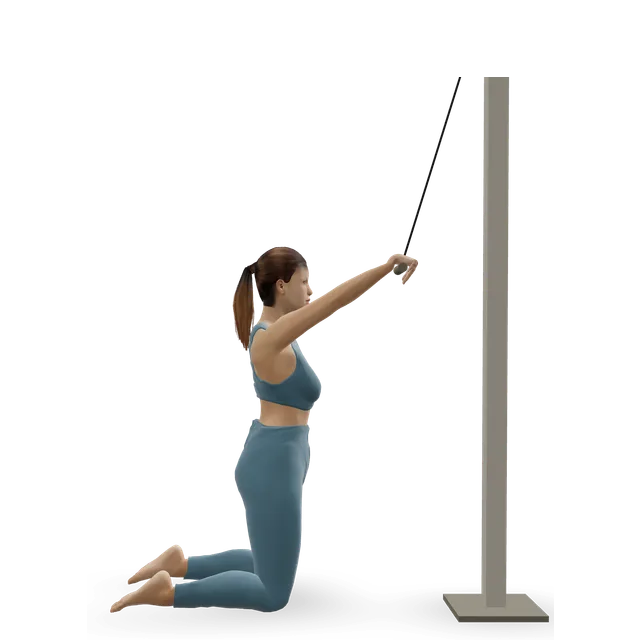
A standing pull on a high cable with straight arms: your shoulders do all the moving, from your arms reaching forward and up to your hands at your thighs. The 3D figure shows it with a straight bar and with a rope. A band works at home, and a seated band version starts from shoulder height.

Its other names

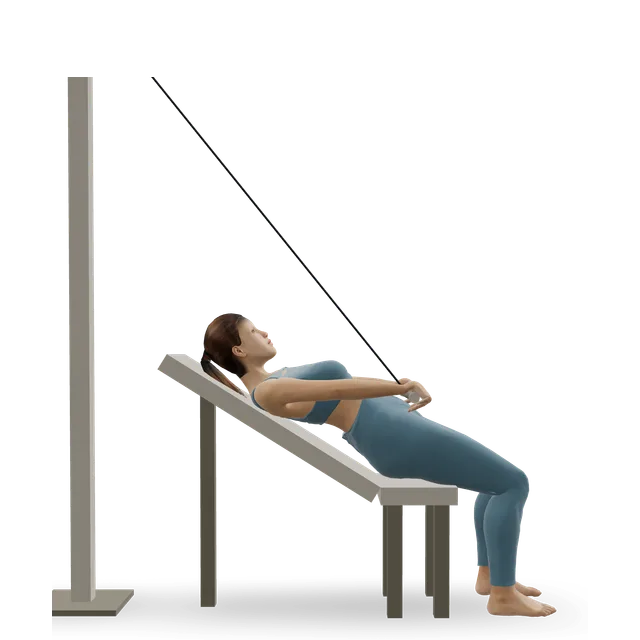
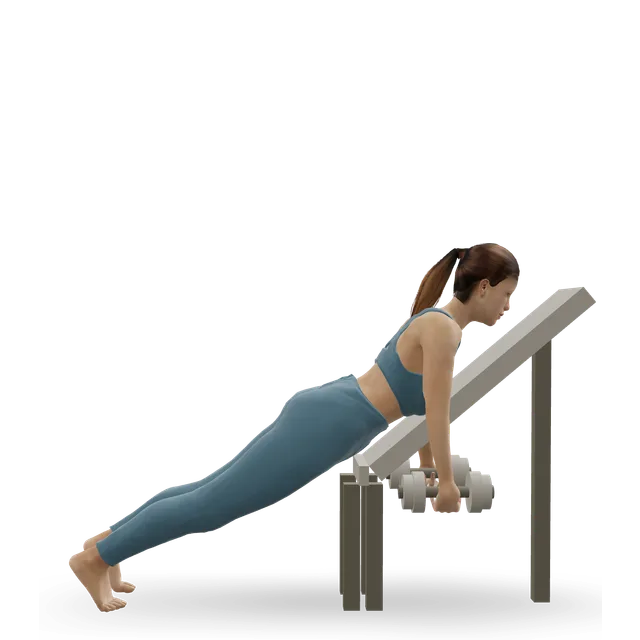
Straight-arm lat pulldown, straight-arm pushdown, lat pushdown, lat prayer and standing cable pullover all name this exercise or its rope version. The lying incline cable pullover is the same arm movement lying back on a bench, and our dumbbell pullover guide covers lying pullovers.

What it works

The muscles that pull your arm down and back (shoulder extension): the lats, the teres major, the long head of the triceps and the backs of your shoulders. Your trunk works to stay still, and your triceps also keeps your elbows straight. It moves one joint, your shoulder, so it's an isolation exercise, as our compound vs isolation guide defines it; it isn't an isolation of the lats.

Sources 2, 3, 4

How it differs from a pulldown and a pullover

In a lat pulldown your elbows bend, so your biceps and other elbow muscles help and you can lift more. A lying dumbbell pullover loads the overhead part of the arc, where the chest works most; a standing cable loads the lower part, where the lats work most.

Sources 5, 4

What you need first

Nothing special: the move pages list no prerequisite and rate it easy. You need to raise your arms to about head height without pain; if you can't, start lower.

How people differ

Longer arms make the same stack weight feel heavier, a longer lever (our reading). Tight lats or shoulders limit how high you can start: start where you can reach without arching your back. The studies were in trained adults, mostly men.

How to do a straight-arm pulldown, step by step

The move page's 3 steps and cues ("Keep the elbows straight", "Don't let the trunk rock") and ACE's set-up; the elbow lead, the start height and the breathing cues are editorial.

  1. Fix a straight bar (or a lat pulldown bar) to a high pulley. Take it overhand, hands about shoulder-width apart, and step back a pace or two until the weight lifts with your arms straight out in front and up.
  2. Hinge forward a little at your hips with soft knees and a long back, feet hip-width apart, so the cable lines up with your arms.
  3. Set your shoulders down away from your ears, and keep your elbows straight or very slightly bent, the same bend all the way.
  4. Breathing out, sweep the bar down in an arc to the tops of your thighs, leading with your elbows towards your hips, without letting your trunk rock or your elbows bend.
  5. Pause for a second at your thighs.
  6. Breathing in, let the bar rise slowly along the same arc until your arms are back at about head height, or lower if your shoulders prefer.

Loading the 3D figure…

Gets into position, then repeats the movement. Technical checks passed; qualified exercise review is pending.

The movement on the figure: Straight-arm pulldown

With a rope

The move page's 3 steps. Coaching sites disagree on rope or bar, and no study compares them: use whichever feels better.

  1. Stand a step back from a high pulley, hinged forward a little, with both hands on the rope, thumbs up, and your arms long out in front and up.
  2. Sweep your arms down in an arc, letting your hands part past your thighs; pause.
  3. Let them rise back under control.

Loading the 3D figure…

Gets into position, then repeats the movement. Technical checks passed; qualified exercise review is pending.

The movement on the figure: Rope straight-arm pulldown

With a band, kneeling or seated

No 3D demo shows the band versions: follow the bar steps above.

Standing with a band

Anchor a band above head height in a closed door on the hinge side, or round a post that can't move, never a handle. Step back until it's taut with your arms forward and up, hinge a little, and follow the same steps. Check the band for nicks first: one that snaps flies back towards your face.

Kneeling

Half-kneeling or tall-kneeling works when the anchor is low or you want your trunk still. The arm path is the same (our view).

Seated, from shoulder height

A seated band pull-down from shoulder height down to your sides is the shorter version used in a shoulder programme for wheelchair users. Its move page gives 3 sets of 8, 3 days a week, from that programme. It suits a sore shoulder, because your arms never go overhead.

Source 10

Why you feel your triceps

The long head crosses your shoulderEmerging evidence

The long head of the triceps starts on your shoulder blade, so it helps pull your arm down as well as straighten your elbow. When researchers stimulated it electrically, its pull on the shoulder was near zero with the arm by the side and about 13 to 14 Nm with the arm raised to 80 degrees. So it works hardest at the start of each rep.

Source 3

As active as the latsEmerging evidence

In 20 trained adults lifting 30% of their body weight for 8 reps, the triceps (about 19% of maximum) and the lats (about 18%) were the most active muscles in the straight-arm pulldown. Triceps activity didn't differ significantly from a barbell pullover.

Source 4

The teres major has the most leverageEmerging evidence

Of the muscles that pull the arm down and back, the teres major has the largest leverage, and the lat's leverage is greatest with the arm about 45 degrees forward, from two anatomy studies in a systematic review.

Source 2

Shifting the feel to your back

Start with your arms a little lower, at about head height rather than overhead, think of driving your elbows towards your hips, and keep a slight, fixed bend in your elbows (our view). Feeling your triceps is normal; it doesn't mean you're doing it wrong.

What the evidence says

No training study

We found no study that trained straight-arm pulldowns for lat or triceps size or strength, and no safety data. What we have is muscle activity over a few reps, which isn't a validated predictor of growth.

Source 7

More lats than a barbell pulloverEmerging evidence

In 20 trained adults, the standing straight-arm pulldown drew significantly more lat activity than a barbell pullover; triceps activity didn't differ between them; and the pullover drew more chest, front-shoulder and abdominal activity. Grip width (shoulder-width or one and a half times wider) made no difference.

Source 4

The lats work most with your arms lowEmerging evidence

In 15 trained men holding maximal straight-arm efforts at five shoulder angles, lat and rear-shoulder activity was highest with the arms low (0 to 45 degrees): in the standing pulldown, lat activity was 88% lower with the arms overhead than by the sides. Chest activity peaked in between (90 to 135 degrees). The muscle readings weren't standardised against a reference contraction, the efforts were held still, and the pulldown was done standing and the pullover lying, so this is a clue rather than a measure of how hard each muscle works in a set.

Source 5

The pullover is more of a chest exerciseEmerging evidence

A barbell pullover worked the chest more than the lats in 8 men. A 2026 review of 23 lat studies says the pullover shouldn't be a first-choice lat exercise and that the straight-arm pulldown may be more targeted; none of its studies measured growth.

Sources 11, 6

No "lower lat" patternEmerging evidence

Lat activity measured at four sites showed no clear pattern of separate upper and lower regions, so claims that one exercise hits the lower lats are untested.

Source 12

Straight-arm pulldowns against lat pulldowns, pullovers and pushdowns

The lat pulldown

Do both if you can. The lat pulldown bends your elbows, lets you lift more and has training trials behind it, as our lat pulldown guide sets out: in a programme that included pulldowns, lat muscle fibres grew 22% in 18 novices over 8 weeks. The straight-arm pulldown keeps your biceps out; no trial has tested it for growth.

Source 8

The dumbbell pullover

The same shoulder movement, loaded differently: lying with a dumbbell loads the overhead part where the chest works most, while a standing cable loads the lower part where the lats work most. Our dumbbell pullover guide covers it, and the lying incline cable pullover sits in between.

Sources 5, 4

The triceps pushdown

Your upper arms stay still and your elbows straighten: a triceps exercise. In a straight-arm pulldown your elbows stay straight and your shoulders move. If your elbows bend as you pull, it's turning into a pushdown and the weight is too heavy.

Rows and face pulls

Rows bend your elbows and work your middle back and biceps; face pulls work the backs of your shoulders. Neither is a substitute; the straight-arm pulldown adds lat work without your biceps.

Cable or band

Band training built strength like weights in 7 small trials, and free weights and machines built strength alike across 13 studies, so use what you have.

Sources 14, 15, 13

Bar, rope and the incline cable pullover

Scapular pull-ups to learn "shoulders down", 2 sets of 6 to 8 (our first pull-up workout); the straight-arm pulldown with a bar or rope, 2 to 3 sets of 10 to 15, stopping 2 or 3 short (our pullover guide's editorial starting point; the move pages give no dose), or 2 to 4 sets of 8 to 12 on the way to a pull-up (ACE, as our lat pulldown guide uses); and the incline cable pullover, lying back on an incline bench, 2 to 3 sets of 8 to 12, stopping 2 or 3 short (its move page's editorial starting point). The seated band pull-down from shoulder height has written steps but no 3D demo yet.

Common mistakes

Bending your elbows into a pushdown

Go lighter and keep the same slight bend all the way, as the move page cues.

Rocking your trunk to start the weight

Hinge a little and hold that angle; the move page's cue is "Don't let the trunk rock". If you need to rock, it's too heavy.

Shrugging

Set your shoulders down before the first rep, as our lat pulldown guide cues, and keep them there.

Starting overhead with your back arched

Start with your arms at about head height, or lower with a sore shoulder.

Standing too close

If the cable runs straight down past your face, step back until it lines up with your arms (our view).

Letting the stack slam at the top

Let the bar rise slowly along the same arc, and set the weight down gently at the end.

How many and how often

No study has tested doses for the straight-arm pulldown, and its move pages give none. These are our starting points, matching our guides and plans.

Your first two weeks

2 sets of 12 to 15 with 3 or 4 reps to spare, as our plans advise for any new exercise.

Working sets

2 to 3 sets of 10 to 15, stopping 2 or 3 reps short; the last set can go to 0 to 2 reps short, as our plans allow for isolation moves. That's our editorial starting point, as in our pullover guide. Failure added a trivial amount of growth at most across 15 studies, and people misjudge the reps they have left by about one.

Sources 16, 17

As a pull-up step

2 to 4 sets of 8 to 12, as ACE uses it and our lat pulldown guide's ladder does, alongside pulldowns or assisted pull-ups.

Source 1

Rest

60 to 90 seconds, as our plans advise for smaller moves. Resting more than about a minute gave a small growth benefit in a review of 9 studies.

Source 18

Weekly sets and how often

Once or twice a week, after your pulldown or pull-up. Count it as a direct lat set in your 10 or so hard back sets a week (our editorial reading of the plans' rule); more weekly sets built more muscle across 67 studies. The NHS asks for strength work on at least 2 days a week.

Sources 19, 22

Progressing

Add reps up to 15, then move to the next pin or the smallest add-on weight. Adding reps and adding load both worked in 43 trained people.

Source 20

Warm up first

A few minutes of easy movement, shoulder circles and a light first set, as our plans and the NHS suggest.

Source 21

Moves that go with it

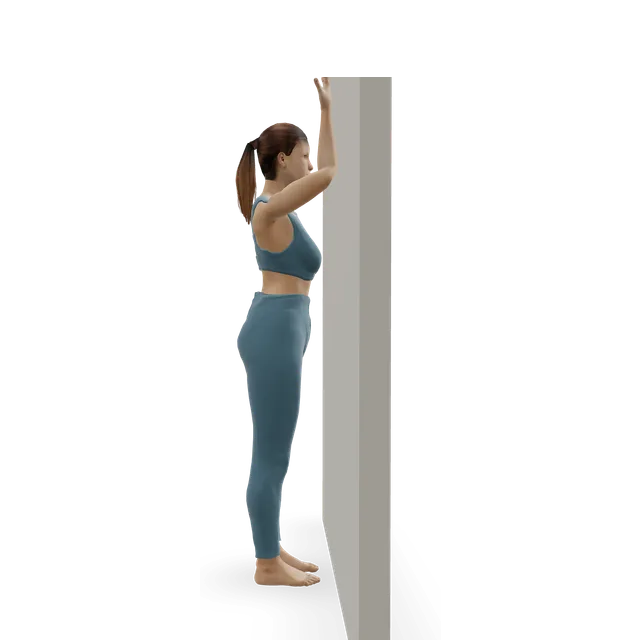
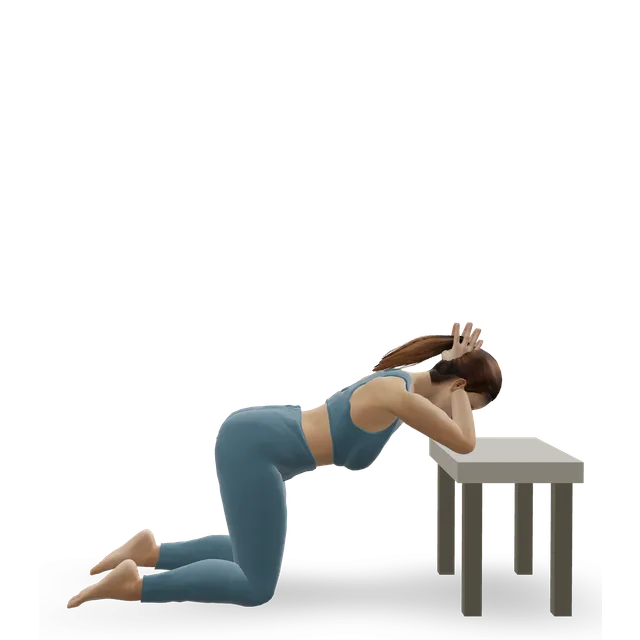
Warm up with shoulder circles, 3 slow circles each way with each arm (the move page's editorial starting point). Before it, a vertical pull: the lat pulldown, 3 sets of 8 to 12 (our lat pulldown guide and full-body gym workout), or band-assisted pull-ups, 2 to 4 sets of 8 to 12 with a band that lets you finish each set in good form (the move page's dose, from ACE). Add the kneeling one-arm high cable row, 2 to 3 sets of 8 to 12 each side (the move page's editorial starting point), and a row with your elbows close, such as the chest-supported dumbbell row, 3 sets of 10 to 12 (our pull day workout). Stretch your lats with the wall lat stretch, 20 to 30 seconds 2 to 4 times each side, or the overhead lat stretch at a bench, 30 to 45 seconds 2 to 4 times (their move pages).

Workouts to follow

Our lat workout is built around the straight-arm pulldown, after the lat pulldown and before a one-arm pull and a row. The back, pull day B and back and biceps workouts are where it fits as an extra lat exercise; the first pull-up workout is the pull-up path; the cable machine workout covers the rest of the station.

Plans it fits

These plans' pull and back days, from pull day workout B and the back workout, are where the straight-arm pulldown fits as an extra lat exercise.

Who should change it

Shoulder pain

Start the arc at about head height or lower, not overhead, and keep the weight light; the seated band pull-down from shoulder height is the shortest version, used in a shoulder programme for wheelchair users. Keep pain to about 5 out of 10, settled by your next session, as our shoulder guides say.

Source 10

After a dislocation or shoulder surgery

Wait until your physiotherapist clears loaded overhead work, as our pullover guide says, then start from shoulder height.

Elbow pain

Use a lighter weight and a slight, fixed bend in your elbows, and see our elbow pain from pull-ups guide if it builds through a set.

After heart, lung or breast surgery

After heart surgery through the breastbone, a heart or lung transplant, or breast cancer surgery or reconstruction, follow your surgical team's advice before you pull with your arms, as our lat pulldown guide and group cautions say.

Pregnancy

Done standing with a small hinge, it suits pregnancy if you already lift; our pullover guide uses it in place of lying pullovers. Stop if you feel uncomfortable, too hot or unwell.

Source 23

High blood pressure

Breathe out as you pull and keep the weight moderate. The American Heart Association calls low- to moderate-intensity strength training with proper breathing safe when blood pressure is controlled.

Sources 24, 37

Your lower back

The hinge is small and held. If your back aches, stand more upright and use a lighter weight, within the back pain rule below (our view).

Warning signs

Stop and get medical help

If you get chest pain or pressure, feel faint or dizzy, are unusually breathless, or your heart races or beats irregularly during exercise, as our plans advise. The American Heart Association says these need immediate medical evaluation.

Source 24

Call 999 (911 in the US)

For chest pain that comes on suddenly and doesn't go away, feels tight or like squeezing, spreads to your arms, neck, jaw, stomach or back, or comes with sweating, feeling sick, light-headedness or breathlessness; arm pain that comes on suddenly with pressure, heaviness or squeezing across your chest; severe difficulty breathing, or a chest that feels tight or heavy; someone who faints while exercising; palpitations that don't go away, or come with chest pain, shortness of breath or feeling faint; or a headache that starts suddenly and is extremely painful, especially while lifting or straining. The NHS says a bleed on the brain may be more likely when lifting something heavy. Don't drive yourself to A&E.

Sources 25, 26, 27, 28, 29, 30, 31, 32

Your shoulder

Ask for an urgent GP appointment or get help from NHS 111 for sudden or very bad shoulder pain, an arm you can't move, a shoulder that has changed shape or is badly swollen, pins and needles that don't go away, no feeling in your arm or shoulder, an arm or shoulder that's hot or cold to touch, pain after an injury or a fall, severe pain in both shoulders, or feeling feverish or unwell. Go to A&E if, after an injury, you can't move your arm or your shoulder looks out of place or has changed shape. See a GP if shoulder pain is getting worse or hasn't improved after 2 weeks.

Sources 33, 34

A pop or snap at the elbow

A pop at the front of the elbow with bruising or a bulge in the upper arm, or a snap at the back of the elbow with weakness straightening your arm: go to an urgent treatment centre or A&E, as the NHS advises for an arm injury with a snapping noise or a change in shape.

Source 27

Elbow or arm pain with exercise

Get help from NHS 111 if your arm hurts when you exercise but the pain goes away when you rest.

Source 27

Back pain

Call 999 or go to A&E: loss of feeling or numbness around the genitals or bottom, new trouble peeing or controlling your bladder or bowels, changes in genital sensation during sex or problems with erections or orgasm, or pain, tingling, weakness or numbness in both legs. These are signs of cauda equina syndrome, which needs treating in hospital urgently. Don't drive yourself.

Pain you'd call mild to moderate, no more than about 5 out of 10, that settles within an hour or so, with your back no worse the next morning, is acceptable; if it is worse, do less next time (fewer reps, a smaller range, a lighter load), not nothing. Stop or shrink any movement that sends pain, pins and needles or numbness further down your leg. That's our back pain guides' rule.

Source 35

Pain down a leg

See a GP if pain spreading down a leg hasn't improved after a few weeks of home treatment, is getting worse or stops your normal activities. Sciatica on both sides, or weakness or numbness in both legs that's severe or getting worse, is a 999 call or a trip to A&E.

Source 36

Before you start

Speak to your GP first if you haven't exercised for some time or have medical conditions or concerns, as the NHS advises. Get advice before heavy lifting or hard straining work if your blood pressure is uncontrolled (140/90 or higher at a clinic, or 135/85 at home), or you have heart disease or chest pain when you're active, a pacemaker or defibrillator, diabetic eye disease, glaucoma, a hernia, recent eye or tummy surgery, or you're pregnant, as our breathing guide lists. After a recent shoulder dislocation or shoulder surgery, follow our shoulder dislocation guide or your surgical team first.

Sources 22, 37
Myths

"Straight-arm pulldowns are just a warm-up"

Untested either way. The lats and triceps work measurably even at a light load, ACE uses it as a working exercise towards a pull-up, and the NSCA lists the band version as an intermediate pulling step. Use it as an extra lat exercise or a warm-up, as you like.

Sources 4, 1, 9

"Straight-arm pulldowns isolate the lats"Emerging evidence

The triceps long head worked as hard as the lats, the teres major has the most leverage, and your trunk works to stay still.

Sources 4, 2

"They build the lats as well as pulldowns"

No study has trained them; lat pulldowns have training trials. Muscle activity isn't growth. Use both.

Sources 7, 8

"They hit the lower lats"Emerging evidence

No clear pattern of separate upper and lower lat activity has been found.

Source 12

"Pullovers and straight-arm pulldowns are the same"Emerging evidence

Same shoulder movement, different loading: lying with a dumbbell loads the overhead part where the chest works most; a standing cable loads the lower part where the lats work most.

Sources 5, 4

"You have to go to failure"Strong evidence

Across 15 studies, training to failure gave a trivial growth advantage at most. Stop 1 to 3 reps short, as our plans say.

Source 16

Questions people ask

How do you do a straight-arm pulldown?

Face a high cable, step back and hinge forward a little with soft knees, holding a bar with your arms long out in front and up. Sweep it down in an arc to your thighs with straight arms, pause, and let it rise slowly.

What muscles do straight-arm pulldowns work?

Your lats, the teres major and the long head of your triceps, which all pull your arm down and back, plus the backs of your shoulders. In one study the triceps worked about as hard as the lats.

Why do I feel straight-arm pulldowns in my triceps?

The long head of the triceps crosses your shoulder and helps pull a raised arm down, and it holds your elbow straight. Feeling it is normal; starting with your arms a little lower can shift the feeling towards your back.

Straight-arm pulldown or lat pulldown: which is better?

Do both if you can. The lat pulldown bends your elbows, lets you lift more and has training trials behind it. The straight-arm pulldown keeps your biceps out and drew more lat activity than a pullover, but no trial has tested it for growth.

Is a straight-arm pulldown the same as a cable pullover?

Standing, yes: it's the same movement, also called a lat prayer or lat pushdown. The lying incline cable pullover moves your arms the same way but loads the overhead part of the arc more.

Rope or bar for straight-arm pulldowns?

Either; no study compares them. A rope lets your hands pass your thighs at the bottom, and a bar is easier to keep level.

Should my arms be completely straight?

Straight or very slightly bent, with the same bend all the way. If your elbows bend more as you pull, it becomes a pushdown and the weight is too heavy.

How many sets and reps of straight-arm pulldowns should I do?

2 to 3 sets of 10 to 15, stopping 2 or 3 reps short, with 60 to 90 seconds' rest, is our starting point. ACE uses 2 to 4 sets of 8 to 12 on the way to a pull-up.

Are straight-arm pulldowns just a warm-up?

They can be, but they're a fair working exercise too: the lats work measurably even with light weights. What they can't do is replace your main pulls.

Can I do straight-arm pulldowns with a band?

Yes. Anchor the band above head height in a closed door on the hinge side or round a post that can't move, never a handle, and follow the same steps.

Do straight-arm pulldowns help pull-ups?

ACE includes them among four moves towards a first pull-up. No trial has tested them on their own; pulldowns, assisted pull-ups and slow lowers are the core of our pull-up path.

Why do straight-arm pulldowns hurt my shoulder?

Usually the start is too high or the weight too heavy. Start with your arms at about head height or lower, go lighter, and keep pain to about 5 out of 10, settled by your next session. See a GP if shoulder pain isn't better after 2 weeks.

Sources

  1. Crockford (ACE) 2015 · 4 moves to help you master the pull-up, including the straight-arm pulldown (coaching article, American Council on Exercise)
  2. Hik 2019 · The moment arms of the muscles that cross the shoulder joint (systematic review, J Anat)
  3. Landin 2018 · Functions of the triceps, including the long head at the shoulder (review, J Clin Med Res)
  4. Muyor 2022 · Barbell pullover against straight-arm pulldown: muscle activity in 20 trained adults (EMG study, Appl Sci)
  5. Teixeira 2022 · Pullover against pulldown at five shoulder angles in 15 trained men (isometric EMG study, Int J Exerc Sci)
  6. Di Fonza 2026 · Lat activity across pulling exercises: 23 studies (narrative review, J Funct Morphol Kinesiol)
  7. Vigotsky 2022 · Surface EMG amplitude in one session is not a validated predictor of muscle growth (review, Sports Med)
  8. Paoli 2016 · Lat muscle fibre growth after 8 weeks of training, lat pulldowns included, in 18 novices (randomised trial, Nutrients)
  9. Linkul (NSCA) · Strength training for the older client: a blueprint for programme design, with press and pull progressions (coaching article, Personal Training Quarterly)
  10. Mulroy 2011 · A home shoulder exercise programme for 80 wheelchair users with shoulder pain: the STOMPS trial (randomised trial, Phys Ther)
  11. Marchetti 2011 · The pullover worked the chest more than the lats in 8 men (EMG study, J Appl Biomech)
  12. Beaudette 2014 · Lat activity at four electrode sites in maximal contractions and lifts (EMG methods study, J Electromyogr Kinesiol)
  13. Haugen 2023 · Free-weight against machine strength training: 13 studies, 1,016 adults (systematic review and meta-analysis, BMC Sports Sci Med Rehabil)
  14. Lopes 2019 · Elastic bands against weights and machines for strength: 7 studies, 224 people, as corrected (systematic review and meta-analysis, SAGE Open Med)
  15. Lopes 2020 · Corrigendum: 7 studies, not 8, with the upper- and lower-limb results swapped (SAGE Open Med)
  16. Refalo 2023 · Proximity to failure and muscle hypertrophy: 15 studies (meta-analysis, Sports Med)
  17. Halperin 2022 · Accuracy in predicting repetitions to failure: 12 studies, 414 people (scoping review and meta-analysis, Sports Med)
  18. Singer 2024 · Rest between sets and muscle growth: 9 studies (Bayesian meta-analysis, Front Sports Act Living)
  19. Pelland 2026 · Weekly volume and frequency, muscle growth and strength: 67 studies, 2,058 people (meta-regressions, Sports Med)
  20. Plotkin 2022 · Progressing load or repetitions in 43 trained people (RCT, PeerJ)
  21. NHS · How to warm up before exercising
  22. NHS · Physical activity guidelines for adults aged 19 to 64
  23. NHS · Exercise in pregnancy
  24. Paluch 2024 · Resistance exercise training with and without cardiovascular disease: 2023 update (American Heart Association scientific statement, Circulation)
  25. NHS · Chest pain (past its review date: reviewed August 2023, review due August 2026)
  26. NHS · Heart attack
  27. NHS · Elbow and arm pain
  28. NHS · Shortness of breath
  29. NHS · Fainting
  30. NHS · Heart palpitations
  31. NHS · Headaches
  32. NHS · Subarachnoid haemorrhage
  33. NHS · Shoulder pain (past its review date: reviewed May 2023, review due May 2026)
  34. NHS · Dislocated shoulder
  35. NHS · Back pain
  36. NHS · Sciatica
  37. NHS · High blood pressure

Exercise education, not a personal prescription, and clinical review of these guides is pending. Check with a GP before starting hard training if you have a heart condition, chest pain, dizziness or breathlessness when active, and stop for sharp or increasing pain. Health disclaimer.