Training guide

How to do chest-supported rows: the bench angle, dumbbells, the T-bar and seal rows, your back, and how many

A chest-supported row is a row with your chest on a pad: you lie face down on an incline bench, a T-bar machine's pad or a high flat bench, and row the weight up from long arms. The pad holds your trunk, so your upper back can work hard without your lower back holding a bent-over position, and you can't swing the weight up.

It may take load off your lower back, but that's our inference, not a measurement: the only study of a row on a bench had 3 people and found no significant differences, and a machine row drew less lower-back activity than a free-weight row in another. The evidence that it builds strength is indirect too, but it all points one way: chest-supported rows train your lats, middle back and rear shoulders like any other row.

This guide covers the steps on the 3D figure, the bench angle, elbows in or out, the chest-supported T-bar machine and the seal row, how heavy and how many, and who should swap it for something else.

The short version

Your chest on a pad, your back does the pulling

Lie face down on a bench set to about 30 to 45 degrees with a dumbbell in each hand, and row your elbows back until the weights reach your lower ribs. The two studies of this set-up used benches at 47 and 45 degrees. The same idea works on a chest-supported T-bar machine or lying flat on a high bench (the seal row).

Sources 1, 2

It may take load off your lower back

In the only study of a bench row, 3 people's lower-back muscles worked at 24% and 53% of their maximum on the bench against 71% and 75% standing bent over, but no difference was statistically significant. A machine row drew about a third less lower-back activity than a free-weight bent-over row in 15 trained men, and the bent-over row loaded the lower spine most of three rows in 7 men. So chest support may take load off your lower back: that's our inference, as no study has measured spine load in it.

Sources 1, 3, 4

Your upper back still works hard

In the bench study, the rear shoulders and upper trapezius worked about as hard on the bench as standing. One methods study found a chest-supported row the best of four positions for a maximal lat contraction, and ACE's 45-degree incline row, elbows out, was among the top exercises for the back and side of the shoulder in 16 men.

Sources 1, 5, 2

Strength: the evidence is indirect, but it points one way

No trial has compared chest-supported with bent-over rows. Free weights and machines built strength alike head to head across 13 studies of 1,016 adults, and you get strongest at what you practise. The prone bench pull, a barbell row lying face down, is the standard pulling test in rowing, and it rose by about 5% over 8 to 12 weeks of training in elite paddlers and rowers.

Sources 6, 7, 8, 9

How heavy and how many

In your first two weeks, 2 sets of 10 to 12 with 3 or 4 reps to spare; then 3 sets of 8 to 12, stopping 1 to 3 reps short, with about 90 seconds' rest, as our pull day and dumbbell upper body B workouts do. Count them in the 10 or so hard sets a week your back needs across all your rows and pulls.

Source 10

Who it suits

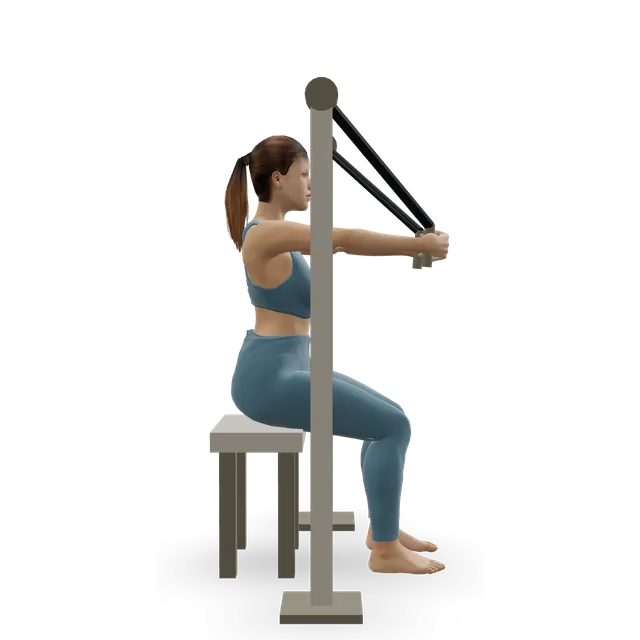
Experts in a Delphi survey rated it moderate in technique and agreed it suits novices, including novices over 60. It suits anyone whose lower back tires before their upper back, and people with osteoporosis, because there's no bent-over position to hold. In later pregnancy, lying face down gets uncomfortable: use a seated cable row instead.

Sources 11, 12

What a chest-supported row is, and what it works

The exercise and its names

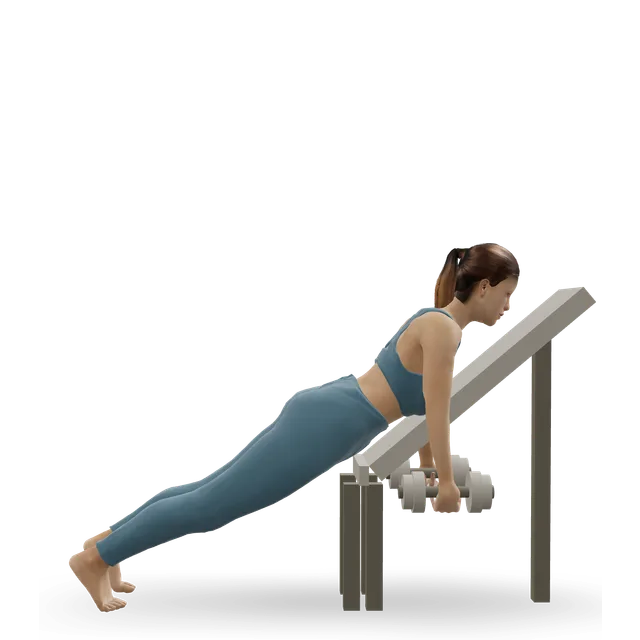
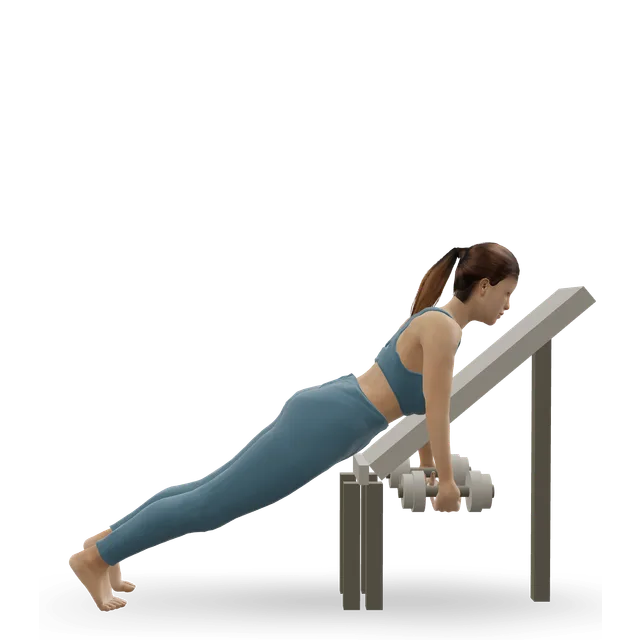
A row with your chest on a pad, so only your arms and shoulder blades move. The common forms: two dumbbells on an incline bench (the 3D demo, also called the incline dumbbell row, prone row or lying dumbbell row), with your palms in and elbows close or your elbows out to the sides; a plate-loaded chest-supported T-bar machine; a seated row machine with a chest pad; and the seal row, lying flat on a high bench with a barbell or dumbbells. Researchers call the barbell version the prone bench pull.

Source 7

What it works

Your lats, the middle and lower trapezius and the rhomboids (which pull your shoulder blades back), the back of your shoulders, and your biceps and the other muscles that bend your elbow. Where your elbows go shifts the balance between the lats and the upper back. Your lower back probably works less than in a bent-over row (our inference).

Sources 1, 13, 2

Still a compound lift

It moves your shoulders and elbows, so it's a compound (multi-joint) exercise, as our compound vs isolation guide defines it, even though the bench holds your trunk.

What you need first

Nothing special: the move page lists no prerequisite, and 17 experts rated its technique 5.1 out of 10 (moderate; none rated it hard), against 6.7 for the dumbbell bent-over row. You need to be comfortable lying face down on a pad for a minute at a time.

Source 11

How people differ

Taller people and longer arms need a higher bench, or the seat raised on a machine, so the weights don't touch the floor at the bottom. On a T-bar machine, set the foot platform so the top of your chest is at the top of the pad. If the pad presses uncomfortably on your chest, breasts or stomach, raise the incline or add a folded towel (the move page's tip, which we've widened).

Effort isn't growth

Most row studies use EMG (electromyography: electrodes measuring how hard a muscle works over a few reps). It isn't a validated predictor of which exercise grows a muscle more, so treat the activity figures on this page as clues, not verdicts.

Source 14

How to do a chest-supported row, step by step

From the move page (chest on the pad, palms facing, elbows back past the trunk) and its caution about lifting the chest. The bench angle is editorial, from the study set-ups; the elbow cue is our T-bar row guide's, the shoulder-blade cue our bent-over row guide's, and the breathing cue our breathing guide's.

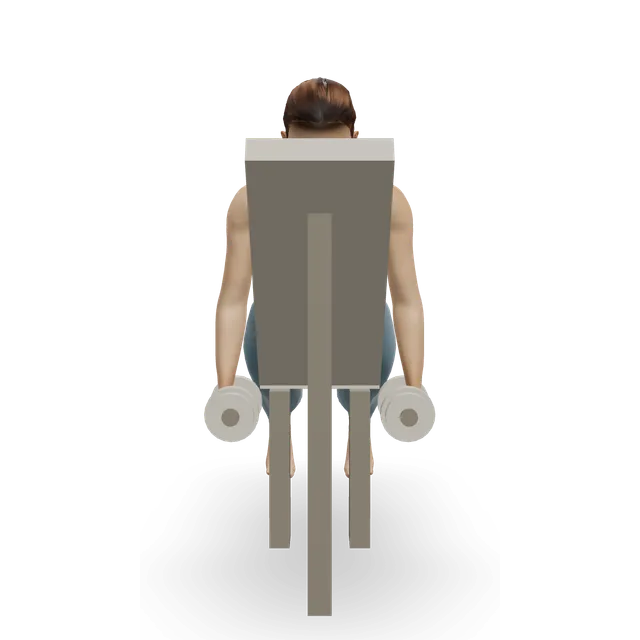
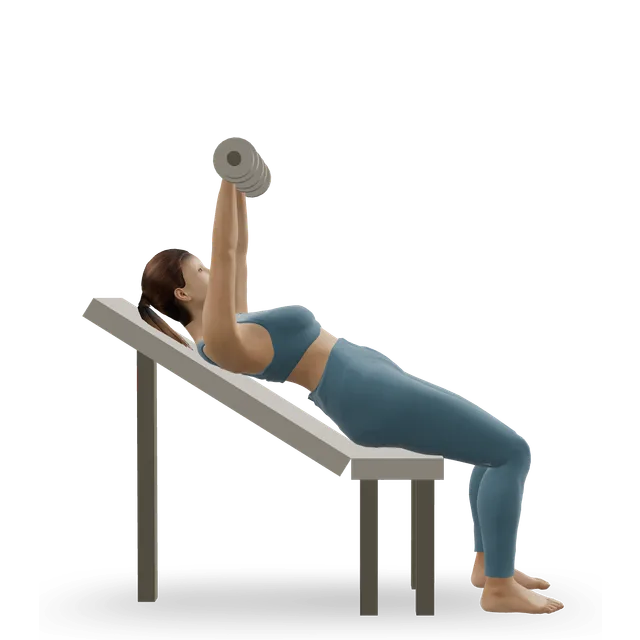
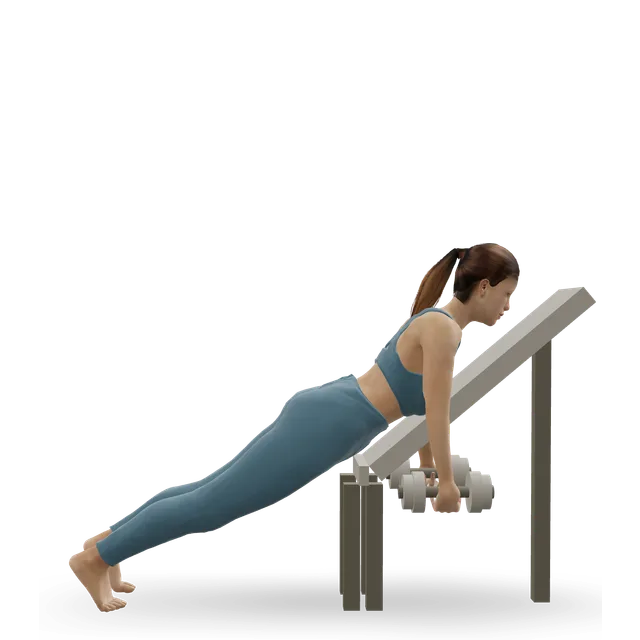
  1. Set an adjustable bench to about 30 to 45 degrees, high enough that your arms can hang straight without the dumbbells touching the floor. Put a dumbbell either side of the front of the bench.
  2. Lie face down with your chest on the pad and the top of your chest at or just over its top edge, so your shoulders can move freely. Keep your feet on the floor behind you, or your toes down with your legs long.
  3. Take the dumbbells with your palms facing each other and let them hang straight down, letting your shoulder blades slide forward a little.
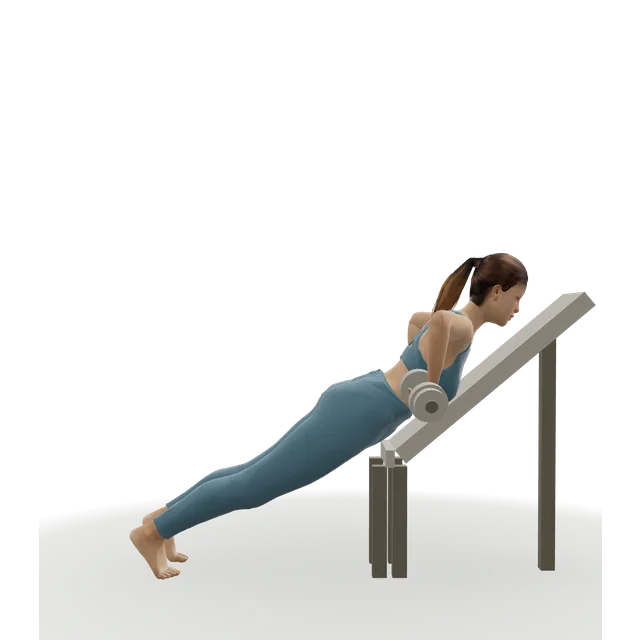
  4. Breathing out, row your elbows back past your trunk until the dumbbells reach your lower ribs, your shoulder blades moving back. Keep your elbows close for the lats, or let them travel out towards shoulder height for the upper back.
  5. Pause for a second with your chest still on the pad, then lower slowly until your arms are long.
  6. Keep your neck long and your eyes on the floor. When you can only finish a rep by lifting your chest off the pad or jerking, the set is over.
  7. Put the dumbbells down beside the bench before you get up, and sit up slowly.

Loading the 3D figure…

Gets into position, then repeats the movement. Technical checks passed; qualified exercise review is pending.

The movement on the figure: Chest-supported dumbbell row

On a chest-supported T-bar machine

The move page's 4 steps. The figure shows the same row with a dumbbell in each hand on an incline bench.

  1. Load the machine and set the foot platform, or choose the step, so the top of your chest is at the top of the pad.
  2. Lie face down on the pad and take the handles palms down, palms up or palms in.
  3. Lift the bar off its rack and let your arms straighten in front of you.
  4. Breathing out, row the handles up with your upper arms close to your trunk, squeeze for a second at the top, then lower slowly.

Loading the 3D figure…

Gets into position, then repeats the movement. Technical checks passed; qualified exercise review is pending.

The movement on the figure: Chest-supported T-bar row

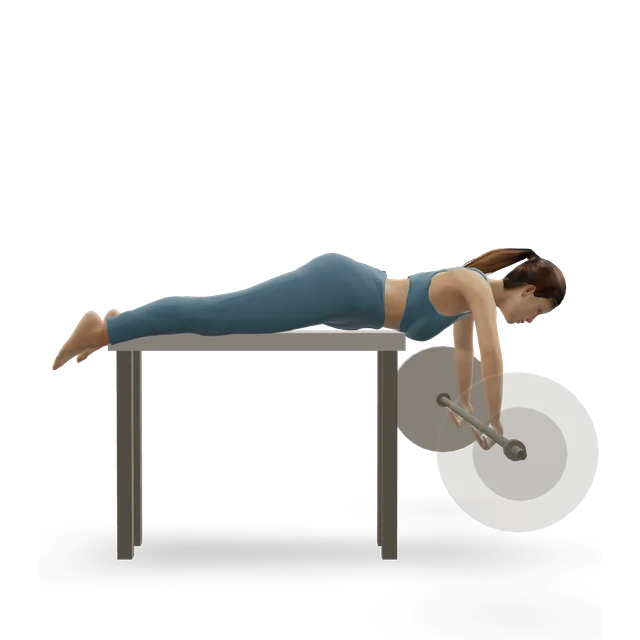
The seal row

No 3D demo shows the seal row: follow the dumbbell row on the figure above, lying flat on a high bench instead of an incline.

What it is

A chest-supported row lying flat on a bench high enough that your arms hang straight down, usually with a barbell (sometimes a cambered bar, bent down in the middle) or two dumbbells. It works like the incline version; the flat bench makes the pull more vertical. Our move page calls it the lying cambered bar row.

How to do a seal row

The steps follow the lying cambered bar row's move page, adapted for a straight bar; the bench set-up is editorial.

  • Use a seal row bench, or a flat bench raised on sturdy, purpose-made blocks so the bar clears the floor with your arms long. Never balance a bench on loose plates (our safety note).
  • Put the barbell under the bench, then lie face down along it with your chest at the end and your head just past it.
  • Take an overhand grip a little wider than your shoulders, arms hanging straight.
  • Breathing out, row the bar up towards the bench, elbows fairly close: to your chest for the upper back, towards your stomach for more of the lats (the move page's cue).
  • Hold for a second, then lower slowly, with your chest and hips staying on the bench.

The bench angle

About 30 to 45 degrees

Choose an angle where your arms hang straight without the weights touching the floor and the pad doesn't dig into your stomach. That's our editorial range: the bench study used 47 degrees and ACE's incline row 45, and coaching pages use 30 to 45.

Sources 1, 2

Flatter or steeper

A flatter bench (or the seal row) puts you nearer level, so you pull more straight up; a steeper bench lets you sit more upright and feels easier to get on and off. Neither has been tested against the other, so use the angle you can row smoothly from (our view).

If the pad presses

Raise the incline a notch or add a folded towel, as the move page suggests, and keep your neck long rather than craning up.

Elbows and grip

Elbows close for the latsEmerging evidence

A 2026 review of 23 muscle-activity studies found that in seated rows a narrower grip and a lower elbow angle each went with more lat activity, in separate studies. Keep your upper arms brushing your sides and pull towards your hips.

Source 13

Elbows out for the upper back and rear shouldersEmerging evidence

In the bench study, rowing with the elbows out at shoulder height worked the rear shoulder and upper trapezius hardest, though not significantly. In 16 men, ACE's 45-degree incline row, lying on the bench and rowing with the elbows out, drew 69% of maximum from the rear shoulder, second of 10 exercises, and 84% from the side of the shoulder, the most of the 10.

Sources 1, 2

Grip matters less than your elbowsMixed evidence

Grip width had no consistent effect on lat activity across the studies the review pooled, and one study's finding pointed the other way. Palms facing in is the most comfortable for most people; use whichever lets you pull hardest without pain.

Source 13

Let your shoulder blades moveEmerging evidence

Squeezing your shoulder blades back as hard as you can didn't change middle trapezius and rhomboid activity in seated rows. Let them slide forward a little at the bottom and back as you pull, as our bent-over row guide says.

Source 15

What the evidence says

The only study of a bench row had 3 peopleEmerging evidence

Three trained sport-science students rowed 12 kg dumbbells standing bent over at about 45 degrees and lying on a 47-degree bench, with their elbows in and out. Lower-back muscle activity was 24% and 53% of maximum on the bench against 71% and 75% standing; lat activity was 30% and 42% on the bench against 43% and 44% standing. With 3 people, no difference was statistically significant, and the authors call it preliminary.

Source 1

Machine rows and the lower backEmerging evidence

In 15 trained men at matched effort, a two-arm free-weight bent-over row drew 34% more lower-back (erector spinae) activity than a machine row. In 7 men, the bent-over row put the largest load on the lower spine of three rows. Nobody has measured spine load in a chest-supported row, so that it may take load off your lower back is our inference from these studies.

Sources 3, 4

The lats in a chest-supported rowEmerging evidence

In a study of how to measure the lats, a chest-supported row was the most effective of four maximal contractions. In 16 trained men doing a prone barbell row, the lats worked a little harder in top-half reps than in full reps (effect size about 0.58), an effect the authors call medium and inconsistent. In 12 male athletes, a lying barbell row and a suspended inverted row drew similar activity.

Sources 5, 16, 17

Strength: indirect evidence from prone bench pullsEmerging evidence

No trial has trained a chest-supported row against a bent-over row. What we have is indirect: the prone bench pull is a reliable maximal strength test in rowers, and its one-rep maximum rose by 5.3% in 11 world-class kayakers over 12 weeks and by 4.6% in the best group of 43 trained rowers over 8 weeks (the abstracts don't say which exercises they trained). In 34 trained men, 8 weeks of free-weight training that used the prone bench pull as its row gave the same results as machine training.

Sources 7, 8, 9, 18

Free weights and machines build strength alikeStrong evidence

Compared head to head across 13 studies of 1,016 adults, free-weight and machine training raised strength and muscle size by the same amount, though each raised strength most on its own kind of test. A second meta-analysis agrees, and the American College of Sports Medicine (ACSM) found equipment type didn't consistently change results across 137 reviews.

Sources 6, 19, 20

No row has been shown to build more muscleEmerging evidence

None of the 23 lat muscle-activity studies in a 2026 review followed people through training, so no row has been shown to grow your back more than another, and one session's muscle activity doesn't predict growth.

Sources 13, 14

Your lower back

Why it may get a rest: our inferenceEmerging evidence

In a bent-over row your back muscles hold your trunk against the weight for the whole set. With your chest on a pad, the pad does much of that job. The 3-person bench study and the machine-row study both point that way, but no study has measured spine load, so it may take load off your lower back rather than certainly does.

Sources 1, 3, 4

You still brace

Your trunk still works to keep you steady on the pad, and on a T-bar machine you push through your legs. Feeling your back muscles work is normal; sharp pain or pain down a leg isn't (our view).

The back pain rule

Pain you'd call mild to moderate, no more than about 5 out of 10, that settles within an hour or so, with your back no worse the next morning, is acceptable; if it is worse, do less next time (fewer reps, a smaller range, a lighter load), not nothing. Stop or shrink any movement that sends pain, pins and needles or numbness further down your leg. That's our back pain guides' rule.

Exercise helps back pain in generalStrong evidence

Across 249 trials, exercise eased long-lasting low back pain by about 15 points on a 100-point scale against no treatment or usual care, with moderate certainty, and NICE suggests group exercise programmes. No trial has tested chest-supported rows in back pain, but they let you keep training your upper back while it settles, as our bent-over and T-bar row guides suggest.

Sources 21, 22

OsteoporosisStrong evidence

The UK consensus advises avoiding postures with a high degree of spinal bending and recommends back-strengthening exercise, so a chest-supported row suits: there's no hinge to hold. Keep your back long on the pad.

Source 12

From a band row to the T-bar machine and the seal row

Band rows, 3 sets of 10 to 15, stopping 2 to 3 reps short (the move page's dose); the machine row with a chest pad, 3 sets of 12 to 15 (our full-body machine workout); the prone shoulder-blade squeeze, 2 to 3 sets of 8 to 12 with a 1-second hold (the move page's dose), to learn the shoulder-blade move; the chest-supported dumbbell row, 2 sets of 10 while you learn (our bent-over row technique workout) and then 3 sets of 10 to 12 (our pull day workout); the elbows-out incline bench pull, 2 to 3 sets of 10 to 12 (our editorial starting point, as in our dumbbell row guide); the chest-supported T-bar row, 2 to 3 sets of 8 to 12, stopping 2 or 3 reps short (the move page's dose); and the seal row (the lying cambered bar row), 2 to 3 sets of 8 to 12 (its move page's dose; it has no 3D demo).

Common mistakes

Lifting your chest off the pad

The usual cheat, as the move page says. Use lighter weights and pause at the top with your chest down.

Weights touching the floor

Raise the bench or the incline so your arms can hang long without the dumbbells landing between reps.

Shrugging to your ears

Think of pulling your elbows towards your hips rather than your shoulders towards your ears.

Cranking your neck up

Keep your eyes on the floor and your neck long, rather than looking up at a mirror.

Short, jerky reps

Lower until your arms are long. Top-half reps raised lat activity only a little, and inconsistently, in one study, so use the full range with a weight you can control.

Source 16

Getting up too fast

Put the weights down first and sit up slowly, especially after a hard set.

How heavy, how many and how often

No study has tested doses for chest-supported rows. These are our starting points, matching our plans, workouts and the move pages.

Your first two weeks

2 sets of 10 to 12, stopping with 3 or 4 reps to spare, as our plans advise for any new lift and as our bent-over row technique workout grooves the pull.

Working sets

3 sets of 8 to 12, stopping 1 to 3 reps short (RIR, reps in reserve: how many more reps you could have done), as our pull day workout (3 sets of 10 to 12, 1 or 2 in reserve) and dumbbell upper body B workout (3 sets of 8 to 12, 2 or 3 in reserve) do. As your main row, 3 to 4 sets of 8 to 12, as our bent-over row guide suggests. Failure added a trivial amount of growth at most across 15 studies, and people misjudge the reps they have left by about one.

Sources 23, 24

On the T-bar machine or as a seal row

2 to 3 sets of 8 to 12, stopping 2 or 3 reps short: the chest-supported T-bar row's and the lying cambered bar row's move page dose.

Rest

About 90 seconds, as our plans advise for compound lifts in sets of 8 to 12. Resting more than about a minute gave a small growth benefit in a review of 9 studies, with nothing clear past 90 seconds.

Source 25

Weekly sets and how often

Count chest-supported rows in your 10 or so hard sets a week for your back, across rows and pulls, over two sessions (our bigger back guide). More weekly sets built more muscle across 67 studies, with smaller gains from each extra set. The NHS asks for strength work on at least 2 days a week.

Sources 10, 26

Progressing

Add reps until every set reaches the top of the range, then move to the next dumbbell and drop back to the bottom of the range, as our plans do. Dumbbells often jump by 2 kg or more, so expect fewer reps for a week or two. Adding reps and adding load both worked in 43 trained people.

Source 27

Warm up first

3 to 5 minutes of easy movement, shoulder circles and band pull-aparts, then a light first set, as our plans and the NHS suggest.

Source 28

No incline bench?

Put your chest on a sturdy step, box or the arm of a sofa set against a wall and row with the same steps (no 3D demo). Or row one arm at a time with a hand and knee on a bench or chair, 3 sets of 10 to 12 each side (our pull day workout B), or use a band row anchored in a closed door, 3 sets of 10 to 15 (the move page's dose).

Chest-supported rows against other rows

The bent-over row

Both build your back. The bent-over row also trains you to hold a hinge and loads your lower back more; the chest-supported row lets you row hard without it. Many people use one of each, and our bent-over row guide covers the hinge.

Sources 4, 3

The T-bar row

The standing T-bar row is the same unsupported hinge as a barbell row; its chest-supported machine is taught on this page, and our T-bar row guide covers the standing version.

The one-arm dumbbell row

A hand and knee on a bench hold your trunk too, and one arm at a time works the muscles at your sides harder. Our dumbbell row guide covers it.

The seated cable row

Upright, with no hinge, and the stack adds weight in small steps. Our seated cable row guide covers grips and set-up.

The inverted row

Your body weight on a bar: it drew the most lat and upper-back activity with the least load on the lower spine of three rows in 7 men. Our inverted row guide covers it.

Source 4

Moves that go with it

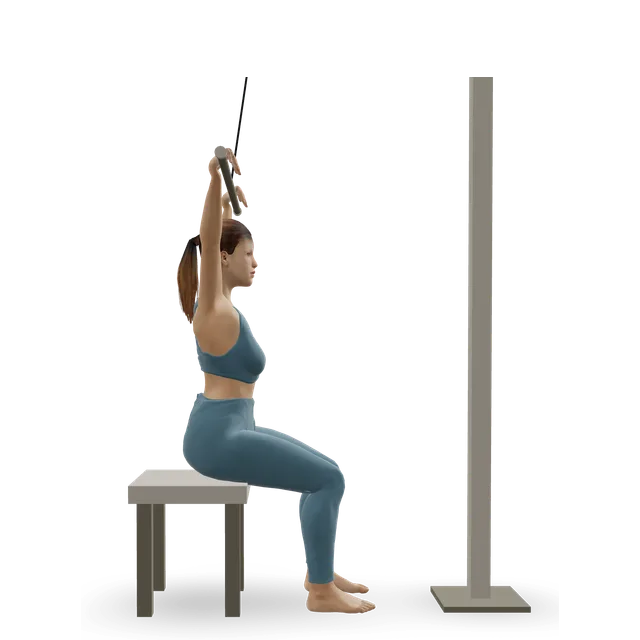
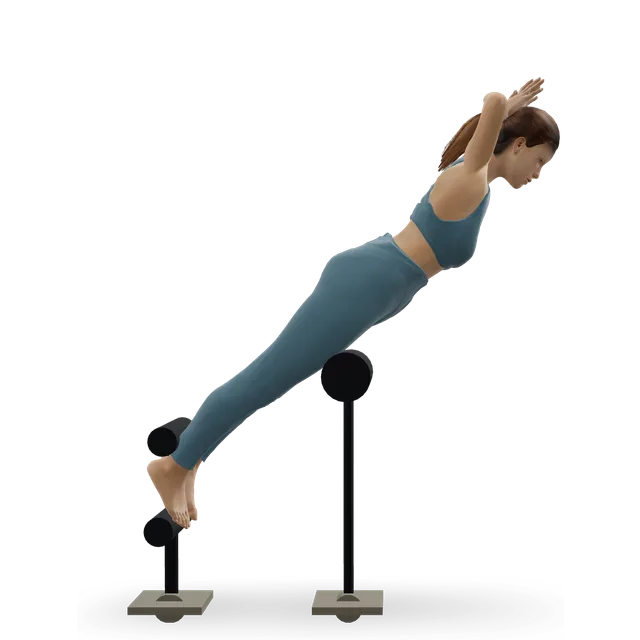
Warm up with shoulder circles, 3 slow circles each way with each arm (the move page's dose), and band pull-aparts, 15 reps (our back workout). Pair it with a vertical pull such as the lat pulldown, 3 sets of 8 to 12 (our pull day workout B); add face pulls, 3 sets of 12 to 20, the last set 0 to 2 reps short (our pull day workout), the incline reverse fly on the same bench, 2 sets of 12 to 20 (our dumbbell upper body B workout), and Y-T-W raises, 2 sets of 6 of each letter (our upper body workout at home), for the rear shoulders and middle back. Back extensions, 2 sets of 10 to 15 (our pull day workout B), train the hinge this row leaves out, and the incline dumbbell press pairs with it on the same bench, 3 to 4 sets of 8 to 12 (our dumbbell upper body B workout).

Workouts to follow

Our pull day and upper body B workouts use chest-supported rows after a heavier pull; the chest and back workout pairs them with an incline press on the same bench; the dumbbell upper body B workout is the home version; the bent-over row technique workout grooves the pull before the barbell; and the back and biceps workout swaps to the chest-supported T-bar row when your lower back is tired.

Plans that use it

Each of these plans has a workout with a chest-supported row.

Who should change it

Back pain or a disc problem

Chest-supported rows are the swap our bent-over, T-bar and dumbbell row guides suggest while back pain settles, within the back pain rule above. Our back pain guide covers the pain itself.

Shoulder pain

Rows usually suit sore shoulders: our shoulder impingement guide uses chest-supported rows. Keep your elbows closer, the weight lighter, and stop if it pinches.

After heart surgery through the breastbone

The pad presses on your breastbone. Follow your surgeon's advice before pushing, pulling or lifting with your arms, as our move page says, and before lying with your weight on your chest.

Pregnancy

The NHS says strength training at a gym is fine if you already do it. Lying on your front on the pad becomes uncomfortable as your bump grows: use a seated cable row or a supported one-arm row instead, as our T-bar row guide suggests. A pregnancy charity says pregnancy is not the time to lift your heaviest weights.

Sources 29, 30

High blood pressure, heart disease or eye disease

Breathe out as you row and keep the weight moderate: heavy lifts to failure with a held breath sent blood pressure to 320/250 mmHg on average in 5 bodybuilders. The American Heart Association calls low- to moderate-intensity strength training with proper breathing safe when blood pressure is controlled. High blood pressure means readings of 140/90 or higher at a clinic, or 135/85 at home.

Sources 31, 32, 33

Osteoporosis

A good fit: no bending to hold, and back-strengthening work is what the UK consensus recommends. Our exercise guide for osteoporosis has more.

Source 12

Warning signs

Stop and get medical help

If you get chest pain or pressure, feel faint or dizzy, are unusually breathless, or your heart races or beats irregularly during exercise, as our plans advise. The American Heart Association says these need immediate medical evaluation.

Source 31

Call 999 (911 in the US)

For chest pain that comes on suddenly and doesn't go away, feels tight or like squeezing, spreads to your arms, neck, jaw, stomach or back, or comes with sweating, feeling sick, light-headedness or breathlessness; severe difficulty breathing; someone who faints while exercising; palpitations that don't go away, or come with chest pain, shortness of breath or feeling faint; or a headache that starts suddenly and is extremely painful, especially while lifting or straining, or comes with numbness or weakness, difficulty speaking or loss of vision. The NHS says a bleed on the brain may be more likely when lifting something heavy. Don't drive yourself to A&E.

Sources 34, 35, 36, 37, 38, 39

Back pain

Call 999 or go to A&E: loss of feeling or numbness around the genitals or bottom, new trouble peeing or controlling your bladder or bowels, changes in genital sensation during sex or problems with erections or orgasm, or pain, tingling, weakness or numbness in both legs. These are signs of cauda equina syndrome, which needs treating in hospital urgently. Don't drive yourself.

Same day (GP or NHS 111): back pain and you feel hot, cold, shivery or generally unwell, or severe pain that starts suddenly or is getting worse quickly.

Source 40

Pain down a leg

See a GP if pain spreading down a leg hasn't improved after a few weeks of home treatment, is getting worse or stops your normal activities. Sciatica on both sides, or weakness or numbness in both legs that's severe or getting worse, is a 999 call or a trip to A&E.

Source 41

Your shoulder

Ask for an urgent GP appointment or get help from NHS 111 for sudden or very bad shoulder pain, an arm you can't move, a shoulder that has changed shape or is badly swollen, pins and needles that don't go away, no feeling in your arm or shoulder, an arm or shoulder that's hot or cold to touch, pain after an injury or a fall, or severe pain in both shoulders. Go to A&E if, after an injury, you can't move your arm or your shoulder looks out of place or has changed shape. See a GP if shoulder pain is getting worse or hasn't improved after 2 weeks.

Sources 42, 43

A pop at the front of the elbow

A sudden pop at the front of the elbow during a heavy pull, with bruising, a gap at the front of the elbow or a bulge in the upper arm, can be a torn biceps tendon. Go to an urgent treatment centre or A&E (in the US, urgent care or the emergency department), and don't wait for it to settle: repair is best done within the first 2 to 3 weeks.

Sources 44, 45

A pulled muscle

A sudden sharp pain in your back, side or armpit during a row may be a strained muscle. Get help from NHS 111 or an urgent treatment centre if it's very painful or getting worse, there's a lot of swelling or bruising, it's very stiff, or it isn't getting better with self-care.

Source 46

Light-headed when you sit up

Put the weights down and sit up slowly. See a GP for dizziness that won't go away or keeps coming back.

Source 47

Pain between your shoulder blades

See a GP about back pain that comes from the top of your back, between your shoulders, as the NHS advises. Our upper back pain guide covers it.

Source 40

Before you start

Speak to your GP first if you haven't exercised for some time or have medical conditions or concerns, as the NHS advises. Get advice before heavy lifting or hard straining work if your blood pressure is uncontrolled, or you have heart disease or chest pain when you're active, a pacemaker or defibrillator, diabetic eye disease, glaucoma, a hernia, recent eye or tummy surgery, or you're pregnant, as our breathing guide lists. After a recent shoulder dislocation or shoulder surgery, follow our shoulder dislocation guide or your surgical team first.

Source 26
Myths

"Chest-supported rows don't build real strength"Emerging evidence

It's a compound lift, and nothing supports the claim. The evidence is indirect: free weights and machines built strength alike across 13 studies, equipment type didn't consistently change results in the ACSM's overview, and the prone bench pull, a barbell seal row, is the pulling strength test elite rowers and paddlers train to improve. You get strongest at what you practise, so if you want a strong bent-over row, practise that too.

Sources 6, 20, 7, 8

"Chest support takes all the load off your lower back"Emerging evidence

It may take some off, by our inference; not all of it. The only direct study had 3 people and no significant differences, a machine row drew a third less lower-back activity than a free-weight row, and nobody has measured spine load. You still brace on the pad.

Sources 1, 3

"You can't cheat on a chest-supported row"

You can lift your chest off the pad or bounce it: the move page calls it the usual cheat. Keep your chest down and pause at the top.

"Rowing heavy fixes rounded shoulders"Mixed evidence

Strengthening programmes, rows among them, improved measured forward-shoulder angles in the 18 trials that measured them (of 28 small trials, 901 people, in the review), but their effects on pain and function were inconsistent, and strengthening changed upper-back and neck posture in a review of 23 studies. We found no trial of rows on their own, and a review of 41 reviews found no consensus that posture causes back pain. Heavy loads aren't needed either. Row because it builds your back; our rounded shoulders guide covers what posture work can change.

Sources 48, 49, 50, 51

"The row that lights up your lats most builds the biggest back"Emerging evidence

One small study found the inverted row drew the most lat activity of three rows, but one session's muscle activity isn't a validated predictor of growth, and no lat study in a 2026 review had a training outcome. Use a row and a vertical pull each week, as our bigger back guide does.

Sources 14, 13, 4

"You have to go to failure"Strong evidence

Across 15 studies, training to failure gave a trivial growth advantage at most. Stop 1 to 3 reps short, as our plans say.

Source 23

Questions people ask

How do you do a chest-supported row?

Set a bench to about 30 to 45 degrees and lie face down with your chest on the pad and a dumbbell in each hand. Row your elbows back until the dumbbells reach your lower ribs, pause with your chest still on the pad, then lower slowly to long arms.

What muscles do chest-supported rows work?

Your lats, the middle back (trapezius and rhomboids), the back of your shoulders and your biceps. In the one study that compared them, the upper back and rear shoulders worked about as hard on a bench as standing bent over, while the lower back worked less.

What angle should the bench be for chest-supported rows?

About 30 to 45 degrees, where your arms hang straight without the weights touching the floor; the studies used 45 and 47 degrees. Raise the incline if the pad presses hard on your stomach.

Should my elbows be in or out on chest-supported rows?

Both work. Elbows close to your sides favour the lats; elbows out towards shoulder height favour the upper back and rear shoulders, and in an ACE study that version was among the top exercises for the back of the shoulder.

Chest-supported row or bent-over row: which is better?

Neither has been shown to build more muscle. The chest-supported row takes the bent-over hold away and stops you swinging; the bent-over row also trains you to hold a hinge. Many people use one of each.

Do chest-supported rows build real strength?

The evidence is indirect, but it points one way: free weights and machines built strength alike across 13 studies, and the barbell version, the prone bench pull, is the pulling strength test rowers train to improve. You get strongest at the row you practise.

Are chest-supported rows good for lower back pain?

They may take load off your lower back, by our inference from a 3-person study and a machine-row study; nobody has measured it. Use them while your back settles, within the back pain rule, and see our back pain guide for the pain itself.

What is a seal row?

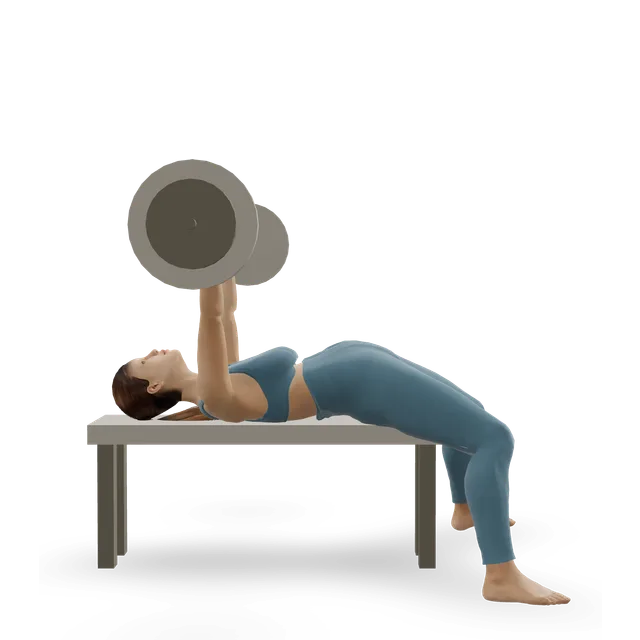
A chest-supported row lying flat on a high bench, so your arms hang straight down, usually with a barbell. It works like the incline version; you need a bench high enough that the bar clears the floor, and our figure doesn't show it yet.

How do I do chest-supported rows without a bench?

Put your chest on a sturdy step, box or the arm of a sofa set against a wall, or do a one-arm row with a hand and knee on a chair. A band row anchored in a closed door also works.

How many sets and reps of chest-supported rows should I do?

3 sets of 8 to 12, stopping 1 to 3 reps short, with about 90 seconds' rest, as our pull day workout does. In your first two weeks, do 2 sets with 3 or 4 reps to spare.

Is the chest-supported row a compound exercise?

Yes. It moves your shoulders and elbows, so it's a multi-joint (compound) lift even though the bench holds your trunk.

Can I do chest-supported rows when pregnant?

If you already do them, yes, early on. As your bump grows, lying face down gets uncomfortable: switch to a seated cable row or a one-arm row with a hand on a bench, and stop if you feel uncomfortable, too hot or unwell.

Sources

  1. García-Jaén 2021 · Dumbbell rows standing bent over or on a 47-degree bench: back and shoulder muscle activity in 3 people (preliminary EMG study, J Phys Educ Sport)
  2. Sweeney 2014 · Top shoulder exercises: 10 exercises in 16 men, including the 45-degree incline row (ACE-sponsored EMG study, ACE ProSource)
  3. Saeterbakken 2015 · Free-weight, cable and machine rows with one arm and two: core muscle activity in 15 trained men (EMG study, Int J Sports Med)
  4. Fenwick 2009 · Three rows compared: trunk muscle activity and lower-spine load in 7 men (lab study, JSCR)
  5. Beaudette 2014 · Lat activity at four electrode sites in maximal contractions and lifts (EMG methods study, J Electromyogr Kinesiol)
  6. Haugen 2023 · Free-weight against machine strength training: 13 studies, 1,016 adults (systematic review and meta-analysis, BMC Sports Sci Med Rehabil)
  7. Lawton 2011 · Strength testing and training of rowers, including the prone bench pull (review, Sports Med)
  8. García-Pallarés 2009 · A 12-week training cycle in 11 world-class kayakers, with prone bench pull strength (training study, Eur J Appl Physiol)
  9. Izquierdo-Gabarren 2010 · Strength training to failure or not in 43 trained rowers, with prone bench pull strength (randomised trial, Med Sci Sports Exerc)
  10. Pelland 2026 · Weekly volume and frequency, muscle growth and strength: 67 studies, 2,058 people (meta-regressions, Sports Med)
  11. Kompf 2025 · Selecting resistance training exercises for novices: a Delphi study with 17 experts (expert consensus, Am J Lifestyle Med)
  12. Brooke-Wavell 2022 · Strong, steady and straight: UK consensus statement on physical activity and exercise for osteoporosis (consensus statement, BJSM)
  13. Di Fonza 2026 · Lat activity across pulling exercises: 23 studies (narrative review, J Funct Morphol Kinesiol)
  14. Vigotsky 2022 · Surface EMG amplitude in one session is not a validated predictor of muscle growth (review, Sports Med)
  15. Lehman 2004 · Muscle activity in lat exercises, and squeezing the shoulder blades back (experimental study, Dyn Med)
  16. Fischer 2025 · Full and partial range in the prone barbell row: muscle activity in 16 trained men (EMG study, J Electromyogr Kinesiol)
  17. Vural 2023 · Suspension exercises against the bench press and lying barbell row in 12 male athletes (EMG study, PLoS One)
  18. Hernández-Belmonte 2023 · Free-weight (with the prone bench pull) against machine training for 8 weeks in 34 trained men (randomised trial, Scand J Med Sci Sports)
  19. Heidel 2022 · Machines and free weights for muscle size, strength and power (systematic review and meta-analysis, J Sports Med Phys Fitness)
  20. Currier 2026 · ACSM position stand: resistance training prescription for muscle function, hypertrophy and physical performance (overview of 137 reviews, MSSE)
  21. Hayden 2021 · Exercise therapy for chronic low back pain: 249 trials (Cochrane review)
  22. NICE NG59 · Low back pain and sciatica in over 16s: assessment and management (guideline, 2016, amended 2026)
  23. Refalo 2023 · Proximity to failure and muscle hypertrophy: 15 studies (meta-analysis, Sports Med)
  24. Halperin 2022 · Accuracy in predicting repetitions to failure: 12 studies, 414 people (scoping review and meta-analysis, Sports Med)
  25. Singer 2024 · Rest between sets and muscle growth: 9 studies (Bayesian meta-analysis, Front Sports Act Living)
  26. NHS · Physical activity guidelines for adults aged 19 to 64
  27. Plotkin 2022 · Progressing load or repetitions in 43 trained people (RCT, PeerJ)
  28. NHS · How to warm up before exercising
  29. NHS · Exercise in pregnancy
  30. Tommy's · Strength training in pregnancy (pregnancy charity information, reviewed September 2026)
  31. Paluch 2024 · Resistance exercise training with and without cardiovascular disease: 2023 update (American Heart Association scientific statement, Circulation)
  32. MacDougall 1985 · Blood pressure during heavy lifting, measured in the artery, in 5 bodybuilders (lab study, J Appl Physiol)
  33. NHS · High blood pressure
  34. NHS · Chest pain (past its review date: reviewed August 2023, review due August 2026)
  35. NHS · Heart attack
  36. NHS · Fainting
  37. NHS · Heart palpitations
  38. NHS · Headaches
  39. NHS · Subarachnoid haemorrhage
  40. NHS · Back pain
  41. NHS · Sciatica
  42. NHS · Shoulder pain (past its review date: reviewed May 2023, review due May 2026)
  43. NHS · Dislocated shoulder
  44. NHS · Elbow and arm pain
  45. AAOS OrthoInfo · Biceps tendon tear at the elbow (patient information, American Academy of Orthopaedic Surgeons)
  46. NHS · Sprains and strains
  47. NHS · Dizziness (past its review date: reviewed April 2023, review due April 2026)
  48. Khorramroo 2026 · Corrective exercise for upper crossed syndrome: 28 trials, 901 people (systematic review and meta-analysis, BMC Sports Sci Med Rehabil)
  49. Warneke 2024 · Stretching or strengthening for spinal posture: 23 studies, 969 people (systematic review and meta-analysis, Sports Med Open)
  50. Swain 2020 · No consensus on causality of spine postures and low back pain: 41 reviews (review of systematic reviews, J Biomech)
  51. Schoenfeld 2017 · Low- against high-load training for strength and muscle growth: 21 studies (meta-analysis, JSCR)

Exercise education, not a personal prescription, and clinical review of these guides is pending. Check with a GP before starting hard training if you have a heart condition, chest pain, dizziness or breathlessness when active, and stop for sharp or increasing pain. Health disclaimer.